Adversity Comes With Success

Did you know that successful people deal with adversity? It’s true. If you read or hear the stories or profiles of most successful people they have a trial to triumph story. They use their life stories as a tool to show that you too can make your dream reality. Everyone likes a story of grit, grind, and conquer.

You should read the profiles of successful people. They contain gems of information and can act as a resource for everyone else. The story is one aspect of reading about them. However, how they dealt with the situation is often a source of inspiration. When you become inspired, you increase your chances of facing and working through your own problems.

Inspiration last for only a period of time. You need to continue connecting yourself to people who are where you want to be. If you can, try to set aside time to read one story of a successful person every month. It will help you with your inspiration, and it can inspire you to rethink your course and learn from their mistakes.

The stories of some people are dated. However, their techniques may be timeless. A perfect example of this is Dale Carnegie’s How to Win Friends and Influence People. The stories themselves describe people and occupations of days long gone. But, his techniques are as valid today as they were back then.

Reading is great and all, however execution is what make things happen. If you don’t take action you will not see any results. A plan without action is just a wish and wishing is not going to create the life you desire. People dream all the time, but those dreams can become reality when you put forth the work.

Reading the stories of people who are successful and knowing their adversities that they have and are conquering, helps create a connection of “Hey, they are just like me!” Hard work, determination, focus, strategy, and most of all a shift in their mindset is the common theme you see in successful people. Persistence and having a positive attitude during challenging times will take you far in facing any situation.

In the midst of you learning from successful people, you will be inspiration for someone else. Don’t hide your gifts and superpowers due to adversity, if anything push through. Know that you are not alone in dealing with challenges in life. Rich or poor, young or old, black or white, adversity has no prejudice of person. Be inspired, take action, and create the life you want.

When you digest stories of successful people, trials and triumphs, and connect with how they became successful, it will shift your mindset to greater. You become what you feed your mind, body, and soul.


Traits of Self-Disciplined People

By: Roz Jones

Whether you’re looking for a metric of how self-disciplined you are or you’re looking for some habits that you should form to be more self-disciplined, you should know that self-disciplined people have certain traits in common.

Not all self-disciplined people are the same and there are other traits that it wouldn’t hurt you to develop as you work toward your own self-discipline. Still, here are five of the most important traits of self-disciplined people.

  1. They Respect And Chase Their Passions

Self-discipline can be, well, a discipline. It doesn’t have to be, however. If you have something that you’re truly passionate about, you won’t have to push yourself to do it because you’ll want to do it and do it well.

If you have trouble keeping yourself working, it could just be that you aren’t truly passionate about what you’re doing. It could help to take a second look at what you’re doing. It must be important to someone, so maybe it can be important to you. Alternatively, it may just be time to keep your eyes open for opportunities to do something that you care more about.

  1. They Power Through

Even if you do something that you are passionate about, sometimes you just don’t feel productive. This is when better self-discipline can come in handy.

Another trait of self-disciplined people is that they are able to remain at work when they don’t feel productive. This may sound like all of self-discipline but it’s really just one aspect of it.

If you can’t work when you don’t feel productive, it can be hard to train yourself to it. Try to find things that make time more bearable for you, like focusing on what you’re doing instead of how long you’ve been doing it or have left to do it. Or, look at time in smaller blocks like working from now until your next break instead of from now until the end of the day. Having a cup of tea is a healthy snack or listening to music while you work can also help the time go by more pleasantly.

  1. They Manage Their Emotions

Self-discipline isn’t just about working, it’s also about how you carry yourself around others. If you think of someone who has no self-discipline, perhaps a spoiled child or an unruly rock star, you don’t think about how little they work, you think about how they behave.

Self-discipline is very much about not “acting out” your emotions. This can be important to prevent you from snapping at people you are mad at, but it can also prevent you from snapping out at people you aren’t mad at just because you’re mad.

Doing this can mean learning how to calm yourself down, learning how to vent your emotions in healthy ways, or at least learning how to communicate to people when you are in a bad mood so that they understand that you aren’t mad at them.

  1. They Understand Their Emotions

On that note, self-discipline is also very much about self-knowledge and self-control. In order to maintain your self-discipline, you need to understand how you act when you aren’t watching – so to speak.

For this reason, mindfulness meditation can be very helpful for self-disciplined people because it increases self-awareness by helping you to understand your feelings and thought processes.

  1. They Understand Their Environment

Finally, self-disciplined people are usually also very aware of those around them. Self-discipline is a very personal thing, but it is also very much about the way in which you interact with your environment. As a result, understanding and appreciating your environment can help you to practice self-discipline. If you don’t understand or care about your environment, why should you bother monitoring how you impact it?

Self-discipline is a scary term because we think of “discipline” as punishment. This is unfortunate because self-discipline doesn’t have to be painful and is more about awareness than it is about austerity. It’s also about developing your passion so that you are more excited to do your part.

Reasons Why You Should Prioritize Self-Care

By: Roz Jones

Self-care refers to any activity that we engage in to maintain and nourish our health, including mental, physical and emotional wellbeing. While it may seem like an obvious concept, self-care often gets cast aside for more pressing priorities such as work, family and the everyday pressures of life. There are many reasons why you should prioritize self-care and we’ve listed six of the most important below.

1. Improves mood

Investing time in your own care can have a major impact on your mood, leading to greater optimism and positivity. It will help you to feel happier, more satisfied and better able to cope with the challenges that life throws you way. Even taking a small amount of time per week to nurture your physical, emotional and mental health can be hugely beneficial on your mood.

2. Helps relationships

Self-care helps you to be the best person you can be, which in turn as a positive impact on your relationships. Taking regular time to invest in your personal health allows you to be happier and more stable as an individual. This has a flow on effect as it allows you to be more patient and accommodating with others and therefore have better relationships.

3. Decreases risk of burnout

We all lead busy lives and regular investment in self-care is necessary to avoid burnout. Find a form of self-care that works for you, whether that be taking a walk, spending time with family or getting a massage, and commit to engaging in it regularly. It will help to manage your stress and prevent burnout.

4. Makes you become more present

Spending time managing yourself allows you to become more present and engaged with your surroundings. You are likely to have a better understanding of what it takes to maintain your mental, physical and emotional health, thus resulting in you having a greater focus on your current mood and trigger that have the potential to impact your health.

5. Better performance

Self-care is often seen as indulgent, when in actual fact it can have a much broader impact. Looking after yourself helps to maintain your health, which in turn allows you to perform better in all aspects of your life: work, family, sport.

6. Increases quality of life

The overarching benefit of self-care is that it increases the quality of your life. By helping you to be healthier, have better relationships and be more present, self-care allows you to live a more fulfilling life.

Signs That Your Emotions Control You

By: Roz Jones

Emotions by themselves are neither good nor bad. They just are. It is how you allow your emotions to influence your thoughts and actions that is important. Awareness and understanding of your feelings can help ensure that you control your feelings and that they aren’t controlling you. Knowing what you are feeling, what made you think that way, and how those feelings are affecting your behaviors and thoughts is a crucial life skill. 

You can’t stop yourself from feeling emotions. But you can become more aware of how those responses change your perceptions and could be influencing your behavior in negative ways. If you aren’t sure if you control your emotions or your emotions control you, here are five warning signs that your feelings may control your life. 

#1. Your reactions are instinctive, not thought out.

If you are a slave to your emotions, then you may often find yourself reacting to life’s circumstances with little thought or reflection. When you allow your emotional responses to control your decision-making, you respond to things at once and never take the time to calm down and let cooler thoughts to prevail. When you are emotionally charged, your amygdala has taken over your brain’s ability to think clearly. So, waiting until that immediate response is over means you see the situation differently. But, when you fly off the handle right away in a situation, you resign yourself to a purely emotional response. 

#2. You often regret your behavior.

Does this ever happen to you? When something happens that upsets you, do you feel good about your response at the moment but feel sorry about what you did or said later? If so, this is a sign you allow your emotions to guide your behavior. Living with lots of regret about how you treated someone else, responded to a situation, or behaved in front of other people means that you are making poor choices in emotional moments instead of learning to control your responses to your feelings. 

#3. You hurt yourself and other people.

When you are under the control of your emotions, you may end up hurting other people or yourself. Allowing your emotions to control you means that you are always on edge, always ready to shift moods and become engulfed in the next emotional episode. Others may have difficulty knowing how to respond to you, and you may not know what to expect from yourself. If you spend your life being emotionally charged, you allow your feelings to control your decisions, which can lead to risky or careless decisions. 

#4. Your thoughts are keeping you up at night.

When you have excessive anxiety, when you are living with regret over your emotional behavior, or when you don’t know who to handle yourself anymore, you can lose sleep at night. If you find yourself laying in bed wondering how your life got so out of control, you may be a slave to your emotions. 

#5. You give up on your dreams.

When you live in a constantly emotional state, it can feel like you won’t ever be able to accomplish what you want in life, which can lead to frustration and cause you to quit pursuing your goals in life. Your dreams are important to you, but when you allow your emotions to control your life, they take center stage over everything else that is important. 

Does any of this sound like you? Are you living a life enslaved by your emotions? Now that you know what is happening, you are ready to start learning to control how you allow your emotions to rule your life so that you can finally live out your destiny.

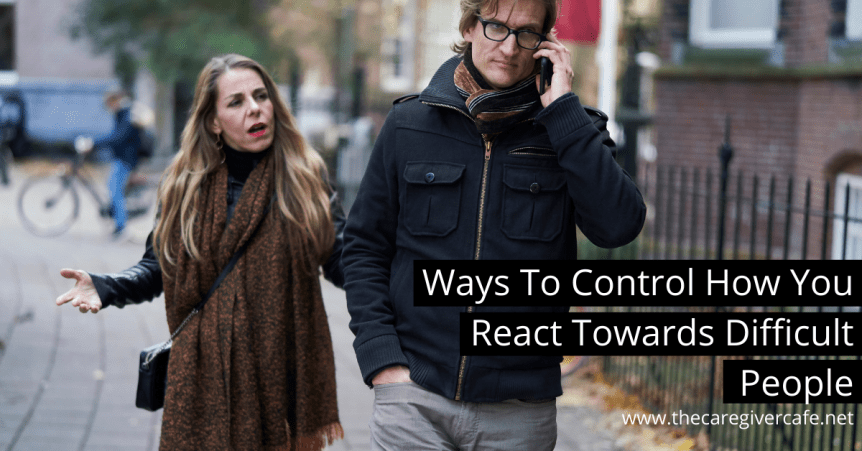
Ways to Control How You React Towards Difficult People

By: Roz Jones

As caregivers we all have to deal with difficult people from time to time, but it’s how you deal with them that matters. Dealing with difficult people is all about control. If you maintain control of how you react towards these people, you keep control of the situation, not allowing those difficult people to win.

In this article, we’re going to cover the five steps you can take to control how you react towards these incessantly difficult people. 

1) Slow down and take a deep breath

It may sound cheesy, but this advice is given so often for a reason. If you slow down and take the time to take a deep breath, you’re allowing yourself not only time to calm down, but also time to consider your actions. When you react quickly without thinking, you tend to overreact and cause more harm than good.

When forced to deal with difficult people, take this time to slow down and consider how you will react to the situation. Don’t just react quickly, control it.

2) Weigh out your reaction

The best way to control how you will react to difficult people is to weigh out the potential consequences of each reaction you could have. This allows you to fully think through and control how you react to these difficult people. Make sure you give yourself the time to do this; otherwise, you might regret what you say or how you handle the situation.

It’s crucial to keep in mind that every action has consequences, be it their initial difficult action or your reaction. You have to weigh these consequences as best you can and make a decision on how you’ll react to these difficult people.

3) Keep calm

The only way you’ll be able to control your reaction to difficult people is by keeping calm. If you let your emotions get in the way and overreact to these situations, you lose complete control. You will no longer be able to control how you react to difficult people. You have to remain calm in these situations in order to keep control.

4) Step away

You have to step away from the situation and allow yourself time to adjust and react. Stepping away from the issue and giving yourself the space to calm down and analyze how you’ll react will allow you to keep control of it. This will help you to keep control of the situation and how you handle the difficult person before you.

5) Know when to walk away

The last step in controlling how you react to difficult people is knowing when to walk away from the situation. If you aren’t getting anywhere with the difficult person and the situation just seems to worsen, it’s time to walk away. 

There’s no use wasting your time and breath on a difficult person that won’t budge. It will only cause yourself more stress and harm than it’s worth. Know when it’s time to walk away and do just that. If you aren’t getting anywhere, there’s no use trying.

Dealing with difficult people is, unfortunately, a necessary part of life. However, how you deal with it is entirely up to you. You are in complete control of how you react towards difficult people, you just have to realize it. We hope that this list will help you to strengthen your ability to control your reactions.

As you go through this, keep in mind that you need to keep calm and maintain control. You have the power to control how you react and when you walk away; exercise and strengthen that power.