Common Self-Love Obstacles People Face

By Roz Jones

When you are trying to practice self-love, there will be a few obstacles along the way, which can derail your progress if you aren’t prepared. Being aware of common obstacles can allow you to put preventative measures in place. So, let’s look at some of the most common obstacles caregivers and others may face when trying to practice more self-love.

Toxic People and Relationships

A major obstacle to self-love is toxic people. If you are surrounded by people who drain your energy and have a negative outlook, you’re going to struggle to practice self-love. 

Surround yourself with positive, healthy relationships. While all relationships go through hard times, for the most part they should lift you up and make you feel positively about yourself. So, if you have relationships that cause you more misery than happiness, now is the time to take a step back and focus on healthier, happier relationships.

Feelings of guilt and selfishness

Another big barrier to practicing self-love is feelings of guilt and selfishness. It is common to feel like self-love is selfish. This can lead to feelings of guilt when you attempt to focus more on yourself.

Please understand the importance of self-love. It isn’t just a luxury, it’s a necessity for your health and wellbeing. It certainly isn’t selfish so you should not feel guilty for trying to love yourself more. We cannot love others properly, or care for them for that matter, if we don’t love ourselves.

Check back later this week for more tips on building up your self-love!
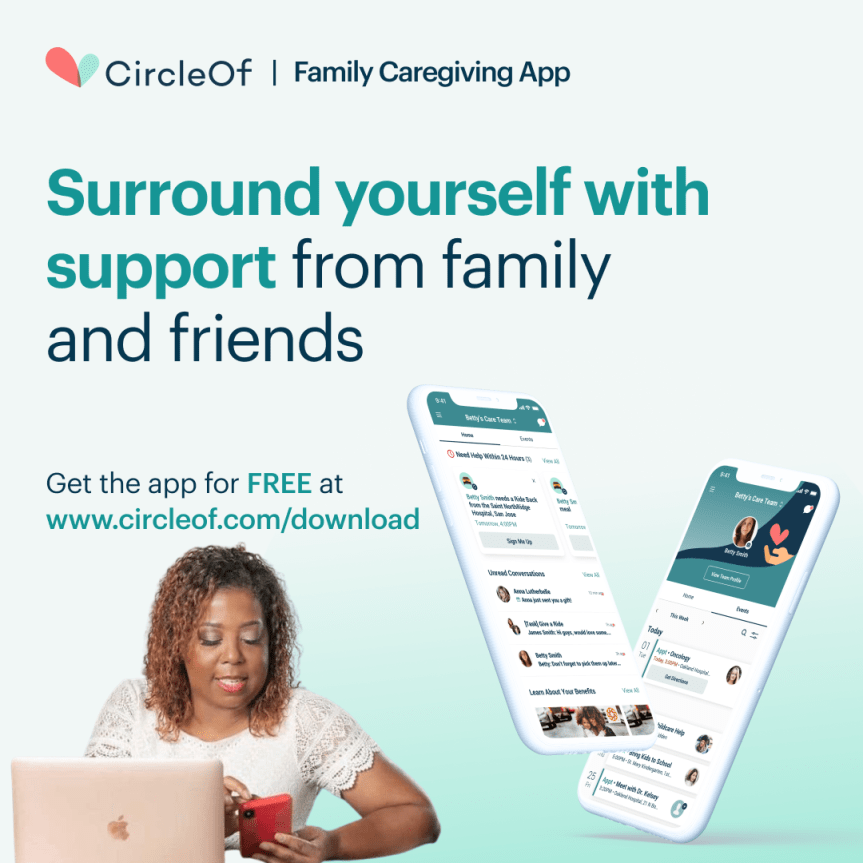
It’s here, I am so excited to share a new caregiver app called Circleof….This app will allow you to surround yourself with resources and experts from your community including ME!!!! As you are looking through the app, you will see my familiar face. I’m excited about this partnership and new ways to support you as you support your loved one. Here’s the link so you can explore the app. I would love your feedback and spread the word by sharing the link to family and friends.

Interested in making your own contribution to the Caregiver Cafe? There are guest blog spots open for October, November, and December. Email assistrozjones@gmail.com for more info!

Visit http://www.rozjonesent.com for more information on staying healthy as a caregiver and check out my upcoming book!

3 Steps For Getting Into The Flow

By Roz Jones

Let’s talk about getting into the flow. You know what I’m talking about, that special state of mind we reach sometimes – quite by accident – where work starts to flow effortlessly and we get an insane amount of it done in a short period of time. It’s a great feeling and something well worth trying to get into more regularly. Here’s how to do just that. 

Step 1 – Get Prepared 

Start by getting yourself prepared. It’s hard to get into the flow when you’re constantly having to get up to grab more supplies or grab a file. And it’s not just the stuff away from your desk. You don’t want a train of thought to be interrupted so you can go find a figure or a document on your computer. 

Prepare as much as you can. Make sure you have all things and information you may need at your fingertips. Of course that isn’t always possible, as new ideas and things pop up while you’re working, but do your best to eliminate having to stop and look when you’re in the flow. 

Step 2 – Get Comfy 

Next it’s time to get comfortable. That means finding a comfortable chair and desk to work at, but also create a setting that’s conducive to flow. What motivates and inspires you? Is it music, scent, pictures of your family, or the calendar with the project outline posted on it? Use whatever it takes to transport yourself into the flow state. 

Step 3 – Get Your Head In The Game 

Last but not least, you need to get your head in the game. Getting into the flow is mostly mental. Yes, the outside stuff we talked about helps, but you can sabotage all the preparation in the world if you go in with a bad attitude. 

Instead, spend a few minutes visualizing what it feels like to be in the flow. Then think about why it is important to get this work done. Who will it benefit? What impact will it have on you, your job, your family? Find some internal motivation to make you want to get this done. That’s when you’re ready to get to work and get into the flow. 

Give this three step process a try and use it anytime you want to get more done in less time. As an added bonus, you’ll find you’ll have more fun doing your work and you’re gaining a lot of pride for a job well done in a timely manner. And let’s not forget that this leaves you plenty of time leftover for the important stuff – spending time with your loved ones and relaxing with one of your favorite hobbies.

It’s here, I am so excited to share a new caregiver app called Circleof….This app will allow you to surround yourself with resources and experts from your community including ME!!!! As you are looking through the app, you will see my familiar face. I’m excited about this partnership and new ways to support you as you support your loved one. Here’s the link so you can explore the app. I would love your feedback and spread the word by sharing the link to family and friends.

Interested in making your own contribution to the Caregiver Cafe? There are guest blog spots open for October, November, and December. Email assistrozjones@gmail.com for more info!

Visit http://www.rozjonesent.com for more information on staying healthy as a caregiver and check out my upcoming book!

Why Embrace Your Imperfections as a Caregiver

By Roz Jones

Do you constantly find yourself wrapped up in your imperfections? If so, it could be getting in the way of leading a happy, fulfilled life. 

Each of us has imperfections. However, many fight against their flaws; harshly criticizing themselves for not being perfect. There is a lot of pressure in society today to be a perfect person. Unfortunately, this just isn’t possible. So, most of us end up feeling like a failure or developing feelings of self-hatred. This is even more difficult when caring for a loved one.

If you want to learn to love yourself, embracing your imperfections is key. Here, we’ll look at why it’s important to embrace your imperfections and the benefits it can deliver.

Your Positive Imperfections

When you start to embrace your imperfections, you’ll start to see them more positively. Believe it or not, there are some positives to imperfections. For example, if you suffer with anxiety, you may beat yourself up for not being able to do certain things that come easily to others. However, a positive of anxiety is that it often makes you more empathetic. That is a great trait to have in an often-cruel world, and especially as a caregiver. When you can empathize with loved ones, you may be able to better comfort them in what they’re going through.

Feel Free

When you are so caught up on your imperfections, it can make you feel trapped, under constant pressure. By embracing them, it helps to set you free. Nothing is more freeing than living your life without the constant weight of your own expectations. Once you accept your flaws, you’ll feel like a weight has been lifted.

Focus on Who You Are

When you are so focused on your imperfections, it can stop you being who you truly are. It causes you to chase an ideal that you aren’t never going to live up to. However, when you let go of your imperfections, your authentic self will start to shine through. 

So, if you feel like you have lost who you are, start letting go of your need to be perfect. 

Living Healthier

Constantly stressing over the things that you are not can even have a negative impact on your health. So, if you want to improve your overall health and wellbeing, you’ll want to start embracing your imperfections.

Living your life constantly focused on your imperfections isn’t healthy. It impacts your perspective on things, causing you to make choices you may not normally make.

These are just some of the reasons why you need to learn to embrace your flaws. While it may be difficult, with practice, you can start to think more positively about your imperfections. Remember, nobody in life is perfect, not even you, and you are never going to be. The sooner you accept this and know that it’s OK, the better your life will become. 

Conquering Fear – How To Fight Your Phobia

By Roz Jones

Being a caregiver can be a scary thing, especially when we are new to the field.  The guide shares a few ideas for conquering some of those fears and phobias when taking care of a loved one once and for all! Please note, the fear of enclosed spaces (claustrophobia) is used as an example – though the steps are applicable to any fear. 

1. Expose yourself to fear. 

If you have a phobia, you probably go out of your way to avoid the thing that causes you to feel afraid. In the claustrophobia example, you may refuse to use lifts, as they make you feel uncomfortable.  

Unfortunately, by avoiding the scenario you fear – the lift – you are actually increasing your overall fear. Avoidance does nothing but make a situation worse, and you need to face the fear before you can conquer it. That means getting into a lift, even if just for one floor. Make yourself do it.  

2. Positive reinforcement. 

After you have forced yourself to confront your fear once, you need to make it a positive experience. This can be having a dessert you enjoy following your ordeal, or buying something nice from your favorite store. Do this as soon as possible following your first attempt to confront the fear – in the example, you should dive into a cupcake the second you step out of the lift. As a caregiver, you should always show your support to your loved one as much as possible. Let them know you understand their fear, and that you are there to help them conquer it. If you are the one experiencing fear, let your loved one know and ask them for their love and support while you conquer it.

3. Rinse, and repeat. 

The way to conquer a phobia is to do the above, over and over again. As you do so, you will learn to manage the fear, and you will also learn that there really is no danger in what panicked you. By continuing to deliberately expose yourself to your fear, and then allowing a congratulatory moment when you succeed, over time, you will rid yourself of the fear forever. Be a team! The caregiver and the loved one receiving care can help each other conquer their fears, together.

Overcoming fear can be intimidating. In order to be the best caregiver you can be, conquering your fears are a must! If you need guidance on how to do this, you need to pre-order my new book, Lifted. It will include a workbook that will help you work through each step.

Are You Productive or Just Busy?

By Roz Jones

Have you ever observed someone who seems to be busy all the time, but doesn’t really get anything done?  Do you feel that sometimes you’re in the same boat?  How do you know if you’re productive or just busy? It can be easy to get overwhelmed with the everyday tasks when taking care of a loved one. As a caregiver it’s important that we manage our time efficiently, not only to give proper care to our loved one, but to also make the necessary time to take care of ourselves.

Do you have goals?  People who are productive generally have goals and focus all of their work on achieving those goals. Of course there are always going to be distractions and obstacles when taking care of a loved one but those distractions don’t take priority over the big picture.

Do you focus or multi-task?  People who multi-task often seem very busy.  They’re always doing something, but they’re rarely doing any one thing very well. Tackle each obstacle you face as a caregiver directly, you’ll be more productive if you focus on doing one thing at a time.

Do you delegate?  Sometimes you may take on tasks that would really be better to delegate to someone else. It can be easy to want to say yes to every task because you want to provide for your loved one. But you might be able to delegate personal tasks while keeping the focus on business tasks. This will improve the quality of care given to your loved one, and minimize the personal burnout you feel as a caregiver.

Do you say no?  People who are productive know how to say no to something that is going to take them away from their own important work.  It’s okay to say no when you really don’t have time to fit in one more thing. Don’t feel guilty when saying no to certain tasks related to your loved one. Instead, feel reassured knowing that this will benefit both of you in the long run.

Do you let some things go?  It may sound counterproductive to erase some tasks from your to-do list.  But you may find that you have given yourself tasks that really won’t move your vision forward and will take up extra time.  It’s okay to scratch something off the list and go a different way.

Do you have a schedule?  People who are productive tend to have a schedule for each day of what needs to be done and when.  If you’re not planning ahead, chances are you’re staying busy but not productive.

Do you complete projects?  You can be busy doing something all day long, every day and never get a project completed.  If you find you’re starting a lot of things without finishing them, it’s time to look at your priorities and become more productive.

Do you feel peace?  When you spend your time very busy but not accomplishing much you might feel a sense of anxiety. You may worry about all the things you need to do that aren’t getting done. Try as best as you can to remain present in each moment. Rather than expressing a sense of anxiety, this will help you express gratitude appreciating the time you get to spend with your loved one.

But when you’re productive, you can actually feel peace when it comes to work.  You know what’s important and you have a plan to get it done on time. 

It can be easy to get overwhelmed with the everyday tasks when taking care of a loved one. As a caregiver it’s crucial that we manage our time efficiently. Not only to provide the utmost of quality care to our loved one but to also make the necessary time to take care of ourselves. If you are struggling with how to manage your time, you need to pre-order my new book, Lifted. It will include a workbook that will help you work through each step!