Is “Mental” Health Really Just In The Mind?

By Roz Jones

Imagine you are asked to describe what depression, obsessive compulsive disorder, or bipolar disorder are. Would you say “mental health problems” or similar? Most would, and there is a general perception that these problems are purely based in the mind. There is still something of an attitude that people with mental health and anxiety problems should be able to “snap out of it” or get over it, just like that. Yet many mental illnesses actually have physical reasons. 

For example, clinical depression. A much-misused term, depression is now used to describe someone feeling a bit low. However, if someone has full, clinical depression, they will experience long periods of horrifically low mood, low motivation, and a general feeling of emptiness. A cruel illness, but one that is described as being mental, and a regular target for the “pull yourself out of it!” brigade. 

Yet, depression does have a physical basis. Depression is caused by a lower-than-average amount of serotonin in the body. Also known as the “feel good” hormone, serotonin controls the mood, personality, and feelings of an individual. If serotonin levels are low, the individual will experience depressive, low thoughts. This is a physical problem with mental evidence, but it is physical nonetheless – antidepressants work on increasing serotonin levels, and tend to have a decent success rate. 

Furthermore, preliminary scans have shown those with obsessive compulsive disorder have enlarged lobes at the front of the brain. These lobes control our worry and anxiety mechanism, and when enlarged, the anxiety goes into overdrive – resulting in what we know as OCD.  

So these mental illnesses are, more often than not, physical in basis after all – and one can no more “shake off” or “get over” a hormone imbalance than one can “shake off” a broken leg!

Visit http://www.rozjonesent.com for more information on addressing mental health as a caregiver and check out my upcoming book!

What is Self-Hatred?

By Roz Jones

Could it be possible you hate yourself too much? Self-hatred is more than simply not liking yourself. When you suffer with self-hatred, you’ll constantly put yourself down and feel like you aren’t good at anything.

Self-hatred and feeling like we are not enough can be especially difficult for those of us fulfilling caregiver roles for our loved ones. When we are responsible for taking care of both ourselves and others, we can feel as if we are never doing enough or “doing it right.”

Here, we’ll look at what self-hatred is, the impact it can have on your life, and how you can stop it in its tracks.

Understanding self-hatred

Self-hatred is basically like having a little bully sat inside your head. You will experience constant criticizing thoughts, pointing out your flaws and mistakes. Some common self-hatred thoughts you might experience include:

You’re a loser”
“Why did you even try, you knew you would fail.”
“You aren’t good enough.”
“Why can’t you just be normal?

You’ll put yourself down and compare yourself to others frequently. Self-hatred tends to develop over time and is triggered by more than one event.

How can it impact your life?

Although self-doubt is healthy, self-hatred is not. If you struggle with self-hatred, it can have a devastating impact on your life. Often the feelings of self-hatred worsen over time and can lead to destructive behaviors as you try and numb the negative self-talk.

Many people who suffer with self-hatred go on to develop destructive behaviors such as cutting themselves, develop eating disorders, or turn to drugs and alcohol. It can impact every aspect of your life, including your relationships, your career, and the friends you include in your life. You may also stop caring about the things you used to enjoy and avoid things that make you feel better.

The impact it can have on your life makes it important to treat quickly, rather than ignore it. The question is, how can you eliminate self-hatred?

Ways to eliminate self-hatred from your life

There are many ways to eliminate self-hatred from your life. Learning how to tame your inner bully is a great first step. So, when you notice that inner voice telling you negative things about yourself, switch it around. Stop those negative thoughts in their tracks and turn them into a positive.

So, if your inner bully says, “You aren’t worth anything,” switch it to “I may feel like I am not worthy, but I know that I am.” The more you counteract the negative thoughts with positive ones, the more positive your mind will become.

You can also make a list of all your strengths. If you struggle to come up with some, ask those closest to you. When you focus on your strengths, you won’t be too caught up in your weaknesses.

Finally, work on building up self-compassion. That is, treat yourself the exact same way you would treat a good friend. As a caregiver, you are excellent at helping out and lifting others up, so turn these skills on yourself. Would you beat a loved one up for making a mistake? If not, why do it to yourself?

Overall, self-hatred can be a powerful thing to overcome since it builds up over time. However, the tips above can help you to start to quiet your inner bully and develop a little more self-compassion.

Visit http://www.rozjonesent.com for more information on building yourself up as a caregiver and check out my upcoming book!

Conquering Fear – How To Fight Your Phobia

By Roz Jones

Being a caregiver can be a scary thing, especially when we are new to the field.  The guide shares a few ideas for conquering some of those fears and phobias when taking care of a loved one once and for all! Please note, the fear of enclosed spaces (claustrophobia) is used as an example – though the steps are applicable to any fear. 

1. Expose yourself to fear. 

If you have a phobia, you probably go out of your way to avoid the thing that causes you to feel afraid. In the claustrophobia example, you may refuse to use lifts, as they make you feel uncomfortable.  

Unfortunately, by avoiding the scenario you fear – the lift – you are actually increasing your overall fear. Avoidance does nothing but make a situation worse, and you need to face the fear before you can conquer it. That means getting into a lift, even if just for one floor. Make yourself do it.  

2. Positive reinforcement. 

After you have forced yourself to confront your fear once, you need to make it a positive experience. This can be having a dessert you enjoy following your ordeal, or buying something nice from your favorite store. Do this as soon as possible following your first attempt to confront the fear – in the example, you should dive into a cupcake the second you step out of the lift. As a caregiver, you should always show your support to your loved one as much as possible. Let them know you understand their fear, and that you are there to help them conquer it. If you are the one experiencing fear, let your loved one know and ask them for their love and support while you conquer it.

3. Rinse, and repeat. 

The way to conquer a phobia is to do the above, over and over again. As you do so, you will learn to manage the fear, and you will also learn that there really is no danger in what panicked you. By continuing to deliberately expose yourself to your fear, and then allowing a congratulatory moment when you succeed, over time, you will rid yourself of the fear forever. Be a team! The caregiver and the loved one receiving care can help each other conquer their fears, together.

Overcoming fear can be intimidating. In order to be the best caregiver you can be, conquering your fears are a must! If you need guidance on how to do this, you need to pre-order my new book, Lifted. It will include a workbook that will help you work through each step.

How to Identify a Possible Mental Health Issue

By Roz Jones

It had been painstaking for some to identify the real deal behind mental health. Some may experience a glitch of being depressed or aggressive then go back to normalcy. While others show some behaviors that are quite odd and uncertain, which may indicate that there is a shifting of attitude in the person and can result in mental disorders.

Mental health providers are capable of distinguishing the difference between being mentally healthy and mentally ill. They diagnose based on symptoms that the client may or may not manifest when going through the evaluation process. There are a lot of approaches and here are some:

1. One’s own perception

Here, you have to assess yourself internally. Are you having morbid thoughts or thoughts of harming yourself or others? Your behaviors, thoughts, and functioning can determine if you are mentally healthy or mentally ill. If there is a sudden shift in your daily habits and routines which you used to enjoy, then there might be something wrong.

In severe cases of mental illness, people can go on with their lives without doing chores or even bathing themselves. Therefore, it is important to assess yourself. If you can no longer pinpoint what is wrong, it may be time to seek professional help.

2. Other people’s perception

It is important to rely on those you trust for opinions on changes in your behavior. People around you may be the best source for an objective opinion. You may see yourself to be perfectly fine while others may disagree. Schizophrenia is one very good example of this, wherein a person may admit seeing or hearing things where in fact nothing’s there.

3. Ethnic and cultural norms

Oftentimes, a person’s normalcy is defined by their culture. Because people are living within different boundaries and cultures, what is normal for others may not seem normal for you. For example, when a person hears or sees things that others cannot, some people may call this insanity, but for some religions, this is normal and is a sort of divine intervention. Culture within the family may also affect the way you see others. What you normally do within your home may not be the same as others.

4. Based on statistical numeric

“Within the range” –a term often used to describe normalcy. Generally, the average or range defines what is normal. However, statistics can change. For instance if they go higher or lower, the range of normalcy shifts.

The information above is not meant to be used as a tool to diagnose yourself or others with a mental health disorder. However, it can be used as a gauge for when to seek medical help for yourself or your loved one.

When Anxiety Strikes

By Roz Jones

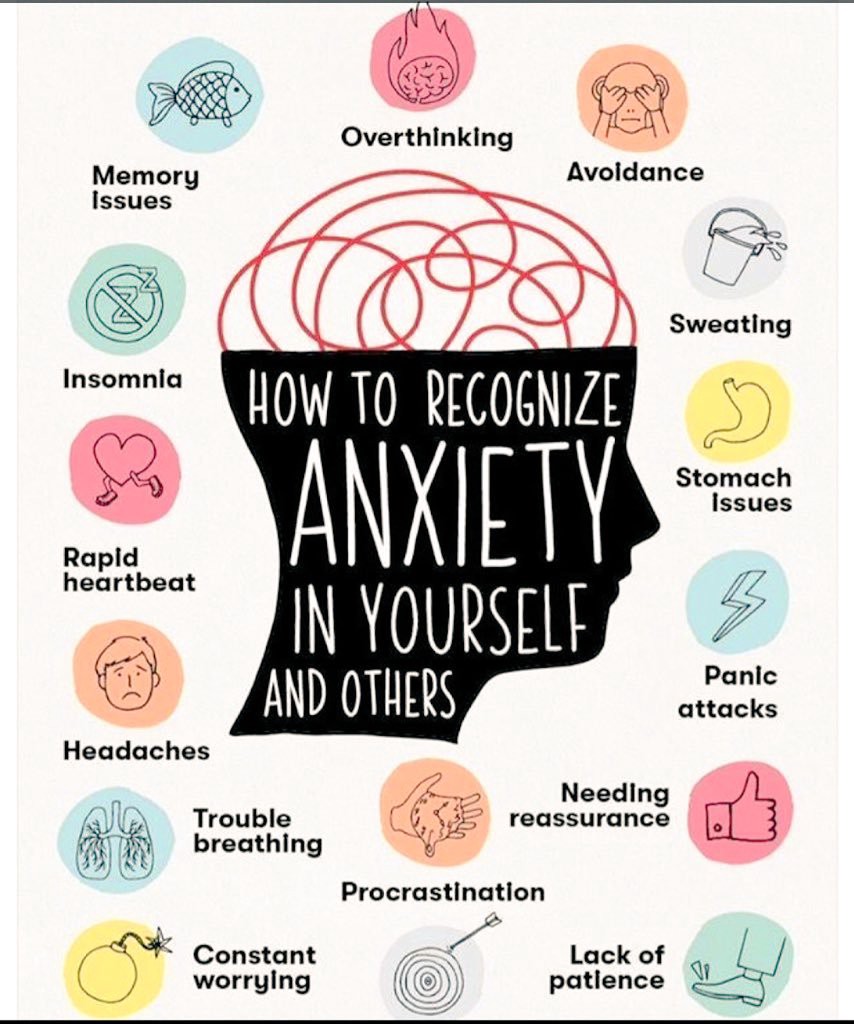
Panic attacks can be the bane of your existence, and can make caring for a loved one or even living your daily life,  extremely daunting. Never knowing when – or why – an attack can hit makes life unpredictable. Searching for a way to control your anxiety is a natural step to take. 

Most anxiety attacks come on suddenly – however, there are usually warning signs. It may only be a few seconds’ warning, but if we try to identify the signs, we may be able to lessen our symptoms. Some people experience chest tightening, lightheadedness, or shaking – all are the immediate signs of a rush of adrenaline. Adrenaline is one of the main identifiable reasons for an anxiety attack.  

As soon as you feel an attack beginning to develop, stop what you are doing. If you’re driving, pull over. If you’re standing or walking, sit down. As the attack begins to flower, take slow, steady breaths. Breathe in for five seconds, and out for five seconds. One of the main things people do when they are experiencing an anxiety attack is to breathe in short, sharp gasps; by slowing and focusing on your breathing, you are distracting your mind and resetting the scales. 

Keep breathing in this fashion. If necessary, close your eyes and tilt your head back so you have a clear throat passage for air to move through. You may also find some form of self-comforting useful; try rubbing the side of your wrist with a fingertip. Remain calm, focus on your breathing and rest until the feeling has passed.