Breaking the Stigma: Addressing Mental Health in Caregiving

By Roz Jones

Caring for a loved one with a chronic illness or disability can be both rewarding and challenging. While caregiving can bring a sense of purpose and fulfillment, it can also have negative impacts on mental health. Unfortunately, there is often a stigma attached to discussing mental health in caregiving, which can prevent caregivers from seeking the help they need. In this blog, we will discuss the importance of addressing mental health in caregiving and breaking the stigma.

The Impact of Caregiving on Mental Health

The demands of caregiving can take a toll on mental health, particularly when the caregiver is providing care for an extended period. Caregivers often experience high levels of stress, anxiety, and depression. They may also feel isolated and overwhelmed, especially if they lack support from friends, family, or healthcare providers.

Furthermore, caregiving can disrupt daily routines and social activities, leading to a loss of identity and purpose. It can also affect the caregiver’s physical health, as they may neglect their own health needs while caring for their loved one.

Breaking the Stigma

Despite the significant impact that caregiving can have on mental health, there is still a stigma attached to discussing mental health in this context. Caregivers may feel ashamed or embarrassed to admit that they are struggling or need help. They may fear being judged or seen as weak or selfish for prioritizing their own needs.

Breaking the stigma around mental health in caregiving is essential to ensure that caregivers get the support they need. This can involve raising awareness about the impact of caregiving on mental health, educating caregivers about the importance of self-care, and providing access to mental health resources and support.

Addressing Mental Health in Caregiving

Caregivers can take several steps to address their mental health needs while caring for their loved ones. These include:

  1. Seeking support: Caregivers should reach out to friends, family, and healthcare providers for support. This can include asking for help with caregiving tasks, seeking emotional support, and attending support groups.
  1. Practicing self-care: Caregivers should prioritize their own physical and emotional health by getting enough sleep, eating a healthy diet, and engaging in activities they enjoy.
  1. Taking breaks: Caregivers should take regular breaks from caregiving to recharge and relax. This can involve engaging in a hobby, spending time with friends, or simply taking a nap.
  1. Seeking professional help: Caregivers should not hesitate to seek professional help if they are experiencing symptoms of depression, anxiety, or other mental health issues. This can involve talking to a therapist, psychiatrist, or other mental health professional.

Caregiving can have a significant impact on mental health, but it’s essential to break the stigma and address this issue. Caregivers should prioritize their own mental health needs by seeking support, practicing self-care, taking breaks, and seeking professional help when necessary. By breaking the stigma around mental health in caregiving, we can ensure that caregivers get the support they need to provide the best care for their loved ones.


Unlock the Power of Nature: Elevate Your Mental Health with Mental Health America’s Exclusive Worksheet
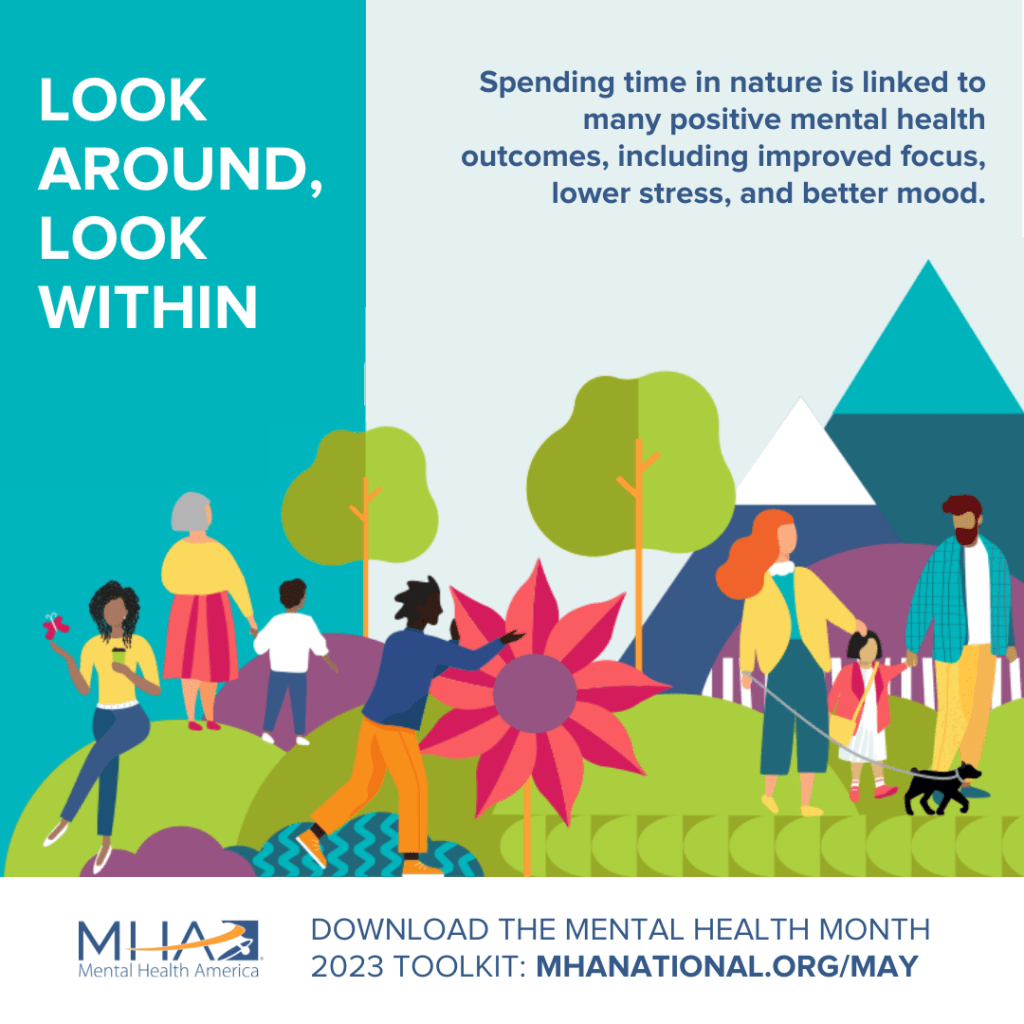
Discover the transformative benefits of embracing the great outdoors and prioritize your mental health this Mental Health Awareness Month. Mental Health America’s exclusive worksheet, “Opening Your Mind to the Outdoors,” will guide you through powerful techniques to overcome motivational barriers and connect your goals to positive emotions.

Unleash the motivation within and unlock a path toward well-being. Download this worksheet now and embark on a journey of self-discovery and mental rejuvenation. Don’t miss out on this incredible opportunity to enhance your mental health and thrive in harmony with nature.


Stay Connected!

The Impact of Caregiving on Mental Health and Personal Well-Being

By Roz Jones

Caregiving is a challenging and demanding role that can take a toll on a caregiver’s mental health and personal well-being. As a caregiver, it’s important to be aware of the potential impact on your mental health and take steps to maintain your personal well-being. In this blog, we will explore the impact of caregiving on mental health and personal well-being and provide tips for coping with the challenges.

The Emotional Toll of Caregiving

Caregiving can be emotionally taxing and bring up a range of emotions, including stress, anxiety, and depression. The demands of caregiving can lead to burnout and exhaustion, which can negatively impact a caregiver’s mental health. Additionally, caregivers may experience feelings of guilt or frustration, which can also impact their well-being.

The Physical Impact of Caregiving

Caregiving can also have a physical impact on a caregiver’s health. The stress and demands of caregiving can lead to physical symptoms, such as headaches, back pain, and exhaustion. Additionally, caregivers may neglect their own physical health due to the demands of caregiving, which can lead to further health problems.

Tips for Maintaining Personal Well-Being

To maintain personal well-being while caregiving, it’s important to prioritize self-care. This can include taking breaks and engaging in activities that bring joy, seeking support from family and friends, and seeking professional counseling or therapy. It’s also important to set boundaries and communicate clearly with the person being cared for about what you are and are not able to provide in terms of care.

Another tip is to seek out resources and support for caregivers. This can include caregiver support groups, respite care services, and home health aides. It’s important to remember that you don’t have to do everything alone, and that it’s okay to ask for help.

The Importance of Self-Care

Self-care is essential for maintaining personal well-being while caregiving. This can include taking time for yourself, engaging in activities you enjoy, and getting enough rest and exercise. Self-care can help you feel more resilient and better able to handle the challenges of caregiving.

Caregiving can have a significant impact on a caregiver’s mental health and personal well-being. By prioritizing self-care, seeking out resources and support, and communicating clearly with the person being cared for, caregivers can maintain their own well-being while providing effective care. Remember, it’s important to take care of yourself in order to be the best caregiver you can be.


Unlock the Power of Nature: Elevate Your Mental Health with Mental Health America’s Exclusive Worksheet

Discover the transformative benefits of embracing the great outdoors and prioritize your mental health this Mental Health Awareness Month. Mental Health America’s exclusive worksheet, “Opening Your Mind to the Outdoors,” will guide you through powerful techniques to overcome motivational barriers and connect your goals to positive emotions.

Unleash the motivation within and unlock a path toward well-being. Download this worksheet now and embark on a journey of self-discovery and mental rejuvenation. Don’t miss out on this incredible opportunity to enhance your mental health and thrive in harmony with nature.

Stay Connected!

5 Ways to Live a Simpler Life

By Roz Jones

Many people dream of living a simpler life. Few achieve it once they become caregivers. The idea of leaving behind possessions and finding nirvana is tempting, but it is not an easy task. Yet, the benefits are immense. You can get your health back. You can get your family back. Your stress levels will lower. All of these add up to a life lived to its fullest. Who doesnโ€™t want that?

5 Suggestions for Living a Simpler Life

Even taking care of an aging loved one or sick friend. Once you understand your WHY you are 90% of the way there. If you are up to the challenge of ditching a complex lifestyle full of stress in exchange for a life well-lived, then here are five suggestions to help you succeed:

  1. Determine your priorities based on your values. What is important to you and your family? What do you want to achieve? What does a simple life look like to you? Once you determine your values, decisions become more straightforward. You say yes to those things that align with your goals and no to those that donโ€™t.
  2. Reign in the digital noise. Smartphones are wonderful tools that should be just that โ€“ tools. Ease tension in your life by turning off notifications when you are at dinner or in bed. You might even remove all social media apps from your phone. Unsubscribe from email lists that do not serve your mission and reply to emails only once per day, not as soon as one comes in.
  3. Declutter your home. By removing unnecessary stuff, you open up your home for those possessions you genuinely love or need. You can start small, like in a junk drawer, and then move on to your wardrobe. You will feel freer as possessions no longer weigh you down.
  4. Live within your means. A simple life is one free from the stress of making money to pay bills and buy more stuff. When you are in debt, your stress levels elevate. Instead, pay down debt and learn to live within your means. You will quickly learn to enjoy life without struggling with debt.
  5. Become comfortable with being alone. The constant stimulation of technology and people cause us to be uncomfortable with being alone. You do not have to head out to an isolated mountain cabin and live as a hermit. It may even be uncomfortable for a while. However, as you learn to sit in the quiet with only yourself as company, you learn to relax and listen to what your body is trying to tell you. 

Embrace the simple life by figuring out your values and then take the necessary steps to live them out. You will be reaping the benefits of this change before you know it.

____________________________________________________________________________________

Follow My Pinterest to Stay Updated On Tips About Caregiving!

(Click the link below to follow my Pinterest Account)

____________________________________________________________________________________

ATTENTION: INSTAGRAM UPDATE!!!

Thank you for your patience with me as I attempted to gain access to my Instagram account @rozjonesenterprises! Unfortunately, I have been prompted to create a NEW Instagram account.

Be sure to follow my new Instagram page @rozcaregiverconsulting!

(Click the link above to access my new Instagram page with ease!)


3 Emotions You Should Let Go

By Roz Jones

Emotions are part of our everyday lives when we are caring for a sick or aging loved one. None of us will go through a day without experiencing some kind of emotion, be it fear, anger, happiness, or joy. Some caregivers have a hard time navigating negative emotions instead of feeling them and letting them go. 

As a caregiver if you tend to hold onto your negative emotions, you may find that your life is affected, including your relationships. It can hinder the pursuit of goals. If left alone long enough, you may look back on your life with regret at the wasted years.

Release these 3 Emotions for Greater Personal Growth

There is a time for experiencing all of your emotions. You donโ€™t want to get stuck in the quagmire of these three negative emotions, however: 

  1. Regret: Who hasn’t second-guessed their decisions? Maybe you are going through some financial stress, and you wish you didn’t buy that expensive new truck. You might wish you would have chosen a different career or spouse. You will regret some of your choices; however, you don’t want to get stuck looking back so much that you stop living in the present and planning for your future. Itโ€™s okay to look back and feel the emotion, but don’t stop there. Learn the lesson, and move on with your life. 
  1. Anger: Getting mad happens. You may have an off day and yell at your kids or partner for a simple mistake. Other times, you might have a good reason to be mad, but you refuse to work through it. Instead, you want to hang on and carry a grudge. Anger affects your health. It also pushes your loved ones away. Donโ€™t let anger control your life and reduce your chances of future happiness. Learn healthy mechanisms to control your outbursts. Extend forgiveness, even if the other person doesnโ€™t ask for it. You are releasing the pain that has been defining you. That is a huge step in personal growth.
  1. Disappointment: This close cousin to regret, disappointment is directed at other people when they donโ€™t live up to your expectations. For example, your co-worker failed to do their part for the upcoming presentation. You may be a little mad, but you are disappointed because you have always known them to be reliable. Living in a constant state of disappointment will affect your relationships. You may come across as cynical and push people away from you. Understand that people will disappoint you, but you donโ€™t have to turn your disappointment into distrust. Itโ€™s critical to offer some grace and move on. 

You will always have to handle your emotions. But when they threaten to overwhelm your happiness, it is time to let them go.

_______________________________________________________________________________________________________

Are you a Caregiver taking care of two loved ones? Did you check out Part 1? Check out Part 2 to hear more from Caregiver, Christine Psalms and how she takes care of both of her parents!

Christine Psalms continues her story with us in this episode.

As a caregiver for both her parents, Christine shares:

1. How she worked on herself to prepare to be her father’s caregiver
2. How therapy, counseling, and journaling changed her life as  a caregiver
3. Navigating relationships with loved ones without resentment.

_______________________________________________________________________________________________________

ATTENTION: INSTAGRAM UPDATE!!!

Thank you for your patience with me as I attempted to gain access to my Instagram account @rozjonesenterprises! Unfortunately, I have been prompted to create a NEW Instagram account.

Be sure to follow my new Instagram page @rozcaregiverconsulting and check out my top business mistakes as a Business Owner!

(Click the link above to access my new Instagram page with ease!)


We’re beginning to launch into new territory with the NASA Goddard Space Flight Center’s Caregiver Connection! The Caregiver Connection is a network for family caregivers that provides care for child(ren) or elderly and Roz Jones has been invited to speak on August 3rd! We are honored to share the same space!

How to Let Go of Past Grudges

By Roz Jones

If we look back over our lives as caregivers, we can reflect on this question. Who hasnโ€™t been hurt by someone? Maybe your spouse cheated on you. Maybe your best friend from high school stole your boyfriend. Maybe you have a co-worker who is stealing your ideas or a boss who bullies you. Worse, you might have experienced trauma from physical, mental, or other forms of abuse. As time passes, some wounds donโ€™t heal, and when that happens, you could end up carrying a grudge. Grudges are those leftover feelings of anger and resentment that prevent you from growing as a person. Itโ€™s time we let go and move beyond our pasts.

Tips to Let Go of Grudges and Get Your Life Back

Holding a grudge is often an indication of unforgiveness. It can tear at your soul and corrode your physical and emotional health. It can affect all of your current and future relationships as a caregiver. Take the needed steps to release the grudge and gain your life back: 

  1. Establish Why You Are Holding the Grudge: You need to determine what the problem is so that it can be forgiven. Sometimes, you will find that the offense is not worth the grudge. Other times, you will know precisely what is causing the pain.
  2. Consider the Benefits of Forgiveness: Choosing to forgive does not mean you forget, nor does it mean that the other person won. Instead, it means you let go of the resentment holding you back from living your life fully.
  3. Acknowledge Your Emotions: Avoid stuffing the emotions down. Use a journal if you want, but take some time to examine your feelings about the harm you received. Also, think about how this affects your behavior and your relationships.
  4. Look at it from Their Perspective: This will not always apply depending on the harm done. However, try putting yourself in their shoes. Under similar circumstances, would you have done the same thing to them? 
  5. Talk with the Other Party: Open communication can remedy some grudges simply. If you believe it will help, approach the other party to see if they will talk with you. 
  6. Release the Victimhood: Choose to accept what happened and your feelings about it. You donโ€™t have to wait for an apology. (HINT: You may never get one.) Instead, stop playing the โ€˜wounded oneโ€™ card and take back your life by healing, releasing the anger and the grudge.
  7. Avoid Dwelling: This may be the most challenging part, but it is critical. Once you choose to forgive, donโ€™t look back. Avoid dwelling on the situation. If others want to bring it up, change the subject. Your healing is worth it.

Grudges donโ€™t need to define you as a person. Let go of the past and spring forward to your new life by releasing resentments today.

____________________________________________________________________________________

Follow My Pinterest to Stay Updated On Tips About Caregiving!

(Click the link below to follow my Pinterest Account)

____________________________________________________________________________________

ATTENTION: INSTAGRAM UPDATE!!!

Thank you for your patience with me as I attempted to gain access to my Instagram account @rozjonesenterprises! Unfortunately, I have been prompted to create a NEW Instagram account.

Be sure to follow my new Instagram page @rozcaregiverconsulting!

(Click the link above to access my new Instagram page with ease!)


We’re beginning to launch into new territory with the NASA Goddard Space Flight Center’s Caregiver Connection! The Caregiver Connection is a network for family caregivers that provides care for child(ren) or elderly and Roz Jones has been invited to speak on August 3rd! We are honored to share the same space!