As a woman, taking your health seriously is of the utmost importance. One way to do this is to get routine screenings that look at various aspects of your health, from your blood pressure and cholesterol, to your stamina and physical health. Here are some of the more important health screenings women need to get.
Blood Pressure and Cholesterol
These are two simple screenings that everyone should get done regularly, including if you are a woman. In fact, women often have a higher risk for heart disease and other cardiovascular conditions, so you should start these tests around age 18-20. Your doctor may request to perform the test each year if you are at a high risk, or do them every few years when you go in for routine bloodwork. Both blood pressure and cholesterol can affect your heart health and overall health, so don’t skip this one.
Breast Screenings
As a woman, one of the riskiest cancers for you is breast cancer. While men can get breast cancer, most people who get this type of cancer are women. You should get various types of breast screenings to look for signs of cancer. The first is a basic type of breast exam, where the doctor or nurse will look for signs of bumps or lumps on your breast, including examining your armpits and areolas for irregular patterns or colors. You should also get a mammogram each year starting between 40 and 50 years old, according to your doctor’s guidelines.
Osteoporosis Screenings
One of the more common medical conditions women need to be careful about is osteoporosis. This is when you lose some of your bone density, which can easily happen with women as they age. You need to focus on diet and nutrition, as well as proper exercise to help prevent osteoporosis. You can also get early treatment by getting osteoporosis screenings periodically. This often includes getting a bone density scan, then following that up with x-rays of your bones.
Blood Glucose Tests
Finally, as a woman you might be at risk for diabetes. Type 2 diabetes can occur at any time during your life, whether you are at a high risk for it or not. It is important to get routine bloodwork, including checking your blood glucose levels, so you know whether or not you are pre-diabetes or if you already have diabetes now and need to get it treated.
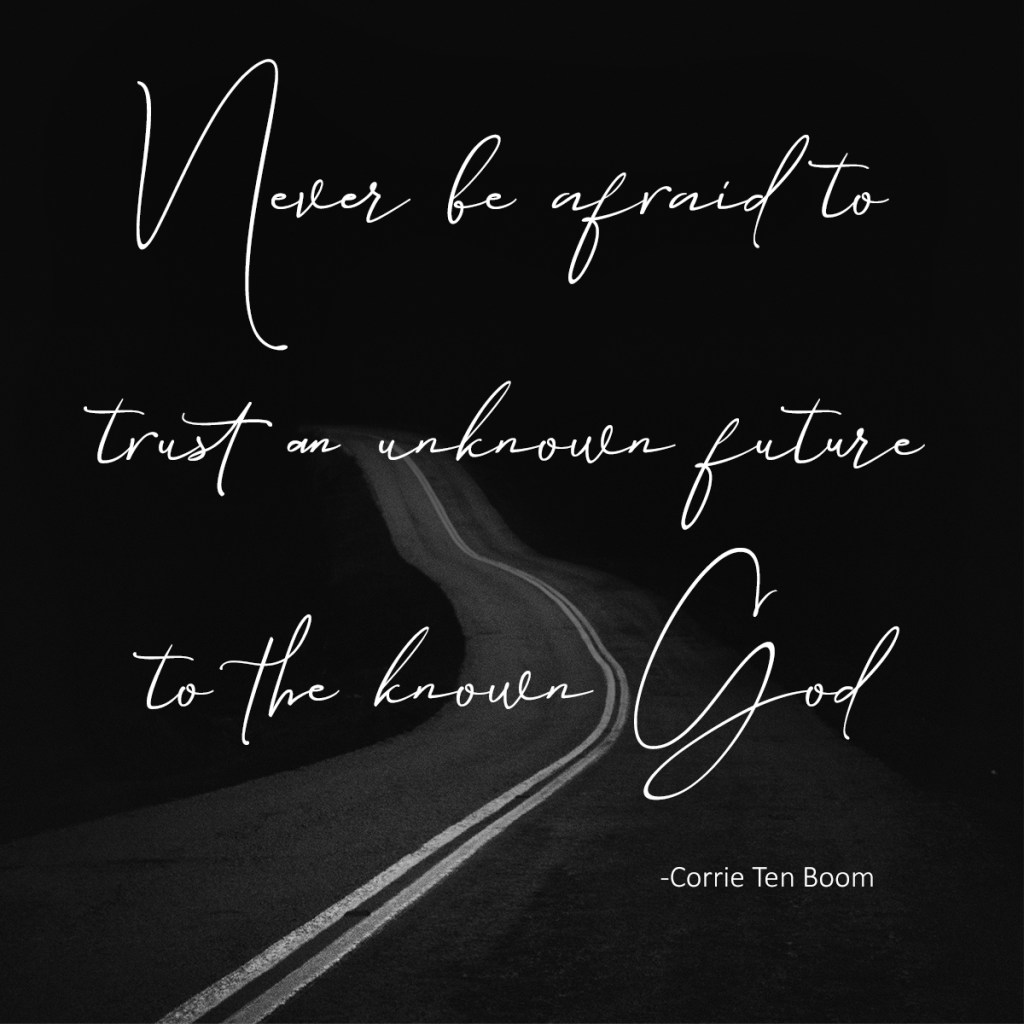
Never be afraid to trust an unknown future to the known God!
Having a chronic illness is a scary thing for sure. Many people don’t get a firm diagnosis or if they do, the doctors find it impossible to predict how that illness may change in the coming weeks, months, or years. As a caretaker you are not only taking on what is going on in your household, but caring for someone else’s day to day health.
It’s easy to sit up late at night, worrying about your health or your patient’s health. Will you be able to pick up your toddler next month? Will you still be able to drive to the grocery store next week? Will you be able to attend that family reunion next year?
This was a woman who faced unimaginable loss and still came out on the other side with a beautiful redemption story. She didn’t let the unknown keep her from seeking (or trusting) God!
Have you ever felt like someone put your world on “spin cycle” and left it there for an extra long time? That’s how I feel when life throws me curveballs, disrupts my life and I have to adjust to the problem at hand .
There’s just so much we can’t control in this life. We can do everything we’re supposed to and things can still go sideways. But we can have peace no matter what’s happening because God is in charge.
Can I pray for you today, friend?
God, I confess—sometimes, my life feels like it’s spinning out of control. But my feelings aren’t true because I believe You are still in control. Help me to rest in this truth today and not what my emotions tell me. In Jesus’ name, Amen.
Teenager being talked about and doesn’t know how to handle it.
While you can expect conflicts at work, it’s the conflicts at home that can be especially maddening, more so when they involve kids. Children quite simply don’t understand the finer points of a situation, meaning they frequently take a very simplistic view of things – and react very emotionally when things don’t go their way.
Add their peers into the mix, and you have a disaster waiting to happen.
We also now have the internet to throw into this mix as well. Our kids, especially our preteens and teens, keep their phones in their hands and are comparing themselves to the highlights that they see of someone’s life. We also have to take in account that young people will use social media to embarrass others or express what they are feeling. This causes anxiety, self esteem issues, and if we do not pay attention they will close off from the world.
As a caregiver we pay special attention to our patients and clients that we take care of. At times we can become so engrossed with work and are tired that we can miss the signs for our children.
Helping your children to learn how to resolve their conflicts with others is an important step in helping them on the path to adulthood. Below, find a list of things you might not have thought of when it comes to guiding your children in conflict resolution with others.
1. Teach your children how to be calm. As mentioned before, it’s very easy for a child to react emotionally. After all, they’ve done it since they were babies, teaching them how to control strong emotions is a skill they’ll need for their entire life. Teach them self-soothing strategies such as counting to 10, taking several deep breaths before responding, or simple meditation techniques.
2. Give your children the language to express themselves, and then teach them when not to use it. Tell your child it’s good to explain how something made them feel, but not to blame other people when doing so. Then show them that after speaking comes listening to what the other person has to say.
3. Show your child how to brainstorm solutions. Even young children can quickly learn this skill, as children are especially creative naturally.
4. Role-play situations. If a child has had a repeating conflict with peers, then help them practice how to react to those conflicts. That will help them to be better prepared when the situation rises again.
5. Teach children fairness. Rather than constantly nagging at your child to take turns or to share, help them to learn a mindset of thinking about others through your actions. Sure, you can reward the behavior you want to see, but it’s through learning empathy that these lessons stick. It will help them through conflict resolution when they can look at a situation and ask the question for themselves, “Was this fair?”
Helping your child in conflict resolution is something you as a parent should take very seriously. Of all the life skills you teach your child, this is one of the most important. But remember, that while using these steps to guide them might be a good jumping off point, you know your child better than anyone. Use what’s logical to you that will teach them best. And then allow them the freedom to practice those skills as they go out into the world.
Have you ever stopped to notice how fast our days seem to fly by? We wake up, bombarded with an insane amount of things we have to get done. Then, just like that, the day is over.
Of course, having the world at your fingertips doesn’t help to slow things down. It only adds to the chaos.
Today, I want to focus on what matters most in our lives. That could mean different things for different people. Nevertheless, each one of us has certain things they value more than others.
So, read ahead to find out how you can live your best life by focusing more on the things that matter.
The Most Important Things in Life
Having status and designer shoes are great and everything. But having them won’t make you any happier or healthier than the average person.
Another thing we tend to obsess over is what we don’t have. Sometimes, it becomes our driving force that can lead to negative habits and behavior.
Let me ask you this: do you want to live your best life today and every day? This is what you should do:
1. Identify What Matters the Most to You
First, take a step back and look at your life from a different vantage point. Next, try to dissect each aspect of your life. Which areas should you pay more attention to? Which should you cut back on?
To lead a balanced, well-fulfilled life, consider having one, or all, or the following. Maybe you can even add a couple of our own to the list.
A healthy body and mind
Family and friends
Money in the bank
The drive to constantly learn new things
A place to call home
Realistic goals and a purpose in life
The takeaway: Recognizing that what matters most in life has nothing to do with material possessions can help you appreciate what you have. Reconnecting with these things can lead to a better, happier, fuller life. It can also boost creativity and lower stress. It also gives you control over your happiness, rather than allowing external factors to affect your inner peace.
2. Listen and Pay Attention
While it’s important to listen to those close to you in life, it’s much more than that. It’s also about listening to yourself and paying attention to your likes and dislikes. This is a measure of your true worth and how much you love yourself.
Self-love requires practice, but it gets easier with time. When you’re at peace with yourself, you allow yourself to love others in a healthy, mature relationship.
The takeaway: Show yourself the same kindness and compassion you show others. When you look in the mirror, focus on the good rather than the bad. Treat yourself to nice things and be happy with who you are.
3. Be in the Present
Too often, we find ourselves regretting the past or worrying about the future. However, what matters the most is the moment we’re living right here and now.
Connecting with the world around you makes you appreciate what you have. The more you’re in tune with your ‘present,’ the more you’ll realize just how precious life can be.
As Earl Nightingale said, “Learn to enjoy every minute of your life…Think how really precious the time is you have to spend, whether it’s at work or with your family. Every minute should be enjoyed and savored.”
The takeaway: Being self-aware helps bring tranquility and happiness into your life. In turn, the happier and calmer you are, the more things you’ll find to be thankful for.
4. Find a Hobby
Hobbies are the things you do for fun in your free time. They can range from knitting to deep-sea diving to jumping from airplanes.
Your experiences in life are what make it worth living. They give it meaning and shape the way you see others around you. Doing something you enjoy has been widely hailed as one of the best stress reducers of our time.
You can also use it to push your boundaries a bit and step out of your comfort zone. Sometimes, the idea of doing something new can be terrifying. If this happens to you, recognize your fear. Then, tell yourself it’s okay to be nervous about something new.
The takeaway: Live your life. Be eager to try out new experiences. They’re what add fulfillment and richness to your life.
5. Practice Positive Habits
Identifying positive habits and carrying them out daily brings order to your life. Good habits also result in good physical and mental health.
With a steady routine, you can reduce distractions that stand in the way of your accomplishing things. They also help steer you towards making better decisions. Studies show that by creating routines and enforcing good habits, you become better at taking care of your life, health, and overall well-being.
The trick is to be authentic to your values and beliefs. Let’s be honest, that can be hard to do in this media-frenzy world we’re living in. Yet, just having confidence in who you are can help shine the light on what matters most in your life.
The takeaway: Your thoughts are expressed through your words and, ultimately, your actions. Those actions turn into habits, so make sure you stick to enforcing positive habits in your life.
Final Thoughts
These five things are just some of the ways you can focus on what matters most in your life. At the end of the day, what it boils down to is that to live your best life, you have to focus on certain things over others.
Remember, what matters more to you may not be as important to others. So, stay true to your values and hold on to the things you treasure more in life.