3 Ways to Become Disciplined

By Roz Jones

There are many ways that can contribute to becoming self-disciplined and being successful in all aspects of your life. Whether in terms of your fitness, relationships, or work ethic, self-discipline is the most important trait that you need, in order to be able to accomplish whatever you want. For example, a lot of successful people understand that discipline is the gateway to the achievement of their work or personal goals. In fact, they learned how to use discipline in their favor and be successful. The following are 3 more ways to become disciplined.

Set active goals

Active goal setting is a very important skill, if you want to become disciplined. In fact, it’s quite different than passive goal setting; with passive goal setting, you just set goals in your mind without properly defining them. But active goals have a profound meaning; you make plans and maybe you have already found some strategies, in order to be able to achieve them as soon as possible. So, you need to set some long-term goals, and you also have to actively track your progress towards your specific goals in life.

Ignore negativity

There may be people around you that can exert an immensely negative effect on you. But you don’t have to let them. More specifically, you don’t have to let words or even their expressions deter you. If you can not accomplish it, you can always seek advice from experts, in order to learn how to avoid negativity. For example, if people say what you want to accomplish is not possible or even sneer at your efforts, you should try to avoid them. Instead, you need to use your energy and strength and try to interact with positive people.

Practice Gratitude

You may spend too much time wanting a lot of things in your life. The habit of gratitude can help you move away from constantly wanting what you really don’t have. It’s time for you to start appreciating what you do have in your life and be happy about it. When you do this, you will begin to see some remarkable shifts in your life. Actually, the effects of gratitude are far-reaching. From improving your emotional well-being, to your mental health and spirituality, gratitude can offer you a lot. The most important thing is that gratitude can help you move from a state of lack towards a state of abundance. For instance, when you live in a state of lack, it’s impossible to focus on achieving your goals and being disciplined. So, you need to focus on positive things and try to succeed in your goals, without having stress. 

This image has an empty alt attribute; its file name is 23b18e9b-8961-427e-97bc-fe8016df3c3f.jpg

I’ve just launched Shop With Roz, my online store filled with supplies and gifts for every caregiver. You can find a wide variety of products in the store to help yourself and your loved one. Check it out here!

After you have a look through the store, see any products you use and love as a caregiver, and think we should share them with everyone? Let me know!
This image has an empty alt attribute; its file name is unnamed.png

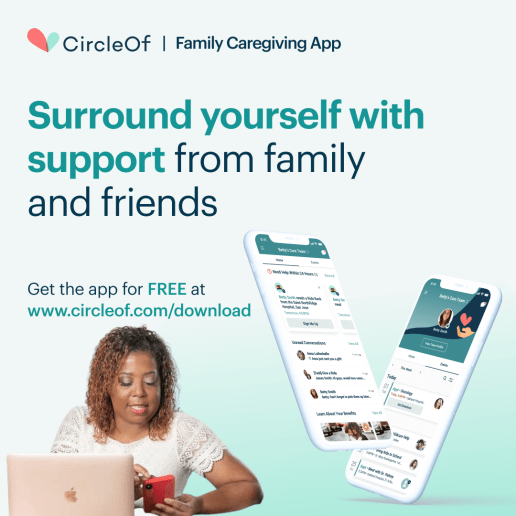
It’s here, I am so excited to share a new caregiver app called CircleOf….This app will allow you to surround yourself with resources and experts from your community including ME!!!! As you are looking through the app, you will see my familiar face. I’m excited about this partnership and new ways to support you as you support your loved one. Here’s the link so you can explore the app. I would love your feedback and spread the word by sharing the link to family and friends.

Visit http://www.rozjonesent.com for more information on addressing mental health as a caregiver and check out my upcoming book!

How to Balance Practicing Self Care with a Busy Life

By Roz Jones

One of the most difficult challenges a lot of people face with self-care is finding the time to fit it in. When you live a busy lifestyle, it can seem almost impossible to find extra time to look after you.

So, how can you balance practicing self-care with a busy lifestyle? Below you’ll discover some more great tips you can follow. Take a look back at my last post here with other ways to integrate self-care into your routine over the holidays.

Schedule it in

A good tip you can follow to ensure you can fit self-care into your busy routine is to schedule it in. Think about it, you schedule in everything else, so why not self-care? When you set a time to focus on yourself, you are much more likely to stick to it. No matter how busy you think you are, there will always be time for self-care somewhere in your schedule.

Establish a morning routine

If you are struggling to find the best time of day to practice self-care, you might find it easier in the morning. If you’re a busy parent, you might disagree here but think about it. In the morning, you could get up just 30 minutes earlier, or 15 minutes if you want. This can be the perfect opportunity to practice self-care.

Alternatively, if you are a parent you could focus on self-care in the evenings when the kids have gone to bed. It doesn’t take long to practice self-care so you should always be able to squeeze it in somewhere. 

Look at automating daily tasks

There are all kinds of tools and gadgets that can automate various aspects of our lives. If you are constantly busy, you’ll find automating certain tasks can be a game changer. 

For example, you could switch from going to the grocery store, to ordering groceries online. If you have items you frequently purchase, these can be added to your favorites list, making it easier to add them to your order next time. Doing your grocery shopping online can free up a lot of free time during the week that can be used on self-care.

Start small

You don’t have to start by completely overhauling your lifestyle. Instead, you can start small with self-care. Begin by taking just 10 minutes out of each day to focus on a self-care activity. Focus on developing one positive self-care habit at a time. Once you have mastered that, you can move on to the next task. 

By starting small, it makes it easier to fit self-care into your busy life. Many people mistakenly think they need to begin with at least 30 minutes a day. The truth is, however much time you can free up for self-care is enough. Once you get started, you’ll find it easier to start focusing more on self-care due to the benefits you experience.

Overall, balancing practicing self-care with a busy lifestyle isn’t easy. However, the tips above can really help. You’ll find a lot of tips online too from busy people just like you. Remember, self-care is essential to your health and wellbeing. So, no matter how busy you are, you should always try and make time for self-care daily.

I’ve just launched Shop With Roz, my online store filled with supplies and gifts for every caregiver. You can find a wide variety of products in the store to help yourself and your loved one. Check it out here!

After you have a look through the store, see any products you use and love as a caregiver, and think we should share them with everyone? Let me know!

It’s here, I am so excited to share a new caregiver app called CircleOf….This app will allow you to surround yourself with resources and experts from your community including ME!!!! As you are looking through the app, you will see my familiar face. I’m excited about this partnership and new ways to support you as you support your loved one. Here’s the link so you can explore the app. I would love your feedback and spread the word by sharing the link to family and friends.

Medicare Open Enrollment ends December 7th!

Navigating the Medicare Open Enrollment process can be confusing and difficult your first time, and I want to help out! For caregivers and their loved ones who are in need of advice and help planning their Medicare enrollment, I’m offering a discounted counseling session for just $97! Go to https://rozjonesent.com to sign up!

Interested in making your own contribution to the Caregiver Cafe? There are guest blog spots open for November and December. Email assistrozjones@gmail.com for more info!

Visit http://www.rozjonesent.com for more information on addressing mental health as a caregiver and check out my upcoming book!

Conquering Fear – How To Fight Your Phobia

By Roz Jones

Being a caregiver can be a scary thing, especially when we are new to the field.  The guide shares a few ideas for conquering some of those fears and phobias when taking care of a loved one once and for all! Please note, the fear of enclosed spaces (claustrophobia) is used as an example – though the steps are applicable to any fear. 

1. Expose yourself to fear. 

If you have a phobia, you probably go out of your way to avoid the thing that causes you to feel afraid. In the claustrophobia example, you may refuse to use lifts, as they make you feel uncomfortable.  

Unfortunately, by avoiding the scenario you fear – the lift – you are actually increasing your overall fear. Avoidance does nothing but make a situation worse, and you need to face the fear before you can conquer it. That means getting into a lift, even if just for one floor. Make yourself do it.  

2. Positive reinforcement. 

After you have forced yourself to confront your fear once, you need to make it a positive experience. This can be having a dessert you enjoy following your ordeal, or buying something nice from your favorite store. Do this as soon as possible following your first attempt to confront the fear – in the example, you should dive into a cupcake the second you step out of the lift. As a caregiver, you should always show your support to your loved one as much as possible. Let them know you understand their fear, and that you are there to help them conquer it. If you are the one experiencing fear, let your loved one know and ask them for their love and support while you conquer it.

3. Rinse, and repeat. 

The way to conquer a phobia is to do the above, over and over again. As you do so, you will learn to manage the fear, and you will also learn that there really is no danger in what panicked you. By continuing to deliberately expose yourself to your fear, and then allowing a congratulatory moment when you succeed, over time, you will rid yourself of the fear forever. Be a team! The caregiver and the loved one receiving care can help each other conquer their fears, together.

Overcoming fear can be intimidating. In order to be the best caregiver you can be, conquering your fears are a must! If you need guidance on how to do this, you need to pre-order my new book, Lifted. It will include a workbook that will help you work through each step.

Traits of Self-Disciplined People

By: Roz Jones

Whether you’re looking for a metric of how self-disciplined you are or you’re looking for some habits that you should form to be more self-disciplined, you should know that self-disciplined people have certain traits in common.

Not all self-disciplined people are the same and there are other traits that it wouldn’t hurt you to develop as you work toward your own self-discipline. Still, here are five of the most important traits of self-disciplined people.

  1. They Respect And Chase Their Passions

Self-discipline can be, well, a discipline. It doesn’t have to be, however. If you have something that you’re truly passionate about, you won’t have to push yourself to do it because you’ll want to do it and do it well.

If you have trouble keeping yourself working, it could just be that you aren’t truly passionate about what you’re doing. It could help to take a second look at what you’re doing. It must be important to someone, so maybe it can be important to you. Alternatively, it may just be time to keep your eyes open for opportunities to do something that you care more about.

  1. They Power Through

Even if you do something that you are passionate about, sometimes you just don’t feel productive. This is when better self-discipline can come in handy.

Another trait of self-disciplined people is that they are able to remain at work when they don’t feel productive. This may sound like all of self-discipline but it’s really just one aspect of it.

If you can’t work when you don’t feel productive, it can be hard to train yourself to it. Try to find things that make time more bearable for you, like focusing on what you’re doing instead of how long you’ve been doing it or have left to do it. Or, look at time in smaller blocks like working from now until your next break instead of from now until the end of the day. Having a cup of tea is a healthy snack or listening to music while you work can also help the time go by more pleasantly.

  1. They Manage Their Emotions

Self-discipline isn’t just about working, it’s also about how you carry yourself around others. If you think of someone who has no self-discipline, perhaps a spoiled child or an unruly rock star, you don’t think about how little they work, you think about how they behave.

Self-discipline is very much about not “acting out” your emotions. This can be important to prevent you from snapping at people you are mad at, but it can also prevent you from snapping out at people you aren’t mad at just because you’re mad.

Doing this can mean learning how to calm yourself down, learning how to vent your emotions in healthy ways, or at least learning how to communicate to people when you are in a bad mood so that they understand that you aren’t mad at them.

  1. They Understand Their Emotions

On that note, self-discipline is also very much about self-knowledge and self-control. In order to maintain your self-discipline, you need to understand how you act when you aren’t watching – so to speak.

For this reason, mindfulness meditation can be very helpful for self-disciplined people because it increases self-awareness by helping you to understand your feelings and thought processes.

  1. They Understand Their Environment

Finally, self-disciplined people are usually also very aware of those around them. Self-discipline is a very personal thing, but it is also very much about the way in which you interact with your environment. As a result, understanding and appreciating your environment can help you to practice self-discipline. If you don’t understand or care about your environment, why should you bother monitoring how you impact it?

Self-discipline is a scary term because we think of “discipline” as punishment. This is unfortunate because self-discipline doesn’t have to be painful and is more about awareness than it is about austerity. It’s also about developing your passion so that you are more excited to do your part.

Ways to Control How You React Towards Difficult People

By: Roz Jones

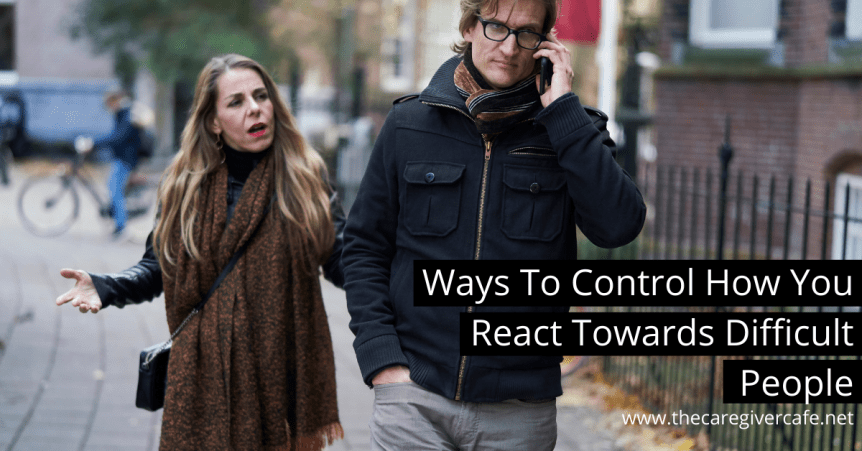
As caregivers we all have to deal with difficult people from time to time, but it’s how you deal with them that matters. Dealing with difficult people is all about control. If you maintain control of how you react towards these people, you keep control of the situation, not allowing those difficult people to win.

In this article, we’re going to cover the five steps you can take to control how you react towards these incessantly difficult people. 

1) Slow down and take a deep breath

It may sound cheesy, but this advice is given so often for a reason. If you slow down and take the time to take a deep breath, you’re allowing yourself not only time to calm down, but also time to consider your actions. When you react quickly without thinking, you tend to overreact and cause more harm than good.

When forced to deal with difficult people, take this time to slow down and consider how you will react to the situation. Don’t just react quickly, control it.

2) Weigh out your reaction

The best way to control how you will react to difficult people is to weigh out the potential consequences of each reaction you could have. This allows you to fully think through and control how you react to these difficult people. Make sure you give yourself the time to do this; otherwise, you might regret what you say or how you handle the situation.

It’s crucial to keep in mind that every action has consequences, be it their initial difficult action or your reaction. You have to weigh these consequences as best you can and make a decision on how you’ll react to these difficult people.

3) Keep calm

The only way you’ll be able to control your reaction to difficult people is by keeping calm. If you let your emotions get in the way and overreact to these situations, you lose complete control. You will no longer be able to control how you react to difficult people. You have to remain calm in these situations in order to keep control.

4) Step away

You have to step away from the situation and allow yourself time to adjust and react. Stepping away from the issue and giving yourself the space to calm down and analyze how you’ll react will allow you to keep control of it. This will help you to keep control of the situation and how you handle the difficult person before you.

5) Know when to walk away

The last step in controlling how you react to difficult people is knowing when to walk away from the situation. If you aren’t getting anywhere with the difficult person and the situation just seems to worsen, it’s time to walk away. 

There’s no use wasting your time and breath on a difficult person that won’t budge. It will only cause yourself more stress and harm than it’s worth. Know when it’s time to walk away and do just that. If you aren’t getting anywhere, there’s no use trying.

Dealing with difficult people is, unfortunately, a necessary part of life. However, how you deal with it is entirely up to you. You are in complete control of how you react towards difficult people, you just have to realize it. We hope that this list will help you to strengthen your ability to control your reactions.

As you go through this, keep in mind that you need to keep calm and maintain control. You have the power to control how you react and when you walk away; exercise and strengthen that power.