Stay Healthy While Working and Caregiving From Home pt 3

By Roz Jones

Have a look at my first few tips on staying healthy at home here and here, and read on to learn some more!

Taking Regular Breaks

Make sure you have a balanced work schedule throughout the day, including taking enough breaks. Think of your work-from-home schedule just like a schedule if you were in the office still. This includes a morning and afternoon break, and a lunch break! If you would get up every hour to move and stretch your body in the office, then you should be doing that now as well. 

Do desk stretches – There are stretches you can do while sitting down or standing. These give you the opportunity to look somewhere other than your computer screen, stretch your body, and hopefully stand up to stretch out your legs as well.

Walk around – Also use your breaks as a chance to get up and walk around your house or office space. 

Make adjustments – Do you feel like your neck is stiff or back is hurting? You may be sitting incorrectly. Check the ergonomics of your workstation, whether you are working at a desk or your kitchen table.

Environmental Changes

The environment where you work at home can also make a big difference in your health and wellbeing. Here are some things you can change in your environment for your health:

Setting up your workspace – Make sure your workspace is set up for focus and productivity, including a desk or table that is comfortable, all the accessories you need to get work done, proper lighting, and a way to cancel out noise or distractions. 

Having healthy resources at home – It is also good to have resources available to you at home to improve your health if this is a priority. This might be nutritious food and snacks, home workout accessories, or just some house plants in your office to get you in the healthy mindset.

Designated break areas – Taking a break at home is a little different from a traditional workplace, since you are already in your relaxing place. This is why having a designated workspace AND a designated place to take your breaks is so essential. 

Your Work-Life Balance 

Everyone needs a good work-life balance, whether you work from home or out of the home. But it tends to be a little more complicated when your home is also your office. 

One of the best things you can do for your work-life balance when you work from home is to have a schedule that tells you when you start work, and when you stop. Avoid bringing your laptop to the couch or your bed to get work done outside of your “office hours”.

This small change, in addition to having a separate workspace, will make a big difference in your work-life balance.

Are You Ready to Be Healthier?

Let’s summarize how to be healthier at home and make sure you are ready and on the right path.

Small habits for big changes – Remember that it is not about changing your entire life in order to be healthier. Just choose some smaller habits, and working from home will benefit you greatly.

Find your motivation – What motivates YOU to be healthier might not motivate anyone else. Be honest with yourself about what you are trying to achieve. 

Set health goals – Lastly, set some goals for yourself when it comes to your health. What are you trying to improve? What are you struggling with right now? The more specific your goals are, the easier they will be to achieve.

Visit http://www.rozjonesent.com for more information on how to be more productive as a caregiver and check out my upcoming book!

Stay Healthy While Working and Caregiving From Home

By Roz Jones

With more people working from home, a common question has come up – how do I get more exercise and avoid eating too much when I am at home full-time? This becomes even more difficult when you are caregiving from home as well, taking care of yourself, your job, and most importantly your loved ones. But don’t worry, it is possible to improve your physical health even while working from home, just like if you were working in an office. 

Here are 3 different things to focus on when it comes to staying healthy while working from home.

1. Staying Active and Stretching

One of the best things you can do when you work from home is to stay active. Even if you sit at a desk or work on the couch with your laptop all day, there are still plenty of opportunities to move your body.

Make it a goal to move more throughout the day, not only with daily exercise, but getting up from your day and stretching more often. 

Here are some ideas:

Start your day with a gentle workout session – In the morning, you can boost your energy and move your body with a gentle form of exercise. Yoga and Pilates are great for the morning, but a short walk would also be great.

Find more reasons to walk during your day – Walking is the gentlest form of exercise, and the easiest to do. You can walk your dogs a little further than you normally would, go on a family walk around the neighborhood after dinner, or walk to run errands if it’s close enough to your house instead of driving.

Add in other forms of exercise – What else do you enjoy doing? Do you want to take an afternoon spin class with a friend? Do you like getting out of the house to go on a hike or head to the gym? Find more forms of exercise that will motivate you. If possible, invite your loved ones to join you!

2. Nutrition While Working from Home

Another pitfall that people often fall into when working from home is snacking or indulging in treats all day. If you have found that your nutrition is falling behind from working near your kitchen all day, here are some tips that can help:

Have healthy snacks on hand – If you tend to reach for chips or candy often, keep healthier snacks within your reach. Have fruit or nuts on your desk, keep granola bars on the counter, make sure your fresh fruit and veggies are visible, instead of a box of donuts on the counter.

Do meal prep – Meal prep works great when you work from home too! This does not just have to be for bringing lunch to work. The more you have prepared at home, the less tempted you will be to order food delivery or go out to eat. It will also save time in the long run, meaning you have more time to take care of and spend time with loved ones.

Designated kitchen times – A common trap when working from home is feeling like you can walk into the kitchen at any time and eat something. To prevent this, have designated kitchen and meal times just like you would if you worked in an office.

3. Developing Healthier Habits

Staying healthy while working from home isn’t about being on a diet or trying to be restrictive. It is about balance, which starts with developing some healthy habits. 

Do you eat better when you have your workout first thing in the morning? Then you know this can be a wonderful healthy habit for you! Habits don’t have to feel like a chore or something you are forced to do. It is very small changes in your day that make the difference.

Try working on your daily routines. From morning routines to what you do in the afternoon, you can change your routines in order to be healthier at home.

Get your family involved. Sometimes, what you need is to focus on the health of your family, not just yourself. Let your kids help with meal times, exercise with the family, and find family-focused activities to get you up and moving throughout the day.

Check back next week for more healthy at home habits, and in the meantime, visit http://www.rozjonesent.com for more information on how to be more productive as a caregiver and check out my upcoming book!


Conquering Fear – How To Fight Your Phobia

By Roz Jones

Being a caregiver can be a scary thing, especially when we are new to the field.  The guide shares a few ideas for conquering some of those fears and phobias when taking care of a loved one once and for all! Please note, the fear of enclosed spaces (claustrophobia) is used as an example – though the steps are applicable to any fear. 

1. Expose yourself to fear. 

If you have a phobia, you probably go out of your way to avoid the thing that causes you to feel afraid. In the claustrophobia example, you may refuse to use lifts, as they make you feel uncomfortable.  

Unfortunately, by avoiding the scenario you fear – the lift – you are actually increasing your overall fear. Avoidance does nothing but make a situation worse, and you need to face the fear before you can conquer it. That means getting into a lift, even if just for one floor. Make yourself do it.  

2. Positive reinforcement. 

After you have forced yourself to confront your fear once, you need to make it a positive experience. This can be having a dessert you enjoy following your ordeal, or buying something nice from your favorite store. Do this as soon as possible following your first attempt to confront the fear – in the example, you should dive into a cupcake the second you step out of the lift. As a caregiver, you should always show your support to your loved one as much as possible. Let them know you understand their fear, and that you are there to help them conquer it. If you are the one experiencing fear, let your loved one know and ask them for their love and support while you conquer it.

3. Rinse, and repeat. 

The way to conquer a phobia is to do the above, over and over again. As you do so, you will learn to manage the fear, and you will also learn that there really is no danger in what panicked you. By continuing to deliberately expose yourself to your fear, and then allowing a congratulatory moment when you succeed, over time, you will rid yourself of the fear forever. Be a team! The caregiver and the loved one receiving care can help each other conquer their fears, together.

Overcoming fear can be intimidating. In order to be the best caregiver you can be, conquering your fears are a must! If you need guidance on how to do this, you need to pre-order my new book, Lifted. It will include a workbook that will help you work through each step.

How to Identify a Possible Mental Health Issue

By Roz Jones

It had been painstaking for some to identify the real deal behind mental health. Some may experience a glitch of being depressed or aggressive then go back to normalcy. While others show some behaviors that are quite odd and uncertain, which may indicate that there is a shifting of attitude in the person and can result in mental disorders.

Mental health providers are capable of distinguishing the difference between being mentally healthy and mentally ill. They diagnose based on symptoms that the client may or may not manifest when going through the evaluation process. There are a lot of approaches and here are some:

1. One’s own perception

Here, you have to assess yourself internally. Are you having morbid thoughts or thoughts of harming yourself or others? Your behaviors, thoughts, and functioning can determine if you are mentally healthy or mentally ill. If there is a sudden shift in your daily habits and routines which you used to enjoy, then there might be something wrong.

In severe cases of mental illness, people can go on with their lives without doing chores or even bathing themselves. Therefore, it is important to assess yourself. If you can no longer pinpoint what is wrong, it may be time to seek professional help.

2. Other people’s perception

It is important to rely on those you trust for opinions on changes in your behavior. People around you may be the best source for an objective opinion. You may see yourself to be perfectly fine while others may disagree. Schizophrenia is one very good example of this, wherein a person may admit seeing or hearing things where in fact nothing’s there.

3. Ethnic and cultural norms

Oftentimes, a person’s normalcy is defined by their culture. Because people are living within different boundaries and cultures, what is normal for others may not seem normal for you. For example, when a person hears or sees things that others cannot, some people may call this insanity, but for some religions, this is normal and is a sort of divine intervention. Culture within the family may also affect the way you see others. What you normally do within your home may not be the same as others.

4. Based on statistical numeric

“Within the range” –a term often used to describe normalcy. Generally, the average or range defines what is normal. However, statistics can change. For instance if they go higher or lower, the range of normalcy shifts.

The information above is not meant to be used as a tool to diagnose yourself or others with a mental health disorder. However, it can be used as a gauge for when to seek medical help for yourself or your loved one.

When Anxiety Strikes

By Roz Jones

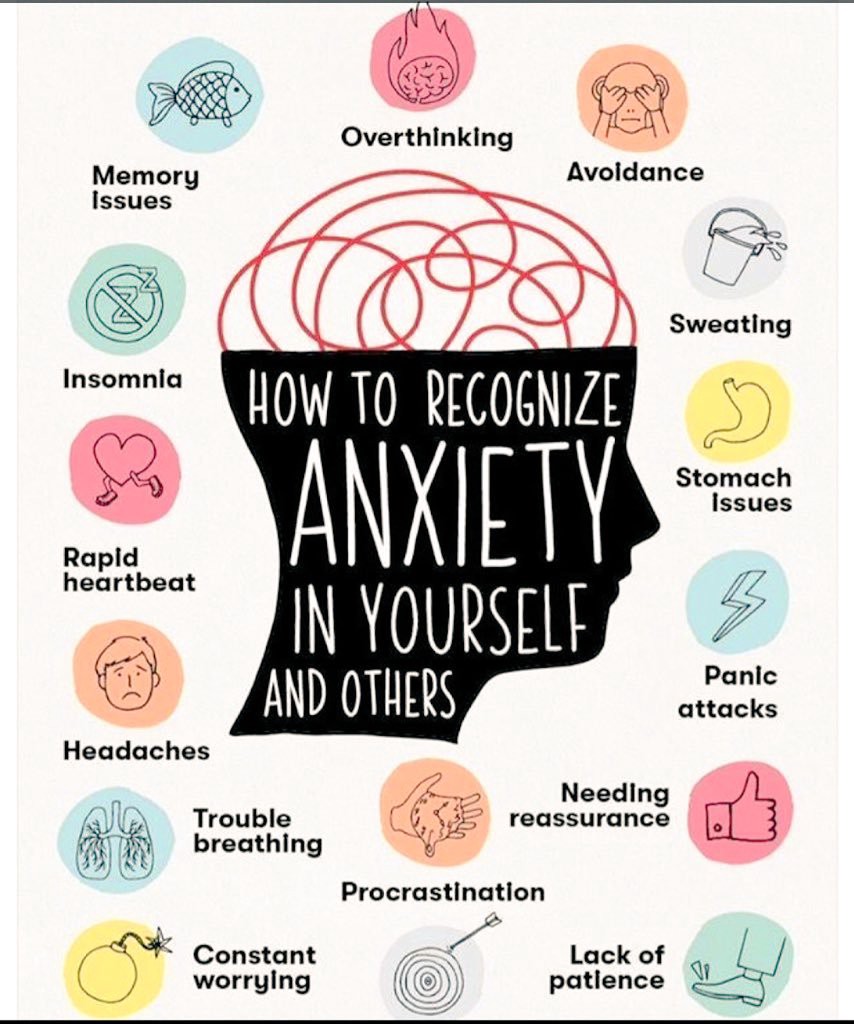
Panic attacks can be the bane of your existence, and can make caring for a loved one or even living your daily life,  extremely daunting. Never knowing when – or why – an attack can hit makes life unpredictable. Searching for a way to control your anxiety is a natural step to take. 

Most anxiety attacks come on suddenly – however, there are usually warning signs. It may only be a few seconds’ warning, but if we try to identify the signs, we may be able to lessen our symptoms. Some people experience chest tightening, lightheadedness, or shaking – all are the immediate signs of a rush of adrenaline. Adrenaline is one of the main identifiable reasons for an anxiety attack.  

As soon as you feel an attack beginning to develop, stop what you are doing. If you’re driving, pull over. If you’re standing or walking, sit down. As the attack begins to flower, take slow, steady breaths. Breathe in for five seconds, and out for five seconds. One of the main things people do when they are experiencing an anxiety attack is to breathe in short, sharp gasps; by slowing and focusing on your breathing, you are distracting your mind and resetting the scales. 

Keep breathing in this fashion. If necessary, close your eyes and tilt your head back so you have a clear throat passage for air to move through. You may also find some form of self-comforting useful; try rubbing the side of your wrist with a fingertip. Remain calm, focus on your breathing and rest until the feeling has passed.