

By Roz Jones
Caring for an aging loved one can change the way you think about your time, your priorities, and the life you want to build. Responsibilities that once seemed manageable may begin to take up more of your day, while plans you had for yourself may need to be adjusted. You may find yourself putting personal goals on hold because your loved one’s needs require your attention. When so much of your energy is directed toward someone else, it can become difficult to imagine what your own next chapter might look like.
Yet caregiving can also reveal things about yourself that you may not have recognized before. You may discover that you are more resourceful than you realized, that you enjoy organizing information, or that you have a natural ability to help others navigate difficult situations. You may learn more about what matters to you, what you value in your relationships, and how you want to spend your time. These discoveries do not make caregiving easy, but they can help you understand how the experience has influenced the person you are becoming.
Your next chapter does not have to be planned all at once. It can begin with recognizing what you have learned, identifying what matters to you now, and giving yourself permission to consider possibilities beyond your current responsibilities.
Recognize What the Experience Has Taught You About Yourself
Caregiving can place you in situations you never expected to manage. You may have needed to learn unfamiliar information, coordinate responsibilities you had never handled before, or find ways to support your loved one through changes that were difficult for both of you. As you responded to these demands, you may have discovered strengths that were not obvious to you before.
Perhaps you learned that you can remain focused when several things need attention. Maybe you became more comfortable asking questions, researching available options, or communicating with people who have different perspectives. You may have discovered that you are patient in situations where you once thought you would become frustrated, or that you can adjust your plans when circumstances change.
It is easy to overlook these discoveries when you are focused on getting through the day. However, taking time to reflect on them can help you understand how the experience has affected you. Consider the situations that required you to learn something new, the responsibilities that initially felt unfamiliar, and the moments when you realized you could handle more than you expected.
You do not need to view every challenge as a gift or find a positive lesson in every difficult experience. Some parts of caregiving may simply have been hard. Still, you can acknowledge those difficulties while recognizing what you have learned about your own abilities along the way.
Revisit the Interests and Goals You Put on Hold
When caregiving becomes a major part of your life, personal interests can gradually move to the background. You may have stopped attending activities you once enjoyed, postponed a class you wanted to take, or delayed plans because you were unsure how your loved one’s needs would affect your availability. Sometimes these adjustments are necessary, and there may be periods when caregiving leaves very little room for anything else.
Even so, it is worth remembering that your interests and goals still matter. You are more than the responsibilities you manage for someone else. There may be parts of your life you want to reconnect with, skills you want to develop, or experiences you would like to make room for when circumstances allow.
Start by thinking about what you enjoyed before caregiving became such a significant part of your routine. Consider whether those interests still appeal to you or whether your priorities have changed. You may want to return to a hobby, spend more time with people who support you, explore a creative outlet, or learn something simply because it interests you.
You do not have to make a major commitment to begin reconnecting with yourself. Depending on your circumstances, you might set aside a short period for an activity you enjoy, research a class, or identify one goal you would like to revisit. The point is not to add more pressure to your schedule. It is to remind yourself that your life contains interests and possibilities beyond caregiving.
Allow Your Priorities to Change
An experience as significant as caregiving can influence what you value. You may become more protective of your time, more intentional about relationships, or more aware of the importance of having reliable support. You may begin to think differently about the kind of work you want to do, how you define success, or what you need to feel supported in your everyday life.
These changes can be difficult to recognize when you are still managing the immediate demands of caregiving. You may be focused on what needs to happen next rather than considering what the experience has taught you about the life you want to lead. Giving yourself time to reflect can help you distinguish between goals you still want to pursue and expectations you may have outgrown.
For example, you might realize that flexibility has become more important to you because you need to balance caregiving with other responsibilities. You may value time with family differently or want to be more intentional about how you spend your available energy. You might decide that a goal still matters but that the timing or approach needs to change.
There is no requirement to return to the exact life you had before caregiving. Your circumstances may be different, and your priorities may have changed. You can use what you know about yourself now to make choices that better reflect your current needs and responsibilities.
Make Room for Possibilities Without Rushing the Process
It can be tempting to think that once you identify what you want next, you should immediately have a plan to make it happen. But caregiving does not always offer a predictable timeline. Your loved one’s needs may change, support may become available or unavailable, and your own circumstances may require adjustments.
Instead of expecting yourself to figure everything out at once, allow your next chapter to develop in manageable steps. You might begin by identifying one area of your life that deserves more attention. Perhaps you want to reconnect with an interest, establish a routine that supports your well-being, explore a new opportunity, or make time for something you have missed.
Consider what is realistic within your current responsibilities. If you cannot pursue a goal fully right now, think about whether there is a smaller step you can take or information you can gather for later. If your caregiving situation leaves very little flexibility, recognizing that limitation is important, too. You do not have to turn every personal aspiration into an immediate action item.
Moving forward can mean making a change today, preparing for a future opportunity, or simply becoming clearer about what you want when circumstances allow. The pace may look different from what you originally imagined, but that does not make your goals less meaningful.
Learn to Separate Your Identity From Your Responsibilities
Caregiving can become such a significant part of your daily life that it begins to shape how you see yourself. You may be the person everyone calls when something needs to be handled, the family member who keeps track of appointments, or the one who knows the details of your loved one’s care. Over time, these responsibilities can become closely connected to your identity.
There is nothing wrong with taking pride in the care you provide. However, it is important to remember that caregiving is a role you fulfill, not the entirety of who you are. You can be a dedicated caregiver while also being a person with interests, relationships, hopes, and goals that deserve attention.
This distinction can become especially important when your caregiving responsibilities change. Perhaps another relative begins helping more consistently, professional support becomes available, or your loved one no longer needs the same level of assistance. Even positive changes can leave you adjusting to a different routine and wondering where your attention should go next.
You may need time to discover what that transition means for you. Rather than treating the change as a demand to immediately fill your schedule with something else, give yourself room to understand how you feel and what you want. Your identity does not disappear when your responsibilities shift, and you do not have to prove your value by remaining needed every moment of the day.
Give Yourself Permission to Grow at Your Own Pace
Growth does not always look like a major accomplishment or a dramatic change in circumstances. Sometimes it means recognizing a need you previously ignored, becoming more comfortable asking for assistance, or learning to make decisions with greater awareness of your own limits. It may mean discovering an interest you want to pursue or realizing that a goal no longer fits the life you want.
Your progress may not be visible to other people. You may still be providing care every day, managing the same responsibilities, and working within the same limitations. That does not mean you cannot be learning about yourself or thinking about what you want for the future.
Try not to measure your next chapter against someone else’s timeline. Other people may be making changes that look exciting from the outside, but their circumstances, responsibilities, and available support may be different from yours. Your path needs to account for the realities of your life, including the care your loved one requires and the resources available to you.
You can acknowledge your current responsibilities without deciding that your personal growth must wait indefinitely. Even small opportunities to reflect, learn, reconnect, or plan can help you maintain a sense of possibility while you continue providing care.
Your Caregiving Experience Is One Part of Your Story
Caring for an aging loved one may influence your life in ways you did not anticipate. It can change your routines, test your patience, introduce new responsibilities, and cause you to reconsider what matters most. Some experiences may leave you proud of what you managed, while others may leave you wishing circumstances had been different.
You do not have to define the experience as entirely positive or entirely negative to recognize its impact. You can appreciate the abilities you developed, acknowledge the things you had to put aside, and be honest about what you need moving forward. All of these parts of your experience can exist together.
As you consider your next chapter, start by paying attention to what you have learned about yourself. Think about the interests you want to revisit, the priorities that have changed, and the opportunities you may want to explore. You do not need to have every answer or know exactly how your circumstances will unfold.
Your responsibilities as a caregiver are important, but they are not the only part of your life that deserves consideration. You are allowed to continue growing, discovering new interests, and imagining possibilities for yourself while caring for someone you love.
If you haven’t read the original article that inspired this series, revisit Why Your Caregiving Skills Are Transferable to Your 9-5. It highlights the abilities caregivers develop while managing the needs of an aging loved one and encourages readers to recognize the value of those experiences. As you reflect on your next chapter, consider how the skills and knowledge you have gained may continue to serve you in different areas of your life.
Tune in to The Caregiver Café Podcast
The Mindset of a Caregiver

For additional insight into the beliefs and expectations that shape your caregiving experience, tune in to The Caregiver Cafe Podcast with Roz Jones: The Mindset of a Caregiver. Take time to reflect on how you approach your responsibilities and where a different perspective may help you recognize your own needs alongside those of your loved one.
Give Yourself a Moment of Grace

For more encouragement through the emotional parts of the caregiving journey, Moments of Grace offers reflections for caregivers navigating responsibility, change, difficult days, and the moments of grace that can still be found along the way.
Preparing for hurricane season?
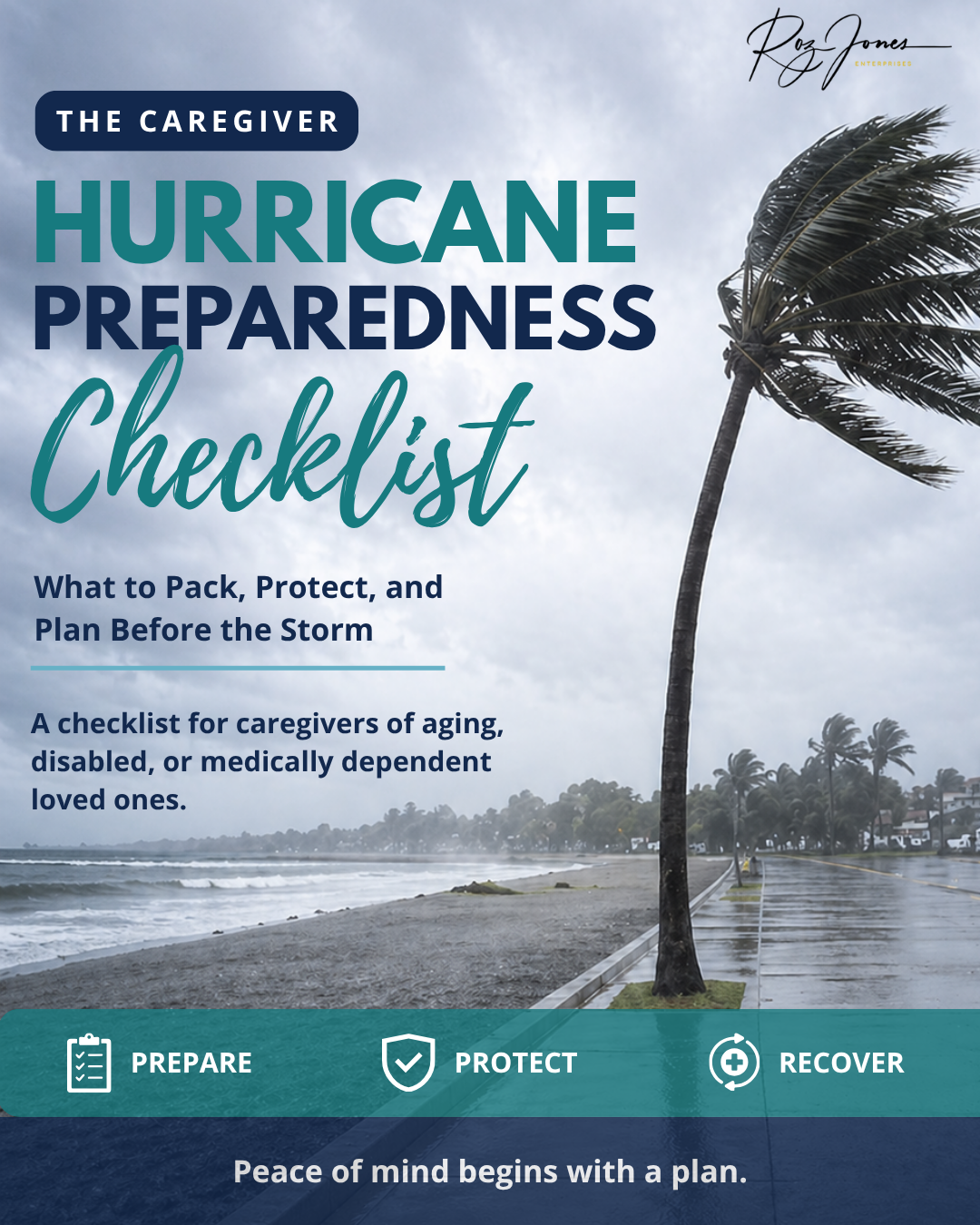
Help organize important emergency-planning considerations for your loved one. Having essential information and preparations in order can support your caregiving responsibilities when unexpected circumstances arise.
Subscribe to The Caregiver Cafe Weekly Newsletter!

1. YOU ARE NOT ALONE: The problems you face as a caregiver are experienced by other caregivers. Knowing that you’re not alone can be comforting.
2. Tools and Resources: Find caregiver stress management tools and gain perspective from other caregiver’s experiences.
3. LEARN TO: Ask for help, accept help when it is offered, and acknowledge yourself on this caregiving journey. Hear from experts on how to balance caregiving responsibilities by taking care of your needs and involving others to help manage the natural stress and isolation of being a caregiver.

