
What to Do When Support Groups Aren’t Your Thing

By Roz Jones

A lot of caregivers try a support group once and walk away unsure it was worth it. Maybe the meeting was held at a time you couldn’t relax, or the room was full of people at a different stage than you. Maybe the conversation drifted into complaints that left you feeling heavier than when you arrived. Then comes the quiet conclusion that support just isn’t for you.

Here’s what I want you to consider: one group that doesn’t fit is not proof that support doesn’t work. It usually means the match was off. Caregiving looks very different depending on who you’re caring for, how long you’ve been at it, and what you need most right now. Support that suits a daughter managing her mother’s dementia may feel irrelevant to a husband caring for a wife after a stroke. Let’s talk about how to find the kind of help that actually fits.

Figure out what kind of support you need

Support tends to fall into a few categories, and most caregivers need more than one at different times. Emotional support means being around people who understand what you’re feeling, whether that’s grief, resentment, or exhaustion. Informational support means learning how things work: how to manage a diagnosis, navigate benefits, or talk with a doctor. Practical support is hands-on, like someone taking a shift, bringing a meal, or driving your loved one to an appointment.

If you’re not sure what you’re missing, ask yourself what would make this week easier. If the answer is “someone to talk to who gets it,” a peer group or counselor may be the right fit. If it’s “I don’t know what to do next,” look for a caregiver class or a social worker. If it’s “I need a few hours back,” respite and help from family or friends matter more than a meeting.

Look for groups that match your situation

General caregiver groups are a good starting point, but specialized ones can feel like a relief. Many organizations focus on a specific condition, such as dementia, Parkinson’s disease, cancer, or stroke. Some groups are built for spouses, others for adult children, and others for caregivers who are still working full time. Meeting times and formats matter, too. If evenings are impossible, ask about a daytime or online option, and if you feel too tired to talk, a group that welcomes listeners can still help.

Several places can point you toward options.

  1. Your local Area Agency on Aging is a good first call, and you can find yours through the Eldercare Locator at eldercare.acl.gov or 1-800-677-1116.
  2. If you’re caring for someone with dementia, the Alzheimer’s Association offers support groups and a 24/7 Helpline at 1-800-272-3900. Hospitals, hospice organizations, senior centers, and faith communities often host groups or can refer you to one.
  3. The Family Caregiver Alliance also offers online resources and groups for caregivers. If you work for a larger employer, ask whether an employee assistance program provides free counseling sessions.

Give a group a fair try, and know when to move on

First meetings can feel awkward, and one session rarely tells you much. If you can, try two or three before you decide. Notice how you feel afterward. Do you leave with a practical idea, a sense of relief, or someone you’d like to talk to again? That’s a good sign. If you consistently leave drained or more anxious, or if the group is dominated by one person or tension you can’t shake, it’s reasonable to look for another. Leaving a group that isn’t working is not failing at support. It’s refining the search.

Choose online groups carefully

Online groups can be a lifeline when you can’t leave the house, live in a rural area, or are awake at 2 a.m. with questions. They also vary widely in quality. A good group has active moderators, clear rules about respect and privacy, and a tone that feels supportive rather than judgmental. Be cautious about sharing details that could identify you or your loved one, and never post financial account information or sensitive medical records.

Treat advice from strangers as personal experience, not as medical guidance. What worked for someone else’s father may not be right for yours, and medication or treatment decisions belong with your loved one’s care team. Be wary, too, of anyone who uses a group to sell products or push expensive services. If a space starts to feel pressured or unkind, you can leave without explaining yourself.

Don’t overlook the people already around you

Formal support is helpful, but the people in your daily life matter, too. The challenge is that they often don’t know what to offer. “Let me know if you need anything” rarely leads to anything, so be specific. Ask a neighbor to pick up groceries on Thursday, a friend to call you on Sunday evenings, or a sibling to handle pharmacy runs. Most people are relieved to be given a clear task, and a small ask is easier to say yes to than a big one.

Telling people what you need can feel uncomfortable, especially if you’re used to being the one who handles everything. It gets easier with practice, and each yes builds a network you can rely on.

Know when it’s more than stress

Caregiving stress is common, but it can also lead to depression or anxiety that deserves professional attention. If you’ve felt persistently hopeless, can’t sleep or eat normally, or have lost interest in things that used to matter to you, talk with your own doctor or a licensed counselor. Many therapists work with caregivers, and some offer telehealth appointments. If you are ever in crisis or having thoughts of harming yourself, call or text 988, the Suicide and Crisis Lifeline, which is available any time. Your health counts in this equation, too.

If you’d like to revisit where this started, read my earlier post, Finding Strength in Support, for more on local organizations and online communities.

Tune in to The Caregiver Café Podcast

It Takes Two

In this episode of The Caregiver Café with Roz Jones, Roz is joined by Christine M. Psalms, mompreneur coach, dance studio owner, wife, mother of four, and caregiver, for a conversation about what it looks like when caregiving begins to shift from something you notice into something you have to actively manage. Christine shares how her journey began when she realized her mother was slowing down, forgetting things, avoiding doctor’s appointments, and showing subtle signs that something had changed.

Give Yourself a Moment of Grace

For more encouragement through the emotional parts of the caregiving journey, Moments of Grace offers reflections for caregivers navigating responsibility, change, difficult days, and the moments of grace that can still be found along the way.

Subscribe to The Caregiver Cafe Weekly Newsletter!

Caregiving can be a roller coaster of ups and downs. The information that you will receive from The Caregiver Cafe Weekly Specials Newsletter will support you as a caregiver. Remember…

1. YOU ARE NOT ALONE: The problems you face as a caregiver are experienced by other caregivers. Knowing that you’re not alone can be comforting. 

2. Tools and Resources:  Find caregiver stress management tools and gain perspective from other caregiver’s experiences.

3. LEARN TO: Ask for help, accept help when it is offered, and acknowledge yourself on this caregiving journey. Hear from experts on how to balance caregiving responsibilities by taking care of your needs and involving others to help manage the natural stress and isolation of being a caregiver. 

Thanksgiving Crafts and Video Calls Everyone Can Enjoy

By Roz Jones

There’s a particular moment that happens in many caregiving households around the holidays. You set out the construction paper, or you prop up the tablet for the family video call, and then you realize it isn’t going to work the way you pictured it. Your mother’s hands are too stiff to hold a pair of scissors. Your father can’t hear a thing over four relatives talking at once. The idea was lovely, but the execution didn’t account for the person it was meant for.

Here’s what I want you to consider: a creative celebration only works when it’s built around what your loved one can see, hear, hold, and enjoy. The good news is that a few small adjustments can turn a frustrating activity into a meaningful one. Thanksgiving falls on Thursday, November 26 this year, which leaves enough time to test your plans before the day arrives.

Set up the video call before the day

A virtual gathering is only as good as the first five minutes, and that’s usually when the trouble shows up. A frozen screen, a muted microphone, or an app your loved one has never used can turn the call into a source of stress for everyone. Do a practice call a few days ahead, ideally with the same device and the same chair your loved one will use on Thanksgiving. Check the sound, the lighting, and whether the screen is large enough for them to see faces comfortably. A tablet on a stand or a laptop is often easier than a phone.

Think about how the call itself will run, too. Large groups talking over each other can be overwhelming, especially for someone with hearing loss or memory changes. Ask relatives to take turns and to say their names when they speak. Keep the call to a manageable length, and consider scheduling it for your loved one’s best time of day instead of when it’s most convenient for everyone else. If the whole family can’t gather at once, several shorter calls with smaller groups often feel warmer than one long one.

Plan something to do together, too, so the call doesn’t turn into a series of awkward pauses. Relatives can cook the same recipe at their own homes, trade a favorite family story, or look through old photos as someone shares their screen. If your loved one has a signature dish, ask for the story behind it rather than the full recipe, and let someone else write down the details.

Choose crafts that match your loved one’s abilities

Crafting can be a lovely way to spend time together, but the right project depends on the person. For someone with arthritis or limited hand strength, look for large-grip tools, easy-to-open glue sticks, and projects that rely on tearing, stamping, or pressing rather than precise cutting. For someone with low vision, choose bold colors, high contrast against the table, and good lighting. For someone with memory loss, keep the steps few and the process more important than the result. It doesn’t matter whether the project looks finished. What matters is that the time together felt good.

Handprint turkeys are a great example. They’re simple and personal, and they work for nearly every ability level, since the hand does most of the work. If pressing a hand into paint isn’t comfortable, trace it instead, or let your loved one decorate a turkey you’ve already outlined. Thanksgiving cards can be adapted the same way: pre-write the message and let them sign it, or let them dictate while you write. Many older adults love sending a card they’ve made themselves, and the person who receives it will likely keep it.

Keep safety in mind

Craft supplies can carry risks that are easy to overlook. If your loved one lives with dementia, they may put small objects in their mouth, so skip beads, buttons, and tiny decorations. Choose non-toxic paints, glues, and markers, and keep scissors, hot glue, and other sharp or hot tools in your hands, not theirs. If you’re using pinecones, leaves, or twigs from outside for a wreath or centerpiece, check them carefully for insects and dampness, and avoid anything with sharp edges or berries that could be mistaken for food. Cover the table, make sure the chair is stable, and keep the space free of clutter so no one trips while reaching for something.

Let your loved one’s contribution be the center

The most meaningful part of any creative project is often the role your loved one plays in it. They don’t need to do the whole centerpiece to feel like it’s theirs. They might choose the colors, arrange the leaves, or tell you where the wreath should hang. A person who has spent decades running a household can still contribute by directing the plan. Asking for their opinion is a form of respect, and it reminds them that their taste and judgment still matter.

Take care of yourself in the planning

It’s easy for the caregiver to become the project manager of every idea, from tech support to craft supplies to coordinating the relatives. If that sounds familiar, delegate. Ask one relative to handle the call invitation, another to mail supplies, and a third to host a short activity during the call. Choose one or two ideas instead of trying them all, and give yourself permission to let a project go if the day isn’t cooperating. A quiet hour looking through photographs can be every bit as meaningful as a craft that took a day of preparation.

If you’d like to revisit where this started, read my earlier post, Crafty and Creative Celebrations for Thanksgiving, for more ideas on celebrating from a distance and crafting together.

Tune in to The Caregiver Café Podcast

It Takes Two

In this episode of The Caregiver Café with Roz Jones, Roz is joined by Christine M. Psalms, mompreneur coach, dance studio owner, wife, mother of four, and caregiver, for a conversation about what it looks like when caregiving begins to shift from something you notice into something you have to actively manage. Christine shares how her journey began when she realized her mother was slowing down, forgetting things, avoiding doctor’s appointments, and showing subtle signs that something had changed.

Give Yourself a Moment of Grace

For more encouragement through the emotional parts of the caregiving journey, Moments of Grace offers reflections for caregivers navigating responsibility, change, difficult days, and the moments of grace that can still be found along the way.

Subscribe to The Caregiver Cafe Weekly Newsletter!

Caregiving can be a roller coaster of ups and downs. The information that you will receive from The Caregiver Cafe Weekly Specials Newsletter will support you as a caregiver. Remember…

1. YOU ARE NOT ALONE: The problems you face as a caregiver are experienced by other caregivers. Knowing that you’re not alone can be comforting. 

2. Tools and Resources:  Find caregiver stress management tools and gain perspective from other caregiver’s experiences.

3. LEARN TO: Ask for help, accept help when it is offered, and acknowledge yourself on this caregiving journey. Hear from experts on how to balance caregiving responsibilities by taking care of your needs and involving others to help manage the natural stress and isolation of being a caregiver. 

Gratitude Circles for the Days That Aren’t Easy

By Roz Jones

Some days, the idea of gathering everyone in a circle to share what we’re thankful for sounds lovely, and also completely out of reach. Your father is tired and confused by late afternoon. Your sister is on edge about who’s doing more. You’re running on four hours of sleep, and the last thing you feel is grateful. Gratitude circles are often described as warm, effortless moments, but for many caregivers the reality is a little messier.

Here’s what I want you to consider: a gratitude circle doesn’t have to be polished to be meaningful. It can be short, quiet, and adapted to what your loved one can manage on a given day. It can also make room for hard feelings instead of covering them up. Let’s talk about how to make this practice work in real caregiving situations, not just ideal ones.

Adapt the circle to your loved one’s abilities

The traditional version assumes everyone can follow a conversation, find the right words, and sit comfortably for a while. Many aging adults can’t, at least not every day, and that doesn’t mean they can’t take part.

If your loved one lives with memory loss or dementia, ask simple, concrete questions instead of open-ended ones. “What was your favorite part of lunch?” or “Who do you like seeing?” is easier to answer than “What are you grateful for?” Photos, a familiar song, or a favorite blanket can help bring feelings to the surface. Avoid quizzing them or correcting what they say. Whatever they offer is the contribution, even if it doesn’t match what you remember. Short, calm sessions in the part of the day when they’re usually at their best tend to go better than a long gathering.

If hearing loss is a factor, reduce background noise, sit facing your loved one, and make sure hearing aids are in and working. If speech has been affected by a stroke or another condition, give extra time, offer choices they can point to or nod at, and let a hand squeeze or a smile count as a turn. If stamina is the issue, fifteen minutes in the morning may be plenty.

Include the people who can’t be in the room

Distance shouldn’t leave anyone out of the circle. A video call works well if someone helps your loved one get set up, and it’s worth testing the technology before the day so no one is struggling with a screen while everyone waits. Relatives who can’t join live can record a short voice or video message to be played during the circle, or mail handwritten notes that you read aloud. Many older adults treasure a physical card they can hold and reread afterward, and it gives them something to return to on harder days.

Set a few ground rules when family tensions are present

Gratitude circles can go sideways when old conflicts are in the room. If you expect strain, say upfront what the circle is for: one person speaks at a time, no one corrects or debates what another person says, and no one uses their turn to settle a score. If a particular relative is likely to turn it into a complaint session, talk with them beforehand and ask them to come with one specific thing they appreciate. A circle can’t resolve every disagreement about care, and it shouldn’t try to. Those conversations need their own time. This one is simply a pause in the middle of them.

Be honest about the hard days

Here’s something I don’t hear said enough: you can be thankful and still be exhausted, frustrated, or grieving in the same moment. Gratitude is not a requirement to ignore difficulty, and it shouldn’t be used to silence anyone who’s struggling. If a family member says they’re grateful and also overwhelmed, that’s honest, and it’s worth hearing.

Specific prompts tend to work better than broad ones. Instead of “What are you thankful for?”, try asking who made your week easier, what small thing went right today, or what moment with your loved one you’d like to remember. These questions give people something concrete to reach for, and they keep gratitude grounded in real life. Research on gratitude practices has linked them to better emotional well-being for many people, though it’s no substitute for support or professional help when caregiving takes a heavier toll.

Make it a rhythm, not an event

A one-time circle can be moving. A recurring one can change the tone of a household. Choose a rhythm you can keep, whether that’s once a week, the first Sunday of the month, or the evening of a doctor’s visit when everyone needs to decompress. Keep it brief and informal enough that it doesn’t become another obligation. Some families write down what’s shared in a notebook, so there’s a record to look back on during harder stretches. National Family Caregivers Month, which falls this November, can be a natural time to begin if you haven’t started yet.

If you’d like to revisit where this idea began, read my earlier post, Soulful Connections: The Art of Gratitude Circles, for the basics of how to set up a circle.

Tune in to The Caregiver Café Podcast

It Takes Two

In this episode of The Caregiver Café with Roz Jones, Roz is joined by Christine M. Psalms, mompreneur coach, dance studio owner, wife, mother of four, and caregiver, for a conversation about what it looks like when caregiving begins to shift from something you notice into something you have to actively manage. Christine shares how her journey began when she realized her mother was slowing down, forgetting things, avoiding doctor’s appointments, and showing subtle signs that something had changed.

Give Yourself a Moment of Grace

For more encouragement through the emotional parts of the caregiving journey, Moments of Grace offers reflections for caregivers navigating responsibility, change, difficult days, and the moments of grace that can still be found along the way.

Subscribe to The Caregiver Cafe Weekly Newsletter!

Caregiving can be a roller coaster of ups and downs. The information that you will receive from The Caregiver Cafe Weekly Specials Newsletter will support you as a caregiver. Remember…

1. YOU ARE NOT ALONE: The problems you face as a caregiver are experienced by other caregivers. Knowing that you’re not alone can be comforting. 

2. Tools and Resources:  Find caregiver stress management tools and gain perspective from other caregiver’s experiences.

3. LEARN TO: Ask for help, accept help when it is offered, and acknowledge yourself on this caregiving journey. Hear from experts on how to balance caregiving responsibilities by taking care of your needs and involving others to help manage the natural stress and isolation of being a caregiver. 

How to Actually Take the Break You Keep Postponing

By Roz Jones

Ask a caregiver when they last had a real break, and you’ll often get a pause, then a laugh, then some version of “I honestly can’t remember.” Most of us don’t skip respite because we don’t believe in it. We skip it because arranging it feels like one more task on a list that’s already too long, and because the guilt shows up the moment we start to imagine someone else covering for us.

Here’s what I want you to consider: respite isn’t a reward you earn after everything else is handled. It’s part of the care plan, the same as the pill organizer and the doctor’s appointments. When the caregiver’s health slips, the whole arrangement is at risk. So let’s talk about how to make a break happen in real life, including what it can cost and who can help.

Why the break keeps getting pushed back

Most of the obstacles are emotional before they’re practical. You may believe no one else knows the routine well enough. Your loved one may have said, more than once, that they don’t want a stranger in the house. Or you may simply dread the work of explaining everything to someone else. These are real concerns, and they’re worth taking seriously rather than brushing aside.

It helps to name which one is actually in your way. If it’s guilt, remember that a rested caregiver is a more patient and attentive one, and your loved one benefits from that. If it’s your loved one’s resistance, the next section matters most. If it’s logistics, the sections after that are for you.

Start the conversation with your loved one early

People are far more open to help when it doesn’t arrive as a surprise. Raise the idea well before you need it, and frame it around what’s true: you want to stay strong enough to keep caring for them. Many aging adults resist outside help because they fear losing independence or becoming a burden, so involve them in choices wherever you can. Let them meet a new aide while you’re still in the room. Try a few hours first, not a weekend. Visit an adult day program together before anyone is signed up.

A short trial run, with you nearby but not hovering, gives both of you information. If it goes well, the next break gets easier. If it doesn’t, you’ve learned what to change without much at stake.

Know your options and what they may cost

Respite comes in several forms, and the right one depends on your loved one’s needs, your budget, and where you live. Family and friends can cover shorter stretches. In-home aides from a licensed agency can fill longer ones, and adult day programs offer a structured, social setting during the workday. Some assisted living communities and nursing homes accept short-term respite stays, though availability and pricing vary widely.

On paying for it, the picture is more limited than many families expect. Original Medicare covers respite care only under the hospice benefit, where it pays for up to five consecutive days of inpatient respite in an approved facility, and the patient generally owes 5 percent of the Medicare-approved amount. Outside of hospice, Medicare generally doesn’t pay for respite or for custodial adult day care. Medicaid programs in many states offer home and community-based services that can include respite, but eligibility and benefits differ by state. Veterans enrolled in VA health care may qualify for respite services through the VA’s caregiver support programs, so ask your local VA caregiver support coordinator.

Two resources are worth a call. Your local Area Agency on Aging can tell you about programs in your community, including services funded through the National Family Caregiver Support Program.

  1. You can reach it through the Eldercare Locator at 1-800-677-1116 or eldercare.acl.gov.
  2. The ARCH National Respite Network also maintains a respite locator at archrespite.org.
  3. If you work, ask your employer about the Family and Medical Leave Act, which can provide up to 12 weeks of unpaid, job-protected leave for eligible employees to care for a parent with a serious health condition. Call ahead to confirm eligibility, because rules and funding vary, and this is the kind of detail worth verifying before you plan around it.

Make it easy for someone else to step in

A one-page care sheet removes a surprising amount of stress for everyone. Include the medication list with times and doses, allergies, the names and numbers of doctors, emergency contacts, daily routines, food preferences, mobility needs, and the small things that make your loved one comfortable, like how they take their coffee or which chair they like. Note what to do if something goes wrong and when to call you versus when to call 911.

Leave the sheet somewhere visible and walk the person through it. The goal is a break where you can actually rest, rather than one where you’re checking your phone every ten minutes.

Make the break count

Once you have the time, resist the urge to spend it all catching up on errands. Errands have their place, but if a break never includes anything restorative, it won’t do much for you. Sleep counts. So does a long lunch with a friend, a medical appointment you’ve been putting off, or an hour with no one needing anything from you.

Smaller breaks matter too, because not every week allows for a long one. A standing hour when a sibling takes over, a short afternoon at an adult day program, or a neighbor sitting with your loved one so you can take a walk can all add up. Regular, modest relief often does more than one big getaway.

Carry the plan forward

Respite works best when it’s scheduled and ordinary, rather than saved for the day you’re running on empty. Put it on the calendar the same way you would any other appointment, and tell the people involved that it’s not optional. National Family Caregivers Month is a good reminder that this is a reasonable thing to ask for, and something worth planning for all year.

If you’d like to revisit where this conversation began, read my earlier post, The Caregiver’s Sanctuary for Self-Care, for more on building self-care into your daily routine.

Tune in to The Caregiver Café Podcast

It Takes Two

In this episode of The Caregiver Café with Roz Jones, Roz is joined by Christine M. Psalms, mompreneur coach, dance studio owner, wife, mother of four, and caregiver, for a conversation about what it looks like when caregiving begins to shift from something you notice into something you have to actively manage. Christine shares how her journey began when she realized her mother was slowing down, forgetting things, avoiding doctor’s appointments, and showing subtle signs that something had changed.

Give Yourself a Moment of Grace

For more encouragement through the emotional parts of the caregiving journey, Moments of Grace offers reflections for caregivers navigating responsibility, change, difficult days, and the moments of grace that can still be found along the way.

Subscribe to The Caregiver Cafe Weekly Newsletter!

Caregiving can be a roller coaster of ups and downs. The information that you will receive from The Caregiver Cafe Weekly Specials Newsletter will support you as a caregiver. Remember…

1. YOU ARE NOT ALONE: The problems you face as a caregiver are experienced by other caregivers. Knowing that you’re not alone can be comforting. 

2. Tools and Resources:  Find caregiver stress management tools and gain perspective from other caregiver’s experiences.

3. LEARN TO: Ask for help, accept help when it is offered, and acknowledge yourself on this caregiving journey. Hear from experts on how to balance caregiving responsibilities by taking care of your needs and involving others to help manage the natural stress and isolation of being a caregiver. 
Thanksgiving Plans That Fit Your Caregiving Life

By Roz Jones

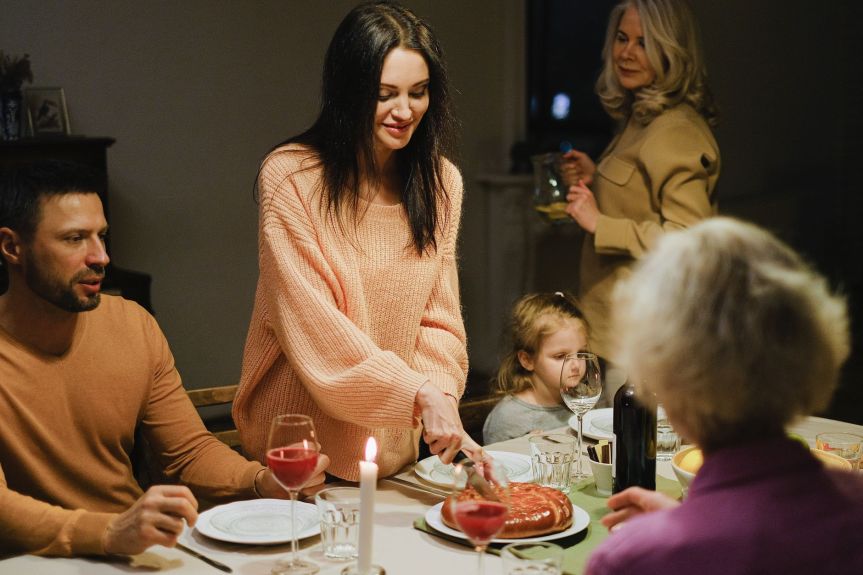
Somewhere around the second hour of Thanksgiving, most caregivers notice the same thing: they haven’t sat down, haven’t finished a plate, and have been quietly watching the clock for someone else’s sake. The holiday is Thursday, November 26, and it’s worth deciding now how you want that day to go, rather than finding out in the middle of it.

Here’s what I want you to consider: a tradition only works if the person at the center of it can actually take part. Cooking together is lovely, but not if your mother tires after fifteen minutes on her feet. A family walk is a great idea, but not if your father is a fall risk on uneven ground. The goal isn’t to scale back the holiday. It’s to build it around the people who will be there, and that includes you.

Plan around your loved one’s best hours

Most aging adults have a time of day when they feel their best, and a time when they don’t. For someone living with dementia, late afternoon can bring increased confusion and agitation, often called sundowning. For someone managing pain or fatigue, a long afternoon gathering can leave them depleted by evening. If you know your loved one is sharpest in the late morning, consider moving the meal to midday, or hold the part of the day that matters most, whether that’s the blessing, the storytelling, or the family photo, during those hours.

Build in a quiet space as well. A bedroom or sitting room where your loved one can rest, away from noise and crowds, lets them step out without feeling like they’re leaving the celebration. Tell guests ahead of time that a break is part of the plan, so nobody takes it personally.

Adjust the menu without losing the meaning

Food is often where tradition lives, and it’s also where caregivers worry most. If your loved one follows a low-sodium, diabetic, or texture-modified diet, you don’t have to cook an entirely separate holiday. Start with the dishes that matter most to them and ask your doctor or a registered dietitian how to adapt those, rather than removing them. Mashed or softened versions of favorite sides, smaller portions of dessert, and lower-sodium gravy can keep familiar flavors on the plate. If swallowing is a concern, ask the care team or a speech-language pathologist what textures are safe before the day arrives.

Food safety deserves a mention, too, because older adults are at higher risk of serious illness from foodborne bacteria. The USDA recommends cooking turkey to a safe internal temperature of 165°F, measured with a food thermometer, and refrigerating perishable food within two hours of serving. Leftovers are generally best eaten within three to four days. If you’re sending plates home with relatives or delivering meals to neighbors, label them with the date and keep them cold until delivery.

Make the space safer and easier to move through

A holiday gathering can quietly turn a familiar home into an obstacle course. Extra chairs, coats on the floor, cords from a slow cooker, and rearranged furniture can all create hazards for someone with a walker, cane, or unsteady gait. Before guests arrive, walk the path your loved one will take from the front door to the table to the bathroom, and clear it. Make sure there’s good lighting along that path, a sturdy chair with arms at the table, and enough room to maneuver a walker or wheelchair. If the gathering is at someone else’s home, call ahead and ask about steps, bathroom access, and seating.

Divide the work before the day, not during it

This is the part many caregivers skip, and it’s often what leads to exhaustion. If you’ve been carrying most of the care, Thanksgiving is not the day to also become the host, cook, cleanup crew, and the one who watches Mom every minute. Have the conversation a couple of weeks ahead. Assign real, specific tasks: someone handles the grocery run, someone picks up your loved one, someone stays beside them during the meal so you can eat sitting down, and someone owns cleanup. Vague offers like “let me know if you need anything” tend to go nowhere. Specific requests usually get a yes.

Out-of-town relatives can help, too. A sibling in another state can order groceries for delivery, coordinate a medication refill, or research a ride service, even if they can’t be at the table.

Give yourself a place in the day

Caregivers often spend the holiday in motion, refilling plates and watching the clock, and then wonder why they feel more depleted than celebratory. Decide in advance what you want from the day. Maybe it’s an uninterrupted conversation with a cousin you rarely see, a quiet walk after dinner, or simply the chance to finish a meal while it’s warm. Tell someone, and ask them to cover for you during that time.

It also helps to give your feelings somewhere to land. The holidays can stir up gratitude and grief in the same afternoon, especially if your loved one has changed or if this is a season of firsts. That’s a normal response, and it deserves some room.

Carry the spirit forward

November is also National Family Caregivers Month, so the days around Thanksgiving are a good time to notice how much caregiving takes, and to ask for what would make it lighter. The best holidays aren’t the ones that look perfect. They’re the ones where the people who matter are included, safe, and cared for, and the caregiver is one of those people.

If you’re still gathering ideas for the day, you can revisit my earlier post, Traditions of the Heart: Thanksgiving with a Twist, for ten more ways to bring heart into the holiday.

Tune in to The Caregiver Café Podcast

It Takes Two

In this episode of The Caregiver Café with Roz Jones, Roz is joined by Christine M. Psalms, mompreneur coach, dance studio owner, wife, mother of four, and caregiver, for a conversation about what it looks like when caregiving begins to shift from something you notice into something you have to actively manage. Christine shares how her journey began when she realized her mother was slowing down, forgetting things, avoiding doctor’s appointments, and showing subtle signs that something had changed.

Give Yourself a Moment of Grace

For more encouragement through the emotional parts of the caregiving journey, Moments of Grace offers reflections for caregivers navigating responsibility, change, difficult days, and the moments of grace that can still be found along the way.

Subscribe to The Caregiver Cafe Weekly Newsletter!

Caregiving can be a roller coaster of ups and downs. The information that you will receive from The Caregiver Cafe Weekly Specials Newsletter will support you as a caregiver. Remember…

1. YOU ARE NOT ALONE: The problems you face as a caregiver are experienced by other caregivers. Knowing that you’re not alone can be comforting. 

2. Tools and Resources:  Find caregiver stress management tools and gain perspective from other caregiver’s experiences.

3. LEARN TO: Ask for help, accept help when it is offered, and acknowledge yourself on this caregiving journey. Hear from experts on how to balance caregiving responsibilities by taking care of your needs and involving others to help manage the natural stress and isolation of being a caregiver.