By Roz Jones
Adding caregiving experience to your resume is an important first step, but eventually someone may ask you to talk about that experience. That is where many caregivers begin second-guessing themselves. You may know exactly how much responsibility you carried while caring for an aging loved one, but explaining that experience in a professional setting can feel different. You may wonder whether an employer will understand the value of what you did or whether they will only see the time you spent away from traditional employment.
In the previous blog, we talked about recognizing caregiving as real experience and identifying the skills that belong on your resume. The next step is learning how to speak about that experience with confidence. You do not have to minimize caregiving, apologize for it, or make it sound like something it was not. You simply need to explain what you learned, what you managed, and how those skills connect to the work you are prepared to do next.
Stop Treating Caregiving Like an Empty Space
Caregivers often describe time away from traditional employment as a gap, but that word can make it sound as though nothing happened during those years. In reality, you may have been coordinating appointments, managing schedules, communicating with healthcare professionals, organizing records, solving problems, handling emergencies, managing household responsibilities, and making decisions under pressure.
That does not mean every caregiving responsibility belongs in every professional conversation. It means you should stop approaching your experience as something that needs to be hidden. If caregiving explains a period away from the workforce, you can acknowledge it clearly and move the conversation toward what you learned and what you are ready to contribute now.
Know the Story You Want to Tell
Before an interview or networking conversation, think about how you want to describe your caregiving experience. You do not need to share every personal detail about your aging loved one’s health or family circumstances. The focus should remain on your role, your responsibilities, and the skills you developed.
You might explain that you stepped away from traditional employment to provide full-time care for a family member and that the experience strengthened your organization, communication, problem-solving, scheduling, and advocacy skills. From there, connect those skills to the position you are pursuing. The goal is not to convince someone that caregiving and traditional employment are exactly the same. The goal is to show that the skills you developed did not disappear simply because they were learned outside of a workplace.
Use Specific Examples Instead of General Statements
Saying that caregiving taught you patience or organization is a start, but examples make those skills easier to understand. Think about situations where you had to coordinate several responsibilities, communicate with different people, adjust quickly when plans changed, or find a solution when something did not go as expected.
You may have coordinated several medical appointments while managing transportation and household responsibilities. You may have created a system for medications, paperwork, or important contacts. You may have communicated with healthcare providers and family members while making sure important information did not get lost. Those examples give employers a clearer picture of how you actually used the skills listed on your resume.
Translate the Experience Into Workplace Language
Caregiving has its own language, and employers may not automatically understand how those responsibilities connect to a professional role. Learning to translate what you did can help make the connection clearer.
Managing an aging loved one’s schedule required organization and time management. Communicating with doctors, insurance representatives, family members, and service providers required communication and coordination. Adjusting quickly when a caregiver canceled, an appointment changed, or an unexpected health concern developed required flexibility and problem-solving. Keeping records organized required attention to detail. Advocating for your loved one required preparation, persistence, and the ability to communicate clearly.
You are not changing the truth about your experience. You are explaining it in language that helps another person understand how those skills can transfer into the workplace.
Decide What You Want to Keep Private
You are allowed to have boundaries around your caregiving story. An interview should not require you to explain every diagnosis, family conflict, financial challenge, or emotional experience connected to caring for your loved one. There may be personal details that shaped your experience but do not need to become part of a professional conversation.
Prepare enough ahead of time that you know where those boundaries are. You can explain why you stepped away from work without sharing private health information. You can discuss the responsibilities you managed without explaining every difficult moment. Keeping parts of your caregiving experience private does not make your story less valuable. It means you are choosing which information is relevant to the conversation.
Do Not Undersell What You Learned
Some caregivers hesitate to describe their abilities confidently because no company hired them to perform those responsibilities. You may think the skills do not count because you learned them while caring for someone you love instead of receiving a paycheck.
The setting does not erase the skill.
If you learned how to organize complicated information, communicate with multiple people, advocate effectively, manage competing priorities, or remain calm while responding to changing circumstances, those abilities are still real. You should be able to talk about them without exaggerating and without dismissing them.
Confidence does not mean pretending caregiving prepared you for every possible job. It means understanding which parts of your experience are relevant and being able to explain them clearly.
Be Ready to Talk About What Comes Next
Employers may also want to know why you are returning to work or why you are pursuing a particular opportunity now. Give some thought to that question before you are sitting in an interview trying to answer it for the first time.
Your answer can focus on the future. You may be ready to return to your career, explore a different field, use skills you developed during caregiving, rebuild financial independence, or pursue work that fits the next stage of your life. Whatever the reason, you do not have to sound apologetic about the path that brought you there.
Caregiving may have interrupted one version of your career, but that does not mean it ended your ability to build another one.
Give Yourself Time to Rebuild Professional Confidence
Returning to professional spaces after spending months or years focused on caregiving can feel unfamiliar. You may question whether your skills are current, whether you still know how to interview, or whether you belong in the room with candidates who followed a more traditional career path.
Confidence may not return all at once. Practice talking about your experience out loud. Review your resume until you are comfortable explaining what is on it. Reconnect with professional contacts when you are ready. Give yourself room to learn what has changed in your industry without treating every new skill you need to learn as evidence that you have fallen behind.
You are not starting from nothing. You are returning with experience that may look different from what you originally planned.
Your Caregiving Story Is Part of Your Experience
Caregiving may not have been the career move you expected to make, but the time you spent caring for an aging loved one still shaped how you communicate, organize, respond to challenges, and manage responsibility. Those experiences can become part of your professional story without becoming the only thing that defines you.
Know what you learned, choose the examples that demonstrate your abilities, protect the details you want to keep private, and practice explaining how those skills connect to where you want to go next. You do not need to apologize for the caregiving chapter of your life. You need to understand how to carry the lessons from that chapter forward.
If you have not read the first blog in this series, go back and read Have You Added Your Caregiving Experience to Your Resume? for more about identifying transferable caregiving skills and incorporating that experience into your resume.
Tune in to The Caregiver Café Podcast
Getting More Done
Caregiving already comes with more than enough responsibilities, which makes it important to have tools that help you manage what needs to be done without feeling like everything has to live in your head. Tune in to The Caregiver Cafe Podcast: Getting More Done for encouragement and practical guidance around staying productive while managing the responsibilities that come with caregiving.
Give Yourself a Moment of Grace

For more encouragement through the emotional parts of the caregiving journey, Moments of Grace offers reflections for caregivers navigating responsibility, change, difficult days, and the moments of grace that can still be found along the way.
Preparing for hurricane season?
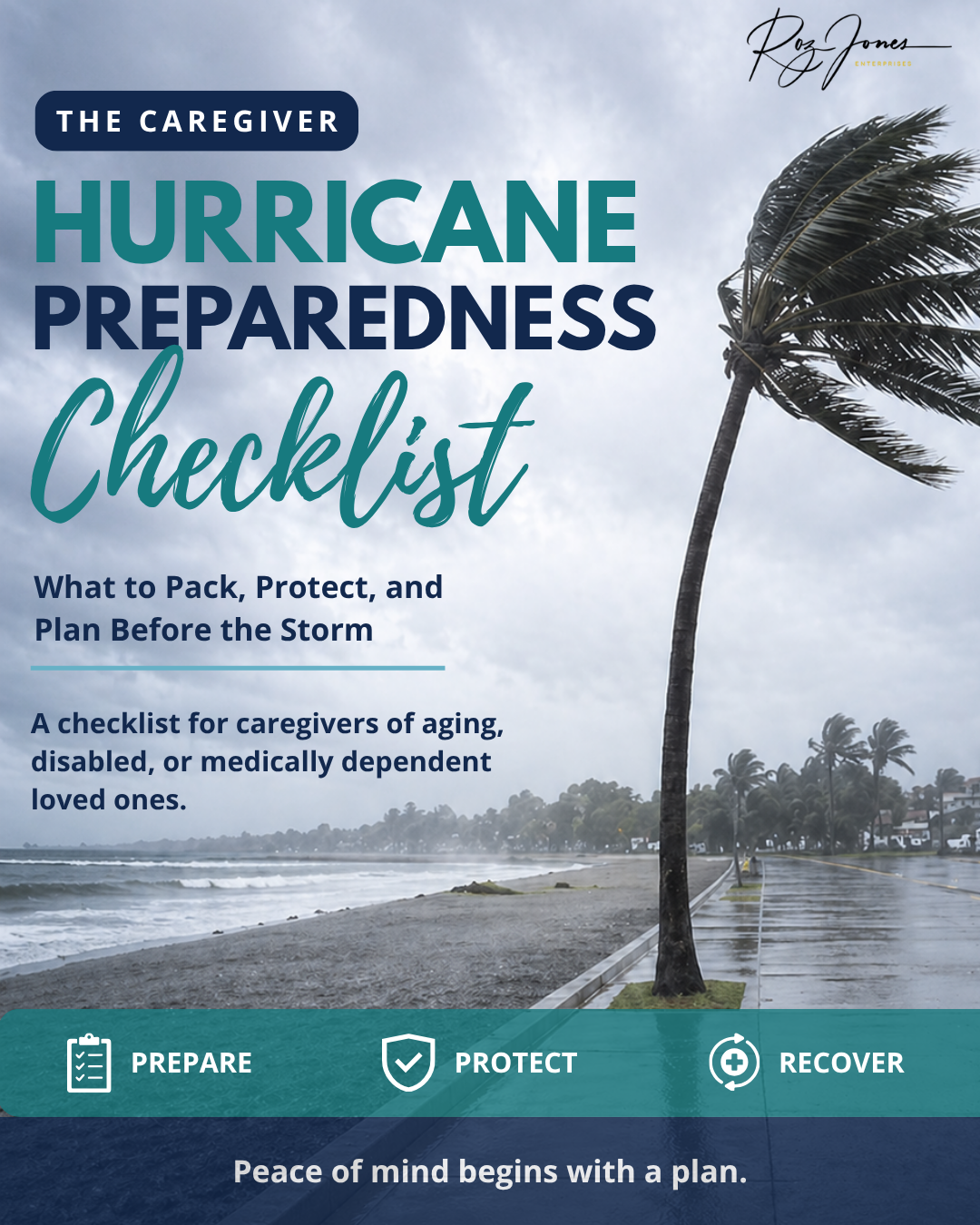
Preventive healthcare is only one part of being prepared as a caregiver. Emergencies can interrupt medications, appointments, transportation, medical equipment, and the routines your aging loved one depends on. The Caregiver Hurricane Preparedness Checklist can help you organize important information, supplies, medications, and caregiving details before severe weather creates another layer of stress.
Subscribe to The Caregiver Cafe Weekly Newsletter!

1. YOU ARE NOT ALONE: The problems you face as a caregiver are experienced by other caregivers. Knowing that you’re not alone can be comforting.
2. Tools and Resources: Find caregiver stress management tools and gain perspective from other caregiver’s experiences.
3. LEARN TO: Ask for help, accept help when it is offered, and acknowledge yourself on this caregiving journey. Hear from experts on how to balance caregiving responsibilities by taking care of your needs and involving others to help manage the natural stress and isolation of being a caregiver.