Factors to Consider When Choosing an Adult Daycare for an Aging Loved One

By Roz Jones

Choosing an adult daycare for an aging loved one can be a challenging decision. It’s essential to consider several factors that can impact your loved one’s comfort, safety, and quality of care. Managed properly, it can even give rise to caregiver guilt. In this article, we will discuss the key factors to consider when selecting an adult daycare for your aging loved one.

First and foremost, location is an essential factor to consider. Look for a daycare center that is close to your loved one’s home or your workplace. This will make it easier for you to drop off and pick up your loved ones and visit them during the day.

The cost of the daycare program is another critical factor to consider. Adult daycare fees can vary greatly depending on the location and services offered. Check if the daycare accepts Medicaid or other insurance programs, as this can significantly reduce out-of-pocket expenses.

When researching adult daycare facilities, pay attention to the services they offer. Some centers provide specialized care for seniors with Alzheimer’s or dementia, while others offer rehabilitation and therapy services. Consider your loved one’s specific needs and choose a daycare center that can meet them.

Staff credentials and licensing are also important factors to consider. Look for daycare centers that have licensed nurses and trained staff. Ask about the staff-to-patient ratio, as this can affect the quality of care your loved one receives.

Finally, touring the daycare center is crucial to making an informed decision. During your visit, ask about the center’s activities, meals, and rules. Observe the staff and how they interact with the patients. Ask about the center’s policies on medication management and emergency procedures.

By considering these factors and asking the right questions, you can choose an adult daycare that provides the best care and support for your aging loved one.

Online Resources for Finding Adult Daycare:

SeniorLiving.org

ElderCare.gov

SeniorNavigator.org


May is Mental Health Month: Take Control of Your Mental Health with 31 Daily Tips

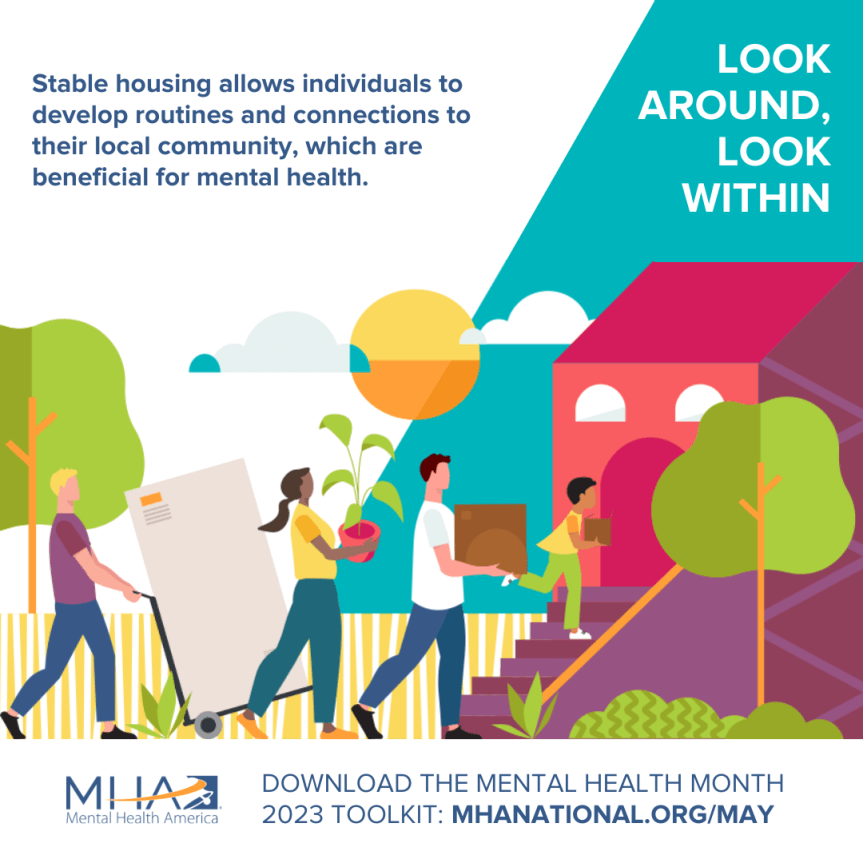
Mental Health America is proud to announce May as Mental Health Month, a time to prioritize and take control of your well-being. This year’s theme is Take Some Time To Look Around, Look Within emphasizing the importance of creating a supportive and uplifting environment for yourself and those around you. To help you achieve this goal, MHA has created a daily calendar with 31 tips for improving your mental health for the month.

Whether you’re struggling with anxiety, depression, stress, or simply looking for ways to maintain a healthy mindset the Mental Health Calendar has something for everyone with each day featuring a different tip or activity to promote self-care, resilience, and positive thinking.

Download the Mental Health Calendar now to learn how to cultivate a more supportive and nurturing environment for yourself and your aging loved one, while also building stronger relationships with those around you!


Stay Connected!

Understanding the Benefits of Adult Daycare for Aging Loved Ones

By Roz Jones

As we age, it becomes increasingly important to maintain our physical and mental well-being. For our aging loved ones who may be living alone or have limited social connections, this can be a challenge. Adult daycare centers can provide a solution, offering a safe and engaging environment where your aging loved one can socialize and participate in activities that promote cognitive and physical health.

One of the primary benefits of adult daycare is socialization. For aging loved ones who live alone or have limited social connections, adult daycare centers offer an opportunity to connect with others and make new friends. Socialization is important for mental and emotional health, as it helps prevent feelings of isolation and depression.

In addition to socialization, adult daycare centers provide a range of activities that promote cognitive stimulation. These activities can include games, puzzles, and other mental exercises that help aging loved ones stay sharp and engaged. Physical activities, such as exercise classes and walking groups, are also often offered, helping aging loved ones maintain their physical health.

Adult daycare centers can also provide respite care for family caregivers. Caring for an aging loved one can be challenging and time-consuming, and many caregivers struggle to find time for their own needs. Adult daycare centers offer a temporary break from caregiving responsibilities, allowing family caregivers to recharge and take care of themselves. As a caregiver, you also want to avoid unfounded caregiver guilt when you do this.

Finally, adult daycare centers can be a great alternative to full-time residential care for aging loved ones. Many aging loved ones prefer to live in their own homes for as long as possible, and adult daycare centers can help make that a reality by providing a safe and engaging environment during the day. This allows aging loved ones to maintain their independence and stay connected to their communities.

Adult daycare centers offer a range of benefits for aging loved ones and their families. Various factors need to be examined when deciding what center to register your aged loved ones. From socialization and cognitive stimulation to respite care and an alternative to full-time residential care, adult daycare can be a great solution for aging loved ones looking to maintain their physical and mental well-being.


May is Mental Health Month: Take Control of Your Mental Health with 31 Daily Tips

Mental Health America is proud to announce May as Mental Health Month, a time to prioritize and take control of your well-being. This year’s theme is Take Some Time To Look Around, Look Within emphasizing the importance of creating a supportive and uplifting environment for yourself and those around you. To help you achieve this goal, MHA has created a daily calendar with 31 tips for improving your mental health for the month.

Whether you’re struggling with anxiety, depression, stress, or simply looking for ways to maintain a healthy mindset the Mental Health Calendar has something for everyone with each day featuring a different tip or activity to promote self-care, resilience, and positive thinking.

Download the Mental Health Calendar now to learn how to cultivate a more supportive and nurturing environment for yourself and your aging loved one, while also building stronger relationships with those around you!


Stay Connected!

The Benefits of Decluttering for Caregivers’ Mental Health

By Roz Jones

As a caregiver, your day-to-day life can be filled with numerous responsibilities, from taking care of your loved one to managing their finances and medication. With so much on your plate, it’s easy for clutter to accumulate, both physically and mentally. However, decluttering your space and your mind can have a significant impact on your overall mental health and well-being.

Here are some benefits of decluttering for caregivers:

  1. Reduces stress and anxiety: Clutter in your environment can make you feel overwhelmed and anxious. Removing unnecessary items from your surroundings can create a sense of calm and peace, allowing you to focus on your caregiving responsibilities with a clear mind.
  1. Increases productivity: A clutter-free environment can improve your focus and boost productivity. You’ll be able to find things easily, and won’t waste time searching for misplaced items.
  1. Improves physical health: A clutter-free space can also improve your physical health by reducing allergens and dust. It can also make it easier to maintain a clean and healthy living environment for your loved one.
  1. Creates a sense of accomplishment: Decluttering can be a challenging task, but completing it can provide a sense of accomplishment and boost your self-esteem. It can also give you a sense of control in a situation where you may feel overwhelmed.
  1. Improves mood and overall well-being: A clean and organized environment can have a positive impact on your mood and overall well-being. It can also improve your loved one’s mood, making it a win-win situation.

Decluttering is an essential aspect of self-care for caregivers. By taking the time to declutter your space and your mind, you can improve your mental health, increase productivity, and create a sense of calm in your caregiving journey.


May is Mental Health Month: Take Control of Your Mental Health with 31 Daily Tips

Mental Health America is proud to announce May as Mental Health Month, a time to prioritize and take control of your well-being. This year’s theme is Take Some Time To Look Around, Look Within emphasizing the importance of creating a supportive and uplifting environment for yourself and those around you. To help you achieve this goal, MHA has created a daily calendar with 31 tips for improving your mental health for the month.

Whether you’re struggling with anxiety, depression, stress, or simply looking for ways to maintain a healthy mindset the Mental Health Calendar has something for everyone with each day featuring a different tip or activity to promote self-care, resilience, and positive thinking.

Download the Mental Health Calendar now to learn how to cultivate a more supportive and nurturing environment for yourself and your aging loved one, while also building stronger relationships with those around you!


Shop The Caregiver Cafe E-Commerce Store!

We founded The Caregiver Cafe Shopify Store with one simple goal: to help you experiment with your passion while at the same time providing amazing prices. We were tired of cookie-cutter stores with lackluster selections, and boring gifts. Instead of offering a huge unoriginal collection, we carefully curate just a few unique pieces perfectly suited for people the taste buds like you.

We focus on items that get you excited about shopping again, as we believe buying online should always be fun!


Subscribe to The Caregiver Cafe Weekly Newsletter!

Caregiving can be a roller coaster of ups and downs. The information that you will receive from The Caregiver Cafe Weekly Specials Newsletter will support you as a caregiver. Remember…

1. YOU ARE NOT ALONE: The problems you face as a caregiver are experienced by other caregivers. Knowing that you’re not alone can be comforting. 

2. Tools and Resources:  Find caregiver stress management tools and gain perspective from other caregivers’ experiences.

3. LEARN TO: Ask for help, accept help when it is offered, and acknowledge yourself on this caregiving journey. Hear from experts on how to balance caregiving responsibilities by taking care of your needs and involving others to help manage the natural stress and isolation of being a caregiver. 

Help! My Baby Daddy is Sick and Needs Me to Take Care of Him!

By Roz Jones

When a former spouse or baby daddy is sick and needs your care, it can be a challenging situation to navigate. Whether you have a good or strained relationship with your ex, providing care for them can be emotionally and mentally taxing. In this blog, we will explore some tips and resources that can help you provide care for your former spouse while taking care of yourself.

Assess Your Ability to Provide Care
Before committing to caregiving, it’s important to assess your ability to provide care. This includes evaluating your availability, financial resources, and emotional capacity. If you have other caregiving responsibilities, work commitments, or health issues, you may need to consider alternative care options such as hiring a professional caregiver or enlisting the help of family and friends. It’s also important to set boundaries and establish clear expectations for caregiving, to prevent burnout and resentment.

Communicate with Your Ex
Open and honest communication is key to successful caregiving. If you have a good relationship with your ex, it may be easier to discuss caregiving arrangements and establish a plan of care. However, if your relationship is strained, it may be helpful to forgive yourself and them. You could also enlist the help of a mediator or therapist to facilitate communication. It’s important to listen to your ex’s needs and preferences and to communicate your own boundaries and limitations.

Seek Support
Caregiving can be emotionally and mentally challenging, and it’s important to seek support when needed. This can include reaching out to friends and family for help, joining a support group for caregivers, or seeking professional counseling. It’s also important to prioritize self-care, such as getting enough rest, exercise, and healthy meals.

Access Resources
There are many resources available for caregivers, including government programs, nonprofit organizations, and community services. These resources can provide financial assistance, respite care, and emotional support. Some resources to consider include the Family Caregiver Alliance, the National Alliance for Caregiving, and the National Council on Aging.

Providing care for a former spouse can be a challenging and complex situation. By assessing your ability to provide care, communicating with your ex, seeking support, and accessing resources, you can provide the best care possible while taking care of your own needs.


May is Mental Health Month: Take Control of Your Mental Health with 31 Daily Tips

Mental Health America is proud to announce May as Mental Health Month, a time to prioritize and take control of your well-being. This year’s theme is Take Some Time To Look Around, Look Within emphasizing the importance of creating a supportive and uplifting environment for yourself and those around you. To help you achieve this goal, MHA has created a daily calendar with 31 tips for improving your mental health for the month.

Whether you’re struggling with anxiety, depression, stress, or simply looking for ways to maintain a healthy mindset the Mental Health Calendar has something for everyone with each day featuring a different tip or activity to promote self-care, resilience, and positive thinking.

Download the Mental Health Calendar now to learn how to cultivate a more supportive and nurturing environment for yourself and your aging loved one, while also building stronger relationships with those around you!


Stay Connected!

5 Technology Strategies for Caregivers to Protect Their Finances

By Roz Jones

As a caregiver, it is crucial to be vigilant about any activity that occurs on your financial accounts. The use of technology can be a helpful component of your plan to keep your money safe. Here are some strategies you can employ to leverage technology to safeguard your accounts:

  1. Change your personal account passwords: If someone knows your passwords, itโ€™s vital that you change them right away.
  1. Monitor accounts with online tools: Many banks and financial services offer apps and online tools that can help you keep an eye on your accounts. These tools can send you automatic alerts about deposits, withdrawals, and other actions. They can also provide a record of any transactions that go against your contract or client agreement, which can be useful if you need to inform your employer, lawyer, or judge. Moreover, these tools can help you manage your own personal finances by monitoring direct deposits, automatic withdrawals, and your balance.
  1. Monitor social media activity: Lawyers and judges often use social media activity to make decisions about financial matters. Therefore, be cautious about what you post on social media, especially posts related to money, your job, your clients, or any other personal information. Remember that once you post something, it can always be copied and saved, so deleting it may not be enough to protect you.
  1. Figure out how to handle joint accounts: Joint accounts are sometimes necessary for regular caregiving expenses, such as housekeeping and home care. Make sure to agree with your client/Loved One on how to handle the joint account and how to use it during the duration of the contract/client agreement. For instance, if your client needs immediate payment for medical care, you can use the joint account to have immediate access to funds. Both of you may need online access to the account, so make use of the technology that your bank offers to monitor it closely.
  1. Be aware of tracking software and tools available: In some cases, it may be necessary to use tracking software and tools if you are using joint accounts. These tools can enable you and/or your client/Loved One to see and monitor financial activities, including those that occur online or on your phone. However, before you opt for this option, consult your employer, or lawyer, or check the local laws first. Also, make sure to keep track of all the software and programs you find on your devices.

Caring for someone or being cared for can be a challenging time for both parties. It’s essential to be proactive about protecting finances while providing care. By following these tips and leveraging technology, you can feel more secure about your finances. Find out how to have secure communication and store data to better protect your finances.


May is Mental Health Month: Take Control of Your Mental Health with 31 Daily Tips

Mental Health America is proud to announce May as Mental Health Month, a time to prioritize and take control of your well-being. This year’s theme is Take Some Time To Look Around, Look Within emphasizing the importance of creating a supportive and uplifting environment for yourself and those around you. To help you achieve this goal, MHA has created a daily calendar with 31 tips for improving your mental health for the month.

Whether you’re struggling with anxiety, depression, stress, or simply looking for ways to maintain a healthy mindset the Mental Health Calendar has something for everyone with each day featuring a different tip or activity to promote self-care, resilience, and positive thinking.

Download the Mental Health Calendar now to learn how to cultivate a more supportive and nurturing environment for yourself and your aging loved one, while also building stronger relationships with those around you!


Shop The Caregiver Cafe E-Commerce Store!

We founded The Caregiver Cafe Shopify Store with one simple goal: to help you experiment with your passion while at the same time providing amazing prices. We were tired of cookie-cutter stores with lackluster selections, and boring gifts. Instead of offering a huge unoriginal collection, we carefully curate just a few unique pieces perfectly suited for people the taste buds like you.

We focus on items that get you excited about shopping again, as we believe buying online should always be fun!


In the latest episode of The Caregiver Cafe Podcast, the focus is on helping Caregivers support their aging loved one through life’s transitions. Tune in to gain valuable insight with Dr. Jacob Kendall about how patterns can affect our lifespan. By recognizing and understanding our patterns, we can increase our life expectancy and make positive changes in our lives. Don’t miss out on this informative and inspiring episode!

Patterns have a great influence on the life you live and if you are keen to recognize your patterns you can increase your life expectancy and change your life.

In this episode, I talk to Dr. Jacob and patterns and their influence on how long and short we live.

Subscribe to The Caregiver Cafe Weekly Newsletter!

Caregiving can be a roller coaster of ups and downs. The information that you will receive from The Caregiver Cafe Weekly Specials Newsletter will support you as a caregiver. Remember…

1. YOU ARE NOT ALONE: The problems you face as a caregiver are experienced by other caregivers. Knowing that you’re not alone can be comforting. 

2. Tools and Resources:  Find caregiver stress management tools and gain perspective from other caregiver’s experiences.

3. LEARN TO: Ask for help, accept help when it is offered, and acknowledge yourself on this caregiving journey. Hear from experts on how to balance caregiving responsibilities by taking care of your needs and involving others to help manage the natural stress and isolation of being a caregiver.