Love Still Has a Language

By Roz Jones

Alzheimer’s disease can change the way a loved one speaks, remembers, responds, and participates in daily life. But it does not take away their need for connection.

Love still has a language.

Sometimes that language is a familiar song. Sometimes it is a gentle hand on the shoulder. Sometimes it is a calm voice, a warm smile, or sitting quietly beside someone who no longer has the words they used to have.

For caregivers supporting aging loved ones with Alzheimer’s, this is one of the hardest lessons to learn: communication may change, but connection can still remain.

That connection may not look the way it once did. Conversations may become shorter. Stories may repeat. Names may be forgotten. Questions may come again and again. But the person in front of you still deserves dignity, patience, and presence.

According to the Alzheimer’s Association’s 2026 Facts and Figures, an estimated 7.4 million Americans age 65 and older are living with Alzheimer’s dementia. More than 12 million family members and other unpaid caregivers are providing care for people living with Alzheimer’s or other dementias. This is not a rare caregiving experience. It is a growing reality for families across the country.

Communication Is More Than Conversation

Many caregivers feel grief when conversation begins to change. A loved one who once gave advice, told stories, laughed easily, or remembered family details may now struggle to find the right words.

That grief is real.

But communication is bigger than conversation.

A person with Alzheimer’s may communicate through facial expressions, body language, restlessness, silence, tears, agitation, or withdrawal. A repeated question may not be about the answer. It may be about needing reassurance. A sudden mood change may not be “difficult behavior.” It may be fear, pain, confusion, hunger, fatigue, or overstimulation.

The Alzheimer’s Association reminds families that Alzheimer’s gradually affects a person’s ability to communicate and that communication requires patience, understanding, and good listening skills.

Caregivers must learn to listen differently.

Not just to the words.

To the person.

Tone Can Become a Form of Care

A caregiver’s tone matters deeply.

As Alzheimer’s progresses, a loved one may not understand every word being said, but they may still sense frustration, impatience, anger, or tension. A rushed voice can increase fear. A sharp tone can create resistance. A tense face can make the person feel unsafe, even if the caregiver is trying to help.

The National Institute on Aging encourages caregivers to make eye contact, call the person by name, and pay attention to tone, volume, facial expressions, and body language when communicating with someone who has Alzheimer’s.

This does not mean caregivers must be perfect. Caregivers are human. They get tired. They get overwhelmed. They have moments when patience is thin.

But tone should be treated as part of the care plan.

A calm voice can help settle confusion.
A gentle expression can reduce fear.
A slower pace can make the moment easier to process.
A respectful approach can help preserve dignity.

Love has a language, and sometimes it sounds like calm.

Simple Words Can Bring More Peace

Alzheimer’s can make it harder for the brain to process long explanations, multiple choices, or fast instructions. This is why caregivers may need to simplify communication without making the loved one feel talked down to.

Instead of several instructions at once, offer one step.

Instead of open-ended questions that may feel overwhelming, offer simple choices.

Instead of correcting every mistaken detail, focus on comfort and connection.

For example, rather than saying, “You already asked me that three times,” try, “We are leaving at 2:00, and I will be with you.”

Rather than saying, “That is not what happened,” try, “I know this feels confusing. You are safe.”

Rather than asking, “What do you want to eat?” try, “Would you like soup or a sandwich?”

Simple does not mean childish.

Simple means clear.

And clarity is kindness when the brain is already working hard.

Reassurance Often Matters More Than Correction

One of the hardest adjustments in Alzheimer’s caregiving is learning when not to argue.

A loved one may insist they need to go home, even if they are already home. They may ask for someone who has passed away. They may become upset about an appointment that is not happening. They may remember something differently.

The instinct may be to correct.

But correction is not always comfort.

Sometimes the better response is reassurance. The caregiver can acknowledge the feeling without feeding the confusion.

“I can see you are worried.”
“You are safe here.”
“I am staying with you.”
“Let’s sit together for a minute.”
“We will take care of it.”

The goal is not to win the conversation. The goal is to reduce distress.

Caregivers do not have to correct every detail to care well. Sometimes love chooses peace over proving a point.

Familiar Routines Can Speak

For people living with Alzheimer’s, familiar routines can become a language of safety.

A morning prayer.
A favorite chair.
The same blanket.
A familiar playlist.
A cup of tea at the same time each day.
A walk after breakfast.
A photo album on the table.
A favorite lotion or scent.
A repeated phrase that brings comfort.

Routines can help reduce confusion because they create rhythm. They tell the body and mind, “This is familiar. This is safe.”

Caregivers can use routines to support communication. A loved one may not always understand an explanation, but they may respond to familiar patterns. They may settle when music begins. They may participate when a task feels known. They may smile at a familiar voice, even when words are limited.

This is why caregivers should pay attention to what still brings recognition, comfort, and calm.

Those details matter.

Connection Can Be Built Through the Senses

As words become harder, the senses can help keep connection alive.

Music can reach memory in powerful ways.
Photos can invite recognition.
Touch can offer reassurance.
Food can bring comfort.
A familiar scent can stir emotion.
A walk outside can calm the nervous system.
A favorite hymn, prayer, or poem can create a moment of peace.

Caregivers may need to shift from trying to have the “old” conversation to creating a meaningful moment in the present.

That may mean sitting together without forcing words.

It may mean singing instead of asking questions.

It may mean holding a hand instead of explaining again.

It may mean letting the loved one fold towels, stir batter, water plants, or look through family pictures.

Connection does not have to be complicated to be meaningful.

Caregivers Need Support for the Emotional Weight

Alzheimer’s caregiving is not only physical care. It is emotional care.

It can be heartbreaking to repeat the same answer all day. It can be exhausting to stay calm through confusion. It can be painful when a loved one no longer recognizes you. It can feel lonely when other family members do not understand how much the communication changes affect daily life.

Caregivers need support too.

Support groups, respite care, family care planning, dementia education, counseling, church support, and trusted community can help caregivers carry the weight with more support and less isolation.

The earlier public conversation around Rosalynn Carter’s dementia diagnosis reminded many families that dementia care reaches far beyond the person diagnosed. Mrs. Carter passed away on November 19, 2023, at age 96, and The Carter Center remembered her as a longtime champion of mental health, caregiving, and women’s rights.

Her legacy still reminds us that caregiving deserves attention, resources, and community.

No caregiver should have to walk this road alone.

Family Members Must Learn the New Language Too

One caregiver cannot be the only person learning how to communicate.

If an aging loved one has Alzheimer’s, the family needs shared understanding. Adult children, spouses, siblings, grandchildren, home care aides, and close support people should learn how communication may change and how to respond with patience.

This helps reduce arguments, frustration, and hurt feelings.

It also helps loved ones stay included.

Family members need to understand that the person living with Alzheimer’s may repeat questions, lose track of conversations, struggle with names, misread tone, or become overwhelmed by too much noise. These changes are not personal attacks. They are part of the disease process.

A prepared family can respond with more compassion.

A confused family may respond with resentment.

Education matters.

Care Planning Protects Connection

Families often wait until communication has declined significantly before talking about care preferences, routines, safety, respite, and support. But waiting makes everything harder.

Care planning should begin while the loved one can still share preferences as much as possible.

What routines bring comfort?
Who does the loved one trust?
What music, prayers, foods, or activities are meaningful?
What environments increase agitation?
What helps calm them?
What family roles need to be clear?
What support does the primary caregiver need?

These questions are not small.

They help protect dignity.

They help reduce confusion.

They help the family respond with more consistency.

And consistency is part of love’s language too.

Love Still Has a Language

Alzheimer’s may change the words, but it does not erase the person.

They still need to feel safe.
They still need to be treated with respect.
They still need familiar voices.
They still need patience.
They still need comfort.
They still need connection.

Caregivers may have to learn a new way to listen. Families may have to learn a new way to respond. The relationship may change, but love can still show up.

In the first blog, we talked about the power of connection, community, and conversation for Alzheimer’s caregivers. This follow-up is a reminder that even as words change, love still has a language. That language may be gentler, slower, quieter, and more intentional, but it can still reach the person you love.

If you missed the first blog, you can read it here: The Power of Connection, Community, and Conversation for Alzheimer’s Caregivers.

Caregivers, do not measure connection only by perfect conversation.

Measure it by peace.
By presence.
By patience.
By dignity.
By the moments when your loved one feels safe because you are near.

That is love speaking.

Give Yourself a Moment of Grace

If your spirit needs encouragement along the way, purchase Moments of Grace: A 40-Day Caregiver Prayer Journal on Amazon.

This journal was created to help caregivers pause, breathe, reflect, and find strength in the middle of the caregiving journey.

Purchase Moments of Grace today and give yourself permission to breathe in the middle of the caregiving journey.

Prepare Before the Emergency Comes

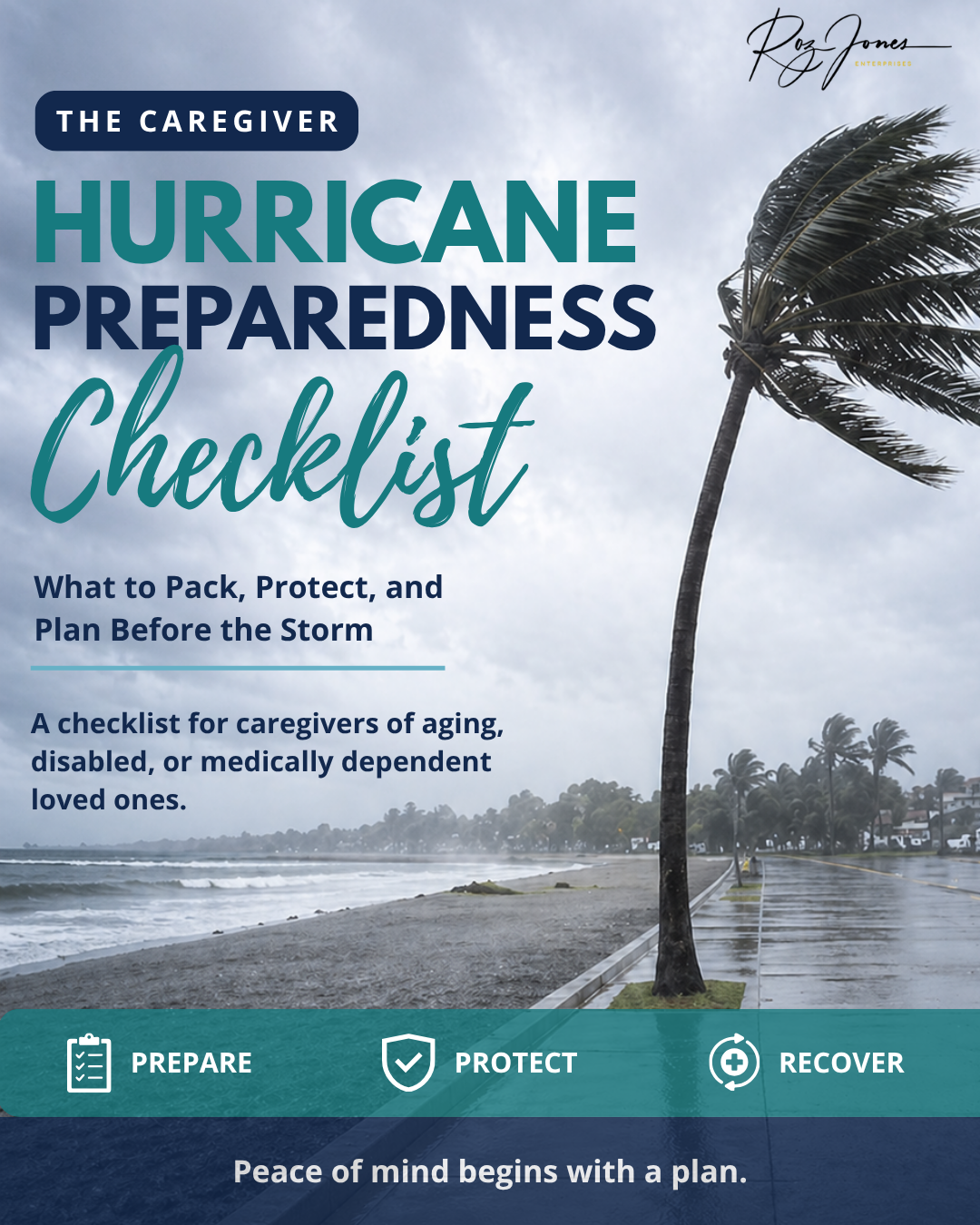
The Caregiver Hurricane Preparedness Checklist.

The Caregiver Hurricane Preparedness Checklist helps caregivers organize important documents, medications, emergency contacts, evacuation needs, medical equipment details, and care instructions before an emergency happens.

For only $1.99, this checklist gives you a simple starting point so you are not trying to gather everything during a storm, power outage, hospitalization, or sudden change in your loved one’s care.

Purchase the Caregiver Hurricane Preparedness Checklist for $1.99 today and take one more step toward peace of mind.

Need Help Sorting Through the Care Plan?

Roz Jones is a dedicated caretaker turned CEO with over a decade of experience in helping families care for and make decisions for loved ones and their legacies.Roz is a compassionate, innovative healthcare industry leader.

Book a Family Care Planning Session with Roz Jones and get support creating a caregiving plan that is clear, compassionate, and realistic.

Together, we can talk through what is working, what is becoming too heavy, and what boundaries need to be strengthened so you can continue to care without losing yourself in the process.

Subscribe to The Caregiver Cafe Weekly Newsletter!

Caregiving can be a roller coaster of ups and downs. The information that you will receive from The Caregiver Cafe Weekly Specials Newsletter will support you as a caregiver. Remember…

1. YOU ARE NOT ALONE: The problems you face as a caregiver are experienced by other caregivers. Knowing that you’re not alone can be comforting. 

2. Tools and Resources:  Find caregiver stress management tools and gain perspective from other caregiver’s experiences.

3. LEARN TO: Ask for help, accept help when it is offered, and acknowledge yourself on this caregiving journey. Hear from experts on how to balance caregiving responsibilities by taking care of your needs and involving others to help manage the natural stress and isolation of being a caregiver. 
Pride Won’t Protect Your Prostate

By Roz Jones

Pride has kept too many men quiet.

Quiet about pain.
Quiet about changes in their body.
Quiet about bathroom issues.
Quiet about fear.
Quiet about appointments they know they need to make.

But pride cannot protect a man’s health.

It cannot read a lab result.
It cannot explain a symptom.
It cannot replace a doctor’s visit.
It cannot catch a concern early.
It cannot give a family peace of mind.

For caregivers supporting aging fathers, husbands, brothers, uncles, grandfathers, partners, or male loved ones, this conversation matters. Men’s health is not just a private issue. When a man’s health begins to change, the whole family often feels it. Caregiving becomes harder when symptoms are ignored, appointments are delayed, and concerns are hidden until they become urgent.

This is why families need to talk about prostate and testicular health with honesty, respect, and wisdom.

Silence Can Delay Care

Many men were raised to believe that strength means staying quiet. They may avoid talking about symptoms because they feel embarrassed, uncomfortable, or afraid of what a doctor might find.

Some men minimize their symptoms.

Some say, “I’m fine.”

Some joke their way out of the conversation.

Some get defensive when a loved one asks questions.

But silence does not make a health issue disappear. It only gives the issue more time to grow.

Prostate cancer screening is not a one-size-fits-all decision. According to the CDC, men ages 55 to 69 should make an individual decision about prostate cancer screening with a PSA blood test after talking with their doctor about the possible benefits and harms. The CDC also states that men 70 and older should not be routinely screened for prostate cancer.

That means the right next step is not guessing. The right next step is a conversation with a healthcare provider.

Prostate Health Is Not Something to Guess About

A prostate concern may not always announce itself loudly. Sometimes the signs show up in everyday routines.

A man may begin getting up more often at night to use the bathroom. He may have trouble starting urination. He may notice a weaker urine stream. He may feel pain, burning, pressure, or discomfort. There may be blood in the urine or semen. He may complain of pain in the back, hips, or pelvis that does not go away.

These symptoms do not automatically mean cancer. They can be connected to other prostate conditions, infection, medication side effects, or aging-related changes. But they should not be ignored.

Caregivers do not need to diagnose the problem. That is not the caregiver’s job.

The caregiver’s role is to notice changes, encourage follow-up, help prepare for appointments, and support the loved one in getting answers.

Screening Decisions Should Be Personal

A PSA blood test measures prostate-specific antigen in the blood. A higher PSA level can be connected to prostate cancer, but it can also be caused by other conditions. This is why results need to be interpreted by a healthcare provider.

The American Cancer Society recommends that men at average risk begin talking with a healthcare provider about prostate cancer screening at age 50 if they are expected to live at least 10 more years. Men at higher risk, including Black men and men with a father or brother diagnosed with prostate cancer before age 65, should have that conversation at age 45. Men with more than one close relative diagnosed at an early age should discuss screening at age 40.

Caregivers can help by making sure family history is not left out of the conversation. If a father, brother, uncle, or grandfather had prostate cancer, that information matters.

A man should not have to walk into the doctor’s office unprepared. Families can help him write down questions, symptoms, medications, and family history before the appointment.

Testicular Health Still Matters

Testicular cancer is more common in younger and middle-aged men, but testicular health still matters across adulthood. Lumps, swelling, heaviness, pain, tenderness, or changes in the size or feel of the testicles or scrotum should be brought to a healthcare provider.

The National Cancer Institute states that there is no standard or routine screening test for testicular cancer. That makes awareness especially important. Men need to know what is normal for their bodies and report changes promptly.

For caregivers, this requires sensitivity. Testicular health is personal. Not every man will want to talk about it openly with family. But the family can still create an environment where health concerns are not treated with shame.

A simple message can go a long way:

“If something feels different, please get it checked.”

Pride Can Sound Like an Excuse

Pride does not always sound loud. Sometimes it sounds reasonable.

“I’ll go next month.”
“It’s probably nothing.”
“I don’t want to talk about that.”
“I’m too old for all that.”
“I don’t need anybody checking me.”
“I’ve been fine this long.”
“I don’t want to know.”

Caregivers may hear these responses often.

It is important not to shame the man or make him feel like a child. But it is also important not to let avoidance lead the care plan.

Respect and accountability can exist in the same conversation. A caregiver can honor a loved one’s dignity while still saying, “I hear you, but I think this is important enough to bring up with your doctor.”

That kind of honesty can be lifesaving.

Caregivers Can Support Without Taking Over

Supporting a man’s health does not mean controlling every decision. It means helping remove barriers that keep him from getting care.

That may include scheduling the appointment, arranging transportation, helping gather insurance information, writing down symptoms, or offering to sit in the waiting room while he speaks with the doctor privately.

Some men may prefer to talk to a male provider. Some may want a spouse present. Some may want privacy. Some may need encouragement but not an audience.

Caregivers should ask what kind of support would actually help.

The goal is not to embarrass him.

The goal is to help him follow through.

Health Conversations Should Not Wait for Crisis

Families often wait until something becomes serious before they talk honestly about health. By then, stress is high and options may feel limited.

Men’s health conversations need to happen earlier.

They need to happen around annual wellness visits, medication reviews, family care planning, and changes in daily routines. They need to include questions about urinary changes, pain, family history, screenings, sexual health, and emotional well-being.

These are not always easy conversations, but they are necessary.

When families make health conversations normal, it becomes easier for loved ones to speak up before a concern becomes an emergency.

Prevention Is Bigger Than One Screening

Screening is important, but it is not the whole picture.

Men also need daily habits that support long-term health. Regular movement, balanced meals, hydration, sleep, stress management, and routine medical care all matter. Limiting tobacco and excessive alcohol use can also support better health outcomes.

For aging loved ones, prevention may also mean managing chronic conditions such as diabetes, high blood pressure, heart disease, kidney disease, or obesity. These conditions can affect energy, mobility, urinary health, sexual health, and overall quality of life.

Caregivers can support healthier routines without turning every meal or appointment into a fight.

Start with what is realistic.

A short walk.
A glass of water.
A doctor’s appointment.
A written symptom list.
A conversation about family history.
A reminder to ask about PSA testing.

Small steps still count.

A Strong Man Still Needs Care

Strength is not proven by avoiding the doctor.

Strength is not proven by ignoring symptoms.

Strength is not proven by pretending nothing is wrong.

A strong man can ask questions. A strong man can get checked. A strong man can talk to his doctor. A strong man can take his health seriously because the people who love him still need him present.

Caregivers can help shift the message from fear to responsibility.

This is not about weakness.

This is about wisdom.

Keep the Conversation Going

Pride may make a man delay care, but love can help open the door.

Aging fathers, husbands, brothers, uncles, grandfathers, partners, and male loved ones deserve dignity. They also deserve honest support when their health needs attention.

In the first blog, we talked about testicular and prostate screenings, what they may involve, and why men should not ignore this part of their health. This follow-up is a reminder that awareness does not stop with one appointment. It continues through family conversations, routine checkups, symptom awareness, and the courage to ask questions.

If you missed the first blog, you can read it here: The Ball is In Your Court: Unveiling the Secrets of Testicular and Prostate Health.

Pride will not protect the men we love.

But preparation, honest conversations, and timely care can make a difference.

Give Yourself a Moment of Grace

If your spirit needs encouragement along the way, purchase Moments of Grace: A 40-Day Caregiver Prayer Journal on Amazon.

This journal was created to help caregivers pause, breathe, reflect, and find strength in the middle of the caregiving journey.

Purchase Moments of Grace today and give yourself permission to breathe in the middle of the caregiving journey.

Prepare Before the Emergency Comes

The Caregiver Hurricane Preparedness Checklist.

The Caregiver Hurricane Preparedness Checklist helps caregivers organize important documents, medications, emergency contacts, evacuation needs, medical equipment details, and care instructions before an emergency happens.

For only $1.99, this checklist gives you a simple starting point so you are not trying to gather everything during a storm, power outage, hospitalization, or sudden change in your loved one’s care.

Purchase the Caregiver Hurricane Preparedness Checklist for $1.99 today and take one more step toward peace of mind.

Need Help Sorting Through the Care Plan?

Roz Jones is a dedicated caretaker turned CEO with over a decade of experience in helping families care for and make decisions for loved ones and their legacies.Roz is a compassionate, innovative healthcare industry leader.

Book a Family Care Planning Session with Roz Jones and get support creating a caregiving plan that is clear, compassionate, and realistic.

Together, we can talk through what is working, what is becoming too heavy, and what boundaries need to be strengthened so you can continue to care without losing yourself in the process.

Subscribe to The Caregiver Cafe Weekly Newsletter!

Caregiving can be a roller coaster of ups and downs. The information that you will receive from The Caregiver Cafe Weekly Specials Newsletter will support you as a caregiver. Remember…

1. YOU ARE NOT ALONE: The problems you face as a caregiver are experienced by other caregivers. Knowing that you’re not alone can be comforting. 

2. Tools and Resources:  Find caregiver stress management tools and gain perspective from other caregiver’s experiences.

3. LEARN TO: Ask for help, accept help when it is offered, and acknowledge yourself on this caregiving journey. Hear from experts on how to balance caregiving responsibilities by taking care of your needs and involving others to help manage the natural stress and isolation of being a caregiver.