
Turning Your Caregiving Experience Into Your Career Story

By Roz Jones

Adding caregiving experience to your resume is an important first step, but eventually someone may ask you to talk about that experience. That is where many caregivers begin second-guessing themselves. You may know exactly how much responsibility you carried while caring for an aging loved one, but explaining that experience in a professional setting can feel different. You may wonder whether an employer will understand the value of what you did or whether they will only see the time you spent away from traditional employment.

In the previous blog, we talked about recognizing caregiving as real experience and identifying the skills that belong on your resume. The next step is learning how to speak about that experience with confidence. You do not have to minimize caregiving, apologize for it, or make it sound like something it was not. You simply need to explain what you learned, what you managed, and how those skills connect to the work you are prepared to do next.

Stop Treating Caregiving Like an Empty Space

Caregivers often describe time away from traditional employment as a gap, but that word can make it sound as though nothing happened during those years. In reality, you may have been coordinating appointments, managing schedules, communicating with healthcare professionals, organizing records, solving problems, handling emergencies, managing household responsibilities, and making decisions under pressure.

That does not mean every caregiving responsibility belongs in every professional conversation. It means you should stop approaching your experience as something that needs to be hidden. If caregiving explains a period away from the workforce, you can acknowledge it clearly and move the conversation toward what you learned and what you are ready to contribute now.

Know the Story You Want to Tell

Before an interview or networking conversation, think about how you want to describe your caregiving experience. You do not need to share every personal detail about your aging loved one’s health or family circumstances. The focus should remain on your role, your responsibilities, and the skills you developed.

You might explain that you stepped away from traditional employment to provide full-time care for a family member and that the experience strengthened your organization, communication, problem-solving, scheduling, and advocacy skills. From there, connect those skills to the position you are pursuing. The goal is not to convince someone that caregiving and traditional employment are exactly the same. The goal is to show that the skills you developed did not disappear simply because they were learned outside of a workplace.

Use Specific Examples Instead of General Statements

Saying that caregiving taught you patience or organization is a start, but examples make those skills easier to understand. Think about situations where you had to coordinate several responsibilities, communicate with different people, adjust quickly when plans changed, or find a solution when something did not go as expected.

You may have coordinated several medical appointments while managing transportation and household responsibilities. You may have created a system for medications, paperwork, or important contacts. You may have communicated with healthcare providers and family members while making sure important information did not get lost. Those examples give employers a clearer picture of how you actually used the skills listed on your resume.

Translate the Experience Into Workplace Language

Caregiving has its own language, and employers may not automatically understand how those responsibilities connect to a professional role. Learning to translate what you did can help make the connection clearer.

Managing an aging loved one’s schedule required organization and time management. Communicating with doctors, insurance representatives, family members, and service providers required communication and coordination. Adjusting quickly when a caregiver canceled, an appointment changed, or an unexpected health concern developed required flexibility and problem-solving. Keeping records organized required attention to detail. Advocating for your loved one required preparation, persistence, and the ability to communicate clearly.

You are not changing the truth about your experience. You are explaining it in language that helps another person understand how those skills can transfer into the workplace.

Decide What You Want to Keep Private

You are allowed to have boundaries around your caregiving story. An interview should not require you to explain every diagnosis, family conflict, financial challenge, or emotional experience connected to caring for your loved one. There may be personal details that shaped your experience but do not need to become part of a professional conversation.

Prepare enough ahead of time that you know where those boundaries are. You can explain why you stepped away from work without sharing private health information. You can discuss the responsibilities you managed without explaining every difficult moment. Keeping parts of your caregiving experience private does not make your story less valuable. It means you are choosing which information is relevant to the conversation.

Do Not Undersell What You Learned

Some caregivers hesitate to describe their abilities confidently because no company hired them to perform those responsibilities. You may think the skills do not count because you learned them while caring for someone you love instead of receiving a paycheck.

The setting does not erase the skill.

If you learned how to organize complicated information, communicate with multiple people, advocate effectively, manage competing priorities, or remain calm while responding to changing circumstances, those abilities are still real. You should be able to talk about them without exaggerating and without dismissing them.

Confidence does not mean pretending caregiving prepared you for every possible job. It means understanding which parts of your experience are relevant and being able to explain them clearly.

Be Ready to Talk About What Comes Next

Employers may also want to know why you are returning to work or why you are pursuing a particular opportunity now. Give some thought to that question before you are sitting in an interview trying to answer it for the first time.

Your answer can focus on the future. You may be ready to return to your career, explore a different field, use skills you developed during caregiving, rebuild financial independence, or pursue work that fits the next stage of your life. Whatever the reason, you do not have to sound apologetic about the path that brought you there.

Caregiving may have interrupted one version of your career, but that does not mean it ended your ability to build another one.

Give Yourself Time to Rebuild Professional Confidence

Returning to professional spaces after spending months or years focused on caregiving can feel unfamiliar. You may question whether your skills are current, whether you still know how to interview, or whether you belong in the room with candidates who followed a more traditional career path.

Confidence may not return all at once. Practice talking about your experience out loud. Review your resume until you are comfortable explaining what is on it. Reconnect with professional contacts when you are ready. Give yourself room to learn what has changed in your industry without treating every new skill you need to learn as evidence that you have fallen behind.

You are not starting from nothing. You are returning with experience that may look different from what you originally planned.

Your Caregiving Story Is Part of Your Experience

Caregiving may not have been the career move you expected to make, but the time you spent caring for an aging loved one still shaped how you communicate, organize, respond to challenges, and manage responsibility. Those experiences can become part of your professional story without becoming the only thing that defines you.

Know what you learned, choose the examples that demonstrate your abilities, protect the details you want to keep private, and practice explaining how those skills connect to where you want to go next. You do not need to apologize for the caregiving chapter of your life. You need to understand how to carry the lessons from that chapter forward.

If you have not read the first blog in this series, go back and read Have You Added Your Caregiving Experience to Your Resume? for more about identifying transferable caregiving skills and incorporating that experience into your resume.

Tune in to The Caregiver Café Podcast

Getting More Done

Caregiving already comes with more than enough responsibilities, which makes it important to have tools that help you manage what needs to be done without feeling like everything has to live in your head. Tune in to The Caregiver Cafe Podcast: Getting More Done for encouragement and practical guidance around staying productive while managing the responsibilities that come with caregiving.

Give Yourself a Moment of Grace

For more encouragement through the emotional parts of the caregiving journey, Moments of Grace offers reflections for caregivers navigating responsibility, change, difficult days, and the moments of grace that can still be found along the way.

Preparing for hurricane season?
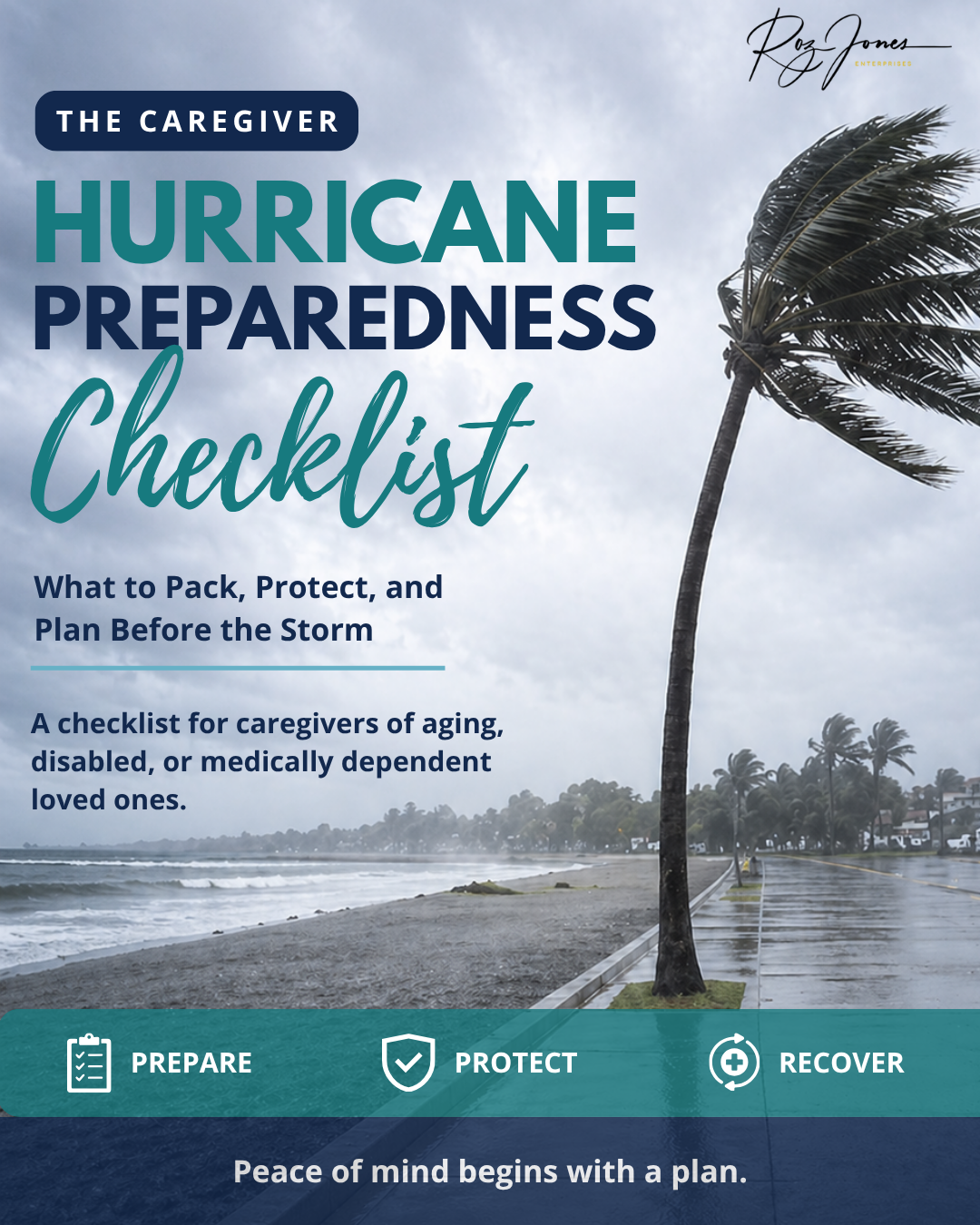
The Caregiver Hurricane Preparedness Checklist.

Preventive healthcare is only one part of being prepared as a caregiver. Emergencies can interrupt medications, appointments, transportation, medical equipment, and the routines your aging loved one depends on. The Caregiver Hurricane Preparedness Checklist can help you organize important information, supplies, medications, and caregiving details before severe weather creates another layer of stress.

Subscribe to The Caregiver Cafe Weekly Newsletter!

Caregiving can be a roller coaster of ups and downs. The information that you will receive from The Caregiver Cafe Weekly Specials Newsletter will support you as a caregiver. Remember…

1. YOU ARE NOT ALONE: The problems you face as a caregiver are experienced by other caregivers. Knowing that you’re not alone can be comforting. 

2. Tools and Resources:  Find caregiver stress management tools and gain perspective from other caregiver’s experiences.

3. LEARN TO: Ask for help, accept help when it is offered, and acknowledge yourself on this caregiving journey. Hear from experts on how to balance caregiving responsibilities by taking care of your needs and involving others to help manage the natural stress and isolation of being a caregiver. 

Recognizing the Wins Caregivers Often Overlook

By Roz Jones

Caregivers do not always recognize success while they are living through it. When you are focused on medications, appointments, mobility, household responsibilities, paperwork, emotional support, and the changing needs of an aging loved one, it can be difficult to stop long enough to see how much progress has already been made. Success may not arrive as one major breakthrough. Sometimes it appears quietly in the routines you have learned to manage, the problems you have learned to solve, and the moments when your loved one is able to do something today that felt much harder several months ago.

In the previous blog, we shared a story about resilience, personal growth, and finding new possibilities while providing care for an aging loved one with a disability. That story reminds us that success can take many forms, but caregivers also need to be careful not to believe that every caregiving victory has to become something big, public, or life-changing before it deserves to be celebrated. Some of the most meaningful progress happens in ordinary moments that no one outside the caregiving household may ever see.

Success Does Not Have to Look Dramatic

Caregivers often become accustomed to focusing on what still needs to be done. If your loved one needs more help getting dressed, you think about how to make mornings easier. If medications change, you adjust the routine. If mobility becomes more difficult, you start thinking about safety and additional support. That constant problem-solving can make it easy to move from one challenge to the next without recognizing what has already improved.

Success may be your loved one completing part of a daily task independently after needing more assistance before. It may be getting through a medical appointment with fewer complications, creating a routine that finally works, learning how to communicate more effectively, or finding a resource that takes one responsibility off your plate. None of those moments may seem dramatic from the outside, but they can represent important progress inside the caregiving journey.

Stop Measuring Progress Against Someone Else’s Story

It is easy to compare your caregiving experience with another family’s. You may hear about an aging loved one who regained independence, a caregiver who found the perfect support system, or a family that appears to have everything organized and wonder why your own situation still feels difficult. The problem with comparison is that you rarely know everything happening behind someone else’s story.

Every caregiving situation begins with different health needs, family dynamics, financial resources, living arrangements, and levels of support. Progress should be measured against where your loved one started and what is realistic for their circumstances, not against what another family has been able to accomplish. The goal is not to recreate someone else’s success. The goal is to recognize what meaningful progress looks like for the person you are caring for.

Notice What Has Become Easier

Caregivers become skilled at adapting, which means many improvements eventually begin to feel normal. A routine that once required constant reminders may now happen without much thought. A piece of equipment that felt intimidating may now be easy to use. You may know which questions to ask at appointments, where important paperwork is kept, which family member can help with transportation, or how to recognize when your loved one needs more rest.

Those skills did not appear overnight. They developed because you continued learning and adjusting. Take time to notice what no longer feels as difficult as it once did. Recognizing that growth does not mean caregiving has become easy. It means you have developed experience, knowledge, and confidence that you did not have at the beginning.

Celebrate Your Loved One’s Effort, Not Just the Outcome

An aging loved one living with a disability may work hard toward something without reaching the outcome either of you hoped for. Mobility may improve but not return completely. A new routine may help without eliminating the need for assistance. A difficult task may become more manageable without becoming fully independent.

Progress still deserves recognition.

Celebrate the effort your loved one is making, the skills they are maintaining, and the ways they continue participating in their own life. Focusing only on the final outcome can make both the caregiver and the person receiving care feel as though anything short of complete success does not count. Caregiving often requires a different definition of progress, one that leaves room for improvement, adaptation, maintenance, and simply continuing to try.

Recognize Your Own Growth Too

Caregivers spend so much time watching the needs and progress of someone else that they may forget to recognize how much they have changed along the way. You may have learned how to advocate with healthcare providers, manage complicated information, communicate with family members, handle difficult situations more calmly, or set boundaries around what you can realistically do.

You may also have learned what you cannot carry by yourself. That is growth too.

Success in caregiving is not proving that you can manage everything alone. Sometimes success is recognizing that a responsibility needs to be shared, that professional support is necessary, or that you need time away from caregiving responsibilities to protect your own well-being. Knowing your limits can make the care plan stronger because it allows you to make decisions based on what is sustainable rather than what you believe you should be able to handle.

Keep a Record of the Progress You Forget

Difficult days have a way of making caregivers forget how far they have come. When something goes wrong, it can feel as though nothing is improving, especially when you are tired or discouraged. Keeping a simple record of small victories can help create a more complete picture of the caregiving journey.

You may write down a new skill your loved one practiced, a problem that was resolved, a resource you found, an appointment that went well, or something you handled differently than you would have several months ago. Those notes are not about pretending the difficult moments do not exist. They are a reminder that difficult moments are not the entire story.

Let Success Change as the Caregiving Journey Changes

The definition of success may need to change over time. Early in the caregiving journey, success may mean helping your loved one regain strength or return to a familiar routine. Later, it may mean maintaining independence for as long as possible, finding the right additional support, keeping them comfortable, or adjusting the home so they can continue participating safely in everyday life.

Changing the goal does not mean you failed to reach the original one. It means the care plan is responding to the person’s current needs. Caregivers need permission to adjust expectations without believing that every change represents a loss. Sometimes the most successful decision is recognizing that the old goal no longer fits and creating one that does.

Make Room to Feel Proud of What You Have Done

Caregiving can make people incredibly aware of what they have not finished, what they could have done differently, and what still needs attention. There will always be another responsibility waiting, which is exactly why caregivers have to intentionally recognize what they are accomplishing along the way.

You have learned. You have adjusted. You have made decisions with the information available to you. You have shown up on days when you were tired, uncertain, frustrated, and overwhelmed. None of that means you have done everything perfectly, and perfection should never be the requirement for recognizing your own progress.

Celebrating success in caregiving is not ignoring the challenges. It is making sure the challenges do not become the only part of the story you remember.

If you have not read the first blog in this series, go back and read Celebrating Success: A Story of Triumph and Inspiration for a story about resilience, personal growth, and finding new possibilities while caring for an aging loved one with a disability.

Tune in to The Caregiver Café Podcast

Getting More Done

Caregiving already comes with more than enough responsibilities, which makes it important to have tools that help you manage what needs to be done without feeling like everything has to live in your head. Tune in to The Caregiver Cafe Podcast: Getting More Done for encouragement and practical guidance around staying productive while managing the responsibilities that come with caregiving.

Give Yourself a Moment of Grace

For more encouragement through the emotional parts of the caregiving journey, Moments of Grace offers reflections for caregivers navigating responsibility, change, difficult days, and the moments of grace that can still be found along the way.

Preparing for hurricane season?

The Caregiver Hurricane Preparedness Checklist.

Preventive healthcare is only one part of being prepared as a caregiver. Emergencies can interrupt medications, appointments, transportation, medical equipment, and the routines your aging loved one depends on. The Caregiver Hurricane Preparedness Checklist can help you organize important information, supplies, medications, and caregiving details before severe weather creates another layer of stress.

Subscribe to The Caregiver Cafe Weekly Newsletter!

Caregiving can be a roller coaster of ups and downs. The information that you will receive from The Caregiver Cafe Weekly Specials Newsletter will support you as a caregiver. Remember…

1. YOU ARE NOT ALONE: The problems you face as a caregiver are experienced by other caregivers. Knowing that you’re not alone can be comforting. 

2. Tools and Resources:  Find caregiver stress management tools and gain perspective from other caregiver’s experiences.

3. LEARN TO: Ask for help, accept help when it is offered, and acknowledge yourself on this caregiving journey. Hear from experts on how to balance caregiving responsibilities by taking care of your needs and involving others to help manage the natural stress and isolation of being a caregiver. 

Helping Without Speaking for Your Loved One

By Roz Jones

When someone you love receives a breast cancer diagnosis, it is natural to want to say something that makes the situation feel less frightening. You may want to reassure them, encourage them, remind them to stay positive, or immediately start talking about what comes next. Those responses often come from love, but support after a diagnosis is not always about finding the right words. Sometimes it is about recognizing which words your loved one does not need to hear.

In the previous blog, we talked about empathy and communication during the early days following a breast cancer diagnosis. As the conversations continue, caregivers also need to understand that good communication is not about keeping every interaction positive or having an answer for every concern. It is about making enough room for your loved one to tell the truth about what they are feeling without having to protect everyone else from it.

Do Not Rush Them Toward Positivity

Encouragement can be comforting, but there is a difference between encouraging someone and asking them to hide difficult emotions. Your loved one may be frightened, angry, disappointed, overwhelmed, or unsure about what comes next. Telling them to stay positive before they have had room to process those feelings can make them feel as though there is a right and wrong way to respond to their own diagnosis.

You do not have to turn every difficult moment into an inspirational one. Sometimes the most supportive response is acknowledging that what your loved one is facing is hard and allowing them to talk about that reality without immediately trying to change how they feel. Hope and fear can exist at the same time, and your loved one should not have to choose one just to make everyone around them more comfortable.

Listen Without Preparing Your Response

There is a difference between hearing someone and listening to them. When caregivers are frightened, it can be easy to listen while already thinking about the next question, the next solution, or the next reassuring statement. Your loved one may be trying to tell you what they need while you are preparing to tell them what you think they should do.

Give conversations enough room to develop. Let your loved one finish what they are saying before responding, and pay attention to what they are actually asking from you. They may want advice, but they may also simply want someone to listen while they sort through thoughts they have not been able to say out loud. You do not have to solve every concern for the conversation to be valuable.

Ask Before Sharing Their Diagnosis

A cancer diagnosis can quickly become family news, but your loved one should still have a say in who knows and how much information is shared. Caregivers may need support too, and there may be practical reasons certain people need information, but that does not mean every relative, friend, coworker, church member, or social media connection automatically needs access to the details.

Talk with your loved one about what they are comfortable sharing and with whom. Find out whether they want to give updates themselves, want you to communicate on their behalf, or prefer to keep certain information private. Respecting those boundaries is part of protecting their dignity and reminding them that a diagnosis does not remove their right to decide who has access to personal information about their health.

Be Careful With Other People’s Cancer Stories

People often respond to a cancer diagnosis by sharing the story of someone else who had cancer. The intention may be to offer hope, show understanding, or create connection, but those stories are not always helpful. Hearing about someone who had a difficult experience may increase fear, while hearing about someone who recovered easily may leave your loved one wondering why their own experience feels different.

Your loved one does not need their diagnosis compared with someone else’s. Every person brings a different medical history, emotional response, support system, and life experience into the situation. If you want to share someone else’s story, consider whether it is actually helping the person in front of you or simply filling an uncomfortable silence.

Let Your Loved One Decide When to Talk

There may be days when your loved one wants to talk about breast cancer and days when they do not. Respect both. A caregiver can become so focused on making sure everything is okay emotionally that every interaction starts with questions about how the person is feeling, whether they are scared, or what they are thinking about the diagnosis.

Checking in matters, but your loved one may also need conversations that have absolutely nothing to do with cancer. They are still interested in family, work, television, food, music, friendships, hobbies, and everything else that was part of their life before the diagnosis. Giving them space to talk about ordinary things can be just as meaningful as creating space for the difficult conversations.

Do Not Speak for Them When They Can Speak for Themselves

Caregivers naturally become protective, especially when someone they love is dealing with something serious. That protective instinct can sometimes turn into answering questions for your loved one, explaining how they feel before they have a chance to respond, or making decisions because you believe you already know what they want.

Support should not erase your loved one’s voice. Ask whether they want your help before stepping into a conversation on their behalf. Give them room to ask their own questions, express their concerns, and make choices about what they are comfortable discussing. There may be times when they specifically ask you to speak up for them, but advocacy should strengthen their voice rather than replace it.

Understand That Silence Can Be Supportive

Caregivers sometimes feel pressure to keep conversations going because silence feels uncomfortable. You may believe you should always know what to say, especially when your loved one is frightened or emotional. The truth is that some moments do not require a speech.

Sitting beside someone, holding their hand, watching television together, or simply being present can communicate support without requiring either of you to find the perfect words. Silence does not always mean something is wrong. Sometimes it means your loved one knows they do not have to perform, explain, reassure, or make conversation in order for you to remain beside them.

Make Room for Their Version of Strength

Strength does not look the same for everyone. Your loved one may cry often, ask the same questions repeatedly, need time alone, become frustrated, or admit that they are scared. None of those responses mean they are failing to handle the diagnosis well.

Caregivers can unintentionally create pressure when they constantly describe someone as strong, especially if that person begins to believe they are not allowed to have moments when they do not feel strong. Remind your loved one that they do not have to prove anything to you. Strength can include asking for help, expressing fear, setting boundaries, changing their mind, or simply getting through a difficult day.

Communication Should Leave Room for the Person

Breast cancer may become part of your loved one’s life, but it should not become their entire identity. The conversations surrounding the diagnosis should still leave room for who they are, what they value, what they want, and how they choose to move through this experience.

Your job as a caregiver is not to find the perfect response to every emotion or make every difficult conversation easier. Your job is to listen, respect boundaries, protect their voice, and remain present without requiring them to experience breast cancer in a way that makes everyone else more comfortable. Sometimes the most meaningful thing you can say is very simple: I am here, I am listening, and you do not have to pretend with me.

If you have not read the first blog in this series, go back and read Empathy and Communication: Supporting Your Loved One Through Diagnosis for more about listening, validating emotions, and creating a supportive environment after a breast cancer diagnosis.

Tune in to The Caregiver Café Podcast

Getting More Done

Caregiving already comes with more than enough responsibilities, which makes it important to have tools that help you manage what needs to be done without feeling like everything has to live in your head. Tune in to The Caregiver Cafe Podcast: Getting More Done for encouragement and practical guidance around staying productive while managing the responsibilities that come with caregiving.

Give Yourself a Moment of Grace

For more encouragement through the emotional parts of the caregiving journey, Moments of Grace offers reflections for caregivers navigating responsibility, change, difficult days, and the moments of grace that can still be found along the way.

Preparing for hurricane season?

The Caregiver Hurricane Preparedness Checklist.

Preventive healthcare is only one part of being prepared as a caregiver. Emergencies can interrupt medications, appointments, transportation, medical equipment, and the routines your aging loved one depends on. The Caregiver Hurricane Preparedness Checklist can help you organize important information, supplies, medications, and caregiving details before severe weather creates another layer of stress.

Subscribe to The Caregiver Cafe Weekly Newsletter!

Caregiving can be a roller coaster of ups and downs. The information that you will receive from The Caregiver Cafe Weekly Specials Newsletter will support you as a caregiver. Remember…

1. YOU ARE NOT ALONE: The problems you face as a caregiver are experienced by other caregivers. Knowing that you’re not alone can be comforting. 

2. Tools and Resources:  Find caregiver stress management tools and gain perspective from other caregiver’s experiences.

3. LEARN TO: Ask for help, accept help when it is offered, and acknowledge yourself on this caregiving journey. Hear from experts on how to balance caregiving responsibilities by taking care of your needs and involving others to help manage the natural stress and isolation of being a caregiver. 

Building a Care Plan When Family Isn’t Nearby

By Roz Jones

Finding a caregiver is an important step, but hiring someone does not automatically create a care plan. When an aging loved one does not have children nearby, does not have children at all, or simply does not have family members who can provide consistent support, the next challenge is making sure the care surrounding them is reliable, organized, and able to change when their needs change. A caregiver may become an important part of that support system, but one person should not be expected to carry every responsibility alone.

In the previous blog, we discussed what to consider when looking for a caregiver, including their experience, availability, qualifications, and cost. Once you have found someone who appears to be the right fit, the focus shifts from hiring to building a relationship and a care structure that protects the aging loved one while also making expectations clear for everyone involved.

Start With What Help Is Actually Needed

Care needs can look very different from one person to another. One aging loved one may only need help with meals, errands, transportation, and light household responsibilities, while another may need assistance with mobility, medication routines, personal care, or more complex health needs. Before deciding what the caregiver should handle, take time to look closely at what is becoming difficult and what your loved one can still comfortably manage on their own.

The goal should not be to take over everything simply because a caregiver is now available. Independence still matters. If your loved one can prepare certain meals, manage their own finances, choose their clothing, communicate with their healthcare providers, or handle other parts of their routine safely, make room for them to continue doing those things. Good caregiving should provide support where it is needed without unnecessarily removing control from the person receiving the care.

Make Expectations Clear From the Beginning

A caregiving arrangement works better when everyone understands what is expected. The caregiver should know which responsibilities belong to them, what schedule they are expected to follow, what should be communicated when something changes, and what situations require immediate attention. Your loved one should also understand the caregiver’s role so that responsibilities do not slowly expand beyond what was originally discussed.

Clear expectations can prevent confusion later. If transportation is part of the agreement, discuss which appointments or errands are included. If meal preparation is expected, talk about dietary needs and preferences. If the caregiver is helping with medication reminders, make sure everyone understands what that responsibility includes and where the boundaries are. Caregiving arrangements are easier to manage when expectations are discussed before a problem forces the conversation.

Create a Backup Before You Need One

Even the most dependable caregiver will eventually need time away. They may become sick, take a vacation, experience a family emergency, or simply need days off. If your aging loved one depends heavily on one person, the absence of that caregiver can quickly turn into a crisis when there is no backup plan.

Start thinking about alternative support while things are going well. That may include another professional caregiver, a trusted friend, a neighbor, extended family, a local agency, transportation services, meal delivery, or another community resource. The backup plan does not have to look exactly like the regular care arrangement, but there should be a clear answer to the question of what happens when the primary caregiver is unavailable.

Planning ahead is especially important when an aging loved one does not have children or nearby family members who can step in without notice. Waiting until the caregiver calls out sick to figure out who will bring meals, provide transportation, or check on your loved one creates stress that could have been reduced with a little preparation.

Keep Important Information Organized

A dependable caregiver still needs access to the right information. Important phone numbers, medication lists, healthcare providers, allergies, emergency contacts, insurance information, preferred hospitals, daily routines, and other essential details should be organized somewhere that can be easily located when needed. This information may become especially important if your loved one becomes ill, has an emergency, or cannot communicate their needs clearly.

It is also important to review that information regularly. Medications change, providers change, emergency contacts move, and care needs evolve. A folder that was accurate six months ago may not be accurate today. Keeping those details updated can help the caregiver respond appropriately and prevent unnecessary confusion during stressful situations.

Pay Attention to How the Relationship Is Working

Hiring a caregiver should not mean that you stop paying attention to the care being provided. Check in with your loved one about how they feel, whether they are comfortable, and whether the caregiver respects their routines, privacy, preferences, and independence. At the same time, check in with the caregiver about what they are noticing. Someone who spends consistent time with your loved one may begin noticing changes in mobility, eating habits, memory, mood, sleep, or daily functioning before anyone else does.

Those conversations can help you identify when the care plan needs to change. The arrangement that works today may not work six months from now. Your loved one may eventually need additional hours, a different type of support, or a caregiver with another level of training. The goal is not to create one plan and leave it untouched. The goal is to build a plan that can grow with the person receiving care.

Build a Circle of Support, Not Just One Caregiver

When someone is aging without children or without nearby family support, it can be tempting to look for one person who can handle everything. That may feel easier, but it can also leave the aging loved one vulnerable if that person becomes unavailable. A stronger approach is to build a circle of support that includes professional caregivers, healthcare providers, trusted friends, neighbors, community organizations, and other resources that can play different roles.

Not everyone in that circle has to provide hands-on care. One person may check in by phone. Someone else may help with transportation. A healthcare provider may help monitor changes in health. A professional caregiver may manage daily support in the home. What matters is that your loved one is not depending on one person for every need and that everyone understands how they fit into the larger care plan.

Continue Planning Before the Need Becomes Urgent

One of the biggest mistakes families make is waiting for a crisis before having conversations about care. If your loved one is living independently today, that does not mean they will always need the same level of support. Mobility can change, health conditions can progress, medications can become more complicated, and tasks that once felt simple can become harder over time.

Continue having conversations about what your loved one wants their care to look like if those changes happen. Discuss who should be contacted, what type of help they would be comfortable receiving, whether they want to remain at home, and what resources may be needed to make that possible. These conversations can be uncomfortable, but making decisions before a crisis gives your loved one more opportunity to participate in shaping their own care.

Caregiving Support Can Be Created

Not having children nearby does not mean an aging loved one has to navigate the future alone. Family can be an important part of caregiving, but family is not the only source of support. Professional caregivers, trusted friends, healthcare professionals, community programs, neighbors, and other resources can all become part of a dependable care network.

The important thing is to build that support intentionally. Know what help is needed, communicate expectations, create backup plans, keep important information organized, and continue adjusting the care plan as needs change. The goal is not simply to find someone who can complete a list of tasks. The goal is to create a safe and reliable support system that allows your loved one to continue living with as much independence, dignity, and choice as possible.

If you have not read the first blog in this series, go back and read Navigating Life Alone: Seeking a Caregiver for important questions to consider when searching for and hiring the right caregiver.

Tune in to The Caregiver Café Podcast

Getting More Done

Caregiving already comes with more than enough responsibilities, which makes it important to have tools that help you manage what needs to be done without feeling like everything has to live in your head. Tune in to The Caregiver Cafe Podcast: Getting More Done for encouragement and practical guidance around staying productive while managing the responsibilities that come with caregiving.

Give Yourself a Moment of Grace

For more encouragement through the emotional parts of the caregiving journey, Moments of Grace offers reflections for caregivers navigating responsibility, change, difficult days, and the moments of grace that can still be found along the way.

Preparing for hurricane season?

The Caregiver Hurricane Preparedness Checklist.

Preventive healthcare is only one part of being prepared as a caregiver. Emergencies can interrupt medications, appointments, transportation, medical equipment, and the routines your aging loved one depends on. The Caregiver Hurricane Preparedness Checklist can help you organize important information, supplies, medications, and caregiving details before severe weather creates another layer of stress.

Subscribe to The Caregiver Cafe Weekly Newsletter!

Caregiving can be a roller coaster of ups and downs. The information that you will receive from The Caregiver Cafe Weekly Specials Newsletter will support you as a caregiver. Remember…

1. YOU ARE NOT ALONE: The problems you face as a caregiver are experienced by other caregivers. Knowing that you’re not alone can be comforting. 

2. Tools and Resources:  Find caregiver stress management tools and gain perspective from other caregiver’s experiences.

3. LEARN TO: Ask for help, accept help when it is offered, and acknowledge yourself on this caregiving journey. Hear from experts on how to balance caregiving responsibilities by taking care of your needs and involving others to help manage the natural stress and isolation of being a caregiver. 

When Medicare Says No, Keep Advocating

By Roz Jones

Receiving a Medicare denial can feel like one more problem added to an already full caregiving plate. Especially when a letter arrives saying Medicare or a Medicare plan will not cover a service, treatment, medication, or piece of equipment you believed they needed. That denial can be frustrating, especially when you are already stretched thin, but it does not always have to be the end of the conversation.

In our previous discussion about Medicare appeals, we walked through the appeals process and the different levels available when you disagree with a Medicare decision. The next step is understanding how to manage the appeal without allowing the process to take over everything else you are already responsible for. Knowing that you have the right to appeal is important, but knowing how to stay organized, gather the right information, involve the healthcare team, and protect your own energy can make the process easier to manage.

Start With the Decision in Front of You

Before making calls or trying to figure out the entire appeal at once, start by carefully reading the notice your loved one received. A denial may be connected to documentation, medical necessity, billing, prior authorization, coverage requirements, or another issue that may need clarification. Pay close attention to why the decision was made, what information is being requested, what deadline applies, and what instructions are provided for challenging the decision. Medicare appeal procedures can vary depending on whether your loved one has Original Medicare, Medicare Advantage, or prescription drug coverage, so the details in that specific notice matter.

This is also one of those moments when putting the paperwork aside until later can create more stress. Caregivers already have enough competing for their attention, but appeals often come with deadlines that can affect what options remain available. The sooner you understand what the notice is asking for, the more time you have to gather records, speak with providers, ask questions, and determine what needs to happen next.

Bring the Healthcare Team Into the Process

You should not feel like you have to build the entire appeal alone. Your loved one’s doctor, healthcare provider, pharmacist, medical equipment supplier, or another member of the care team may have information that explains why the service or treatment is necessary. Instead of spending all your time trying to explain the medical side of the situation yourself, ask the provider whether additional documentation, treatment notes, test results, medical history, or another form of supporting information can strengthen the appeal.

Sometimes the most important part of advocacy is knowing who needs to be involved. Caregivers often become the person connecting everyone, which means your role may be to make sure the healthcare provider understands the denial, the appropriate records are gathered, and the information gets submitted where it needs to go. You do not have to become a Medicare expert or a medical professional. You need enough information to help keep the process moving and make sure your loved one’s needs are clearly documented.

Keep Everything in One Place

Caregiver paperwork can get out of hand quickly. One denial letter becomes several notices, phone calls lead to confirmation numbers, providers send additional records, and suddenly you are trying to remember where you put a document you saw two weeks ago. Creating one place for everything connected to the appeal can save time and reduce frustration. Keep the denial notice, Medicare Summary Notices, medical records, bills, receipts, provider statements, appeal forms, confirmation numbers, and copies of anything you submit together.

It also helps to keep a simple record of the conversations you have. Write down the date, who you spoke with, what was discussed, and what you were told should happen next. You do not need a complicated system. You need one that allows you to understand where things stand without having to reconstruct the entire process every time another letter arrives. If the appeal continues to another level, those records can also help you explain what has already happened and what information has already been provided.

Make Sure You Can Speak on Your Loved One’s Behalf

Caregivers often handle most of the work behind the scenes, but that does not automatically mean every organization can discuss your loved one’s Medicare information with you. If your aging loved one wants you to formally help with the appeal, they may need to appoint you as their representative. Taking care of that authorization early can make communication easier when you are trying to ask questions, submit documents, follow up on the appeal, or understand what needs to happen next.

This is also an important reminder that caregiving should not automatically remove your loved one from their own healthcare decisions. Whenever possible, keep them involved in what is happening, explain the steps you are taking, and make sure their wishes remain part of the process. You may be doing the paperwork and making the calls, but it is still their healthcare and their coverage.

Pay Attention to Urgent Situations

Not every Medicare dispute has the same level of urgency. There may be situations where your loved one believes covered services are ending too soon, including certain care provided by hospitals, skilled nursing facilities, home health agencies, rehabilitation facilities, or hospice programs. In some circumstances, there may be options for a faster review, which makes it important to read every notice carefully and pay attention to any instructions related to an expedited appeal.

If waiting through the standard process could affect your loved one’s health, safety, or continued access to care, do not assume the appeal can sit on the kitchen table until you have more time. Ask questions early and find out whether a faster appeal process applies. When healthcare and coverage decisions are involved, timing can matter just as much as documentation.

Use the Resources Available to You

Being a strong advocate does not mean you have to know everything about Medicare. Caregivers are used to figuring things out, but some situations are easier to manage when you have support. If the appeal instructions are confusing, ask questions. If you need help understanding your loved one’s Medicare coverage, programs such as the State Health Insurance Assistance Program can provide guidance. If the situation becomes more complicated, legal aid or other advocacy resources may also be available depending on the issue.

Asking for help does not mean you are giving up control. In many cases, getting the right information from the right resource can help you make better decisions and keep the situation from becoming more overwhelming than it already is. The goal is not to carry every part of the process by yourself. The goal is to make sure your loved one has someone paying attention, asking questions, and following through.

Protect Your Energy While You Advocate

One of the hardest parts of a Medicare appeal is often the mental load that comes with it. You may already be worried about your loved one’s health while trying to remember deadlines, collect records, return phone calls, communicate with providers, and understand unfamiliar language. Trying to hold all of that in your head throughout the day can make an already stressful situation even heavier.

Give yourself permission to work through the appeal one step at a time. Decide what actually needs your attention today, write down the next step before putting the paperwork away, and create a specific time to make calls or review documents instead of allowing the appeal to stay on your mind all day. Advocacy is part of caregiving, but it should not consume every ounce of energy you have. Your loved one needs you to continue showing up, and that means creating systems that help you manage the responsibility instead of allowing the responsibility to manage you.

A Denial Is Not Always the Final Word

Medicare paperwork can feel intimidating, especially when the answer you receive is no. A denial is still a decision, and in some situations that decision can be challenged when you believe coverage should have been provided. Read the notice carefully, understand why the decision was made, involve the healthcare provider, gather the right documentation, keep your records together, and ask for help when you need it. You may not control the first decision Medicare makes, but you can control how prepared you are to respond.

If you have not read the first blog in this series, go back and read Navigating Your Loved One’s Medicare Appeals Like a Champ for more information about Medicare appeals, fraud prevention, and how the appeals process works.

Tune in to The Caregiver Café Podcast

Getting More Done

Caregiving already comes with more than enough responsibilities, which makes it important to have tools that help you manage what needs to be done without feeling like everything has to live in your head. Tune in to The Caregiver Cafe Podcast: Getting More Done for encouragement and practical guidance around staying productive while managing the responsibilities that come with caregiving.

Give Yourself a Moment of Grace

For more encouragement through the emotional parts of the caregiving journey, Moments of Grace offers reflections for caregivers navigating responsibility, change, difficult days, and the moments of grace that can still be found along the way.

Preparing for hurricane season?

The Caregiver Hurricane Preparedness Checklist.

Preventive healthcare is only one part of being prepared as a caregiver. Emergencies can interrupt medications, appointments, transportation, medical equipment, and the routines your aging loved one depends on. The Caregiver Hurricane Preparedness Checklist can help you organize important information, supplies, medications, and caregiving details before severe weather creates another layer of stress.

Subscribe to The Caregiver Cafe Weekly Newsletter!

Caregiving can be a roller coaster of ups and downs. The information that you will receive from The Caregiver Cafe Weekly Specials Newsletter will support you as a caregiver. Remember…

1. YOU ARE NOT ALONE: The problems you face as a caregiver are experienced by other caregivers. Knowing that you’re not alone can be comforting. 

2. Tools and Resources:  Find caregiver stress management tools and gain perspective from other caregiver’s experiences.

3. LEARN TO: Ask for help, accept help when it is offered, and acknowledge yourself on this caregiving journey. Hear from experts on how to balance caregiving responsibilities by taking care of your needs and involving others to help manage the natural stress and isolation of being a caregiver.