
By Roz Jones
Caregiving has a way of moving a person’s health to the bottom of the list.
A loved one needs help getting to an appointment. Medication needs to be picked up. The house needs to be managed. Meals need to be prepared. Insurance calls need to be made. Family members need updates. Something unexpected happens, and the caregiver adjusts again.
Before long, the caregiver’s own checkup gets postponed. A screening gets delayed. A symptom gets ignored. Sleep becomes inconsistent. Meals become whatever is quick. Stress becomes normal. Fatigue becomes something to push through.
Knowing that preventive care matters is one thing. Building it into the caregiving lifestyle is another.
Caregivers cannot keep treating their own health like an afterthought and expect to remain strong enough to support someone else.
Caregiving Can Hide Health Problems
Many caregivers learn how to function while tired, stressed, and overwhelmed. They keep going because the needs around them are real. But when stress becomes constant, it can become harder to notice what is happening in the body.
A caregiver may dismiss headaches as tension.
They may blame chest discomfort on stress.
They may assume shortness of breath is from being out of shape.
They may explain away changes in appetite, sleep, mood, or energy.
They may ignore pain because there is no time to deal with it.
They may delay care because the loved one’s needs feel more urgent.
This is how health problems can hide in plain sight.
Preventive care is not only about catching disease early. It is also about giving the caregiver permission to pay attention to their own body before the body has to get louder.
A caregiver’s health is not separate from the caregiving plan. It is part of it.
The Cost of Always Going Last
Many caregivers place themselves last out of love, obligation, or habit. For male caregivers, this can be especially common when strength is tied to endurance, providing, protecting, and not complaining.
But always going last has a cost.
Missed appointments can delay diagnosis. Ignored symptoms can become more serious. Poor sleep can affect mood and decision-making. Unmanaged blood pressure, diabetes, stress, or heart health concerns can create long-term risks.
Caregivers may also find themselves becoming more irritable, forgetful, withdrawn, or emotionally exhausted. These changes do not always mean the caregiver does not care. They may mean the caregiver is running without enough support, rest, or medical attention.
Caregiving requires presence. It requires patience. It requires energy. It requires clear thinking.
Those things are harder to maintain when the caregiver’s own health is being neglected.
Preventive Care Has to Be Scheduled, Not Wished For
Good intentions are not enough.
Many caregivers say they will make the appointment when things calm down. But caregiving seasons do not always calm down on their own. There may always be another appointment, another errand, another concern, another family issue, or another task that feels more urgent.
That is why preventive care has to be scheduled.
A caregiver may need to choose a month for annual appointments and protect that time. They may need to schedule their own checkup on the same day each year. They may need to set reminders for blood pressure checks, lab work, dental visits, eye exams, prostate screenings, colon cancer screenings, and other recommended care.
For some caregivers, it may help to treat personal medical appointments the same way they treat their loved one’s appointments: written down, confirmed, protected, and taken seriously.
A caregiver’s appointment should not be the first thing canceled every time life gets busy.
Health Conversations Should Include the Caregiver
When families discuss caregiving responsibilities, they often talk about the loved one’s needs.
Who will take them to the doctor?
Who will cook?
Who will manage medication?
Who will stay overnight?
Who will handle transportation?
Those conversations are important, but they are incomplete if they do not include the caregiver’s health.
Families also need to ask:
Who will cover care when the caregiver has a medical appointment?
Who can help if the caregiver is sick?
Who can step in if the caregiver needs rest?
Who is watching for signs that the caregiver is overwhelmed?
Who is helping the caregiver stay healthy enough to continue?
The caregiver should not have to choose between their own appointment and their loved one’s care. A healthy caregiving plan includes backup support.
If no one else knows how to help, the family needs to create a better system before a crisis forces the issue.
Male Caregivers and Silent Symptoms
Many male caregivers are used to minimizing what they feel.
They may downplay pain. They may avoid talking about fatigue. They may ignore changes in mood, sleep, digestion, weight, or energy. They may avoid screenings because they are uncomfortable, busy, or afraid of what might be found.
But silence does not protect health.
Preventive care gives male caregivers a chance to address concerns early, before they become harder to manage. It also challenges the idea that men should only seek help when something becomes severe.
A man can be strong and still get his blood pressure checked.
A man can be dependable and still schedule a prostate screening.
A man can love his family and still talk to a doctor about stress, depression, sleep issues, or pain.
A man can be a caregiver and still need care.
There is no honor in waiting until the body breaks down.
Watch the Patterns, Not Just the Symptoms
Caregivers often look for one major sign that something is wrong. But health changes may show up as patterns.
A caregiver may notice they are tired every morning, not just once in a while.
They may feel more short-tempered than usual.
They may need more caffeine to get through the day.
They may stop exercising.
They may eat more fast food because cooking feels like too much.
They may avoid people.
They may lose interest in things they once enjoyed.
They may feel their heart racing during stressful moments.
They may experience headaches, stomach issues, dizziness, muscle tension, or trouble sleeping.
These patterns deserve attention.
They may be connected to stress, but that does not mean they should be ignored. Stress can affect the body in real ways. It can also exist alongside other health concerns that need medical care.
Caregivers should not diagnose themselves and move on. They should bring concerns to a healthcare provider and let the provider help sort out what needs attention.
Build a Personal Health Folder
Caregivers often keep detailed information for their loved ones but do not have the same organization for themselves.
A personal health folder can help change that.
This folder can include:
- Primary care provider information
- Medication list
- Allergies
- Emergency contacts
- Insurance information
- Recent lab results
- Screening dates
- Vaccination records
- Family health history
- Questions for upcoming appointments
- Notes about symptoms or changes
This does not have to be complicated. The goal is to make the caregiver’s health easier to track.
When information is organized, appointments are more productive. It is easier to remember questions, follow up on screenings, and notice when something has been delayed.
Caregivers organize so much for others. Their own health deserves that same attention.
Make Caregiver Health Part of the Weekly Routine
Preventive care is not only about annual appointments. It is also about what happens in the weekly rhythm of life.
Small choices matter when they are repeated.
A caregiver health routine may include checking blood pressure, taking prescribed medication, drinking enough water, walking a few times a week, preparing simple meals, stretching, sleeping at a consistent time, limiting alcohol, scheduling quiet time, or checking in with a support person.
The goal is not perfection.
The goal is consistency.
A caregiver who waits for the perfect schedule may never begin. But a caregiver who builds small health habits into the week can begin protecting their body before exhaustion takes over.
The question is not, “How do I overhaul my entire life?”
The better question is, “What is one thing I can do this week that supports my health?”
Emergency Preparedness Includes the Caregiver Too
When caregiving involves an aging loved one, emergency planning often focuses on the person receiving care. That is important, especially if they depend on medication, oxygen, mobility support, medical equipment, refrigerated supplies, or transportation assistance.
But emergency preparedness should also include the caregiver.
What happens if the caregiver becomes sick?
What happens if the caregiver cannot get to the loved one during a storm?
What happens if power goes out and medical equipment is needed?
What happens if medication runs low before severe weather arrives?
What happens if the caregiver is too exhausted to make clear decisions in the middle of a crisis?
Planning ahead reduces stress. It also helps protect both the loved one and the caregiver.
Emergency contacts, backup transportation, medication lists, supply checklists, and family communication plans should be easy to access. During hurricane season or severe weather, preparation can make a hard situation less chaotic.
Preparedness is not fear. It is care with a plan.
Caregiving Cannot Depend on One Person’s Health Forever
A family should never build a caregiving system that assumes one person will always be available, healthy, and able to manage everything.
That is not realistic.
Caregivers have bodies. They have limits. They have appointments. They have emotional needs. They may develop health challenges of their own.
A better plan includes shared responsibility, backup support, community resources, and honest conversations about what the caregiver can and cannot continue doing alone.
If one person’s health is holding the entire caregiving system together, the system needs attention.
Caregiver health is not a side issue. It is a foundation.
When the caregiver is healthier, the loved one is safer. When the caregiver is supported, the care plan is stronger. When the caregiver receives preventive care, the whole family benefits.
Caring for Yourself Is Part of Caring for Them
Preventive care is not selfish. It is not a luxury. It is not something to handle only after everyone else is settled.
It is part of caregiving.
A caregiver who gets regular checkups, completes recommended screenings, pays attention to symptoms, manages stress, and builds healthy routines is not stepping away from responsibility. They are strengthening their ability to continue.
Caregivers often give their best attention to the people they love. This next season requires them to give some of that attention back to themselves.
The loved one matters.
The caregiver matters too.
And a care plan that honors both is stronger, safer, and more sustainable.
To read more on the subject, read my previous blog, Are You Positioned to Care? Nurturing Your Own Health.
Give Yourself a Moment of Grace

If you need encouragement for the emotional side of caregiving, purchase Roz Jones’ book, Moments of Grace. This book offers reflection, support, and reminders of grace for caregivers who are carrying more than others may see.
This journal was created to help caregivers pause, breathe, reflect, and find strength in the middle of the caregiving journey.
Purchase Moments of Grace today and give yourself permission to breathe in the middle of the caregiving journey.
Prepare Before the Emergency Comes
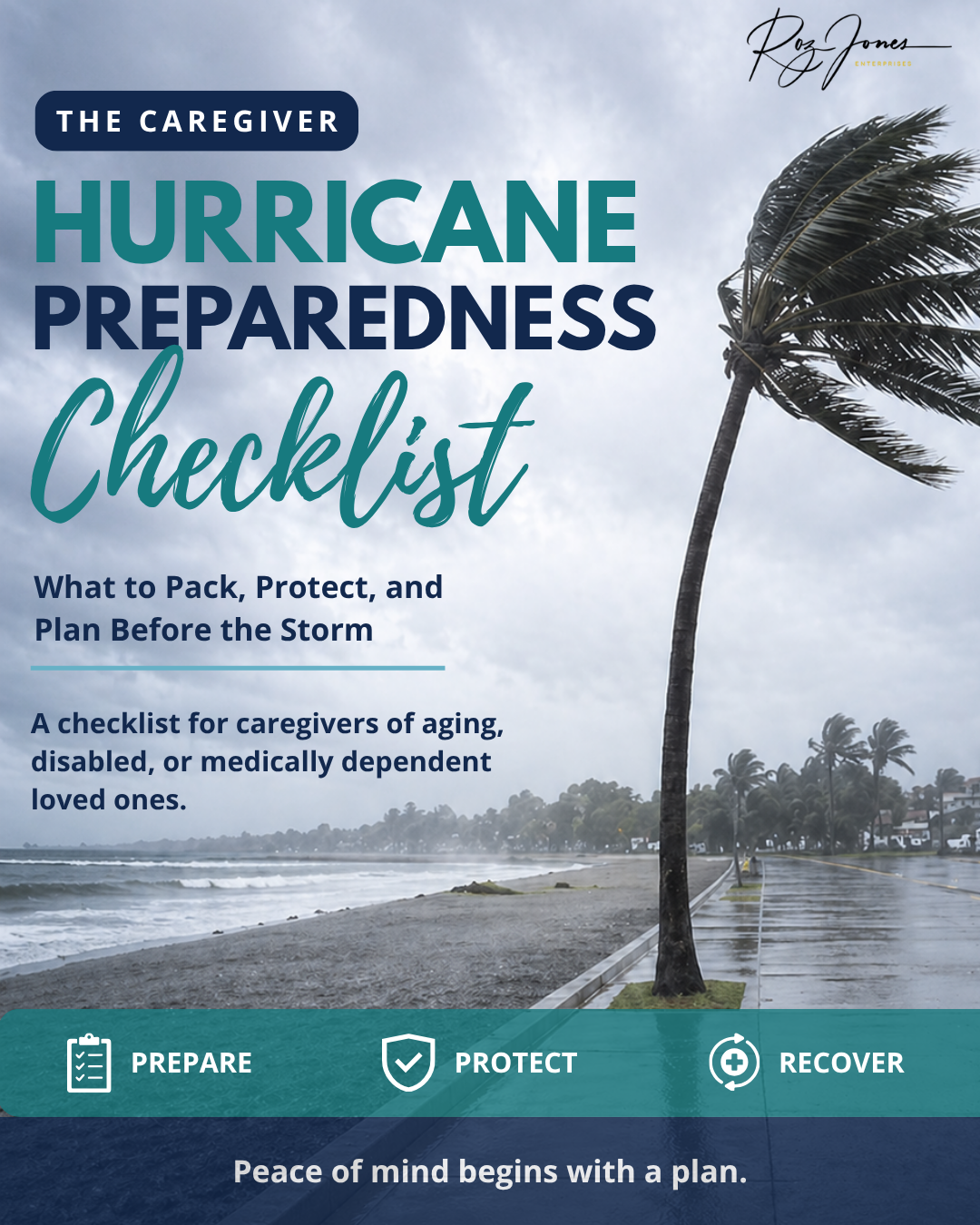
If you are caring for an aging loved one and want to reduce the stress of last-minute emergency planning, purchase the Caregiver Hurricane Preparedness Checklist. This resource can help you organize important details, supplies, contacts, and plans before severe weather or a crisis arrives.
For only $1.99, this checklist gives you a simple starting point so you are not trying to gather everything during a storm, power outage, hospitalization, or sudden change in your loved one’s care.
Purchase the Caregiver Hurricane Preparedness Checklist for $1.99 today and take one more step toward peace of mind.
Need Help Sorting Through the Care Plan?

If your family needs help thinking through care decisions, caregiving responsibilities, or next steps, book a session with Roz Jones. You do not have to navigate this season alone.
If your family needs help creating a care plan, talking through caregiving responsibilities, or deciding what support is needed next, book a session with Roz Jones. You do not have to carry the caregiving journey by yourself.
Subscribe to The Caregiver Cafe Weekly Newsletter!

1. YOU ARE NOT ALONE: The problems you face as a caregiver are experienced by other caregivers. Knowing that you’re not alone can be comforting.
2. Tools and Resources: Find caregiver stress management tools and gain perspective from other caregiver’s experiences.
3. LEARN TO: Ask for help, accept help when it is offered, and acknowledge yourself on this caregiving journey. Hear from experts on how to balance caregiving responsibilities by taking care of your needs and involving others to help manage the natural stress and isolation of being a caregiver.