Love Still Has a Language

By Roz Jones

Alzheimer’s disease can change the way a loved one speaks, remembers, responds, and participates in daily life. But it does not take away their need for connection.

Love still has a language.

Sometimes that language is a familiar song. Sometimes it is a gentle hand on the shoulder. Sometimes it is a calm voice, a warm smile, or sitting quietly beside someone who no longer has the words they used to have.

For caregivers supporting aging loved ones with Alzheimer’s, this is one of the hardest lessons to learn: communication may change, but connection can still remain.

That connection may not look the way it once did. Conversations may become shorter. Stories may repeat. Names may be forgotten. Questions may come again and again. But the person in front of you still deserves dignity, patience, and presence.

According to the Alzheimer’s Association’s 2026 Facts and Figures, an estimated 7.4 million Americans age 65 and older are living with Alzheimer’s dementia. More than 12 million family members and other unpaid caregivers are providing care for people living with Alzheimer’s or other dementias. This is not a rare caregiving experience. It is a growing reality for families across the country.

Communication Is More Than Conversation

Many caregivers feel grief when conversation begins to change. A loved one who once gave advice, told stories, laughed easily, or remembered family details may now struggle to find the right words.

That grief is real.

But communication is bigger than conversation.

A person with Alzheimer’s may communicate through facial expressions, body language, restlessness, silence, tears, agitation, or withdrawal. A repeated question may not be about the answer. It may be about needing reassurance. A sudden mood change may not be “difficult behavior.” It may be fear, pain, confusion, hunger, fatigue, or overstimulation.

The Alzheimer’s Association reminds families that Alzheimer’s gradually affects a person’s ability to communicate and that communication requires patience, understanding, and good listening skills.

Caregivers must learn to listen differently.

Not just to the words.

To the person.

Tone Can Become a Form of Care

A caregiver’s tone matters deeply.

As Alzheimer’s progresses, a loved one may not understand every word being said, but they may still sense frustration, impatience, anger, or tension. A rushed voice can increase fear. A sharp tone can create resistance. A tense face can make the person feel unsafe, even if the caregiver is trying to help.

The National Institute on Aging encourages caregivers to make eye contact, call the person by name, and pay attention to tone, volume, facial expressions, and body language when communicating with someone who has Alzheimer’s.

This does not mean caregivers must be perfect. Caregivers are human. They get tired. They get overwhelmed. They have moments when patience is thin.

But tone should be treated as part of the care plan.

A calm voice can help settle confusion.
A gentle expression can reduce fear.
A slower pace can make the moment easier to process.
A respectful approach can help preserve dignity.

Love has a language, and sometimes it sounds like calm.

Simple Words Can Bring More Peace

Alzheimer’s can make it harder for the brain to process long explanations, multiple choices, or fast instructions. This is why caregivers may need to simplify communication without making the loved one feel talked down to.

Instead of several instructions at once, offer one step.

Instead of open-ended questions that may feel overwhelming, offer simple choices.

Instead of correcting every mistaken detail, focus on comfort and connection.

For example, rather than saying, “You already asked me that three times,” try, “We are leaving at 2:00, and I will be with you.”

Rather than saying, “That is not what happened,” try, “I know this feels confusing. You are safe.”

Rather than asking, “What do you want to eat?” try, “Would you like soup or a sandwich?”

Simple does not mean childish.

Simple means clear.

And clarity is kindness when the brain is already working hard.

Reassurance Often Matters More Than Correction

One of the hardest adjustments in Alzheimer’s caregiving is learning when not to argue.

A loved one may insist they need to go home, even if they are already home. They may ask for someone who has passed away. They may become upset about an appointment that is not happening. They may remember something differently.

The instinct may be to correct.

But correction is not always comfort.

Sometimes the better response is reassurance. The caregiver can acknowledge the feeling without feeding the confusion.

“I can see you are worried.”
“You are safe here.”
“I am staying with you.”
“Let’s sit together for a minute.”
“We will take care of it.”

The goal is not to win the conversation. The goal is to reduce distress.

Caregivers do not have to correct every detail to care well. Sometimes love chooses peace over proving a point.

Familiar Routines Can Speak

For people living with Alzheimer’s, familiar routines can become a language of safety.

A morning prayer.
A favorite chair.
The same blanket.
A familiar playlist.
A cup of tea at the same time each day.
A walk after breakfast.
A photo album on the table.
A favorite lotion or scent.
A repeated phrase that brings comfort.

Routines can help reduce confusion because they create rhythm. They tell the body and mind, “This is familiar. This is safe.”

Caregivers can use routines to support communication. A loved one may not always understand an explanation, but they may respond to familiar patterns. They may settle when music begins. They may participate when a task feels known. They may smile at a familiar voice, even when words are limited.

This is why caregivers should pay attention to what still brings recognition, comfort, and calm.

Those details matter.

Connection Can Be Built Through the Senses

As words become harder, the senses can help keep connection alive.

Music can reach memory in powerful ways.
Photos can invite recognition.
Touch can offer reassurance.
Food can bring comfort.
A familiar scent can stir emotion.
A walk outside can calm the nervous system.
A favorite hymn, prayer, or poem can create a moment of peace.

Caregivers may need to shift from trying to have the “old” conversation to creating a meaningful moment in the present.

That may mean sitting together without forcing words.

It may mean singing instead of asking questions.

It may mean holding a hand instead of explaining again.

It may mean letting the loved one fold towels, stir batter, water plants, or look through family pictures.

Connection does not have to be complicated to be meaningful.

Caregivers Need Support for the Emotional Weight

Alzheimer’s caregiving is not only physical care. It is emotional care.

It can be heartbreaking to repeat the same answer all day. It can be exhausting to stay calm through confusion. It can be painful when a loved one no longer recognizes you. It can feel lonely when other family members do not understand how much the communication changes affect daily life.

Caregivers need support too.

Support groups, respite care, family care planning, dementia education, counseling, church support, and trusted community can help caregivers carry the weight with more support and less isolation.

The earlier public conversation around Rosalynn Carter’s dementia diagnosis reminded many families that dementia care reaches far beyond the person diagnosed. Mrs. Carter passed away on November 19, 2023, at age 96, and The Carter Center remembered her as a longtime champion of mental health, caregiving, and women’s rights.

Her legacy still reminds us that caregiving deserves attention, resources, and community.

No caregiver should have to walk this road alone.

Family Members Must Learn the New Language Too

One caregiver cannot be the only person learning how to communicate.

If an aging loved one has Alzheimer’s, the family needs shared understanding. Adult children, spouses, siblings, grandchildren, home care aides, and close support people should learn how communication may change and how to respond with patience.

This helps reduce arguments, frustration, and hurt feelings.

It also helps loved ones stay included.

Family members need to understand that the person living with Alzheimer’s may repeat questions, lose track of conversations, struggle with names, misread tone, or become overwhelmed by too much noise. These changes are not personal attacks. They are part of the disease process.

A prepared family can respond with more compassion.

A confused family may respond with resentment.

Education matters.

Care Planning Protects Connection

Families often wait until communication has declined significantly before talking about care preferences, routines, safety, respite, and support. But waiting makes everything harder.

Care planning should begin while the loved one can still share preferences as much as possible.

What routines bring comfort?
Who does the loved one trust?
What music, prayers, foods, or activities are meaningful?
What environments increase agitation?
What helps calm them?
What family roles need to be clear?
What support does the primary caregiver need?

These questions are not small.

They help protect dignity.

They help reduce confusion.

They help the family respond with more consistency.

And consistency is part of love’s language too.

Love Still Has a Language

Alzheimer’s may change the words, but it does not erase the person.

They still need to feel safe.
They still need to be treated with respect.
They still need familiar voices.
They still need patience.
They still need comfort.
They still need connection.

Caregivers may have to learn a new way to listen. Families may have to learn a new way to respond. The relationship may change, but love can still show up.

In the first blog, we talked about the power of connection, community, and conversation for Alzheimer’s caregivers. This follow-up is a reminder that even as words change, love still has a language. That language may be gentler, slower, quieter, and more intentional, but it can still reach the person you love.

If you missed the first blog, you can read it here: The Power of Connection, Community, and Conversation for Alzheimer’s Caregivers.

Caregivers, do not measure connection only by perfect conversation.

Measure it by peace.
By presence.
By patience.
By dignity.
By the moments when your loved one feels safe because you are near.

That is love speaking.

Give Yourself a Moment of Grace

If your spirit needs encouragement along the way, purchase Moments of Grace: A 40-Day Caregiver Prayer Journal on Amazon.

This journal was created to help caregivers pause, breathe, reflect, and find strength in the middle of the caregiving journey.

Purchase Moments of Grace today and give yourself permission to breathe in the middle of the caregiving journey.

Prepare Before the Emergency Comes

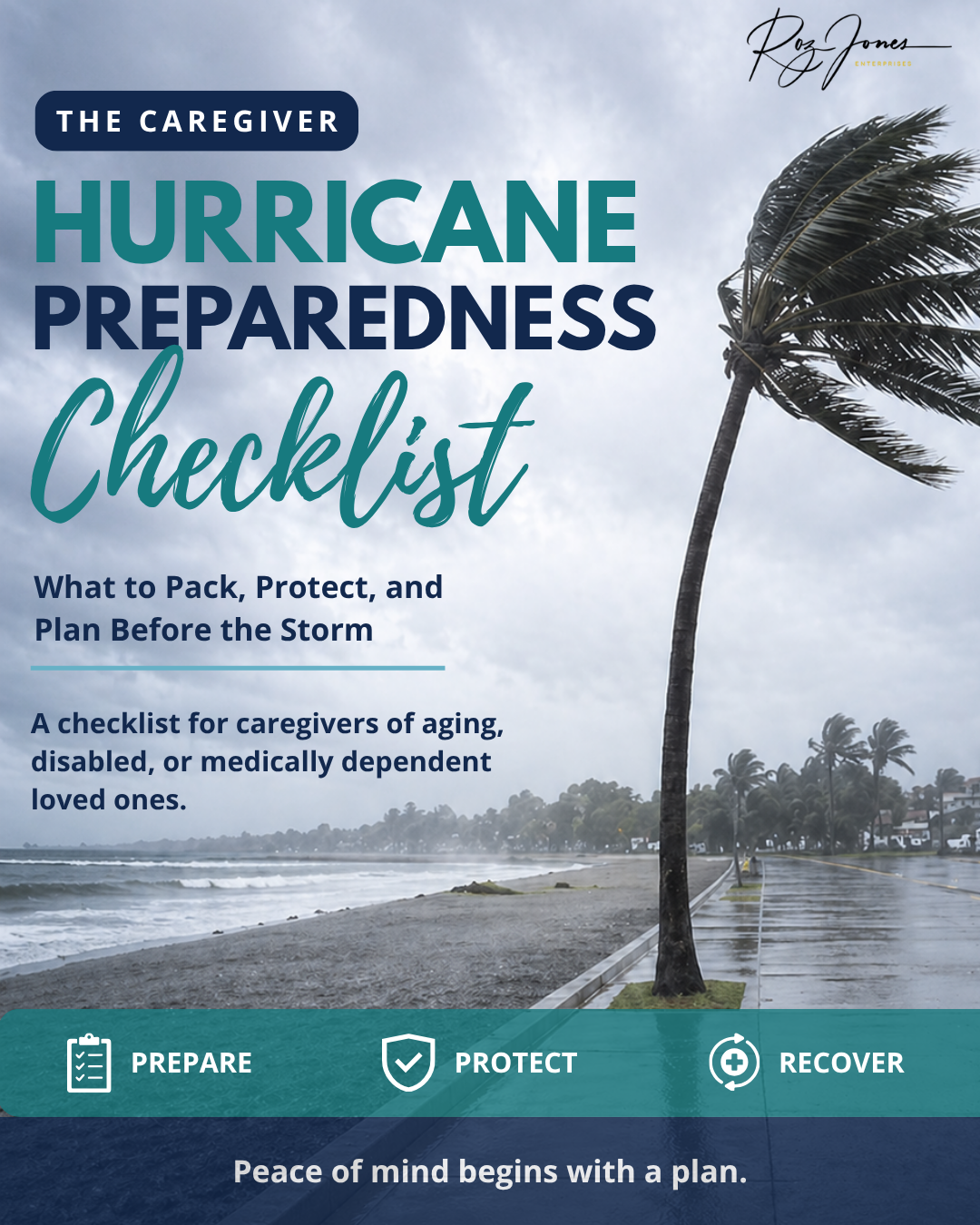
The Caregiver Hurricane Preparedness Checklist.

The Caregiver Hurricane Preparedness Checklist helps caregivers organize important documents, medications, emergency contacts, evacuation needs, medical equipment details, and care instructions before an emergency happens.

For only $1.99, this checklist gives you a simple starting point so you are not trying to gather everything during a storm, power outage, hospitalization, or sudden change in your loved one’s care.

Purchase the Caregiver Hurricane Preparedness Checklist for $1.99 today and take one more step toward peace of mind.

Need Help Sorting Through the Care Plan?

Roz Jones is a dedicated caretaker turned CEO with over a decade of experience in helping families care for and make decisions for loved ones and their legacies.Roz is a compassionate, innovative healthcare industry leader.

Book a Family Care Planning Session with Roz Jones and get support creating a caregiving plan that is clear, compassionate, and realistic.

Together, we can talk through what is working, what is becoming too heavy, and what boundaries need to be strengthened so you can continue to care without losing yourself in the process.

Subscribe to The Caregiver Cafe Weekly Newsletter!

Caregiving can be a roller coaster of ups and downs. The information that you will receive from The Caregiver Cafe Weekly Specials Newsletter will support you as a caregiver. Remember…

1. YOU ARE NOT ALONE: The problems you face as a caregiver are experienced by other caregivers. Knowing that you’re not alone can be comforting. 

2. Tools and Resources:  Find caregiver stress management tools and gain perspective from other caregiver’s experiences.

3. LEARN TO: Ask for help, accept help when it is offered, and acknowledge yourself on this caregiving journey. Hear from experts on how to balance caregiving responsibilities by taking care of your needs and involving others to help manage the natural stress and isolation of being a caregiver. 

Pride Won’t Protect Your Prostate

By Roz Jones

Pride has kept too many men quiet.

Quiet about pain.
Quiet about changes in their body.
Quiet about bathroom issues.
Quiet about fear.
Quiet about appointments they know they need to make.

But pride cannot protect a man’s health.

It cannot read a lab result.
It cannot explain a symptom.
It cannot replace a doctor’s visit.
It cannot catch a concern early.
It cannot give a family peace of mind.

For caregivers supporting aging fathers, husbands, brothers, uncles, grandfathers, partners, or male loved ones, this conversation matters. Men’s health is not just a private issue. When a man’s health begins to change, the whole family often feels it. Caregiving becomes harder when symptoms are ignored, appointments are delayed, and concerns are hidden until they become urgent.

This is why families need to talk about prostate and testicular health with honesty, respect, and wisdom.

Silence Can Delay Care

Many men were raised to believe that strength means staying quiet. They may avoid talking about symptoms because they feel embarrassed, uncomfortable, or afraid of what a doctor might find.

Some men minimize their symptoms.

Some say, “I’m fine.”

Some joke their way out of the conversation.

Some get defensive when a loved one asks questions.

But silence does not make a health issue disappear. It only gives the issue more time to grow.

Prostate cancer screening is not a one-size-fits-all decision. According to the CDC, men ages 55 to 69 should make an individual decision about prostate cancer screening with a PSA blood test after talking with their doctor about the possible benefits and harms. The CDC also states that men 70 and older should not be routinely screened for prostate cancer.

That means the right next step is not guessing. The right next step is a conversation with a healthcare provider.

Prostate Health Is Not Something to Guess About

A prostate concern may not always announce itself loudly. Sometimes the signs show up in everyday routines.

A man may begin getting up more often at night to use the bathroom. He may have trouble starting urination. He may notice a weaker urine stream. He may feel pain, burning, pressure, or discomfort. There may be blood in the urine or semen. He may complain of pain in the back, hips, or pelvis that does not go away.

These symptoms do not automatically mean cancer. They can be connected to other prostate conditions, infection, medication side effects, or aging-related changes. But they should not be ignored.

Caregivers do not need to diagnose the problem. That is not the caregiver’s job.

The caregiver’s role is to notice changes, encourage follow-up, help prepare for appointments, and support the loved one in getting answers.

Screening Decisions Should Be Personal

A PSA blood test measures prostate-specific antigen in the blood. A higher PSA level can be connected to prostate cancer, but it can also be caused by other conditions. This is why results need to be interpreted by a healthcare provider.

The American Cancer Society recommends that men at average risk begin talking with a healthcare provider about prostate cancer screening at age 50 if they are expected to live at least 10 more years. Men at higher risk, including Black men and men with a father or brother diagnosed with prostate cancer before age 65, should have that conversation at age 45. Men with more than one close relative diagnosed at an early age should discuss screening at age 40.

Caregivers can help by making sure family history is not left out of the conversation. If a father, brother, uncle, or grandfather had prostate cancer, that information matters.

A man should not have to walk into the doctor’s office unprepared. Families can help him write down questions, symptoms, medications, and family history before the appointment.

Testicular Health Still Matters

Testicular cancer is more common in younger and middle-aged men, but testicular health still matters across adulthood. Lumps, swelling, heaviness, pain, tenderness, or changes in the size or feel of the testicles or scrotum should be brought to a healthcare provider.

The National Cancer Institute states that there is no standard or routine screening test for testicular cancer. That makes awareness especially important. Men need to know what is normal for their bodies and report changes promptly.

For caregivers, this requires sensitivity. Testicular health is personal. Not every man will want to talk about it openly with family. But the family can still create an environment where health concerns are not treated with shame.

A simple message can go a long way:

“If something feels different, please get it checked.”

Pride Can Sound Like an Excuse

Pride does not always sound loud. Sometimes it sounds reasonable.

“I’ll go next month.”
“It’s probably nothing.”
“I don’t want to talk about that.”
“I’m too old for all that.”
“I don’t need anybody checking me.”
“I’ve been fine this long.”
“I don’t want to know.”

Caregivers may hear these responses often.

It is important not to shame the man or make him feel like a child. But it is also important not to let avoidance lead the care plan.

Respect and accountability can exist in the same conversation. A caregiver can honor a loved one’s dignity while still saying, “I hear you, but I think this is important enough to bring up with your doctor.”

That kind of honesty can be lifesaving.

Caregivers Can Support Without Taking Over

Supporting a man’s health does not mean controlling every decision. It means helping remove barriers that keep him from getting care.

That may include scheduling the appointment, arranging transportation, helping gather insurance information, writing down symptoms, or offering to sit in the waiting room while he speaks with the doctor privately.

Some men may prefer to talk to a male provider. Some may want a spouse present. Some may want privacy. Some may need encouragement but not an audience.

Caregivers should ask what kind of support would actually help.

The goal is not to embarrass him.

The goal is to help him follow through.

Health Conversations Should Not Wait for Crisis

Families often wait until something becomes serious before they talk honestly about health. By then, stress is high and options may feel limited.

Men’s health conversations need to happen earlier.

They need to happen around annual wellness visits, medication reviews, family care planning, and changes in daily routines. They need to include questions about urinary changes, pain, family history, screenings, sexual health, and emotional well-being.

These are not always easy conversations, but they are necessary.

When families make health conversations normal, it becomes easier for loved ones to speak up before a concern becomes an emergency.

Prevention Is Bigger Than One Screening

Screening is important, but it is not the whole picture.

Men also need daily habits that support long-term health. Regular movement, balanced meals, hydration, sleep, stress management, and routine medical care all matter. Limiting tobacco and excessive alcohol use can also support better health outcomes.

For aging loved ones, prevention may also mean managing chronic conditions such as diabetes, high blood pressure, heart disease, kidney disease, or obesity. These conditions can affect energy, mobility, urinary health, sexual health, and overall quality of life.

Caregivers can support healthier routines without turning every meal or appointment into a fight.

Start with what is realistic.

A short walk.
A glass of water.
A doctor’s appointment.
A written symptom list.
A conversation about family history.
A reminder to ask about PSA testing.

Small steps still count.

A Strong Man Still Needs Care

Strength is not proven by avoiding the doctor.

Strength is not proven by ignoring symptoms.

Strength is not proven by pretending nothing is wrong.

A strong man can ask questions. A strong man can get checked. A strong man can talk to his doctor. A strong man can take his health seriously because the people who love him still need him present.

Caregivers can help shift the message from fear to responsibility.

This is not about weakness.

This is about wisdom.

Keep the Conversation Going

Pride may make a man delay care, but love can help open the door.

Aging fathers, husbands, brothers, uncles, grandfathers, partners, and male loved ones deserve dignity. They also deserve honest support when their health needs attention.

In the first blog, we talked about testicular and prostate screenings, what they may involve, and why men should not ignore this part of their health. This follow-up is a reminder that awareness does not stop with one appointment. It continues through family conversations, routine checkups, symptom awareness, and the courage to ask questions.

If you missed the first blog, you can read it here: The Ball is In Your Court: Unveiling the Secrets of Testicular and Prostate Health.

Pride will not protect the men we love.

But preparation, honest conversations, and timely care can make a difference.

Give Yourself a Moment of Grace

If your spirit needs encouragement along the way, purchase Moments of Grace: A 40-Day Caregiver Prayer Journal on Amazon.

This journal was created to help caregivers pause, breathe, reflect, and find strength in the middle of the caregiving journey.

Purchase Moments of Grace today and give yourself permission to breathe in the middle of the caregiving journey.

Prepare Before the Emergency Comes

The Caregiver Hurricane Preparedness Checklist.

The Caregiver Hurricane Preparedness Checklist helps caregivers organize important documents, medications, emergency contacts, evacuation needs, medical equipment details, and care instructions before an emergency happens.

For only $1.99, this checklist gives you a simple starting point so you are not trying to gather everything during a storm, power outage, hospitalization, or sudden change in your loved one’s care.

Purchase the Caregiver Hurricane Preparedness Checklist for $1.99 today and take one more step toward peace of mind.

Need Help Sorting Through the Care Plan?

Roz Jones is a dedicated caretaker turned CEO with over a decade of experience in helping families care for and make decisions for loved ones and their legacies.Roz is a compassionate, innovative healthcare industry leader.

Book a Family Care Planning Session with Roz Jones and get support creating a caregiving plan that is clear, compassionate, and realistic.

Together, we can talk through what is working, what is becoming too heavy, and what boundaries need to be strengthened so you can continue to care without losing yourself in the process.

Subscribe to The Caregiver Cafe Weekly Newsletter!

Caregiving can be a roller coaster of ups and downs. The information that you will receive from The Caregiver Cafe Weekly Specials Newsletter will support you as a caregiver. Remember…

1. YOU ARE NOT ALONE: The problems you face as a caregiver are experienced by other caregivers. Knowing that you’re not alone can be comforting. 

2. Tools and Resources:  Find caregiver stress management tools and gain perspective from other caregiver’s experiences.

3. LEARN TO: Ask for help, accept help when it is offered, and acknowledge yourself on this caregiving journey. Hear from experts on how to balance caregiving responsibilities by taking care of your needs and involving others to help manage the natural stress and isolation of being a caregiver. 
Find the AED Before a Situation Finds You

By Roz Jones

An AED can save a life, but only if people know where it is, trust how it works, and are prepared to use it.

For caregivers supporting aging loved ones, this matters. Cardiac emergencies can happen at home, in church, at the senior center, at a family gathering, in a grocery store, or during an ordinary afternoon when no one expected anything to go wrong. The goal is not to make families afraid. The goal is to help them become prepared enough to respond with clarity when every second matters.

An Automated External Defibrillator, often called an AED, is a portable medical device designed to help someone experiencing sudden cardiac arrest. The device analyzes the heart’s rhythm and, when appropriate, delivers an electric shock to help restore a normal rhythm. The FDA describes AEDs as computerized defibrillators that automatically analyze the heart rhythm and deliver a shock when needed. AED systems include necessary accessories such as batteries and electrode pads.

That is important for caregivers to understand because AEDs are not only for medical professionals. Public access AEDs are intended for laypeople with minimal training and can be found in places such as airports, community centers, schools, government buildings, hospitals, and other public locations.

For families caring for aging loved ones, AED awareness needs to become part of the care conversation.

AEDs Are Made to Guide You

One reason caregivers hesitate around AEDs is fear.

Fear of doing it wrong.

Fear of hurting someone.

Fear of touching the device.

Fear of freezing in front of everyone.

But AEDs are designed to guide the user. The device gives instructions, often through voice prompts, and tells the person what to do next. During training, the American Red Cross AED trainer instructions include following voice prompts to attach pads, plug in the connector, push the shock button if prompted, and begin CPR if prompted.

That is why training helps. It allows caregivers to hear those prompts, practice the steps, and understand what the machine is asking them to do before a real emergency happens.

An AED is not asking the caregiver to diagnose the heart rhythm. The device analyzes the rhythm. The caregiver’s role is to turn it on, follow the prompts, apply the pads correctly, and make sure no one is touching the person if a shock is advised.

That kind of preparation can turn fear into action.

Knowing Where the AED Is Matters

Many people walk past AEDs every day and never notice them.

They are mounted on walls in airports, recreation centers, schools, churches, gyms, senior centers, community buildings, and office spaces. But in a crisis, families cannot afford to start searching.

Caregivers should make AED awareness a habit. When visiting places their aging loved one frequents, they can ask simple questions:

Where is the AED located?

Is it easy to access?

Who on-site is trained to use it?

Is it checked regularly?

Is it available during all operating hours?

These questions are not excessive. They are wise.

If a loved one attends adult day programming, dialysis, church activities, physical therapy, a senior center, or community events, the family should know whether an AED is available and where it is located. This is especially important because emergencies often happen away from home, in familiar places where people assume someone else has a plan.

Assumption is not a plan.

Awareness is.

Caregivers Can Advocate for AED Access

Some buildings have AEDs. Some do not. Some have them but keep them in places that are difficult to find. Some people may not even know whether the device is still active, stocked, or ready.

That is where caregivers can advocate.

A caregiver may not be responsible for managing a church, senior center, workplace, or community space, but they can still ask the right questions. If aging adults gather there regularly, AED access should be part of the safety conversation.

Caregivers can ask leadership whether an AED is available. They can ask if staff members are trained. They can ask how often the device is inspected. They can ask whether emergency procedures are reviewed.

These conversations may feel uncomfortable at first, but they can protect a whole community. Caregivers are often the ones who notice what others overlook because they are already thinking about safety, mobility, medications, health changes, and what could happen next.

That awareness is valuable.

AED Readiness Requires Maintenance

Having an AED on the wall is not enough.

The device must be maintained. Batteries, pads, software, storage, and readiness indicators matter. The FDA notes that AED systems include accessories such as batteries and pad electrodes that are necessary for the device to detect and interpret the heart rhythm and deliver a shock if needed.

Pads and batteries do not last forever. They have expiration dates and replacement needs that depend on the device and manufacturer. AED readiness should include checking that the device is accessible, powered, stocked, and not past replacement dates for key supplies.

For caregivers, this matters in two ways.

First, if there is an AED in the home, someone must be responsible for checking it.

Second, if a loved one spends time in public or community settings, it is reasonable to ask whether the AED is maintained and who is responsible for that process.

A device that is present but not ready can create a false sense of security. Families deserve better than that.

Home AEDs May Be Worth Discussing

Some families caring for aging loved ones wonder whether they should purchase an AED for the home. This is a personal decision and one that should be discussed with a healthcare provider, especially if the loved one has a known heart condition or elevated risk for sudden cardiac arrest.

AEDs are not inexpensive, and owning one comes with responsibility. The family must understand how to use it, where to store it, how to check it, how to maintain it, and who else should be trained.

For some households, a home AED may bring peace of mind. For others, the more immediate need may be CPR/AED training, stronger communication with the medical team, or a clearer emergency plan.

The point is not to rush into buying equipment.

The point is to have the conversation.

Training Makes the Device Less Intimidating

AEDs are designed for laypeople, but training still matters.

Training helps caregivers understand how AEDs work, how pads are placed, what to do when the device is analyzing, when to stand clear, and how CPR and AED use work together. It also helps caregivers become more comfortable acting under stress.

The American Heart Association’s Chain of Survival explains that strong links can improve the chances of survival and recovery for people experiencing cardiac arrest. AED use is one of those links.

Caregivers should look for CPR/AED training through trusted organizations such as the American Heart Association, American Red Cross, local hospitals, fire departments, community centers, senior centers, workplaces, or healthcare organizations.

Training should not be limited to one person in the family. If several people help care for an aging loved one, several people should be encouraged to learn.

Preparedness works best when it is shared.

AED Awareness Belongs in the Care Plan

Family care planning is not only about who drives to appointments or who picks up medications.

It also includes safety.

It includes knowing the risks.

It includes understanding what equipment may be needed.

It includes deciding who should be trained.

It includes having honest conversations about what the family does and does not know.

AED awareness should be part of that larger plan. Families can review where AEDs are located in places their loved one visits often, whether anyone in the household has CPR/AED training, whether any community programs have emergency procedures, and whether the loved one’s doctor recommends additional planning.

This is not about becoming fearful.

This is about becoming organized.

And organization gives caregivers something fear cannot give them: direction.

Do Not Wait Until the Emergency

It is easy to say, “I will figure it out if something happens.”

But emergencies are not the time to figure everything out.

The time to ask where the AED is located is before the church service starts.

The time to learn how the device works is before someone collapses.

The time to check the expiration date is before the device is needed.

The time to decide who else should be trained is before one caregiver is standing there alone.

Aging loved ones deserve thoughtful preparation. Caregivers deserve support. Families deserve a plan that does not rely on panic.

Empowered Caregiving Includes Lifesaving Readiness

An AED is more than a device on the wall. It is a tool that can help save a life when sudden cardiac arrest happens.

But the device is only one part of readiness.

The caregiver still needs awareness.

The family still needs training.

The community still needs access.

The equipment still needs maintenance.

The care plan still needs to be clear.

In the first blog, we talked about the purpose and use of AEDs and why caregivers should understand how these lifesaving devices work. This follow-up is a reminder that AED readiness does not stop with knowing what the device is. It means knowing where it is, whether it is ready, who is trained, and how it fits into the larger care plan.

If you missed the first blog, you can read it here: Unleashing the Lifesaving Potential: AEDs for Empowered Caregivers.

Caregivers do not have to live in fear of emergencies. But they do need to prepare with wisdom.

When the unexpected happens, preparation can help a caregiver move from panic to purpose.

Give Yourself a Moment of Grace

If your spirit needs encouragement along the way, purchase Moments of Grace: A 40-Day Caregiver Prayer Journal on Amazon.

This journal was created to help caregivers pause, breathe, reflect, and find strength in the middle of the caregiving journey.

Purchase Moments of Grace today and give yourself permission to breathe in the middle of the caregiving journey.

Prepare Before the Emergency Comes

The Caregiver Hurricane Preparedness Checklist.

The Caregiver Hurricane Preparedness Checklist helps caregivers organize important documents, medications, emergency contacts, evacuation needs, medical equipment details, and care instructions before an emergency happens.

For only $1.99, this checklist gives you a simple starting point so you are not trying to gather everything during a storm, power outage, hospitalization, or sudden change in your loved one’s care.

Purchase the Caregiver Hurricane Preparedness Checklist for $1.99 today and take one more step toward peace of mind.

Need Help Sorting Through the Care Plan?

Roz Jones is a dedicated caretaker turned CEO with over a decade of experience in helping families care for and make decisions for loved ones and their legacies.Roz is a compassionate, innovative healthcare industry leader.

Book a Family Care Planning Session with Roz Jones and get support creating a caregiving plan that is clear, compassionate, and realistic.

Together, we can talk through what is working, what is becoming too heavy, and what boundaries need to be strengthened so you can continue to care without losing yourself in the process.

Subscribe to The Caregiver Cafe Weekly Newsletter!

Caregiving can be a roller coaster of ups and downs. The information that you will receive from The Caregiver Cafe Weekly Specials Newsletter will support you as a caregiver. Remember…

1. YOU ARE NOT ALONE: The problems you face as a caregiver are experienced by other caregivers. Knowing that you’re not alone can be comforting. 

2. Tools and Resources:  Find caregiver stress management tools and gain perspective from other caregiver’s experiences.

3. LEARN TO: Ask for help, accept help when it is offered, and acknowledge yourself on this caregiving journey. Hear from experts on how to balance caregiving responsibilities by taking care of your needs and involving others to help manage the natural stress and isolation of being a caregiver. 

Don’t Just Learn CPR, Stay Ready

By Roz Jones

Learning CPR is one of the most important steps a caregiver can take. But learning it once is not enough. When you are caring for an aging loved one, lifesaving skills need to stay fresh, familiar, and ready to use.

Many families take a CPR class, receive the certificate, and move on. Life gets busy. Care needs change. Appointments, medications, meals, transportation, and family responsibilities take over. Before long, years may pass, and the caregiver who once felt prepared may no longer feel confident.

That is why CPR readiness must be treated as part of the care plan, not just a one-time class.

CPR Skills Can Fade Over Time

CPR is a hands-on skill. It requires rhythm, pressure, positioning, and focus. Like any skill, it can fade when it is not practiced.

The American Red Cross explains that CPR renewal courses help people refresh their memory, renew their skills, and stay up to date with current techniques. CPR renewal can also extend certification for an additional two years.

For caregivers, that matters. Two years can bring many changes.

An aging loved one may become weaker. A diagnosis may progress. New medications may be added. Mobility may decline. A person who was once independent may now need more supervision and support.

The care plan changes as the person changes. CPR readiness should change with it.

Confidence Comes From Practice

Reading about CPR can help. Watching a video can help. But hands-on training gives the body a chance to practice what the mind is learning.

In a CPR class, caregivers learn more than the steps. They learn what compressions feel like. They learn how tiring CPR can be. They learn how to position their body. They learn how to keep going when the situation feels overwhelming.

The American Heart Association says adult CPR chest compressions should be performed at a rate of 100 to 120 compressions per minute and at a depth of at least 2 inches for the average adult, while avoiding excessive depth.

Those details are important, but they are easier to understand when they are practiced. CPR is not just information. It is action.

And in an emergency, confidence matters.

Caregivers Should Not Carry This Alone

In many families, one person becomes the keeper of everything.

One person knows the schedule. One person knows the medications. One person knows the doctor’s name. One person handles the calls, the appointments, the paperwork, and the hard conversations.

Too often, that same person is also expected to be the only one prepared for an emergency.

That is too much for one caregiver to carry.

CPR training should be a shared family responsibility. Adult children, spouses, siblings, trusted neighbors, church members, and anyone who spends regular time with an aging loved one should be encouraged to learn basic lifesaving skills.

This does not mean everyone will feel equally comfortable. It does mean the family is not depending on one person to know what to do.

A stronger care circle gives everyone more support.

Know Your Own Physical Limits

CPR can be physically demanding. Caregivers need to be honest about their own bodies too.

Some caregivers are managing arthritis, back pain, fatigue, heart concerns, mobility issues, or recovery from illness or surgery. Some are older adults themselves. Some are caring for a loved one who is much larger or heavier than they are.

These realities do not mean a caregiver cannot be prepared. They mean the plan needs to be realistic.

Hands-on CPR training can help caregivers understand what they are physically able to do and where backup support may be needed. It can also help families decide who else should be trained and available.

Caregiving should not be built on the idea that one person must do everything.

Make CPR Training Part of the Family Calendar

CPR training should not be treated as something to remember only after a crisis. Put it on the family calendar.

Schedule a refresher before certification expires. Invite another family member to attend. Ask a home care aide if they are current on CPR training. Check with local hospitals, fire departments, community centers, senior centers, churches, workplaces, the American Heart Association, or the American Red Cross for classes.

The American Red Cross offers CPR/AED recertification options, including blended learning with online coursework and an in-person skills session to help people keep their credentials current.

For caregivers of aging loved ones, hands-on practice is especially valuable. The goal is not just to know the information. The goal is to be able to respond when the moment calls for it.

Talk About CPR Before It Is Needed

CPR can be an uncomfortable topic for families. It brings up thoughts of medical emergencies, decline, and difficult decisions. But avoiding the conversation does not make the need disappear.

Families should understand whether their aging loved one has medical wishes, advance care instructions, or documents that guide emergency decisions. These conversations should happen before a crisis, when there is time to ask questions and get clarity from healthcare providers.

This is not about fear. It is about respect.

Caregivers need lifesaving skills. Families also need to understand the wishes of the person receiving care. Both are part of responsible planning.

Create a Small Training Circle

Every family caring for an aging loved one should consider creating a small training circle.

This may include the primary caregiver, one or two backup family members, a trusted neighbor, a close friend, a church support person, or a home care aide.

The group does not need to be large. It needs to be dependable.

Once or twice a year, review who has completed CPR training, who needs a refresher, and whether anything has changed in the loved one’s care needs. This kind of simple review helps families stay prepared without waiting until stress is high.

A trained circle is stronger than a single overwhelmed caregiver.

Preparation Is an Act of Care

Emergency preparation is not about expecting the worst. It is about loving someone enough to be ready.

For caregivers, preparation may look like signing up for a CPR class. It may mean refreshing an old certification. It may mean asking another family member to get trained. It may mean talking with a loved one’s doctor about emergency wishes. It may mean bringing the family together to decide who needs to know what.

Small steps matter.

A caregiver does not have to do everything in one day. But the family does need to start.

Keep the Skill Close

CPR is not just a certificate. It is not just a class. It is not just something for medical professionals.

It is a skill that can help caregivers respond when the unexpected happens.

In the first blog, we talked about mastering CPR techniques for different age groups and why those skills matter for caregivers. This follow-up is a reminder that learning CPR is only the beginning. Keeping those skills ready is part of the care plan too.

If you missed it, you can read it here: Hands-On: Mastering CPR Techniques for Caregivers.

When an aging loved one depends on you, readiness becomes part of love. Not panic. Not fear. Readiness.

Learn the skill. Refresh the skill. Share the responsibility.

That is how caregivers stay prepared.

Give Yourself a Moment of Grace

If your spirit needs encouragement along the way, purchase Moments of Grace: A 40-Day Caregiver Prayer Journal on Amazon.

This journal was created to help caregivers pause, breathe, reflect, and find strength in the middle of the caregiving journey.

Purchase Moments of Grace today and give yourself permission to breathe in the middle of the caregiving journey.

Prepare Before the Emergency Comes

The Caregiver Hurricane Preparedness Checklist.

The Caregiver Hurricane Preparedness Checklist helps caregivers organize important documents, medications, emergency contacts, evacuation needs, medical equipment details, and care instructions before an emergency happens.

For only $1.99, this checklist gives you a simple starting point so you are not trying to gather everything during a storm, power outage, hospitalization, or sudden change in your loved one’s care.

Purchase the Caregiver Hurricane Preparedness Checklist for $1.99 today and take one more step toward peace of mind.

Need Help Sorting Through the Care Plan?

Roz Jones is a dedicated caretaker turned CEO with over a decade of experience in helping families care for and make decisions for loved ones and their legacies.Roz is a compassionate, innovative healthcare industry leader.

Book a Family Care Planning Session with Roz Jones and get support creating a caregiving plan that is clear, compassionate, and realistic.

Together, we can talk through what is working, what is becoming too heavy, and what boundaries need to be strengthened so you can continue to care without losing yourself in the process.

Subscribe to The Caregiver Cafe Weekly Newsletter!

Caregiving can be a roller coaster of ups and downs. The information that you will receive from The Caregiver Cafe Weekly Specials Newsletter will support you as a caregiver. Remember…

1. YOU ARE NOT ALONE: The problems you face as a caregiver are experienced by other caregivers. Knowing that you’re not alone can be comforting. 

2. Tools and Resources:  Find caregiver stress management tools and gain perspective from other caregiver’s experiences.

3. LEARN TO: Ask for help, accept help when it is offered, and acknowledge yourself on this caregiving journey. Hear from experts on how to balance caregiving responsibilities by taking care of your needs and involving others to help manage the natural stress and isolation of being a caregiver. 
Do You Know What to Do When the Heart Sends a Warning?

By Roz Jones

A heart emergency does not always look the way people expect.

It may not begin with someone suddenly grabbing their chest and falling to the floor.

Sometimes it starts quietly.

A little pressure in the chest.
Shortness of breath.
Unusual tiredness.
Dizziness.
Nausea.
Pain in the jaw, neck, back, shoulder, or arm.
A cold sweat.
A feeling that something is just not right.

And when you are supporting an aging loved one, spouse, parent, or family member with health concerns, those small changes matter.

Because when the heart is involved, waiting too long can change everything.

Do Not Brush Off the Warning Signs

One of the hardest parts about recognizing a cardiac emergency is that symptoms can look different from person to person.

Some people may describe chest pain.
Some may feel pressure, squeezing, fullness, or discomfort.
Some may complain of indigestion, nausea, or unusual fatigue.
Some may become short of breath or lightheaded.
Some may have pain that travels to the jaw, neck, back, arm, or shoulder.

This is why families must be careful about saying:

“Maybe it’s just gas.”
“Maybe they’re just tired.”
“Let’s wait and see.”
“They’ll probably feel better in a few minutes.”

Sometimes it may be something minor.

But sometimes it is not.

And if something feels wrong, especially when chest discomfort, shortness of breath, fainting, sudden weakness, or severe pain is involved, call 911.

Do not try to talk yourself out of getting help.

Do not wait for the symptoms to become dramatic.

Do not drive your loved one to the hospital yourself unless emergency services are not available. Paramedics can begin care on the way and communicate with the hospital before arrival.

Know the Difference Between a Heart Attack and Cardiac Arrest

A heart attack and cardiac arrest are both serious, but they are not the same.

A heart attack happens when blood flow to part of the heart is blocked. The person may still be awake, breathing, and able to talk.

Cardiac arrest happens when the heart suddenly stops beating effectively. The person may collapse, become unresponsive, and stop breathing normally.

A heart attack is a circulation problem.

Cardiac arrest is an electrical problem.

Both require immediate action.

So the question becomes:

What do you do in those first few minutes?

Call 911 First

When you suspect a cardiac emergency, call 911 immediately.

Not after you call a sibling.
Not after you wait ten more minutes.
Not after you search online.
Not after you ask your loved one if they are “sure.”

Call.

Put the phone on speaker if possible. Stay with your loved one and follow the dispatcher’s instructions.

If someone else is in the home, give them a clear job:

“Call 911.”
“Unlock the front door.”
“Get the medication list.”
“Move the pets.”
“Flag down the ambulance.”
“Find the AED.”

In an emergency, clear instructions help reduce confusion.

And confusion is one thing you do not need when every second matters.

If They Become Unresponsive, Be Ready to Act

If your loved one becomes unresponsive and is not breathing normally, CPR may be needed.

This is why CPR and AED training are so important.

Reading a blog does not replace hands-on training.

But this blog can remind you that training belongs on your list.

If you are often the one present with your loved one, do not wait until the emergency happens to wish you knew what to do.

Take the class.
Learn the steps.
Practice with an instructor.
Refresh your training when needed.
Know where the AED is in the places your loved one visits often.

Preparation builds confidence.

And confidence matters when fear enters the room.

AEDs Are Not Just for Professionals

An AED, or automated external defibrillator, is designed to help during sudden cardiac arrest.

You may see AEDs in airports, churches, gyms, community centers, schools, senior centers, offices, and public buildings. These devices are made to give clear instructions so that a bystander can use them while waiting for emergency responders.

But here is the issue:

Most people do not notice where the AED is until they need it.

Start paying attention now.

Where is the AED at church?
Where is it at the senior center?
Where is it at your workplace?
Where is it in the community building?
Where is it at the gym or recreation center?

You do not want to lose precious time searching.

Keep Medical Information Easy to Find

When first responders arrive, they may ask questions quickly.

What medications does your loved one take?
Do they have allergies?
Do they have a heart condition?
Have they had previous surgeries?
Who is their doctor?
What symptoms started, and when?
Do they have advance directives or medical documents?

Do not wait until the emergency to gather this information.

Keep an updated emergency folder or one-page medical summary in a place that is easy to access.

Include:

Medication list.
Allergies.
Major diagnoses.
Doctor and specialist contacts.
Emergency contacts.
Insurance information.
Preferred hospital, if applicable.
Advance directives or important medical paperwork.
Notes about pacemakers, implanted devices, oxygen, or other medical equipment.

This is not about being fearful.

This is about being ready.

Pay Attention to the Whole Person

Sometimes the warning signs do not come out clearly.

Your loved one may not say, “I am having chest pain.”

They may say:

“I do not feel right.”
“I feel weak.”
“My stomach hurts.”
“I am so tired.”
“I feel pressure.”
“My back hurts.”
“I cannot catch my breath.”
“I feel dizzy.”
“I need to sit down.”

Especially with older adults, symptoms may be easy to mistake for something else.

That is why you have to know what is normal for your loved one and what is not.

A sudden change deserves attention.

A new symptom deserves attention.

A symptom that keeps getting worse deserves attention.

And anything involving chest discomfort, shortness of breath, fainting, sudden weakness, or severe pain deserves immediate medical help.

Do Not Let One Person Hold the Whole Plan

In many families, one person knows everything.

The medication list.
The doctor’s name.
The insurance card.
The pharmacy.
The last hospital visit.
The emergency contacts.
The family history.
The paperwork.

That may work on a regular day.

It does not work well in a crisis.

What happens if that person is at work?
What happens if their phone dies?
What happens if they are out of town?
What happens if they are the one who gets sick?

Families need shared information.

That does not mean everybody needs access to every private detail. But the right people should know where to find emergency instructions, medical contacts, and important documents.

Not every person needs every detail.

But the family should not fall apart because one person is unavailable.

A shared plan protects everyone.

Training Should Stay Current

If you took CPR training years ago, this is your reminder to refresh it.

Guidelines can change.

Your confidence can fade.

And in a real emergency, you do not want to be standing there trying to remember what you learned a decade ago.

Look for CPR, AED, and First Aid training through trusted organizations such as the American Heart Association, American Red Cross, local hospitals, fire departments, community centers, senior centers, or workplace safety programs.

Choose training that gives you hands-on practice if possible.

Because when the moment comes, your hands need to know what to do.

The Goal Is Not Fear. The Goal Is Readiness.

I do not want families walking around scared every day.

That is not the goal.

The goal is to be prepared enough to respond.

Prepared enough to recognize signs.
Prepared enough to call 911 quickly.
Prepared enough to know where the paperwork is.
Prepared enough to start CPR if needed.
Prepared enough to use an AED if one is available.
Prepared enough to speak clearly when help arrives.

Cardiac emergencies are frightening.

But preparation gives you something fear cannot give you.

A plan.

And when someone you love is depending on you, a plan can make all the difference.

When the Heart Sends a Warning, Listen

The heart can send warnings.

Sometimes loud.
Sometimes subtle.
Sometimes easy to dismiss.

But families cannot afford to ignore the signs.

If something feels wrong, respond.

Call 911.
Follow instructions.
Use your training.
Get the medical information ready.
Let emergency responders take over when they arrive.

In my previous blog, Stay One Step Ahead: Is Your Aging Loved One a Heartbeat Away from a Cardiac Emergency, we talked about recognizing cardiac emergencies and why early action matters. This continuation is a reminder that staying one step ahead means more than knowing the symptoms.

It means preparing before the moment comes.

Because when the heart is involved, every second matters.

Give Yourself a Moment of Grace

If this season of caregiving has been heavy, emotional, or filled with grief you have not had time to name, Moments of Grace: A Caregiver’s Guided Journal for Reflection, Prayer, and Peace was created with you in mind.

This journal gives caregivers a quiet place to pause, reflect, pray, release, and reconnect with themselves while caring for someone they love.

Purchase Moments of Grace today and give yourself permission to breathe in the middle of the caregiving journey.

Prepare Before the Emergency Comes

The Caregiver Hurricane Preparedness Checklist.

The Caregiver Hurricane Preparedness Checklist helps caregivers organize important documents, medications, emergency contacts, evacuation needs, medical equipment details, and care instructions before an emergency happens.

For only $1.99, this checklist gives you a simple starting point so you are not trying to gather everything during a storm, power outage, hospitalization, or sudden change in your loved one’s care.

Purchase the Caregiver Hurricane Preparedness Checklist for $1.99 today and take one more step toward peace of mind.

Need Help Sorting Through the Care Plan?

Roz Jones is a dedicated caretaker turned CEO with over a decade of experience in helping families care for and make decisions for loved ones and their legacies.Roz is a compassionate, innovative healthcare industry leader.

Book a Family Care Planning Session with Roz Jones and get support creating a caregiving plan that is clear, compassionate, and realistic.

Together, we can talk through what is working, what is becoming too heavy, and what boundaries need to be strengthened so you can continue to care without losing yourself in the process.

Subscribe to The Caregiver Cafe Weekly Newsletter!

Caregiving can be a roller coaster of ups and downs. The information that you will receive from The Caregiver Cafe Weekly Specials Newsletter will support you as a caregiver. Remember…

1. YOU ARE NOT ALONE: The problems you face as a caregiver are experienced by other caregivers. Knowing that you’re not alone can be comforting. 

2. Tools and Resources:  Find caregiver stress management tools and gain perspective from other caregiver’s experiences.

3. LEARN TO: Ask for help, accept help when it is offered, and acknowledge yourself on this caregiving journey. Hear from experts on how to balance caregiving responsibilities by taking care of your needs and involving others to help manage the natural stress and isolation of being a caregiver.