

By Roz Jones
Caregiving teaches you that plans are important.
But caregiving also teaches you that plans can change.
You can book the trip, pack the bags, confirm the hotel, arrange transportation, and still have something unexpected happen before you even make it out the door. That is just real life. And when you are caring for an aging loved one, real life often requires a little more preparation.
That does not mean caregivers should never travel. It does not mean you should feel guilty for wanting a break, attending a family event, taking a vacation, or spending time away from the daily routine. It simply means that when you are responsible for someone else’s care, you need to think through a few things before you go.
When the Unexpected Is Not an Emergency
What happens when the issue is not a full emergency, but it is still enough to disrupt the care routine?
Maybe your loved one becomes anxious because someone new is helping them. Maybe they refuse to eat the meal that was prepared. Maybe the person checking in does not know where the medication is kept. Maybe the weather changes. Maybe the power goes out. Maybe your flight is delayed and you cannot get back when you expected.
These are the moments that can create stress if there is no plan in place.
A good caregiver vacation plan is not only about what to do if something goes terribly wrong. It is also about helping the people around your loved one know what to do when something small starts to feel big.
The Details You Carry Matter
As caregivers, we often carry information in our heads that nobody else knows.
We know which cup our loved one prefers. We know how they like their coffee. We know which chair helps them sit more comfortably. We know when they are just tired and when something seems off. We know which tone of voice helps calm them down. We know which foods they will eat without a fuss and which ones will sit untouched on the plate.
Those details may not seem important until somebody else has to step in.
Before you leave, take time to write down the things that help your loved one’s day go smoothly. Not just the medical information, but the personal information too.
What brings them comfort? What makes them anxious? What time do they usually wake up? Do they need reminders to drink water? Do they need help getting to the bathroom at night? Do they become more confused in the evening? Do they need encouragement to use their walker?
This is the kind of information that helps care feel familiar, even when you are not the one providing it.
Prepare Your Loved One Emotionally
Caregivers also need to prepare their loved one emotionally, when possible.
If your aging loved one is able to understand that you will be away, talk with them ahead of time. Keep it simple. Let them know who will be helping, when you will check in, and when you plan to return.
You do not have to explain every detail. Sometimes too much information creates more worry. What your loved one may need most is reassurance.
They need to know they will not be forgotten.
They need to know someone will be there.
They need to know there is a plan.
For loved ones living with memory changes, this conversation may need to happen more than once. A note on the refrigerator, a simple calendar, or a written schedule can help remind them what is happening and who is coming by.
Make the Family Plan Clear
Now, let’s talk about family.
Before a caregiver leaves for vacation, the family needs to understand the plan too. This is where many caregivers get frustrated because people may say, “Just call me if you need anything,” but they do not always understand what “anything” includes.
That is why the conversation has to be clear.
Who is the first person to call if there is a concern? Who can make a decision if something urgent happens? Who has a key to the house? Who knows where the medications are? Who can take your loved one to an appointment if needed? Who can stay longer if the original helper has to leave?
These are not dramatic questions. These are responsible questions.
And they matter because when something happens, confusion can waste time.
It is also important to talk through what should happen if you are delayed. Travel does not always go as planned. Flights get canceled. Cars break down. Weather changes. Family emergencies happen. If you are expected back on a certain day and cannot return, someone needs to know what the next step is.
Caregivers should not have to solve everything from an airport, a hotel room, or the side of the road.
There should already be a plan in place.
Do Not Forget Weather Readiness
If your loved one lives in an area where storms or hurricanes are a concern, this planning becomes even more important.
A vacation backup plan should include weather readiness. Make sure someone knows where the flashlights are. Make sure there is water in the home. Make sure medications, important documents, and emergency contacts are easy to find.
If your loved one uses medical equipment that requires electricity, the family needs to know what to do if the power goes out.
Caregiving during hurricane season requires preparation before the storm is ever on the way.
The goal is not to wait until everyone is nervous and rushing. The goal is to have the basics in place so the person stepping in knows what to do, where to look, and who to call.
When Your Loved One Is Traveling With You
The same is true when you are vacationing with your aging loved one instead of leaving them at home.
That kind of trip requires its own kind of preparation.
You may need to plan for more rest breaks. You may need to bring extra medication. You may need to call ahead about accessibility. You may need to think about how much walking is involved, whether the bathroom is close by, and whether your loved one will have quiet time to recharge.
Sometimes caregivers plan a vacation based on how the family used to travel. But aging changes things.
That does not mean the trip cannot still be meaningful. It just means the plan may need to be adjusted.
Maybe you do fewer activities. Maybe you build in more downtime. Maybe you choose comfort over convenience. Maybe you stop trying to make the trip perfect and focus instead on making it peaceful.
That is still a beautiful vacation.
That is still connection.
That is still care.
Give Yourself Permission to Rest
Caregivers, I want you to hear this.
You are allowed to rest.
You are allowed to step away.
You are allowed to enjoy yourself.
You are allowed to take a vacation without feeling like you have failed your loved one.
Guilt has a way of showing up when caregivers try to do something for themselves. But rest is not selfish. Preparation is not selfish. Asking for help is not selfish.
It is part of keeping the care going.
If you are doing everything alone, never resting, never leaving, and never allowing anyone else to help, that is not sustainable. Love can be strong and still need support. Commitment can be real and still need rest.
Caregiving is a journey, and every season brings something different. Some seasons are about daily routines. Some are about hard decisions. Some are about planning for emergencies. Some are about learning how to rest without guilt.
Vacation planning sits right in the middle of all of that.
Because it asks caregivers to do something many are not used to doing.
It asks you to trust the plan.
It asks you to let others help.
It asks you to prepare, release, and breathe.
Keep Building Your Backup Plan
If you missed the first blog, you can read Preparing for the Unexpected: Importance of Having a Vacation Backup Plan here. It is a helpful starting point for building your vacation backup plan.
This blog builds on that reminder with one more truth:
The goal is not to control everything.
The goal is to prepare well enough that you and your loved one are supported if things change.
Because they might.
And if they do, you do not have to panic.
You can respond.
You can adjust.
You can lean on the plan you created.
Caregiver, peace of mind does not happen by accident. Sometimes it comes from taking the time to prepare before you need to.
So before you take that trip, attend that event, or step away for a few days, give yourself and your loved one the gift of a clear plan.
Not because you expect the worst.
But because care is easier when support is already in place.
Download the Vacationing With Aging Loved Ones Checklist for FREE!

Before your next trip, download the free Vacationing with an Aging Loved One Checklist. This resource can help you think through what needs to be packed, planned discussed, and prepared before travel begins!
Tune in to The Caregiver Café Podcast

In this episode of The Caregiver Café with Roz Jones, Roz is talking about something that many families face but do not always know how to handle: caregiving as a family affair.
When an aging parent, loved one, or family member needs care, one person often becomes the main caregiver while everyone else steps back, scatters, or assumes that person has it all under control. But caregiving should not fall on one person without a plan, support, or honest family conversations.
Roz breaks down how families can reduce the chaos in caregiving by understanding where tension comes from, setting realistic expectations, creating a care plan, assigning roles, and being honest about what each person can and cannot do. She also reminds listeners that every family member may not be able or willing to provide hands-on care, and that is why outside resources, respite care, and hired support may need to become part of the plan.
This episode is a practical reminder that caregiving requires communication, boundaries, preparation, and teamwork. Whether you live close by or long distance, there is usually some way to support the person providing daily care.
Caregiving may be a family affair, but it works best when the family has a plan.
Give Yourself a Moment of Grace

If you need encouragement for the emotional side of caregiving, purchase Roz Jones’ book, Moments of Grace. This book offers support, reflection, and reminders of grace for the caregiver who is carrying a lot.
This journal was created to help caregivers pause, breathe, reflect, and find strength in the middle of the caregiving journey.
Purchase Moments of Grace today and give yourself permission to breathe in the middle of the caregiving journey.
Prepare Before the Emergency Comes
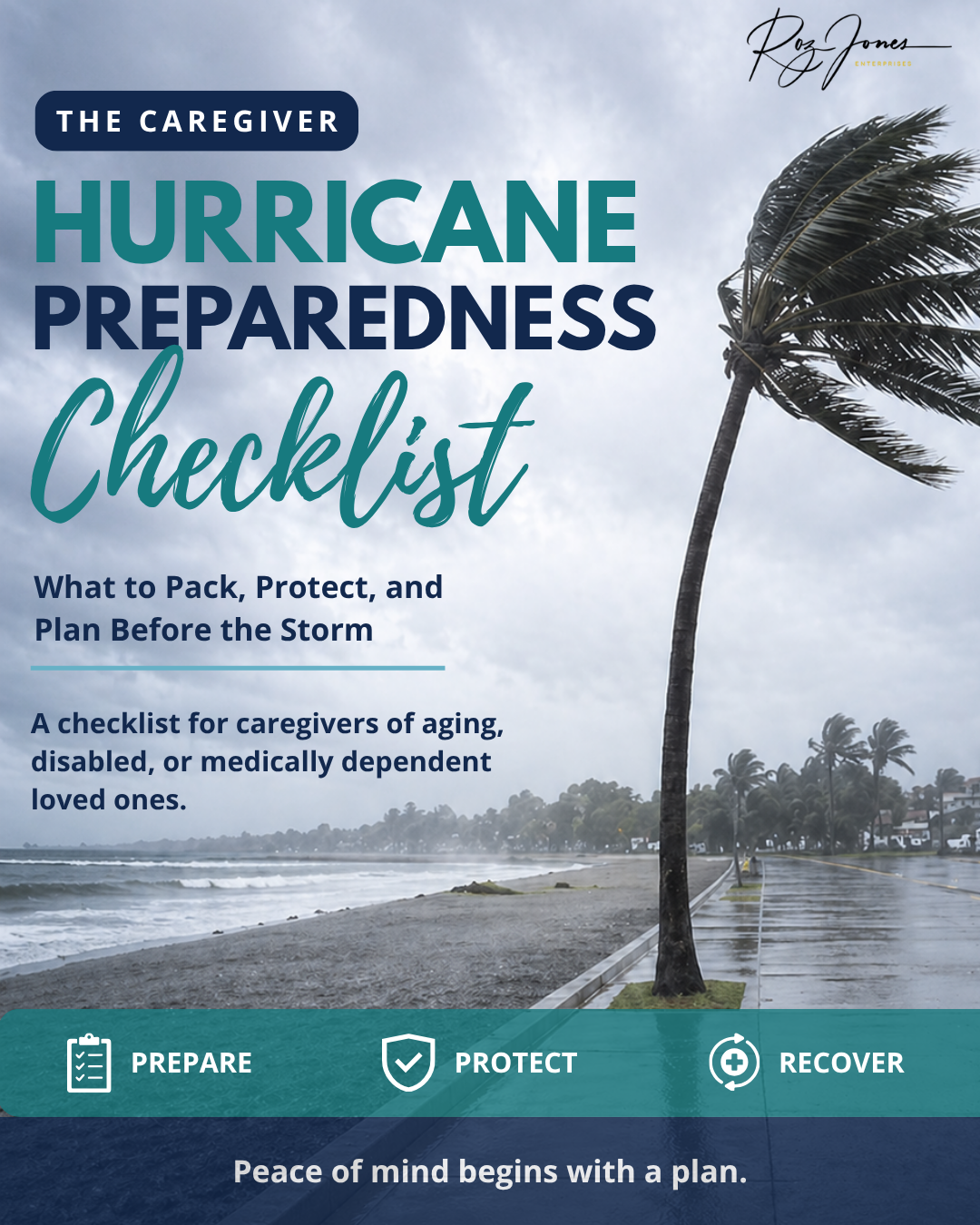
If you are caring for a loved one during storm season, purchase the Caregiver Hurricane Preparedness Checklist. It can help you prepare important documents, emergency contacts, supplies, medication needs, and safety steps before severe weather becomes a crisis.
For only $1.99, this checklist gives you a simple starting point so you are not trying to gather everything during a storm, power outage, hospitalization, or sudden change in your loved one’s care.
Purchase the Caregiver Hurricane Preparedness Checklist for $1.99 today and take one more step toward peace of mind.
Need Help Sorting Through the Care Plan?

If your family needs help thinking through care decisions, caregiving responsibilities, or next steps, book a session with Roz Jones. You do not have to navigate this season alone.
Together, we can talk through what is working, what is becoming too heavy, and what boundaries need to be strengthened so you can continue to care without losing yourself in the process.
Subscribe to The Caregiver Cafe Weekly Newsletter!

1. YOU ARE NOT ALONE: The problems you face as a caregiver are experienced by other caregivers. Knowing that you’re not alone can be comforting.
2. Tools and Resources: Find caregiver stress management tools and gain perspective from other caregiver’s experiences.
3. LEARN TO: Ask for help, accept help when it is offered, and acknowledge yourself on this caregiving journey. Hear from experts on how to balance caregiving responsibilities by taking care of your needs and involving others to help manage the natural stress and isolation of being a caregiver.

