The Caregiver’s Quiet Breaking Point

By Roz Jones

There is a breaking point caregivers do not always talk about.

It may not look like yelling.
It may not look like falling apart.
It may not look like walking away.

Sometimes it looks like sitting in the car before going inside because you need one more minute.

Sometimes it looks like staring at your phone when it rings and feeling your whole body tense up.

Sometimes it looks like forgetting simple things because your mind is holding too much.

Sometimes it looks like saying, “I’m fine,” when you are tired, overwhelmed, and one more request away from tears.

That is the quiet breaking point.

And many caregivers know it well.

In my previous blog, The Intersection of Mental Health and Caregiving for an Aging Loved One, I talked about the emotional challenges caregivers often face, including stress, anxiety, guilt, grief, burnout, depression, and the importance of self-care, support, communication, respite care, counseling, and asking for help.

Because caregiving does not only change your schedule.

It can change your mood, your body, your relationships, your patience, your sleep, your peace, and the way you move through the world.

And if nobody checks on the caregiver, the caregiver can reach a breaking point quietly.

When You Are Always “The One”

There is a certain weight that comes with being the one everybody depends on.

The one who remembers the appointments.
The one who calls the pharmacy.
The one who notices the changes.
The one who keeps track of the paperwork.
The one who updates the family.
The one who shows up when everyone else is busy.
The one who is expected to be strong because you have been strong for so long.

Being dependable is a beautiful thing.

But being depended on without support can become exhausting.

Caregivers are often praised for being strong, but not always supported in a way that actually helps.

Someone may say, “You’re doing such a good job,” but never offer to sit with your loved one.

Someone may say, “Let me know if you need anything,” but disappear when you ask for something specific.

Someone may have plenty of opinions about the care, but no real availability to share the work.

That kind of imbalance can wear on your mental health.

Not all at once.

Little by little.

Caregiving Can Stir Up Everything

Caring for an aging loved one can bring up emotions that do not fit neatly into one category.

You may feel love and resentment in the same afternoon.

You may feel grateful for more time with them and still grieve who they used to be.

You may want to help and still feel trapped by how much help is needed.

You may feel guilty for needing space.

You may feel angry that other people are not doing more.

You may feel sad watching your loved one lose independence, memory, mobility, confidence, or control.

And if there is family history, caregiving can bring that history right back into the room.

Old wounds.

Old roles.

Old expectations.

Old arguments.

Old patterns where one person carries the weight and everyone else assumes that is just how it is.

Caregiving is not only about what is happening now.

Sometimes it also touches everything that happened before.

That is why your mental health matters.

Because you are not just managing tasks.

You are managing emotions, memories, responsibilities, and relationships all at once.

The Mental Load Can Become Too Much

People can see the visible parts of caregiving.

They can see you driving to appointments, picking up groceries, organizing medication, cleaning the house, answering calls, and helping with daily needs.

But they may not see the invisible work.

The constant thinking.

The remembering.

The planning.

The worrying.

The listening for changes in your loved one’s voice.

The checking your phone to make sure you did not miss a call.

The wondering what happens if there is a fall, a hospital visit, a hurricane, a power outage, or a sudden emergency.

That mental load can feel like too many tabs open in your mind at the same time.

And even when you are supposed to be resting, part of you may still be on alert.

This is why caregivers need more than encouragement.

You need systems that help you stop carrying every detail from memory.

A current medication list.
A folder for important documents.
An emergency contact list.
A plan for appointments.
A backup caregiver.
A storm plan.
A family care plan.

These are not just organizational tools.

They are stress reducers.

They give your mind somewhere to place what it has been trying to hold alone.

Mental Health Is Part of the Care Plan

Caregivers often put their own mental health at the bottom of the list.

You tell yourself you will rest after the next appointment.

You will call the therapist after things calm down.

You will ask for help after the hospital discharge.

You will take a break after the family meeting.

You will deal with your own feelings later.

But later keeps moving.

And the care keeps growing.

Your mental health cannot be an afterthought. Not when you are making decisions, managing crises, communicating with family, advocating at appointments, and trying to keep your own life together.

If you are more irritable than usual, that matters.

If you are not sleeping, that matters.

If you are crying more often, that matters.

If you feel numb, that matters.

If you are avoiding calls, forgetting things, feeling anxious, or feeling like you are always bracing for the next problem, that matters too.

You do not have to wait until you fall apart to take your mental health seriously.

Support is not only for crisis.

Support is how you stay steady before everything becomes a crisis.

Communication Has to Get Clearer

One of the hardest parts of caregiving is that people often assume the main caregiver has everything handled.

Especially when you are capable.

Especially when you are organized.

Especially when you are the one who usually figures things out.

But being capable does not mean you should be carrying everything alone.

Sometimes family members need direct communication, not hints.

Instead of saying, “I need help,” try saying:

  • “I need you to handle pharmacy refills this month.”
  • “I need you to take Mom to her appointment on Thursday.”
  • “I need you to sit with Dad for three hours on Saturday so I can rest.”
  • “I need us to meet and talk about the emergency plan.”
  • “I need help paying for respite care.”
  • “I need you to be the backup contact if I am unavailable.”

Clear communication may feel uncomfortable at first, but it reduces confusion.

It also makes it harder for others to pretend they did not know what was needed.

Caregivers do not need vague concern.

Caregivers need shared responsibility.

Boundaries Are Care Too

Boundaries are not a lack of love.

Boundaries are what help love survive the pressure.

You may need to say:

  • “I cannot answer calls after 9 p.m. unless it is an emergency.”
  • “I cannot keep missing work without a backup plan.”
  • “I cannot pay for these expenses by myself.”
  • “I can help with appointments, but I cannot manage everything alone.”
  • “I need a break before I make another decision.”
  • “I need other family members involved.”

That is not selfish.

That is honest.

And honesty protects both the caregiver and the person receiving care.

When caregivers have no boundaries, resentment can build quietly.

Exhaustion can become normal.

Stress can become part of your personality.

And the breaking point gets closer.

Emergency Planning Protects Your Peace

When we talk about caregiver mental health, emergency planning may not be the first thing people think about.

But it should be.

Because nothing drains a caregiver faster than a crisis with no plan.

A hurricane.
A power outage.
A hospitalization.
A fall.
An evacuation.
A sudden change in health.

These moments are stressful enough on their own.

But they become even heavier when nobody knows where the documents are, what medications are needed, who should be called, what supplies are required, or what the plan is if your loved one cannot safely stay home.

Preparation does not remove every worry.

But it does reduce the chaos.

It helps you move from panic to action.

It gives family members something clear to follow.

It gives the caregiver a little room to breathe.

That matters.

Because the person holding the care plan should not also have to invent the plan in the middle of an emergency.

You Deserve Support Before You Break

Caregivers, please hear me.

You do not have to wait until you are angry, exhausted, sick, resentful, or completely overwhelmed before you ask for help.

You do not have to earn rest by reaching your limit.

You do not have to prove your love by sacrificing your mental health.

You are allowed to need support now.

You are allowed to need a plan now.

You are allowed to say, “This is too much for one person.”

You are allowed to care deeply and still admit that caregiving is affecting you.

The goal is not to stop caring.

The goal is to care in a way that does not cost you yourself.

Need Help Before the Breaking Point Becomes a Crisis?

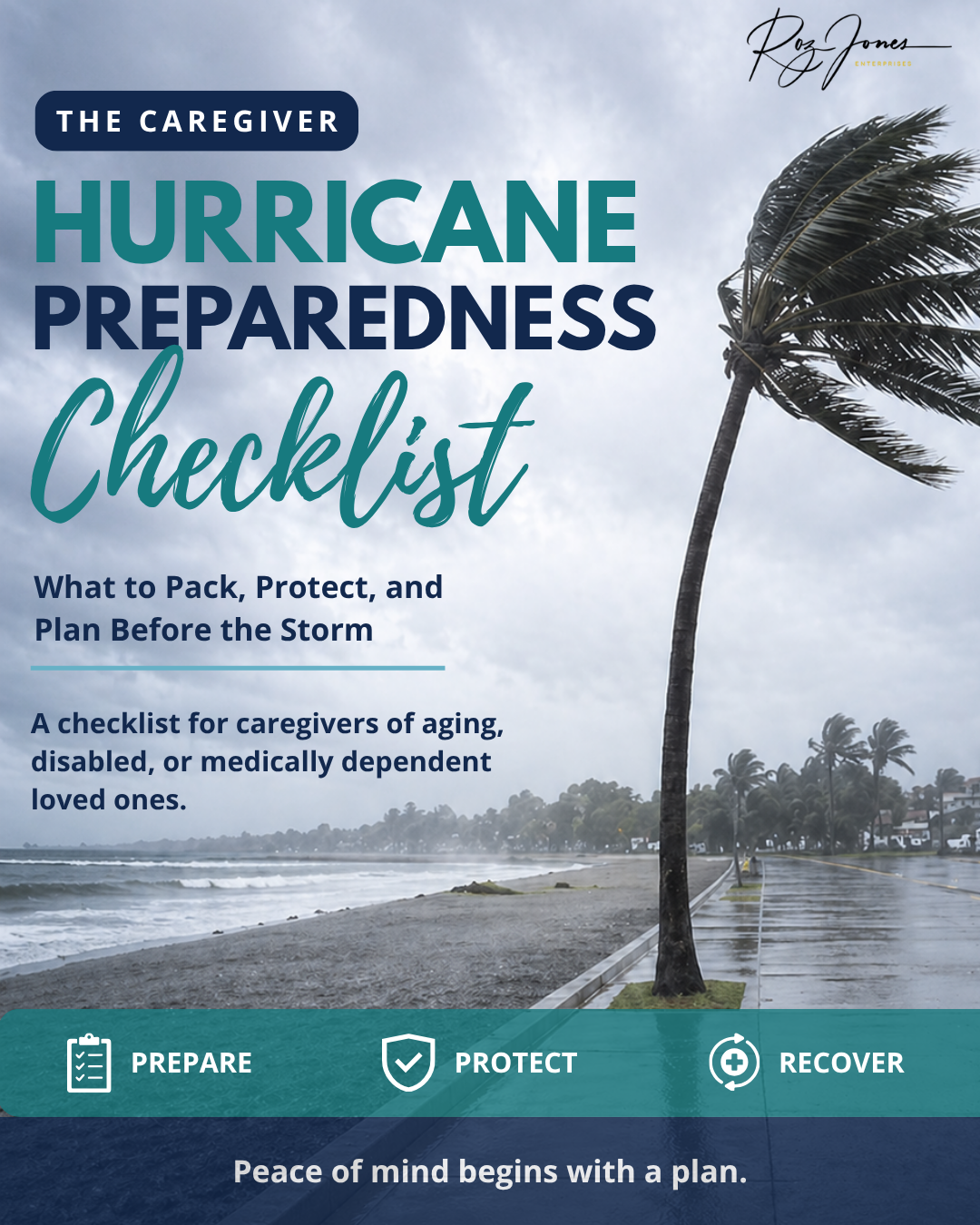
The Caregiver Hurricane Preparedness Checklist.

Caregivers, please do not wait until the storm is coming, the hospital calls, the medication list is missing, or the family is scrambling to figure out what should have already been written down.

Preparation is not panic.
Preparation is care.

That is why I created the Caregiver Hurricane Preparedness Checklist. For only $1.99, this checklist helps you organize the important details before an emergency happens, including medications, emergency contacts, documents, supplies, evacuation needs, and care information.Purchase the Caregiver Hurricane Preparedness Checklist today and give yourself one less thing to carry from me

When You Can’t Do it All Give Roz a Call!

Roz Jones is a dedicated caretaker turned CEO with over a decade of experience in helping families care for and make decisions for loved ones and their legacies.Roz is a compassionate, innovative healthcare industry leader.

If your caregiving situation feels bigger than a checklist, I invite you to book a Family Care Planning Session with me.

Together, we can look at what needs to be organized, what conversations need to happen, who needs to be involved, and what support needs to be put in place so you are not carrying the care plan alone.

You deserve support before you break.

Subscribe to The Caregiver Cafe Weekly Newsletter!

Caregiving can be a roller coaster of ups and downs. The information that you will receive from The Caregiver Cafe Weekly Specials Newsletter will support you as a caregiver. Remember…

1. YOU ARE NOT ALONE: The problems you face as a caregiver are experienced by other caregivers. Knowing that you’re not alone can be comforting. 

2. Tools and Resources:  Find caregiver stress management tools and gain perspective from other caregiver’s experiences.

3. LEARN TO: Ask for help, accept help when it is offered, and acknowledge yourself on this caregiving journey. Hear from experts on how to balance caregiving responsibilities by taking care of your needs and involving others to help manage the natural stress and isolation of being a caregiver. 

Before the Next Dose

A Guide to Medication Safety, Organization, and Emergency Readiness

By Roz Jones

Caregiving has a way of making you pay attention to the details.

The doctor’s appointments.
The insurance cards.
The pharmacy calls.
The pill bottles on the counter.
The vitamins in the kitchen cabinet.
The “as needed” medication that nobody can remember the last time they used.

And then there is the next dose.

The one that needs to be taken with food.
The one that should not be mixed with another medication.
The one that changed after the last doctor’s appointment.
The one that your loved one swears they already took, but you are not quite sure.

When you are caring for an aging loved one, medication management is not just another task on the list.

It is part of the care plan.

In my previous blog, Decluttering and Organizing Medication: A Guide for Caregivers, I talked about the importance of checking expiration dates, sorting medications, labeling bottles, using trackers, keeping medicine stored safely, and properly disposing of what is no longer needed.

But before the next dose, caregivers need more than a neat medicine cabinet.

They need a system that protects safety, reduces confusion, and helps everyone involved know what is being taken, when, why, and by whom.

Because medication mistakes do not always happen because someone does not care.

Sometimes they happen because the system is unclear.

Before the Next Dose, Know What Is Current

Before organizing anything, gather every medication and health-related item into one place.

Not just the prescription bottles.

Check the bathroom cabinet.
The kitchen drawer.
The nightstand.
The purse.
The car.
The old travel bag.
The refrigerator.
The weekly pill organizer.

Caregivers are often surprised by what they find.

Duplicate bottles.

Expired medication.

Old antibiotics.

Prescription pain medicine from a past procedure.

Supplements no one remembers buying.

Medicine that was discontinued but never removed from the home.

Before the next dose is given, you need to know what is actually current.

Separate everything into categories:

  • Daily medications: These are medications your loved one takes on a regular schedule.
  • As-needed medications: These may include pain relievers, allergy medication, inhalers, nausea medication, or anything taken only when symptoms appear.
  • Over-the-counter medications and supplements: This includes vitamins, herbal supplements, digestive support, cold medicine, sleep aids, and anything purchased without a prescription.
  • Expired or no-longer-needed medication:  These should be separated and disposed of properly.
  • Medications that need clarification: If you are not sure whether your loved one should still be taking something, do not guess. Set it aside and ask the pharmacist or provider.

Before the Next Dose, Update the Medication List

Every caregiver should have a current medication list.

Not one from two years ago.

Not one buried in a folder.

Not one saved only in one person’s phone.

A current list.

This list should include:

  • Name of each medication
  • Dosage
  • Time of day it is taken
  • How often it is taken
  • Why it is being taken
  • Name of the prescribing doctor
  • Pharmacy name and phone number
  • Allergies
  • Medical conditions
  • Notes about recent changes or side effects
  • Emergency contacts
  • Insurance information

Keep a printed copy somewhere easy to reach.

Keep a digital copy as a backup.

And make sure at least one other trusted person knows where to find it.

Because if there is a fall, a hospital visit, a power outage, an evacuation, or a sudden change in health, you do not want to rely on memory.

Memory gets tired.

Memory gets stressed.

Memory forgets the name of the little white pill when the nurse is asking questions in the emergency room.

A medication list gives the care team something clear to work from.

Before the Next Dose, Check for Changes

Medication routines can change quickly.

A doctor adjusts the dosage.

A specialist adds something new.

A hospital discharge summary includes new instructions.

The pharmacy changes the look of the pill because the manufacturer changed.

Your loved one stops taking something because it makes them feel dizzy.

Another family member gives an over-the-counter medicine without realizing it could interact with something else.

This is why caregivers need to review medications regularly, especially after:

  • Doctor’s appointments
  • Emergency room visits
  • Hospital stays
  • Rehab or skilled nursing stays
  • New diagnoses
  • New symptoms
  • Falls
  • Confusion
  • Changes in appetite or sleep
  • Pharmacy refill changes

Before the next dose, ask yourself:

  • Has anything changed?
  • Was anything added?
  • Was anything stopped?
  • Did the instructions change?
  • Does the pill look different?
  • Did the doctor and pharmacist both know about all the medications, supplements, and over-the-counter items being used?

These are the questions that help prevent avoidable confusion.

Before the Next Dose, Choose a System That Works in Real Life

A medication system only works if the caregiver and loved one can actually use it.

  • Some families do well with medication apps.
  • Some need a paper chart on the refrigerator.
  • Some prefer a weekly pill organizer.
  • Some need pharmacy-prepared pill packs.
  • Some need phone alarms.
  • Some need a nurse, aide, or family member to physically check in.

Do not choose a system because it sounds impressive.

Choose the one that will actually get used.

You may consider:

  • Weekly pill organizers: Helpful for routine medications, but they should be filled carefully and checked often.
  • Medication reminder apps: Helpful when caregivers need alerts or shared reminders.
  • Pharmacy blister packs or pill packaging: Helpful when medication schedules are complex or when confusion is becoming a concern.
  • Paper medication logs: Helpful for documenting when medication was taken, missed, refused, or changed.
  • Shared caregiver notes: Helpful when more than one person is providing support.

Before the next dose, the person helping should know what needs to happen without guessing.

Before the Next Dose, Watch What Your Loved One’s Body Is Telling You

Caregivers often notice changes first.

Aging loved ones may not always connect symptoms to medication.

They may say:

  • “I just feel funny.”
  • “I’m more tired than usual.”
  • “I feel dizzy.”
  • “I don’t have an appetite.”
  • “I don’t know why I keep falling.”
  • “I feel confused.”
  • “I feel weak.”
  • “I can’t sleep.”

Those changes matter.

They may be connected to illness, dehydration, aging, or something else entirely.

But medication should always be part of the conversation.

Before the next dose, pay attention to what is different.

  • Write it down.
  • Call the pharmacist.
  • Message the doctor.
  • Ask whether medications could be interacting.
  • Ask whether the dose needs to be reviewed.
  • Ask whether the medication is still needed.
  • And please do not stop prescription medication without speaking with the provider unless you have been clearly instructed to do so.

Your role is not to become the doctor.

Your role is to notice, document, and advocate.

That is caregiving.

Before the Next Dose, Store Medication Safely

Medication should be easy for the right person to access and hard for the wrong person to access.

That balance matters.

Keep medication away from children, pets, and anyone who may take it accidentally.

Pay attention to storage instructions. Some medications need to be kept at room temperature. Some may need refrigeration. Some should not be stored in humid spaces like bathrooms.

Also consider your loved one’s current ability.

If they are experiencing memory loss, confusion, vision changes, mobility limitations, or difficulty reading labels, the medication system may need to change.

That does not mean taking away independence.

It means creating support that matches their needs.

Safety is not disrespect.

Safety is care.

Before the Next Dose, Clear Out What No Longer Belongs

Expired or unused medication should not sit around the house.

It creates clutter. It creates confusion. It creates risk.

If a medication is expired, discontinued, duplicated, or no longer needed, separate it from the current medication routine.

Then ask your local pharmacy, doctor’s office, or community agency about safe disposal options.

Many communities offer medication take-back programs or disposal kiosks.

Do not assume every medication should be flushed or thrown away. Some medications have specific disposal instructions.

When in doubt, ask the pharmacist.

That one question can help prevent an unsafe mistake.

Before the Next Dose, Prepare for Emergencies

Medication organization is not separate from emergency planning.

It is part of emergency planning.

If there is a hurricane, power outage, hospitalization, evacuation, flood, or sudden change in health, medication access can become urgent.

Caregivers need to know:

  • Does my loved one have enough medication on hand?
  • Are refills current?
  • Which medications cannot be missed?
  • Which medications need refrigeration?
  • What happens if the power goes out?
  • Do we have a printed medication list?
  • Do we have pharmacy contact information?
  • Do we have copies of prescriptions or medical supply orders?
  • Does anyone else know the medication routine?
  • If we had to leave quickly, could we grab what we need?

This is where many families realize preparation is not just about bottled water and flashlights.

It is also about pill bottles, prescriptions, medical equipment, insurance cards, emergency contacts, and knowing who is responsible for what.

Before the next storm, before the next emergency, and before the next dose, make sure the plan is clear.

Need Help Getting Prepared?

The Caregiver Hurricane Preparedness Checklist.

Caregivers, please do not wait until everything is urgent to get organized.
Do not wait until the storm is coming.
Do not wait until the hospital calls.
Do not wait until the medication list is missing, the refill is empty, or the family is asking who knows what.
Preparation is not panic.
Preparation is care.


That is why I created the Caregiver Hurricane Preparedness Checklist.
For only $1.99, this checklist helps caregivers organize the important details before an emergency happens, including medications, emergency contacts, documents, supplies, evacuation needs, and care information.


Purchase the Caregiver Hurricane Preparedness Checklist for $1.99 today and make sure your loved one’s care plan is not left to memory.

When You Can’t Do it All Give Roz a Call!

Roz Jones is a dedicated caretaker turned CEO with over a decade of experience in helping families care for and make decisions for loved ones and their legacies.Roz is a compassionate, innovative healthcare industry leader.

If your caregiving situation feels bigger than a checklist, I invite you to book a Family Care Planning Session with me.

Together, we can look at what needs to be organized, what conversations need to happen, and what support needs to be put in place so you are not carrying the care plan alone.

Subscribe to The Caregiver Cafe Weekly Newsletter!

Caregiving can be a roller coaster of ups and downs. The information that you will receive from The Caregiver Cafe Weekly Specials Newsletter will support you as a caregiver. Remember…

1. YOU ARE NOT ALONE: The problems you face as a caregiver are experienced by other caregivers. Knowing that you’re not alone can be comforting. 

2. Tools and Resources:  Find caregiver stress management tools and gain perspective from other caregiver’s experiences.

3. LEARN TO: Ask for help, accept help when it is offered, and acknowledge yourself on this caregiving journey. Hear from experts on how to balance caregiving responsibilities by taking care of your needs and involving others to help manage the natural stress and isolation of being a caregiver. 

Before the Bell Rings: Things to Get You Ready for the School Season

By Roz Jones

As the anticipation of a new school season dawns upon us, caregivers stand at the forefront of orchestrating seamless transitions for their loved ones. This blog extends a helping hand to caregivers, offering a comprehensive guide to prepare for the school season with confidence and ease. Before the bell rings, let’s embark on a journey of preparation, ensuring that caregivers and their families step into the new school year fully equipped and ready to embrace the exciting days ahead.

1. Set Up a School-Ready Environment

Prepare a dedicated study space for your loved ones that is conducive to learning. Stock it with necessary school supplies, books, and a comfortable chair. Organize shelves and storage solutions to keep materials easily accessible. A well-organized study environment sets the tone for productive learning.

2. Organizing Calendars and Schedules

Create a family calendar that outlines important dates, school events, and extracurricular activities. Use digital tools or traditional planners to keep track of appointments, meetings, and deadlines. A well-structured calendar ensures that no important event is overlooked.

3. Back-to-School Shopping

Begin a shopping adventure to gather school essentials. Make a list of clothing, footwear, backpacks, lunch boxes, and school supplies. Engage your loved ones in the process, turning it into a bonding experience that combines both functionality and fun.

4. Incorporating Healthy Routines

Gradually adjust sleep schedules to align with school routines. Plan nutritious breakfasts and lunches to fuel the day. Encourage physical activity and outdoor play to ensure a healthy balance between learning and recreation.

5. Establish Open Lines of Communication with Educators

Establish open lines of communication with your loved ones’ teachers and educators. Attend school orientations, parent-teacher conferences, and stay engaged with classroom activities. Effective communication fosters a collaborative partnership in supporting your loved ones’ academic journey.

6. Extracurricular Activities

Explore enrichment programs and extracurricular activities that align with your loved ones’ interests. From sports to arts, these activities provide opportunities for skill development, social interaction, and personal growth.

7. Addressing Anxieties

Acknowledge and address any anxieties your loved ones may have about the upcoming school season. Foster open conversations, validate their feelings, and offer reassurance. Create a positive narrative around the school experience to instill confidence.

8. Prioritizing Me-Time

Engage in activities that rejuvenate your spirit, whether it’s reading, meditation, or spending time outdoors. Nurturing your well-being ensures you can support your loved ones with a refreshed heart.

9. Celebrating Milestones

Celebrate the beginning of the school season with a special activity or outing. Capture the excitement with photos and create a memory keepsake. Embrace each milestone as a chapter in your loved ones’ journey.

Before the bell rings, let this guide be your compass, leading you through the preparations for a successful and enriching school season. By embracing these thoughtful steps, caregivers ensure a smooth transition into the world of learning, growth, and shared experiences.


Planning a Summer Vacation with an Aging Loved One? Download the FREE Checklist!

Are you embarking on a summer vacation adventure with a loved one in need of care? Whether you’re a caregiver or know someone who is, we understand the unique challenges and considerations that come with vacationing while ensuring your loved one is safe..

Make your vacation experience stress-free and enjoyable for both you and your loved one, we’re excited to offer you a free downloadable checklist!

Stay Ahead of the Storm: Download Your Free Expert Storm Guide Now!

Photo by ALTEREDSNAPS on Pexels.com

As we know, June – November is Hurricane Season. As a family caregiver, there are many ways to prepare your loved ones for it. Early preparation helps reduce opportunities for stress and anxiety as storms approach.

One of the best ways to prepare is allowing your loved on to assist in packing their travel bag, checking their contact list and ensuring there are adequate emergency supplies.

Participation… not isolation… go a long way when preparing for major storms. This Seniors Storm Guide gives essential information to refer to again and again!


Shop The Caregiver Cafe E-Commerce Store!

We founded The Caregiver Cafe Shopify Store with one simple goal: to help you experiment with your passion while at the same time providing amazing prices. We were tired of cookie-cutter stores with lackluster selections, and boring gifts. Instead of offering a huge unoriginal collection, we carefully curate just a few unique pieces perfectly suited for people the taste buds like you.

We focus on items that get you excited about shopping again, as we believe buying online should always be fun!


Challenges of Balancing Work and Caregiver Responsibilities

Balancing work and caregiver responsibilities can be a significant challenge, as it involves juggling multiple demands and responsibilities simultaneously.

This is a common struggle for many caregivers and in this episode, I share a couple of those challenges and how one can adjust their hours or seek the help they need from loved ones.

Press play to listen in.

Subscribe to The Caregiver Cafe Weekly Newsletter!

Caregiving can be a roller coaster of ups and downs. The information that you will receive from The Caregiver Cafe Weekly Specials Newsletter will support you as a caregiver. Remember…

1. YOU ARE NOT ALONE: The problems you face as a caregiver are experienced by other caregivers. Knowing that you’re not alone can be comforting. 

2. Tools and Resources:  Find caregiver stress management tools and gain perspective from other caregiver’s experiences.

3. LEARN TO: Ask for help, accept help when it is offered, and acknowledge yourself on this caregiving journey. Hear from experts on how to balance caregiving responsibilities by taking care of your needs and involving others to help manage the natural stress and isolation of being a caregiver.