

By Roz Jones
Every aging loved one does not need the same kind of vacation.
Some may enjoy the ease of a cruise. Some may prefer the comfort of a resort. Some may feel better traveling with a group where everything is planned. Others may need the quiet and flexibility of a vacation rental where the family can move at its own pace.
That is why caregivers have to think beyond the destination.
The question is not just, “Where should we go?”
The question is, “What kind of travel experience will support my loved one best?”
Because when you are traveling with an aging loved one, the right setting can make all the difference. It can reduce stress. It can protect their energy. It can help them feel included. It can give the caregiver more breathing room. And it can turn a trip that feels overwhelming into one that feels possible.
Traveling with an aging loved one does not have to mean doing everything the hard way.
But it does mean choosing wisely.
Start With the Kind of Support Your Loved One Needs
Before choosing between a group tour or a vacation rental, take a moment to think about how your loved one moves through the day.
Do they do better with structure or flexibility? Do they enjoy being around people, or do they need quiet time? Can they walk for longer periods, or do they need frequent rest breaks? Are they comfortable with changes in schedule? Do they need meals at certain times? Do they need space for medical equipment, mobility aids, or caregiving support?
Those answers should guide the travel plan.
A group tour may sound wonderful, but it may not be the best fit if your loved one becomes exhausted by long days or strict schedules. A vacation rental may sound relaxing, but it may require more planning from the caregiver if meals, transportation, and activities are not already arranged.
Neither option is automatically better.
The best option is the one that fits your loved one’s needs and your capacity as the caregiver.
When Group Tours Can Be Helpful
Group tours can be a good choice for aging loved ones who enjoy structure, social interaction, and guided experiences.
One of the benefits of a group tour is that many of the details are already planned. Transportation, activities, lodging, and schedules may be handled by the tour company. That can reduce the pressure on the caregiver who is usually the one researching, booking, confirming, calling, and coordinating.
For some caregivers, that kind of support is a relief.
Instead of carrying every detail alone, there is a plan already in place.
Group tours can also offer companionship. Aging loved ones may enjoy meeting other travelers, hearing stories, sharing meals, and feeling part of a group. For seniors who have felt isolated, this can bring a sense of connection.
But caregiver, structure can be helpful only if it is realistic.
Before booking a group tour, look closely at the activity level. Ask how much walking is involved. Ask whether mobility devices can be used. Ask how often the group stops for rest. Ask if there are accessible bathrooms along the way. Ask what happens if your loved one needs to skip an activity or return early.
A good tour should not make your loved one feel rushed, embarrassed, or left behind.
The goal is not to keep up with everybody else.
The goal is to enjoy the experience safely.
Look Beyond the Brochure
Travel brochures can make everything look easy.
Beautiful photos. Smiling people. Perfect weather. Smooth paths. Relaxed meals. Comfortable transportation.
But caregivers know to ask deeper questions.
Is the bus easy to board? Are there stairs at the sites? How far is the hotel room from the lobby? Is luggage assistance provided? Is there time to sit between activities? Are meals flexible for dietary needs? Are guides trained to support older adults? Is there a plan for emergencies?
These questions matter because aging loved ones may not always speak up when something is too much. They may push themselves because they do not want to be difficult. They may say they are fine because they do not want to slow anyone down.
Caregivers have to pay attention to what is being offered and what is not being said.
A senior-friendly tour should make room for real aging bodies, not just active older adults who can move through a packed schedule without support.
That difference matters.
When Vacation Rentals Make More Sense
Vacation rentals can be a good fit for caregivers and aging loved ones who need privacy, flexibility, and a slower pace.
A rental home, condo, or apartment may allow the family to create a routine that feels more familiar. There may be space to cook meals, rest in separate rooms, store medical supplies, do laundry, and move through the day without the pressure of hotel schedules or group activities.
For some aging loved ones, that home-like setting can bring comfort.
They can wake up slowly. Eat familiar foods. Take breaks. Sit outside. Watch television. Spend time with family without feeling like they have to be “on” all day.
This can be especially helpful for loved ones who experience memory changes, anxiety, mobility challenges, dietary needs, or fatigue.
But vacation rentals also require careful planning.
A rental may look beautiful online and still be a poor fit for an aging loved one.
There may be stairs at the entrance. The bathroom may not have grab bars. The shower may be difficult to step into. The bedrooms may be on another floor. The driveway may be steep. The furniture may be too low. The nearest hospital or pharmacy may be farther away than expected.
Caregiver, do not assume.
Ask questions before you book.
Check the Layout Before You Commit
When booking a vacation rental, the layout matters.
Look at the photos carefully. Read the description closely. Message the host or rental company with specific questions. Ask about stairs, bathroom setup, bed height, doorway width, parking, lighting, flooring, and how close the rental is to grocery stores, pharmacies, urgent care, and local support.
If your loved one uses a walker, wheelchair, cane, shower chair, oxygen equipment, CPAP machine, or other medical support, think through how that equipment will fit into the space.
Also think about the caregiver’s needs.
Will you have space to rest? Will you be able to sleep? Will you have help preparing meals? Will you be able to get your loved one in and out safely? Will you be carrying luggage, groceries, equipment, and caregiving tasks without enough support?
A vacation rental can be peaceful, but only if the setup works for the whole care situation.
The goal is not just to find a pretty place.
The goal is to find a place that supports the care.
Choose Flexibility Without Losing Structure
One of the best things about vacation rentals is flexibility.
But too much flexibility can also create stress if there is no plan.
Caregivers may find themselves asking every day, “What are we doing today? What are we eating? Who is driving? Where is the closest bathroom? How far is the activity? Can my loved one handle this?”
That is why a loose plan still helps.
You do not need every minute scheduled, but it is helpful to have a few anchors in the day.
A steady breakfast time.
A planned rest period.
One main activity instead of several.
A simple dinner plan.
A backup activity if the weather changes.
A quiet evening routine.
These anchors can help your loved one feel more settled and help the caregiver feel less like everything is being figured out on the spot.
Flexibility works best when it has a little structure underneath it.
Do Not Plan the Trip Around Who Your Loved One Used to Be
This part can be emotional.
Sometimes caregivers and families plan trips based on who their aging loved one used to be.
The person who used to walk all day.
The person who loved crowded places.
The person who could travel without medication reminders.
The person who never needed help in the bathroom.
The person who could stay up late and be ready to go early the next morning.
But caregiving asks us to pay attention to who our loved one is now.
That does not mean we stop honoring who they have been.
It means we plan with love for who they are today.
That may mean choosing a slower group tour. It may mean renting a one-level home. It may mean shortening the trip. It may mean building in rest days. It may mean choosing connection over a packed itinerary.
A trip does not have to look the way it used to in order to matter.
Sometimes the sweetest moments come when the family stops forcing the old rhythm and starts respecting the new one.
Keep Safety and Joy Together
Caregivers can sometimes feel like planning for safety takes away from the fun.
But safety and joy can exist together.
A comfortable bathroom setup can help your loved one relax. A slower schedule can help them enjoy the outing. A group tour with the right pace can help them feel included. A vacation rental with the right layout can help everyone breathe easier.
Planning for safety does not mean expecting the worst.
It means making room for the best parts of the trip to happen without unnecessary stress.
Your loved one deserves to enjoy the vacation.
And caregiver, so do you.
Keep Building Your Travel Plan
If you missed the first blog, you can read Enriching Senior-Friendly Vacation Options: Group Tours and Vacation Rentals here. It is a helpful starting point for understanding how group tours and vacation rentals can support aging loved ones in different ways.
This blog builds on that reminder with one more truth:
The right travel option is the one that fits your loved one’s real needs.
Not just their old routine.
Not just the family tradition.
Not just the prettiest destination.
But their current energy, mobility, comfort, safety, and emotional well-being.
Caregiver, you do not have to make travel complicated to make it meaningful.
You can choose a group tour that gives structure and support.
You can choose a vacation rental that gives privacy and flexibility.
You can choose a slower pace.
You can choose fewer activities.
You can choose rest.
You can choose connection.
Because the goal is not to prove that your loved one can still do everything.
The goal is to help them enjoy what they can do with dignity, comfort, and care.
Download the Vacationing With an Aging Loved One Checklist for FREE!

Before your next trip, download the free Vacationing with an Aging Loved One Checklist. This resource can help you think through what needs to be packed, planned discussed, and prepared before travel begins!
Tune in to The Caregiver Café Podcast

In this episode of The Caregiver Café with Roz Jones, Roz is talking about something that many families face but do not always know how to handle: caregiving as a family affair.
When an aging parent, loved one, or family member needs care, one person often becomes the main caregiver while everyone else steps back, scatters, or assumes that person has it all under control. But caregiving should not fall on one person without a plan, support, or honest family conversations.
Roz breaks down how families can reduce the chaos in caregiving by understanding where tension comes from, setting realistic expectations, creating a care plan, assigning roles, and being honest about what each person can and cannot do. She also reminds listeners that every family member may not be able or willing to provide hands-on care, and that is why outside resources, respite care, and hired support may need to become part of the plan.
This episode is a practical reminder that caregiving requires communication, boundaries, preparation, and teamwork. Whether you live close by or long distance, there is usually some way to support the person providing daily care.
Caregiving may be a family affair, but it works best when the family has a plan.
Give Yourself a Moment of Grace

If you need encouragement for the emotional side of caregiving, purchase Roz Jones’ book, Moments of Grace. This book offers support, reflection, and reminders of grace for the caregiver who is carrying a lot.
This journal was created to help caregivers pause, breathe, reflect, and find strength in the middle of the caregiving journey.
Purchase Moments of Grace today and give yourself permission to breathe in the middle of the caregiving journey.
Prepare Before the Emergency Comes
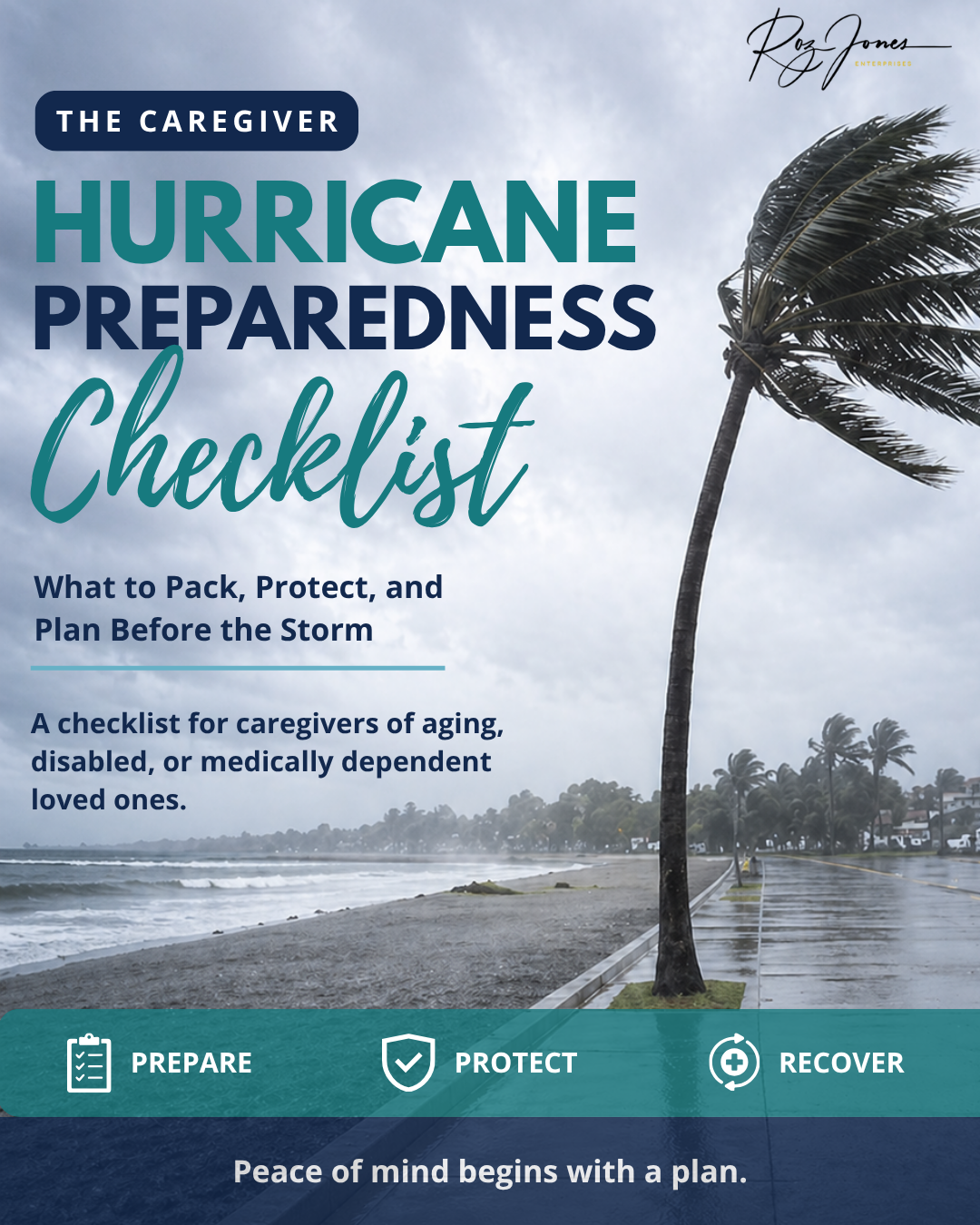
If you are caring for a loved one during storm season, purchase the Caregiver Hurricane Preparedness Checklist. It can help you prepare important documents, emergency contacts, supplies, medication needs, and safety steps before severe weather becomes a crisis.
For only $1.99, this checklist gives you a simple starting point so you are not trying to gather everything during a storm, power outage, hospitalization, or sudden change in your loved one’s care.
Purchase the Caregiver Hurricane Preparedness Checklist for $1.99 today and take one more step toward peace of mind.
Need Help Sorting Through the Care Plan?

If your family needs help thinking through care decisions, caregiving responsibilities, or next steps, book a session with Roz Jones. You do not have to navigate this season alone.
Together, we can talk through what is working, what is becoming too heavy, and what boundaries need to be strengthened so you can continue to care without losing yourself in the process.
Subscribe to The Caregiver Cafe Weekly Newsletter!

1. YOU ARE NOT ALONE: The problems you face as a caregiver are experienced by other caregivers. Knowing that you’re not alone can be comforting.
2. Tools and Resources: Find caregiver stress management tools and gain perspective from other caregiver’s experiences.
3. LEARN TO: Ask for help, accept help when it is offered, and acknowledge yourself on this caregiving journey. Hear from experts on how to balance caregiving responsibilities by taking care of your needs and involving others to help manage the natural stress and isolation of being a caregiver.

