Recognizing the Leadership Skills You Use Every Day as a Caregiver

By Roz Jones

When you hear the word leadership, what comes to mind? You may picture a manager directing a team, an executive making important decisions, or someone responsible for overseeing an organization. But leadership does not always come with a title, an office, or a paycheck. Sometimes, leadership looks like a daughter coordinating her mother’s medical appointments, a son making sure his father has what he needs at home, or a family member stepping in to help everyone navigate the changing needs of an aging loved one.

Caregiving requires you to make decisions, communicate with different people, manage responsibilities, and respond when circumstances change. You may not think of these actions as leadership because they have become part of your everyday routine. However, the ability to recognize what needs to be done, determine the next steps, and follow through is an important part of leading. Understanding this can help you see your caregiving experience differently, especially when you have spent so much time focusing on what your loved one needs.

Leadership Begins With Taking Initiative

As a caregiver, you may be the person who notices when something needs attention before anyone else does. You recognize that an appointment needs to be scheduled, a prescription needs to be refilled, or a change in your loved one’s routine requires further consideration. Instead of waiting for someone else to take responsibility, you begin figuring out what needs to happen.

Taking initiative does not mean you must handle every task yourself. It means recognizing a need and taking appropriate steps to address it. Sometimes that involves making a phone call, gathering information, asking for professional guidance, or letting another family member know that assistance is needed. Other times, it means recognizing that a situation requires more support than you can reasonably provide on your own.

These decisions may seem ordinary because they happen so frequently. Yet they require you to pay attention, assess what is happening, and determine how to move forward. As you reflect on your caregiving responsibilities, consider how often you have taken the first step toward solving a problem or making sure something important was not overlooked. Those moments demonstrate initiative, even if no one has ever called it leadership.

Making Decisions When There Is No Easy Answer

One of the more demanding parts of caring for an aging loved one is making decisions when the right answer is not immediately clear. You may need to consider changes in living arrangements, additional support at home, transportation options, or how to respond when your loved one’s needs become more complex. These decisions can involve practical concerns, personal preferences, financial limitations, and the emotions of everyone involved.

You may not always feel confident when making these choices. Sometimes you will need to gather more information, speak with healthcare professionals, consult other family members, or revisit a decision as circumstances change. Leadership does not require you to know everything. It requires you to recognize what you know, identify what you still need to understand, and take the time to make informed decisions.

It is also important to remember that your loved one should remain part of decisions affecting their life whenever possible. Their preferences, concerns, independence, and dignity deserve consideration. Taking responsibility for caregiving does not mean taking away their voice. In many situations, good leadership involves listening carefully, respecting your loved one’s wishes, and helping them understand the available options so decisions can be made together.

Learning to Coordinate People and Responsibilities

Caregiving can involve more people than the caregiver and the aging loved one. You may communicate with healthcare providers, relatives, transportation services, home care professionals, insurance representatives, and other people who play a role in providing support. Each person may have different information, responsibilities, and expectations. Keeping everyone informed can require considerable coordination.

You may find yourself confirming appointments, sharing updates, tracking instructions, and making sure the people involved understand what needs to happen next. If several relatives participate in caregiving, you may also need to coordinate schedules and clarify who is responsible for particular tasks. When communication breaks down, important details can be missed, leaving you to figure out how to address the situation.

These responsibilities require organization, clear communication, and an understanding of how different tasks connect. They also highlight the importance of setting expectations. When possible, establish who is responsible for each task, how updates will be shared, and what should happen if someone cannot fulfill their commitment. You should not have to keep every detail in your head or serve as the only person who knows what is happening.

Coordinating care is meaningful work, but it can become exhausting when everyone assumes you will manage the entire process. Recognizing your leadership abilities should also remind you that leadership includes knowing when responsibilities need to be shared.

Advocating for Your Loved One

There may be times when you need to speak up to make sure your loved one’s needs are understood. You might need clarification about a medical recommendation, ask questions about available services, communicate a concern to a healthcare professional, or request that someone explain information in a way your loved one can understand.

Advocacy requires preparation, patience, and the willingness to ask questions even when doing so feels uncomfortable. You may need to explain why a concern matters, seek additional information, or follow up when you have not received a clear response. You may also need to help your loved one communicate their preferences, particularly when they feel overwhelmed or have difficulty navigating a complicated system.

You do not have to be an expert in every subject to advocate effectively. You need to recognize when something is unclear, ask appropriate questions, and seek reliable information. It is also important to distinguish between speaking on behalf of your loved one when necessary and speaking over them when they can communicate for themselves.

The ability to advocate is not limited to medical appointments. It can also mean making sure your loved one is treated with respect, that their concerns are heard, and that the people involved in their care understand what matters to them. These actions help protect their dignity while supporting their ability to participate in decisions about their life.

Staying Flexible When the Plan Changes

Even the most organized caregiver cannot control every situation. An appointment may be canceled, a family member may become unavailable, or your loved one may need a different level of assistance than they did the week before. When circumstances change, you may have to reconsider your plans and determine what needs immediate attention.

This requires flexibility, but flexibility does not mean accepting every disruption without limits. It means recognizing what has changed, identifying the most important priorities, and deciding what adjustments are reasonable. Some situations will require immediate action, while others can wait until you have more information or assistance.

It is helpful to separate what must be addressed now from what can be handled later. When several responsibilities compete for your attention, determine which needs affect your loved one’s immediate safety or well-being and which can be scheduled for another time. If a situation exceeds what you can manage, reach out to the appropriate professional or support person rather than trying to solve everything alone.

You may have learned to adapt because caregiving leaves little room for everything to go according to plan. Recognizing that ability can help you appreciate how much thought and judgment you bring to your responsibilities.

Leadership Also Means Knowing Your Limits

Caregivers sometimes become the default person for every decision and every problem. Because you have been dependable, family members may assume you will continue managing everything. You may also find it difficult to step back because you worry that something will be missed if you are not involved.

However, leadership is not measured by how much responsibility one person can carry without help. It also involves recognizing when a situation requires additional resources, communicating limitations, and creating arrangements that do not depend entirely on one individual.

You may need to explain which responsibilities you can manage and which require assistance. You may need to ask relatives to take on specific tasks rather than making a general request for help. If family support is limited, you may need to explore community resources, professional caregiving services, or other options that fit your circumstances.

These conversations are not always easy, particularly when family members disagree about what should happen or how responsibilities should be divided. Still, being honest about your limits is important. Your loved one’s needs matter, and so does your ability to continue providing care without placing yourself in an unsustainable position.

Give Yourself Credit for the Work You Are Doing

Because caregiving responsibilities often repeat themselves, it can be easy to overlook the judgment and effort involved. You may focus on the appointments that still need to be scheduled, the paperwork that remains unfinished, or the problems that have not yet been resolved. When your attention is always on the next responsibility, you may rarely pause to recognize what you have already managed.

Take a moment to consider the decisions you have made, the situations you have helped navigate, and the ways you have supported your loved one through changing circumstances. Think about the times you stepped in when something needed attention, asked questions when information was unclear, or organized people and resources to address a concern. These experiences represent more than a list of tasks. They show how you have learned to respond to responsibility.

Recognizing these abilities does not mean pretending caregiving is easy or suggesting that every experience has been positive. It means acknowledging the effort and judgment required to manage a role that can be both demanding and deeply personal.

As you continue caring for your aging loved one, remember that leadership does not always look like being in charge. Sometimes it means listening, asking for help, making a thoughtful decision, or recognizing that the next step requires a different approach. You may already be practicing these skills every day without giving yourself credit for them.

If you haven’t read the original article that inspired this series, revisit Why Your Caregiving Skills Are Transferable to Your 9-5. It explores the valuable skills caregivers develop through their daily responsibilities, including communication, organization, problem-solving, and teamwork. Recognizing these abilities is an important step toward understanding the experience you bring to everything you do.

Tune in to The Caregiver Café Podcast

The Mindset of a Caregiver

For additional insight into the beliefs and expectations that shape your caregiving experience, tune in to The Caregiver Cafe Podcast with Roz Jones: The Mindset of a Caregiver. Take time to reflect on how you approach your responsibilities and where a different perspective may help you recognize your own needs alongside those of your loved one.

Give Yourself a Moment of Grace

For more encouragement through the emotional parts of the caregiving journey, Moments of Grace offers reflections for caregivers navigating responsibility, change, difficult days, and the moments of grace that can still be found along the way.

Preparing for hurricane season?
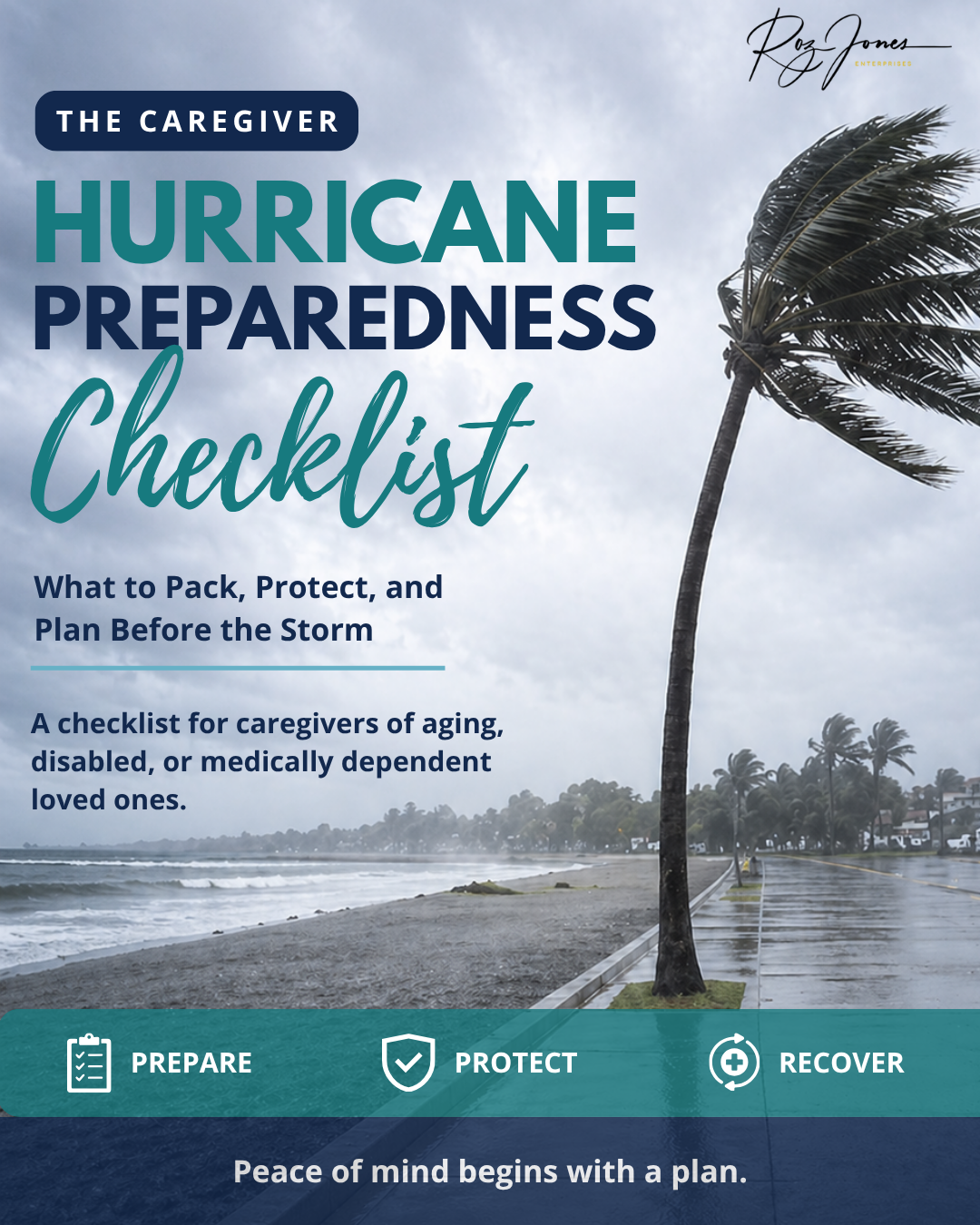
The Caregiver Hurricane Preparedness Checklist.

Help organize important emergency-planning considerations for your loved one. Having essential information and preparations in order can support your caregiving responsibilities when unexpected circumstances arise.

Subscribe to The Caregiver Cafe Weekly Newsletter!

Caregiving can be a roller coaster of ups and downs. The information that you will receive from The Caregiver Cafe Weekly Specials Newsletter will support you as a caregiver. Remember…

1. YOU ARE NOT ALONE: The problems you face as a caregiver are experienced by other caregivers. Knowing that you’re not alone can be comforting. 

2. Tools and Resources:  Find caregiver stress management tools and gain perspective from other caregiver’s experiences.

3. LEARN TO: Ask for help, accept help when it is offered, and acknowledge yourself on this caregiving journey. Hear from experts on how to balance caregiving responsibilities by taking care of your needs and involving others to help manage the natural stress and isolation of being a caregiver. 

Turning Your Caregiving Experience Into Your Career Story

By Roz Jones

Adding caregiving experience to your resume is an important first step, but eventually someone may ask you to talk about that experience. That is where many caregivers begin second-guessing themselves. You may know exactly how much responsibility you carried while caring for an aging loved one, but explaining that experience in a professional setting can feel different. You may wonder whether an employer will understand the value of what you did or whether they will only see the time you spent away from traditional employment.

In the previous blog, we talked about recognizing caregiving as real experience and identifying the skills that belong on your resume. The next step is learning how to speak about that experience with confidence. You do not have to minimize caregiving, apologize for it, or make it sound like something it was not. You simply need to explain what you learned, what you managed, and how those skills connect to the work you are prepared to do next.

Stop Treating Caregiving Like an Empty Space

Caregivers often describe time away from traditional employment as a gap, but that word can make it sound as though nothing happened during those years. In reality, you may have been coordinating appointments, managing schedules, communicating with healthcare professionals, organizing records, solving problems, handling emergencies, managing household responsibilities, and making decisions under pressure.

That does not mean every caregiving responsibility belongs in every professional conversation. It means you should stop approaching your experience as something that needs to be hidden. If caregiving explains a period away from the workforce, you can acknowledge it clearly and move the conversation toward what you learned and what you are ready to contribute now.

Know the Story You Want to Tell

Before an interview or networking conversation, think about how you want to describe your caregiving experience. You do not need to share every personal detail about your aging loved one’s health or family circumstances. The focus should remain on your role, your responsibilities, and the skills you developed.

You might explain that you stepped away from traditional employment to provide full-time care for a family member and that the experience strengthened your organization, communication, problem-solving, scheduling, and advocacy skills. From there, connect those skills to the position you are pursuing. The goal is not to convince someone that caregiving and traditional employment are exactly the same. The goal is to show that the skills you developed did not disappear simply because they were learned outside of a workplace.

Use Specific Examples Instead of General Statements

Saying that caregiving taught you patience or organization is a start, but examples make those skills easier to understand. Think about situations where you had to coordinate several responsibilities, communicate with different people, adjust quickly when plans changed, or find a solution when something did not go as expected.

You may have coordinated several medical appointments while managing transportation and household responsibilities. You may have created a system for medications, paperwork, or important contacts. You may have communicated with healthcare providers and family members while making sure important information did not get lost. Those examples give employers a clearer picture of how you actually used the skills listed on your resume.

Translate the Experience Into Workplace Language

Caregiving has its own language, and employers may not automatically understand how those responsibilities connect to a professional role. Learning to translate what you did can help make the connection clearer.

Managing an aging loved one’s schedule required organization and time management. Communicating with doctors, insurance representatives, family members, and service providers required communication and coordination. Adjusting quickly when a caregiver canceled, an appointment changed, or an unexpected health concern developed required flexibility and problem-solving. Keeping records organized required attention to detail. Advocating for your loved one required preparation, persistence, and the ability to communicate clearly.

You are not changing the truth about your experience. You are explaining it in language that helps another person understand how those skills can transfer into the workplace.

Decide What You Want to Keep Private

You are allowed to have boundaries around your caregiving story. An interview should not require you to explain every diagnosis, family conflict, financial challenge, or emotional experience connected to caring for your loved one. There may be personal details that shaped your experience but do not need to become part of a professional conversation.

Prepare enough ahead of time that you know where those boundaries are. You can explain why you stepped away from work without sharing private health information. You can discuss the responsibilities you managed without explaining every difficult moment. Keeping parts of your caregiving experience private does not make your story less valuable. It means you are choosing which information is relevant to the conversation.

Do Not Undersell What You Learned

Some caregivers hesitate to describe their abilities confidently because no company hired them to perform those responsibilities. You may think the skills do not count because you learned them while caring for someone you love instead of receiving a paycheck.

The setting does not erase the skill.

If you learned how to organize complicated information, communicate with multiple people, advocate effectively, manage competing priorities, or remain calm while responding to changing circumstances, those abilities are still real. You should be able to talk about them without exaggerating and without dismissing them.

Confidence does not mean pretending caregiving prepared you for every possible job. It means understanding which parts of your experience are relevant and being able to explain them clearly.

Be Ready to Talk About What Comes Next

Employers may also want to know why you are returning to work or why you are pursuing a particular opportunity now. Give some thought to that question before you are sitting in an interview trying to answer it for the first time.

Your answer can focus on the future. You may be ready to return to your career, explore a different field, use skills you developed during caregiving, rebuild financial independence, or pursue work that fits the next stage of your life. Whatever the reason, you do not have to sound apologetic about the path that brought you there.

Caregiving may have interrupted one version of your career, but that does not mean it ended your ability to build another one.

Give Yourself Time to Rebuild Professional Confidence

Returning to professional spaces after spending months or years focused on caregiving can feel unfamiliar. You may question whether your skills are current, whether you still know how to interview, or whether you belong in the room with candidates who followed a more traditional career path.

Confidence may not return all at once. Practice talking about your experience out loud. Review your resume until you are comfortable explaining what is on it. Reconnect with professional contacts when you are ready. Give yourself room to learn what has changed in your industry without treating every new skill you need to learn as evidence that you have fallen behind.

You are not starting from nothing. You are returning with experience that may look different from what you originally planned.

Your Caregiving Story Is Part of Your Experience

Caregiving may not have been the career move you expected to make, but the time you spent caring for an aging loved one still shaped how you communicate, organize, respond to challenges, and manage responsibility. Those experiences can become part of your professional story without becoming the only thing that defines you.

Know what you learned, choose the examples that demonstrate your abilities, protect the details you want to keep private, and practice explaining how those skills connect to where you want to go next. You do not need to apologize for the caregiving chapter of your life. You need to understand how to carry the lessons from that chapter forward.

If you have not read the first blog in this series, go back and read Have You Added Your Caregiving Experience to Your Resume? for more about identifying transferable caregiving skills and incorporating that experience into your resume.

Tune in to The Caregiver Café Podcast

Getting More Done

Caregiving already comes with more than enough responsibilities, which makes it important to have tools that help you manage what needs to be done without feeling like everything has to live in your head. Tune in to The Caregiver Cafe Podcast: Getting More Done for encouragement and practical guidance around staying productive while managing the responsibilities that come with caregiving.

Give Yourself a Moment of Grace

For more encouragement through the emotional parts of the caregiving journey, Moments of Grace offers reflections for caregivers navigating responsibility, change, difficult days, and the moments of grace that can still be found along the way.

Preparing for hurricane season?

The Caregiver Hurricane Preparedness Checklist.

Preventive healthcare is only one part of being prepared as a caregiver. Emergencies can interrupt medications, appointments, transportation, medical equipment, and the routines your aging loved one depends on. The Caregiver Hurricane Preparedness Checklist can help you organize important information, supplies, medications, and caregiving details before severe weather creates another layer of stress.

Subscribe to The Caregiver Cafe Weekly Newsletter!

Caregiving can be a roller coaster of ups and downs. The information that you will receive from The Caregiver Cafe Weekly Specials Newsletter will support you as a caregiver. Remember…

1. YOU ARE NOT ALONE: The problems you face as a caregiver are experienced by other caregivers. Knowing that you’re not alone can be comforting. 

2. Tools and Resources:  Find caregiver stress management tools and gain perspective from other caregiver’s experiences.

3. LEARN TO: Ask for help, accept help when it is offered, and acknowledge yourself on this caregiving journey. Hear from experts on how to balance caregiving responsibilities by taking care of your needs and involving others to help manage the natural stress and isolation of being a caregiver. 

When Work Inclusion Becomes Everyday Support

By Roz Jones

Workplace inclusion means more than hiring someone with a disability or approving a single accommodation. For aging loved ones who want to remain employed, real inclusion often depends on what happens after the initial conversation. The workplace has to continue responding to changing needs without treating disability as a reason to lower expectations, isolate the employee, or remove opportunities for growth.

That balance matters because disability does not erase professional experience, skills, or the desire to contribute. An aging loved one may need support in one area while remaining fully capable in many others. A truly inclusive workplace recognizes those differences without defining the employee only by the accommodation they receive.

Inclusion Should Support the Job, Not Replace It

Reasonable accommodations are designed to help qualified employees perform essential job functions and access the same employment opportunities as other workers. Under the Americans with Disabilities Act, covered employers may need to consider changes such as modified schedules, accessible equipment, job restructuring, telework, or reassignment when appropriate. The accommodation must be effective, but it does not remove the employee’s responsibility to perform the essential functions of the position.

That distinction is important for caregivers because support should not be confused with lowering expectations. An aging loved one may need more flexibility around treatment or a change in how a task is completed without needing someone else to take over the job itself.

Workplace inclusion works best when the focus remains on what allows the employee to do the work successfully. The question should not be whether disability makes the person less capable. The better question is whether a reasonable change can remove a barrier that is making the work unnecessarily difficult.

The Employee Should Remain at the Center

Caregivers may want to speak directly with an employer when they see a loved one struggling, but workplace accommodations are generally handled between the employee and employer. The employee typically needs to communicate that a change is needed because of a medical condition, although special legal language is not required to begin the process.

That means the caregiver’s role may be most helpful behind the scenes. A caregiver can help the loved one identify what has changed, organize documentation, think through possible solutions, or prepare for a meeting with human resources or a supervisor.

The goal is to strengthen the loved one’s ability to advocate for themselves rather than replacing their voice. Preserving that independence can be especially important for someone who is already adjusting to changes in health, mobility, or stamina.

Accommodations May Need to Change Over Time

An accommodation that worked six months ago may not continue working forever. A disability can change, treatment can change, and the requirements of a job can change. That is why workplace inclusion should be treated as an ongoing process rather than a one-time decision.

The Equal Employment Opportunity Commission encourages employers and employees to discuss possible accommodations when the appropriate solution is not immediately clear. The Job Accommodation Network also emphasizes that accommodations should be individualized because the same diagnosis can affect two employees very differently.

Caregivers can help loved ones notice when an arrangement is no longer working as well as it once did. Increased exhaustion, repeated difficulty completing a particular task, or a change in treatment may signal that another conversation with the employer is needed.

That does not mean the original accommodation failed. It may simply mean the support needs to evolve with the employee.

Inclusion Also Means Access to Opportunity

Supporting a disabled employee should not stop with making the workplace physically accessible or adjusting a schedule. Employees with disabilities should still have access to training, assignments, promotions, benefits, and other employment opportunities. The ADA applies to a broad range of employment practices, including hiring, training, job assignments, promotion, pay, and benefits.

This matters for aging loved ones who may still have professional goals. A disability should not automatically move someone to the sidelines of the workplace or cause others to assume they are no longer interested in advancing.

Caregivers can encourage loved ones to continue thinking about the parts of work that matter to them. Remaining employed may involve keeping a familiar routine, but it may also involve learning something new, taking on a different responsibility, or continuing to build a career.

Support should make those possibilities more accessible rather than quietly narrowing them.

Flexibility Can Help Preserve Experience

Workplace flexibility can benefit employees who are managing disability-related limitations without removing them from the workforce. Depending on the position and the individual situation, flexibility may include changes to work hours, how the workspace is arranged, or where some work is performed.

The Department of Labor’s Job Accommodation Network provides employers and employees with hundreds of examples of workplace accommodations. Federal guidance also makes clear that accommodations should be evaluated individually because what works in one workplace may not work in another.

For aging employees, that flexibility can help preserve years of knowledge and experience. The goal is not to keep someone working at any cost. It is to avoid losing a valuable employee simply because an unnecessary workplace barrier was never addressed.

Caregiving Support Needs Boundaries Too

Supporting an aging loved one’s employment can create additional responsibilities outside the workplace. A caregiver may help coordinate transportation, appointments, medications, or recovery after treatment while the loved one continues working.

Those responsibilities can gradually increase without anyone stopping to consider what they are asking of the caregiver.

A sustainable plan has to consider both sides. Preserving the loved one’s employment should not depend on the caregiver becoming permanently responsible for every task that makes the workday possible.

As needs change, families may need to reconsider transportation, scheduling, outside support, or how responsibilities are shared. Supporting independence works best when the care plan does not create exhaustion somewhere else in the family.

Inclusion Should Protect Dignity and Independence

The strongest workplaces do not treat accommodation as a favor. They treat it as one part of creating equal access to employment.

For aging loved ones with disabilities, that approach can protect more than a paycheck. It can help preserve independence, routine, professional identity, and connection to a community outside the home.

Caregivers can support that process by helping loved ones understand their options, prepare for workplace conversations, and recognize when an existing arrangement needs to change. The goal is not to control the employment relationship. It is to make sure a loved one has the support needed to remain involved in decisions about their own future.

If you have not read the first blog in this series, start with The Power of Inclusion: Supporting Disabled Employees. It explores why inclusive workplaces matter and how caregivers can begin supporting an aging loved one’s professional independence.

Tune in to The Caregiver Café Podcast

9 Things to Consider After Hospital Discharge

Listen to The Caregiver Cafe Podcast: 9 Things to Consider After Hospital Discharge for guidance on preparing for the transition home and the responsibilities that may follow a hospital stay.

Give Yourself a Moment of Grace

Caregiving includes demanding days, unexpected changes, and moments of connection that may be easy to overlook. Moments of Grace offers encouragement to caregivers who need a reminder to pause and recognize the meaningful moments along the journey.

Preparing for hurricane season?

The Caregiver Hurricane Preparedness Checklist.

Are you preparing for hurricane season? Purchase the Caregiver Hurricane Preparedness Checklist to organize the information and supplies your family may need before severe weather arrives.

Subscribe to The Caregiver Cafe Weekly Newsletter!

Caregiving can be a roller coaster of ups and downs. The information that you will receive from The Caregiver Cafe Weekly Specials Newsletter will support you as a caregiver. Remember…

1. YOU ARE NOT ALONE: The problems you face as a caregiver are experienced by other caregivers. Knowing that you’re not alone can be comforting. 

2. Tools and Resources:  Find caregiver stress management tools and gain perspective from other caregiver’s experiences.

3. LEARN TO: Ask for help, accept help when it is offered, and acknowledge yourself on this caregiving journey. Hear from experts on how to balance caregiving responsibilities by taking care of your needs and involving others to help manage the natural stress and isolation of being a caregiver.