When Hospice Begins, Caregivers Need Holding Too

By Roz Jones

Hospice care often begins when a family has already carried a long season of appointments, decisions, treatments, questions, and emotional weight.

By the time hospice becomes part of the conversation, caregivers may already be tired. They may have spent months or years coordinating care, managing symptoms, listening for changes, updating family members, and trying to keep the home steady. Hospice does not erase that weight. It brings a different kind of care, a different kind of support, and a different kind of emotional preparation.

For many families, hospice is misunderstood.

Some hear the word and feel fear. Some hear the word and think it means giving up. Some delay the conversation because they do not want to face what may be changing. But hospice care is not about abandoning a loved one. Hospice is about comfort, dignity, support, and making sure the person receiving care and the family surrounding them are not left to carry the final season alone.

And that includes the caregiver.

Family caregivers play a vital role during hospice care. They are often the ones noticing changes first. They are the ones calling the nurse, giving updates, managing the home, comforting the loved one, and helping the family understand what is happening. They may be present for difficult conversations, quiet moments, emotional shifts, and physical changes that are hard to witness.

That kind of care requires emotional support.

Not later.

Now.

Hospice Care Changes the Caregiver’s Role

When hospice begins, the caregiver’s responsibilities may shift, but they do not disappear.

The focus of care may move from treatment to comfort. The medical team may become more involved. Nurses, aides, chaplains, social workers, and other hospice professionals may enter the home or care setting. Medications may change. Routines may change. Family members may begin asking more questions.

The caregiver may feel relief that help has arrived, but that relief can exist alongside sadness, fear, guilt, uncertainty, and grief.

This is why emotional support matters.

The caregiver is not only managing tasks. The caregiver is also processing what hospice means for the loved one, for the family, and for the future. There may be moments when the caregiver feels grateful for the support and moments when the reality feels too heavy to hold.

Both can be true.

A caregiver can know hospice is the right support and still grieve the reason hospice is needed.

The Emotional Weight of Watching Change

One of the hardest parts of hospice caregiving is witnessing decline.

A loved one may sleep more. They may eat less. They may speak less. Their body may change. Their needs may become more delicate. The caregiver may find themselves watching closely, wondering what each change means and whether they are doing enough.

That watching can be exhausting.

Caregivers may experience anticipatory grief, which is the grief that begins before the loss occurs. They may feel sadness while still providing care. They may feel guilt for needing rest. They may feel anger that life has changed. They may feel anxious about what comes next.

These emotions do not mean the caregiver lacks faith, love, or strength.

They mean the caregiver is human.

Emotional support gives caregivers a place to put some of what they are carrying. It creates room for honesty, tears, questions, prayer, silence, and support without judgment. It reminds caregivers that they do not have to be strong every minute in order to love well.

Caregivers Need More Than Information

Hospice teams often provide education about symptoms, medications, equipment, and what to expect. That information is important. It helps families feel less afraid when changes happen. It helps caregivers understand when to call for help and how to provide comfort.

But caregivers need more than information.

They need someone to ask how they are holding up.
They need space to say what feels hard.
They need permission to rest.
They need family members who do more than wait for updates.
They need support that reaches the caregiver, not just the care plan.

A caregiver can have all the instructions and still feel emotionally overwhelmed.

That is why families must be intentional about supporting the person providing care. Hospice care should not become another season where one caregiver carries everything while everyone else stands at a distance.

Family Support Must Become Practical

During hospice care, concern is not enough.

Family members may say, “Let me know if you need anything,” but caregivers are often too tired to assign tasks in the moment. The better approach is to offer specific, practical support.

Someone can bring meals.
Someone can sit with the loved one while the caregiver rests.
Someone can manage phone calls and family updates.
Someone can help with laundry, groceries, errands, or transportation.
Someone can stay overnight if appropriate.
Someone can help organize paperwork, emergency contacts, and important documents.

Support becomes more meaningful when it lightens the caregiver’s actual load.

This is especially important when the caregiver is also managing grief. A caregiver who is emotionally overwhelmed may not have the energy to explain every need. Family members must pay attention, step in with care, and follow through.

Hospice Support Includes the Caregiver

Hospice care is designed to support both the patient and the family.

Caregivers should use the hospice team as part of their support system. The nurse can answer questions about symptoms and medication. The social worker can help with emotional concerns, family communication, planning, and resources. The chaplain can offer spiritual care. Bereavement support may also be available before and after the loss.

Caregivers do not have to wait until they are breaking down before asking for help.

Questions are allowed.
Tears are allowed.
Uncertainty is allowed.
Needing a break is allowed.

Hospice professionals understand that this season can be tender and difficult. They can help caregivers understand what is happening and remind them that comfort care includes the emotional well-being of the family.

Self-Care During Hospice Is Not Selfish

Self-care can feel complicated during hospice.

Many caregivers feel guilty leaving the room, taking a nap, eating a full meal, or stepping outside for air. They may feel they should be available every moment. They may worry that resting means they are not doing enough.

But caregivers cannot pour from a body and spirit that have been completely drained.

Self-care during hospice may be simple. It may look like drinking water. Eating something nourishing. Sitting outside for ten minutes. Letting someone else answer the phone. Taking a shower. Praying. Writing in a journal. Listening to music. Calling a trusted friend. Accepting respite when it is offered.

These small moments matter.

They help the caregiver remain present without becoming consumed. They help the body release some of the stress. They remind the caregiver that their needs still matter, even in a difficult season.

Emotional Support Protects the Caregiver and the Care

When caregivers are emotionally supported, care becomes steadier.

The caregiver is better able to listen, respond, communicate, and make decisions. They are less likely to feel completely alone in the process. They may still feel grief and exhaustion, but they are not carrying those feelings without support.

When caregivers are not supported, the weight can become too much. Stress can turn into burnout. Sadness can become isolation. Exhaustion can affect health, patience, and decision-making. Family tension can grow when one person feels responsible for everything.

Supporting the caregiver is not separate from supporting the loved one.

It is part of the same care.

A loved one in hospice deserves comfort and dignity. The caregiver deserves compassion and support while helping provide that care.

Preparing the Family Before Crisis

Hospice care also reminds families of the importance of preparation.

The more families talk, plan, and share responsibilities, the less pressure falls on one person. Caregivers need to know who is available, who can help, what documents are needed, what the hospice team provides, and how family communication will be handled.

Preparation does not remove the grief, but it can reduce confusion.

In a previous blog, The Importance of Emotional Support for Family Caregivers During Hospice Care, we talked about the importance of having the next hospice conversation before crisis makes every decision harder. This blog continues that conversation by reminding families that emotional support for the caregiver must be part of the plan, not an afterthought.

Caregivers Should Not Be Left Alone in Hospice

Hospice is a sacred and emotional season of care.

It can hold tenderness, sorrow, gratitude, fear, peace, and uncertainty all at once. It can bring families closer, but it can also reveal where support is missing. It can give caregivers help, but families must still be willing to surround the caregiver with compassion and practical care.

No caregiver should have to walk through hospice feeling invisible.

The caregiver needs to be seen.
The caregiver needs to be supported.
The caregiver needs to be allowed to grieve.
The caregiver needs to rest.
The caregiver needs a circle of people who understand that love does not mean carrying everything alone.

Hospice care is not only about helping a loved one die with dignity.

It is also about helping the family care with compassion, honesty, and support.

And the caregiver is part of that family.

Tune in to The Caregiver Café Podcast

In the first episode of The Caregiver Café with Roz Jones, Roz welcomes listeners into a space created to serve those caring for sick, aging, or vulnerable loved ones.

Roz shares the personal story that started her caregiving journey and how one unexpected hospital visit showed her just how quickly life can change. Through her experience, she reminds families of the importance of having documentation in order, including advance directives, healthcare surrogates, and backup support before a crisis happens.

This episode is a warm introduction to Roz, her heart for caregivers, and the purpose of The Caregiver Café: to provide resources, encouragement, and practical support that helps reduce stress, overwhelm, and safety concerns along the caregiving journey.

Pull up a chair. Roz has a seat waiting for you.

Give Yourself a Moment of Grace

If you need encouragement for the emotional side of caregiving, purchase Roz Jones’ book, Moments of Grace. This book offers support, reflection, and reminders of grace for the caregiver who is carrying a lot.

This journal was created to help caregivers pause, breathe, reflect, and find strength in the middle of the caregiving journey.

Purchase Moments of Grace today and give yourself permission to breathe in the middle of the caregiving journey.

Prepare Before the Emergency Comes

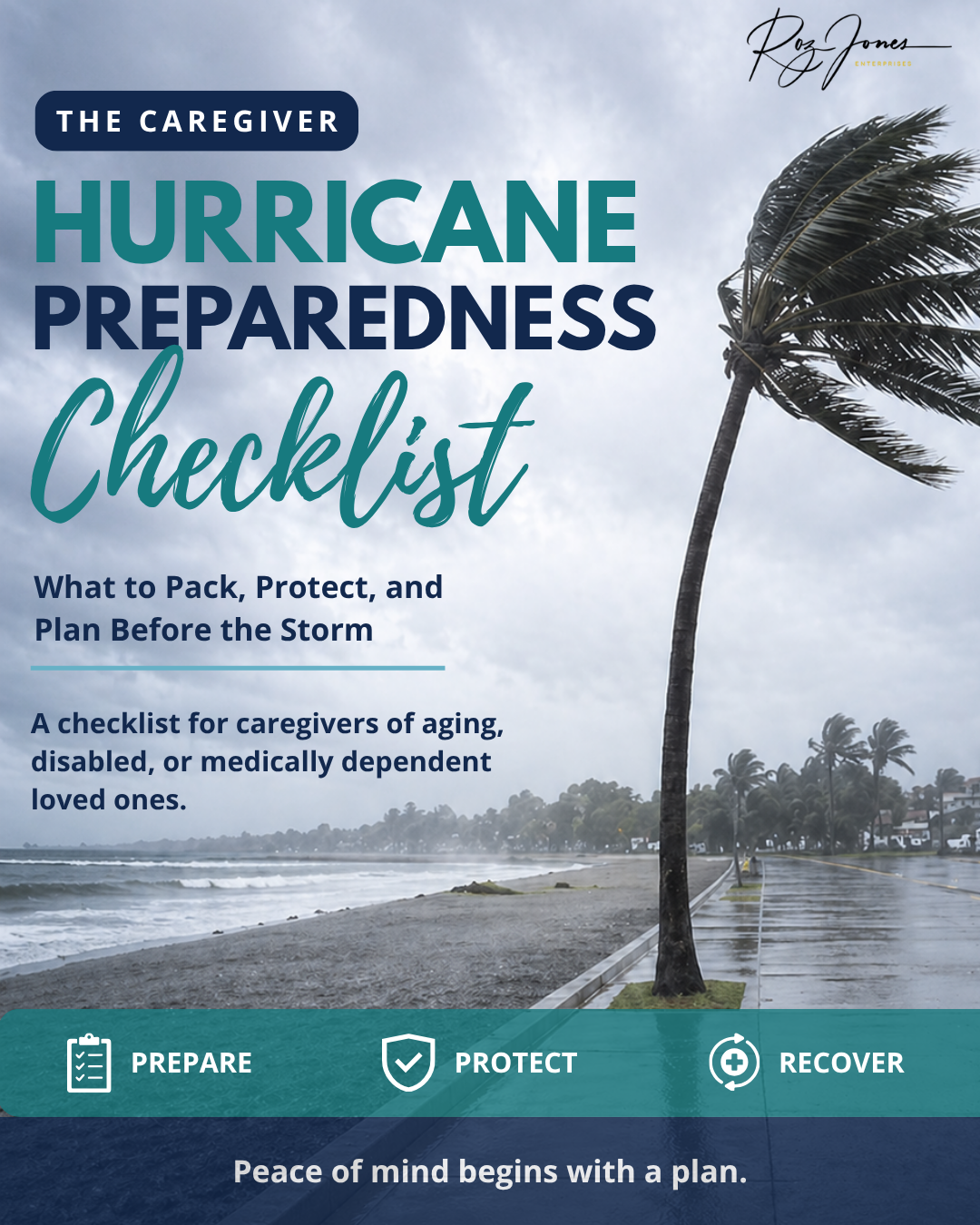
The Caregiver Hurricane Preparedness Checklist.

If you are caring for a loved one and want to be better prepared for storms, power outages, and unexpected caregiving emergencies, purchase the Caregiver Hurricane Preparedness Checklist. This resource can help you think through important details before a crisis is already at the door.

For only $1.99, this checklist gives you a simple starting point so you are not trying to gather everything during a storm, power outage, hospitalization, or sudden change in your loved one’s care.

Purchase the Caregiver Hurricane Preparedness Checklist for $1.99 today and take one more step toward peace of mind.

Need Help Sorting Through the Care Plan?

Roz Jones is a dedicated caretaker turned CEO with over a decade of experience in helping families care for and make decisions for loved ones and their legacies.Roz is a compassionate, innovative healthcare industry leader.

If your family needs help thinking through care decisions, caregiving responsibilities, or next steps, book a session with Roz Jones. You do not have to navigate this season alone.

Together, we can talk through what is working, what is becoming too heavy, and what boundaries need to be strengthened so you can continue to care without losing yourself in the process.

Subscribe to The Caregiver Cafe Weekly Newsletter!

Caregiving can be a roller coaster of ups and downs. The information that you will receive from The Caregiver Cafe Weekly Specials Newsletter will support you as a caregiver. Remember…

1. YOU ARE NOT ALONE: The problems you face as a caregiver are experienced by other caregivers. Knowing that you’re not alone can be comforting. 

2. Tools and Resources:  Find caregiver stress management tools and gain perspective from other caregiver’s experiences.

3. LEARN TO: Ask for help, accept help when it is offered, and acknowledge yourself on this caregiving journey. Hear from experts on how to balance caregiving responsibilities by taking care of your needs and involving others to help manage the natural stress and isolation of being a caregiver. 

Strong Does Not Mean Silent: The Mental Load Men Carry While Caring for Loved Ones

By Roz Jones

There is a kind of pressure many men carry quietly.

The pressure to be strong.
The pressure to provide.
The pressure to fix the problem.
The pressure to keep emotions under control.
The pressure to show up for everybody else, even when they are running on empty.

And when a man is also responsible for supporting an aging parent, spouse, relative, or loved one through illness, decline, memory loss, disability, or daily needs, that pressure can become even heavier.

Because now he is not only managing his own life.

He may be managing appointments.
Medications.
Bills.
Transportation.
Household repairs.
Emergency decisions.
Family conflict.
Doctor updates.
Late-night worries.
And the quiet grief of watching someone he loves change.

That is a lot to carry.

And too often, men carry it behind a mask.

The Mask Can Sound Like “I’m Fine”

For many men, the mask does not always look like silence.

Sometimes it looks like staying busy.
Working more hours.
Making jokes when the conversation gets too serious.
Getting irritated quickly.
Avoiding the doctor.
Refusing help.
Saying, “I got it,” when they really do not.

Sometimes the mask sounds like:

“I’m good.”
“It is what it is.”
“I don’t have time to think about that.”
“I’ll deal with me later.”
“Everybody is depending on me.”

But here is the truth.

You can be dependable and still need support.

You can love your family and still feel overwhelmed.

You can be strong and still be tired.

You can be the one everyone calls and still need someone to check on you.

That does not make you weak.

That makes you human.

Emotional Strain Does Not Always Announce Itself

When someone you love needs more support, the emotional toll can sneak up on you.

At first, you may feel like you are just helping out.

Then the responsibilities keep growing.

One appointment turns into five.
One errand turns into a weekly routine.
One hard conversation turns into ongoing family decisions.
One emergency turns into a whole new level of responsibility.

And before you know it, your life has shifted around someone else’s needs.

That shift can bring stress, sadness, frustration, guilt, fear, and even resentment.

Not because you do not care.

Because you are carrying more than one person was meant to carry alone.

This is why mental health matters so much for men who are supporting aging loved ones, spouses, parents, relatives, or family members who depend on them. When emotions keep getting pushed down, they do not disappear. They come out somewhere.

They may show up in your sleep.
Your blood pressure.
Your appetite.
Your patience.
Your relationships.
Your motivation.
Your ability to focus.
Your ability to feel joy.

Your mind and body will eventually tell the truth, even when your mouth keeps saying, “I’m fine.”

You Do Not Have to Earn Rest by Breaking Down First

One of the most harmful beliefs many men have been taught is that rest comes after everything is handled.

But in care work, everything may never be fully handled.

There may always be another call to make.
Another prescription to pick up.
Another bill to review.
Another doctor to contact.
Another family issue to settle.
Another concern sitting in the back of your mind.

So if you wait until everything is done before you rest, you may never rest.

Let me say that again.

You may never rest.

Rest is not something you earn after exhaustion.

Rest is part of how you keep going in a healthy way.

A walk around the block counts.
Sitting in the car for five quiet minutes counts.
Letting someone else handle dinner counts.
Turning your phone off for a short break counts.
Going to therapy counts.
Calling a friend and telling the truth counts.

Small pauses matter.

And you do not have to apologize for needing them.

Men Need Safe Places to Tell the Truth

Many men are not given enough room to be honest about what they feel.

They may be expected to lead, provide, protect, and problem-solve, but not necessarily cry, grieve, admit fear, or say, “I do not know how much longer I can keep doing this by myself.”

That needs to change.

Because the men supporting loved ones through aging, illness, memory changes, or major life transitions deserve support too.

They need spaces where they can say:

“This is harder than I expected.”
“I miss who my loved one used to be.”
“I am scared about what comes next.”
“I am angry that more people are not helping.”
“I feel guilty when I want time for myself.”
“I need a plan.”
“I need help.”

Those words do not make a man less strong.

They make him honest.

And honesty is often the beginning of healing.

Family Support Cannot Fall on One Person

When one person becomes the default helper, the rest of the family may not always realize how much is being carried.

They may assume things are handled because one person keeps handling them.

But families need to have real conversations before the main support person reaches a breaking point.

Who is making medical appointments?
Who is managing transportation?
Who is checking in during the week?
Who is handling paperwork?
Who is helping with meals?
Who can provide relief?
Who has access to emergency information?
Who is available when plans change suddenly?

These questions matter.

Not because anyone wants to create conflict.

But because silence creates confusion.

And confusion creates burnout.

The goal is not for one person to be the hero.

The goal is for the family to build a plan that protects the loved one and the people providing care.

Mental Health Support Is Not a Last Resort

Therapy, support groups, coaching, spiritual guidance, and honest conversations should not be seen as something men turn to only when they are falling apart.

Support can help before the crisis.

It can help you understand what you are feeling.
It can help you manage stress.
It can help you set boundaries.
It can help you communicate with family.
It can help you prepare for hard decisions.
It can help you stop carrying guilt that does not belong to you.

Seeking help is not a sign that you cannot handle life.

It is a sign that you are taking your life seriously.

And if you are responsible for helping someone else stay well, you must also take your own well-being seriously.

Check on the Men Who Are Always Checking on Everyone Else

Sometimes the men who seem the strongest are the ones people forget to ask about.

The son who always shows up.
The husband who never complains.
The brother who handles the paperwork.
The father who keeps the family moving.
The uncle who quietly steps in.
The friend who says, “Call me if you need anything,” and means it.

Check on him.

Ask more than, “You good?”

Ask:

“How are you sleeping?”
“What do you need help with this week?”
“When was the last time you had a break?”
“Do you want me to sit with you at the appointment?”
“What part of this has been the hardest?”
“What can I take off your plate?”

And then listen.

Do not rush to fix.
Do not dismiss.
Do not make him feel like his emotions are too much.

Just give him room to be human.

Strong Does Not Mean Silent

Men do not have to carry everything in silence.

They do not have to pretend they are fine when they are exhausted.
They do not have to wait until stress turns into sickness.
They do not have to handle every family responsibility alone.
They do not have to hide grief, fear, anger, or sadness behind a mask of strength.

Real strength includes self-awareness.

Real strength includes asking for help.

Real strength includes saying, “I need support too.”

In my previous blog, Beyond the Mask: Mental Health Challenges for Men, we talked about depression, anxiety, societal expectations, and the importance of helping men prioritize their mental well-being. This continuation is a reminder that the conversation cannot stop there.

Especially for men who are caring for aging loved ones, spouses, parents, relatives, or family members who depend on them.

Because mental health is not separate from family care.

It is part of the journey.

And the people holding the family together deserve to be held too.

Give Yourself a Moment of Grace

If this season of caregiving has been heavy, emotional, or filled with grief you have not had time to name, Moments of Grace: A Caregiver’s Guided Journal for Reflection, Prayer, and Peace was created with you in mind.

This journal gives caregivers a quiet place to pause, reflect, pray, release, and reconnect with themselves while caring for someone they love.

Purchase Moments of Grace today and give yourself permission to breathe in the middle of the caregiving journey.

Prepare Before the Emergency Comes

The Caregiver Hurricane Preparedness Checklist.

Grief can make it hard to think clearly in a crisis. That is why preparation matters.

The Caregiver Hurricane Preparedness Checklist helps caregivers organize important documents, medications, emergency contacts, evacuation needs, medical equipment details, and care instructions before an emergency happens.

For only $1.99, this checklist gives you a simple starting point so you are not trying to gather everything during a storm, power outage, hospitalization, or sudden change in your loved one’s care.

Purchase the Caregiver Hurricane Preparedness Checklist for $1.99 today and take one more step toward peace of mind.

Need Help Sorting Through the Care Plan?

Roz Jones is a dedicated caretaker turned CEO with over a decade of experience in helping families care for and make decisions for loved ones and their legacies.Roz is a compassionate, innovative healthcare industry leader.

If you are caring for a former spouse, aging loved one, or family member and the boundaries are starting to feel complicated, you do not have to figure it out alone.

Book a Family Care Planning Session with Roz Jones and get support creating a caregiving plan that is clear, compassionate, and realistic.

Together, we can talk through what is working, what is becoming too heavy, and what boundaries need to be strengthened so you can continue to care without losing yourself in the process.

Subscribe to The Caregiver Cafe Weekly Newsletter!

Caregiving can be a roller coaster of ups and downs. The information that you will receive from The Caregiver Cafe Weekly Specials Newsletter will support you as a caregiver. Remember…

1. YOU ARE NOT ALONE: The problems you face as a caregiver are experienced by other caregivers. Knowing that you’re not alone can be comforting. 

2. Tools and Resources:  Find caregiver stress management tools and gain perspective from other caregiver’s experiences.

3. LEARN TO: Ask for help, accept help when it is offered, and acknowledge yourself on this caregiving journey. Hear from experts on how to balance caregiving responsibilities by taking care of your needs and involving others to help manage the natural stress and isolation of being a caregiver.