Caring Through Culture, Stress, and Silence: What Minority Caregivers Need to Remember

By Roz Jones

Caregiving is already a lot.

But when you are caring for an aging loved one in a minority family, there can be another layer that people do not always talk about.

There may be cultural expectations.
There may be family pressure.
There may be silence around mental health.
There may be guilt around asking for help.
There may be a long history of doing what had to be done without naming how heavy it really was.

During National Minority Mental Health Awareness Month, it is important to talk about caregiving in a way that sees the whole picture.

Because minority caregivers are not just managing appointments, meals, medications, transportation, bathing, paperwork, and family updates.

Many are also carrying the emotional weight of being the one everyone depends on.

And caregiver, that weight can affect your mental health too.

When Caregiving Becomes the Family Expectation

In many families, caregiving is not treated like a role someone steps into.

It is treated like something you are just supposed to do.

You may hear things like:

“That is your mother.”
“That is your father.”
“That is what family does.”
“We do not put our business out there.”
“We take care of our own.”

And yes, family care is beautiful.

There is love in showing up. There is honor in caring for the people who cared for you. There is strength in making sure aging loved ones are not forgotten, dismissed, or left without support.

But love does not mean the caregiver should disappear.

Family responsibility should not come at the cost of your health, your peace, your body, your sleep, or your emotional well-being.

Caregivers can honor their aging loved ones and still need support.

Both can be true.

The Silence Around Mental Health Can Be Heavy

In some minority communities, mental health has not always been easy to talk about.

Some families were taught to pray through it, push through it, work through it, or keep it private. Some were taught that sadness, anxiety, depression, exhaustion, and grief were not things to discuss outside the home.

Some aging loved ones may not even have the language to say what they are feeling.

They may say they are tired.
They may say they do not feel like themselves.
They may become more withdrawn.
They may become more irritable.
They may refuse help.
They may say, “I’m fine,” even when everyone can see they are not.

Caregivers may do the same thing.

You keep going because you feel like you have to. You say you are okay because there is too much to do. You ignore the stress because your loved one’s needs feel more urgent than your own.

But silence does not make the stress disappear.

It just makes the caregiver carry it alone.

Aging Loved Ones Need Emotional Support Too

When caring for an aging loved one, it can be easy to focus only on physical needs.

Are they eating?
Are they taking medication?
Are they safe at home?
Are they getting to appointments?
Are the bills paid?
Is the house clean?

Those things matter.

But aging also affects a person emotionally.

Your loved one may be grieving independence. They may be missing the way their body used to move. They may be afraid of becoming a burden. They may be lonely. They may be frustrated because decisions are being made for them. They may be carrying memories, losses, disappointments, or trauma that were never fully talked about.

For minority aging loved ones, there may also be the impact of life experiences shaped by racism, discrimination, economic hardship, medical mistrust, or being unheard in systems that were supposed to help.

Caregivers need to understand that mental health is not separate from caregiving.

It is part of caregiving.

Sometimes support looks like listening without rushing to fix. Sometimes it looks like helping your loved one talk to a doctor. Sometimes it looks like finding a counselor, support group, faith leader, or community resource that understands their background and experience.

And sometimes support looks like noticing when something has changed and not brushing it off as “just getting older.”

Caregivers Need Safe Places to Tell the Truth

Caregivers are often asked how their loved one is doing.

But not enough people ask how the caregiver is doing.

And even when they do ask, caregivers may not tell the full truth.

Because the truth may sound like:

“I am tired.”
“I am overwhelmed.”
“I am scared.”
“I feel guilty.”
“I am angry.”
“I need help.”
“I do not know how much longer I can keep doing this alone.”

Those words can be hard to say, especially if you were raised to be strong, private, dependable, or self-sacrificing.

But caregiver, being honest about what you need does not make you weak.

It makes you human.

You need people in your life who can hear the truth without judging you. You need people who will not shame you for needing rest. You need people who understand that caregiving can be an act of love and still be exhausting.

That may be a support group. That may be a trusted friend. That may be a therapist. That may be a caregiver community. That may be another family member who finally needs to understand what you have been carrying.

But you need somewhere to put the weight down.

Even if only for a moment.

Cultural Care Should Not Mean Carrying Everything Alone

Culture can be a source of strength in caregiving.

Family meals, music, faith, traditions, stories, prayer, community, and shared history can bring comfort to aging loved ones. These things can remind them who they are and where they come from.

But culture should not be used to keep caregivers silent.

It should not be used to make one person responsible for everything. It should not be used to shame caregivers who need outside help. It should not be used to stop families from talking about depression, anxiety, grief, dementia, caregiver burnout, or emotional stress.

There is nothing wrong with honoring tradition.

But we also have to be willing to ask:

Is this tradition helping the caregiver survive?
Is this expectation fair?
Is this silence protecting the family, or is it hurting the person doing the caregiving?
Is there a way to honor our loved one without sacrificing one person’s entire well-being?

Caregiving does not have to look the same in every generation.

We can keep the love and change the way the weight is carried.

Small Check-Ins Can Make a Difference

You do not have to wait until everything falls apart to take mental health seriously.

Start with small check-ins.

Ask your loved one how they are feeling emotionally, not just physically. Pay attention to changes in mood, sleep, appetite, energy, memory, and interest in things they used to enjoy.

Ask yourself those same questions too.

Am I sleeping?
Am I eating?
Am I more irritated than usual?
Am I crying more?
Am I withdrawing from people?
Am I feeling hopeless?
Am I constantly on edge?
Am I carrying resentment because I have not asked for help?

These questions are not meant to make you feel bad.

They are meant to help you notice what needs care.

Because caregivers need care too.

And the earlier you notice the signs, the easier it may be to get support before burnout takes over.

Support Can Look Different for Every Family

Every family will not need the same kind of support.

Some caregivers may need respite care. Some may need family members to take specific tasks off their plate. Some may need help navigating insurance, appointments, or transportation. Some may need therapy. Some may need a support group where they do not have to explain the cultural layers of caregiving.

Some may need to have a hard conversation with family and say:

“I cannot keep doing this by myself.”

That sentence may be uncomfortable, but it can also be necessary.

Caregiving should not depend on one person quietly breaking down while everyone else assumes they are handling it.

If your family wants your aging loved one to receive good care, then the caregiver also needs support.

That is not selfish.

That is realistic.

Keep the Conversation Going

If you missed the first blog, you can read Nurturing Mental Health in Minority Caregiving: A Guide to Supporting Aging Loved Ones here. It is a helpful starting point for understanding how culture, mental health, and caregiving connect.

This blog builds on that reminder with one more truth:

Caregivers in minority families need room to be honest.

Honest about the love.
Honest about the stress.
Honest about the cultural expectations.
Honest about the silence.
Honest about needing help.

Because caregiving is not only about keeping your loved one safe.

It is also about making sure the caregiver does not get lost in the process.

National Minority Mental Health Awareness Month reminds us that mental health conversations belong in every community, every family, and every caregiving journey.

Caregiver, you do not have to carry everything quietly.

You can ask for help.

You can name what is heavy.

You can honor your loved one and still protect your own well-being.

You can build a care plan that includes your aging loved one and you.

Because care is not complete if the caregiver is left unsupported.

Download the Vacationing With an Aging Loved One Checklist for FREE!

Before your next trip, download the free Vacationing with an Aging Loved One Checklist. This resource can help you think through what needs to be packed, planned discussed, and prepared before travel begins!

Tune in to The Caregiver Café Podcast

In this episode of The Caregiver Café with Roz Jones, Roz is talking about something that many families face but do not always know how to handle: caregiving as a family affair.

When an aging parent, loved one, or family member needs care, one person often becomes the main caregiver while everyone else steps back, scatters, or assumes that person has it all under control. But caregiving should not fall on one person without a plan, support, or honest family conversations.

Roz breaks down how families can reduce the chaos in caregiving by understanding where tension comes from, setting realistic expectations, creating a care plan, assigning roles, and being honest about what each person can and cannot do. She also reminds listeners that every family member may not be able or willing to provide hands-on care, and that is why outside resources, respite care, and hired support may need to become part of the plan.

This episode is a practical reminder that caregiving requires communication, boundaries, preparation, and teamwork. Whether you live close by or long distance, there is usually some way to support the person providing daily care.

Caregiving may be a family affair, but it works best when the family has a plan.

Give Yourself a Moment of Grace

If you need encouragement for the emotional side of caregiving, purchase Roz Jones’ book, Moments of Grace. This book offers support, reflection, and reminders of grace for the caregiver who is carrying a lot.

This journal was created to help caregivers pause, breathe, reflect, and find strength in the middle of the caregiving journey.

Purchase Moments of Grace today and give yourself permission to breathe in the middle of the caregiving journey.

Prepare Before the Emergency Comes

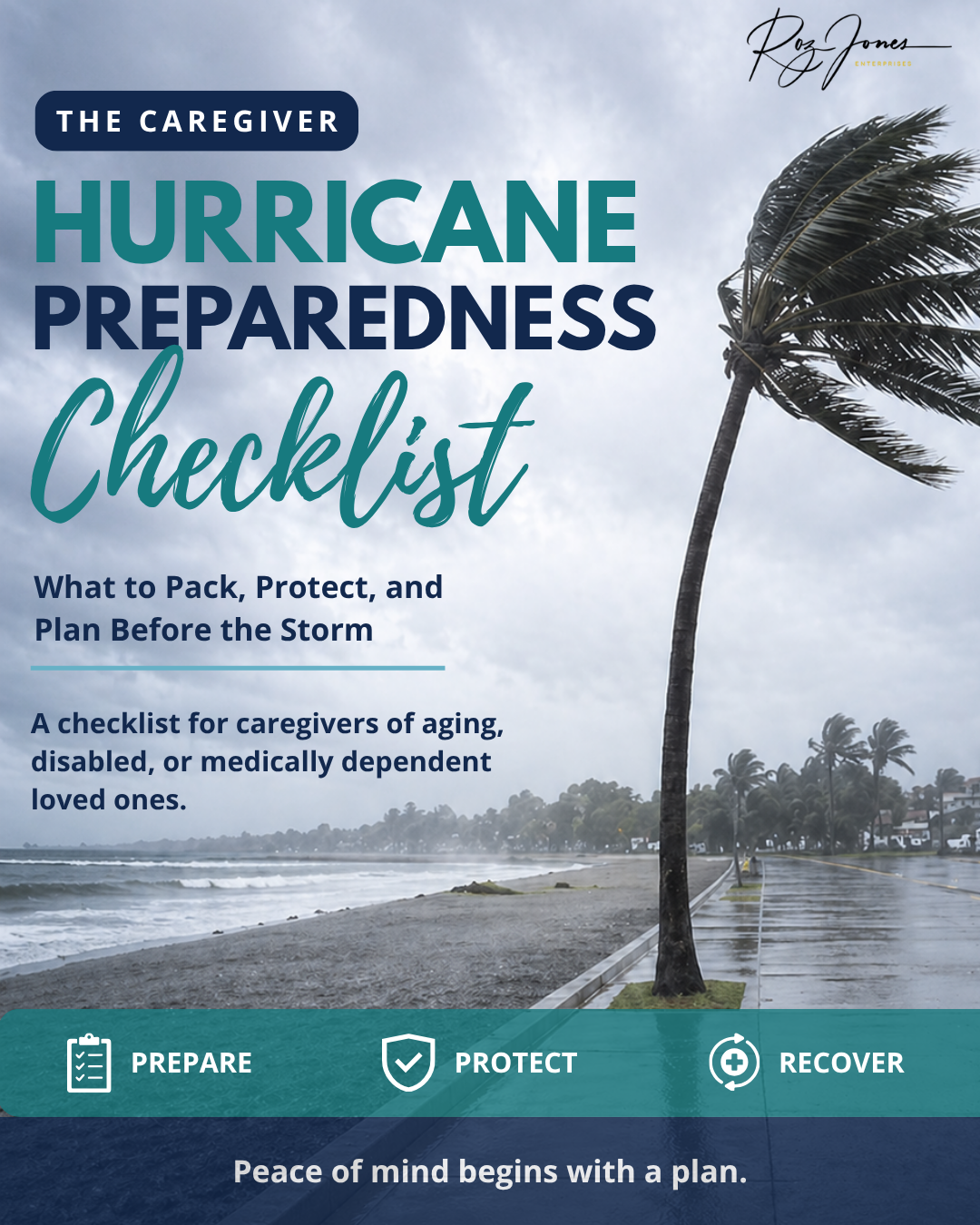
The Caregiver Hurricane Preparedness Checklist.

If you are caring for a loved one during storm season, purchase the Caregiver Hurricane Preparedness Checklist. It can help you prepare important documents, emergency contacts, supplies, medication needs, and safety steps before severe weather becomes a crisis.

For only $1.99, this checklist gives you a simple starting point so you are not trying to gather everything during a storm, power outage, hospitalization, or sudden change in your loved one’s care.

Purchase the Caregiver Hurricane Preparedness Checklist for $1.99 today and take one more step toward peace of mind.

Need Help Sorting Through the Care Plan?

Roz Jones is a dedicated caretaker turned CEO with over a decade of experience in helping families care for and make decisions for loved ones and their legacies.Roz is a compassionate, innovative healthcare industry leader.

If your family needs help thinking through care decisions, caregiving responsibilities, or next steps, book a session with Roz Jones. You do not have to navigate this season alone.

Together, we can talk through what is working, what is becoming too heavy, and what boundaries need to be strengthened so you can continue to care without losing yourself in the process.

Subscribe to The Caregiver Cafe Weekly Newsletter!

Caregiving can be a roller coaster of ups and downs. The information that you will receive from The Caregiver Cafe Weekly Specials Newsletter will support you as a caregiver. Remember…

1. YOU ARE NOT ALONE: The problems you face as a caregiver are experienced by other caregivers. Knowing that you’re not alone can be comforting. 

2. Tools and Resources:  Find caregiver stress management tools and gain perspective from other caregiver’s experiences.

3. LEARN TO: Ask for help, accept help when it is offered, and acknowledge yourself on this caregiving journey. Hear from experts on how to balance caregiving responsibilities by taking care of your needs and involving others to help manage the natural stress and isolation of being a caregiver. 

Creating Connection for Loved Ones Living with Alzheimer’s

By Roz Jones

When a loved one is living with Alzheimer’s, the home becomes more than a place to sleep, eat, and move through the day.

The home becomes part of the care.

The way a room is arranged, the amount of clutter in a hallway, the lighting in the evening, the sounds in the background, and the familiar items within reach can all affect how safe, calm, and connected a loved one feels.

For caregivers, this matters because Alzheimer’s changes more than memory. It can change how a loved one understands their surroundings, responds to noise, recognizes familiar spaces, and moves through daily routines. A room that once felt simple may begin to feel confusing. A busy environment may become overwhelming. A lack of activity may lead to boredom, restlessness, or withdrawal.

That is why caregivers must think beyond safety alone.

Safety is important. But connection is important too.

A loved one living with Alzheimer’s needs an environment that reduces confusion while still offering comfort, stimulation, dignity, and belonging. The goal is not to create a perfect home. The goal is to create a supportive space where the loved one can move through the day with less anxiety and more moments of peace.

The Environment Shapes the Care Experience

Caregiving for someone with Alzheimer’s requires attention to details that others may overlook.

A pile of mail on the counter may feel harmless, but it can add to confusion. A dark hallway may increase fear or the risk of falling. Too many choices in a closet may make getting dressed harder. A loud television may cause agitation. A room without familiar objects may feel unfamiliar, even if the loved one has lived there for years.

The environment can either support the caregiver’s efforts or make the day more difficult.

When the home is arranged with care, daily routines can become smoother. The loved one may feel more settled. The caregiver may spend less time redirecting, searching, explaining, or responding to preventable distress.

Creating the right environment is not about removing personality from the home. It is about making the space easier to understand and safer to navigate while preserving the warmth and memories that still matter.

Simplicity Can Bring Calm

A simplified space can help reduce confusion.

For someone living with Alzheimer’s, clutter can become overwhelming. Too many items, too many sounds, or too many visual distractions may make it harder to focus. This can increase frustration, anxiety, or agitation.

Caregivers can begin by looking at the rooms where their loved one spends the most time. Clear walkways. Remove items that are no longer needed. Keep frequently used objects in consistent places. Limit unnecessary decorations or piles that may create confusion.

Simple does not have to mean empty.

A calm space can still feel warm. A favorite blanket, a familiar chair, family photos, meaningful keepsakes, and soft lighting can help the room feel comforting. The purpose is to create an environment that is easier for the loved one to recognize and easier for the caregiver to manage.

Safety Must Be Built Into the Routine

Safety is one of the most important parts of Alzheimer’s care.

As the disease progresses, a loved one may become more vulnerable to falls, wandering, medication mistakes, burns, or confusion around household items. Caregivers may need to look at the home with fresh eyes and ask what could become unsafe as needs change.

Handrails, grab bars, non-slip mats, proper lighting, labeled rooms, secured medications, and clear pathways can all make a difference. Hazardous products should be placed out of reach. Doors, locks, appliances, and emergency exits may need to be reviewed. Rugs that slide or cords that cross walkways should be removed or secured.

Safety planning should also include emergencies.

Caregivers need to know what would happen during a storm, power outage, medical change, or evacuation. Alzheimer’s care requires extra preparation because sudden changes in routine can increase fear and confusion for the loved one.

The safer the environment, the more confidence the caregiver can have in the daily care routine.

Familiarity Helps Loved Ones Feel Grounded

Familiar objects can offer comfort when memory is changing.

A loved one may not always remember the date, the schedule, or the reason something is happening, but familiar items can still create a sense of connection. Family photographs, favorite music, meaningful books, quilts, spiritual items, or objects connected to their life story can help bring warmth and recognition into the space.

Caregivers can use familiar items intentionally.

A photo wall may help spark memories. A favorite chair can create a sense of routine. A familiar scent, such as a lotion, soap, or candle used safely, may bring calm. Music from an earlier season of life may help reduce anxiety or encourage connection.

Familiarity reminds the loved one that they are still surrounded by pieces of their life.

It also reminds the caregiver that the person they love is still present, even when communication changes.

Stimulation Should Be Gentle and Meaningful

A loved one with Alzheimer’s still needs engagement.

Isolation can happen quietly when families become unsure of what activities are still possible. A caregiver may stop offering activities because the loved one can no longer participate in the same way. But meaningful stimulation does not have to be complicated.

It can be simple and gentle.

Listening to music. Folding towels. Looking through photos. Sitting outside. Watering plants. Sorting safe household items. Holding a soft blanket. Watching birds from a window. Singing familiar songs. Doing simple art. Enjoying a hand massage. Reading scripture, poetry, or short reflections aloud.

The goal is not performance.

The goal is connection.

Activities should match the loved one’s ability and energy level. Some days may allow more engagement. Other days may require quiet presence. Caregivers can pay attention to what brings comfort, what causes frustration, and what helps the loved one feel included.

A stimulating environment does not need to be busy. In Alzheimer’s care, too much stimulation can overwhelm. The best stimulation is meaningful, familiar, and calm.

Routine Reduces Anxiety

Routine helps create predictability.

For a loved one living with Alzheimer’s, not knowing what comes next can create fear or confusion. A steady routine can help the day feel more manageable. Regular times for meals, bathing, rest, activities, medication, and bedtime can provide structure.

Visual reminders may help as well.

A simple calendar, a whiteboard with the day’s schedule, labels on drawers, or signs for rooms can support orientation. Caregivers should keep reminders clear and easy to read. Too much information can become confusing, so the goal is to provide just enough guidance.

A routine also supports the caregiver.

When the day has structure, the caregiver can plan better, ask for help more clearly, and notice changes more quickly. If a loved one suddenly struggles with a familiar routine, that may be a sign that the care plan needs to be adjusted.

Social Connection Still Matters

Alzheimer’s can change how a loved one communicates, but it does not remove the need for connection.

Loved ones may still benefit from visits, familiar voices, gentle conversation, music, prayer, touch, and shared presence. Social connection can help reduce loneliness and support emotional well-being.

Families may need guidance on how to visit well.

Visits should be calm and not too crowded. Conversations may need to be simple. Family members should avoid correcting every memory mistake or asking too many testing questions. Instead of saying, “Do you remember me?” they can introduce themselves warmly and focus on the present moment.

Connection does not always require a long conversation.

Sometimes connection is sitting together.
Sometimes it is holding a hand.
Sometimes it is listening to a song.
Sometimes it is sharing a meal.
Sometimes it is being present without forcing the loved one to perform memory.

Caregivers can help family members understand that the goal is not to make the loved one remember everything. The goal is to help them feel safe, respected, and loved.

The Caregiver Needs Support in the Environment Too

When creating a supportive space for a loved one with Alzheimer’s, caregivers must also consider their own needs.

A home that is safer and more organized can reduce caregiver stress. Clear routines, labeled items, emergency plans, and simplified spaces can make the caregiving day less chaotic. But the caregiver also needs emotional support, rest, and practical help.

A caregiver who is constantly managing confusion, safety concerns, and behavior changes can become exhausted. That exhaustion should not be ignored.

Family members can help by assisting with home organization, preparing meals, sitting with the loved one, handling errands, or giving the caregiver time to rest. Care teams, support groups, respite care, and community programs can also help caregivers feel less alone.

The environment should not only protect the loved one. It should also make caregiving more sustainable.

Creating a Home That Supports the Journey

Alzheimer’s care requires patience, flexibility, and preparation.

The home may need to change as the loved one’s needs change. What worked six months ago may not work now. A room that once felt safe may need new adjustments. An activity that once brought joy may need to be simplified. A routine that once worked smoothly may need to be updated.

Caregivers should not see these changes as failure.

They are part of the caregiving journey.

A supportive environment helps loved ones feel safer, calmer, and more connected. It also helps caregivers respond with more confidence. The goal is to create a home where safety and dignity work together, where stimulation does not become overwhelm, and where connection remains possible even as memory changes.

In a previous blog, Creating an Environment of Stimulation Not Isolation for Aging Loved Ones with Alzheimer’s, we talked about how Alzheimer’s changes more than memory and why families need to understand what may come next. This blog continues that conversation by focusing on the home environment and the daily choices caregivers can make to reduce confusion, encourage connection, and support quality of life.

Tune in to The Caregiver Café Podcast

In the first episode of The Caregiver Café with Roz Jones, Roz welcomes listeners into a space created to serve those caring for sick, aging, or vulnerable loved ones.

Roz shares the personal story that started her caregiving journey and how one unexpected hospital visit showed her just how quickly life can change. Through her experience, she reminds families of the importance of having documentation in order, including advance directives, healthcare surrogates, and backup support before a crisis happens.

This episode is a warm introduction to Roz, her heart for caregivers, and the purpose of The Caregiver Café: to provide resources, encouragement, and practical support that helps reduce stress, overwhelm, and safety concerns along the caregiving journey.

Pull up a chair. Roz has a seat waiting for you.

Give Yourself a Moment of Grace

If you need encouragement for the emotional side of caregiving, purchase Roz Jones’ book, Moments of Grace. This book offers support, reflection, and reminders of grace for the caregiver who is carrying a lot.

This journal was created to help caregivers pause, breathe, reflect, and find strength in the middle of the caregiving journey.

Purchase Moments of Grace today and give yourself permission to breathe in the middle of the caregiving journey.

Prepare Before the Emergency Comes

The Caregiver Hurricane Preparedness Checklist.

If you are caring for a loved one and want to be better prepared for storms, power outages, and unexpected caregiving emergencies, purchase the Caregiver Hurricane Preparedness Checklist. This resource can help you think through important details before a crisis is already at the door.

For only $1.99, this checklist gives you a simple starting point so you are not trying to gather everything during a storm, power outage, hospitalization, or sudden change in your loved one’s care.

Purchase the Caregiver Hurricane Preparedness Checklist for $1.99 today and take one more step toward peace of mind.

Need Help Sorting Through the Care Plan?

Roz Jones is a dedicated caretaker turned CEO with over a decade of experience in helping families care for and make decisions for loved ones and their legacies.Roz is a compassionate, innovative healthcare industry leader.

If your family needs help thinking through care decisions, caregiving responsibilities, or next steps, book a session with Roz Jones. You do not have to navigate this season alone.

Together, we can talk through what is working, what is becoming too heavy, and what boundaries need to be strengthened so you can continue to care without losing yourself in the process.

Subscribe to The Caregiver Cafe Weekly Newsletter!

Caregiving can be a roller coaster of ups and downs. The information that you will receive from The Caregiver Cafe Weekly Specials Newsletter will support you as a caregiver. Remember…

1. YOU ARE NOT ALONE: The problems you face as a caregiver are experienced by other caregivers. Knowing that you’re not alone can be comforting. 

2. Tools and Resources:  Find caregiver stress management tools and gain perspective from other caregiver’s experiences.

3. LEARN TO: Ask for help, accept help when it is offered, and acknowledge yourself on this caregiving journey. Hear from experts on how to balance caregiving responsibilities by taking care of your needs and involving others to help manage the natural stress and isolation of being a caregiver. 

When Hospice Begins, Caregivers Need Holding Too

By Roz Jones

Hospice care often begins when a family has already carried a long season of appointments, decisions, treatments, questions, and emotional weight.

By the time hospice becomes part of the conversation, caregivers may already be tired. They may have spent months or years coordinating care, managing symptoms, listening for changes, updating family members, and trying to keep the home steady. Hospice does not erase that weight. It brings a different kind of care, a different kind of support, and a different kind of emotional preparation.

For many families, hospice is misunderstood.

Some hear the word and feel fear. Some hear the word and think it means giving up. Some delay the conversation because they do not want to face what may be changing. But hospice care is not about abandoning a loved one. Hospice is about comfort, dignity, support, and making sure the person receiving care and the family surrounding them are not left to carry the final season alone.

And that includes the caregiver.

Family caregivers play a vital role during hospice care. They are often the ones noticing changes first. They are the ones calling the nurse, giving updates, managing the home, comforting the loved one, and helping the family understand what is happening. They may be present for difficult conversations, quiet moments, emotional shifts, and physical changes that are hard to witness.

That kind of care requires emotional support.

Not later.

Now.

Hospice Care Changes the Caregiver’s Role

When hospice begins, the caregiver’s responsibilities may shift, but they do not disappear.

The focus of care may move from treatment to comfort. The medical team may become more involved. Nurses, aides, chaplains, social workers, and other hospice professionals may enter the home or care setting. Medications may change. Routines may change. Family members may begin asking more questions.

The caregiver may feel relief that help has arrived, but that relief can exist alongside sadness, fear, guilt, uncertainty, and grief.

This is why emotional support matters.

The caregiver is not only managing tasks. The caregiver is also processing what hospice means for the loved one, for the family, and for the future. There may be moments when the caregiver feels grateful for the support and moments when the reality feels too heavy to hold.

Both can be true.

A caregiver can know hospice is the right support and still grieve the reason hospice is needed.

The Emotional Weight of Watching Change

One of the hardest parts of hospice caregiving is witnessing decline.

A loved one may sleep more. They may eat less. They may speak less. Their body may change. Their needs may become more delicate. The caregiver may find themselves watching closely, wondering what each change means and whether they are doing enough.

That watching can be exhausting.

Caregivers may experience anticipatory grief, which is the grief that begins before the loss occurs. They may feel sadness while still providing care. They may feel guilt for needing rest. They may feel anger that life has changed. They may feel anxious about what comes next.

These emotions do not mean the caregiver lacks faith, love, or strength.

They mean the caregiver is human.

Emotional support gives caregivers a place to put some of what they are carrying. It creates room for honesty, tears, questions, prayer, silence, and support without judgment. It reminds caregivers that they do not have to be strong every minute in order to love well.

Caregivers Need More Than Information

Hospice teams often provide education about symptoms, medications, equipment, and what to expect. That information is important. It helps families feel less afraid when changes happen. It helps caregivers understand when to call for help and how to provide comfort.

But caregivers need more than information.

They need someone to ask how they are holding up.
They need space to say what feels hard.
They need permission to rest.
They need family members who do more than wait for updates.
They need support that reaches the caregiver, not just the care plan.

A caregiver can have all the instructions and still feel emotionally overwhelmed.

That is why families must be intentional about supporting the person providing care. Hospice care should not become another season where one caregiver carries everything while everyone else stands at a distance.

Family Support Must Become Practical

During hospice care, concern is not enough.

Family members may say, “Let me know if you need anything,” but caregivers are often too tired to assign tasks in the moment. The better approach is to offer specific, practical support.

Someone can bring meals.
Someone can sit with the loved one while the caregiver rests.
Someone can manage phone calls and family updates.
Someone can help with laundry, groceries, errands, or transportation.
Someone can stay overnight if appropriate.
Someone can help organize paperwork, emergency contacts, and important documents.

Support becomes more meaningful when it lightens the caregiver’s actual load.

This is especially important when the caregiver is also managing grief. A caregiver who is emotionally overwhelmed may not have the energy to explain every need. Family members must pay attention, step in with care, and follow through.

Hospice Support Includes the Caregiver

Hospice care is designed to support both the patient and the family.

Caregivers should use the hospice team as part of their support system. The nurse can answer questions about symptoms and medication. The social worker can help with emotional concerns, family communication, planning, and resources. The chaplain can offer spiritual care. Bereavement support may also be available before and after the loss.

Caregivers do not have to wait until they are breaking down before asking for help.

Questions are allowed.
Tears are allowed.
Uncertainty is allowed.
Needing a break is allowed.

Hospice professionals understand that this season can be tender and difficult. They can help caregivers understand what is happening and remind them that comfort care includes the emotional well-being of the family.

Self-Care During Hospice Is Not Selfish

Self-care can feel complicated during hospice.

Many caregivers feel guilty leaving the room, taking a nap, eating a full meal, or stepping outside for air. They may feel they should be available every moment. They may worry that resting means they are not doing enough.

But caregivers cannot pour from a body and spirit that have been completely drained.

Self-care during hospice may be simple. It may look like drinking water. Eating something nourishing. Sitting outside for ten minutes. Letting someone else answer the phone. Taking a shower. Praying. Writing in a journal. Listening to music. Calling a trusted friend. Accepting respite when it is offered.

These small moments matter.

They help the caregiver remain present without becoming consumed. They help the body release some of the stress. They remind the caregiver that their needs still matter, even in a difficult season.

Emotional Support Protects the Caregiver and the Care

When caregivers are emotionally supported, care becomes steadier.

The caregiver is better able to listen, respond, communicate, and make decisions. They are less likely to feel completely alone in the process. They may still feel grief and exhaustion, but they are not carrying those feelings without support.

When caregivers are not supported, the weight can become too much. Stress can turn into burnout. Sadness can become isolation. Exhaustion can affect health, patience, and decision-making. Family tension can grow when one person feels responsible for everything.

Supporting the caregiver is not separate from supporting the loved one.

It is part of the same care.

A loved one in hospice deserves comfort and dignity. The caregiver deserves compassion and support while helping provide that care.

Preparing the Family Before Crisis

Hospice care also reminds families of the importance of preparation.

The more families talk, plan, and share responsibilities, the less pressure falls on one person. Caregivers need to know who is available, who can help, what documents are needed, what the hospice team provides, and how family communication will be handled.

Preparation does not remove the grief, but it can reduce confusion.

In a previous blog, The Importance of Emotional Support for Family Caregivers During Hospice Care, we talked about the importance of having the next hospice conversation before crisis makes every decision harder. This blog continues that conversation by reminding families that emotional support for the caregiver must be part of the plan, not an afterthought.

Caregivers Should Not Be Left Alone in Hospice

Hospice is a sacred and emotional season of care.

It can hold tenderness, sorrow, gratitude, fear, peace, and uncertainty all at once. It can bring families closer, but it can also reveal where support is missing. It can give caregivers help, but families must still be willing to surround the caregiver with compassion and practical care.

No caregiver should have to walk through hospice feeling invisible.

The caregiver needs to be seen.
The caregiver needs to be supported.
The caregiver needs to be allowed to grieve.
The caregiver needs to rest.
The caregiver needs a circle of people who understand that love does not mean carrying everything alone.

Hospice care is not only about helping a loved one die with dignity.

It is also about helping the family care with compassion, honesty, and support.

And the caregiver is part of that family.

Tune in to The Caregiver Café Podcast

In the first episode of The Caregiver Café with Roz Jones, Roz welcomes listeners into a space created to serve those caring for sick, aging, or vulnerable loved ones.

Roz shares the personal story that started her caregiving journey and how one unexpected hospital visit showed her just how quickly life can change. Through her experience, she reminds families of the importance of having documentation in order, including advance directives, healthcare surrogates, and backup support before a crisis happens.

This episode is a warm introduction to Roz, her heart for caregivers, and the purpose of The Caregiver Café: to provide resources, encouragement, and practical support that helps reduce stress, overwhelm, and safety concerns along the caregiving journey.

Pull up a chair. Roz has a seat waiting for you.

Give Yourself a Moment of Grace

If you need encouragement for the emotional side of caregiving, purchase Roz Jones’ book, Moments of Grace. This book offers support, reflection, and reminders of grace for the caregiver who is carrying a lot.

This journal was created to help caregivers pause, breathe, reflect, and find strength in the middle of the caregiving journey.

Purchase Moments of Grace today and give yourself permission to breathe in the middle of the caregiving journey.

Prepare Before the Emergency Comes

The Caregiver Hurricane Preparedness Checklist.

If you are caring for a loved one and want to be better prepared for storms, power outages, and unexpected caregiving emergencies, purchase the Caregiver Hurricane Preparedness Checklist. This resource can help you think through important details before a crisis is already at the door.

For only $1.99, this checklist gives you a simple starting point so you are not trying to gather everything during a storm, power outage, hospitalization, or sudden change in your loved one’s care.

Purchase the Caregiver Hurricane Preparedness Checklist for $1.99 today and take one more step toward peace of mind.

Need Help Sorting Through the Care Plan?

Roz Jones is a dedicated caretaker turned CEO with over a decade of experience in helping families care for and make decisions for loved ones and their legacies.Roz is a compassionate, innovative healthcare industry leader.

If your family needs help thinking through care decisions, caregiving responsibilities, or next steps, book a session with Roz Jones. You do not have to navigate this season alone.

Together, we can talk through what is working, what is becoming too heavy, and what boundaries need to be strengthened so you can continue to care without losing yourself in the process.

Subscribe to The Caregiver Cafe Weekly Newsletter!

Caregiving can be a roller coaster of ups and downs. The information that you will receive from The Caregiver Cafe Weekly Specials Newsletter will support you as a caregiver. Remember…

1. YOU ARE NOT ALONE: The problems you face as a caregiver are experienced by other caregivers. Knowing that you’re not alone can be comforting. 

2. Tools and Resources:  Find caregiver stress management tools and gain perspective from other caregiver’s experiences.

3. LEARN TO: Ask for help, accept help when it is offered, and acknowledge yourself on this caregiving journey. Hear from experts on how to balance caregiving responsibilities by taking care of your needs and involving others to help manage the natural stress and isolation of being a caregiver. 
Beyond the Brave Face: Emotional Wellness for Male Caregivers

By Roz Jones

Male caregivers often carry responsibilities that are not always visible to others.

The work may begin early in the morning with medication reminders, meal preparation, transportation, or checking in on a loved one before the rest of the day begins. It may continue through doctor’s appointments, household tasks, financial concerns, family updates, and the constant need to remain alert to changes in health, mood, or behavior.

Much of this work is done quietly.

Many male caregivers become the steady presence in the family. They are expected to manage, respond, decide, and continue forward. Their strength is often praised, but the emotional weight behind that strength is not always acknowledged.

Caregiving affects more than the daily schedule. It affects the heart, the mind, the body, and the relationships surrounding the caregiver. For male caregivers, emotional wellness must become part of the care plan because the quality of care is connected to the well-being of the person providing it.

The Emotional Side of Caregiving

Caregiving brings responsibility, but it also brings emotion.

A male caregiver may be caring for a parent whose needs are increasing, a spouse whose health is changing, a sibling who requires support, or another aging loved one who can no longer manage life in the same way. These changes can bring grief, worry, frustration, sadness, fear, and exhaustion.

In many families, male caregivers are expected to stay calm and composed. They may have been taught to handle problems privately, avoid emotional expression, and keep going without complaint. As a result, the emotional impact of caregiving may remain unnamed.

Unspoken stress can still affect the caregiver.

It may appear as irritability, fatigue, sleeplessness, withdrawal, impatience, or difficulty concentrating. It may also affect communication with family members, healthcare providers, and the loved one receiving care. These signs do not mean the caregiver is failing. They often indicate that the caregiver needs support, rest, and healthier ways to process what is being carried.

When Responsibility Becomes Isolation

Isolation is one of the quiet challenges many caregivers face.

For male caregivers, isolation may not always look like being physically alone. It may look like being surrounded by family but still feeling like the only one who truly understands the care needs. It may look like answering questions about the loved one’s condition while no one asks how the caregiver is managing. It may look like keeping difficult emotions private because there is no safe place to put them.

Over time, this isolation can make caregiving feel heavier than it already is.

Family members may assume that everything is under control because the caregiver continues to function. Friends may admire the caregiver’s dedication without realizing how much support is needed. The caregiver may begin to pull back from conversations, social activities, or personal routines because care has taken up more and more space.

Isolation can weaken both the caregiver and the care plan.

A caregiver who feels emotionally alone may struggle to ask for help, make clear decisions, or recognize when burnout is approaching. This is why emotional wellness is not separate from caregiving. It is part of the foundation that allows care to remain steady and sustainable.

Why Emotional Wellness Matters

Emotional wellness helps caregivers recognize what they are feeling and respond to those feelings in healthy ways. It does not remove the challenges of caregiving, but it gives the caregiver tools to manage the pressure with more clarity and support.

For male caregivers, emotional wellness can strengthen communication, improve relationships, and reduce the risk of carrying stress in silence. It can make it easier to identify when help is needed, when rest is necessary, and when a family conversation must happen.

A caregiver who is emotionally supported is better able to remain patient during difficult moments. He is better prepared to manage unexpected changes. He is more likely to seek resources before a crisis develops. He is also more able to care from a place of steadiness instead of constant depletion.

The caregiver’s emotional health matters because the caregiver matters.

Caregiving should not require a man to disappear behind responsibility. It should not require him to ignore his own stress in order to prove commitment. Emotional wellness allows male caregivers to remain connected to themselves while caring for someone else.

Healthy Relationships Support Better Care

Strong caregiving relationships require communication, honesty, and shared responsibility.

When the emotional burden rests on one person, resentment can build. Misunderstandings can grow. Family members may not realize how much is being handled behind the scenes. The caregiver may feel frustrated that others are not helping, while others may not know what kind of help is needed.

Healthy relationships create space for the care plan to be shared more clearly.

This may include assigning specific responsibilities, updating family members regularly, identifying backup support, or asking others to assist with transportation, meals, errands, paperwork, or respite. It may also include emotional check-ins that focus on the caregiver, not only the loved one receiving care.

For male caregivers, these relationships can provide important relief. They offer a reminder that caregiving does not have to be carried alone. They also help protect the caregiver from becoming the only person who understands the needs, routines, and decisions connected to care.

Supportive relationships do more than provide help. They help prevent isolation.

Healthy Coping Is Not Optional

Caregiving stress needs somewhere to go.

Without healthy coping strategies, stress can begin to settle into the body and mind. It may affect sleep, appetite, mood, focus, energy, and overall health. Male caregivers may be especially likely to minimize these effects if they have been taught to push through discomfort rather than address it.

Healthy coping creates room for release.

This may include walking, exercise, prayer, journaling, therapy, time outdoors, music, support groups, or quiet moments of reflection. It may also include practical routines such as scheduling respite care, attending personal medical appointments, or setting aside time each week for rest.

Coping is not about avoiding the reality of caregiving. It is about helping the caregiver remain well enough to continue.

Rest, reflection, and support are not signs of weakness. They are tools that help caregivers preserve their strength.

Professional Support Has a Place

There are times when family and friends may not be enough.

Professional support can help caregivers process the emotional and practical demands of care. A therapist or counselor can provide space to work through grief, stress, frustration, and burnout. A care manager may help families understand options and organize next steps. Respite care providers can allow caregivers to step away for rest or personal needs without leaving their loved one unsupported.

Community organizations, caregiver programs, senior centers, faith communities, and healthcare teams may also provide education, referrals, and resources.

Seeking professional support does not mean the caregiver has failed. It means the caregiver understands that sustainable care requires more than endurance.

Building Support Before Crisis

Caregiving becomes more difficult when support is only discussed after something has gone wrong.

Families benefit from building support before a crisis occurs. This includes knowing who can help, what resources are available, where important information is stored, and what the caregiver needs in order to continue safely and well.

This is especially important for male caregivers who may have been carrying responsibilities privately. When care details live only in one person’s head, the entire family becomes vulnerable during emergencies. A shared plan helps reduce confusion and allows others to step in with greater confidence.

In a previous blog, Igniting vs. Isolation: The Impact of Emotional Well-Being on Men, we discussed the importance of building a caregiver circle and creating relationships that can help carry the weight of care. This blog continues that message by focusing on the emotional wellness of male caregivers and the need for support that reaches beyond tasks.

Male Caregivers Need Care Too

Male caregivers are often recognized for their dependability, loyalty, and strength. Those qualities matter, but they should not become a reason to overlook their emotional needs.

The man who provides care may also be grieving.
He may be exhausted.
He may be overwhelmed.
He may need rest, guidance, encouragement, and support.
He may need someone to notice the weight behind the brave face.

Caregiving is an act of love, but love should not require emotional isolation.

When male caregivers are supported, families become stronger. Care plans become healthier. Communication improves. Emergencies become less chaotic. The caregiver is better able to continue without losing himself in the process.

Emotional wellness is not separate from caregiving.

It is one of the ways caregivers are sustained for the journey ahead.

Tune in to The Caregiver Café Podcast

In the first episode of The Caregiver Café with Roz Jones, Roz welcomes listeners into a space created to serve those caring for sick, aging, or vulnerable loved ones.

Roz shares the personal story that started her caregiving journey and how one unexpected hospital visit showed her just how quickly life can change. Through her experience, she reminds families of the importance of having documentation in order, including advance directives, healthcare surrogates, and backup support before a crisis happens.

This episode is a warm introduction to Roz, her heart for caregivers, and the purpose of The Caregiver Café: to provide resources, encouragement, and practical support that helps reduce stress, overwhelm, and safety concerns along the caregiving journey.

Pull up a chair. Roz has a seat waiting for you.

Give Yourself a Moment of Grace

If you need encouragement for the emotional side of caregiving, purchase Roz Jones’ book, Moments of Grace. This book offers support, reflection, and reminders of grace for the caregiver who is carrying a lot.

This journal was created to help caregivers pause, breathe, reflect, and find strength in the middle of the caregiving journey.

Purchase Moments of Grace today and give yourself permission to breathe in the middle of the caregiving journey.

Prepare Before the Emergency Comes

The Caregiver Hurricane Preparedness Checklist.

If you are caring for a loved one and want to be better prepared for storms, power outages, and unexpected caregiving emergencies, purchase the Caregiver Hurricane Preparedness Checklist. This resource can help you think through important details before a crisis is already at the door.

For only $1.99, this checklist gives you a simple starting point so you are not trying to gather everything during a storm, power outage, hospitalization, or sudden change in your loved one’s care.

Purchase the Caregiver Hurricane Preparedness Checklist for $1.99 today and take one more step toward peace of mind.

Need Help Sorting Through the Care Plan?

Roz Jones is a dedicated caretaker turned CEO with over a decade of experience in helping families care for and make decisions for loved ones and their legacies.Roz is a compassionate, innovative healthcare industry leader.

If your family needs help thinking through care decisions, caregiving responsibilities, or next steps, book a session with Roz Jones. You do not have to navigate this season alone.

Together, we can talk through what is working, what is becoming too heavy, and what boundaries need to be strengthened so you can continue to care without losing yourself in the process.

Subscribe to The Caregiver Cafe Weekly Newsletter!

Caregiving can be a roller coaster of ups and downs. The information that you will receive from The Caregiver Cafe Weekly Specials Newsletter will support you as a caregiver. Remember…

1. YOU ARE NOT ALONE: The problems you face as a caregiver are experienced by other caregivers. Knowing that you’re not alone can be comforting. 

2. Tools and Resources:  Find caregiver stress management tools and gain perspective from other caregiver’s experiences.

3. LEARN TO: Ask for help, accept help when it is offered, and acknowledge yourself on this caregiving journey. Hear from experts on how to balance caregiving responsibilities by taking care of your needs and involving others to help manage the natural stress and isolation of being a caregiver. 

The Caregiver Circle: Why Strong Support Makes Stronger Care

By Roz Jones

Caregiving is not only about what one person can carry.

It is about what happens when the right people, resources, and plans are placed around the caregiver before the weight becomes too heavy. Many caregivers step into the role with love, loyalty, and a deep sense of responsibility. They manage appointments, medications, meals, transportation, household needs, emotional changes, and family updates. They learn how to adjust quickly, respond calmly, and keep going even when their own bodies and minds are tired.

But caregiving was never meant to be a one-person assignment.

When one caregiver becomes the only person who knows the routine, understands the care needs, manages the emergencies, and holds the family plan together, the care system becomes fragile. It may appear steady from the outside, but inside, the caregiver may be exhausted, isolated, and silently overwhelmed.

That is why building a caregiver circle matters.

A strong caregiver circle is not just a list of people who care. It is a support system that understands what is needed and knows how to respond. It includes family, friends, neighbors, community resources, healthcare professionals, respite care, support groups, and spiritual or emotional support. It gives the caregiver room to breathe while making sure the loved one continues to receive steady care.

Support Is Part of the Care Plan

Many caregivers are used to doing what needs to be done without asking for much in return. They may believe that asking for help means they are not strong enough. They may feel guilty for needing rest. They may hesitate to share the full picture because they do not want to worry anyone else.

But support is not a sign of weakness.

Support is part of a healthy care plan.

A caregiver who has support is better positioned to make thoughtful decisions, respond to emergencies, and remain emotionally present for the loved one receiving care. Without support, even the most committed caregiver can become worn down by the constant pressure of being needed.

Caregiving requires strength, but it also requires connection. It requires someone to step in when the caregiver needs rest. It requires someone to listen when the caregiver needs to talk. It requires someone to help organize information, prepare for emergencies, and share responsibility when the needs become too much for one person to carry alone.

The Danger of Carrying the Plan Alone

One of the hardest parts of caregiving is that much of the work is invisible.

Others may see the doctor’s appointment, but they may not see the hours spent scheduling it, preparing questions, gathering medications, arranging transportation, and explaining everything afterward. Others may see the meal on the table, but they may not see the planning, shopping, dietary changes, and worry behind it. Others may know that care is being provided, but they may not understand how much mental and emotional energy it takes to keep everything moving.

When the care plan lives mostly in one person’s head, the caregiver becomes the calendar, the emergency contact, the medication tracker, the decision-maker, and the family update system.

That is too much for one person.

A strong caregiver circle helps move the plan out of one person’s head and into a shared structure. It allows others to understand what is happening, what needs attention, and where they can help. It also protects the caregiver from becoming the only person everyone depends on during a crisis.

Building Relationships That Can Hold Care

Caregiving relationships need more than concern. They need communication, clarity, and consistency.

Some family members may want to help but may not know what to do. Others may assume the primary caregiver has everything handled because they have not been told otherwise. Sometimes the caregiver is frustrated that no one is stepping in, while family members are waiting to be asked.

This is where clear communication becomes important.

Instead of only saying, “I need help,” caregivers benefit from naming specific needs. A relative may be able to take over transportation once a week. A neighbor may be willing to check in after a storm. A friend may be able to sit with a loved one while the caregiver runs errands. A family member who lives far away may be able to manage phone calls, paperwork, research, or appointment reminders.

Help becomes easier when people understand what kind of help is needed.

Building relationships that can hold care also means telling the truth before resentment builds. Caregivers do not have to wait until they are angry, exhausted, or at a breaking point before having family conversations. Support works best when it is built early, not after the crisis has already arrived.

The Value of Other Caregivers

There is a different kind of comfort that comes from connecting with someone who understands caregiving from the inside.

Other caregivers know what it feels like to be tired and still show up. They understand the emotional weight of making decisions for someone else. They know how hard it can be to balance love, frustration, fear, and responsibility. They understand why rest can feel difficult, even when it is necessary.

Caregiver support groups, online communities, local organizations, and faith-based groups can offer a place to speak honestly without having to explain every detail. These spaces can provide practical ideas, emotional encouragement, and reminders that the caregiver is not alone.

For male caregivers especially, support spaces can be important because caregiving conversations often overlook their experiences. Many men are caring for spouses, parents, siblings, relatives, and loved ones while also carrying expectations to stay strong, quiet, and in control. A support network gives male caregivers permission to be honest about the weight they are carrying and the help they need.

Professional Support Has a Place

Family support is important, but there are times when professional support is needed too.

A therapist or counselor can help caregivers process stress, grief, anger, guilt, and burnout. A care manager can help organize next steps and connect the family with resources. A respite care provider can give the caregiver time away without leaving the loved one unsupported. Community agencies, senior centers, caregiver organizations, and healthcare teams can also provide education, referrals, and practical guidance.

Seeking professional support does not mean the caregiver has failed.

It means the caregiver understands that this journey requires more than endurance. It requires tools. It requires planning. It requires spaces where the caregiver’s well-being is also considered.

Respite Is Not Abandonment

Many caregivers struggle with taking breaks because they feel responsible for being available all the time. But constant availability is not the same as healthy caregiving.

Respite care gives caregivers time to rest, handle personal needs, attend appointments, sleep, work, worship, exercise, or simply sit quietly without being on alert. These breaks are not selfish. They are necessary.

A caregiver who never has time to recover is at greater risk for burnout, frustration, and health challenges. Rest helps protect the caregiver’s ability to continue providing care with patience, steadiness, and compassion.

Caregivers must be reminded that stepping away for a short time does not mean they have stepped away from love. It means they are making room to continue.

Preparation Strengthens the Circle

Support should not begin at the moment of emergency.

Every caregiver circle needs a plan. That plan should include who to call, where important documents are kept, what medications are being taken, what routines matter, what signs require urgent attention, and what should happen during severe weather, power outages, or sudden health changes.

Preparation helps reduce panic. It allows family members and support people to respond with more confidence. It also keeps the primary caregiver from having to explain everything in the middle of a crisis.

In the previous blog, Are You Blocking or Building Strong Relationships as a Caregiver? we talked about the importance of having the right conversations before the caregiver becomes overwhelmed and before crisis makes every decision harder. This conversation continues that message by reminding families that support must be built before it is urgently needed.

Caregiving Needs Community

Caregiving is an act of love, but love still needs structure.

Love needs a plan.
Love needs communication.
Love needs backup.
Love needs rest.
Love needs people who are willing to show up with more than concern.

The caregiver circle does not have to be large to be meaningful. It simply needs to be honest, dependable, and willing to share the weight of care. One person helping with transportation, one person helping with meals, one person helping with paperwork, one person offering respite, and one person checking in emotionally can make a real difference.

Caregivers should not have to disappear inside the role in order to prove their love.

They deserve support.
They deserve rest.
They deserve preparation.
They deserve community.

Strong care is not built by one person carrying everything alone. Strong care is built when the caregiver is surrounded, supported, and strengthened for the journey ahead.

Tune in to The Caregiver Café Podcast

In the first episode of The Caregiver Café with Roz Jones, Roz welcomes listeners into a space created to serve those caring for sick, aging, or vulnerable loved ones.

Roz shares the personal story that started her caregiving journey and how one unexpected hospital visit showed her just how quickly life can change. Through her experience, she reminds families of the importance of having documentation in order, including advance directives, healthcare surrogates, and backup support before a crisis happens.

This episode is a warm introduction to Roz, her heart for caregivers, and the purpose of The Caregiver Café: to provide resources, encouragement, and practical support that helps reduce stress, overwhelm, and safety concerns along the caregiving journey.

Pull up a chair. Roz has a seat waiting for you.

Give Yourself a Moment of Grace

If you need encouragement for the emotional side of caregiving, purchase Roz Jones’ book, Moments of Grace. This book offers support, reflection, and reminders of grace for the caregiver who is carrying a lot.

This journal was created to help caregivers pause, breathe, reflect, and find strength in the middle of the caregiving journey.

Purchase Moments of Grace today and give yourself permission to breathe in the middle of the caregiving journey.

Prepare Before the Emergency Comes

The Caregiver Hurricane Preparedness Checklist.

If you are caring for a loved one and want to be better prepared for storms, power outages, and unexpected caregiving emergencies, purchase the Caregiver Hurricane Preparedness Checklist. This resource can help you think through important details before a crisis is already at the door.

For only $1.99, this checklist gives you a simple starting point so you are not trying to gather everything during a storm, power outage, hospitalization, or sudden change in your loved one’s care.

Purchase the Caregiver Hurricane Preparedness Checklist for $1.99 today and take one more step toward peace of mind.

Need Help Sorting Through the Care Plan?

Roz Jones is a dedicated caretaker turned CEO with over a decade of experience in helping families care for and make decisions for loved ones and their legacies.Roz is a compassionate, innovative healthcare industry leader.

If your family needs help thinking through care decisions, caregiving responsibilities, or next steps, book a session with Roz Jones. You do not have to navigate this season alone.

Together, we can talk through what is working, what is becoming too heavy, and what boundaries need to be strengthened so you can continue to care without losing yourself in the process.

Subscribe to The Caregiver Cafe Weekly Newsletter!

Caregiving can be a roller coaster of ups and downs. The information that you will receive from The Caregiver Cafe Weekly Specials Newsletter will support you as a caregiver. Remember…

1. YOU ARE NOT ALONE: The problems you face as a caregiver are experienced by other caregivers. Knowing that you’re not alone can be comforting. 

2. Tools and Resources:  Find caregiver stress management tools and gain perspective from other caregiver’s experiences.

3. LEARN TO: Ask for help, accept help when it is offered, and acknowledge yourself on this caregiving journey. Hear from experts on how to balance caregiving responsibilities by taking care of your needs and involving others to help manage the natural stress and isolation of being a caregiver.