
By Roz Jones
Caregiving is already a lot.
But when you are caring for an aging loved one in a minority family, there can be another layer that people do not always talk about.
There may be cultural expectations.
There may be family pressure.
There may be silence around mental health.
There may be guilt around asking for help.
There may be a long history of doing what had to be done without naming how heavy it really was.
During National Minority Mental Health Awareness Month, it is important to talk about caregiving in a way that sees the whole picture.
Because minority caregivers are not just managing appointments, meals, medications, transportation, bathing, paperwork, and family updates.
Many are also carrying the emotional weight of being the one everyone depends on.
And caregiver, that weight can affect your mental health too.
When Caregiving Becomes the Family Expectation
In many families, caregiving is not treated like a role someone steps into.
It is treated like something you are just supposed to do.
You may hear things like:
“That is your mother.”
“That is your father.”
“That is what family does.”
“We do not put our business out there.”
“We take care of our own.”
And yes, family care is beautiful.
There is love in showing up. There is honor in caring for the people who cared for you. There is strength in making sure aging loved ones are not forgotten, dismissed, or left without support.
But love does not mean the caregiver should disappear.
Family responsibility should not come at the cost of your health, your peace, your body, your sleep, or your emotional well-being.
Caregivers can honor their aging loved ones and still need support.
Both can be true.
The Silence Around Mental Health Can Be Heavy
In some minority communities, mental health has not always been easy to talk about.
Some families were taught to pray through it, push through it, work through it, or keep it private. Some were taught that sadness, anxiety, depression, exhaustion, and grief were not things to discuss outside the home.
Some aging loved ones may not even have the language to say what they are feeling.
They may say they are tired.
They may say they do not feel like themselves.
They may become more withdrawn.
They may become more irritable.
They may refuse help.
They may say, “I’m fine,” even when everyone can see they are not.
Caregivers may do the same thing.
You keep going because you feel like you have to. You say you are okay because there is too much to do. You ignore the stress because your loved one’s needs feel more urgent than your own.
But silence does not make the stress disappear.
It just makes the caregiver carry it alone.
Aging Loved Ones Need Emotional Support Too
When caring for an aging loved one, it can be easy to focus only on physical needs.
Are they eating?
Are they taking medication?
Are they safe at home?
Are they getting to appointments?
Are the bills paid?
Is the house clean?
Those things matter.
But aging also affects a person emotionally.
Your loved one may be grieving independence. They may be missing the way their body used to move. They may be afraid of becoming a burden. They may be lonely. They may be frustrated because decisions are being made for them. They may be carrying memories, losses, disappointments, or trauma that were never fully talked about.
For minority aging loved ones, there may also be the impact of life experiences shaped by racism, discrimination, economic hardship, medical mistrust, or being unheard in systems that were supposed to help.
Caregivers need to understand that mental health is not separate from caregiving.
It is part of caregiving.
Sometimes support looks like listening without rushing to fix. Sometimes it looks like helping your loved one talk to a doctor. Sometimes it looks like finding a counselor, support group, faith leader, or community resource that understands their background and experience.
And sometimes support looks like noticing when something has changed and not brushing it off as “just getting older.”
Caregivers Need Safe Places to Tell the Truth
Caregivers are often asked how their loved one is doing.
But not enough people ask how the caregiver is doing.
And even when they do ask, caregivers may not tell the full truth.
Because the truth may sound like:
“I am tired.”
“I am overwhelmed.”
“I am scared.”
“I feel guilty.”
“I am angry.”
“I need help.”
“I do not know how much longer I can keep doing this alone.”
Those words can be hard to say, especially if you were raised to be strong, private, dependable, or self-sacrificing.
But caregiver, being honest about what you need does not make you weak.
It makes you human.
You need people in your life who can hear the truth without judging you. You need people who will not shame you for needing rest. You need people who understand that caregiving can be an act of love and still be exhausting.
That may be a support group. That may be a trusted friend. That may be a therapist. That may be a caregiver community. That may be another family member who finally needs to understand what you have been carrying.
But you need somewhere to put the weight down.
Even if only for a moment.
Cultural Care Should Not Mean Carrying Everything Alone
Culture can be a source of strength in caregiving.
Family meals, music, faith, traditions, stories, prayer, community, and shared history can bring comfort to aging loved ones. These things can remind them who they are and where they come from.
But culture should not be used to keep caregivers silent.
It should not be used to make one person responsible for everything. It should not be used to shame caregivers who need outside help. It should not be used to stop families from talking about depression, anxiety, grief, dementia, caregiver burnout, or emotional stress.
There is nothing wrong with honoring tradition.
But we also have to be willing to ask:
Is this tradition helping the caregiver survive?
Is this expectation fair?
Is this silence protecting the family, or is it hurting the person doing the caregiving?
Is there a way to honor our loved one without sacrificing one person’s entire well-being?
Caregiving does not have to look the same in every generation.
We can keep the love and change the way the weight is carried.
Small Check-Ins Can Make a Difference
You do not have to wait until everything falls apart to take mental health seriously.
Start with small check-ins.
Ask your loved one how they are feeling emotionally, not just physically. Pay attention to changes in mood, sleep, appetite, energy, memory, and interest in things they used to enjoy.
Ask yourself those same questions too.
Am I sleeping?
Am I eating?
Am I more irritated than usual?
Am I crying more?
Am I withdrawing from people?
Am I feeling hopeless?
Am I constantly on edge?
Am I carrying resentment because I have not asked for help?
These questions are not meant to make you feel bad.
They are meant to help you notice what needs care.
Because caregivers need care too.
And the earlier you notice the signs, the easier it may be to get support before burnout takes over.
Support Can Look Different for Every Family
Every family will not need the same kind of support.
Some caregivers may need respite care. Some may need family members to take specific tasks off their plate. Some may need help navigating insurance, appointments, or transportation. Some may need therapy. Some may need a support group where they do not have to explain the cultural layers of caregiving.
Some may need to have a hard conversation with family and say:
“I cannot keep doing this by myself.”
That sentence may be uncomfortable, but it can also be necessary.
Caregiving should not depend on one person quietly breaking down while everyone else assumes they are handling it.
If your family wants your aging loved one to receive good care, then the caregiver also needs support.
That is not selfish.
That is realistic.
Keep the Conversation Going
If you missed the first blog, you can read Nurturing Mental Health in Minority Caregiving: A Guide to Supporting Aging Loved Ones here. It is a helpful starting point for understanding how culture, mental health, and caregiving connect.
This blog builds on that reminder with one more truth:
Caregivers in minority families need room to be honest.
Honest about the love.
Honest about the stress.
Honest about the cultural expectations.
Honest about the silence.
Honest about needing help.
Because caregiving is not only about keeping your loved one safe.
It is also about making sure the caregiver does not get lost in the process.
National Minority Mental Health Awareness Month reminds us that mental health conversations belong in every community, every family, and every caregiving journey.
Caregiver, you do not have to carry everything quietly.
You can ask for help.
You can name what is heavy.
You can honor your loved one and still protect your own well-being.
You can build a care plan that includes your aging loved one and you.
Because care is not complete if the caregiver is left unsupported.
Download the Vacationing With an Aging Loved One Checklist for FREE!

Before your next trip, download the free Vacationing with an Aging Loved One Checklist. This resource can help you think through what needs to be packed, planned discussed, and prepared before travel begins!
Tune in to The Caregiver Café Podcast

In this episode of The Caregiver Café with Roz Jones, Roz is talking about something that many families face but do not always know how to handle: caregiving as a family affair.
When an aging parent, loved one, or family member needs care, one person often becomes the main caregiver while everyone else steps back, scatters, or assumes that person has it all under control. But caregiving should not fall on one person without a plan, support, or honest family conversations.
Roz breaks down how families can reduce the chaos in caregiving by understanding where tension comes from, setting realistic expectations, creating a care plan, assigning roles, and being honest about what each person can and cannot do. She also reminds listeners that every family member may not be able or willing to provide hands-on care, and that is why outside resources, respite care, and hired support may need to become part of the plan.
This episode is a practical reminder that caregiving requires communication, boundaries, preparation, and teamwork. Whether you live close by or long distance, there is usually some way to support the person providing daily care.
Caregiving may be a family affair, but it works best when the family has a plan.
Give Yourself a Moment of Grace

If you need encouragement for the emotional side of caregiving, purchase Roz Jones’ book, Moments of Grace. This book offers support, reflection, and reminders of grace for the caregiver who is carrying a lot.
This journal was created to help caregivers pause, breathe, reflect, and find strength in the middle of the caregiving journey.
Purchase Moments of Grace today and give yourself permission to breathe in the middle of the caregiving journey.
Prepare Before the Emergency Comes
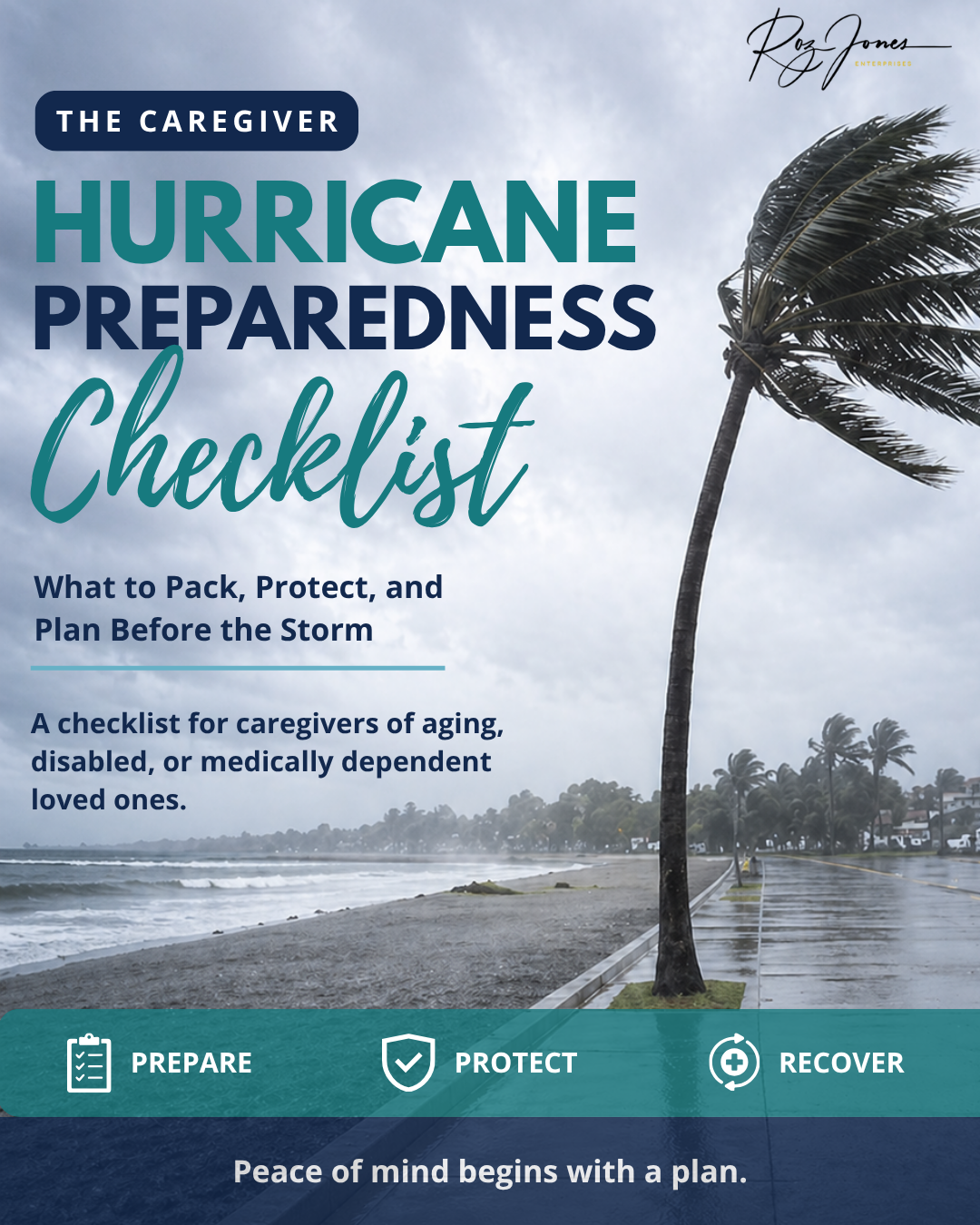
If you are caring for a loved one during storm season, purchase the Caregiver Hurricane Preparedness Checklist. It can help you prepare important documents, emergency contacts, supplies, medication needs, and safety steps before severe weather becomes a crisis.
For only $1.99, this checklist gives you a simple starting point so you are not trying to gather everything during a storm, power outage, hospitalization, or sudden change in your loved one’s care.
Purchase the Caregiver Hurricane Preparedness Checklist for $1.99 today and take one more step toward peace of mind.
Need Help Sorting Through the Care Plan?

If your family needs help thinking through care decisions, caregiving responsibilities, or next steps, book a session with Roz Jones. You do not have to navigate this season alone.
Together, we can talk through what is working, what is becoming too heavy, and what boundaries need to be strengthened so you can continue to care without losing yourself in the process.
Subscribe to The Caregiver Cafe Weekly Newsletter!

1. YOU ARE NOT ALONE: The problems you face as a caregiver are experienced by other caregivers. Knowing that you’re not alone can be comforting.
2. Tools and Resources: Find caregiver stress management tools and gain perspective from other caregiver’s experiences.
3. LEARN TO: Ask for help, accept help when it is offered, and acknowledge yourself on this caregiving journey. Hear from experts on how to balance caregiving responsibilities by taking care of your needs and involving others to help manage the natural stress and isolation of being a caregiver.