When Caring Comes With History

By Roz Jones

Caregiving is already layered.

But when you are caring for a former spouse, there can be even more emotions, questions, and decisions sitting at the table with you.

You may no longer be married.

You may no longer share a home.

You may have rebuilt your life in a different direction.

And still, here you are, helping someone you once loved, built with, raised children with, or shared years of life with to navigate aging, illness, disability, or a season where they simply cannot manage everything on their own.

That is not always easy to explain to other people.

Some may ask, “Why are you doing all of that?”

Some may assume you are obligated.

Some may assume you should walk away.

But caregiving does not always fit neatly into people’s opinions.

Sometimes care comes with history.

Sometimes care comes with unfinished emotions.

Sometimes care comes with adult children, shared finances, medical decisions, family expectations, or old wounds that still need boundaries around them.

And if you are stepping into a caregiving role for a former spouse, I want you to hear me clearly:

You can care without losing yourself.

You can support without becoming financially responsible for everything.

You can show compassion without ignoring the legal, emotional, and practical realities of the situation.

Caregiving After Divorce Requires Clarity

In my previous blog, Legal and Financial Considerations for Caregiving for a Former Spouse, I talked about the importance of understanding legal authority, financial responsibilities, power of attorney, guardianship, insurance, long-term care coverage, and reimbursement options.

Those pieces matter.

Because love, history, guilt, or family pressure cannot replace paperwork.

If your former spouse becomes unable to make decisions, someone needs the legal authority to speak with doctors, access records, manage bills, handle insurance, or make care decisions.

And that “someone” may or may not be you.

That is why clarity is so important.

Before you step fully into the role, ask yourself:

  • Do I have the legal authority to make decisions?
  • Am I listed on any medical or financial documents?
  • Are there adult children, siblings, or other relatives involved?
  • Who is responsible for paying for care?
  • What happens if their needs increase?
  • What boundaries do I need in place?
  • What am I willing to do, and what am I not willing to take on?

These questions may feel uncomfortable, but they are necessary.

Because caregiving without clarity can quickly become confusion.

And confusion can become conflict.

Do Not Let Emotions Replace a Care Plan

Let’s be honest.

Caring for a former spouse can stir up a lot.

Old love.

Old pain.

Old resentment.

Old loyalty.

Old guilt.

And sometimes, old family dynamics that everyone thought were done but somehow find their way back into the room.

That is why you need more than a kind heart.

You need a care plan.

A care plan helps you separate what is emotional from what is practical.

It helps you identify who is doing what, who needs to be contacted, where documents are stored, what medical conditions need to be monitored, what medications are being taken, and what needs to happen in an emergency.

This is especially important when other family members are involved.

If adult children are depending on you, if relatives are calling you for updates, or if your former spouse is relying on you more and more, everything needs to be documented.

Not because you are being cold.

Because you are being wise.

Protect Your Own Financial Well-Being

One of the biggest mistakes caregivers make is silently absorbing costs.

A prescription here.

Groceries there.

A bill that needs to be paid “just this once.”

Gas money.

Medical supplies.

Home repairs.

Transportation.

Emergency expenses.

And before you know it, you are financially involved in ways you never planned for.

When the person you are caring for is a former spouse, this can get even more complicated. There may be divorce agreements, shared property issues, old debts, benefits, insurance policies, or family expectations connected to the past.

Please do not guess your way through that.

Talk to a legal professional.

Talk to a financial advisor.

Keep receipts.

Document expenses.

Know what you are paying for and why.

And most importantly, know what you can afford to do without putting your own household, retirement, credit, or peace of mind at risk.

You are allowed to be generous.

But you are not required to become financially unstable in order to prove that you care.

Emergency Planning Matters, Too

Now let’s take this one step further.

Legal and financial planning is not only about doctor’s offices, bank accounts, and long-term decisions.

It also matters when an emergency happens.

A hurricane.

A power outage.

A hospitalization.

An evacuation.

A fall.

A sudden change in health.

A storm does not wait for families to figure out who has the paperwork.

An emergency does not pause while you search through drawers, text messages, file folders, or old emails trying to find the insurance card, medication list, emergency contacts, or advance directive.

That is why caregivers need to be prepared before the crisis comes.

If you are caring for a former spouse, ask:

  • Where are their important documents?
  • Who has access to them?
  • Are copies stored digitally and physically?
  • Who should be contacted first in an emergency?
  • Do they have a current medication list?
  • Do they use medical equipment that requires electricity?
  • Do they have transportation if evacuation is needed?
  • Are emergency contacts updated?
  • Do family members know the plan?

These details may seem small until they are needed.

Then they become everything.

Boundaries Are Part of the Plan

I want caregivers to understand this:

Boundaries are not a lack of love.

Boundaries are structure.

And when you are caring for a former spouse, structure is what helps keep the care from becoming emotionally overwhelming or financially harmful.

You may need boundaries around time.

You may need boundaries around money.

You may need boundaries around communication.

You may need boundaries with adult children or extended family.

You may need boundaries around what you are willing to manage alone.

A simple boundary may sound like:

“I can help with appointments, but I cannot be responsible for paying medical bills.”

Or:

“I am willing to be part of the care team, but we need to include the children in these decisions.”

Or:

“I can help organize documents, but I need legal authority in place before I can speak with providers.”

Or:

“I want to support you, but I cannot be the only person responsible for this care plan.”

That is not being difficult.

That is being honest.

And honesty protects everyone.

Keep the Family Conversations Clear

If there are children involved, especially adult children, do not assume everyone is on the same page.

Caregiving can bring up old family roles quickly.

One person may think you are taking over.

Another may expect you to handle everything.

Someone else may disagree with your choices.

And the former spouse receiving care may have their own opinions, fears, and preferences.

This is why family care conversations matter.

Everyone needs to understand:

  • What the care needs are
  • What documents are in place
  • Who has decision-making authority
  • Who is responsible for what
  • What financial resources are available
  • What emergency plan needs to be followed
  • What support the caregiver needs

The goal is not to control everyone.

The goal is to reduce confusion before confusion becomes a crisis.

Need Help Getting Prepared?

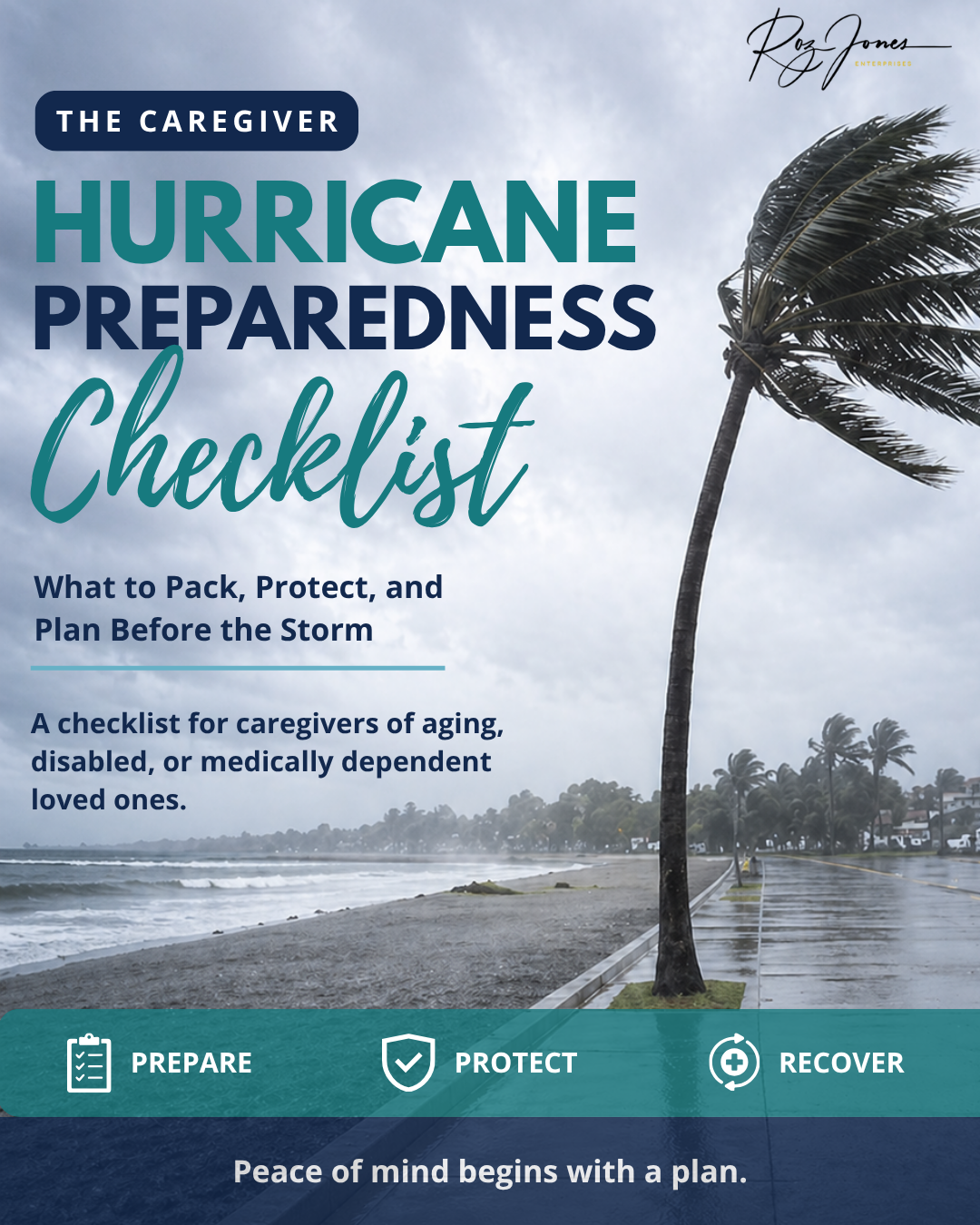
The Caregiver Hurricane Preparedness Checklist.

If you are caring for an aging loved one, a former spouse, or someone whose care needs are becoming more complex, now is the time to get organized.

Do not wait until the storm is already here.

Do not wait until the hospital calls.

Do not wait until the family is confused and emotions are high.

Start with a plan.

To help you prepare, I created the Caregiver Hurricane Preparedness Checklist, a simple and practical resource to help caregivers organize the essentials before an emergency happens.

For only $1.99, you can use this checklist to think through important documents, medications, emergency contacts, evacuation needs, supplies, and care details that should not be left to memory.

When You Can’t Do it All Give Roz a Call!

Roz Jones is a dedicated caretaker turned CEO with over a decade of experience in helping families care for and make decisions for loved ones and their legacies.Roz is a compassionate, innovative healthcare industry leader.

If you need more personalized support, I invite you to book a Family Care Planning Session with me.
Together, we can talk through your caregiving situation, identify what needs to be organized, and create a plan that supports your loved one without leaving you overwhelmed, confused, or carrying everything by yourself.

Subscribe to The Caregiver Cafe Weekly Newsletter!

Caregiving can be a roller coaster of ups and downs. The information that you will receive from The Caregiver Cafe Weekly Specials Newsletter will support you as a caregiver. Remember…

1. YOU ARE NOT ALONE: The problems you face as a caregiver are experienced by other caregivers. Knowing that you’re not alone can be comforting. 

2. Tools and Resources:  Find caregiver stress management tools and gain perspective from other caregiver’s experiences.

3. LEARN TO: Ask for help, accept help when it is offered, and acknowledge yourself on this caregiving journey. Hear from experts on how to balance caregiving responsibilities by taking care of your needs and involving others to help manage the natural stress and isolation of being a caregiver. 

Protect the Paperwork Before the Storm

By Roz Jones

When we talk about disaster preparedness, most people think about bottled water, batteries, flashlights, canned goods, medications, and evacuation bags.

And yes, all of that matters.

But caregivers, there is another part of preparedness that often gets overlooked until it is too late: the documents, passwords, records, and digital information that help you care for your aging loved one when life gets disrupted.

Because after a storm, flood, power outage, evacuation, or medical emergency, you may need quick access to information like insurance cards, medication lists, medical records, banking contacts, advance directives, prescriptions, home insurance, or power of attorney documents.

And if all of that is sitting in one folder, on one phone, in one drawer, or on one computer that gets damaged, lost, or locked, that can create a whole new crisis on top of the one you are already managing.

So today, we are talking about how caregivers can back up and safely store important information before disaster strikes.

Why Data Backup Matters for Caregivers

Caregivers carry a lot of invisible responsibility.

You may be the one keeping up with appointment notes, prescription refills, insurance information, doctors’ names, pharmacy contacts, health history, bills, passwords, home care information, and emergency contacts.

That information matters every day, but it becomes even more important during hurricane season or any emergency.

  • If you have to evacuate quickly, can you access your loved one’s medication list?
  • If their wallet gets misplaced, do you have copies of their ID and insurance cards?
  • If the power is out, can you still reach the pharmacy or oxygen provider?
  • If your phone breaks, does someone else know where the documents are?
  • If your loved one is hospitalized, can you pull up the paperwork that allows you to help make decisions?

These are the questions caregivers need to answer before the emergency.

Start With a Caregiver Document Checklist

Before choosing a storage system, first decide what needs to be saved.

Start with the documents and information that would be hardest to replace during an emergency.

That may include:

  • Photo ID
  • Insurance cards
  • Medicare or Medicaid cards
  • Medication list
  • Medical history
  • Doctor and pharmacy contacts
  • Emergency contacts
  • Advance directives
  • Power of attorney documents
  • Living will
  • Home insurance or rental documents
  • Banking and financial contact information
  • Utility account information
  • Medical equipment provider information
  • Veteran benefit information, if applicable
  • Facility or home care agency contacts
  • Recent care notes or discharge instructions

Keep the list simple enough that you will actually use it.

The goal is not to create a perfect filing system. The goal is to make sure the right information is available when it is needed.

Use the 3-2-1 Backup Rule

Caregivers, one copy is not enough.

If something is important, it should not live in only one place.

A simple backup method many experts recommend is the 3-2-1 backup rule. That means keeping three copies of important files, using two different types of storage, with one copy stored off-site or away from the original location. CISA and other backup guidance use this approach as a way to reduce the risk of losing critical data during disasters, device failures, or cyber incidents.

For caregivers, that might look like this:

One printed copy in a waterproof folder
One digital copy stored securely in the cloud
One backup copy on an external hard drive or secure digital vault

This way, if one copy is damaged, lost, or unavailable, you still have another way to access what you need.

Cloud Storage Can Be Helpful If You Secure It

Cloud storage can be a practical option for caregivers because it lets you access documents from different devices and locations.

Options may include Google Drive, Dropbox, iCloud, OneDrive, or another secure document storage system.

This can be helpful when you need to pull up a medication list at the doctor’s office, share a document with a sibling, or access insurance information during an evacuation.

But convenience should not come at the expense of safety.

If you use cloud storage, make sure you:

  • Use a strong, unique password
  • Turn on multi-factor authentication
  • Limit who has access
  • Organize files clearly
  • Avoid sharing sensitive documents through unsecured links
  • Review access permissions regularly
  • Remove access for anyone who no longer needs it

The FTC recommends using strong passwords and two-factor authentication to help protect online accounts that may contain personal information.

So yes, use the tools. But use them wisely.

Consider a Digital Vault for Sensitive Information

Some caregivers may benefit from using a digital vault.

A digital vault is a secure online place where you can store important documents, passwords, account information, and instructions for trusted people who may need access in the future.

This can be helpful if you are managing documents for an aging loved one and want everything organized in one secure location.

AARP notes that digital vaults can help organize important documents that may otherwise be scattered across physical files, email inboxes, cloud accounts, and online storage platforms.

This can be especially useful for:

  • Advance directives
  • Insurance documents
  • Financial records
  • Legal paperwork
  • Account information
  • Funeral or end-of-life wishes
  • Medical care instructions
  • Property documents

If you choose this option, make sure the platform is reputable, secure, and easy enough for your family to understand. The fanciest system is not always the best system. The best system is the one your caregiver team can actually use.

External Hard Drives and USB Drives Still Have a Place

Not everything has to be online.

External hard drives and password-protected USB drives can still be useful backup options, especially if you want a physical copy of important digital files.

But they need to be handled carefully.

If you use an external drive or USB drive:

  • Password-protect it
  • Store it in a waterproof container
  • Keep it in a safe place
  • Label it clearly without exposing sensitive information
  • Update it regularly
  • Do not make it the only backup
  • Keep one copy outside the home, if possible

USB drives can be lost, damaged, or stolen. External drives can fail. That is why they should be part of the plan, not the whole plan.

Use a Password Manager Instead of a Password List

Caregivers often end up managing passwords for portals, pharmacies, insurance accounts, utility accounts, banking, email, medical apps, and patient platforms.

Writing every password on a loose piece of paper or saving them in a document called “passwords” is risky.

A password manager can help store and organize passwords securely. It can also help create stronger passwords instead of using the same password over and over.

Also, make sure there is a plan for trusted access.

If something happens to you, who can access the information needed to care for your loved one?
If something happens to your loved one, who has legal authority to manage accounts or documents?
If the person with all the passwords is unavailable, what happens next?

These are not always easy conversations, but they are necessary ones.

Protect Medical and Financial Information

Caregivers often handle sensitive information, so privacy matters.

Be careful about where and how you store:

  • Social Security numbers
  • Bank account information
  • Insurance records
  • Medical records
  • Legal documents
  • Passwords
  • Tax documents
  • Health portal logins

Do not text sensitive documents casually.
Do not email private information without thinking it through.
Do not share login information with people who do not need access.
Do not leave printed copies sitting out in plain view.

And when you do share information, share only what is necessary.

Caregiving requires coordination, but coordination should still protect your loved one’s dignity and privacy.

Make the Information Easy to Find in an Emergency

A backup system only works if people know how to use it.

Create a simple emergency document guide that says:

  • Where the printed folder is located
  • Where the digital copies are stored
  • Who has access
  • Who the backup caregiver is
  • Where passwords or vault access instructions are kept
  • Which documents are most important in an emergency
  • Who to call first

Do not make people search through ten folders, three inboxes, and five devices while the power is out.

Keep it simple.
Keep it organized.
Keep it updated.

That is the part that saves time when emotions are high.

Review and Update Everything Regularly

Your backup plan should not be something you create once and forget.

Review it at least twice a year, and definitely before hurricane season if your loved one lives in Florida or another storm-prone area.

Also check that your backup files actually open.

That part matters.

A backup you cannot access is not really a backup.

If you have not read the previous blog, Data Backup and Storage Solutions for Caregiver, start there.

That blog walks through practical ways caregivers can protect an aging loved one’s important information, including cloud storage, external hard drives, password-protected USB drives, online backup services, and backup recovery tools.

Once you have those digital backup systems in place, this blog helps you take the next step: making sure those documents, passwords, emergency contacts, and care records are easy to access when hurricane season, power outages, evacuations, or medical emergencies happen.

Need help turning this into a real plan?

Photo by Connor Scott McManus on Pexels.com

Reading about hurricane preparations is a good first step. But caregivers also need something they can print, fill out, and keep close when the pressure is on. Roz is creating a printable Caregiver Hurricane Preparedness Checklist to help families prepare with more clarity and less last-minute panic.

This front-and-back checklist will include space for emergency contacts, medical information, supply reminders, care bag items, and recovery steps. Want first access when it is ready? Complete the interest form below.

← Back

Thank you for your response. ✨

Are you currently caring for an aging loved one?

When You Can’t Do it All Give Roz a Call!

Roz Jones is a dedicated caretaker turned CEO with over a decade of experience in helping families care for and make decisions for loved ones and their legacies.Roz is a compassionate, innovative healthcare industry leader.

If your family needs support talking through care decisions, roles, and next steps, book a family care planning session with Roz Jones to create more clarity before a crisis forces rushed decisions.

Subscribe to The Caregiver Cafe Weekly Newsletter!

Caregiving can be a roller coaster of ups and downs. The information that you will receive from The Caregiver Cafe Weekly Specials Newsletter will support you as a caregiver. Remember…

1. YOU ARE NOT ALONE: The problems you face as a caregiver are experienced by other caregivers. Knowing that you’re not alone can be comforting. 

2. Tools and Resources:  Find caregiver stress management tools and gain perspective from other caregiver’s experiences.

3. LEARN TO: Ask for help, accept help when it is offered, and acknowledge yourself on this caregiving journey. Hear from experts on how to balance caregiving responsibilities by taking care of your needs and involving others to help manage the natural stress and isolation of being a caregiver. 

Florida Hurricane Resources Every Caregiver Should Know

By Roz Jones

Preparing for hurricane season can feel overwhelming, especially when you are caring for an aging loved one. There are supplies to gather, medications to track, documents to protect, phone numbers to update, and decisions to make before the storm is anywhere near the forecast.

And caregivers, I want you to hear me clearly: you do not have to figure it all out at the last minute.

The goal is not to panic.
The goal is to prepare.

When you know where to turn for information, support, alerts, and local resources, you give yourself and your loved one a stronger foundation before hurricane season gets active.

Because preparation is not just what you pack.
Preparation is also knowing who to call, where to go, what to ask, and how to keep your loved one included in the plan.

Florida Hurricane Season Is the Time to Prepare Early

Florida hurricane season runs from June 1 through November 30, but caregivers should not wait until a storm is already forming to get ready.

If your aging loved one lives in Florida, now is the time to review their emergency plan, update contact information, check medication refills, confirm transportation options, and learn what resources are available in their county.

This is especially important because not every older adult can simply “grab a bag and go.”

Some need help getting out of the home.
Some rely on oxygen or other medical equipment.
Some need refrigerated medication.
Some have mobility challenges.
Some may become confused, anxious, or overwhelmed when routines change.

That is why hurricane preparedness for caregivers must be personal. It has to match your loved one’s real life, not just a general checklist.

Start With FloridaDisaster.org

If you are caring for an aging loved one in Florida, FloridaDisaster.org should be one of your first stops.

This site provides statewide emergency preparedness information, planning tools, county emergency management contacts, evacuation guidance, and resources for people with access and functional needs.

Use this resource to:

  • Find your loved one’s local county emergency management office
  • Review hurricane preparedness guidance
  • Check evacuation and shelter information
  • Learn about planning for special needs
  • Create or update a family emergency plan

This is especially helpful if your loved one lives alone or if you are caregiving from another city or state. You need to know which county office to contact and what local support may be available before there is an active storm.

Know the Florida Special Needs Registry

This one is important.

If your aging loved one has medical needs, mobility challenges, relies on electricity for medical equipment, or may need help during evacuation or sheltering, look into the Florida Special Needs Registry.

This registry helps connect individuals with special needs to their local emergency management agency so emergency planners have information that may help them prepare and respond during a disaster.

But caregiver, please understand this clearly: registration does not mean every detail is automatically handled.

After registering, follow up with the local county emergency management office. Ask what happens next. Ask what your loved one should bring. Ask whether transportation assistance is available. Ask whether a caregiver can come with them. Ask what kind of medical support the shelter can and cannot provide.

That follow-up matters.

Do not just register and assume everything is finished. Make the call. Get the details. Write them down.

Contact the Local County Emergency Management Office

Florida is one state, but hurricane preparation is local.

What happens in one county may not look the same in another. Evacuation zones, shelter openings, transportation support, alert systems, and local updates are often handled at the county level.

Your loved one’s county emergency management office can help you understand:

  • Evacuation zones
  • Shelter locations
  • Special needs shelter registration
  • Transportation assistance
  • Local emergency alerts
  • Pet-friendly shelter options
  • Road closure updates
  • County-specific hurricane guidance

This is the information you want before the storm is approaching, not when everyone else is trying to get through on the phone.

Caregiving requires details. During hurricane season, those details can make all the difference.

Sign Up for Emergency Alerts

A caregiver should not have to depend on social media rumors or last-minute family messages to know what is happening.

Sign up for local emergency alerts in the county where your loved one lives. Many Florida counties offer phone, text, or email alerts for weather warnings, evacuation orders, shelter openings, boil water notices, road closures, and other urgent updates.

Also make sure your aging loved one has more than one way to receive information.

That may include:

  • A charged cell phone
  • A written list of emergency contacts
  • A battery-powered radio
  • A weather radio
  • A trusted neighbor
  • A family communication chain
  • Local news access

And remember, if your loved one has hearing, vision, memory, or mobility challenges, the alert system needs to match their actual ability to receive and respond to information.

An alert only helps if they can hear it, read it, understand it, or have someone nearby who can help them act on it.

Use Ready.gov for the Basics

Ready.gov is a helpful resource for general disaster preparedness, including emergency kits, communication plans, and family readiness.

This can be a good starting point if you are building your hurricane plan from scratch.

But caregiver, do not stop at the general checklist.

Use the basic emergency kit as your foundation, then personalize it for your loved one’s care needs.

Ask yourself:

Do they need medication at a certain time?
Do they need supplies for incontinence care?
Do they have dietary restrictions?
Do they need glasses, hearing aids, dentures, or mobility equipment?
Do they use medical equipment that requires electricity?
Do they become confused or anxious when routines change?
Do they need documents that allow someone else to speak on their behalf?

A basic checklist is helpful. A personalized checklist is safer.

The American Red Cross Can Help With Emergency Readiness

The American Red Cross offers disaster preparedness information, shelter guidance, first aid resources, and support during and after disasters.

For caregivers, the Red Cross can be especially helpful when thinking through emergency supplies, basic first aid, sheltering, family communication, and preparedness for older adults.

The Red Cross also reminds families to consider assistive devices, prescriptions, medical equipment, and support networks when preparing older adults for emergencies.

That support network piece is important.

Caregiver, you should not be the only person who knows the plan.

Someone else should know where the documents are.
Someone else should know the medication list.
Someone else should know who to call.
Someone else should know where your loved one would go if evacuation is needed.

Check With the Florida Department of Health

The Florida Department of Health works with county health departments and local emergency management agencies around emergency preparedness, including special needs shelter planning.

If your loved one may need a special needs shelter, contact the county early to ask about registration, eligibility, transportation, caregiver access, and what supplies your loved one needs to bring.

Ask questions like:

  • Does my loved one qualify for a special needs shelter?
  • How do we register?
  • What happens after registration?
  • Can a caregiver stay with them?
  • Are pets allowed?
  • What medical support is provided?
  • What medical support is not provided?
  • What should we bring?
  • How will we be notified if evacuation is recommended?

Special needs shelters are a resource, but they are not a full replacement for a care plan.

So ask the questions now, while there is still time to prepare.

Do Not Forget the Florida Department of Elder Affairs

The Florida Department of Elder Affairs is another helpful resource for older adults, caregivers, and families preparing for hurricane season.

Through elder-focused programs and local aging resources, caregivers may be able to find information about disaster planning, transportation, local support, and services for older adults.

If you are not sure where to begin, look into your local Area Agency on Aging or Florida’s Elder Helpline. These resources can help connect caregivers and older adults with local support before and after a disaster.

This can be especially helpful if your loved one lives alone, has limited family nearby, or needs help navigating services.

Review Nursing Home or Assisted Living Plans

If your aging loved one lives in an assisted living facility, nursing home, independent senior community, or another residential care setting, do not assume the facility has everything handled.

Ask for the emergency plan.

Ask:

  • Will the facility evacuate or shelter in place?
  • Where will residents be taken if evacuation is needed?
  • How will families be notified?
  • How are medications transported?
  • What happens if the power goes out?
  • Is there generator support?
  • How are residents with dementia supported?
  • Who should families contact during and after the storm?
  • How often will updates be provided?

When you are caregiving, questions are part of the job.

Build Your Own Caregiver Resource List

Once you gather resources, put them all in one place.

Create a printed and digital list with:

  • County emergency management office
  • Local emergency alert sign-up
  • Special Needs Registry information
  • Nearest hospital
  • Primary doctor
  • Pharmacy
  • Home health agency
  • Oxygen or medical equipment provider
  • Insurance contact
  • Utility company
  • Transportation contact
  • Trusted neighbors
  • Family contacts
  • Facility contact, if applicable

Keep one copy with you.
Keep one copy with your loved one.
Share one copy with a trusted backup caregiver.

And please make sure the print is large enough for your loved one to read.

If you have not read the first blog, Resources for Disaster Preparedness and Planning, start there.

That blog shares helpful emergency preparedness resources, including Ready.gov, FEMA, the American Red Cross, CDC, Elder Care Locator, AARP, state and local emergency management agencies, emergency alert systems, and community emergency response teams.

Once you have reviewed those general disaster preparedness resources, use this Florida-focused hurricane guide to take the next step: confirming local support, checking evacuation information, signing up for alerts, and making sure your aging loved one is prepared before hurricane season becomes active.

Need help turning this into a real plan?

Photo by Connor Scott McManus on Pexels.com

Reading about hurricane preparations is a good first step. But caregivers also need something they can print, fill out, and keep close when the pressure is on. Roz is creating a printable Caregiver Hurricane Preparedness Checklist to help families prepare with more clarity and less last-minute panic.

This front-and-back checklist will include space for emergency contacts, medical information, supply reminders, care bag items, and recovery steps. Want first access when it is ready? Complete the interest form below.

← Back

Thank you for your response. ✨

Are you currently caring for an aging loved one?

When You Can’t Do it All Give Roz a Call!

Roz Jones is a dedicated caretaker turned CEO with over a decade of experience in helping families care for and make decisions for loved ones and their legacies.Roz is a compassionate, innovative healthcare industry leader.

If your family needs support talking through care decisions, roles, and next steps, book a family care planning session with Roz Jones to create more clarity before a crisis forces rushed decisions.

Subscribe to The Caregiver Cafe Weekly Newsletter!

Caregiving can be a roller coaster of ups and downs. The information that you will receive from The Caregiver Cafe Weekly Specials Newsletter will support you as a caregiver. Remember…

1. YOU ARE NOT ALONE: The problems you face as a caregiver are experienced by other caregivers. Knowing that you’re not alone can be comforting. 

2. Tools and Resources:  Find caregiver stress management tools and gain perspective from other caregiver’s experiences.

3. LEARN TO: Ask for help, accept help when it is offered, and acknowledge yourself on this caregiving journey. Hear from experts on how to balance caregiving responsibilities by taking care of your needs and involving others to help manage the natural stress and isolation of being a caregiver. 
Hurricane Season Is Coming: Is Your Care Plan Ready?

By Roz Jones

If you’ve been with me for a while, you know I believe in staying ready so you don’t have to get ready. In Part I of this series, we talked about the basics; water, food, medications, documents, and all the essentials your aging loved one needs to stay safe when disaster strikes. If you missed that first blog or would like a refresher, you can read it here

Now, as Florida prepares for hurricane season, it is time to take that checklist a step further. Because hurricane preparation is not just about stocking up on supplies.

It is about knowing your evacuation zone.
It is about having a plan if the power goes out.
It is about making sure medications, mobility needs, oxygen, medical equipment, transportation, and communication are handled before the storm is at your door.

And caregivers, let me say this clearly: preparation is not panic.

Preparation is peace.
Preparation is protection.
Preparation is love with a plan.

Hurricane Season Requires a Different Kind of Readiness

Florida’s hurricane season officially runs from June 1 through November 30, and preparation needs to begin before there is a named storm in the forecast. For caregivers of aging loved ones, this planning has to be even more intentional.

Your loved one may not be able to move quickly. They may depend on refrigerated medication, oxygen, a walker, a wheelchair, a CPAP machine, hearing aids, or daily support. They may also experience confusion, fear, or anxiety when their routine is disrupted.

That means your hurricane plan cannot be general.

It has to be personal.

It has to be built around your loved one’s health, home, body, mobility, and care needs.

Start With “Know Your Zone, Know Your Home”

Before you even pack the emergency bag, find out whether your loved one lives in an evacuation zone.

The Florida Division of Emergency Management reminds residents to “Know Your Zone” and “Know Your Home,” because evacuation decisions depend on where the home is located and how well it can withstand wind, rain, flooding, and storm surge.

If your aging loved one lives in Florida, make sure you know:

What evacuation zone they are in
Whether they live in a flood-prone area
Whether their home can handle strong winds and heavy rain
Where the closest shelter is
Whether they qualify for a special needs shelter
How they would evacuate if you could not get there in time

This is not the kind of information you want to search for when everyone else is already on the road.

Do it now.

Write it down.
Share it with family.
Keep a copy in their emergency folder.

Build the Hurricane Kit Around Their Daily Life

A basic hurricane kit should include water, shelf-stable food, flashlights, batteries, phone chargers, hygiene items, a first aid kit, cash, important documents, and supplies for several days.

But when you are caring for an aging loved one, you need to think beyond the basics.

Ask yourself: What does my loved one use every single day?

Then build the kit from there.

Include:

  • A current medication list
  • At least several days of essential medications, when possible
  • Doctor and pharmacy information
  • Medical insurance cards
  • Copies of ID
  • Hearing aid batteries
  • Extra eyeglasses
  • Denture supplies
  • Incontinence products
  • Mobility aids
  • A backup phone charger
  • A battery-powered radio
  • Blankets or lightweight bedding
  • Shelf-stable foods that match their dietary needs
  • Water for drinking and hygiene
  • Comfort items, such as a family photo, sweater, blanket, or small familiar object

If your loved one uses medical equipment that depends on electricity, this becomes even more important. You need a plan for backup power, charging, relocation, or evacuation.

Do not assume the power will come back quickly.
Do not assume the pharmacy will reopen the next day.
Do not assume roads will be easy to navigate after a storm.

Hope is good. A plan is better.

Make a Medication and Medical Equipment Plan

This is one of the most important parts of hurricane preparation for caregivers.

If your loved one takes daily medication, keep an updated list that includes:

  • Medication name
  • Dosage
  • Time of day it is taken
  • Prescribing doctor
  • Pharmacy contact information
  • Refill dates
  • Allergies
  • Medical conditions

If medication needs refrigeration, ask the doctor or pharmacist what to do during a power outage. If your loved one uses oxygen, dialysis, a CPAP machine, an electric wheelchair, or any other power-dependent medical equipment, call the provider before hurricane season gets active.

Ask questions like:

  • How long does the backup battery last?
  • What should we do if the power is out for more than 24 hours?
  • Can equipment be transported safely?
  • Is there a backup supplier?
  • Should the utility company be notified?
  • Does my loved one need to register for a special needs shelter?

In Florida, special needs shelters may be available for residents who need extra medical support during emergencies, but they usually require advance registration through the county or local emergency management office.

Caregivers, please do not wait until a storm is already forming to figure this out.

Have an Evacuation Plan Before the Order Comes

One of the hardest parts of hurricane season is deciding whether to stay or go.

For caregivers, that decision may involve mobility equipment, medications, pets, oxygen, transportation, dementia-related needs, or the physical ability to safely move your loved one.

That is why the evacuation plan needs to be made early.

Decide:

  • Who will pick up your loved one
  • Where they will go
  • What route they will take
  • What supplies need to go with them
  • Who has access to the house
  • Who has copies of important documents
  • What happens if the primary caregiver cannot get there
  • Whether pets are included in the plan
  • What shelter or family home is safest

And let me be direct: if local officials issue an evacuation order, take it seriously.

Storm surge, flooding, high winds, and blocked roads can create dangerous conditions quickly. A plan made ahead of time can help you move with clarity instead of fear.

Do Not Leave Communication to Chance

During a hurricane, cell service may be unreliable. Phones may die. Internet may go down. Family members may be scattered across different areas.

That is why every caregiver needs a communication plan.

Write down:

  • Primary emergency contact
  • Backup emergency contact
  • Doctor’s phone number
  • Pharmacy phone number
  • Home health agency contact
  • Nearest hospital
  • Neighbors who can check in
  • Family members who should receive updates
  • County emergency management contact information

Make sure your aging loved one has these numbers written in large, readable print. Do not rely only on a cell phone contact list.

Also, make sure at least two trusted people know the plan.

Not just you.

Because caregiver, you are important too. If something happens and you cannot get there right away, someone else needs to know what to do.

Protect the Documents Before the Storm

Hurricanes do not just damage homes. They can scatter paperwork, destroy records, and make it harder to access care or financial support after the storm.

Keep copies of important documents in a waterproof folder or bag.

Include:

  • Photo ID
  • Insurance cards
  • Medicare or Medicaid cards
  • Medication list
  • Medical history
  • Doctor information
  • Advance directives
  • Power of attorney documents
  • Emergency contacts
  • Home insurance or rental documents
  • Banking and financial contact information
  • Veteran benefit information, if applicable

If your loved one has advance directives, make sure the right people know where they are.

And if your family has not had those conversations yet, hurricane season is one more reason to stop putting them off.

Hard conversations are still easier before the crisis.

Plan for the Emotional Side Too

We talk a lot about water, batteries, and evacuation routes.

But caregivers also need to prepare for the emotional side of hurricane season.

Storms can be frightening for aging loved ones, especially if they have experienced past trauma, memory loss, anxiety, or confusion. Loud winds, power outages, changes in routine, and leaving home suddenly can be overwhelming.

So think about comfort, not just safety.

Have familiar items nearby.
Keep routines as steady as possible.
Explain the plan calmly and simply.
Use written reminders if your loved one gets confused.
Keep favorite snacks, music, photos, or blankets close.
Limit constant news exposure if it increases their anxiety.

Sometimes the most loving thing you can say is:

“We have a plan. You are not alone. We are going to take this one step at a time.”

Revisit the Plan Throughout the Season

Hurricane preparation is not something you do once and forget.

Check the kit.
Update the medications.
Refresh the water.
Replace expired food.
Charge backup batteries.
Review evacuation routes.
Update phone numbers.
Make sure documents are still current.

And if your loved one has had a recent hospital stay, new diagnosis, fall, surgery, medication change, or mobility change, update the hurricane plan right away.

The plan should match the person they are today, not who they were last year.

If you have not read the first blog, Creating a Disaster Preparedness Checklist for You and Your Aging Loved One, start there. That blog walks through the basic items every caregiver should consider when preparing for an emergency.

Read the previous blog here.

Once you have that foundation, come back to this blog and build your hurricane-season plan around your loved one’s specific care needs.

When You Can’t Do it All Give Roz a Call!

Roz Jones is a dedicated caretaker turned CEO with over a decade of experience in helping families care for and make decisions for loved ones and their legacies.Roz is a compassionate, innovative healthcare industry leader.

If your family needs support talking through care decisions, roles, and next steps, book a family care planning session with Roz Jones to create more clarity before a crisis forces rushed decisions.

Need help turning this into a real plan?

Photo by Connor Scott McManus on Pexels.com

Reading about hurricane preparations is a good first step. But caregivers also need something they can print, fill out, and keep close when the pressure is on. Roz is creating a printable Caregiver Hurricane Preparedness Checklist to help families prepare with more clarity and less last-minute panic.

This front-and-back checklist will include space for emergency contacts, medical information, supply reminders, care bag items, and recovery steps. Want first access when it is ready? Complete the interest form below.

← Back

Thank you for your response. ✨

Are you currently caring for an aging loved one?

Subscribe to The Caregiver Cafe Weekly Newsletter!

Caregiving can be a roller coaster of ups and downs. The information that you will receive from The Caregiver Cafe Weekly Specials Newsletter will support you as a caregiver. Remember…

1. YOU ARE NOT ALONE: The problems you face as a caregiver are experienced by other caregivers. Knowing that you’re not alone can be comforting. 

2. Tools and Resources:  Find caregiver stress management tools and gain perspective from other caregiver’s experiences.

3. LEARN TO: Ask for help, accept help when it is offered, and acknowledge yourself on this caregiving journey. Hear from experts on how to balance caregiving responsibilities by taking care of your needs and involving others to help manage the natural stress and isolation of being a caregiver. 
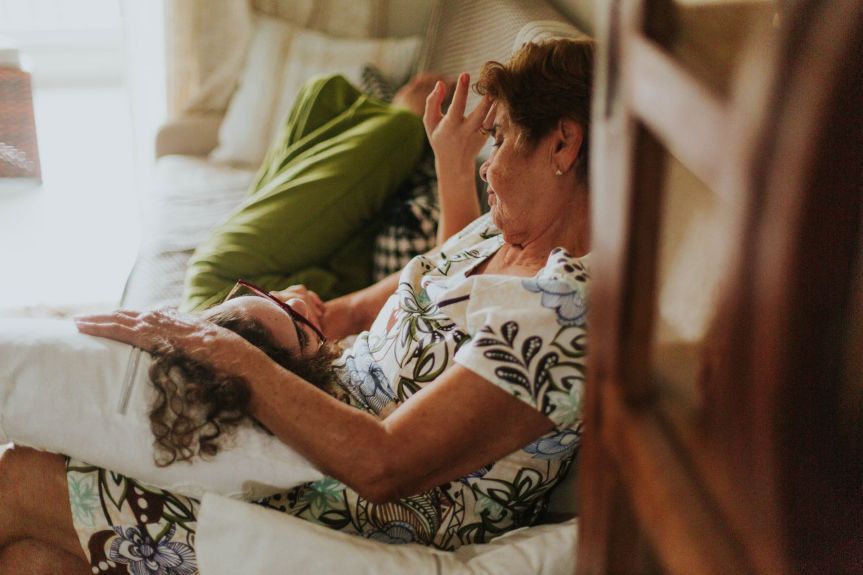
When Work and Care Collide

By Roz Jones

Caring for someone you love while trying to keep up with work can feel like living in two worlds at once.

One world expects you to show up, stay focused, meet deadlines, return calls, and keep moving. The other asks you to slow down, pay attention, respond to changes, manage appointments, solve problems, and carry the emotional weight that comes with caring for an aging loved one.

For many caregivers, the tension is not just about being busy. It is about trying to be fully present in two places that both matter deeply.

And that kind of pressure can wear on you in ways other people do not always see.

It Is More Than a Time Management Issue

When people talk about caregiving and work, they often reduce it to scheduling.

But this is not just about a planner or a calendar.

This is about mental load.
This is about emotional strain.
This is about trying to stay dependable at work while also being dependable to someone who may need more from you than they did before.

You may be at work thinking about your loved one.
You may be with your loved one thinking about work.
You may end the day feeling like you showed up everywhere, but never fully settled anywhere.

That does something to a person.

The Pressure Builds Quietly

For many caregivers, this season does not arrive all at once.

It builds.

A few appointments here.
A few more check-in calls there.
A prescription refill.
A ride to one specialist.
A little more help with forms, bills, meals, or household needs.

Then one day, you realize you are no longer simply helping. You are coordinating, carrying, remembering, adjusting, and holding together far more than you expected.

All while still trying to keep your own life moving.

Work Does Not Always Make Room for What Home Requires

One of the hardest parts of this experience is that work responsibilities often stay the same, even when caregiving responsibilities increase.

The emails still come.
The expectations still stand.
The deadlines still matter.
The bills still need to be paid.

So caregivers often find themselves trying to hold everything together without enough room to breathe.

That can create guilt in both directions.

Guilt that you are not doing enough at home.
Guilt that you are distracted at work.
Guilt that you are tired.
Guilt that you need help.
Guilt that no matter how much you are carrying, it still feels like more is needed.

Name What Feels Hardest

Before trying to fix everything, it helps to get honest about what is making this season feel so heavy.

Is it the unpredictability?
The transportation?
The constant communication?
The financial stress?
The medication management?
The emotional weight?
The lack of help?
The fear of what comes next?

When you name the real pressure points, you can start making decisions based on what is actually draining you instead of just pushing through and hoping things get easier on their own.

Build a Rhythm, Not a Perfect Balance

Perfect balance is not always realistic in caregiving.

A better goal may be rhythm.

A rhythm helps you create some steadiness in a season that can feel scattered. That might mean setting specific times to return caregiving calls, keeping appointments in one shared calendar, writing down medication notes in one place, or blocking off one part of the week to handle care-related tasks before they pile up.

The goal is not to control everything.
The goal is to create enough structure that everything does not feel urgent all the time.

Let Help Be Practical

Many caregivers hear, “Let me know if you need anything,” but still end up doing most of it alone.

Part of the problem is that vague support often creates more work. You are still left figuring out what to ask for, who can handle it, and whether they will actually follow through.

Try getting specific instead.

Ask someone to take one appointment this month.
Ask a family member to do one grocery run each week.
Ask someone to handle one phone call or paperwork task.
Ask for one consistent check-in instead of broad promises.

Specific support tends to be more useful, more realistic, and easier to accept.

Your Work Life May Need a New Conversation

Sometimes the answer is not just coping better. Sometimes the structure around you needs to shift.

That may mean asking about flexibility.
It may mean changing your schedule where possible.
It may mean using benefits you have not used before.
It may mean talking to your supervisor before you are completely overwhelmed.
It may even mean reevaluating whether your current work setup still fits the life you are living now.

That is not failure. That is responding honestly to reality.

Caregiving Affects More Than Your Schedule

Caregiving can touch every part of life.

Your focus.
Your sleep.
Your finances.
Your energy.
Your relationships.
Your ability to rest without feeling like you should be doing something else.

That is why working caregivers need more than productivity tips. They need support, clarity, and space to make thoughtful decisions instead of only reacting to the next urgent thing.

You Matter in This Too

This part is important.

Caring for someone else does not mean disappearing from your own life.

Yes, caregiving asks a lot.
Yes, work asks a lot too.
But you are still a person inside all of this.

You still need rest.
You still need support.
You still need room to breathe, think, and care for yourself in ways that are not treated like an afterthought.

You are not selfish for needing that.
You are human.If this blog spoke to what you are carrying right now, go back and read How to Juggle Caregiving and a 9-5 Job Successfully for the earlier conversation that this piece builds on. It offers another layer to the reality of balancing work, caregiving, and the many responsibilities that come with both.

When You Can’t Do it All Give Roz a Call!

Roz Jones is a dedicated caretaker turned CEO with over a decade of experience in helping families care for and make decisions for loved ones and their legacies.Roz is a compassionate, innovative healthcare industry leader.

If your family needs support talking through care decisions, roles, and next steps, book a family care planning session with Roz Jones to create more clarity before a crisis forces rushed decisions.

Purchase the Caregiving & Advance Health Directives Checklist!

Roz Jones Enterprises Caregiving & Advance Health Directives Checklist.

And if you are ready to start getting organized around these important conversations, purchase the Advanced Directives Checklist to help your family prepare with more confidence and less confusion.

Subscribe to The Caregiver Cafe Weekly Newsletter!

Caregiving can be a roller coaster of ups and downs. The information that you will receive from The Caregiver Cafe Weekly Specials Newsletter will support you as a caregiver. Remember…

1. YOU ARE NOT ALONE: The problems you face as a caregiver are experienced by other caregivers. Knowing that you’re not alone can be comforting. 

2. Tools and Resources:  Find caregiver stress management tools and gain perspective from other caregiver’s experiences.

3. LEARN TO: Ask for help, accept help when it is offered, and acknowledge yourself on this caregiving journey. Hear from experts on how to balance caregiving responsibilities by taking care of your needs and involving others to help manage the natural stress and isolation of being a caregiver.