

By Roz Jones
Male caregivers often carry responsibilities that are not always visible to others.
The work may begin early in the morning with medication reminders, meal preparation, transportation, or checking in on a loved one before the rest of the day begins. It may continue through doctor’s appointments, household tasks, financial concerns, family updates, and the constant need to remain alert to changes in health, mood, or behavior.
Much of this work is done quietly.
Many male caregivers become the steady presence in the family. They are expected to manage, respond, decide, and continue forward. Their strength is often praised, but the emotional weight behind that strength is not always acknowledged.
Caregiving affects more than the daily schedule. It affects the heart, the mind, the body, and the relationships surrounding the caregiver. For male caregivers, emotional wellness must become part of the care plan because the quality of care is connected to the well-being of the person providing it.
The Emotional Side of Caregiving
Caregiving brings responsibility, but it also brings emotion.
A male caregiver may be caring for a parent whose needs are increasing, a spouse whose health is changing, a sibling who requires support, or another aging loved one who can no longer manage life in the same way. These changes can bring grief, worry, frustration, sadness, fear, and exhaustion.
In many families, male caregivers are expected to stay calm and composed. They may have been taught to handle problems privately, avoid emotional expression, and keep going without complaint. As a result, the emotional impact of caregiving may remain unnamed.
Unspoken stress can still affect the caregiver.
It may appear as irritability, fatigue, sleeplessness, withdrawal, impatience, or difficulty concentrating. It may also affect communication with family members, healthcare providers, and the loved one receiving care. These signs do not mean the caregiver is failing. They often indicate that the caregiver needs support, rest, and healthier ways to process what is being carried.
When Responsibility Becomes Isolation
Isolation is one of the quiet challenges many caregivers face.
For male caregivers, isolation may not always look like being physically alone. It may look like being surrounded by family but still feeling like the only one who truly understands the care needs. It may look like answering questions about the loved one’s condition while no one asks how the caregiver is managing. It may look like keeping difficult emotions private because there is no safe place to put them.
Over time, this isolation can make caregiving feel heavier than it already is.
Family members may assume that everything is under control because the caregiver continues to function. Friends may admire the caregiver’s dedication without realizing how much support is needed. The caregiver may begin to pull back from conversations, social activities, or personal routines because care has taken up more and more space.
Isolation can weaken both the caregiver and the care plan.
A caregiver who feels emotionally alone may struggle to ask for help, make clear decisions, or recognize when burnout is approaching. This is why emotional wellness is not separate from caregiving. It is part of the foundation that allows care to remain steady and sustainable.
Why Emotional Wellness Matters
Emotional wellness helps caregivers recognize what they are feeling and respond to those feelings in healthy ways. It does not remove the challenges of caregiving, but it gives the caregiver tools to manage the pressure with more clarity and support.
For male caregivers, emotional wellness can strengthen communication, improve relationships, and reduce the risk of carrying stress in silence. It can make it easier to identify when help is needed, when rest is necessary, and when a family conversation must happen.
A caregiver who is emotionally supported is better able to remain patient during difficult moments. He is better prepared to manage unexpected changes. He is more likely to seek resources before a crisis develops. He is also more able to care from a place of steadiness instead of constant depletion.
The caregiver’s emotional health matters because the caregiver matters.
Caregiving should not require a man to disappear behind responsibility. It should not require him to ignore his own stress in order to prove commitment. Emotional wellness allows male caregivers to remain connected to themselves while caring for someone else.
Healthy Relationships Support Better Care
Strong caregiving relationships require communication, honesty, and shared responsibility.
When the emotional burden rests on one person, resentment can build. Misunderstandings can grow. Family members may not realize how much is being handled behind the scenes. The caregiver may feel frustrated that others are not helping, while others may not know what kind of help is needed.
Healthy relationships create space for the care plan to be shared more clearly.
This may include assigning specific responsibilities, updating family members regularly, identifying backup support, or asking others to assist with transportation, meals, errands, paperwork, or respite. It may also include emotional check-ins that focus on the caregiver, not only the loved one receiving care.
For male caregivers, these relationships can provide important relief. They offer a reminder that caregiving does not have to be carried alone. They also help protect the caregiver from becoming the only person who understands the needs, routines, and decisions connected to care.
Supportive relationships do more than provide help. They help prevent isolation.
Healthy Coping Is Not Optional
Caregiving stress needs somewhere to go.
Without healthy coping strategies, stress can begin to settle into the body and mind. It may affect sleep, appetite, mood, focus, energy, and overall health. Male caregivers may be especially likely to minimize these effects if they have been taught to push through discomfort rather than address it.
Healthy coping creates room for release.
This may include walking, exercise, prayer, journaling, therapy, time outdoors, music, support groups, or quiet moments of reflection. It may also include practical routines such as scheduling respite care, attending personal medical appointments, or setting aside time each week for rest.
Coping is not about avoiding the reality of caregiving. It is about helping the caregiver remain well enough to continue.
Rest, reflection, and support are not signs of weakness. They are tools that help caregivers preserve their strength.
Professional Support Has a Place
There are times when family and friends may not be enough.
Professional support can help caregivers process the emotional and practical demands of care. A therapist or counselor can provide space to work through grief, stress, frustration, and burnout. A care manager may help families understand options and organize next steps. Respite care providers can allow caregivers to step away for rest or personal needs without leaving their loved one unsupported.
Community organizations, caregiver programs, senior centers, faith communities, and healthcare teams may also provide education, referrals, and resources.
Seeking professional support does not mean the caregiver has failed. It means the caregiver understands that sustainable care requires more than endurance.
Building Support Before Crisis
Caregiving becomes more difficult when support is only discussed after something has gone wrong.
Families benefit from building support before a crisis occurs. This includes knowing who can help, what resources are available, where important information is stored, and what the caregiver needs in order to continue safely and well.
This is especially important for male caregivers who may have been carrying responsibilities privately. When care details live only in one person’s head, the entire family becomes vulnerable during emergencies. A shared plan helps reduce confusion and allows others to step in with greater confidence.
In a previous blog, Igniting vs. Isolation: The Impact of Emotional Well-Being on Men, we discussed the importance of building a caregiver circle and creating relationships that can help carry the weight of care. This blog continues that message by focusing on the emotional wellness of male caregivers and the need for support that reaches beyond tasks.
Male Caregivers Need Care Too
Male caregivers are often recognized for their dependability, loyalty, and strength. Those qualities matter, but they should not become a reason to overlook their emotional needs.
The man who provides care may also be grieving.
He may be exhausted.
He may be overwhelmed.
He may need rest, guidance, encouragement, and support.
He may need someone to notice the weight behind the brave face.
Caregiving is an act of love, but love should not require emotional isolation.
When male caregivers are supported, families become stronger. Care plans become healthier. Communication improves. Emergencies become less chaotic. The caregiver is better able to continue without losing himself in the process.
Emotional wellness is not separate from caregiving.
It is one of the ways caregivers are sustained for the journey ahead.
Tune in to The Caregiver Café Podcast

In the first episode of The Caregiver Café with Roz Jones, Roz welcomes listeners into a space created to serve those caring for sick, aging, or vulnerable loved ones.
Roz shares the personal story that started her caregiving journey and how one unexpected hospital visit showed her just how quickly life can change. Through her experience, she reminds families of the importance of having documentation in order, including advance directives, healthcare surrogates, and backup support before a crisis happens.
This episode is a warm introduction to Roz, her heart for caregivers, and the purpose of The Caregiver Café: to provide resources, encouragement, and practical support that helps reduce stress, overwhelm, and safety concerns along the caregiving journey.
Pull up a chair. Roz has a seat waiting for you.
Give Yourself a Moment of Grace

If you need encouragement for the emotional side of caregiving, purchase Roz Jones’ book, Moments of Grace. This book offers support, reflection, and reminders of grace for the caregiver who is carrying a lot.
This journal was created to help caregivers pause, breathe, reflect, and find strength in the middle of the caregiving journey.
Purchase Moments of Grace today and give yourself permission to breathe in the middle of the caregiving journey.
Prepare Before the Emergency Comes
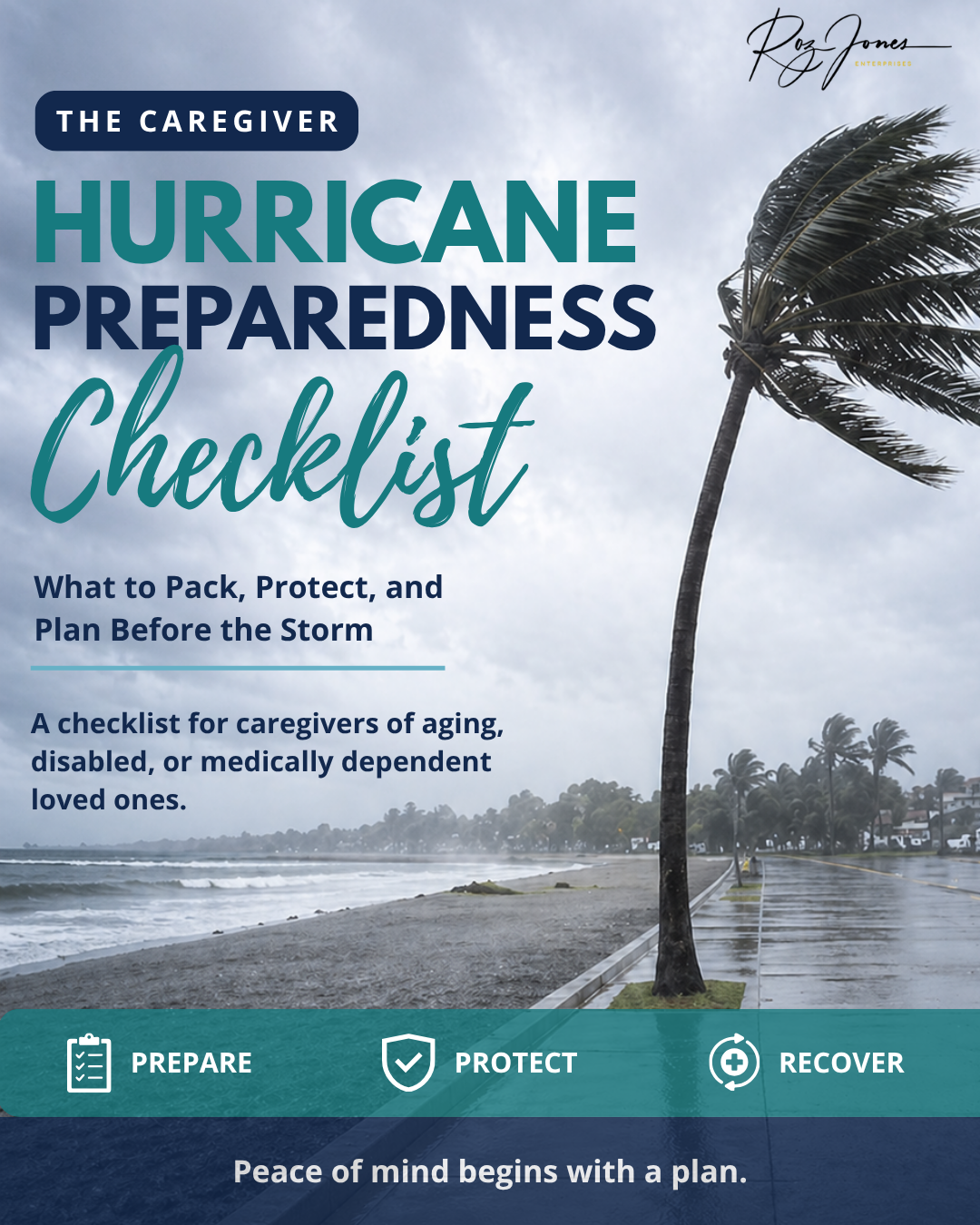
If you are caring for a loved one and want to be better prepared for storms, power outages, and unexpected caregiving emergencies, purchase the Caregiver Hurricane Preparedness Checklist. This resource can help you think through important details before a crisis is already at the door.
For only $1.99, this checklist gives you a simple starting point so you are not trying to gather everything during a storm, power outage, hospitalization, or sudden change in your loved one’s care.
Purchase the Caregiver Hurricane Preparedness Checklist for $1.99 today and take one more step toward peace of mind.
Need Help Sorting Through the Care Plan?

If your family needs help thinking through care decisions, caregiving responsibilities, or next steps, book a session with Roz Jones. You do not have to navigate this season alone.
Together, we can talk through what is working, what is becoming too heavy, and what boundaries need to be strengthened so you can continue to care without losing yourself in the process.
Subscribe to The Caregiver Cafe Weekly Newsletter!

1. YOU ARE NOT ALONE: The problems you face as a caregiver are experienced by other caregivers. Knowing that you’re not alone can be comforting.
2. Tools and Resources: Find caregiver stress management tools and gain perspective from other caregiver’s experiences.
3. LEARN TO: Ask for help, accept help when it is offered, and acknowledge yourself on this caregiving journey. Hear from experts on how to balance caregiving responsibilities by taking care of your needs and involving others to help manage the natural stress and isolation of being a caregiver.

