There’s a particular moment that happens in many caregiving households around the holidays. You set out the construction paper, or you prop up the tablet for the family video call, and then you realize it isn’t going to work the way you pictured it. Your mother’s hands are too stiff to hold a pair of scissors. Your father can’t hear a thing over four relatives talking at once. The idea was lovely, but the execution didn’t account for the person it was meant for.
Here’s what I want you to consider: a creative celebration only works when it’s built around what your loved one can see, hear, hold, and enjoy. The good news is that a few small adjustments can turn a frustrating activity into a meaningful one. Thanksgiving falls on Thursday, November 26 this year, which leaves enough time to test your plans before the day arrives.
Set up the video call before the day
A virtual gathering is only as good as the first five minutes, and that’s usually when the trouble shows up. A frozen screen, a muted microphone, or an app your loved one has never used can turn the call into a source of stress for everyone. Do a practice call a few days ahead, ideally with the same device and the same chair your loved one will use on Thanksgiving. Check the sound, the lighting, and whether the screen is large enough for them to see faces comfortably. A tablet on a stand or a laptop is often easier than a phone.
Think about how the call itself will run, too. Large groups talking over each other can be overwhelming, especially for someone with hearing loss or memory changes. Ask relatives to take turns and to say their names when they speak. Keep the call to a manageable length, and consider scheduling it for your loved one’s best time of day instead of when it’s most convenient for everyone else. If the whole family can’t gather at once, several shorter calls with smaller groups often feel warmer than one long one.
Plan something to do together, too, so the call doesn’t turn into a series of awkward pauses. Relatives can cook the same recipe at their own homes, trade a favorite family story, or look through old photos as someone shares their screen. If your loved one has a signature dish, ask for the story behind it rather than the full recipe, and let someone else write down the details.
Choose crafts that match your loved one’s abilities
Crafting can be a lovely way to spend time together, but the right project depends on the person. For someone with arthritis or limited hand strength, look for large-grip tools, easy-to-open glue sticks, and projects that rely on tearing, stamping, or pressing rather than precise cutting. For someone with low vision, choose bold colors, high contrast against the table, and good lighting. For someone with memory loss, keep the steps few and the process more important than the result. It doesn’t matter whether the project looks finished. What matters is that the time together felt good.
Handprint turkeys are a great example. They’re simple and personal, and they work for nearly every ability level, since the hand does most of the work. If pressing a hand into paint isn’t comfortable, trace it instead, or let your loved one decorate a turkey you’ve already outlined. Thanksgiving cards can be adapted the same way: pre-write the message and let them sign it, or let them dictate while you write. Many older adults love sending a card they’ve made themselves, and the person who receives it will likely keep it.
Keep safety in mind
Craft supplies can carry risks that are easy to overlook. If your loved one lives with dementia, they may put small objects in their mouth, so skip beads, buttons, and tiny decorations. Choose non-toxic paints, glues, and markers, and keep scissors, hot glue, and other sharp or hot tools in your hands, not theirs. If you’re using pinecones, leaves, or twigs from outside for a wreath or centerpiece, check them carefully for insects and dampness, and avoid anything with sharp edges or berries that could be mistaken for food. Cover the table, make sure the chair is stable, and keep the space free of clutter so no one trips while reaching for something.
Let your loved one’s contribution be the center
The most meaningful part of any creative project is often the role your loved one plays in it. They don’t need to do the whole centerpiece to feel like it’s theirs. They might choose the colors, arrange the leaves, or tell you where the wreath should hang. A person who has spent decades running a household can still contribute by directing the plan. Asking for their opinion is a form of respect, and it reminds them that their taste and judgment still matter.
Take care of yourself in the planning
It’s easy for the caregiver to become the project manager of every idea, from tech support to craft supplies to coordinating the relatives. If that sounds familiar, delegate. Ask one relative to handle the call invitation, another to mail supplies, and a third to host a short activity during the call. Choose one or two ideas instead of trying them all, and give yourself permission to let a project go if the day isn’t cooperating. A quiet hour looking through photographs can be every bit as meaningful as a craft that took a day of preparation.
In this episode of The Caregiver Café with Roz Jones, Roz is joined by Christine M. Psalms, mompreneur coach, dance studio owner, wife, mother of four, and caregiver, for a conversation about what it looks like when caregiving begins to shift from something you notice into something you have to actively manage. Christine shares how her journey began when she realized her mother was slowing down, forgetting things, avoiding doctor’s appointments, and showing subtle signs that something had changed.
For more encouragement through the emotional parts of the caregiving journey, Moments of Grace offers reflections for caregivers navigating responsibility, change, difficult days, and the moments of grace that can still be found along the way.
Subscribe to The Caregiver Cafe Weekly Newsletter!
Caregiving can be a roller coaster of ups and downs. The information that you will receive from The Caregiver Cafe Weekly Specials Newsletter will support you as a caregiver. Remember…
1. YOU ARE NOT ALONE: The problems you face as a caregiver are experienced by other caregivers. Knowing that you’re not alone can be comforting.
2. Tools and Resources: Find caregiver stress management tools and gain perspective from other caregiver’s experiences.
3. LEARN TO: Ask for help, accept help when it is offered, and acknowledge yourself on this caregiving journey. Hear from experts on how to balance caregiving responsibilities by taking care of your needs and involving others to help manage the natural stress and isolation of being a caregiver.
Somewhere around the second hour of Thanksgiving, most caregivers notice the same thing: they haven’t sat down, haven’t finished a plate, and have been quietly watching the clock for someone else’s sake. The holiday is Thursday, November 26, and it’s worth deciding now how you want that day to go, rather than finding out in the middle of it.
Here’s what I want you to consider: a tradition only works if the person at the center of it can actually take part. Cooking together is lovely, but not if your mother tires after fifteen minutes on her feet. A family walk is a great idea, but not if your father is a fall risk on uneven ground. The goal isn’t to scale back the holiday. It’s to build it around the people who will be there, and that includes you.
Plan around your loved one’s best hours
Most aging adults have a time of day when they feel their best, and a time when they don’t. For someone living with dementia, late afternoon can bring increased confusion and agitation, often called sundowning. For someone managing pain or fatigue, a long afternoon gathering can leave them depleted by evening. If you know your loved one is sharpest in the late morning, consider moving the meal to midday, or hold the part of the day that matters most, whether that’s the blessing, the storytelling, or the family photo, during those hours.
Build in a quiet space as well. A bedroom or sitting room where your loved one can rest, away from noise and crowds, lets them step out without feeling like they’re leaving the celebration. Tell guests ahead of time that a break is part of the plan, so nobody takes it personally.
Adjust the menu without losing the meaning
Food is often where tradition lives, and it’s also where caregivers worry most. If your loved one follows a low-sodium, diabetic, or texture-modified diet, you don’t have to cook an entirely separate holiday. Start with the dishes that matter most to them and ask your doctor or a registered dietitian how to adapt those, rather than removing them. Mashed or softened versions of favorite sides, smaller portions of dessert, and lower-sodium gravy can keep familiar flavors on the plate. If swallowing is a concern, ask the care team or a speech-language pathologist what textures are safe before the day arrives.
Food safety deserves a mention, too, because older adults are at higher risk of serious illness from foodborne bacteria. The USDA recommends cooking turkey to a safe internal temperature of 165°F, measured with a food thermometer, and refrigerating perishable food within two hours of serving. Leftovers are generally best eaten within three to four days. If you’re sending plates home with relatives or delivering meals to neighbors, label them with the date and keep them cold until delivery.
Make the space safer and easier to move through
A holiday gathering can quietly turn a familiar home into an obstacle course. Extra chairs, coats on the floor, cords from a slow cooker, and rearranged furniture can all create hazards for someone with a walker, cane, or unsteady gait. Before guests arrive, walk the path your loved one will take from the front door to the table to the bathroom, and clear it. Make sure there’s good lighting along that path, a sturdy chair with arms at the table, and enough room to maneuver a walker or wheelchair. If the gathering is at someone else’s home, call ahead and ask about steps, bathroom access, and seating.
Divide the work before the day, not during it
This is the part many caregivers skip, and it’s often what leads to exhaustion. If you’ve been carrying most of the care, Thanksgiving is not the day to also become the host, cook, cleanup crew, and the one who watches Mom every minute. Have the conversation a couple of weeks ahead. Assign real, specific tasks: someone handles the grocery run, someone picks up your loved one, someone stays beside them during the meal so you can eat sitting down, and someone owns cleanup. Vague offers like “let me know if you need anything” tend to go nowhere. Specific requests usually get a yes.
Out-of-town relatives can help, too. A sibling in another state can order groceries for delivery, coordinate a medication refill, or research a ride service, even if they can’t be at the table.
Give yourself a place in the day
Caregivers often spend the holiday in motion, refilling plates and watching the clock, and then wonder why they feel more depleted than celebratory. Decide in advance what you want from the day. Maybe it’s an uninterrupted conversation with a cousin you rarely see, a quiet walk after dinner, or simply the chance to finish a meal while it’s warm. Tell someone, and ask them to cover for you during that time.
It also helps to give your feelings somewhere to land. The holidays can stir up gratitude and grief in the same afternoon, especially if your loved one has changed or if this is a season of firsts. That’s a normal response, and it deserves some room.
Carry the spirit forward
November is also National Family Caregivers Month, so the days around Thanksgiving are a good time to notice how much caregiving takes, and to ask for what would make it lighter. The best holidays aren’t the ones that look perfect. They’re the ones where the people who matter are included, safe, and cared for, and the caregiver is one of those people.
In this episode of The Caregiver Café with Roz Jones, Roz is joined by Christine M. Psalms, mompreneur coach, dance studio owner, wife, mother of four, and caregiver, for a conversation about what it looks like when caregiving begins to shift from something you notice into something you have to actively manage. Christine shares how her journey began when she realized her mother was slowing down, forgetting things, avoiding doctor’s appointments, and showing subtle signs that something had changed.
For more encouragement through the emotional parts of the caregiving journey, Moments of Grace offers reflections for caregivers navigating responsibility, change, difficult days, and the moments of grace that can still be found along the way.
Subscribe to The Caregiver Cafe Weekly Newsletter!
Caregiving can be a roller coaster of ups and downs. The information that you will receive from The Caregiver Cafe Weekly Specials Newsletter will support you as a caregiver. Remember…
1. YOU ARE NOT ALONE: The problems you face as a caregiver are experienced by other caregivers. Knowing that you’re not alone can be comforting.
2. Tools and Resources: Find caregiver stress management tools and gain perspective from other caregiver’s experiences.
3. LEARN TO: Ask for help, accept help when it is offered, and acknowledge yourself on this caregiving journey. Hear from experts on how to balance caregiving responsibilities by taking care of your needs and involving others to help manage the natural stress and isolation of being a caregiver.
As we recognize National Family Caregivers Month and prepare for Thanksgiving, families have an opportunity to reflect on what it truly means to care for an aging loved one. The holiday season often brings people together, but for the family member who manages appointments, coordinates care, prepares meals, and makes sure everyone is comfortable, the season can feel more like another full-time responsibility than a time of celebration.
Caregiving requires time, patience, and commitment. When the holidays arrive, those responsibilities do not disappear. In fact, they may increase as families try to maintain traditions while accommodating an aging loved one’s changing needs. This is why delegation and collaboration matter. Caring for an aging parent or loved one should not rest on the shoulders of one family member when others have the ability to contribute.
Sharing the Responsibility Starts With a Conversation
In many families, one person gradually becomes the go-to caregiver. They may be the first person called when something goes wrong, the one who knows the medication schedule, or the family member responsible for arranging transportation and appointments. Over time, everyone may become accustomed to relying on that person without realizing how much they are carrying.
Thanksgiving can be an opportunity to change that pattern. Rather than waiting until the caregiver is overwhelmed, families can have an honest conversation about what needs to be done and how responsibilities can be shared. One relative might handle grocery shopping, another could prepare a favorite dish, and someone else might help with transportation or spend time with an aging loved one while the caregiver takes a break.
The important thing is to make the responsibilities clear. A general offer to help is appreciated, but a specific commitment is often more useful. When family members take ownership of their assigned tasks, the primary caregiver no longer has to manage every detail alone.
Collaboration Means Considering Everyone’s Needs
A successful Thanksgiving celebration is not simply about dividing up the cooking and cleaning. It also requires families to consider what will make the day comfortable and enjoyable for their aging loved ones.
Changes in health, mobility, memory, or energy levels may affect how an older adult participates in holiday traditions. Families can work together to adjust the celebration without losing the meaning behind it. Perhaps dinner needs to be served earlier, the gathering should be shorter, or a quiet space should be available for rest. These adjustments can help an aging loved one feel included without placing unnecessary demands on their energy.
Collaboration also means listening to the person receiving care. Their preferences and wishes should remain part of the conversation. Although family members may have good intentions, making decisions without involving an aging loved one can leave them feeling as though the holiday is happening around them rather than with them.
When everyone has an opportunity to contribute, communicate, and be heard, the celebration becomes more meaningful.
Recognize the Caregiver Behind the Celebration
During National Family Caregivers Month, appreciation should extend beyond kind words and holiday cards. Caregivers need practical support, too. They need family members who follow through on their commitments, recognize when they are tired, and understand that caregiving continues long after the Thanksgiving meal is over.
If you are supporting a family caregiver this holiday season, consider what you can do to make their responsibilities more manageable. Offer to stay with your loved one while the caregiver rests, take responsibility for a recurring task, or arrange a time to check in after the holiday. Consistent support can be far more valuable than a single offer of assistance.
If you are the primary caregiver, remember that asking for help does not diminish your commitment to your loved one. You can love someone deeply and still need time to rest, tend to your own responsibilities, or enjoy the holiday without managing every detail.
You are a member of the family, too. You deserve to experience the connection and comfort that Thanksgiving is meant to bring.
Make Thanksgiving About More Than the Meal
The most meaningful family gatherings are not always the ones with the largest menus or the most elaborate decorations. They are the gatherings where people make an effort to care for one another. When responsibilities are shared, caregivers have more room to be present, aging loved ones have more opportunities to participate, and family members can build memories without placing the entire burden on one person.
This National Family Caregivers Month, let us recognize that caregiving is a shared responsibility that calls for communication, cooperation, and compassion. We can honor caregivers by showing up in ways that make a real difference, not simply by acknowledging how much they do.
Thanksgiving is an opportunity to practice what family support should look like throughout the year. It is a chance to build traditions that recognize the needs of aging loved ones while protecting the well-being of the people who care for them.
Because when families work together, caregiving becomes less about one person carrying the load and more about everyone contributing to the care, connection, and dignity their loved one deserves.
For more on sharing responsibilities and working together to create a meaningful Thanksgiving, revisit our earlier blog, Together We Thrive: Delegate and Collaborate. Discover how families can share holiday tasks, communicate their needs, and make the celebration more manageable for everyone, including the person providing care.
Tune in to The Caregiver Café Podcast
Caregiving Is More than a One Child Affair
In this episode of The Caregiver Café with Roz Jones, Roz is joined again by Reverend Dr. Herbert A. Brisbon III for a conversation about why caregiving should be treated as a family affair instead of automatically becoming the responsibility of one child. When an aging loved one begins needing more support, families may assume everyone will contribute equally, but the reality is that each person brings different relationships, responsibilities, finances, locations, and emotional capacity to the caregiving table.
For more encouragement through the emotional parts of the caregiving journey, Moments of Grace offers reflections for caregivers navigating responsibility, change, difficult days, and the moments of grace that can still be found along the way.
Subscribe to The Caregiver Cafe Weekly Newsletter!
Caregiving can be a roller coaster of ups and downs. The information that you will receive from The Caregiver Cafe Weekly Specials Newsletter will support you as a caregiver. Remember…
1. YOU ARE NOT ALONE: The problems you face as a caregiver are experienced by other caregivers. Knowing that you’re not alone can be comforting.
2. Tools and Resources: Find caregiver stress management tools and gain perspective from other caregiver’s experiences.
3. LEARN TO: Ask for help, accept help when it is offered, and acknowledge yourself on this caregiving journey. Hear from experts on how to balance caregiving responsibilities by taking care of your needs and involving others to help manage the natural stress and isolation of being a caregiver.
Caregiving is not only about helping an aging loved one get through the day.
It is also about helping them remain connected to the parts of life that bring peace, purpose, memory, and joy. As loved ones age, their routines may change. Their energy may shift. Their physical abilities may look different than they once did. But the need for meaningful engagement does not disappear.
Aging loved ones still need opportunities to think, create, remember, participate, and feel connected to the world around them.
That is why activities matter in caregiving.
They are not just something to fill time. They can become a source of comfort. They can support emotional well-being. They can encourage gentle movement. They can help preserve dignity. They can create moments of connection between caregivers and the people they love.
Reading and gardening are beautiful examples of this. Both can be adapted to meet a loved one where they are. Both can bring calm into the day. Both can help caregivers create meaningful moments without needing an overly complicated plan.
And as Independence Day approaches, these simple activities can also help families honor tradition, connection, and a loved one’s changing independence in a safe and meaningful way.
The key is to focus less on doing the activity perfectly and more on creating an experience that feels supportive, familiar, and life-giving.
Begin with What Still Brings Interest
When choosing activities for an aging loved one, caregivers should begin with interest.
What has always brought them joy? What did they love when they were younger? What topics do they still talk about? What makes them smile? What helps them feel calm? What gives them a sense of purpose?
A loved one who enjoyed reading may not be able to sit with a long novel anymore, but they may still enjoy short stories, devotionals, poetry, magazines, audiobooks, or being read to. A loved one who once kept a large garden may not be able to bend, dig, or spend long hours outside, but they may still enjoy watering plants, choosing flowers, touching herbs, or sitting near something growing.
The activity may need to change, but the connection to what they love can remain.
Caregivers do not have to force something new when there is already meaning in what is familiar.
Make Reading More Accessible
Reading can offer comfort, stimulation, and connection for aging loved ones. It can open the door to memories, conversation, imagination, and reflection.
But caregivers may need to adjust how reading happens.
Vision changes, fatigue, memory concerns, hearing loss, or difficulty concentrating may make traditional reading harder. That does not mean reading has to be removed from the routine. It simply means the activity may need to be adapted.
Large-print books can help. Audiobooks can be a wonderful option. Short stories may feel more manageable than longer chapters. Devotionals, prayer books, poetry, newspapers, or magazines may be easier to enjoy in small portions. Reading aloud can also create a peaceful shared experience between the caregiver and the loved one.
The goal is not to finish a book quickly.
The goal is to create a moment.
A caregiver might read a few pages after breakfast. A loved one might listen to an audiobook while resting. The family might read a devotional together in the evening. A grandchild might read a favorite story during a visit.
Reading can become more than an activity. It can become a rhythm of connection.
Use Stories to Encourage Conversation
Books, poems, devotionals, and articles can gently open the door to meaningful conversation.
A story may remind an aging loved one of childhood. A poem may bring up a favorite memory. A devotional may lead to a conversation about faith. A newspaper article may help them feel connected to the world. A recipe in a magazine may bring back memories of family meals, holidays, or traditions.
Around Independence Day, reading can also become a way to revisit family history. A caregiver may read a short patriotic poem, a favorite prayer, a family recipe, or a story connected to past summer gatherings. For some aging loved ones, the Fourth of July may bring back memories of cookouts, parades, church picnics, military service, neighborhood celebrations, or children playing outside while the adults prepared the meal.
Caregivers can use these memories as invitations, not tests.
Instead of asking questions that may feel like pressure, caregivers can make room for natural conversation.
“This reminds me of something you used to say.” “I remember you telling me about that.” “This sounds like something you would have loved.” “That part made me think of our family.”
These moments can be especially meaningful when a loved one is living with memory changes. The purpose is not to correct every detail. The purpose is to connect with the person.
Sometimes the memory may not be exact, but the emotion behind it is still real.
Create a Peaceful Reading Space
Environment matters.
A loved one may enjoy reading more when the space feels comfortable and calm. Good lighting, a supportive chair, a soft blanket, reading glasses, a side table, and reduced background noise can make the experience easier.
Caregivers can create a simple reading corner without needing anything fancy. A favorite chair by a window, a basket of books, a lamp, and a warm drink may be enough.
For loved ones who tire easily, shorter reading sessions may work best. Ten minutes can be meaningful. One page can still matter. A few lines of scripture, poetry, or reflection can bring comfort into the day.
Caregiving often teaches families that small moments are not small at all.
A quiet reading moment can be a gift.
Bring Gardening Down to a Manageable Size
Gardening can be deeply meaningful for aging loved ones, especially those who once enjoyed caring for flowers, vegetables, herbs, or outdoor spaces.
But gardening does not have to mean maintaining a full yard.
It can be simple.
A few potted plants. A windowsill herb garden. A small container on the porch. A raised garden bed. A hanging basket. A vase of fresh flowers. A tomato plant in a sunny spot. A small watering can near the door.
For aging loved ones with limited mobility, container gardening or raised beds can make participation easier. For those who cannot safely bend or stand for long periods, gardening tasks can be done seated at a table.
They may help choose the seeds. They may place soil in a pot. They may water a plant. They may smell herbs. They may help decide where flowers should go. They may simply sit outside and enjoy watching something grow.
That still counts.
Gardening is not only about the harvest. It is about the experience of nurturing life.
Use Gardening for Seasonal Connection
Gardening can also help families bring seasonal meaning into the home.
For Independence Day, caregivers may consider creating a small red, white, and blue flower arrangement, planting a container garden for the porch, placing fresh flowers on the table, or letting an aging loved one help choose herbs or plants for the holiday meal.
These simple activities can help a loved one feel included without requiring them to do too much.
If they once hosted the family cookout, tended the yard, prepared the food, or decorated the table, small gardening-related tasks may reconnect them to those familiar roles. They may no longer be able to manage the whole celebration, but they can still participate in a way that honors their abilities.
Aging changes what independence looks like.
It does not remove the need to feel useful, included, and respected.
Use Gardening for Sensory Connection
Gardening offers many forms of gentle sensory engagement.
The smell of basil, mint, rosemary, or lavender can be calming. The color of flowers can bring joy. The feeling of soil, leaves, or petals can provide stimulation. The sound of birds, wind, or water can create peace. The warmth of sunlight can lift the mood.
For aging loved ones living with dementia or other memory changes, sensory experiences can be especially meaningful. A familiar scent or texture may bring comfort even when words are harder to find.
Caregivers can use gardening as a way to support connection without demanding too much.
A loved one does not have to remember the name of every flower to enjoy the garden. They do not have to complete every task to feel included. They do not have to do things the way they once did for the moment to have value.
The garden can meet them where they are.
Allow the Activity to Support Purpose
Purpose is important in caregiving.
Many aging loved ones spent years working, raising families, serving others, managing homes, cooking meals, tending gardens, leading households, and making decisions. As they age, they may begin to feel like everything is being done for them.
That can be difficult.
Activities like reading and gardening can help restore a sense of participation.
A loved one may feel useful when asked to choose what book to read next. They may feel included when asked which flowers to plant. They may feel proud when a plant blooms. They may feel connected when their opinion is valued.
Caregivers can look for small ways to give their loved one choice and involvement.
Would they prefer flowers or herbs? Would they like fiction or a devotional? Would they rather sit outside or by the window? Would they like to water the plant today? Would they like to listen while someone reads?
Choice helps preserve dignity.
Even small choices can remind an aging loved one that their voice still matters.
Include Them in Independence Day Traditions
Summer holidays can bring up many memories for aging loved ones.
For some, the Fourth of July may bring back memories of family cookouts, neighborhood gatherings, fireworks, parades, church picnics, military service, summer meals, children playing outside, or time spent in the garden before company arrived.
Caregivers can use Independence Day as an opportunity to create connection in ways that are safe, comfortable, and meaningful.
This may look like reading a short patriotic poem, looking through old family photos from past summer gatherings, listening to familiar music, helping arrange flowers for the table, watering plants before guests arrive, or sitting outside in the shade while the family prepares the meal.
If fireworks are too loud, overwhelming, or unsafe, families can find gentler ways to mark the day. Watching fireworks on television, using soft lighting, enjoying red, white, and blue flowers, making a simple dessert together, or sharing family stories can still make the day feel special.
The goal is not to force an aging loved one into every activity.
The goal is to help them feel included.
Independence Day can also be a reminder that independence may look different as loved ones age. A parent may no longer host the cookout, prepare every dish, or stay outside late into the evening. But they can still have choices. They can still participate. They can still be honored. They can still be part of the family rhythm.
Caregiving invites families to protect safety while still preserving dignity, voice, and connection.
Adjust for Safety and Comfort
Activities should always be adapted to the loved one’s needs.
For reading, caregivers may need to consider lighting, font size, hearing, attention span, and fatigue. For gardening, caregivers should consider balance, heat, hydration, sun exposure, allergies, tools, and safe seating.
During summer gatherings, safety becomes even more important. Heat, crowds, noise, fireworks, uneven grass, long periods outside, and changes in routine can be difficult for aging loved ones.
Caregivers can plan ahead by keeping water nearby, offering shade, choosing supportive seating, limiting time outdoors during the hottest part of the day, and creating a quiet indoor space if the celebration becomes overstimulating.
If a loved one becomes tired, confused, irritated, withdrawn, or uncomfortable, it may be time to pause.
This does not mean the activity failed.
It means the caregiver is paying attention.
Meaningful activities can support the emotional, physical, and mental well-being of aging loved ones. They can bring comfort, memory, purpose, creativity, and connection into the caregiving journey.
Reading and gardening are simple ways to create those moments, especially during the summer season when families may be gathering, traveling, celebrating, or spending more time outdoors.
As Independence Day approaches, caregivers may find themselves planning cookouts, visits, travel, or time with family. These moments can be meaningful, but they may also require extra care.
The noise may be too much. The heat may be too strong. The schedule may be too long. The environment may need to be adjusted.
Still, with preparation and patience, the holiday can become a time of connection instead of stress.
Aging loved ones do not have to participate in the same way they once did for the day to matter. Sometimes being included, being asked, being remembered, and being seated comfortably where they can enjoy the family is enough.
In this episode of The Caregiver Café with Roz Jones, Roz sits down with her dear friend Susan Palmer for a heartfelt Caregiver Chronicles conversation about caring for her mother at home.
Susan shares how caregiving became part of her life, first through planning and preparing a space for her mom, and then through unexpected changes after the pandemic, a fall, hospital stays, and increased care needs. Together, Roz and Susan talk honestly about what it means when caregiving happens because you are the closest, the one available, or the one everyone assumes will step in.
This conversation walks through the real-life details many families face: creating a safe home environment, preventing falls, using tools like walkers, risers, belts, shower chairs, and hospital-style beds, managing medications and hydration, and learning how to support a loved one with dignity during private care moments.
Roz also reminds listeners that caregiving is not meant to be carried alone. Support matters. Respite matters. Family conversations matter. And taking care of yourself is part of taking care of the person you love.
Susan’s story is filled with honesty, humor, tenderness, and practical wisdom for anyone caring for an aging loved one at home.
So pour yourself something warm and join Roz and Susan at The Caregiver Café as they talk about what’s roasting, what’s in the cup, and what it really means to care with kindness, preparation, and grace.
If you need encouragement for the emotional side of caregiving, purchase Roz Jones’ book, Moments of Grace. This book offers support, reflection, and reminders of grace for the caregiver who is carrying a lot.
This journal was created to help caregivers pause, breathe, reflect, and find strength in the middle of the caregiving journey.
Purchase Moments of Grace today and give yourself permission to breathe in the middle of the caregiving journey.
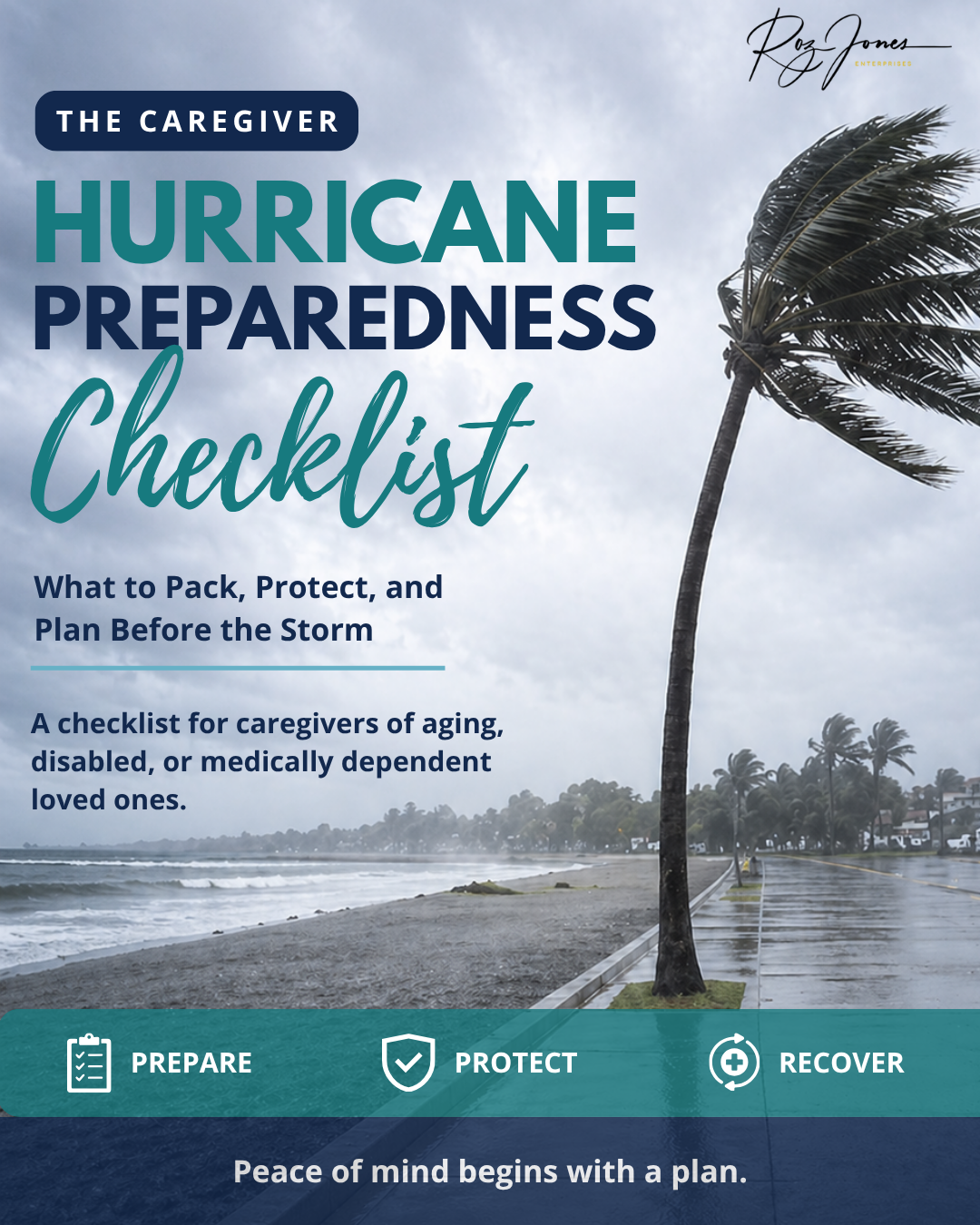
If you are caring for a loved one and want to be better prepared for storms, power outages, and unexpected caregiving emergencies, purchase the Caregiver Hurricane Preparedness Checklist. This resource can help you think through important details before a crisis is already at the door.
For only $1.99, this checklist gives you a simple starting point so you are not trying to gather everything during a storm, power outage, hospitalization, or sudden change in your loved one’s care.
Purchase the Caregiver Hurricane Preparedness Checklist for $1.99 today and take one more step toward peace of mind.
If your family needs help thinking through care decisions, caregiving responsibilities, or next steps, book a session with Roz Jones. You do not have to navigate this season alone.
Together, we can talk through what is working, what is becoming too heavy, and what boundaries need to be strengthened so you can continue to care without losing yourself in the process.
Subscribe to The Caregiver Cafe Weekly Newsletter!
Caregiving can be a roller coaster of ups and downs. The information that you will receive from The Caregiver Cafe Weekly Specials Newsletter will support you as a caregiver. Remember…
1. YOU ARE NOT ALONE: The problems you face as a caregiver are experienced by other caregivers. Knowing that you’re not alone can be comforting.
2. Tools and Resources: Find caregiver stress management tools and gain perspective from other caregiver’s experiences.
3. LEARN TO: Ask for help, accept help when it is offered, and acknowledge yourself on this caregiving journey. Hear from experts on how to balance caregiving responsibilities by taking care of your needs and involving others to help manage the natural stress and isolation of being a caregiver.