

By Roz Jones
When a loved one is living with Alzheimer’s, the home becomes more than a place to sleep, eat, and move through the day.
The home becomes part of the care.
The way a room is arranged, the amount of clutter in a hallway, the lighting in the evening, the sounds in the background, and the familiar items within reach can all affect how safe, calm, and connected a loved one feels.
For caregivers, this matters because Alzheimer’s changes more than memory. It can change how a loved one understands their surroundings, responds to noise, recognizes familiar spaces, and moves through daily routines. A room that once felt simple may begin to feel confusing. A busy environment may become overwhelming. A lack of activity may lead to boredom, restlessness, or withdrawal.
That is why caregivers must think beyond safety alone.
Safety is important. But connection is important too.
A loved one living with Alzheimer’s needs an environment that reduces confusion while still offering comfort, stimulation, dignity, and belonging. The goal is not to create a perfect home. The goal is to create a supportive space where the loved one can move through the day with less anxiety and more moments of peace.
The Environment Shapes the Care Experience
Caregiving for someone with Alzheimer’s requires attention to details that others may overlook.
A pile of mail on the counter may feel harmless, but it can add to confusion. A dark hallway may increase fear or the risk of falling. Too many choices in a closet may make getting dressed harder. A loud television may cause agitation. A room without familiar objects may feel unfamiliar, even if the loved one has lived there for years.
The environment can either support the caregiver’s efforts or make the day more difficult.
When the home is arranged with care, daily routines can become smoother. The loved one may feel more settled. The caregiver may spend less time redirecting, searching, explaining, or responding to preventable distress.
Creating the right environment is not about removing personality from the home. It is about making the space easier to understand and safer to navigate while preserving the warmth and memories that still matter.
Simplicity Can Bring Calm
A simplified space can help reduce confusion.
For someone living with Alzheimer’s, clutter can become overwhelming. Too many items, too many sounds, or too many visual distractions may make it harder to focus. This can increase frustration, anxiety, or agitation.
Caregivers can begin by looking at the rooms where their loved one spends the most time. Clear walkways. Remove items that are no longer needed. Keep frequently used objects in consistent places. Limit unnecessary decorations or piles that may create confusion.
Simple does not have to mean empty.
A calm space can still feel warm. A favorite blanket, a familiar chair, family photos, meaningful keepsakes, and soft lighting can help the room feel comforting. The purpose is to create an environment that is easier for the loved one to recognize and easier for the caregiver to manage.
Safety Must Be Built Into the Routine
Safety is one of the most important parts of Alzheimer’s care.
As the disease progresses, a loved one may become more vulnerable to falls, wandering, medication mistakes, burns, or confusion around household items. Caregivers may need to look at the home with fresh eyes and ask what could become unsafe as needs change.
Handrails, grab bars, non-slip mats, proper lighting, labeled rooms, secured medications, and clear pathways can all make a difference. Hazardous products should be placed out of reach. Doors, locks, appliances, and emergency exits may need to be reviewed. Rugs that slide or cords that cross walkways should be removed or secured.
Safety planning should also include emergencies.
Caregivers need to know what would happen during a storm, power outage, medical change, or evacuation. Alzheimer’s care requires extra preparation because sudden changes in routine can increase fear and confusion for the loved one.
The safer the environment, the more confidence the caregiver can have in the daily care routine.
Familiarity Helps Loved Ones Feel Grounded
Familiar objects can offer comfort when memory is changing.
A loved one may not always remember the date, the schedule, or the reason something is happening, but familiar items can still create a sense of connection. Family photographs, favorite music, meaningful books, quilts, spiritual items, or objects connected to their life story can help bring warmth and recognition into the space.
Caregivers can use familiar items intentionally.
A photo wall may help spark memories. A favorite chair can create a sense of routine. A familiar scent, such as a lotion, soap, or candle used safely, may bring calm. Music from an earlier season of life may help reduce anxiety or encourage connection.
Familiarity reminds the loved one that they are still surrounded by pieces of their life.
It also reminds the caregiver that the person they love is still present, even when communication changes.
Stimulation Should Be Gentle and Meaningful
A loved one with Alzheimer’s still needs engagement.
Isolation can happen quietly when families become unsure of what activities are still possible. A caregiver may stop offering activities because the loved one can no longer participate in the same way. But meaningful stimulation does not have to be complicated.
It can be simple and gentle.
Listening to music. Folding towels. Looking through photos. Sitting outside. Watering plants. Sorting safe household items. Holding a soft blanket. Watching birds from a window. Singing familiar songs. Doing simple art. Enjoying a hand massage. Reading scripture, poetry, or short reflections aloud.
The goal is not performance.
The goal is connection.
Activities should match the loved one’s ability and energy level. Some days may allow more engagement. Other days may require quiet presence. Caregivers can pay attention to what brings comfort, what causes frustration, and what helps the loved one feel included.
A stimulating environment does not need to be busy. In Alzheimer’s care, too much stimulation can overwhelm. The best stimulation is meaningful, familiar, and calm.
Routine Reduces Anxiety
Routine helps create predictability.
For a loved one living with Alzheimer’s, not knowing what comes next can create fear or confusion. A steady routine can help the day feel more manageable. Regular times for meals, bathing, rest, activities, medication, and bedtime can provide structure.
Visual reminders may help as well.
A simple calendar, a whiteboard with the day’s schedule, labels on drawers, or signs for rooms can support orientation. Caregivers should keep reminders clear and easy to read. Too much information can become confusing, so the goal is to provide just enough guidance.
A routine also supports the caregiver.
When the day has structure, the caregiver can plan better, ask for help more clearly, and notice changes more quickly. If a loved one suddenly struggles with a familiar routine, that may be a sign that the care plan needs to be adjusted.
Social Connection Still Matters
Alzheimer’s can change how a loved one communicates, but it does not remove the need for connection.
Loved ones may still benefit from visits, familiar voices, gentle conversation, music, prayer, touch, and shared presence. Social connection can help reduce loneliness and support emotional well-being.
Families may need guidance on how to visit well.
Visits should be calm and not too crowded. Conversations may need to be simple. Family members should avoid correcting every memory mistake or asking too many testing questions. Instead of saying, “Do you remember me?” they can introduce themselves warmly and focus on the present moment.
Connection does not always require a long conversation.
Sometimes connection is sitting together.
Sometimes it is holding a hand.
Sometimes it is listening to a song.
Sometimes it is sharing a meal.
Sometimes it is being present without forcing the loved one to perform memory.
Caregivers can help family members understand that the goal is not to make the loved one remember everything. The goal is to help them feel safe, respected, and loved.
The Caregiver Needs Support in the Environment Too
When creating a supportive space for a loved one with Alzheimer’s, caregivers must also consider their own needs.
A home that is safer and more organized can reduce caregiver stress. Clear routines, labeled items, emergency plans, and simplified spaces can make the caregiving day less chaotic. But the caregiver also needs emotional support, rest, and practical help.
A caregiver who is constantly managing confusion, safety concerns, and behavior changes can become exhausted. That exhaustion should not be ignored.
Family members can help by assisting with home organization, preparing meals, sitting with the loved one, handling errands, or giving the caregiver time to rest. Care teams, support groups, respite care, and community programs can also help caregivers feel less alone.
The environment should not only protect the loved one. It should also make caregiving more sustainable.
Creating a Home That Supports the Journey
Alzheimer’s care requires patience, flexibility, and preparation.
The home may need to change as the loved one’s needs change. What worked six months ago may not work now. A room that once felt safe may need new adjustments. An activity that once brought joy may need to be simplified. A routine that once worked smoothly may need to be updated.
Caregivers should not see these changes as failure.
They are part of the caregiving journey.
A supportive environment helps loved ones feel safer, calmer, and more connected. It also helps caregivers respond with more confidence. The goal is to create a home where safety and dignity work together, where stimulation does not become overwhelm, and where connection remains possible even as memory changes.
In a previous blog, Creating an Environment of Stimulation Not Isolation for Aging Loved Ones with Alzheimer’s, we talked about how Alzheimer’s changes more than memory and why families need to understand what may come next. This blog continues that conversation by focusing on the home environment and the daily choices caregivers can make to reduce confusion, encourage connection, and support quality of life.
Tune in to The Caregiver Café Podcast

In the first episode of The Caregiver Café with Roz Jones, Roz welcomes listeners into a space created to serve those caring for sick, aging, or vulnerable loved ones.
Roz shares the personal story that started her caregiving journey and how one unexpected hospital visit showed her just how quickly life can change. Through her experience, she reminds families of the importance of having documentation in order, including advance directives, healthcare surrogates, and backup support before a crisis happens.
This episode is a warm introduction to Roz, her heart for caregivers, and the purpose of The Caregiver Café: to provide resources, encouragement, and practical support that helps reduce stress, overwhelm, and safety concerns along the caregiving journey.
Pull up a chair. Roz has a seat waiting for you.
Give Yourself a Moment of Grace

If you need encouragement for the emotional side of caregiving, purchase Roz Jones’ book, Moments of Grace. This book offers support, reflection, and reminders of grace for the caregiver who is carrying a lot.
This journal was created to help caregivers pause, breathe, reflect, and find strength in the middle of the caregiving journey.
Purchase Moments of Grace today and give yourself permission to breathe in the middle of the caregiving journey.
Prepare Before the Emergency Comes
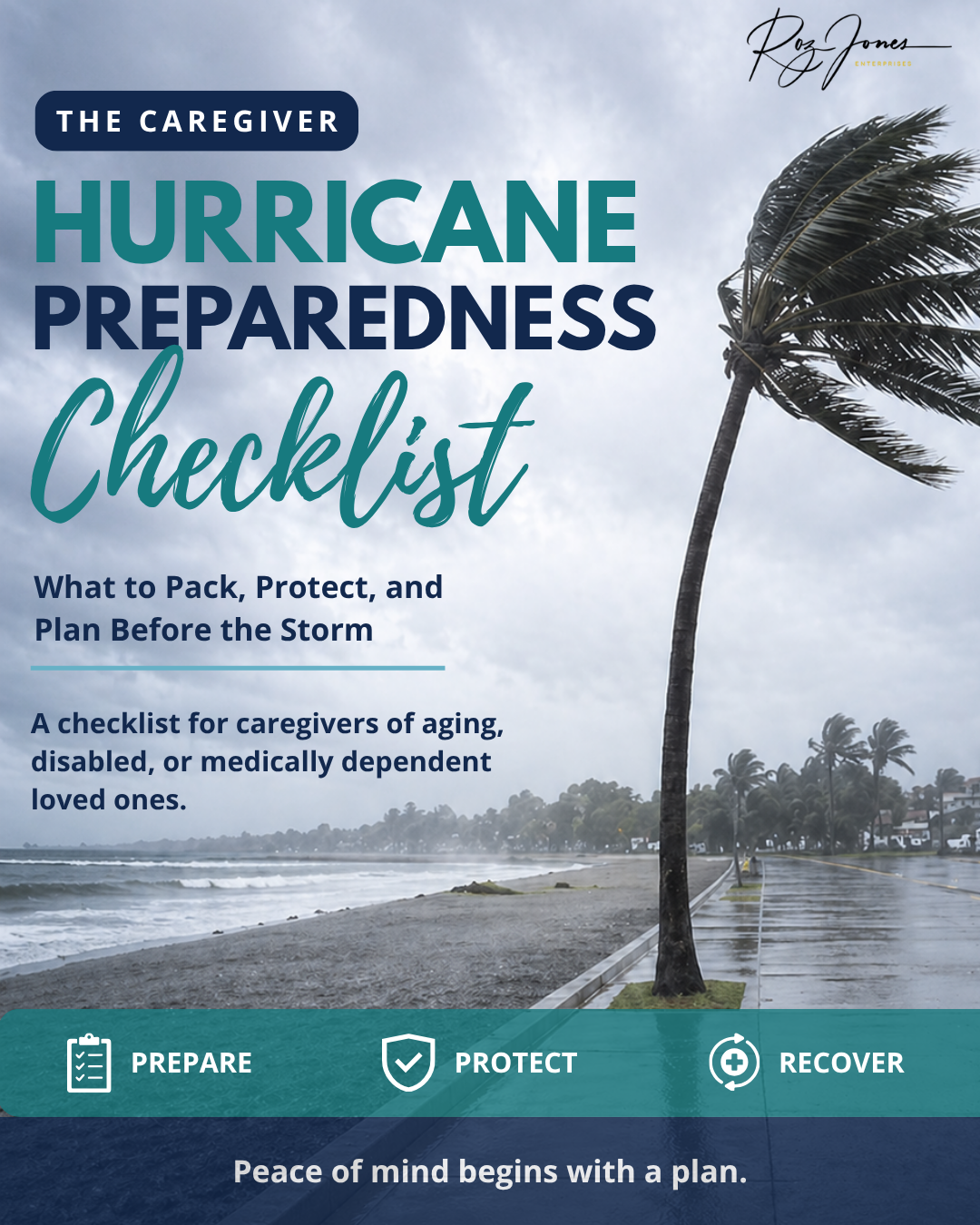
If you are caring for a loved one and want to be better prepared for storms, power outages, and unexpected caregiving emergencies, purchase the Caregiver Hurricane Preparedness Checklist. This resource can help you think through important details before a crisis is already at the door.
For only $1.99, this checklist gives you a simple starting point so you are not trying to gather everything during a storm, power outage, hospitalization, or sudden change in your loved one’s care.
Purchase the Caregiver Hurricane Preparedness Checklist for $1.99 today and take one more step toward peace of mind.
Need Help Sorting Through the Care Plan?

If your family needs help thinking through care decisions, caregiving responsibilities, or next steps, book a session with Roz Jones. You do not have to navigate this season alone.
Together, we can talk through what is working, what is becoming too heavy, and what boundaries need to be strengthened so you can continue to care without losing yourself in the process.
Subscribe to The Caregiver Cafe Weekly Newsletter!

1. YOU ARE NOT ALONE: The problems you face as a caregiver are experienced by other caregivers. Knowing that you’re not alone can be comforting.
2. Tools and Resources: Find caregiver stress management tools and gain perspective from other caregiver’s experiences.
3. LEARN TO: Ask for help, accept help when it is offered, and acknowledge yourself on this caregiving journey. Hear from experts on how to balance caregiving responsibilities by taking care of your needs and involving others to help manage the natural stress and isolation of being a caregiver.

