
Caring Through Culture, Stress, and Silence: What Minority Caregivers Need to Remember

By Roz Jones

Caregiving is already a lot.

But when you are caring for an aging loved one in a minority family, there can be another layer that people do not always talk about.

There may be cultural expectations.
There may be family pressure.
There may be silence around mental health.
There may be guilt around asking for help.
There may be a long history of doing what had to be done without naming how heavy it really was.

During National Minority Mental Health Awareness Month, it is important to talk about caregiving in a way that sees the whole picture.

Because minority caregivers are not just managing appointments, meals, medications, transportation, bathing, paperwork, and family updates.

Many are also carrying the emotional weight of being the one everyone depends on.

And caregiver, that weight can affect your mental health too.

When Caregiving Becomes the Family Expectation

In many families, caregiving is not treated like a role someone steps into.

It is treated like something you are just supposed to do.

You may hear things like:

“That is your mother.”
“That is your father.”
“That is what family does.”
“We do not put our business out there.”
“We take care of our own.”

And yes, family care is beautiful.

There is love in showing up. There is honor in caring for the people who cared for you. There is strength in making sure aging loved ones are not forgotten, dismissed, or left without support.

But love does not mean the caregiver should disappear.

Family responsibility should not come at the cost of your health, your peace, your body, your sleep, or your emotional well-being.

Caregivers can honor their aging loved ones and still need support.

Both can be true.

The Silence Around Mental Health Can Be Heavy

In some minority communities, mental health has not always been easy to talk about.

Some families were taught to pray through it, push through it, work through it, or keep it private. Some were taught that sadness, anxiety, depression, exhaustion, and grief were not things to discuss outside the home.

Some aging loved ones may not even have the language to say what they are feeling.

They may say they are tired.
They may say they do not feel like themselves.
They may become more withdrawn.
They may become more irritable.
They may refuse help.
They may say, “I’m fine,” even when everyone can see they are not.

Caregivers may do the same thing.

You keep going because you feel like you have to. You say you are okay because there is too much to do. You ignore the stress because your loved one’s needs feel more urgent than your own.

But silence does not make the stress disappear.

It just makes the caregiver carry it alone.

Aging Loved Ones Need Emotional Support Too

When caring for an aging loved one, it can be easy to focus only on physical needs.

Are they eating?
Are they taking medication?
Are they safe at home?
Are they getting to appointments?
Are the bills paid?
Is the house clean?

Those things matter.

But aging also affects a person emotionally.

Your loved one may be grieving independence. They may be missing the way their body used to move. They may be afraid of becoming a burden. They may be lonely. They may be frustrated because decisions are being made for them. They may be carrying memories, losses, disappointments, or trauma that were never fully talked about.

For minority aging loved ones, there may also be the impact of life experiences shaped by racism, discrimination, economic hardship, medical mistrust, or being unheard in systems that were supposed to help.

Caregivers need to understand that mental health is not separate from caregiving.

It is part of caregiving.

Sometimes support looks like listening without rushing to fix. Sometimes it looks like helping your loved one talk to a doctor. Sometimes it looks like finding a counselor, support group, faith leader, or community resource that understands their background and experience.

And sometimes support looks like noticing when something has changed and not brushing it off as “just getting older.”

Caregivers Need Safe Places to Tell the Truth

Caregivers are often asked how their loved one is doing.

But not enough people ask how the caregiver is doing.

And even when they do ask, caregivers may not tell the full truth.

Because the truth may sound like:

“I am tired.”
“I am overwhelmed.”
“I am scared.”
“I feel guilty.”
“I am angry.”
“I need help.”
“I do not know how much longer I can keep doing this alone.”

Those words can be hard to say, especially if you were raised to be strong, private, dependable, or self-sacrificing.

But caregiver, being honest about what you need does not make you weak.

It makes you human.

You need people in your life who can hear the truth without judging you. You need people who will not shame you for needing rest. You need people who understand that caregiving can be an act of love and still be exhausting.

That may be a support group. That may be a trusted friend. That may be a therapist. That may be a caregiver community. That may be another family member who finally needs to understand what you have been carrying.

But you need somewhere to put the weight down.

Even if only for a moment.

Cultural Care Should Not Mean Carrying Everything Alone

Culture can be a source of strength in caregiving.

Family meals, music, faith, traditions, stories, prayer, community, and shared history can bring comfort to aging loved ones. These things can remind them who they are and where they come from.

But culture should not be used to keep caregivers silent.

It should not be used to make one person responsible for everything. It should not be used to shame caregivers who need outside help. It should not be used to stop families from talking about depression, anxiety, grief, dementia, caregiver burnout, or emotional stress.

There is nothing wrong with honoring tradition.

But we also have to be willing to ask:

Is this tradition helping the caregiver survive?
Is this expectation fair?
Is this silence protecting the family, or is it hurting the person doing the caregiving?
Is there a way to honor our loved one without sacrificing one person’s entire well-being?

Caregiving does not have to look the same in every generation.

We can keep the love and change the way the weight is carried.

Small Check-Ins Can Make a Difference

You do not have to wait until everything falls apart to take mental health seriously.

Start with small check-ins.

Ask your loved one how they are feeling emotionally, not just physically. Pay attention to changes in mood, sleep, appetite, energy, memory, and interest in things they used to enjoy.

Ask yourself those same questions too.

Am I sleeping?
Am I eating?
Am I more irritated than usual?
Am I crying more?
Am I withdrawing from people?
Am I feeling hopeless?
Am I constantly on edge?
Am I carrying resentment because I have not asked for help?

These questions are not meant to make you feel bad.

They are meant to help you notice what needs care.

Because caregivers need care too.

And the earlier you notice the signs, the easier it may be to get support before burnout takes over.

Support Can Look Different for Every Family

Every family will not need the same kind of support.

Some caregivers may need respite care. Some may need family members to take specific tasks off their plate. Some may need help navigating insurance, appointments, or transportation. Some may need therapy. Some may need a support group where they do not have to explain the cultural layers of caregiving.

Some may need to have a hard conversation with family and say:

“I cannot keep doing this by myself.”

That sentence may be uncomfortable, but it can also be necessary.

Caregiving should not depend on one person quietly breaking down while everyone else assumes they are handling it.

If your family wants your aging loved one to receive good care, then the caregiver also needs support.

That is not selfish.

That is realistic.

Keep the Conversation Going

If you missed the first blog, you can read Nurturing Mental Health in Minority Caregiving: A Guide to Supporting Aging Loved Ones here. It is a helpful starting point for understanding how culture, mental health, and caregiving connect.

This blog builds on that reminder with one more truth:

Caregivers in minority families need room to be honest.

Honest about the love.
Honest about the stress.
Honest about the cultural expectations.
Honest about the silence.
Honest about needing help.

Because caregiving is not only about keeping your loved one safe.

It is also about making sure the caregiver does not get lost in the process.

National Minority Mental Health Awareness Month reminds us that mental health conversations belong in every community, every family, and every caregiving journey.

Caregiver, you do not have to carry everything quietly.

You can ask for help.

You can name what is heavy.

You can honor your loved one and still protect your own well-being.

You can build a care plan that includes your aging loved one and you.

Because care is not complete if the caregiver is left unsupported.

Download the Vacationing With an Aging Loved One Checklist for FREE!

Before your next trip, download the free Vacationing with an Aging Loved One Checklist. This resource can help you think through what needs to be packed, planned discussed, and prepared before travel begins!

Tune in to The Caregiver Café Podcast

In this episode of The Caregiver Café with Roz Jones, Roz is talking about something that many families face but do not always know how to handle: caregiving as a family affair.

When an aging parent, loved one, or family member needs care, one person often becomes the main caregiver while everyone else steps back, scatters, or assumes that person has it all under control. But caregiving should not fall on one person without a plan, support, or honest family conversations.

Roz breaks down how families can reduce the chaos in caregiving by understanding where tension comes from, setting realistic expectations, creating a care plan, assigning roles, and being honest about what each person can and cannot do. She also reminds listeners that every family member may not be able or willing to provide hands-on care, and that is why outside resources, respite care, and hired support may need to become part of the plan.

This episode is a practical reminder that caregiving requires communication, boundaries, preparation, and teamwork. Whether you live close by or long distance, there is usually some way to support the person providing daily care.

Caregiving may be a family affair, but it works best when the family has a plan.

Give Yourself a Moment of Grace

If you need encouragement for the emotional side of caregiving, purchase Roz Jones’ book, Moments of Grace. This book offers support, reflection, and reminders of grace for the caregiver who is carrying a lot.

This journal was created to help caregivers pause, breathe, reflect, and find strength in the middle of the caregiving journey.

Purchase Moments of Grace today and give yourself permission to breathe in the middle of the caregiving journey.

Prepare Before the Emergency Comes
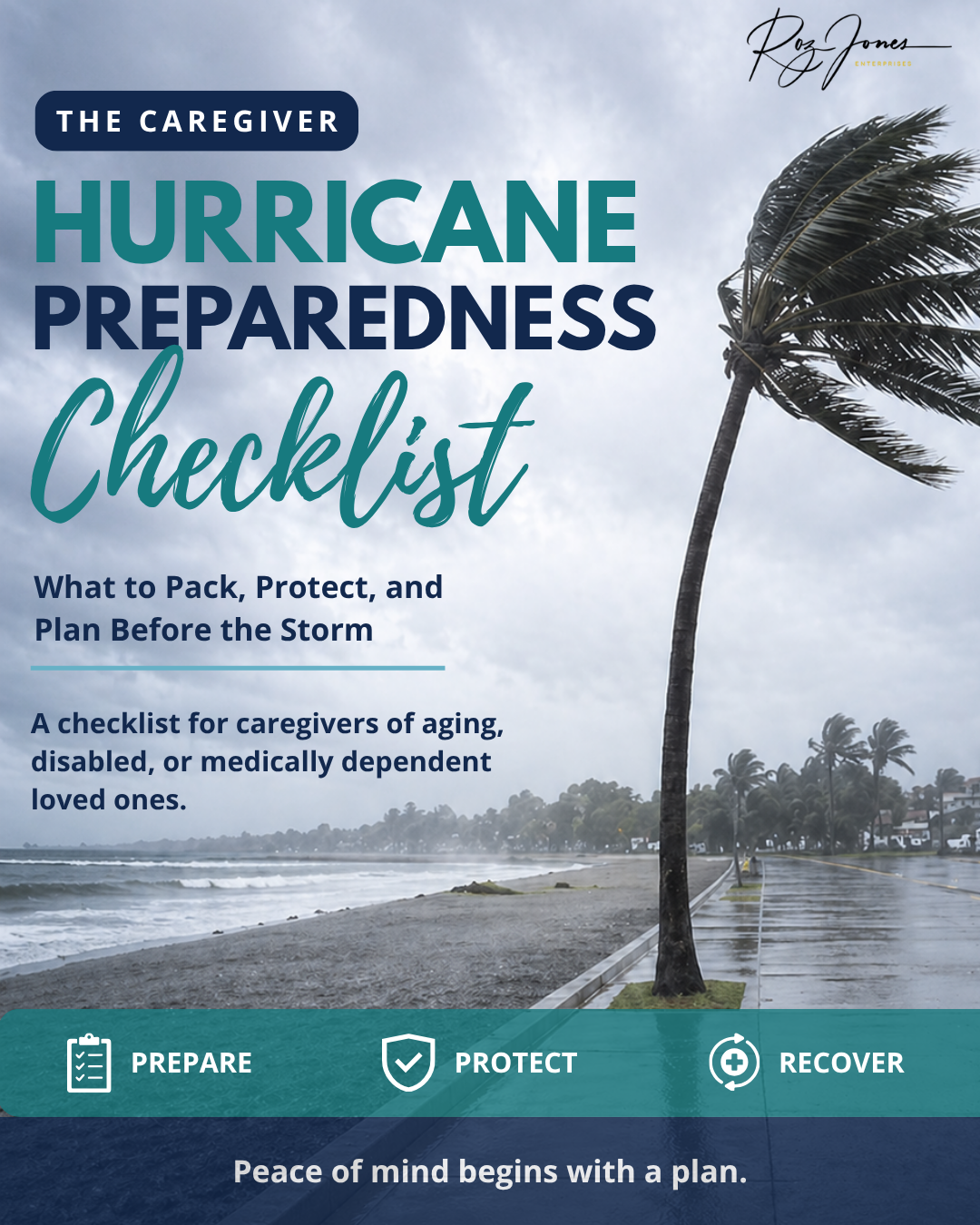
The Caregiver Hurricane Preparedness Checklist.

If you are caring for a loved one during storm season, purchase the Caregiver Hurricane Preparedness Checklist. It can help you prepare important documents, emergency contacts, supplies, medication needs, and safety steps before severe weather becomes a crisis.

For only $1.99, this checklist gives you a simple starting point so you are not trying to gather everything during a storm, power outage, hospitalization, or sudden change in your loved one’s care.

Purchase the Caregiver Hurricane Preparedness Checklist for $1.99 today and take one more step toward peace of mind.

Need Help Sorting Through the Care Plan?

Roz Jones is a dedicated caretaker turned CEO with over a decade of experience in helping families care for and make decisions for loved ones and their legacies.Roz is a compassionate, innovative healthcare industry leader.

If your family needs help thinking through care decisions, caregiving responsibilities, or next steps, book a session with Roz Jones. You do not have to navigate this season alone.

Together, we can talk through what is working, what is becoming too heavy, and what boundaries need to be strengthened so you can continue to care without losing yourself in the process.

Subscribe to The Caregiver Cafe Weekly Newsletter!

Caregiving can be a roller coaster of ups and downs. The information that you will receive from The Caregiver Cafe Weekly Specials Newsletter will support you as a caregiver. Remember…

1. YOU ARE NOT ALONE: The problems you face as a caregiver are experienced by other caregivers. Knowing that you’re not alone can be comforting. 

2. Tools and Resources:  Find caregiver stress management tools and gain perspective from other caregiver’s experiences.

3. LEARN TO: Ask for help, accept help when it is offered, and acknowledge yourself on this caregiving journey. Hear from experts on how to balance caregiving responsibilities by taking care of your needs and involving others to help manage the natural stress and isolation of being a caregiver. 

The Freedom to Rest: A Juneteenth Reflection for Caregivers

By Roz Jones

Caregiving often begins with a simple act of love. A loved one needs help, and someone steps forward. An aging parent needs support after a diagnosis. A spouse needs assistance after surgery. A family member can no longer manage medications, meals, transportation, appointments, or daily care alone.

Over time, what begins as helping can become a full caregiving role. Schedules change. Responsibilities increase. Sleep becomes lighter. Personal needs are postponed. The caregiver becomes the person who answers the calls, manages the updates, keeps track of appointments, and tries to hold the family together.

In the previous blog, Managing Stress and Burnout: Self-Care for Caregivers, the focus was on managing stress and burnout through self-care, including recognizing the signs of burnout, prioritizing personal well-being, staying physically active, practicing relaxation, and seeking support.

This continuation expands that conversation through the lens of Juneteenth.

Juneteenth is a reminder of freedom, dignity, liberation, and the ongoing work of building lives where people are not simply surviving, but able to rest, heal, and live with support. For caregivers, especially those who have been taught to carry silently, this message is deeply relevant.

Caregiving should not require a person to disappear inside the needs of everyone else.

Freedom Includes Rest

Juneteenth invites reflection on what freedom means beyond survival.

For caregivers, freedom may not mean stepping away from responsibility. It may mean having enough support that responsibility does not become isolation. It may mean being able to rest without guilt, ask for help without shame, and name exhaustion before it becomes a health crisis.

Caregivers often continue long after their bodies and minds have signaled that the load is too heavy. They may keep going because the loved one’s needs are urgent, because family support is limited, or because they have been conditioned to believe that strength means endurance at all costs.

However, rest is not a reward for finishing the work. Rest is part of the work.

A caregiver who is depleted cannot continue to provide steady care without consequence. Physical fatigue, emotional strain, resentment, poor sleep, and declining health can all become signs that the current caregiving arrangement is not sustainable.

Rest is not neglect. It is maintenance for the person providing care.

Burnout Is a Signal, Not a Character Flaw

Burnout is often misunderstood as weakness, impatience, or a lack of commitment. In reality, burnout is a signal that the caregiving load has exceeded the caregiver’s capacity without enough support.

This is especially important for male caregivers, who may face added pressure to appear strong, capable, and emotionally contained. Some men may feel they are expected to be the provider, protector, decision-maker, and steady presence for everyone else. That pressure can make it difficult to admit when caregiving has become overwhelming.

Burnout can show up in many ways. It may appear as irritability, fatigue, withdrawal, disrupted sleep, poor concentration, changes in appetite, resentment, sadness, anxiety, or a loss of interest in things that once brought joy.

These signs should not be ignored.

Burnout does not mean the caregiver does not love their family member. It means the caregiving structure needs attention. Love may be present, but love alone does not replace rest, help, resources, and a realistic plan.

The Care Plan Must Include the Caregiver

Care plans often focus on the person receiving care: medications, appointments, meals, mobility, safety, hygiene, and daily support. Those details matter, but they are incomplete if the caregiver is not included in the plan.

A sustainable care plan should account for the person providing the care.

This includes the caregiver’s schedule, health, work responsibilities, sleep, emotional well-being, financial strain, and access to support. A plan that depends on one person being available at all times is not sustainable. It places the entire household at risk if that caregiver becomes sick, overwhelmed, or unable to continue.

Families should discuss how responsibilities can be shared before the caregiver reaches a breaking point. This may include transportation, grocery shopping, meal preparation, medication pickup, appointment scheduling, household chores, financial paperwork, overnight support, and communication with extended family.

When caregiving responsibilities are clearly named, they are easier to divide. When they remain invisible, the primary caregiver often carries them alone.

The Trap of Being “The Strong One”

Many caregivers are praised for being strong. While that praise may be well-intentioned, it can also create pressure.

The “strong one” is often expected to keep going without complaint. Family members may assume that the person who has always handled things can continue handling them. Friends may not ask deeper questions. The caregiver may begin to believe that needing help is a form of failure.

This expectation is especially harmful when strength becomes another word for silence.

Strength should not require a caregiver to ignore exhaustion, hide grief, suppress frustration, or accept an unfair share of responsibility. True strength can include honesty. It can include asking for help. It can include setting limits. It can include admitting that the current arrangement is no longer working.

A healthier caregiving culture does not celebrate burnout as proof of devotion. It recognizes that care must be shared, supported, and sustained.

Boundaries Help Protect the Care

Boundaries are often misunderstood in caregiving. Some families interpret boundaries as selfishness or distance. In reality, boundaries help protect both the caregiver and the loved one receiving care.

Without boundaries, caregiving can expand until it consumes every hour, every relationship, and every part of the caregiver’s life. Over time, that can lead to resentment, emotional exhaustion, and physical decline.

Boundaries may include setting limits on phone calls, identifying which days are available for appointments, asking other relatives to take specific tasks, limiting non-urgent requests, or creating protected time for rest.

Healthy boundaries make caregiving more sustainable. They clarify what the caregiver can do, what others must help with, and what support needs to be brought in from outside the family.

Boundaries do not reduce love. They make continued care possible.

Support Must Be Practical

Caregivers are often told, “Let me know if you need anything.” While the sentiment may be kind, it still places responsibility on the caregiver to identify the need, ask for help, explain the task, and manage the follow-through.

Practical support is more useful when it is specific.

A family member can bring dinner on a certain day. A friend can sit with a loved one for two hours. A sibling can handle pharmacy pickups. A neighbor can take out the trash. Someone can manage the family update text. Someone can drive to an appointment. Someone can help organize paperwork.

Specific help reduces the caregiver’s mental load.

Caregivers can also benefit from keeping a running list of tasks that others can take on. When someone offers help, there is already a clear answer. This prevents the caregiver from minimizing their needs or defaulting to doing everything alone.

Support is most effective when it lightens the actual workload.

A Weekly Reset Can Reduce the Weight

Caregiving often becomes reactive. One need follows another. One appointment leads to another task. One phone call turns into another responsibility. Without a rhythm, caregivers may feel as if they are always responding to the next issue.

A weekly reset can help bring structure to the care routine.

This reset may include reviewing the upcoming week’s appointments, checking medication refills, preparing simple meals, confirming transportation, updating the family, reviewing supplies, organizing paperwork, and identifying one task that can be delegated.

It should also include attention to the caregiver’s needs.

Sleep, meals, movement, quiet time, spiritual practice, medical appointments, counseling, and social connection all matter. A weekly reset gives the caregiver a chance to ask what is needed before another week begins.

This practice does not remove every challenge, but it can reduce the feeling of constantly being behind.

Emergency Preparedness Is Part of Caregiver Wellness

Stress often increases when caregivers are carrying too many “what ifs.”

What if the power goes out? What if medication runs low? What if a storm comes? What if medical equipment stops working? What if transportation is needed quickly? What if the caregiver cannot get to the loved one? What if oxygen, refrigerated medication, or mobility support is interrupted?

Emergency planning helps reduce that mental burden.

Caregivers should have important information organized and accessible. This includes medication lists, physician contacts, insurance information, emergency contacts, medical equipment instructions, backup power needs, transportation options, and copies of important documents.

This is especially important during hurricane season or in areas where severe weather can disrupt care.

Preparedness is not fear. It is stability. It allows caregivers to respond with more clarity and less panic when unexpected situations arise.

Community Is a Form of Care

Caregiving may happen inside the family, but it should not depend on one person alone. Support can come from relatives, friends, neighbors, church communities, caregiver support groups, respite programs, professional care planners, medical teams, and community organizations.

Building a care network takes effort, but it can reduce isolation and help prevent burnout.

Community support also challenges the idea that caregiving is private work that must be carried quietly. Many caregivers suffer because the need is hidden. When the care situation is shared with trusted people, support becomes more possible.

No caregiver should have to become invisible in order to be dependable.

Juneteenth and the Call to Care Differently

Juneteenth reminds us that freedom is not only about release from bondage. It is also about the pursuit of dignity, wholeness, rest, family, and a life where people are not only surviving.

That message belongs in the caregiving conversation.

Caregivers deserve more than survival. They deserve care plans that include their needs. They deserve support that is specific and reliable. They deserve rest that is not treated as selfish. They deserve family systems that do not depend on one person being endlessly available.

For Black caregivers, male caregivers, and anyone who has been taught to keep carrying without complaint, Juneteenth offers a timely reminder: liberation also includes the right to be supported.

The goal is not to stop caring.

The goal is to build a caregiving life that does not destroy the caregiver in the process.

Caregiving rooted in love should also make room for rest, preparation, community, and grace.

Read more on this subject by reading, Managing Stress and Burnout: Self-Care for Caregivers.

Give Yourself a Moment of Grace

If you need encouragement for the emotional side of caregiving, purchase Roz Jones’ book, Moments of Grace. This book offers support, reflection, and reminders of grace for the caregiver who is carrying a lot.

This journal was created to help caregivers pause, breathe, reflect, and find strength in the middle of the caregiving journey.

Purchase Moments of Grace today and give yourself permission to breathe in the middle of the caregiving journey.

Prepare Before the Emergency Comes

The Caregiver Hurricane Preparedness Checklist.

If you are caring for a loved one and want to be better prepared for storms, power outages, and unexpected caregiving emergencies, purchase the Caregiver Hurricane Preparedness Checklist. This resource can help you think through important details before a crisis is already at the door.

For only $1.99, this checklist gives you a simple starting point so you are not trying to gather everything during a storm, power outage, hospitalization, or sudden change in your loved one’s care.

Purchase the Caregiver Hurricane Preparedness Checklist for $1.99 today and take one more step toward peace of mind.

Need Help Sorting Through the Care Plan?

Roz Jones is a dedicated caretaker turned CEO with over a decade of experience in helping families care for and make decisions for loved ones and their legacies.Roz is a compassionate, innovative healthcare industry leader.

If your family needs help thinking through care decisions, caregiving responsibilities, or next steps, book a session with Roz Jones. You do not have to navigate this season alone.

Together, we can talk through what is working, what is becoming too heavy, and what boundaries need to be strengthened so you can continue to care without losing yourself in the process.

Subscribe to The Caregiver Cafe Weekly Newsletter!

Caregiving can be a roller coaster of ups and downs. The information that you will receive from The Caregiver Cafe Weekly Specials Newsletter will support you as a caregiver. Remember…

1. YOU ARE NOT ALONE: The problems you face as a caregiver are experienced by other caregivers. Knowing that you’re not alone can be comforting. 

2. Tools and Resources:  Find caregiver stress management tools and gain perspective from other caregiver’s experiences.

3. LEARN TO: Ask for help, accept help when it is offered, and acknowledge yourself on this caregiving journey. Hear from experts on how to balance caregiving responsibilities by taking care of your needs and involving others to help manage the natural stress and isolation of being a caregiver.