
Helping Without Speaking for Your Loved One

By Roz Jones

When someone you love receives a breast cancer diagnosis, it is natural to want to say something that makes the situation feel less frightening. You may want to reassure them, encourage them, remind them to stay positive, or immediately start talking about what comes next. Those responses often come from love, but support after a diagnosis is not always about finding the right words. Sometimes it is about recognizing which words your loved one does not need to hear.

In the previous blog, we talked about empathy and communication during the early days following a breast cancer diagnosis. As the conversations continue, caregivers also need to understand that good communication is not about keeping every interaction positive or having an answer for every concern. It is about making enough room for your loved one to tell the truth about what they are feeling without having to protect everyone else from it.

Do Not Rush Them Toward Positivity

Encouragement can be comforting, but there is a difference between encouraging someone and asking them to hide difficult emotions. Your loved one may be frightened, angry, disappointed, overwhelmed, or unsure about what comes next. Telling them to stay positive before they have had room to process those feelings can make them feel as though there is a right and wrong way to respond to their own diagnosis.

You do not have to turn every difficult moment into an inspirational one. Sometimes the most supportive response is acknowledging that what your loved one is facing is hard and allowing them to talk about that reality without immediately trying to change how they feel. Hope and fear can exist at the same time, and your loved one should not have to choose one just to make everyone around them more comfortable.

Listen Without Preparing Your Response

There is a difference between hearing someone and listening to them. When caregivers are frightened, it can be easy to listen while already thinking about the next question, the next solution, or the next reassuring statement. Your loved one may be trying to tell you what they need while you are preparing to tell them what you think they should do.

Give conversations enough room to develop. Let your loved one finish what they are saying before responding, and pay attention to what they are actually asking from you. They may want advice, but they may also simply want someone to listen while they sort through thoughts they have not been able to say out loud. You do not have to solve every concern for the conversation to be valuable.

Ask Before Sharing Their Diagnosis

A cancer diagnosis can quickly become family news, but your loved one should still have a say in who knows and how much information is shared. Caregivers may need support too, and there may be practical reasons certain people need information, but that does not mean every relative, friend, coworker, church member, or social media connection automatically needs access to the details.

Talk with your loved one about what they are comfortable sharing and with whom. Find out whether they want to give updates themselves, want you to communicate on their behalf, or prefer to keep certain information private. Respecting those boundaries is part of protecting their dignity and reminding them that a diagnosis does not remove their right to decide who has access to personal information about their health.

Be Careful With Other People’s Cancer Stories

People often respond to a cancer diagnosis by sharing the story of someone else who had cancer. The intention may be to offer hope, show understanding, or create connection, but those stories are not always helpful. Hearing about someone who had a difficult experience may increase fear, while hearing about someone who recovered easily may leave your loved one wondering why their own experience feels different.

Your loved one does not need their diagnosis compared with someone else’s. Every person brings a different medical history, emotional response, support system, and life experience into the situation. If you want to share someone else’s story, consider whether it is actually helping the person in front of you or simply filling an uncomfortable silence.

Let Your Loved One Decide When to Talk

There may be days when your loved one wants to talk about breast cancer and days when they do not. Respect both. A caregiver can become so focused on making sure everything is okay emotionally that every interaction starts with questions about how the person is feeling, whether they are scared, or what they are thinking about the diagnosis.

Checking in matters, but your loved one may also need conversations that have absolutely nothing to do with cancer. They are still interested in family, work, television, food, music, friendships, hobbies, and everything else that was part of their life before the diagnosis. Giving them space to talk about ordinary things can be just as meaningful as creating space for the difficult conversations.

Do Not Speak for Them When They Can Speak for Themselves

Caregivers naturally become protective, especially when someone they love is dealing with something serious. That protective instinct can sometimes turn into answering questions for your loved one, explaining how they feel before they have a chance to respond, or making decisions because you believe you already know what they want.

Support should not erase your loved one’s voice. Ask whether they want your help before stepping into a conversation on their behalf. Give them room to ask their own questions, express their concerns, and make choices about what they are comfortable discussing. There may be times when they specifically ask you to speak up for them, but advocacy should strengthen their voice rather than replace it.

Understand That Silence Can Be Supportive

Caregivers sometimes feel pressure to keep conversations going because silence feels uncomfortable. You may believe you should always know what to say, especially when your loved one is frightened or emotional. The truth is that some moments do not require a speech.

Sitting beside someone, holding their hand, watching television together, or simply being present can communicate support without requiring either of you to find the perfect words. Silence does not always mean something is wrong. Sometimes it means your loved one knows they do not have to perform, explain, reassure, or make conversation in order for you to remain beside them.

Make Room for Their Version of Strength

Strength does not look the same for everyone. Your loved one may cry often, ask the same questions repeatedly, need time alone, become frustrated, or admit that they are scared. None of those responses mean they are failing to handle the diagnosis well.

Caregivers can unintentionally create pressure when they constantly describe someone as strong, especially if that person begins to believe they are not allowed to have moments when they do not feel strong. Remind your loved one that they do not have to prove anything to you. Strength can include asking for help, expressing fear, setting boundaries, changing their mind, or simply getting through a difficult day.

Communication Should Leave Room for the Person

Breast cancer may become part of your loved one’s life, but it should not become their entire identity. The conversations surrounding the diagnosis should still leave room for who they are, what they value, what they want, and how they choose to move through this experience.

Your job as a caregiver is not to find the perfect response to every emotion or make every difficult conversation easier. Your job is to listen, respect boundaries, protect their voice, and remain present without requiring them to experience breast cancer in a way that makes everyone else more comfortable. Sometimes the most meaningful thing you can say is very simple: I am here, I am listening, and you do not have to pretend with me.

If you have not read the first blog in this series, go back and read Empathy and Communication: Supporting Your Loved One Through Diagnosis for more about listening, validating emotions, and creating a supportive environment after a breast cancer diagnosis.

Tune in to The Caregiver Café Podcast

Getting More Done

Caregiving already comes with more than enough responsibilities, which makes it important to have tools that help you manage what needs to be done without feeling like everything has to live in your head. Tune in to The Caregiver Cafe Podcast: Getting More Done for encouragement and practical guidance around staying productive while managing the responsibilities that come with caregiving.

Give Yourself a Moment of Grace

For more encouragement through the emotional parts of the caregiving journey, Moments of Grace offers reflections for caregivers navigating responsibility, change, difficult days, and the moments of grace that can still be found along the way.

Preparing for hurricane season?
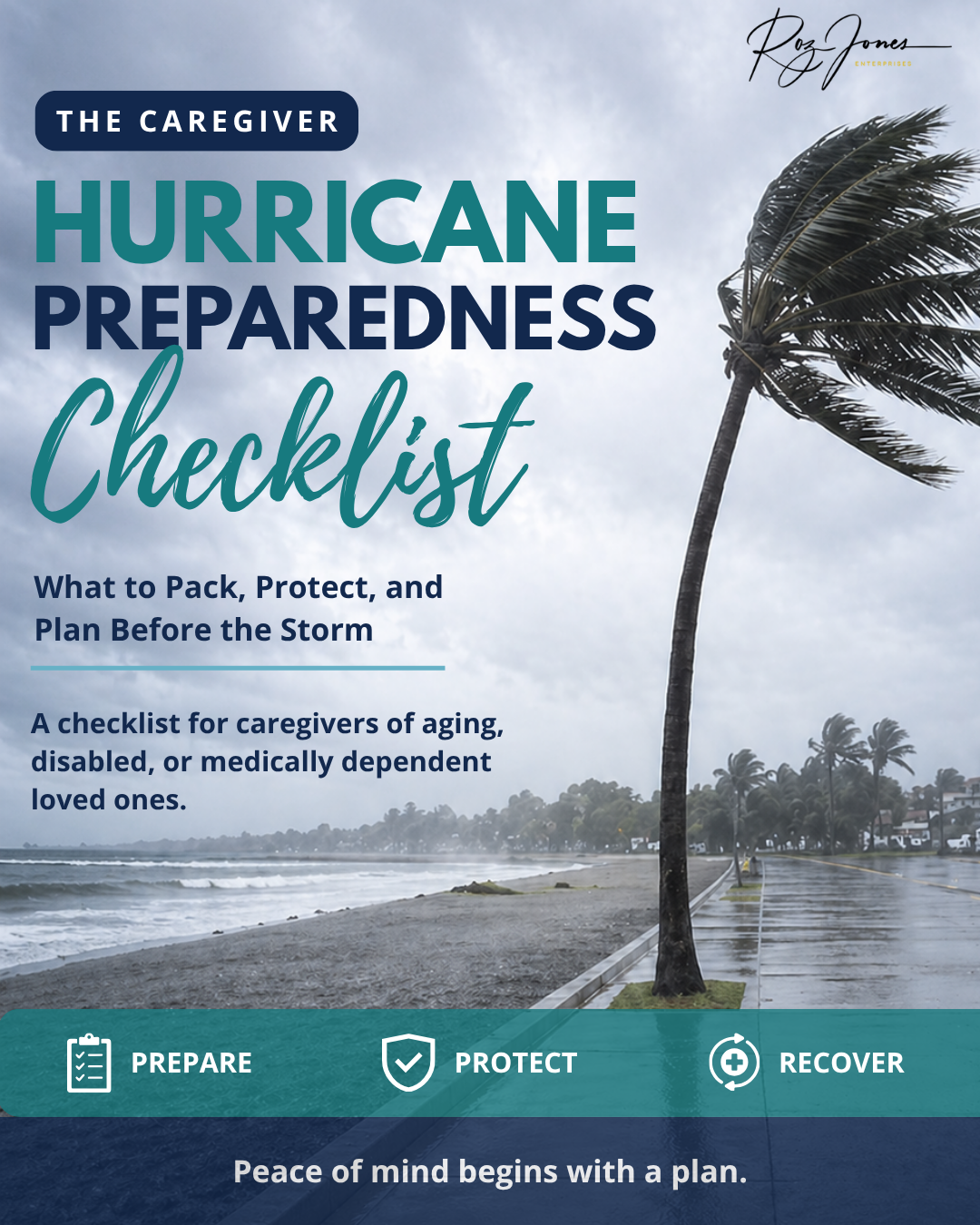
The Caregiver Hurricane Preparedness Checklist.

Preventive healthcare is only one part of being prepared as a caregiver. Emergencies can interrupt medications, appointments, transportation, medical equipment, and the routines your aging loved one depends on. The Caregiver Hurricane Preparedness Checklist can help you organize important information, supplies, medications, and caregiving details before severe weather creates another layer of stress.

Subscribe to The Caregiver Cafe Weekly Newsletter!

Caregiving can be a roller coaster of ups and downs. The information that you will receive from The Caregiver Cafe Weekly Specials Newsletter will support you as a caregiver. Remember…

1. YOU ARE NOT ALONE: The problems you face as a caregiver are experienced by other caregivers. Knowing that you’re not alone can be comforting. 

2. Tools and Resources:  Find caregiver stress management tools and gain perspective from other caregiver’s experiences.

3. LEARN TO: Ask for help, accept help when it is offered, and acknowledge yourself on this caregiving journey. Hear from experts on how to balance caregiving responsibilities by taking care of your needs and involving others to help manage the natural stress and isolation of being a caregiver. 

Caregiving Without Losing Yourself or Your Parent

By Roz Jones

Caring for an aging parent can change the relationship between you in ways neither of you expected. As their needs increase, you may become the person helping with appointments, medications, paperwork, transportation, household tasks, and medical decisions. That shift can make it easy to believe that being a good caregiver means taking over, but caregiving should not automatically mean your aging parent loses their voice. At the same time, preserving their independence should not require you to carry every responsibility alone.

The goal is to find a balance between support and control. Your parent may need more help than they did before while still being capable of making decisions, expressing preferences, and participating in their own care. You also need enough information, support, and boundaries to remain present without allowing caregiving to consume every part of your life. Empowerment has to happen on both sides.

Support Your Parent Without Taking Over

When you begin noticing that your aging parent needs more assistance, your first instinct may be to step in and fix everything. That usually comes from love and concern. You see a problem, recognize the risk, and want to prevent something worse from happening. Before long, you may find yourself making appointments, organizing medications, handling paperwork, answering questions for them, and taking over responsibilities they previously managed on their own.

Some of that help may be necessary, but there is a difference between providing support and removing someone from their own life. Whenever possible, allow your parent to remain involved in decisions that affect them. Their ability to participate may change depending on their health, memory, mobility, or other circumstances, but needing assistance does not automatically mean they should no longer have a say.

Instead of looking only at what needs to be done for your parent, pay attention to what they can still do with the right support. Sometimes the goal is not complete independence. The goal is helping them maintain as much independence as safely possible while making sure the areas where they do need help are supported.

Pay Attention to Changes Without Making Assumptions

Caregivers are often the first people to notice when something is different. You may recognize that your parent is forgetting appointments more often, repeating questions, becoming confused about bills, struggling with familiar tasks, or having difficulty managing medications. You may also notice changes in mobility, appetite, mood, sleep, or how they communicate.

Those changes deserve attention, but they do not always tell you what is causing them. Instead of assuming a change is simply part of aging or deciding that it must mean something serious, document what you are noticing and bring those observations to the appropriate healthcare provider.

Medicare Part B can cover a separate cognitive assessment visit when appropriate. During that visit, a healthcare provider may review medications and medical history, assess cognitive function, develop a care plan, discuss advance care planning, and connect the patient and family with additional support. A caregiver can also participate in the assessment to provide information and hear recommendations.

Your role is not to diagnose the problem. Your role is to notice changes, document them, and make sure the right person knows what is happening.

Keep Your Parent Involved in the Plan

Care plans work better when the person receiving the care understands what is happening and has an opportunity to participate. That can become difficult when the caregiver and aging parent disagree about what support is needed.

Your parent may believe they can still drive when you are worried about their safety. They may resist having help in the home, refuse to use a mobility aid, or become uncomfortable with the idea of respite care or other outside support. Those conversations can become tense quickly, especially when you believe you are trying to protect them.

It can help to look beyond the immediate disagreement and consider what the change may represent to your parent. Accepting help may feel like losing independence, becoming a burden, or moving closer to a future they are not ready to face. Understanding that fear does not mean ignoring a genuine safety concern. It means addressing the concern without forgetting the person experiencing it.

Whenever circumstances allow, give your parent choices. A person who can no longer do something exactly the way they did before may still be able to decide how support is introduced and what changes feel most manageable.

Ask to Be Taught, Not Just Told

Caregivers are often given responsibilities without receiving enough instruction. A healthcare provider may explain that your parent needs help at home, but you may still leave the appointment unsure of exactly what that help should look like. You may suddenly be expected to assist with medications, mobility, wound care, daily activities, or changes connected to a medical condition without feeling prepared for any of it.

In some situations, Medicare Part B covers caregiver training when a healthcare provider determines that the training is necessary to help the person with Medicare successfully follow their treatment plan. That training may include skills related to medications, daily activities, safe movement, communication, medical conditions, and other parts of supporting your loved one at home.

Caregivers should not assume they are expected to know how to perform a new task simply because they love the person who needs the care. If you are being asked to do something you do not understand, say so. Ask the healthcare team to demonstrate it, explain what warning signs to watch for, and clarify when you should call the doctor or seek emergency care.

Being informed is not about becoming your parent’s doctor or nurse. It is about making sure you have the information necessary to safely handle the responsibilities placed in your hands.

Know Where Your Responsibility Ends

Caregiving can slowly expand until there is no clear line between helping your parent and becoming responsible for everything. You may begin with transportation and appointments, then gradually take on groceries, medications, insurance calls, family updates, household responsibilities, and every unexpected issue that comes up.

Before long, everyone may assume you will handle whatever needs to be done. That is how caregivers become overwhelmed.

Supporting your aging parent does not require becoming the only person capable of helping them. If siblings, relatives, friends, professionals, community organizations, or other resources are available, caregiving responsibilities should be discussed instead of automatically falling onto one person.

Your limits may also change over time. There may be responsibilities you can manage now that become too much later, and there may be things your parent wants from you that you cannot provide safely or consistently. Recognizing those limits does not mean you care less. It helps identify where the care plan needs additional support.

Prepare Before More Help Is Needed

Families often wait for a crisis before discussing what comes next. A fall happens, someone is hospitalized, memory changes become more noticeable, or the caregiver becomes exhausted. Suddenly, the family is trying to make major decisions quickly.

Planning earlier gives everyone more room to think. Talk with your parent about what matters to them while they are still able to participate fully in those conversations. Ask what they would want if living independently became more difficult, who they trust to help with medical or financial decisions, and what types of support they would be comfortable receiving.

Important legal and healthcare documents should also be discussed before they are urgently needed. Depending on your parent’s situation and state, that may include an advance directive, healthcare proxy, financial power of attorney, estate planning documents, or other arrangements that make their wishes clear.

The purpose is not to predict every possible outcome. It is to reduce confusion and pressure if the family eventually has to make difficult decisions.

Protect the Relationship Too

When caregiving responsibilities become heavy, the relationship between an adult child and parent can become centered entirely around care. Every conversation begins to focus on appointments, medications, food, bills, symptoms, or what needs to happen next.

But your aging parent is still your parent.

When possible, make room for parts of the relationship that have nothing to do with caregiving. Share a meal without turning it into a discussion about what they should be eating. Watch a favorite show, look through old photographs, listen to music, or talk about family stories. Those moments still matter.

You are managing important responsibilities, but you are also living through a season of your relationship that you will not get back. Caregiving should protect your parent’s well-being without allowing the responsibilities of care to erase the relationship underneath it.

Empowerment Goes Both Ways

Empowering your aging parent means recognizing what they can still do, including them in decisions, listening to what matters to them, and helping them adapt when their needs change. Empowering yourself means learning what you need to know without believing you have to know everything, asking for guidance, accepting support, preparing for future decisions, and recognizing when the care plan is asking too much from one person.

You and your parent may not agree about everything along the way. There may be difficult conversations, changing responsibilities, and moments when neither of you is completely comfortable with what comes next. The goal is not to handle caregiving perfectly. The goal is to create a care plan that protects your parent’s health and dignity while also recognizing that the caregiver has needs, limits, responsibilities, and a life of their own.

When both of those things remain part of the conversation, caregiving becomes less about one person taking control of another person’s life and more about finding the support that allows both of you to move through this season with greater understanding.

Continue Reading About Empowered Caregiving

This blog continues the conversation from Empowering Yourself and Your Aging Parent. If you have not read the original blog, start there for more on caregiver education, building a support system, prioritizing your well-being, and beginning important conversations about your parent’s future.

You can also revisit my earlier blog, How to Parent Your Parent – When Roles Are Reversed for additional insight into navigating the changes that can happen when an aging parent begins depending more heavily on their adult child.

Tune in to The Caregiver Café Podcast

5 Ways to Boost Your Mental Health as a Caregiver

Caring for someone else also requires paying attention to what caregiving is doing to you. If you have been feeling mentally exhausted, overwhelmed, or so focused on your aging loved one that your own needs have disappeared from the plan, listen to 5 Ways to Boost Your Mental Health as a Caregiver on The Caregiver Cafe podcast. Your mental health should not become the last thing you address after everyone else has been taken care of.

Give Yourself a Moment of Grace

For more encouragement through the emotional parts of the caregiving journey, Moments of Grace offers reflections for caregivers navigating responsibility, change, difficult days, and the moments of grace that can still be found along the way.

Preparing for hurricane season?

The Caregiver Hurricane Preparedness Checklist.

Empowering yourself as a caregiver also means preparing before you are standing in the middle of an emergency. If your family may be affected by hurricanes or severe weather, the Caregiver Hurricane Preparedness Checklist can help you organize medications, important information, supplies, transportation details, and other caregiving needs before a storm arrives.

Subscribe to The Caregiver Cafe Weekly Newsletter!

Caregiving can be a roller coaster of ups and downs. The information that you will receive from The Caregiver Cafe Weekly Specials Newsletter will support you as a caregiver. Remember…

1. YOU ARE NOT ALONE: The problems you face as a caregiver are experienced by other caregivers. Knowing that you’re not alone can be comforting. 

2. Tools and Resources:  Find caregiver stress management tools and gain perspective from other caregiver’s experiences.

3. LEARN TO: Ask for help, accept help when it is offered, and acknowledge yourself on this caregiving journey. Hear from experts on how to balance caregiving responsibilities by taking care of your needs and involving others to help manage the natural stress and isolation of being a caregiver. 

What to Do When Your Loved One Is Struggling

By Roz Jones

Recognizing that your aging loved one may be struggling emotionally is one thing. Knowing what to do with that information can feel much harder. You may notice that something has changed and still wonder whether you should bring it up. You may worry about embarrassing your loved one, making them defensive, or saying the wrong thing. If they tell you they’re feeling hopeless, lonely, or overwhelmed, you may also feel pressure to immediately find the right words or solve the problem.

Caregivers don’t have to have every answer. What matters is creating an opportunity for your loved one to talk, taking what they tell you seriously, and knowing when it’s time to bring additional support into the conversation.

Start With What You’ve Actually Noticed

Difficult conversations often go better when they begin with an observation instead of an assumption. Rather than telling your loved one that you think they’re depressed, begin with the change you’ve noticed. Maybe they haven’t been attending activities they normally enjoy. Maybe they’ve stopped answering calls from friends. Perhaps they’re sleeping much more than usual, seem increasingly frustrated, or have started saying that they feel like a burden.

Starting with what you’ve seen gives your loved one room to explain what may be happening from their perspective. There may be something going on that you didn’t know about. They may be grieving a loss, worried about money, frustrated by a health change, struggling with pain, or having difficulty adjusting to depending on other people. The first conversation doesn’t have to uncover everything. Sometimes the most important thing you can do is open the door.

Give Them Room to Tell You What’s Going On

Caregivers spend a lot of time solving problems. When something happens, we start thinking about appointments, transportation, medications, schedules, and what needs to happen next. Emotional conversations require something a little different. Before deciding what your loved one needs, give them time to talk.

That may mean sitting through a pause without immediately filling the silence. It may mean hearing frustration that you can’t fix. Your loved one may tell you they’re angry about losing independence, tired of medical appointments, lonely since someone died, or embarrassed that they need more assistance. Try not to immediately correct what they’re feeling. Telling someone that they shouldn’t feel that way, that other people have it worse, or that they have plenty to be grateful for may be intended as encouragement, but it can also shut down the conversation.

You don’t have to agree with every conclusion your loved one reaches to acknowledge that what they’re feeling is real to them.

Ask Direct Questions When the Situation Calls for Them

There are times when a general conversation about emotional health needs to become more direct. If your aging loved one talks about wanting to die, says there’s no reason to keep living, describes themselves as a burden, or makes comments that cause you to worry about their safety, don’t avoid the subject because it feels uncomfortable.

Ask what they mean. If you’re concerned they may be thinking about suicide, ask them directly. The 988 Suicide & Crisis Lifeline includes talking about wanting to die, feeling hopeless, feeling trapped, believing you’re a burden, withdrawing from others, major changes in sleep, increased substance use, and extreme mood changes among warning signs that may require additional attention, particularly when the behavior is new, increasing, or connected to a painful loss or change.

Asking about suicide does not mean you’re accusing your loved one of something. You’re trying to understand whether they’re safe. Avoiding the question doesn’t remove the risk.

Don’t Promise to Keep a Safety Concern Secret

Your aging loved one may tell you something difficult and ask you not to tell anyone. That can put caregivers in an uncomfortable position. You want your loved one to trust you, but protecting that trust cannot mean keeping information private when you believe their safety may be at risk.

If they’re experiencing suicidal thoughts or you’re seriously concerned about their mental health, additional support may need to be involved even if they’re hesitant. You can still be respectful about how that happens. Explain why you’re concerned. Let them know who you would like to contact and why. Include them in decisions as much as the situation safely allows.

The goal isn’t to take control away from your loved one. It’s to make sure a serious concern isn’t left for one family member to manage alone.

Bring Their Healthcare Provider Into the Conversation

Changes in emotional health should be discussed with your loved one’s healthcare provider, especially when those changes are new, persistent, or beginning to interfere with daily life. A primary care provider can be an important place to start because emotional and physical health are closely connected.

Some symptoms that appear to be depression may also be affected by medical conditions, medications, pain, sleep problems, or other changes in health. That is another reason caregivers should avoid trying to diagnose the situation on their own. Your loved one may eventually need support from a therapist, counselor, psychiatrist, social worker, or another mental health professional, but you don’t have to determine that by yourself. Start by making sure the concern reaches someone who can properly evaluate what’s happening.

Expect That Your Loved One May Resist Help

Recognizing that someone needs additional support doesn’t mean they’ll immediately agree. Your loved one may insist they’re fine. They may tell you they don’t want strangers involved in their business. They may come from a generation or culture where mental health treatment carried significant stigma. Some older adults may also associate counseling or psychiatric care with being weak, unstable, or unable to manage their own lives.

Arguing usually doesn’t make those concerns disappear. Instead, find out what’s behind the resistance. If your loved one doesn’t want to see a therapist, they may be more comfortable beginning with their regular doctor. Someone who doesn’t want to attend a support group may feel differently about speaking privately with a counselor. Telehealth may work better for someone with transportation or mobility limitations.

The first option you suggest doesn’t have to be the only option. The goal is getting your loved one connected to appropriate support in a way they’re willing and able to use whenever possible.

Stay Connected After the First Conversation

One conversation may not be enough. Your loved one may tell you they’re fine because they aren’t ready to talk. They may share a little and decide they don’t want to say anything else. You may help schedule an appointment and assume that means the problem has been handled.

Continue checking in. That doesn’t mean turning every phone call into an emotional assessment. It means continuing to pay attention and leaving room for the conversation to continue. Ask how they’ve been feeling. Find out whether the appointment was helpful. Notice whether the behaviors that concerned you are improving, continuing, or becoming more serious.

Support often happens over time. Aging loved ones need to know that asking for help won’t make them a burden and that talking about what they’re experiencing won’t make their family disappear.

Know When the Situation Cannot Wait

Some situations require immediate help. If your aging loved one is experiencing a mental health crisis, has suicidal thoughts, or you’re worried they may harm themselves, the 988 Suicide & Crisis Lifeline is available throughout the United States. As of 2026, people can call or text 988 or use the online chat service to connect with trained crisis counselors. Caregivers can also contact 988 when they’re worried about someone else and need guidance about what to do next.

If your aging loved one is a veteran, the Veterans Crisis Line can also be reached by calling 988 and pressing 1 or by texting 838255. If someone has already attempted suicide, has a life-threatening injury, or is in immediate physical danger, seek emergency medical assistance.

You don’t have to wait until you’re completely certain before asking for professional guidance.

Remember That You Are Their Caregiver, Not Their Therapist

When someone you love is struggling, it can be easy to feel as though keeping them emotionally well has become another caregiving responsibility. That is too much for one person to carry.

You can listen, notice changes, make an appointment, provide transportation, sit beside them during a difficult conversation, help them connect with resources, and continue showing up. What you cannot do is become their entire mental health support system.

Supporting your aging loved one means helping create a wider circle of care rather than trying to become that entire circle yourself. That distinction matters for the person receiving care and for the caregiver. The stronger the support system becomes, the less likely one person is to be responsible for recognizing every change, answering every call, handling every crisis, and knowing exactly what to do.

Keep the Conversation Going

Talking about emotional health doesn’t need to happen only after something has gone wrong. Make it part of how your family talks about aging and caregiving. If you’re already discussing blood pressure, medications, mobility, doctor appointments, and physical pain, there should also be room to ask how your loved one is doing emotionally.

Some conversations will be uncomfortable, and some may not go the way you expect. Your loved one may need time before they’re willing to accept additional support. What matters is that emotional health doesn’t become something the family notices but never discusses.

In Recognizing Emotional Changes in Your Aging Loved One, I talked about how caregivers can recognize changes in mood, behavior, social connection, and daily life that may indicate an aging loved one is struggling. Once you recognize those changes, the next responsibility isn’t to diagnose what’s happening. It’s to respond, ask questions, involve the appropriate support, and make sure serious concerns aren’t ignored.

Caregivers cannot prevent every difficult season their aging loved ones will experience. But we can create families where emotional health is taken seriously, asking for help is allowed, and no one has to quietly carry everything by themselves.

Prepare for Your Next Trip

Planning to travel with an aging loved one? Download the free Vacationing with an Aging Loved One Checklist to help you prepare for medications, mobility needs, comfort, safety, and unexpected changes.

Tune in to The Caregiver Café Podcast

Struggling with being patient as a Caregiver

In this episode of The Caregiver Café with Roz Jones, Roz is talking about something every caregiver has probably struggled with at one time or another: patience.

Caregiving does not happen in a perfect environment. You may wake up late, your schedule may change, something unexpected may happen with your aging loved one, or you may simply be tired, hungry, overwhelmed, and trying to get too much done at once. Before you know it, something small can push you from calm to frustrated.

And Roz will be the first to tell you—she is working on this right along with you.

In this episode, Roz breaks down six reasons we often struggle with patience, including disrupted routines, feeling like there is never enough time, comparing our progress to someone else’s, becoming overwhelmed, expecting results too quickly, and trying to function when we are tired or hungry.

Give Yourself a Moment of Grace

Caregiving includes demanding days, unexpected changes, and moments of connection that may be easy to overlook. Moments of Grace offers encouragement to caregivers who need a reminder to pause and recognize the meaningful moments along the journey.

Preparing for hurricane season?

The Caregiver Hurricane Preparedness Checklist.

Are you preparing for hurricane season? Purchase the Caregiver Hurricane Preparedness Checklist to organize the information and supplies your family may need before severe weather arrives.

Subscribe to The Caregiver Cafe Weekly Newsletter!

Caregiving can be a roller coaster of ups and downs. The information that you will receive from The Caregiver Cafe Weekly Specials Newsletter will support you as a caregiver. Remember…

1. YOU ARE NOT ALONE: The problems you face as a caregiver are experienced by other caregivers. Knowing that you’re not alone can be comforting. 

2. Tools and Resources:  Find caregiver stress management tools and gain perspective from other caregiver’s experiences.

3. LEARN TO: Ask for help, accept help when it is offered, and acknowledge yourself on this caregiving journey. Hear from experts on how to balance caregiving responsibilities by taking care of your needs and involving others to help manage the natural stress and isolation of being a caregiver. 

When Your Aging Loved One Resists Respite Care

By Roz Jones

You may know you need a break. You may have found someone who can help. You may even have the resources to make respite care possible. Then your aging loved one says the one thing you were hoping not to hear: I don’t want anybody else taking care of me.

For some caregivers, this becomes the reason respite never happens.

Your loved one may be uncomfortable with a stranger coming into the home. They may insist that no one knows their routine the way you do. They may worry about losing privacy or independence. If memory loss or dementia is part of the care situation, a change in who is providing care may create even more uncertainty.

Those concerns deserve to be heard. But they also do not mean the caregiver has to remain the only person providing care indefinitely.

Find Out What They Are Actually Saying No To

A refusal of respite care may sound simple.

“I don’t need anybody.”

“I don’t want a stranger in my house.”

“You can take care of me.”

But there may be something underneath those words.

Your loved one may be embarrassed about needing help with bathing or dressing. They may be worried that accepting another caregiver means they’re losing more independence. They may have had a bad experience with professional care in the past. They may simply be afraid of someone unfamiliar entering their space.

Before trying to convince them, ask questions.

What makes you uncomfortable about having someone else here?

Is there something you’re worried they won’t understand?

Would you feel differently if you met the person first?

What kind of help would feel acceptable to you?

You may not be able to remove every concern, but understanding what your loved one is resisting gives you something specific to address.

Do Not Introduce Respite as a Replacement

Words matter.

If respite is presented as, “Someone else is going to take care of you because I need a break,” your loved one may hear something very different.

They may hear:

You’re too much for me.

I don’t want to take care of you anymore.

Someone else is replacing me.

That may not be what you’re saying, but caregiving changes can bring up fears about dependence, abandonment, and losing control.

Try framing respite as additional support rather than replacement.

You might explain that another person is joining the care plan so there is someone familiar who can help when you have appointments, errands, work responsibilities, or other things you need to manage.

The goal is not to convince your loved one that you’re leaving.

It’s to help them understand that good care should be able to continue even when one caregiver is not available.

Give Them a Voice in Choosing the Support

Whenever your loved one is able to participate in the decision, include them.

If you’re considering professional respite care, let them meet the person who may be providing support. If several options are available, ask which person they feel most comfortable with.

Talk about what tasks they are comfortable receiving help with.

Maybe they’re comfortable having someone prepare lunch and provide companionship but aren’t ready to accept help bathing.

Maybe they would rather attend an adult day program than have someone come into their home.

Maybe they would feel more comfortable starting with a family member before bringing in professional support.

Not every preference can be accommodated, especially when safety or significant care needs are involved. But giving your loved one reasonable choices can make respite feel less like something being done to them.

Start Smaller Than You Think You Need

The first respite experience does not have to be an entire weekend.

If your loved one is resistant, several hours may feel overwhelming.

Start with thirty minutes or an hour while you’re still nearby.

Let the respite provider spend time talking with your loved one while you’re in another room. On another visit, leave long enough to run a short errand. If that goes well, gradually increase the amount of time.

This gives your loved one an opportunity to become familiar with the person and learn that you leave and come back.

It also gives you a chance to see how the arrangement works before depending on it for a longer period.

Familiarity takes time.

The person your loved one calls a stranger today may become someone they recognize and trust after several consistent visits.

Be Careful About Asking for Permission You Cannot Always Give

This can be one of the harder parts of the conversation.

There is a difference between respecting your loved one’s preferences and allowing their resistance to determine whether you are ever permitted to rest.

If your loved one is able to remain safely alone and simply prefers that you stay home, you may have more room to set boundaries around your availability.

If they cannot safely remain alone, the family needs another care option whether they like the idea initially or not.

That doesn’t mean ignoring their feelings.

It means being honest about what the care situation requires.

You can say:

“I understand that you would rather have me here, but I cannot be the only person available every day.”

Or:

“I hear that you’re uncomfortable with this. We’re going to start slowly so you can get to know her, but I need another person who can help when I’m not available.”

Caregivers can be compassionate without promising unlimited availability.

Watch for Resistance That May Be Connected to Dementia

For a loved one living with Alzheimer’s disease or another form of dementia, resistance may not be about the respite provider personally.

Changes in routine, unfamiliar faces, difficulty recognizing people, fear, confusion, or trouble understanding why the primary caregiver is leaving may all affect how respite is received.

In those situations, consistency can matter.

Using the same respite provider whenever possible may help the person become more familiar over time. Keeping meals, activities, music, television programs, and other parts of the daily routine familiar can also reduce unnecessary changes.

It may also help to introduce the respite provider without repeatedly emphasizing that you are “leaving.”

The Alzheimer’s Association recommends looking for the reason behind resistant behaviors and adjusting the environment or approach when possible rather than assuming the person is simply being difficult. Changes in routine, fear, discomfort, confusion, and unmet needs may all contribute to resistance.

Do Not Wait Until You Have No Choice

Here’s the shift I want to encourage: don’t make the first introduction to another caregiver happen on the day you absolutely have to leave.

If you wait until you’re sick, exhausted, hospitalized, called into work, or dealing with a family emergency, there may be no time for your loved one to adjust gradually.

Introduce support while you still have choices.

Let your loved one meet the person.

Pay attention to what makes them comfortable.

Make adjustments.

Give the relationship time to develop.

Respite becomes much harder when everyone is being introduced to a new care arrangement in the middle of a crisis.

Their Comfort Matters, and So Does Your Capacity

Caregivers can become so focused on keeping an aging loved one comfortable that they stop acknowledging their own limits.

Your loved one’s feelings about respite matter.

Their dignity matters.

Their preferences matter.

But the caregiver’s health, responsibilities, relationships, work, rest, and ability to continue providing care matter too.

A sustainable care plan has to make room for both.

You can listen to your loved one’s concerns without allowing guilt to make every decision.

You can introduce change slowly without avoiding change altogether.

You can respect their voice while still recognizing that one caregiver cannot always be the entire care plan.

Sometimes accepting another person into the caregiving circle takes time.

Start the conversation before you desperately need the break.

Because respite works best when your loved one has time to learn that receiving care from someone else does not mean losing you.

It means the care plan is becoming strong enough to support both of you.

For the beginning of this conversation, read Finding Balance Before Your Break for National Respite Care Month..

Prepare for Your Next Trip

Planning to travel with an aging loved one? Download the free Vacationing with an Aging Loved One Checklist to help you prepare for medications, mobility needs, comfort, safety, and unexpected changes.

Tune in to The Caregiver Café Podcast

Dad’s Dementia: Grieving the Living with Phil Hill

In this episode of The Caregiver Café with Roz Jones, Roz is joined by security expert and former family caregiver Phil Hill for an honest conversation about caring for a parent through cognitive decline, dementia, and the final years of life.

Phil shares how he first began noticing changes in his father, including confusion, difficulty navigating familiar places, changes in his appearance, and trouble managing responsibilities that had once been routine. Those early signs led to doctor visits, cognitive testing, difficult decisions about driving, and eventually moving his father into his home.

As the primary caregiver, Phil had to learn how to coordinate support among family members while also caring for his wife, his children, his business, and himself. He explains how even small contributions from relatives, such as taking his father to the barber shop, spending an afternoon with him, or providing companionship, gave him valuable moments of rest.

Roz and Phil also discuss the emotional side of caregiving. Watching a parent decline can bring grief long before the person passes away. Caregivers may lose sleep, experience exhaustion, make difficult safety decisions, and manage behaviors their loved one may not fully understand or remember.

Give Yourself a Moment of Grace

Caregiving includes demanding days, unexpected changes, and moments of connection that may be easy to overlook. Moments of Grace offers encouragement to caregivers who need a reminder to pause and recognize the meaningful moments along the journey.

Preparing for hurricane season?

The Caregiver Hurricane Preparedness Checklist.

Are you preparing for hurricane season? Purchase the Caregiver Hurricane Preparedness Checklist to organize the information and supplies your family may need before severe weather arrives.

Subscribe to The Caregiver Cafe Weekly Newsletter!

Caregiving can be a roller coaster of ups and downs. The information that you will receive from The Caregiver Cafe Weekly Specials Newsletter will support you as a caregiver. Remember…

1. YOU ARE NOT ALONE: The problems you face as a caregiver are experienced by other caregivers. Knowing that you’re not alone can be comforting. 

2. Tools and Resources:  Find caregiver stress management tools and gain perspective from other caregiver’s experiences.

3. LEARN TO: Ask for help, accept help when it is offered, and acknowledge yourself on this caregiving journey. Hear from experts on how to balance caregiving responsibilities by taking care of your needs and involving others to help manage the natural stress and isolation of being a caregiver. 

The Freedom to Rest: A Juneteenth Reflection for Caregivers

By Roz Jones

Caregiving often begins with a simple act of love. A loved one needs help, and someone steps forward. An aging parent needs support after a diagnosis. A spouse needs assistance after surgery. A family member can no longer manage medications, meals, transportation, appointments, or daily care alone.

Over time, what begins as helping can become a full caregiving role. Schedules change. Responsibilities increase. Sleep becomes lighter. Personal needs are postponed. The caregiver becomes the person who answers the calls, manages the updates, keeps track of appointments, and tries to hold the family together.

In the previous blog, Managing Stress and Burnout: Self-Care for Caregivers, the focus was on managing stress and burnout through self-care, including recognizing the signs of burnout, prioritizing personal well-being, staying physically active, practicing relaxation, and seeking support.

This continuation expands that conversation through the lens of Juneteenth.

Juneteenth is a reminder of freedom, dignity, liberation, and the ongoing work of building lives where people are not simply surviving, but able to rest, heal, and live with support. For caregivers, especially those who have been taught to carry silently, this message is deeply relevant.

Caregiving should not require a person to disappear inside the needs of everyone else.

Freedom Includes Rest

Juneteenth invites reflection on what freedom means beyond survival.

For caregivers, freedom may not mean stepping away from responsibility. It may mean having enough support that responsibility does not become isolation. It may mean being able to rest without guilt, ask for help without shame, and name exhaustion before it becomes a health crisis.

Caregivers often continue long after their bodies and minds have signaled that the load is too heavy. They may keep going because the loved one’s needs are urgent, because family support is limited, or because they have been conditioned to believe that strength means endurance at all costs.

However, rest is not a reward for finishing the work. Rest is part of the work.

A caregiver who is depleted cannot continue to provide steady care without consequence. Physical fatigue, emotional strain, resentment, poor sleep, and declining health can all become signs that the current caregiving arrangement is not sustainable.

Rest is not neglect. It is maintenance for the person providing care.

Burnout Is a Signal, Not a Character Flaw

Burnout is often misunderstood as weakness, impatience, or a lack of commitment. In reality, burnout is a signal that the caregiving load has exceeded the caregiver’s capacity without enough support.

This is especially important for male caregivers, who may face added pressure to appear strong, capable, and emotionally contained. Some men may feel they are expected to be the provider, protector, decision-maker, and steady presence for everyone else. That pressure can make it difficult to admit when caregiving has become overwhelming.

Burnout can show up in many ways. It may appear as irritability, fatigue, withdrawal, disrupted sleep, poor concentration, changes in appetite, resentment, sadness, anxiety, or a loss of interest in things that once brought joy.

These signs should not be ignored.

Burnout does not mean the caregiver does not love their family member. It means the caregiving structure needs attention. Love may be present, but love alone does not replace rest, help, resources, and a realistic plan.

The Care Plan Must Include the Caregiver

Care plans often focus on the person receiving care: medications, appointments, meals, mobility, safety, hygiene, and daily support. Those details matter, but they are incomplete if the caregiver is not included in the plan.

A sustainable care plan should account for the person providing the care.

This includes the caregiver’s schedule, health, work responsibilities, sleep, emotional well-being, financial strain, and access to support. A plan that depends on one person being available at all times is not sustainable. It places the entire household at risk if that caregiver becomes sick, overwhelmed, or unable to continue.

Families should discuss how responsibilities can be shared before the caregiver reaches a breaking point. This may include transportation, grocery shopping, meal preparation, medication pickup, appointment scheduling, household chores, financial paperwork, overnight support, and communication with extended family.

When caregiving responsibilities are clearly named, they are easier to divide. When they remain invisible, the primary caregiver often carries them alone.

The Trap of Being “The Strong One”

Many caregivers are praised for being strong. While that praise may be well-intentioned, it can also create pressure.

The “strong one” is often expected to keep going without complaint. Family members may assume that the person who has always handled things can continue handling them. Friends may not ask deeper questions. The caregiver may begin to believe that needing help is a form of failure.

This expectation is especially harmful when strength becomes another word for silence.

Strength should not require a caregiver to ignore exhaustion, hide grief, suppress frustration, or accept an unfair share of responsibility. True strength can include honesty. It can include asking for help. It can include setting limits. It can include admitting that the current arrangement is no longer working.

A healthier caregiving culture does not celebrate burnout as proof of devotion. It recognizes that care must be shared, supported, and sustained.

Boundaries Help Protect the Care

Boundaries are often misunderstood in caregiving. Some families interpret boundaries as selfishness or distance. In reality, boundaries help protect both the caregiver and the loved one receiving care.

Without boundaries, caregiving can expand until it consumes every hour, every relationship, and every part of the caregiver’s life. Over time, that can lead to resentment, emotional exhaustion, and physical decline.

Boundaries may include setting limits on phone calls, identifying which days are available for appointments, asking other relatives to take specific tasks, limiting non-urgent requests, or creating protected time for rest.

Healthy boundaries make caregiving more sustainable. They clarify what the caregiver can do, what others must help with, and what support needs to be brought in from outside the family.

Boundaries do not reduce love. They make continued care possible.

Support Must Be Practical

Caregivers are often told, “Let me know if you need anything.” While the sentiment may be kind, it still places responsibility on the caregiver to identify the need, ask for help, explain the task, and manage the follow-through.

Practical support is more useful when it is specific.

A family member can bring dinner on a certain day. A friend can sit with a loved one for two hours. A sibling can handle pharmacy pickups. A neighbor can take out the trash. Someone can manage the family update text. Someone can drive to an appointment. Someone can help organize paperwork.

Specific help reduces the caregiver’s mental load.

Caregivers can also benefit from keeping a running list of tasks that others can take on. When someone offers help, there is already a clear answer. This prevents the caregiver from minimizing their needs or defaulting to doing everything alone.

Support is most effective when it lightens the actual workload.

A Weekly Reset Can Reduce the Weight

Caregiving often becomes reactive. One need follows another. One appointment leads to another task. One phone call turns into another responsibility. Without a rhythm, caregivers may feel as if they are always responding to the next issue.

A weekly reset can help bring structure to the care routine.

This reset may include reviewing the upcoming week’s appointments, checking medication refills, preparing simple meals, confirming transportation, updating the family, reviewing supplies, organizing paperwork, and identifying one task that can be delegated.

It should also include attention to the caregiver’s needs.

Sleep, meals, movement, quiet time, spiritual practice, medical appointments, counseling, and social connection all matter. A weekly reset gives the caregiver a chance to ask what is needed before another week begins.

This practice does not remove every challenge, but it can reduce the feeling of constantly being behind.

Emergency Preparedness Is Part of Caregiver Wellness

Stress often increases when caregivers are carrying too many “what ifs.”

What if the power goes out? What if medication runs low? What if a storm comes? What if medical equipment stops working? What if transportation is needed quickly? What if the caregiver cannot get to the loved one? What if oxygen, refrigerated medication, or mobility support is interrupted?

Emergency planning helps reduce that mental burden.

Caregivers should have important information organized and accessible. This includes medication lists, physician contacts, insurance information, emergency contacts, medical equipment instructions, backup power needs, transportation options, and copies of important documents.

This is especially important during hurricane season or in areas where severe weather can disrupt care.

Preparedness is not fear. It is stability. It allows caregivers to respond with more clarity and less panic when unexpected situations arise.

Community Is a Form of Care

Caregiving may happen inside the family, but it should not depend on one person alone. Support can come from relatives, friends, neighbors, church communities, caregiver support groups, respite programs, professional care planners, medical teams, and community organizations.

Building a care network takes effort, but it can reduce isolation and help prevent burnout.

Community support also challenges the idea that caregiving is private work that must be carried quietly. Many caregivers suffer because the need is hidden. When the care situation is shared with trusted people, support becomes more possible.

No caregiver should have to become invisible in order to be dependable.

Juneteenth and the Call to Care Differently

Juneteenth reminds us that freedom is not only about release from bondage. It is also about the pursuit of dignity, wholeness, rest, family, and a life where people are not only surviving.

That message belongs in the caregiving conversation.

Caregivers deserve more than survival. They deserve care plans that include their needs. They deserve support that is specific and reliable. They deserve rest that is not treated as selfish. They deserve family systems that do not depend on one person being endlessly available.

For Black caregivers, male caregivers, and anyone who has been taught to keep carrying without complaint, Juneteenth offers a timely reminder: liberation also includes the right to be supported.

The goal is not to stop caring.

The goal is to build a caregiving life that does not destroy the caregiver in the process.

Caregiving rooted in love should also make room for rest, preparation, community, and grace.

Read more on this subject by reading, Managing Stress and Burnout: Self-Care for Caregivers.

Give Yourself a Moment of Grace

If you need encouragement for the emotional side of caregiving, purchase Roz Jones’ book, Moments of Grace. This book offers support, reflection, and reminders of grace for the caregiver who is carrying a lot.

This journal was created to help caregivers pause, breathe, reflect, and find strength in the middle of the caregiving journey.

Purchase Moments of Grace today and give yourself permission to breathe in the middle of the caregiving journey.

Prepare Before the Emergency Comes

The Caregiver Hurricane Preparedness Checklist.

If you are caring for a loved one and want to be better prepared for storms, power outages, and unexpected caregiving emergencies, purchase the Caregiver Hurricane Preparedness Checklist. This resource can help you think through important details before a crisis is already at the door.

For only $1.99, this checklist gives you a simple starting point so you are not trying to gather everything during a storm, power outage, hospitalization, or sudden change in your loved one’s care.

Purchase the Caregiver Hurricane Preparedness Checklist for $1.99 today and take one more step toward peace of mind.

Need Help Sorting Through the Care Plan?

Roz Jones is a dedicated caretaker turned CEO with over a decade of experience in helping families care for and make decisions for loved ones and their legacies.Roz is a compassionate, innovative healthcare industry leader.

If your family needs help thinking through care decisions, caregiving responsibilities, or next steps, book a session with Roz Jones. You do not have to navigate this season alone.

Together, we can talk through what is working, what is becoming too heavy, and what boundaries need to be strengthened so you can continue to care without losing yourself in the process.

Subscribe to The Caregiver Cafe Weekly Newsletter!

Caregiving can be a roller coaster of ups and downs. The information that you will receive from The Caregiver Cafe Weekly Specials Newsletter will support you as a caregiver. Remember…

1. YOU ARE NOT ALONE: The problems you face as a caregiver are experienced by other caregivers. Knowing that you’re not alone can be comforting. 

2. Tools and Resources:  Find caregiver stress management tools and gain perspective from other caregiver’s experiences.

3. LEARN TO: Ask for help, accept help when it is offered, and acknowledge yourself on this caregiving journey. Hear from experts on how to balance caregiving responsibilities by taking care of your needs and involving others to help manage the natural stress and isolation of being a caregiver.