
By Roz Jones
Caring for an aging parent can change the relationship between you in ways neither of you expected. As their needs increase, you may become the person helping with appointments, medications, paperwork, transportation, household tasks, and medical decisions. That shift can make it easy to believe that being a good caregiver means taking over, but caregiving should not automatically mean your aging parent loses their voice. At the same time, preserving their independence should not require you to carry every responsibility alone.
The goal is to find a balance between support and control. Your parent may need more help than they did before while still being capable of making decisions, expressing preferences, and participating in their own care. You also need enough information, support, and boundaries to remain present without allowing caregiving to consume every part of your life. Empowerment has to happen on both sides.
Support Your Parent Without Taking Over
When you begin noticing that your aging parent needs more assistance, your first instinct may be to step in and fix everything. That usually comes from love and concern. You see a problem, recognize the risk, and want to prevent something worse from happening. Before long, you may find yourself making appointments, organizing medications, handling paperwork, answering questions for them, and taking over responsibilities they previously managed on their own.
Some of that help may be necessary, but there is a difference between providing support and removing someone from their own life. Whenever possible, allow your parent to remain involved in decisions that affect them. Their ability to participate may change depending on their health, memory, mobility, or other circumstances, but needing assistance does not automatically mean they should no longer have a say.
Instead of looking only at what needs to be done for your parent, pay attention to what they can still do with the right support. Sometimes the goal is not complete independence. The goal is helping them maintain as much independence as safely possible while making sure the areas where they do need help are supported.
Pay Attention to Changes Without Making Assumptions
Caregivers are often the first people to notice when something is different. You may recognize that your parent is forgetting appointments more often, repeating questions, becoming confused about bills, struggling with familiar tasks, or having difficulty managing medications. You may also notice changes in mobility, appetite, mood, sleep, or how they communicate.
Those changes deserve attention, but they do not always tell you what is causing them. Instead of assuming a change is simply part of aging or deciding that it must mean something serious, document what you are noticing and bring those observations to the appropriate healthcare provider.
Medicare Part B can cover a separate cognitive assessment visit when appropriate. During that visit, a healthcare provider may review medications and medical history, assess cognitive function, develop a care plan, discuss advance care planning, and connect the patient and family with additional support. A caregiver can also participate in the assessment to provide information and hear recommendations.
Your role is not to diagnose the problem. Your role is to notice changes, document them, and make sure the right person knows what is happening.
Keep Your Parent Involved in the Plan
Care plans work better when the person receiving the care understands what is happening and has an opportunity to participate. That can become difficult when the caregiver and aging parent disagree about what support is needed.
Your parent may believe they can still drive when you are worried about their safety. They may resist having help in the home, refuse to use a mobility aid, or become uncomfortable with the idea of respite care or other outside support. Those conversations can become tense quickly, especially when you believe you are trying to protect them.
It can help to look beyond the immediate disagreement and consider what the change may represent to your parent. Accepting help may feel like losing independence, becoming a burden, or moving closer to a future they are not ready to face. Understanding that fear does not mean ignoring a genuine safety concern. It means addressing the concern without forgetting the person experiencing it.
Whenever circumstances allow, give your parent choices. A person who can no longer do something exactly the way they did before may still be able to decide how support is introduced and what changes feel most manageable.
Ask to Be Taught, Not Just Told
Caregivers are often given responsibilities without receiving enough instruction. A healthcare provider may explain that your parent needs help at home, but you may still leave the appointment unsure of exactly what that help should look like. You may suddenly be expected to assist with medications, mobility, wound care, daily activities, or changes connected to a medical condition without feeling prepared for any of it.
In some situations, Medicare Part B covers caregiver training when a healthcare provider determines that the training is necessary to help the person with Medicare successfully follow their treatment plan. That training may include skills related to medications, daily activities, safe movement, communication, medical conditions, and other parts of supporting your loved one at home.
Caregivers should not assume they are expected to know how to perform a new task simply because they love the person who needs the care. If you are being asked to do something you do not understand, say so. Ask the healthcare team to demonstrate it, explain what warning signs to watch for, and clarify when you should call the doctor or seek emergency care.
Being informed is not about becoming your parent’s doctor or nurse. It is about making sure you have the information necessary to safely handle the responsibilities placed in your hands.
Know Where Your Responsibility Ends
Caregiving can slowly expand until there is no clear line between helping your parent and becoming responsible for everything. You may begin with transportation and appointments, then gradually take on groceries, medications, insurance calls, family updates, household responsibilities, and every unexpected issue that comes up.
Before long, everyone may assume you will handle whatever needs to be done. That is how caregivers become overwhelmed.
Supporting your aging parent does not require becoming the only person capable of helping them. If siblings, relatives, friends, professionals, community organizations, or other resources are available, caregiving responsibilities should be discussed instead of automatically falling onto one person.
Your limits may also change over time. There may be responsibilities you can manage now that become too much later, and there may be things your parent wants from you that you cannot provide safely or consistently. Recognizing those limits does not mean you care less. It helps identify where the care plan needs additional support.
Prepare Before More Help Is Needed
Families often wait for a crisis before discussing what comes next. A fall happens, someone is hospitalized, memory changes become more noticeable, or the caregiver becomes exhausted. Suddenly, the family is trying to make major decisions quickly.
Planning earlier gives everyone more room to think. Talk with your parent about what matters to them while they are still able to participate fully in those conversations. Ask what they would want if living independently became more difficult, who they trust to help with medical or financial decisions, and what types of support they would be comfortable receiving.
Important legal and healthcare documents should also be discussed before they are urgently needed. Depending on your parent’s situation and state, that may include an advance directive, healthcare proxy, financial power of attorney, estate planning documents, or other arrangements that make their wishes clear.
The purpose is not to predict every possible outcome. It is to reduce confusion and pressure if the family eventually has to make difficult decisions.
Protect the Relationship Too
When caregiving responsibilities become heavy, the relationship between an adult child and parent can become centered entirely around care. Every conversation begins to focus on appointments, medications, food, bills, symptoms, or what needs to happen next.
But your aging parent is still your parent.
When possible, make room for parts of the relationship that have nothing to do with caregiving. Share a meal without turning it into a discussion about what they should be eating. Watch a favorite show, look through old photographs, listen to music, or talk about family stories. Those moments still matter.
You are managing important responsibilities, but you are also living through a season of your relationship that you will not get back. Caregiving should protect your parent’s well-being without allowing the responsibilities of care to erase the relationship underneath it.
Empowerment Goes Both Ways
Empowering your aging parent means recognizing what they can still do, including them in decisions, listening to what matters to them, and helping them adapt when their needs change. Empowering yourself means learning what you need to know without believing you have to know everything, asking for guidance, accepting support, preparing for future decisions, and recognizing when the care plan is asking too much from one person.
You and your parent may not agree about everything along the way. There may be difficult conversations, changing responsibilities, and moments when neither of you is completely comfortable with what comes next. The goal is not to handle caregiving perfectly. The goal is to create a care plan that protects your parent’s health and dignity while also recognizing that the caregiver has needs, limits, responsibilities, and a life of their own.
When both of those things remain part of the conversation, caregiving becomes less about one person taking control of another person’s life and more about finding the support that allows both of you to move through this season with greater understanding.
Continue Reading About Empowered Caregiving
This blog continues the conversation from Empowering Yourself and Your Aging Parent. If you have not read the original blog, start there for more on caregiver education, building a support system, prioritizing your well-being, and beginning important conversations about your parent’s future.
You can also revisit my earlier blog, How to Parent Your Parent – When Roles Are Reversed for additional insight into navigating the changes that can happen when an aging parent begins depending more heavily on their adult child.
Tune in to The Caregiver Café Podcast
5 Ways to Boost Your Mental Health as a Caregiver

Caring for someone else also requires paying attention to what caregiving is doing to you. If you have been feeling mentally exhausted, overwhelmed, or so focused on your aging loved one that your own needs have disappeared from the plan, listen to 5 Ways to Boost Your Mental Health as a Caregiver on The Caregiver Cafe podcast. Your mental health should not become the last thing you address after everyone else has been taken care of.
Give Yourself a Moment of Grace

For more encouragement through the emotional parts of the caregiving journey, Moments of Grace offers reflections for caregivers navigating responsibility, change, difficult days, and the moments of grace that can still be found along the way.
Preparing for hurricane season?
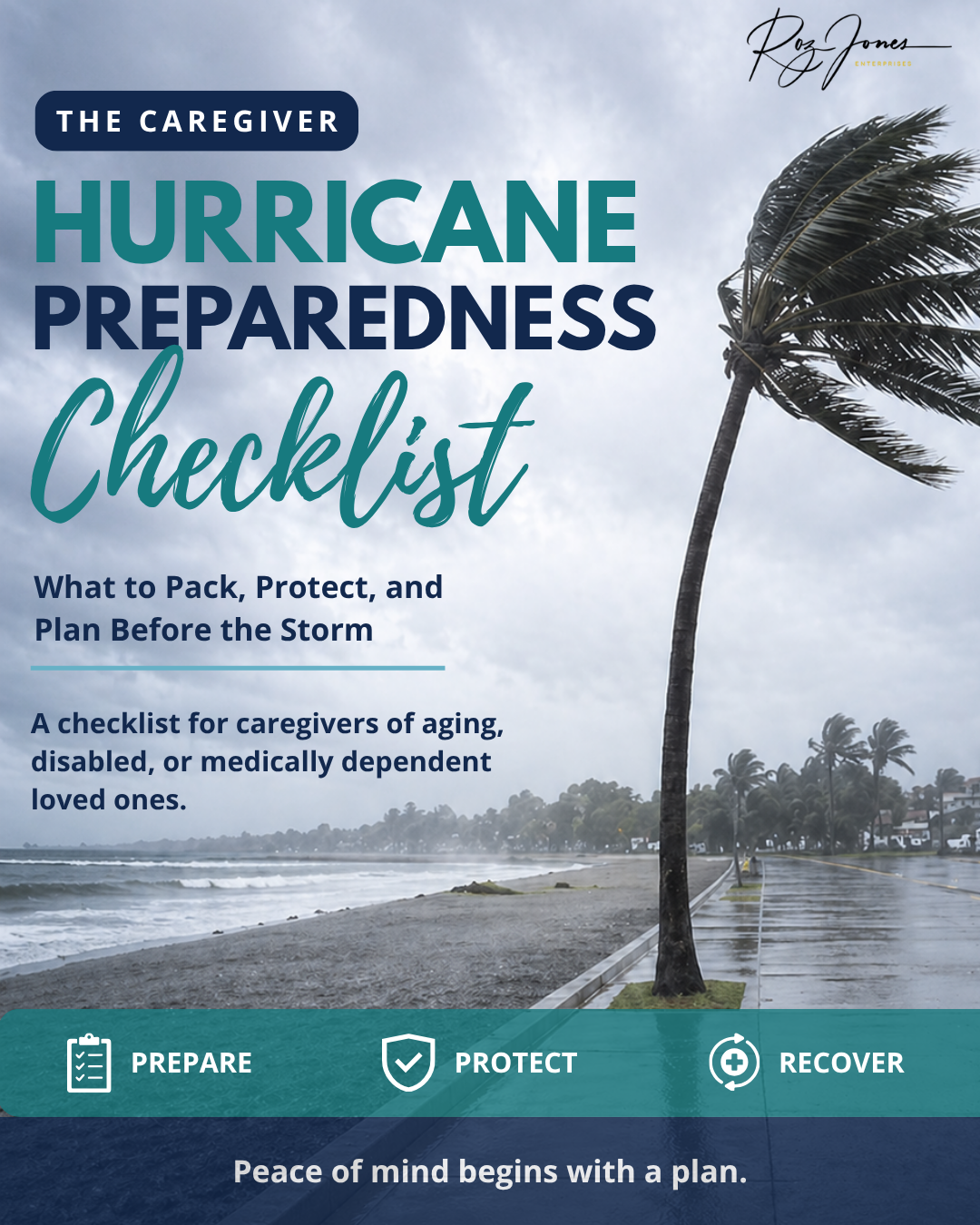
Empowering yourself as a caregiver also means preparing before you are standing in the middle of an emergency. If your family may be affected by hurricanes or severe weather, the Caregiver Hurricane Preparedness Checklist can help you organize medications, important information, supplies, transportation details, and other caregiving needs before a storm arrives.
Subscribe to The Caregiver Cafe Weekly Newsletter!

1. YOU ARE NOT ALONE: The problems you face as a caregiver are experienced by other caregivers. Knowing that you’re not alone can be comforting.
2. Tools and Resources: Find caregiver stress management tools and gain perspective from other caregiver’s experiences.
3. LEARN TO: Ask for help, accept help when it is offered, and acknowledge yourself on this caregiving journey. Hear from experts on how to balance caregiving responsibilities by taking care of your needs and involving others to help manage the natural stress and isolation of being a caregiver.