By Roz Jones
Planning a trip with an aging loved one involves more than making reservations and packing a suitcase. Once the transportation and accommodations have been secured, families must begin preparing for the changes that travel can bring.
Even a short trip can interrupt familiar routines. Medication schedules may change. Meals may be served at different times. Your loved one may have to sleep in an unfamiliar room, walk longer distances, use different bathrooms, or spend more time around crowds and noise.
These changes may not seem significant to everyone else, but they can affect an aging loved one’s comfort, energy, mobility, and overall well-being.
The goal is not to remove every possible challenge. The goal is to prepare for the challenges you can anticipate and have a plan for the ones you cannot.
Begin Preparing Before Travel Day
Travel preparation should begin several days before the family leaves home.
Waiting until the morning of the trip to pack medications, locate insurance cards, charge medical equipment, and organize important documents creates unnecessary stress. It also increases the chance that something important will be forgotten.
Use the days leading up to the trip to confirm medication refills, transportation arrangements, hotel accommodations, medical equipment needs, emergency contacts, and the location of nearby healthcare facilities.
Talk with your aging loved one about what the trip will involve. Explain how long the travel day may be, where the family will be staying, who will be present, and what activities have been planned.
This conversation gives your loved one an opportunity to ask questions and share concerns before leaving familiar surroundings.
It also gives the caregiver time to make adjustments.
Your loved one may tell you that the proposed schedule feels too busy. They may be concerned about walking long distances, using an unfamiliar bathroom, managing stairs, or finding a quiet place to rest.
Do not dismiss those concerns. Addressing them before the trip is easier than trying to solve them after everyone has arrived.
Keep Important Information Together
Every caregiver should travel with updated information about the loved one receiving care.
This information should include a current medication list, known allergies, medical conditions, physician contact information, insurance information, emergency contacts, and copies of important identification documents.
Keep this information together in a folder, envelope, travel organizer, or secure digital file that can be accessed quickly.
Do not place the only copy inside checked luggage.
The caregiver should also carry a written summary of the loved one’s daily routine and care needs. This can be especially helpful when several family members will be sharing responsibilities during the trip.
Include information such as medication times, meal preferences, mobility assistance, bathroom needs, bedtime routines, dietary restrictions, and signs that the loved one may be tired, confused, anxious, or in pain.
Family members may be willing to help, but willingness does not automatically mean they understand the care routine.
Clear instructions protect the loved one and reduce confusion among the family.
Prepare for Medication Changes and Delays
Medication management can become difficult when a normal routine is interrupted.
Travel delays, time-zone changes, long outings, late meals, and busy family schedules can all affect when medications are taken.
Before leaving home, make sure there is enough medication for the entire trip, along with extra medication in case the return is delayed. Keep medications in their original labeled containers whenever possible, and place them in a bag that remains with the caregiver.
If medication must be refrigerated, contact the hotel, airline, cruise line, or vacation rental ahead of time to confirm that proper storage will be available.
Caregivers should also consider using phone alarms, written schedules, or a medication-tracking sheet during the trip.
Do not rely on memory alone. Travel days can become hectic, and caregivers are often responsible for luggage, transportation, meals, check-ins, family communication, and their loved one’s personal care at the same time.
A simple reminder can help prevent a missed or duplicated dose.
Plan for Rest Before It Is Needed
Aging loved ones may not have the same stamina they had during previous family vacations.
The body changes.
Mobility changes.
Sleep patterns change.
Recovery time changes.
A schedule that once felt enjoyable may now be physically exhausting.
Build rest periods into the itinerary before your loved one becomes overtired. Avoid scheduling several demanding activities back-to-back, and leave enough time between outings for meals, medication, bathroom breaks, and recovery.
Your loved one may need to spend part of the afternoon resting in the room. They may choose to attend one activity instead of three. They may enjoy breakfast with the family but decide not to participate in the evening plans.
That does not mean the trip has been ruined.
It means the trip is being adjusted to fit the loved one’s present needs.
Families should not pressure an aging loved one to participate in every activity simply because money was spent or reservations were made.
The purpose of the trip is to spend time together. That can happen during a family excursion, but it can also happen while sharing a quiet meal, sitting on a balcony, looking through photographs, or talking in the hotel room.
Pay Attention to Changes in Behavior
Fatigue does not always look like someone falling asleep.
An aging loved one may become unusually quiet, frustrated, restless, confused, unsteady, or withdrawn when they are tired or overwhelmed. They may repeat questions, lose interest in eating, complain more frequently, or have difficulty following conversations.
These changes may be signs that your loved one needs food, water, medication, rest, a bathroom break, or relief from noise and activity.
Caregivers should pay attention to what is different from the loved one’s normal behavior.
Do not assume that every change is simply part of aging or travel. Sudden confusion, difficulty breathing, chest pain, fainting, severe weakness, slurred speech, an unexplained fall, or a significant change in alertness may require immediate medical attention.
Before the trip, identify the closest hospital, urgent care center, pharmacy, and emergency services near the destination.
When an emergency occurs, that is not the time to begin searching for help.
Now is the time to act before you have to react.
Include Your Loved One in the Decisions
Travel plans are often made for aging loved ones without asking what they would actually enjoy.
Families may choose activities based on what the loved one enjoyed years ago rather than what is comfortable or meaningful now.
Ask your loved one what they want to do.
They may prefer a scenic drive over a walking tour. They may want to eat at a familiar restaurant instead of somewhere crowded and new. They may enjoy spending time with family at the vacation rental more than attending a full day of activities.
Including your loved one in the decisions helps preserve dignity and independence.
Needing assistance does not mean a person should lose the right to express preferences. There may be times when health and safety must guide the final decision, but the loved one’s voice should still be part of the conversation.
Listen to what they say.
Pay attention to what they do not say.
Some aging loved ones will agree to plans because they do not want to disappoint the family. They may push themselves beyond their limits to avoid becoming what they believe is a burden.
Give them permission to say they are tired.
Give them permission to change their minds.
Give them permission to enjoy the trip in a way that feels comfortable for them.
Share the Responsibility With Family
Traveling with an aging loved one should not become the sole responsibility of one caregiver while everyone else enjoys the vacation.
Before the trip, decide who will assist with transportation, luggage, meals, medication reminders, bathroom breaks, mobility equipment, and supervision.
Be specific.
Instead of waiting for someone to offer help, assign clear responsibilities based on what each person can manage.
One family member may be responsible for handling the luggage while the caregiver assists the loved one. Another may stay with the loved one during a rest period. Someone else may pick up meals, locate accessible entrances, or communicate with hotel staff.
Caregivers often become exhausted because they continue doing everything while family members assume they will ask for help when they need it.
By the time the caregiver asks, they may already be overwhelmed.
Discussing responsibilities in advance helps the family work as a team and allows the primary caregiver to enjoy part of the trip too.
Prepare for Severe Weather and Emergencies
Families traveling during hurricane season or other periods of severe weather should have an emergency plan.
Flights may be canceled.
Roads may close.
Hotels may lose power.
Families may have to evacuate or remain indoors longer than expected.
Caregivers should know how the loved one’s medications, mobility needs, medical equipment, and personal care will be managed if plans change suddenly.
Keep medications, emergency contacts, medical information, chargers, flashlights, water, nonperishable snacks, and basic care supplies together.
If your loved one uses equipment that requires electricity, ask how it will be powered during an outage. If medications require refrigeration, identify a backup storage option.
Review the evacuation procedures for the hotel, cruise ship, vacation rental, or family home where you will be staying. Make sure the evacuation route is appropriate for someone with limited mobility.
Emergency planning is not about creating fear.
It is about reducing confusion when quick decisions have to be made.
Caregiving is not perfection. It is preparation.
Make the Return Home Part of the Plan
The caregiving responsibility does not end when the vacation is over.
Travel can be physically and emotionally tiring for an aging loved one. Once home, they may need additional time to rest and return to their regular routine.
Avoid scheduling unnecessary appointments, errands, or visitors immediately after the trip when possible.
Reorganize medications, check medical equipment, restock food and supplies, and watch for changes in appetite, sleep, mobility, confusion, swelling, pain, or energy.
The caregiver may also need time to recover.
Managing travel while providing care requires constant attention. The caregiver is often monitoring medications, navigating unfamiliar surroundings, assisting with mobility, communicating with family members, anticipating problems, and making decisions throughout the trip.
Give yourself time to rest when you return home.
The laundry can wait.
The suitcase can remain unpacked for another day.
Your body may need time to come down from the responsibility you carried while everyone was away.
A Successful Trip May Look Different Now
Families sometimes measure the success of a vacation by how many activities were completed.
That may not be the best measurement when traveling with an aging loved one.
A successful trip may mean your loved one feels safe.
It may mean they were included in family decisions.
It may mean the family slowed down instead of leaving them behind.
It may mean they were able to rest when needed without feeling guilty.
It may mean the caregiver received help instead of carrying every responsibility alone.
The trip may not look the way family vacations looked in the past, but different does not mean less meaningful.
Some of the memories your family treasures most may come from the quiet moments that were never placed on the itinerary.
Preparation allows families to focus less on what might go wrong and more on the time they have together.
Read the previous blog, Traveling with Aging Loved Ones: Tips for Smooth Transitions, for additional guidance on planning ahead, packing wisely, arranging special assistance, maintaining open communication, and protecting your loved one’s comfort and safety throughout the journey.
Prepare for Your Next Trip

Before traveling with an aging loved one, download the free Vacationing with an Aging Loved One Checklist.
This checklist will help you organize important information, supplies, medications, documents, accommodations, and care needs before leaving home.
Tune in to The Caregiver Café Podcast
Assisted Living: What Caregivers Need to Know

In this episode of The Caregiver Café with Roz Jones, Roz is talking about what caregivers need to know when it may be time to look for an assisted living facility.
There may come a point in the caregiving journey when your loved one’s care needs become more than one person can safely manage at home. Maybe their condition has changed. Maybe they need help standing, bathing, eating, taking medication, or getting to the bathroom. Maybe it now takes two people to safely transfer them from the bed or chair. When that happens, it may be time to start asking questions and exploring the next level of care.
Roz walks listeners through some of the important questions to ask when touring an assisted living facility, including staff ratios, staff turnover, training, medical support, room options, emergency response systems, accessibility, activities, meals, shared spaces, and whether residents can bring personal furniture or pets.
This episode is a practical reminder that choosing a facility is not only about the building. It is about safety, staffing, comfort, dignity, and making sure your loved one receives the care they need.
Before you take a tour, pour yourself something warm, get your questions ready, and let Roz help you know what to look for, what to ask, and what to pay attention to.
Give Yourself a Moment of Grace

If you need encouragement for the emotional side of caregiving, purchase Roz Jones’ book, Moments of Grace. This book offers support, reflection, and reminders of grace for the caregiver who is carrying a lot.
This journal was created to help caregivers pause, breathe, reflect, and find strength in the middle of the caregiving journey.
Purchase Moments of Grace today and give yourself permission to breathe in the middle of the caregiving journey.
Don’t Wait Until the Storm is Coming
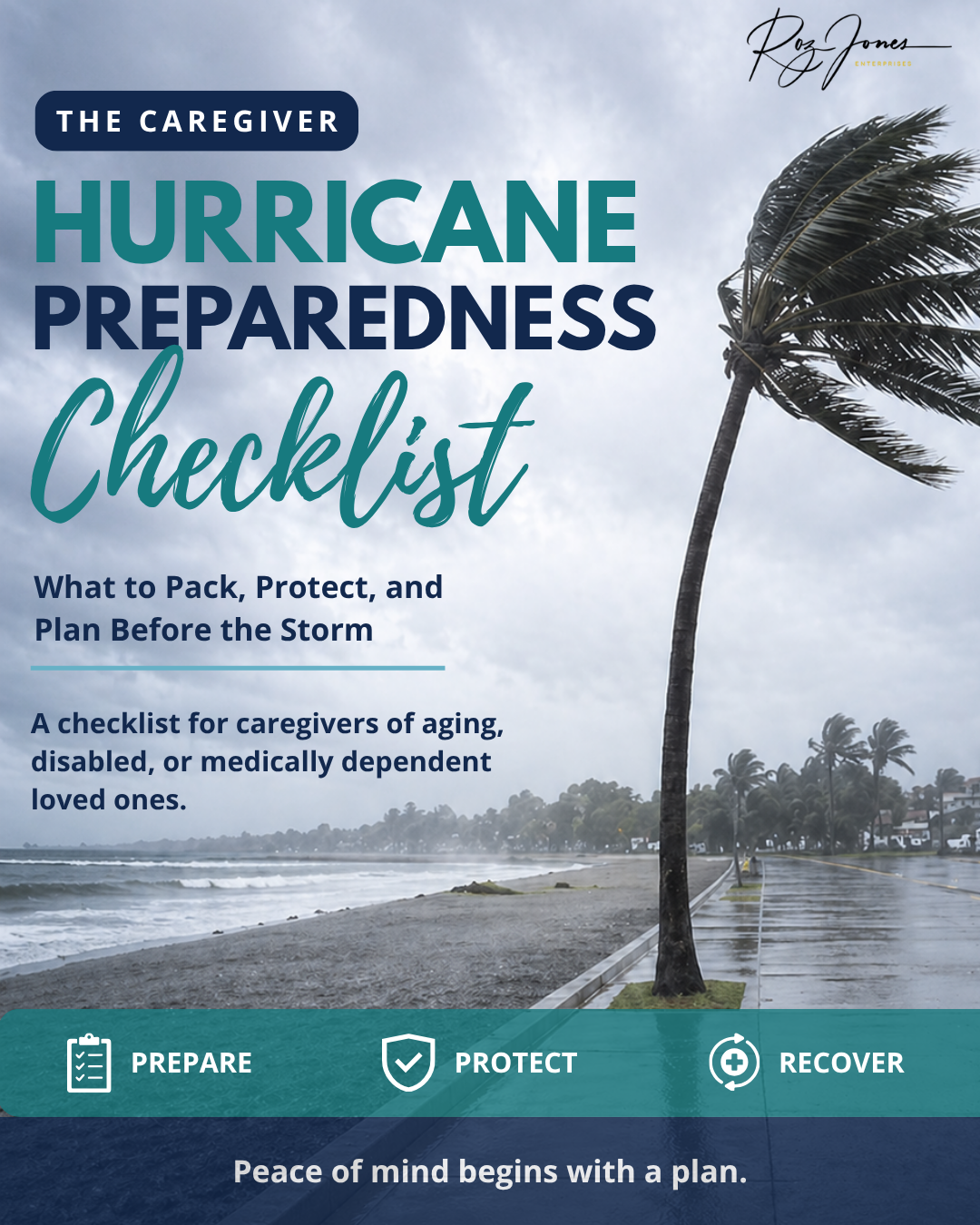
Severe weather can create additional risks for aging loved ones and family caregivers.
The Caregiver Hurricane Preparedness Checklist will help you organize emergency contacts, medications, medical information, evacuation needs, important documents and essential supplies before a storm arrives.
Need Help Sorting Through the Care Plan?

If your family needs help thinking through care decisions, caregiving responsibilities, or next steps, book a session with Roz Jones. You do not have to navigate this season alone.
Together, we can talk through what is working, what is becoming too heavy, and what boundaries need to be strengthened so you can continue to care without losing yourself in the process.
Subscribe to The Caregiver Cafe Weekly Newsletter!

1. YOU ARE NOT ALONE: The problems you face as a caregiver are experienced by other caregivers. Knowing that you’re not alone can be comforting.
2. Tools and Resources: Find caregiver stress management tools and gain perspective from other caregiver’s experiences.
3. LEARN TO: Ask for help, accept help when it is offered, and acknowledge yourself on this caregiving journey. Hear from experts on how to balance caregiving responsibilities by taking care of your needs and involving others to help manage the natural stress and isolation of being a caregiver.