

By Roz Jones
Caregiving often brings attention to the most visible needs of an aging loved one.
Families focus on medications, appointments, meals, mobility, safety, memory changes, transportation, and daily routines. These needs matter. They help keep a loved one safe, supported, and cared for.
But an aging loved one is more than a care schedule.
They are still a whole person with a history, a body, emotions, relationships, desires, and a need for dignity. As the body changes, intimacy may also change. But the need for affection, companionship, respect, privacy, and emotional connection does not disappear.
For caregivers, this can be a sensitive topic. It may feel too private to discuss, especially when caring for a parent, spouse, or older relative. But avoiding the conversation completely can cause families to overlook important parts of a loved one’s emotional and physical well-being.
Intimacy after 60 is not only about sex. It can include holding hands, sitting close, praying together, sharing memories, gentle touch, laughter, companionship, and feeling seen beyond a diagnosis or care need.
Caregiving that honors the whole person must also honor the need for connection.
Intimacy Is Part of Whole-Person Care
Whole-person care means looking beyond the diagnosis, the medication list, and the next appointment. It means remembering that aging loved ones still need emotional safety, belonging, affection, and dignity.
For some older adults, intimacy may include sexual expression. For others, it may look like tenderness, closeness, conversation, or quiet companionship. These expressions of intimacy can reduce loneliness and help a loved one feel valued.
When caregiving becomes task-focused, intimacy can unintentionally be pushed aside. A spouse may become more of a caregiver than a partner. Adult children may become so focused on safety that privacy is forgotten. Family members may assume that illness, age, or disability has removed the need for affection.
Those assumptions can leave aging loved ones feeling unseen.
The form of intimacy may change, but the need for connection remains.
Aging Can Affect Confidence, Health, and Desire
As men age, their bodies may change in ways that affect intimacy. Decreased stamina, changes in desire, erectile dysfunction, fatigue, pain, medication side effects, prostate concerns, diabetes, heart disease, depression, anxiety, or changes in body confidence can all play a role.
These concerns can be difficult for older men to discuss.
A man who has always seen himself as strong, independent, or capable may feel embarrassed when his body begins to respond differently. He may withdraw from his partner. He may avoid medical conversations. He may become quiet, frustrated, or distant because he does not know how to explain what has changed.
Caregivers should approach these changes with compassion, not shame.
Changes in intimacy may be connected to larger health concerns. A conversation with a healthcare provider can help determine whether medications, chronic conditions, stress, or other factors are affecting sexual health or emotional closeness.
The caregiver’s role is not to intrude into private matters. The caregiver’s role is to encourage dignity, respect, and appropriate medical support when concerns arise.
Communication Helps Preserve Dignity
Communication becomes even more important when aging, illness, or caregiving changes a relationship.
Couples may need to talk about comfort, desire, pain, fatigue, fear, limitations, and new ways to remain close. These conversations may feel uncomfortable, but silence can create distance. Honest communication can help both people adjust with more tenderness and less confusion.
When a spouse becomes a caregiver, the relationship may shift. The routines of care can affect romance, privacy, patience, and emotional connection. Both people may grieve what has changed while trying to understand what closeness can look like now.
That process requires grace.
For adult children and other family caregivers, communication must be handled with sensitivity. They do not need to know every private detail, but they can help create an environment where loved ones are treated with respect and where health concerns are not ignored because of embarrassment.
Dignity is protected when families understand that older adults still deserve privacy, affection, and choice.
Privacy Is Part of Good Care
Caregiving often requires help with personal tasks such as bathing, dressing, toileting, mobility, and medication routines. These moments can make privacy harder to protect, but they also make privacy more important.
Small actions matter.
Knocking before entering a room.
Explaining care tasks before beginning.
Offering choices when possible.
Covering the body during personal care.
Allowing the loved one to do what they safely can on their own.
These practices help preserve dignity.
Privacy also matters for couples. If an aging loved one has a spouse or partner, their relationship should still be respected. When safety allows, couples may need private time together, emotional closeness, and space to remain connected without feeling watched or managed.
Aging does not remove the right to dignity.
Emotional Wellness Shapes Intimacy
Stress, grief, anxiety, depression, loneliness, and exhaustion can affect intimacy. This is true for the person receiving care and for the caregiver.
A loved one may feel like a burden. A spouse may feel overwhelmed by the demands of caregiving. A caregiver may be physically present but emotionally depleted. These emotional realities can affect affection, patience, communication, and closeness.
Support can make a difference.
Counseling, support groups, respite care, spiritual guidance, medical conversations, and family support can help caregivers and loved ones process change instead of allowing stress and silence to take over.
Healthy intimacy does not require everything to be the way it used to be.
It requires compassion, patience, honesty, and a willingness to stay connected in a new season.
Redefining Intimacy in a New Season
Aging may require couples and families to redefine intimacy.
What once felt natural may need to be adjusted. Illness, disability, memory changes, fatigue, pain, or caregiving responsibilities may change what is possible. But those changes do not remove the need for closeness.
Redefined intimacy may include shared routines, gentle touch, sitting together, listening to music, looking through photographs, praying together, laughing, or simply being present. For some couples, physical intimacy may continue with communication and medical guidance. For others, emotional closeness may become the most meaningful expression of love.
The value of intimacy is not measured by performance.
It is measured by connection.
When care becomes demanding, simple expressions of affection can remind everyone that the relationship is still more than the illness, the schedule, or the next task.
A Continuation of Care, Connection, and Belonging
In the previous blog, Embracing Intimacy: Sex After 60 for the Distinguished Gentleman, we discussed how aging loved ones need connection, stimulation, safety, and belonging as their care needs change. This conversation continues that message by reminding caregivers that connection also includes intimacy, affection, privacy, and emotional closeness.
Alzheimer’s, chronic illness, mobility changes, and aging can all affect how a loved one experiences the world. Caregivers must continue creating environments where loved ones feel safe, respected, and included. That includes the physical space, the emotional atmosphere, and the way the family protects dignity.
Care That Honors the Whole Person
Caregiving is not only about helping someone get through the day.
It is about honoring the person within the care.
Aging loved ones need safety, but they also need tenderness. They need medical attention, but they also need emotional connection. They need support with daily tasks, but they also need privacy and respect. They need families who remember that aging does not erase the desire to be loved, valued, and treated as a whole person.
For male aging loved ones, conversations about intimacy and sexual health may carry added layers of pride, vulnerability, or discomfort. These conversations should be approached with compassion instead of embarrassment.
When caregivers respond with dignity, they create room for better health, stronger relationships, and a more respectful care environment.
Aging changes many things.
But it does not remove the need for connection.
Care that honors intimacy is care that honors humanity.
Tune in to The Caregiver Café Podcast

In the first episode of The Caregiver Café with Roz Jones, Roz welcomes listeners into a space created to serve those caring for sick, aging, or vulnerable loved ones.
Roz shares the personal story that started her caregiving journey and how one unexpected hospital visit showed her just how quickly life can change. Through her experience, she reminds families of the importance of having documentation in order, including advance directives, healthcare surrogates, and backup support before a crisis happens.
This episode is a warm introduction to Roz, her heart for caregivers, and the purpose of The Caregiver Café: to provide resources, encouragement, and practical support that helps reduce stress, overwhelm, and safety concerns along the caregiving journey.
Pull up a chair. Roz has a seat waiting for you.
Give Yourself a Moment of Grace

If you need encouragement for the emotional side of caregiving, purchase Roz Jones’ book, Moments of Grace. This book offers support, reflection, and reminders of grace for the caregiver who is carrying a lot.
This journal was created to help caregivers pause, breathe, reflect, and find strength in the middle of the caregiving journey.
Purchase Moments of Grace today and give yourself permission to breathe in the middle of the caregiving journey.
Prepare Before the Emergency Comes
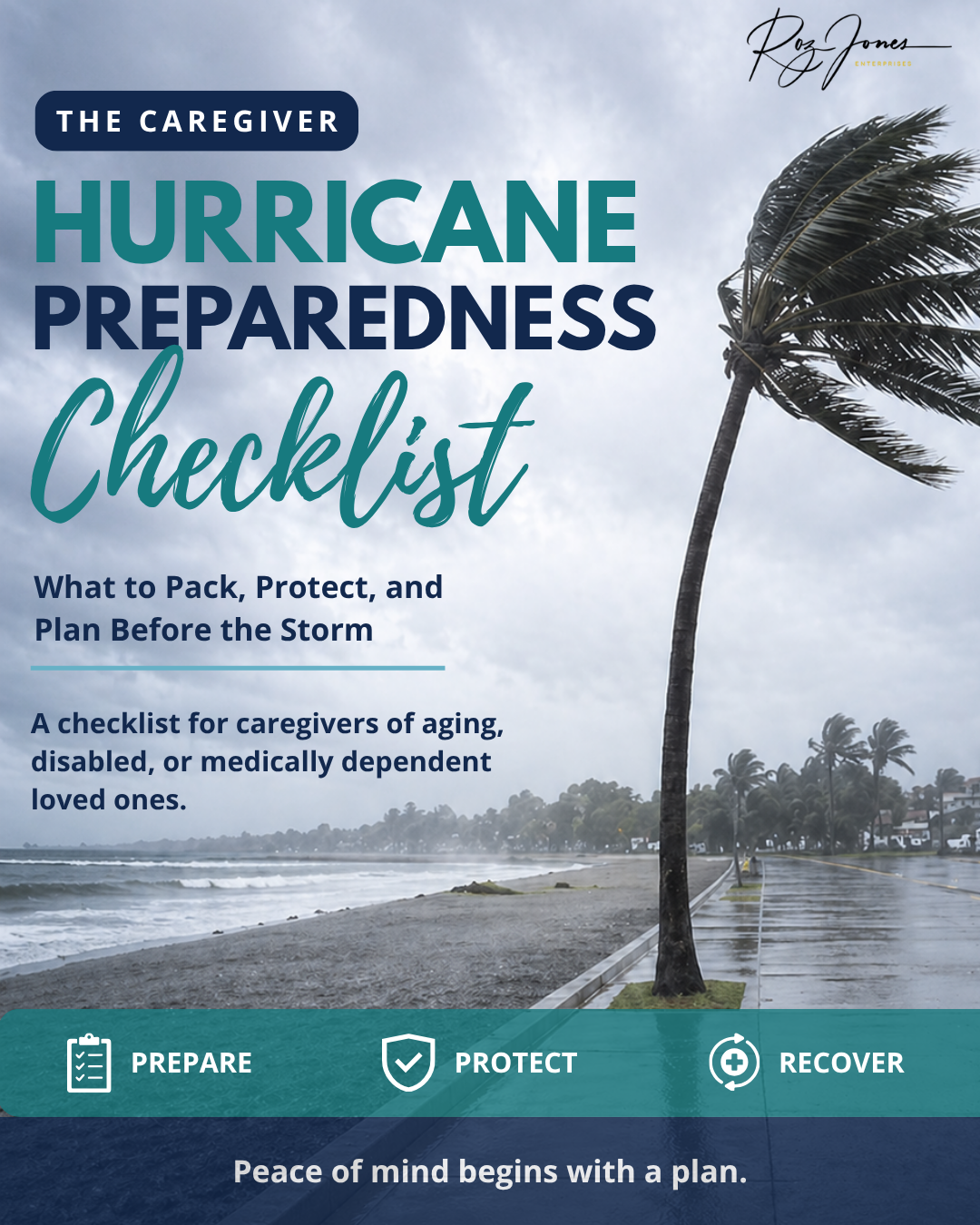
If you are caring for a loved one and want to be better prepared for storms, power outages, and unexpected caregiving emergencies, purchase the Caregiver Hurricane Preparedness Checklist. This resource can help you think through important details before a crisis is already at the door.
For only $1.99, this checklist gives you a simple starting point so you are not trying to gather everything during a storm, power outage, hospitalization, or sudden change in your loved one’s care.
Purchase the Caregiver Hurricane Preparedness Checklist for $1.99 today and take one more step toward peace of mind.
Need Help Sorting Through the Care Plan?

If your family needs help thinking through care decisions, caregiving responsibilities, or next steps, book a session with Roz Jones. You do not have to navigate this season alone.
Together, we can talk through what is working, what is becoming too heavy, and what boundaries need to be strengthened so you can continue to care without losing yourself in the process.
Subscribe to The Caregiver Cafe Weekly Newsletter!

1. YOU ARE NOT ALONE: The problems you face as a caregiver are experienced by other caregivers. Knowing that you’re not alone can be comforting.
2. Tools and Resources: Find caregiver stress management tools and gain perspective from other caregiver’s experiences.
3. LEARN TO: Ask for help, accept help when it is offered, and acknowledge yourself on this caregiving journey. Hear from experts on how to balance caregiving responsibilities by taking care of your needs and involving others to help manage the natural stress and isolation of being a caregiver.

