
By Roz Jones
Caregiving is already layered.
But when you are caring for a former spouse, there can be even more emotions, questions, and decisions sitting at the table with you.
You may no longer be married.
You may no longer share a home.
You may have rebuilt your life in a different direction.
And still, here you are, helping someone you once loved, built with, raised children with, or shared years of life with to navigate aging, illness, disability, or a season where they simply cannot manage everything on their own.
That is not always easy to explain to other people.
Some may ask, “Why are you doing all of that?”
Some may assume you are obligated.
Some may assume you should walk away.
But caregiving does not always fit neatly into people’s opinions.
Sometimes care comes with history.
Sometimes care comes with unfinished emotions.
Sometimes care comes with adult children, shared finances, medical decisions, family expectations, or old wounds that still need boundaries around them.
And if you are stepping into a caregiving role for a former spouse, I want you to hear me clearly:
You can care without losing yourself.
You can support without becoming financially responsible for everything.
You can show compassion without ignoring the legal, emotional, and practical realities of the situation.
Caregiving After Divorce Requires Clarity
In my previous blog, Legal and Financial Considerations for Caregiving for a Former Spouse, I talked about the importance of understanding legal authority, financial responsibilities, power of attorney, guardianship, insurance, long-term care coverage, and reimbursement options.
Those pieces matter.
Because love, history, guilt, or family pressure cannot replace paperwork.
If your former spouse becomes unable to make decisions, someone needs the legal authority to speak with doctors, access records, manage bills, handle insurance, or make care decisions.
And that “someone” may or may not be you.
That is why clarity is so important.
Before you step fully into the role, ask yourself:
- Do I have the legal authority to make decisions?
- Am I listed on any medical or financial documents?
- Are there adult children, siblings, or other relatives involved?
- Who is responsible for paying for care?
- What happens if their needs increase?
- What boundaries do I need in place?
- What am I willing to do, and what am I not willing to take on?
These questions may feel uncomfortable, but they are necessary.
Because caregiving without clarity can quickly become confusion.
And confusion can become conflict.
Do Not Let Emotions Replace a Care Plan
Let’s be honest.
Caring for a former spouse can stir up a lot.
Old love.
Old pain.
Old resentment.
Old loyalty.
Old guilt.
And sometimes, old family dynamics that everyone thought were done but somehow find their way back into the room.
That is why you need more than a kind heart.
You need a care plan.
A care plan helps you separate what is emotional from what is practical.
It helps you identify who is doing what, who needs to be contacted, where documents are stored, what medical conditions need to be monitored, what medications are being taken, and what needs to happen in an emergency.
This is especially important when other family members are involved.
If adult children are depending on you, if relatives are calling you for updates, or if your former spouse is relying on you more and more, everything needs to be documented.
Not because you are being cold.
Because you are being wise.
Protect Your Own Financial Well-Being
One of the biggest mistakes caregivers make is silently absorbing costs.
A prescription here.
Groceries there.
A bill that needs to be paid “just this once.”
Gas money.
Medical supplies.
Home repairs.
Transportation.
Emergency expenses.
And before you know it, you are financially involved in ways you never planned for.
When the person you are caring for is a former spouse, this can get even more complicated. There may be divorce agreements, shared property issues, old debts, benefits, insurance policies, or family expectations connected to the past.
Please do not guess your way through that.
Talk to a legal professional.
Talk to a financial advisor.
Keep receipts.
Document expenses.
Know what you are paying for and why.
And most importantly, know what you can afford to do without putting your own household, retirement, credit, or peace of mind at risk.
You are allowed to be generous.
But you are not required to become financially unstable in order to prove that you care.
Emergency Planning Matters, Too
Now let’s take this one step further.
Legal and financial planning is not only about doctor’s offices, bank accounts, and long-term decisions.
It also matters when an emergency happens.
A hurricane.
A power outage.
A hospitalization.
An evacuation.
A fall.
A sudden change in health.
A storm does not wait for families to figure out who has the paperwork.
An emergency does not pause while you search through drawers, text messages, file folders, or old emails trying to find the insurance card, medication list, emergency contacts, or advance directive.
That is why caregivers need to be prepared before the crisis comes.
If you are caring for a former spouse, ask:
- Where are their important documents?
- Who has access to them?
- Are copies stored digitally and physically?
- Who should be contacted first in an emergency?
- Do they have a current medication list?
- Do they use medical equipment that requires electricity?
- Do they have transportation if evacuation is needed?
- Are emergency contacts updated?
- Do family members know the plan?
These details may seem small until they are needed.
Then they become everything.
Boundaries Are Part of the Plan
I want caregivers to understand this:
Boundaries are not a lack of love.
Boundaries are structure.
And when you are caring for a former spouse, structure is what helps keep the care from becoming emotionally overwhelming or financially harmful.
You may need boundaries around time.
You may need boundaries around money.
You may need boundaries around communication.
You may need boundaries with adult children or extended family.
You may need boundaries around what you are willing to manage alone.
A simple boundary may sound like:
“I can help with appointments, but I cannot be responsible for paying medical bills.”
Or:
“I am willing to be part of the care team, but we need to include the children in these decisions.”
Or:
“I can help organize documents, but I need legal authority in place before I can speak with providers.”
Or:
“I want to support you, but I cannot be the only person responsible for this care plan.”
That is not being difficult.
That is being honest.
And honesty protects everyone.
Keep the Family Conversations Clear
If there are children involved, especially adult children, do not assume everyone is on the same page.
Caregiving can bring up old family roles quickly.
One person may think you are taking over.
Another may expect you to handle everything.
Someone else may disagree with your choices.
And the former spouse receiving care may have their own opinions, fears, and preferences.
This is why family care conversations matter.
Everyone needs to understand:
- What the care needs are
- What documents are in place
- Who has decision-making authority
- Who is responsible for what
- What financial resources are available
- What emergency plan needs to be followed
- What support the caregiver needs
The goal is not to control everyone.
The goal is to reduce confusion before confusion becomes a crisis.
Need Help Getting Prepared?
If you are caring for an aging loved one, a former spouse, or someone whose care needs are becoming more complex, now is the time to get organized.
Do not wait until the storm is already here.
Do not wait until the hospital calls.
Do not wait until the family is confused and emotions are high.
Start with a plan.
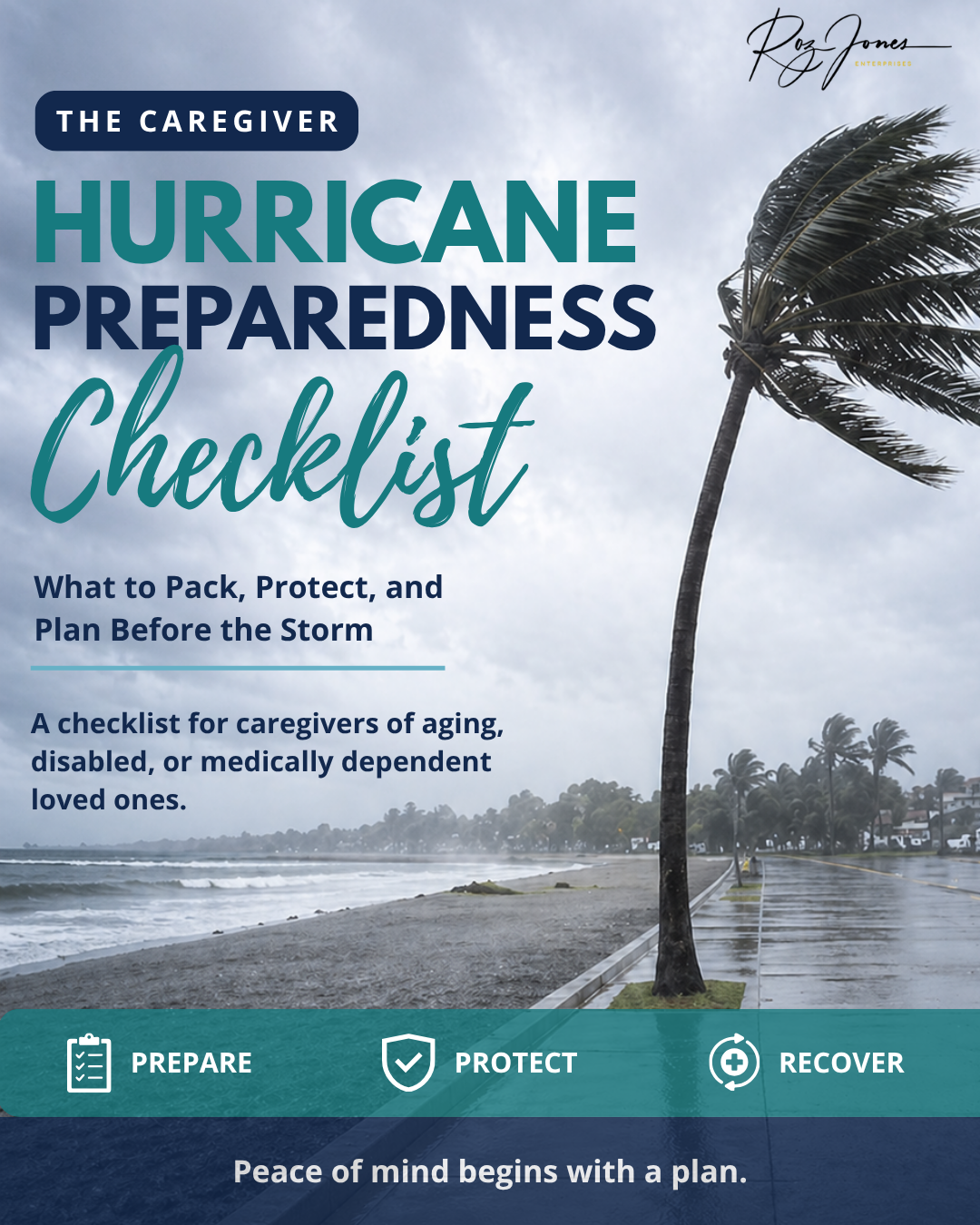
To help you prepare, I created the Caregiver Hurricane Preparedness Checklist, a simple and practical resource to help caregivers organize the essentials before an emergency happens.
For only $1.99, you can use this checklist to think through important documents, medications, emergency contacts, evacuation needs, supplies, and care details that should not be left to memory.
When You Can’t Do it All Give Roz a Call!

If you need more personalized support, I invite you to book a Family Care Planning Session with me.
Together, we can talk through your caregiving situation, identify what needs to be organized, and create a plan that supports your loved one without leaving you overwhelmed, confused, or carrying everything by yourself.
Subscribe to The Caregiver Cafe Weekly Newsletter!

1. YOU ARE NOT ALONE: The problems you face as a caregiver are experienced by other caregivers. Knowing that you’re not alone can be comforting.
2. Tools and Resources: Find caregiver stress management tools and gain perspective from other caregiver’s experiences.
3. LEARN TO: Ask for help, accept help when it is offered, and acknowledge yourself on this caregiving journey. Hear from experts on how to balance caregiving responsibilities by taking care of your needs and involving others to help manage the natural stress and isolation of being a caregiver.