Reducing the Mental Load During the School Year

By Roz Jones

A busy caregiving day doesn’t only require your time. It requires you to make decisions from the moment you wake up.

What is everyone eating for breakfast? Did the school form get signed? Does Mom have enough medication for the week? Who is handling pickup? Should that doctor’s appointment be rescheduled? What needs to come out of the freezer for dinner? Did someone call the insurance company back? Who can stay with your loved one during the parent-teacher conference?

One decision may not feel like much. Fifty of them before dinner is something different.

For caregivers balancing an aging loved one’s needs with children, work, household responsibilities, and the school-year schedule, protecting your well-being may require more than finding time to relax. Sometimes you need to reduce how much your brain is being asked to manage in the first place.

Create Defaults for the Decisions You Make Repeatedly

Not every decision deserves fresh energy every day.

If you’re standing in the kitchen every evening trying to figure out dinner while helping with homework and checking on an aging loved one, create a few meals that become your defaults on busy nights.

The same approach can work throughout the week.

Maybe medications are refilled on the same day each month.

Maybe groceries are ordered every Thursday.

Maybe school paperwork is reviewed on Sunday evening.

Maybe your loved one’s transportation is arranged at the beginning of the week instead of one appointment at a time.

Defaults don’t mean your household has to become rigid. They simply remove some of the repeated decisions that keep taking up mental space.

The less energy you spend deciding the same things over and over again, the more you have available for the situations that actually require your attention.

Stop Being the Family’s Only Reminder System

Caregivers often become the person who remembers everything.

You remind the children about assignments.

You remind your loved one about appointments.

You remind family members when they’re supposed to help.

You remind yourself about medications, bills, transportation, paperwork, groceries, school events, and everything else that needs to happen.

That is a lot of information for one person to carry.

Use a shared calendar when it makes sense. Set recurring reminders for tasks that happen regularly. Put important school dates, medical appointments, prescription refills, and family responsibilities somewhere other people can see them.

If another adult has agreed to handle something, let that responsibility belong to them.

You should not have to remember their responsibility so you can remind them to complete it.

Decide What Someone Else Can Decide

Delegating a task can still leave the caregiver carrying the mental work behind it.

Someone may agree to buy groceries, but you’re still making the list, checking the refrigerator, choosing the brands, answering questions from the store, and telling them where everything goes when they return.

Technically, you received help.

Mentally, you were still managing the task.

When possible, delegate the decision along with the responsibility.

Instead of saying, “Can you pick up something for dinner?” try giving someone responsibility for dinner that night.

Instead of asking a family member to call the pharmacy after you’ve already figured out what needs to be refilled, let them take responsibility for monitoring and picking up one recurring prescription if that’s appropriate for your care situation.

Support becomes more meaningful when it actually removes something from your mind.

Put Limits on How Available You Are

Phones have made it possible for caregivers to be reachable almost every minute of the day.

The school sends an email.

The patient portal sends a notification.

A family member texts.

The pharmacy calls.

Another relative wants an update.

A teacher posts something.

The calendar sends another reminder.

Being informed is important. Being interrupted every few minutes is exhausting.

Not every notification needs your immediate response.

Unless you’re waiting for something urgent, consider checking non-emergency email, school messages, or family updates at specific times instead of responding every time your phone makes a sound.

If family members routinely call you for information they could find elsewhere, create another way for those updates to be shared.

The goal isn’t to become unavailable.

It’s to stop treating every incoming message like an emergency.

Make the Next Day Easier Before It Begins

A small amount of preparation can remove several decisions from the next morning.

Look at tomorrow’s schedule before the evening gets away from you.

Does your loved one have an appointment?

Do the children need anything different for school?

Does someone need transportation?

Are medications or supplies running low?

Is there a conflict you can solve tonight instead of discovering it at 7:15 tomorrow morning?

This doesn’t require spending an hour organizing the entire household every night.

Five or ten minutes may be enough to identify the one thing that could make tomorrow unnecessarily difficult.

You’re not trying to control everything that might happen.

You’re simply reducing the number of surprises you can reasonably prevent.

Pay Attention When Simple Decisions Start Feeling Hard

One sign that your mental load is becoming too heavy can be difficulty making even small decisions.

You stare into the refrigerator and cannot decide what to eat.

Someone asks what time works for you, and the question feels irritating.

You reread an email three times without absorbing it.

You walk into a room and forget why you went there.

You become frustrated because someone asks you one more question.

Those moments don’t automatically mean something is seriously wrong. But they can be a signal that your brain has been carrying too much for too long.

Caregiving can involve significant emotional, physical, financial, and logistical demands, especially when one person becomes responsible for coordinating multiple parts of a loved one’s care. Roz’s current Caregiver Café content increasingly reflects that reality: caregiving today often includes care coordination, family communication, medical advocacy, financial management, and daily decision-making alongside the visible hands-on work.

Pay attention before overwhelm becomes your normal.

Protect Your Mental Energy, Not Just Your Time

Here’s the shift I want to encourage: when you’re looking at your schedule, don’t only ask, Do I have enough time to do this?

Ask, Do I have the mental capacity for this too?

You can technically have thirty open minutes and still be exhausted.

You can finish everything on the list and still have nothing left for yourself.

You can manage the school schedule, caregiving responsibilities, meals, appointments, work, transportation, and household needs and still recognize that the way you’re managing them is taking too much out of you.

Self-care during a busy school year is not always about adding another activity to the calendar.

Sometimes it’s deciding fewer things.

Remembering fewer things.

Managing fewer things that someone else could manage.

Creating routines that reduce unnecessary mental work.

And recognizing that your mind needs breathing room just as much as your body needs rest.

Keeping your rhythm as a caregiver doesn’t mean moving at the same pace all day, every day. It means creating a rhythm you can actually sustain.

For the beginning of this conversation, read The ABCs of Caregiving: Keeping Your Rhythm, and explore the earlier blog, Self-Care Ideas for Caregivers During the School Year..

Prepare for Your Next Trip

Planning to travel with an aging loved one? Download the free Vacationing with an Aging Loved One Checklist to help you prepare for medications, mobility needs, comfort, safety, and unexpected changes.

Tune in to The Caregiver Café Podcast

Dad’s Dementia: Grieving the Living with Phil Hill

In this episode of The Caregiver Café with Roz Jones, Roz is joined by security expert and former family caregiver Phil Hill for an honest conversation about caring for a parent through cognitive decline, dementia, and the final years of life.

Phil shares how he first began noticing changes in his father, including confusion, difficulty navigating familiar places, changes in his appearance, and trouble managing responsibilities that had once been routine. Those early signs led to doctor visits, cognitive testing, difficult decisions about driving, and eventually moving his father into his home.

As the primary caregiver, Phil had to learn how to coordinate support among family members while also caring for his wife, his children, his business, and himself. He explains how even small contributions from relatives, such as taking his father to the barber shop, spending an afternoon with him, or providing companionship, gave him valuable moments of rest.

Roz and Phil also discuss the emotional side of caregiving. Watching a parent decline can bring grief long before the person passes away. Caregivers may lose sleep, experience exhaustion, make difficult safety decisions, and manage behaviors their loved one may not fully understand or remember.

Give Yourself a Moment of Grace

Caregiving includes demanding days, unexpected changes, and moments of connection that may be easy to overlook. Moments of Grace offers encouragement to caregivers who need a reminder to pause and recognize the meaningful moments along the journey.

Preparing for hurricane season?
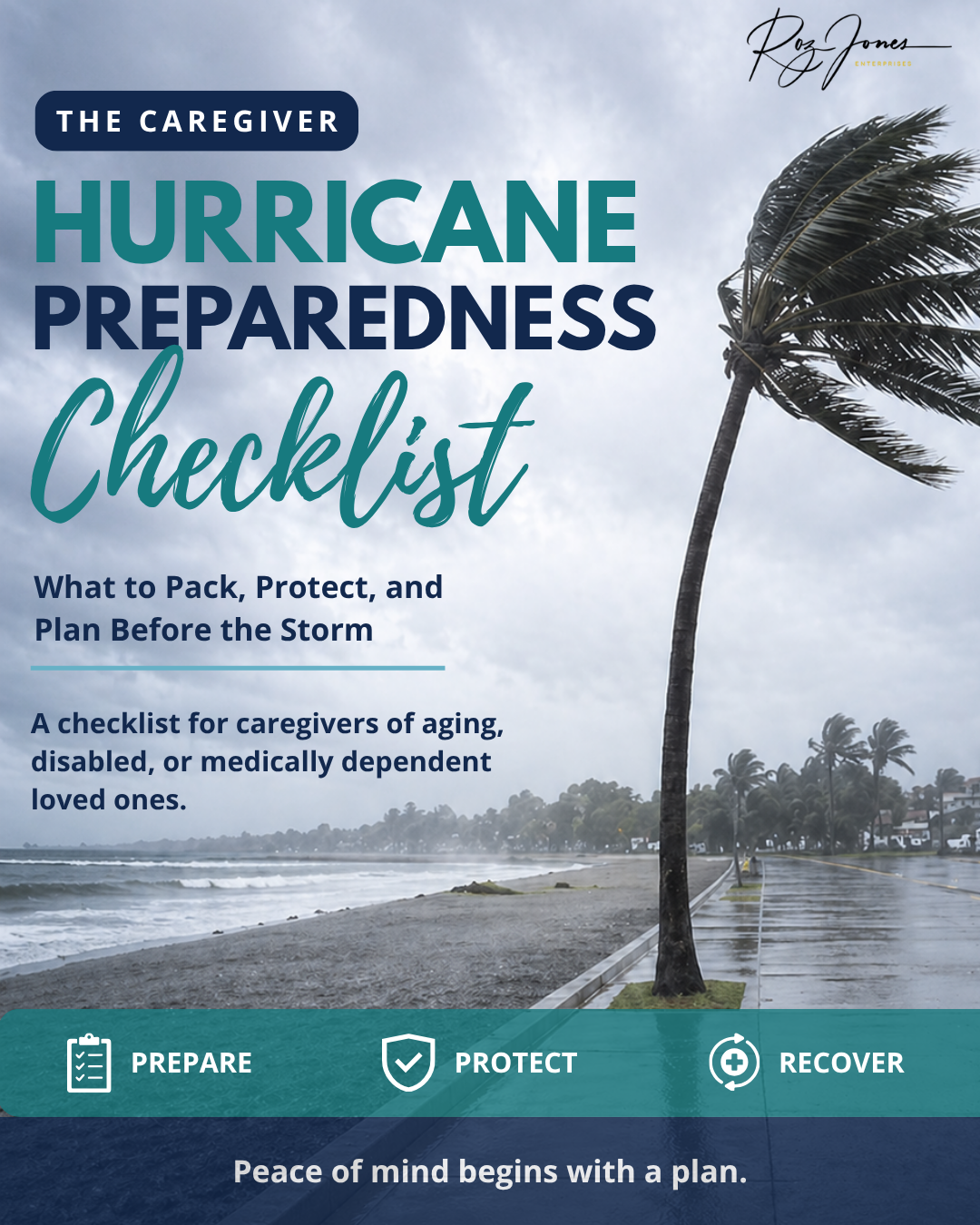
The Caregiver Hurricane Preparedness Checklist.

Are you preparing for hurricane season? Purchase the Caregiver Hurricane Preparedness Checklist to organize the information and supplies your family may need before severe weather arrives.

Subscribe to The Caregiver Cafe Weekly Newsletter!

Caregiving can be a roller coaster of ups and downs. The information that you will receive from The Caregiver Cafe Weekly Specials Newsletter will support you as a caregiver. Remember…

1. YOU ARE NOT ALONE: The problems you face as a caregiver are experienced by other caregivers. Knowing that you’re not alone can be comforting. 

2. Tools and Resources:  Find caregiver stress management tools and gain perspective from other caregiver’s experiences.

3. LEARN TO: Ask for help, accept help when it is offered, and acknowledge yourself on this caregiving journey. Hear from experts on how to balance caregiving responsibilities by taking care of your needs and involving others to help manage the natural stress and isolation of being a caregiver. 

Caregiving Needs Better Systems

By Roz Jones

Most caregivers are not dealing with one distraction at a time. 

They are answering calls between meetings, tracking medications while making dinner, trying to remember appointment details, responding to family members, checking in on an aging loved one, and still attempting to hold together the rest of their own lives. Caregiving today often happens in the middle of everything else, which is exactly why so many caregivers feel mentally overloaded before the day is even over.

Technology cannot remove the emotional weight of caregiving. It cannot replace presence, patience, or support. But it can help reduce some of the clutter, create more structure, and make daily caregiving responsibilities feel a little more manageable.

Technology Is Not the Answer to Everything

Let’s start there.

Technology is a tool, not a cure-all.

It cannot make hard decisions for you. It cannot solve grief, family tension, or the stress of watching someone you love need more help than they used to. And not every app, device, or system will work for every family.

But the right tools can reduce friction.

They can help you remember what needs to happen.
They can make communication easier.
They can support your aging loved one’s safety and independence.
They can help you stop carrying every detail in your head.

The Best Caregiving Tech Is Usually Simple

A few years ago, a blog like this might have focused mostly on listing caregiver apps. But caregiving has changed, and technology changes fast too. The better question now is not, “What app should I download?” It is, “What systems will actually make this easier?”

Most caregivers do not need more digital clutter. They need tools that reduce confusion and help them stay organized in real life.

Technology Tools That Can Lighten the Load

Not every caregiver needs a dozen new apps. In most cases, a few simple tools can make daily life feel more manageable. The goal is not to add more noise. It is to reduce the mental clutter, missed details, and constant back-and-forth that caregiving can create.

  • Shared calendar tools
    • One of the biggest sources of caregiver stress is trying to remember everything. Appointments. Medication refill dates. Transportation plans. Follow-up calls. Family updates. It adds up quickly.
    • A shared digital calendar can help keep those details in one place. This can be especially useful when more than one family member is involved in care, even if one person is still managing most of it.
  • Medication reminder apps
    • Medication management can become one of the most stressful parts of caregiving, especially when prescriptions change, refill timing gets complicated, or your loved one is managing multiple medications at once.
    • Medication reminder tools can help with alarms, refill tracking, and keeping an updated list of prescriptions. The Family Caregiver Alliance notes that digital medication tools can support pill identification, scheduling, and reminder systems, and AARP has highlighted Medisafe (Iphone /Android) as one current free option caregivers use for medication tracking.
  • Care coordination apps
    • Some caregivers need one central place to organize tasks, updates, and support from others. AARP has highlighted tools such as CaringBridge for updates and support, and Caring Village for coordinating tasks, roles, and communication among a care team. These kinds of tools can be helpful when several people want to support your loved one but communication is scattered or inconsistent.
  • Voice assistants and smart speakers
    • Voice assistants can be useful for reminders, hands-free calls, medication prompts, music, or simple daily routines. AARP notes that smart home technology can help older adults stay independent longer and can give caregivers oversight without feeling overly intrusive. For some families, something as simple as a spoken reminder can reduce daily stress in a meaningful way.
  • Smart home safety tools
    • Depending on your loved one’s needs, tools like video doorbells, motion sensors, smart lights, smart locks, fall alerts, and medical alert systems may help support safety at home. AARP recommends these kinds of tools as part of aging in place support and notes they can make daily life easier for both older adults and caregivers. Not every household needs all of this. Sometimes one or two simple tools can make a meaningful difference.
  • Telehealth and patient portals
    • For many families, healthcare communication looks different now than it did a few years ago. Telehealth can be helpful for routine follow-ups, mental health support, medication conversations, and appointments that do not require travel. Patient portals can also make it easier to review test results, request refills, track provider messages, and keep appointment information in one place. Caring.com lists virtual medicine and health tracking among the most useful tech categories for caregivers. Even if your aging loved one is not managing these systems independently, you may still be able to use them to reduce back-and-forth and stay more organized yourself.
  • Group messaging or shared notes
    • Sometimes the most helpful tool is not a caregiving app at all. A shared notes app, family group text, or simple digital checklist can reduce repetition and make it easier to keep everyone informed without having to explain the same thing over and over again. CaringBridge also notes that task-management tools for scheduling, medication reminders, and organization can be valuable for family caregivers.
  • Budget and bill-tracking tools
    • When caregiving includes helping with expenses, subscriptions, or household bills, digital budgeting tools can make that easier to monitor. AARP has highlighted tools such as Monarch Money, Quicken Simplifi, Rocket Money, and YNAB for tracking spending and spotting unusual transactions.This can be especially helpful when you are helping manage someone else’s household while trying to keep up with your own.
  • Use what already exists on your phone
    • Sometimes caregivers do not need another app. AARP notes that many built-in smartphone features can improve accessibility, reminders, and ease of use. In some families, the best tool may simply be using alarms, shared reminders, notes, and contact shortcuts more intentionally.

Support does not have to be fancy to be effective.

Not Every Tool Will Work for Every Family

It is important to stay grounded here.

A tool is only helpful if it is accessible, affordable, understandable, and usable in your actual daily life.

Sometimes the right support is digital.
Sometimes it is a paper planner and one reliable reminder system.
Sometimes it is keeping things simple enough that everyone involved can actually follow through.

Support does not have to be trendy to be effective.

Start with the Problem, Not the Product

Before downloading another app or buying another device, pause and ask yourself:

What is the actual problem we are trying to solve?

Is it missed medications?
Difficulty keeping up with appointments?
Trouble updating family members?
Safety concerns at home?
Losing track of paperwork?
Feeling like every task is living in your head?

When you start with the problem, you are much more likely to choose a tool that truly helps instead of adding more clutter.

Technology Should Lighten the Load

Caregiving can already feel like too many tabs open in your mind at once.

The best technology should not create more work. It should help you close a few tabs.

It should help you feel more organized.
More supported.
Less scattered.
Less alone in managing all the moving pieces.

That is the real value.

Not doing more.
Doing what matters with more clarity.If this blog spoke to where you are right now, be sure to read the earlier blog, Technology as a Tool for Caregivers to Manage Daily Distractions,” for a deeper look at how everyday interruptions can wear caregivers down over time. It is a helpful companion to this conversation and offers more context for why support systems matter so much.

When You Can’t Do it All Give Roz a Call!

Roz Jones is a dedicated caretaker turned CEO with over a decade of experience in helping families care for and make decisions for loved ones and their legacies.Roz is a compassionate, innovative healthcare industry leader.

If your family is managing too many moving parts without enough structure, book a family care planning session with Roz Jones for support in creating a clearer, more manageable plan.

Purchase the Caregiving & Advance Health Directives Checklist!

Roz Jones Enterprises Caregiving & Advance Health Directives Checklist.

If you are ready to get organized around important care decisions and next steps, purchase the Advanced Directives Checklist to help your family move forward with more clarity and confidence.

Subscribe to The Caregiver Cafe Weekly Newsletter!

Caregiving can be a roller coaster of ups and downs. The information that you will receive from The Caregiver Cafe Weekly Specials Newsletter will support you as a caregiver. Remember…

1. YOU ARE NOT ALONE: The problems you face as a caregiver are experienced by other caregivers. Knowing that you’re not alone can be comforting. 

2. Tools and Resources:  Find caregiver stress management tools and gain perspective from other caregiver’s experiences.

3. LEARN TO: Ask for help, accept help when it is offered, and acknowledge yourself on this caregiving journey. Hear from experts on how to balance caregiving responsibilities by taking care of your needs and involving others to help manage the natural stress and isolation of being a caregiver. 

The Mental Load of Caregiving Today

By Roz Jones

If you have not yet read my earlier blog, The Challenges of Daily Distractions for Caregivers,”  I encourage you to start there first. It offers an important foundation for understanding how everyday interruptions can affect the caregiving experience. This blog builds on that conversation and takes a closer look at what caregiving overload can look like today.

Caregiving has always required patience, flexibility, and attention. But for many caregivers of aging loved ones, today’s distractions are not minor interruptions. They are constant demands coming from every direction.

It is the doctor’s office calling while you are at work.
It is the pharmacy delay, the stack of paperwork, the reminder about an appointment, the text you forgot to answer, the bills that still need to be paid, and the growing list of things that all feel urgent at once.

This is one of the hardest parts of caregiving that people do not always see.

The stress is not only in the physical tasks. It is in the mental load of trying to remember everything, respond to everything, and stay emotionally present while life keeps moving around you.

Distractions Look Different Now

For many caregivers, daily distractions used to mean household chores, phone calls, or trying to balance a busy schedule.

Now, distractions often come layered with responsibility. You may be coordinating care, tracking medications, handling technology, communicating with providers, keeping up with family updates, managing your own responsibilities, and still trying to make thoughtful decisions for your aging loved one.

That kind of pressure can wear you down.

It becomes harder to focus. Harder to rest. Harder to feel like you are doing enough, even when you are doing far more than most people realize.

The Mental Load Is Real

Caregivers of aging loved ones are often carrying an invisible workload that follows them everywhere.

You may be sitting in a meeting while thinking about test results.
You may be running errands while mentally reviewing prescriptions.
You may be trying to relax at home while wondering what tomorrow will bring.

Even when you are not actively caregiving in the moment, caregiving is often still running in the background of your mind.

That kind of constant mental switching can lead to exhaustion, forgetfulness, irritability, and guilt. It can also make you feel like you are never fully present anywhere.

And that often means you are overloaded.

When Everything Feels Important

One of the most difficult parts of caregiving is that so many things do matter.

Your loved one’s health matters.
Their comfort matters.
Their paperwork matters.
Their safety matters.
Your own life responsibilities still matter too.

When everything feels important, it can become difficult to tell what needs immediate attention and what can wait. That is where overwhelm tends to grow. Not because caregivers do not care, but because they care deeply about so much at once.

What Can Actually Help

There may not be a way to eliminate every distraction, but there are ways to reduce the pressure and create more steadiness in your day.

  • Get things out of your head
    • Do not rely on memory alone. Keep one central place for appointments, questions, medication notes, reminders, and follow-up tasks. Whether that is a notebook, planner, or digital note system, the goal is to stop carrying everything mentally.
  • Separate urgent from non-urgent
    • Not every interruption needs an immediate response. Some things are truly time-sensitive. Some things are simply demanding your attention. Learning the difference can protect your energy.
  • Batch what you can
    • Try setting aside specific times for calls, paperwork, scheduling, or errands related to caregiving. Even if your day cannot be perfectly structured, grouping a few tasks together can reduce some of the mental strain.
  • Ask for specific help
    • General offers of support can be hard to use. Specific requests are easier. Ask someone to pick up groceries, sit with your loved one for an hour, make one phone call, or handle one errand. Small practical help can make a real difference.
  • Respect your own capacity
    • Caregivers often push themselves past their limits and call it love. But sustainable care requires honesty about what you can carry. Boundaries are not selfish. They are part of caring well.

Planning Can Reduce the Noise

A major source of distraction in caregiving is uncertainty.

When there is no clear plan, everything feels more urgent.
When responsibilities are not clearly shared, one person often ends up holding too much.
When important decisions and documents are left unaddressed, everyday stress grows even heavier.

That is why care planning matters.

It helps families get clearer about next steps, responsibilities, priorities, and preferences before everything becomes a crisis. It also gives caregivers a stronger sense of direction, which can reduce the constant feeling of scrambling.

You Were Never Meant to Hold It All Alone

If caregiving has left you feeling scattered, exhausted, or like your mind is always in ten places at once, you are not alone.

So many caregivers of aging loved ones are trying to manage more than one person should have to manage without enough support, enough clarity, or enough room to breathe.

That is why it is so important to name what is happening honestly. These are not just distractions. They are competing demands, emotional labor, and ongoing care responsibilities that can easily become too much without support.

You do not need to wait until things get worse to create more structure and relief. If you have not already, take a moment to read The Challenges of Daily Distractions for Caregivers for the earlier part of this conversation. It is a helpful starting point for understanding how everyday caregiving interruptions can affect your well-being and your ability to stay grounded.

When You Can’t Do it All Give Roz a Call!

Roz Jones is a dedicated caretaker turned CEO with over a decade of experience in helping families care for and make decisions for loved ones and their legacies.Roz is a compassionate, innovative healthcare industry leader.

If your family is feeling overwhelmed or unprepared, this may be the right time to put a clearer plan in place. Book a family care planning session with Roz Jones for support in navigating caregiving responsibilities, conversations, and next steps.

Purchase the Caregiving & Advance Health Directives Checklist!

Roz Jones Enterprises Caregiving & Advance Health Directives Checklist.

If you are ready to begin organizing important decisions and documents, purchase the Advanced Directives Checklist to help your family move forward with more clarity and confidence.

Subscribe to The Caregiver Cafe Weekly Newsletter!

Caregiving can be a roller coaster of ups and downs. The information that you will receive from The Caregiver Cafe Weekly Specials Newsletter will support you as a caregiver. Remember…

1. YOU ARE NOT ALONE: The problems you face as a caregiver are experienced by other caregivers. Knowing that you’re not alone can be comforting. 

2. Tools and Resources:  Find caregiver stress management tools and gain perspective from other caregiver’s experiences.

3. LEARN TO: Ask for help, accept help when it is offered, and acknowledge yourself on this caregiving journey. Hear from experts on how to balance caregiving responsibilities by taking care of your needs and involving others to help manage the natural stress and isolation of being a caregiver.