When Help Is on the Way: What Caregivers Can Do First

By Roz Jones

Emergencies do not always begin with a warning.

Sometimes, they happen in the middle of an ordinary day.

A loved one clutches their chest.
Someone starts choking at the table.
A fall happens in the hallway.
Breathing suddenly changes.
A person becomes confused, weak, or unresponsive.
Panic enters the room before anyone knows what to do next.

And in that moment, the person nearby may be the one who makes the first lifesaving difference.

That is why this conversation matters.

In the first blog, we talked about CPR, AED training, and why lifesaving skills belong in every home where someone is supporting an aging loved one, spouse, parent, relative, or person with ongoing health needs.

Now, I want to take that conversation one step further.

Because help may be on the way. But what you do before help arrives can matter.

The First Few Minutes Can Feel Overwhelming

When an emergency happens, your mind can move in every direction.

You may be trying to call 911.
Calm your loved one.
Unlock the front door.
Find medication bottles.
Answer the dispatcher’s questions.
Remember the last doctor’s instructions.
Tell another family member what happened.
Keep yourself from falling apart.

That is a lot to manage when fear is sitting in the room.

This is why preparation matters.

Not because you expect something bad to happen.

But because when something does happen, you do not want to be searching for information that should already be easy to find.

Every home should have basic emergency information in one place:

Current medication list.
Known allergies.
Primary doctor and specialist contacts.
Emergency contacts.
Insurance information.
Advance directives or important medical documents.
Major diagnoses or health conditions.
Preferred hospital, if applicable.
Instructions for medical equipment in the home.

It does not have to be fancy. It just has to be clear, updated, and easy for someone else to use if you are not available.

Call 911 and Listen Closely

In an emergency, one of the first things to do is call 911 or tell someone else to call.

Then listen.

The dispatcher may ask questions that feel repetitive, but they are trying to understand what is happening and guide the response.

Put the phone on speaker if you can.
Stay near your loved one.
Follow instructions as calmly as possible.
Send someone to unlock the door.
Move pets out of the way.
Turn on the porch light if it is dark.
Have someone flag down emergency responders if needed.

These small actions can help first responders reach your loved one faster and with fewer obstacles.

And remember this: you do not have to know everything. The dispatcher is there to help guide you through the next step.

CPR and AED Training Still Matter

Let me say this plainly: watching a video is not the same as hands-on training.

Videos can help you understand the basics. But training gives your body a chance to practice, and practice builds confidence.

The American Heart Association says high-quality adult CPR includes chest compressions at a rate of 100 to 120 compressions per minute and a depth of at least 2 inches for an average adult. AEDs are also important because they can help restore a normal heart rhythm during sudden cardiac arrest.

The American Red Cross offers First Aid/CPR/AED courses, including blended learning options, and successful completion can provide a two-year certification.

If you are often the one present with your loved one, CPR and AED training should be on your list.

Know Where the AED Is Before You Need It

An AED, or automated external defibrillator, is designed to help during sudden cardiac arrest.

You may see AEDs in churches, community centers, gyms, airports, schools, offices, senior centers, and public buildings.

But here is the problem: in a crisis, people often do not know where the AED is.

So before an emergency happens, start noticing.

Where is the AED at church?
Where is it at your loved one’s senior center?
Where is it at work?
Where is it at the gym?
Where is it in the community building?

Ask. Look. Make a mental note.

When every second counts, knowing where to go matters.

Choking, Falls, and Medication Emergencies Need Attention Too

When people think about lifesaving skills, they often think about CPR first.

And yes, CPR matters.

But families also need to prepare for other common emergencies.

Choking can happen during meals, especially if a loved one has swallowing difficulties, dental issues, neurological changes, or certain medical conditions.

Falls can happen in bathrooms, bedrooms, stairways, kitchens, and porches.

Medication mistakes can happen when prescriptions change, bottles look alike, or more than one person is helping.

Breathing concerns, confusion, sudden weakness, slurred speech, severe pain, and changes in consciousness should never be brushed off.

The American Heart Association’s 2025 updates include expanded guidance around choking, suspected opioid overdose, and cardiac emergencies, which is a reminder that first aid knowledge needs to stay current.

This is why I encourage families to think beyond one skill.

CPR is important.

But so is first aid.
So is medication organization.
So is fall prevention.
So is knowing when to call 911.
So is having documents ready.
So is making sure the family knows the plan.

Do Not Let One Person Hold the Whole Emergency Plan

Too often, one person knows everything.

Where the medicine is.
Who the doctor is.
What the diagnosis means.
What the insurance covers.
Where the paperwork is.
Who to call first.
What happened at the last appointment.

That may work on a regular day.

It does not work well in a crisis.

What happens if that person is at work?
What happens if their phone dies?
What happens if they are out of town?
What happens if they are the one who gets sick?

Families need shared information.

That does not mean everybody needs access to every private detail. But the right people should know where to find emergency instructions, medical contacts, and important documents.

This is not about fear.

This is about reducing confusion.

Because when everyone has to guess, precious time can be lost.

Keep the Home Ready for First Responders

Emergency preparation is not just about documents and training.

It is also about access.

Can first responders get through the front door?
Is the house number easy to see from the street?
Is there a clear path through the home?
Are rugs, cords, or clutter creating fall risks?
Is medical equipment easy to identify?
Is there a list of medications nearby?
Does someone know how to secure pets quickly?

These details may seem small until an emergency happens.

Then they become important.

A prepared home helps everyone respond faster.

Preparation Is an Act of Love

Some people avoid emergency planning because it feels uncomfortable.

Nobody wants to imagine a heart emergency, choking, hospitalization, a fall, storm damage, evacuation, or sudden decline.

I understand that.

But avoiding the conversation does not protect the family.

Preparation does.

Preparation says:

“I love you enough to plan ahead.”
“I care enough to learn what to do.”
“I want us to be ready, not scrambling.”
“I want first responders to have what they need.”
“I want our family to have less confusion in a hard moment.”

You do not have to do everything in one day.

Start with one step.

Sign up for CPR and First Aid training.
Update the medication list.
Put emergency contacts where they can be found.
Make sure medical documents are easy to access.
Talk to the family about who does what in a crisis.
Review emergency supplies before storm season.
Ask where the AED is in the places your loved one visits often.

Small steps can make a real difference.

Be Ready Before the Moment Comes

The goal is not to live in fear.

The goal is to live with wisdom.

When someone depends on you, preparation becomes part of care.

Not just meals.
Not just appointments.
Not just transportation.
Not just medication reminders.

But readiness.

Readiness for the unexpected.
Readiness for the phone call.
Readiness for the storm.
Readiness for the fall.
Readiness for the moment when your hands, your voice, and your calm may matter.

In my previous blog, Lifesaving Skills for Caregivers: The Power is in Your Hands, we talked about the importance of CPR and AED training and how those skills can help save lives. This continuation is a reminder that lifesaving care does not begin when the emergency happens.

It begins with what you prepare today.

Give Yourself a Moment of Grace

If this season of caregiving has been heavy, emotional, or filled with grief you have not had time to name, Moments of Grace: A Caregiver’s Guided Journal for Reflection, Prayer, and Peace was created with you in mind.

This journal gives caregivers a quiet place to pause, reflect, pray, release, and reconnect with themselves while caring for someone they love.

Purchase Moments of Grace today and give yourself permission to breathe in the middle of the caregiving journey.

Prepare Before the Emergency Comes

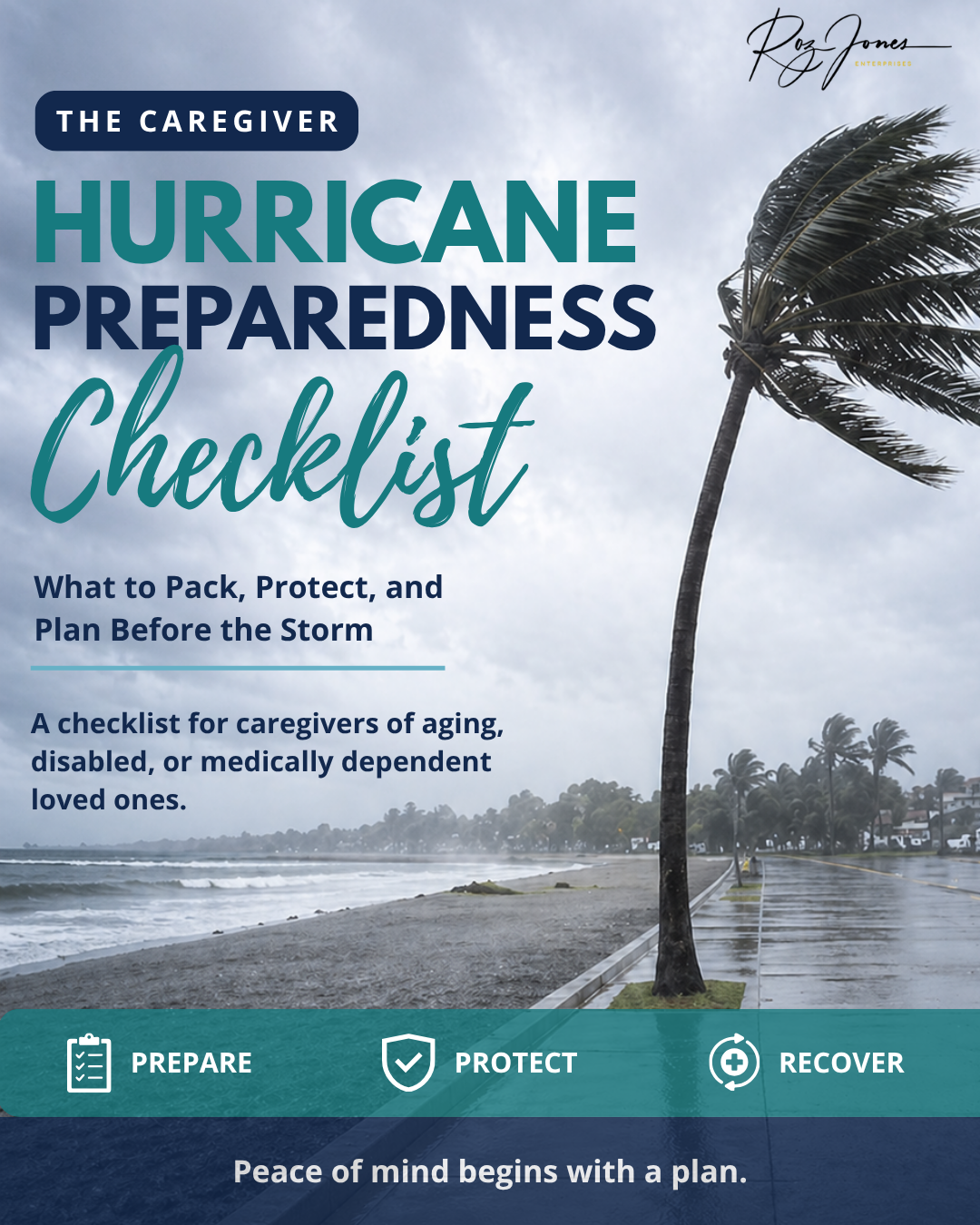
The Caregiver Hurricane Preparedness Checklist.

The Caregiver Hurricane Preparedness Checklist helps caregivers organize important documents, medications, emergency contacts, evacuation needs, medical equipment details, and care instructions before an emergency happens.

For only $1.99, this checklist gives you a simple starting point so you are not trying to gather everything during a storm, power outage, hospitalization, or sudden change in your loved one’s care.

Purchase the Caregiver Hurricane Preparedness Checklist for $1.99 today and take one more step toward peace of mind.

Need Help Sorting Through the Care Plan?

Roz Jones is a dedicated caretaker turned CEO with over a decade of experience in helping families care for and make decisions for loved ones and their legacies.Roz is a compassionate, innovative healthcare industry leader.

Book a Family Care Planning Session with Roz Jones and get support creating a caregiving plan that is clear, compassionate, and realistic.

Together, we can talk through what is working, what is becoming too heavy, and what boundaries need to be strengthened so you can continue to care without losing yourself in the process.

Subscribe to The Caregiver Cafe Weekly Newsletter!

Caregiving can be a roller coaster of ups and downs. The information that you will receive from The Caregiver Cafe Weekly Specials Newsletter will support you as a caregiver. Remember…

1. YOU ARE NOT ALONE: The problems you face as a caregiver are experienced by other caregivers. Knowing that you’re not alone can be comforting. 

2. Tools and Resources:  Find caregiver stress management tools and gain perspective from other caregiver’s experiences.

3. LEARN TO: Ask for help, accept help when it is offered, and acknowledge yourself on this caregiving journey. Hear from experts on how to balance caregiving responsibilities by taking care of your needs and involving others to help manage the natural stress and isolation of being a caregiver. 

Caregiving in a Digital World

By Roz Jones

Years ago, caring for an aging loved one may have meant keeping a paper calendar on the refrigerator, writing medication instructions in a notebook, and waiting for the doctor’s office to call back.

Now, caregivers are managing patient portals, telehealth appointments, medication apps, pharmacy texts, smartwatches, video calls, passwords, emergency alerts, and online forms — all while still doing the hands-on work of care.

And let me tell you, technology can be a blessing.

But it can also become one more thing the caregiver has to manage.

That is why we have to talk about caregiving in a digital world with honesty. Because the goal is not to have the newest device, the most expensive system, or an app for everything.

The goal is to help your aging loved one stay safe, connected, and respected — without making their life or your life more complicated.

This blog is a continuation of my earlier conversation, Tech-Essentials: Must-Have Technology for Aging Loved Ones. If you have not read that piece yet, I encourage you to revisit it as a starting point for understanding how technology can support aging loved ones in practical ways.

Technology Should Support the Care Plan, Not Replace It

Before we talk about phones, tablets, watches, reminders, or smart home tools, we need to start here:

Technology is not the care plan.

It is a support tool.

It cannot replace a calm conversation.
It cannot replace checking in.
It cannot replace family involvement.
It cannot replace listening to your loved one’s concerns.
It cannot replace knowing what they actually need.

Technology works best when it is connected to a real care need.

Are they missing medication?
Are they forgetting appointments?
Are they feeling isolated?
Are you worried about falls?
Are they having trouble reaching someone in an emergency?
Are important documents hard to access?
Are family members struggling to stay updated?

Start with the need first. Then choose the tool.

Too often, families buy devices because they sound helpful, but nobody thinks through whether the aging loved one will actually use them. Then the caregiver ends up troubleshooting, reminding, resetting passwords, charging devices, and answering questions about a tool that was supposed to make life easier.

That is not support. That is more work.

Keep It Simple

In a digital world, simple is powerful.

Your aging loved one does not need ten apps if one shared calendar will do. They do not need five devices if one phone with clear settings can meet the need. They do not need complicated technology that makes them feel frustrated, embarrassed, or dependent.

They need tools that fit their life.

That may mean setting up larger text on their phone.
Saving emergency contacts as favorites.
Putting appointment reminders in one calendar.
Using a tablet for video calls and telehealth visits.
Choosing a medication reminder that is easy to understand.
Keeping written instructions nearby for passwords, portals, and devices.

The more complicated the system, the less likely it is to be used consistently.

And consistency matters.

A tool only helps if your loved one can use it, trust it, and feel comfortable with it.

Smartphones Can Be Lifelines

For many aging loved ones, a smartphone is not just a phone.

It can be their connection to the family.
Their appointment reminder.
Their photo album.
Their emergency contact list.
Their way to attend telehealth visits.
Their access point to transportation, prescriptions, messages, and health information.

But the phone needs to be set up for them, not for you.

Make the screen easier to read.
Remove apps they do not use.
Put the most important contacts on the home screen.
Turn on helpful accessibility settings.
Make sure emergency contacts are saved correctly.
Write down the passcode and store it safely.
Practice how to answer a video call or join a telehealth appointment.

Do not assume they know how to use every feature just because they have the phone.

Sit with them. Walk through it. Let them practice. Be patient.

Sometimes the technology is not the problem. The problem is that nobody slowed down long enough to teach it in a way that felt respectful.

Tablets Can Help With Connection and Care

A tablet can be a beautiful tool for aging loved ones, especially when the screen on a phone feels too small.

It can be used for video calls, telehealth appointments, reading, music, games, church services, family photos, and entertainment. It can also help reduce isolation, especially for loved ones who live alone, have limited mobility, or are not able to get out as much as they used to.

But again, set it up with intention.

Keep the home screen clean.
Save the apps they actually use.
Make the volume and text size comfortable.
Practice video calls before a real appointment.
Keep the charger in the same place.
Write down simple instructions in plain language.

Do not hand them the tablet and expect them to figure it out.

What feels simple to you may feel overwhelming to them.

Wearables and Emergency Devices Can Support Independence

Many caregivers worry about falls, heart concerns, wandering, or emergencies when their loved one is home alone.

That is where wearable devices and medical alert systems can help.

Some watches and emergency response devices can detect falls, track location, send alerts, or connect your loved one with help quickly. For some families, that brings peace of mind. For some aging adults, it allows them to keep more independence.

But the right device has to match the person.

Will they wear it every day?
Can they charge it?
Is it comfortable?
Can they press the button if needed?
Does it work outside the home?
Who receives the alert?
Is there a monthly fee?
What happens if the internet or power goes out?

Do not choose a device based only on what it promises.

Choose one based on how your loved one lives.

And please remember: safety tools should not make your loved one feel like they are being watched or controlled. Talk to them about why the tool matters. Include them in the decision when possible. Their dignity still matters.

Voice Assistants Can Make Daily Life Easier

Voice-activated devices can be helpful when they are used simply.

They can remind your loved one to take medication, drink water, check the calendar, call a family member, turn on lights, play music, or set a timer.

For someone with mobility challenges, vision changes, or forgetfulness, hands-free support can make daily life feel a little easier.

But not everyone will enjoy using a voice assistant.

Some people may feel uncomfortable.
Some may forget the command words.
Some may get frustrated when the device does not understand them.
Some may not like the idea of having a listening device in their home.

So start small.

Use it for one or two things. Practice together. Keep written instructions nearby. And if your loved one does not like it, pay attention to that.

Technology should reduce stress, not create more of it.

Medication Management Needs a System

Medication is one of the biggest areas where caregivers need support.

There may be multiple prescriptions, changing dosages, refill dates, side effects, pharmacy calls, and instructions from different providers. One missed dose or double dose can create serious concerns.

Digital tools can help with this, but the system needs to be clear.

That may look like:

A medication reminder on the phone.
A smart pill dispenser.
A pharmacy-filled pill pack.
A shared medication list.
A refill reminder.
A caregiver alert when a dose is missed.

But do not overcomplicate it.

The best medication system is the one your loved one and the caregiver can actually follow.

Also, keep a printed medication list somewhere easy to access. Digital tools are helpful, but during a power outage, emergency room visit, evacuation, or phone issue, you may need the information quickly.

Technology is useful. A backup plan is wisdom.

Digital Tools Can Help Families Share the Load

One of the most helpful parts of caregiving in a digital world is that family members do not always have to be in the same home to contribute.

A sibling who lives out of state can help manage online bill payments.
An adult child can help schedule grocery delivery.
A cousin can update the shared calendar.
A family member can help organize documents in a secure folder.
Someone else can attend a telehealth visit by phone or video.
Another person can research services, transportation, or respite options.

This matters because caregiving should not fall on one person simply because they live closest or answer the phone fastest.

Digital tools can help make the invisible work visible.

Use a shared calendar.
Create a secure document folder.
Keep emergency contacts updated.
Use a group message for care updates.
Assign tasks clearly.

But do not let the group chat become the care plan.

Put responsibilities in writing. Make sure everyone knows what they are responsible for. Technology can help coordinate care, but people still have to show up and do their part.

Protect the Passwords and Paperwork

In caregiving, digital access matters.

You may need passwords for health portals, pharmacy accounts, insurance websites, online banking, bill pay, email, phone accounts, or emergency contact systems.

But passwords should not be scattered across text messages, sticky notes, and old notebooks.

Create a safe system.

Keep a secure password manager or a protected document.
Make sure the right trusted person knows how to access it.
Update emergency contacts.
Keep copies of important documents.
Back up medical, legal, and insurance information.
Print the most essential information in case technology fails.

This is especially important during emergencies.

If the power goes out, the phone dies, the internet is down, or your loved one has to evacuate quickly, you do not want to be searching through emails and drawers trying to find what you need.

Digital caregiving still needs an emergency plan.

Do Not Let Technology Replace Human Connection

This is the heart of it.

A video call is helpful, but it does not replace being remembered.
A medication reminder is helpful, but it does not replace being cared for.
A fall alert is helpful, but it does not replace someone checking in.
A shared calendar is helpful, but it does not replace family responsibility.
A portal message is helpful, but it does not replace advocacy.

Technology should make connection easier, not colder.

Your aging loved one still needs your voice.
They still need patience.
They still need respect.
They still need to be included in decisions.
They still need to feel like a person, not a project.

And caregivers need support too.

Because managing digital tools, appointments, alerts, passwords, and family updates can become its own kind of caregiver labor.

Purchase Moments of Grace

Caregiving asks a lot of you — emotionally, physically, mentally, and spiritually. That is why Roz Jones created Moments of Grace: A 40-Day Caregiver Prayer Journal, a faith-filled journal designed to help caregivers pause, reflect, release, and reconnect with God in the middle of the caregiving journey.

Through daily prayers, comforting scriptures, guided journal prompts, and uplifting affirmations, Moments of Grace offers caregivers a quiet place to be honest about what they are carrying while receiving encouragement for the road ahead.

Whether you are caring for an aging parent, spouse, loved one, patient, or family member, this journal is a reminder that your spirit needs care too.

Prepare Before the Storm, Not During It

The Caregiver Hurricane Preparedness Checklist.

Caregiving in a digital world also means thinking about what happens when technology is not available.

What happens if the power goes out?
What happens if your loved one cannot charge their phone?
What happens if the internet is down?
What happens if a storm is coming and you need to evacuate?
What happens if medication, paperwork, emergency contacts, and transportation plans are not ready?

This is why preparation matters.

The Caregiver Hurricane Preparedness Checklist was created to help caregivers get organized before hurricane season becomes urgent. It walks you through important details like emergency supplies, medication planning, important documents, communication, transportation, and the needs of your aging loved one.

Purchase the Caregiver Hurricane Preparedness Checklist for $1.99 and take one practical step toward keeping your loved one safe, connected, and prepared before the next storm is in the forecast.

Need Help Building a Digital Care Plan?

Roz Jones is a dedicated caretaker turned CEO with over a decade of experience in helping families care for and make decisions for loved ones and their legacies.Roz is a compassionate, innovative healthcare industry leader.

Sometimes the hardest part is knowing where to start.

You may know your loved one needs more support, but you are not sure which tools make sense. You may be juggling appointments, passwords, family updates, documents, and emergency planning. You may feel like the care plan is living in your head, your phone, your email, and a pile of papers on the table.

That is too much for one person to carry alone. A Family Care Planning Session with Roz Jones can help you look at the bigger picture. Together, we can talk through your loved one’s needs, family responsibilities, safety concerns, emergency plans, documents, routines, and the tools that may help make caregiving more organized and less overwhelming.

Subscribe to The Caregiver Cafe Weekly Newsletter!

Caregiving can be a roller coaster of ups and downs. The information that you will receive from The Caregiver Cafe Weekly Specials Newsletter will support you as a caregiver. Remember…

1. YOU ARE NOT ALONE: The problems you face as a caregiver are experienced by other caregivers. Knowing that you’re not alone can be comforting. 

2. Tools and Resources:  Find caregiver stress management tools and gain perspective from other caregiver’s experiences.

3. LEARN TO: Ask for help, accept help when it is offered, and acknowledge yourself on this caregiving journey. Hear from experts on how to balance caregiving responsibilities by taking care of your needs and involving others to help manage the natural stress and isolation of being a caregiver. 

Before the Next Dose

A Guide to Medication Safety, Organization, and Emergency Readiness

By Roz Jones

Caregiving has a way of making you pay attention to the details.

The doctor’s appointments.
The insurance cards.
The pharmacy calls.
The pill bottles on the counter.
The vitamins in the kitchen cabinet.
The “as needed” medication that nobody can remember the last time they used.

And then there is the next dose.

The one that needs to be taken with food.
The one that should not be mixed with another medication.
The one that changed after the last doctor’s appointment.
The one that your loved one swears they already took, but you are not quite sure.

When you are caring for an aging loved one, medication management is not just another task on the list.

It is part of the care plan.

In my previous blog, Decluttering and Organizing Medication: A Guide for Caregivers, I talked about the importance of checking expiration dates, sorting medications, labeling bottles, using trackers, keeping medicine stored safely, and properly disposing of what is no longer needed.

But before the next dose, caregivers need more than a neat medicine cabinet.

They need a system that protects safety, reduces confusion, and helps everyone involved know what is being taken, when, why, and by whom.

Because medication mistakes do not always happen because someone does not care.

Sometimes they happen because the system is unclear.

Before the Next Dose, Know What Is Current

Before organizing anything, gather every medication and health-related item into one place.

Not just the prescription bottles.

Check the bathroom cabinet.
The kitchen drawer.
The nightstand.
The purse.
The car.
The old travel bag.
The refrigerator.
The weekly pill organizer.

Caregivers are often surprised by what they find.

Duplicate bottles.

Expired medication.

Old antibiotics.

Prescription pain medicine from a past procedure.

Supplements no one remembers buying.

Medicine that was discontinued but never removed from the home.

Before the next dose is given, you need to know what is actually current.

Separate everything into categories:

  • Daily medications: These are medications your loved one takes on a regular schedule.
  • As-needed medications: These may include pain relievers, allergy medication, inhalers, nausea medication, or anything taken only when symptoms appear.
  • Over-the-counter medications and supplements: This includes vitamins, herbal supplements, digestive support, cold medicine, sleep aids, and anything purchased without a prescription.
  • Expired or no-longer-needed medication:  These should be separated and disposed of properly.
  • Medications that need clarification: If you are not sure whether your loved one should still be taking something, do not guess. Set it aside and ask the pharmacist or provider.

Before the Next Dose, Update the Medication List

Every caregiver should have a current medication list.

Not one from two years ago.

Not one buried in a folder.

Not one saved only in one person’s phone.

A current list.

This list should include:

  • Name of each medication
  • Dosage
  • Time of day it is taken
  • How often it is taken
  • Why it is being taken
  • Name of the prescribing doctor
  • Pharmacy name and phone number
  • Allergies
  • Medical conditions
  • Notes about recent changes or side effects
  • Emergency contacts
  • Insurance information

Keep a printed copy somewhere easy to reach.

Keep a digital copy as a backup.

And make sure at least one other trusted person knows where to find it.

Because if there is a fall, a hospital visit, a power outage, an evacuation, or a sudden change in health, you do not want to rely on memory.

Memory gets tired.

Memory gets stressed.

Memory forgets the name of the little white pill when the nurse is asking questions in the emergency room.

A medication list gives the care team something clear to work from.

Before the Next Dose, Check for Changes

Medication routines can change quickly.

A doctor adjusts the dosage.

A specialist adds something new.

A hospital discharge summary includes new instructions.

The pharmacy changes the look of the pill because the manufacturer changed.

Your loved one stops taking something because it makes them feel dizzy.

Another family member gives an over-the-counter medicine without realizing it could interact with something else.

This is why caregivers need to review medications regularly, especially after:

  • Doctor’s appointments
  • Emergency room visits
  • Hospital stays
  • Rehab or skilled nursing stays
  • New diagnoses
  • New symptoms
  • Falls
  • Confusion
  • Changes in appetite or sleep
  • Pharmacy refill changes

Before the next dose, ask yourself:

  • Has anything changed?
  • Was anything added?
  • Was anything stopped?
  • Did the instructions change?
  • Does the pill look different?
  • Did the doctor and pharmacist both know about all the medications, supplements, and over-the-counter items being used?

These are the questions that help prevent avoidable confusion.

Before the Next Dose, Choose a System That Works in Real Life

A medication system only works if the caregiver and loved one can actually use it.

  • Some families do well with medication apps.
  • Some need a paper chart on the refrigerator.
  • Some prefer a weekly pill organizer.
  • Some need pharmacy-prepared pill packs.
  • Some need phone alarms.
  • Some need a nurse, aide, or family member to physically check in.

Do not choose a system because it sounds impressive.

Choose the one that will actually get used.

You may consider:

  • Weekly pill organizers: Helpful for routine medications, but they should be filled carefully and checked often.
  • Medication reminder apps: Helpful when caregivers need alerts or shared reminders.
  • Pharmacy blister packs or pill packaging: Helpful when medication schedules are complex or when confusion is becoming a concern.
  • Paper medication logs: Helpful for documenting when medication was taken, missed, refused, or changed.
  • Shared caregiver notes: Helpful when more than one person is providing support.

Before the next dose, the person helping should know what needs to happen without guessing.

Before the Next Dose, Watch What Your Loved One’s Body Is Telling You

Caregivers often notice changes first.

Aging loved ones may not always connect symptoms to medication.

They may say:

  • “I just feel funny.”
  • “I’m more tired than usual.”
  • “I feel dizzy.”
  • “I don’t have an appetite.”
  • “I don’t know why I keep falling.”
  • “I feel confused.”
  • “I feel weak.”
  • “I can’t sleep.”

Those changes matter.

They may be connected to illness, dehydration, aging, or something else entirely.

But medication should always be part of the conversation.

Before the next dose, pay attention to what is different.

  • Write it down.
  • Call the pharmacist.
  • Message the doctor.
  • Ask whether medications could be interacting.
  • Ask whether the dose needs to be reviewed.
  • Ask whether the medication is still needed.
  • And please do not stop prescription medication without speaking with the provider unless you have been clearly instructed to do so.

Your role is not to become the doctor.

Your role is to notice, document, and advocate.

That is caregiving.

Before the Next Dose, Store Medication Safely

Medication should be easy for the right person to access and hard for the wrong person to access.

That balance matters.

Keep medication away from children, pets, and anyone who may take it accidentally.

Pay attention to storage instructions. Some medications need to be kept at room temperature. Some may need refrigeration. Some should not be stored in humid spaces like bathrooms.

Also consider your loved one’s current ability.

If they are experiencing memory loss, confusion, vision changes, mobility limitations, or difficulty reading labels, the medication system may need to change.

That does not mean taking away independence.

It means creating support that matches their needs.

Safety is not disrespect.

Safety is care.

Before the Next Dose, Clear Out What No Longer Belongs

Expired or unused medication should not sit around the house.

It creates clutter. It creates confusion. It creates risk.

If a medication is expired, discontinued, duplicated, or no longer needed, separate it from the current medication routine.

Then ask your local pharmacy, doctor’s office, or community agency about safe disposal options.

Many communities offer medication take-back programs or disposal kiosks.

Do not assume every medication should be flushed or thrown away. Some medications have specific disposal instructions.

When in doubt, ask the pharmacist.

That one question can help prevent an unsafe mistake.

Before the Next Dose, Prepare for Emergencies

Medication organization is not separate from emergency planning.

It is part of emergency planning.

If there is a hurricane, power outage, hospitalization, evacuation, flood, or sudden change in health, medication access can become urgent.

Caregivers need to know:

  • Does my loved one have enough medication on hand?
  • Are refills current?
  • Which medications cannot be missed?
  • Which medications need refrigeration?
  • What happens if the power goes out?
  • Do we have a printed medication list?
  • Do we have pharmacy contact information?
  • Do we have copies of prescriptions or medical supply orders?
  • Does anyone else know the medication routine?
  • If we had to leave quickly, could we grab what we need?

This is where many families realize preparation is not just about bottled water and flashlights.

It is also about pill bottles, prescriptions, medical equipment, insurance cards, emergency contacts, and knowing who is responsible for what.

Before the next storm, before the next emergency, and before the next dose, make sure the plan is clear.

Need Help Getting Prepared?

The Caregiver Hurricane Preparedness Checklist.

Caregivers, please do not wait until everything is urgent to get organized.
Do not wait until the storm is coming.
Do not wait until the hospital calls.
Do not wait until the medication list is missing, the refill is empty, or the family is asking who knows what.
Preparation is not panic.
Preparation is care.


That is why I created the Caregiver Hurricane Preparedness Checklist.
For only $1.99, this checklist helps caregivers organize the important details before an emergency happens, including medications, emergency contacts, documents, supplies, evacuation needs, and care information.


Purchase the Caregiver Hurricane Preparedness Checklist for $1.99 today and make sure your loved one’s care plan is not left to memory.

When You Can’t Do it All Give Roz a Call!

Roz Jones is a dedicated caretaker turned CEO with over a decade of experience in helping families care for and make decisions for loved ones and their legacies.Roz is a compassionate, innovative healthcare industry leader.

If your caregiving situation feels bigger than a checklist, I invite you to book a Family Care Planning Session with me.

Together, we can look at what needs to be organized, what conversations need to happen, and what support needs to be put in place so you are not carrying the care plan alone.

Subscribe to The Caregiver Cafe Weekly Newsletter!

Caregiving can be a roller coaster of ups and downs. The information that you will receive from The Caregiver Cafe Weekly Specials Newsletter will support you as a caregiver. Remember…

1. YOU ARE NOT ALONE: The problems you face as a caregiver are experienced by other caregivers. Knowing that you’re not alone can be comforting. 

2. Tools and Resources:  Find caregiver stress management tools and gain perspective from other caregiver’s experiences.

3. LEARN TO: Ask for help, accept help when it is offered, and acknowledge yourself on this caregiving journey. Hear from experts on how to balance caregiving responsibilities by taking care of your needs and involving others to help manage the natural stress and isolation of being a caregiver. 

Caregiving Needs Better Systems

By Roz Jones

Most caregivers are not dealing with one distraction at a time. 

They are answering calls between meetings, tracking medications while making dinner, trying to remember appointment details, responding to family members, checking in on an aging loved one, and still attempting to hold together the rest of their own lives. Caregiving today often happens in the middle of everything else, which is exactly why so many caregivers feel mentally overloaded before the day is even over.

Technology cannot remove the emotional weight of caregiving. It cannot replace presence, patience, or support. But it can help reduce some of the clutter, create more structure, and make daily caregiving responsibilities feel a little more manageable.

Technology Is Not the Answer to Everything

Let’s start there.

Technology is a tool, not a cure-all.

It cannot make hard decisions for you. It cannot solve grief, family tension, or the stress of watching someone you love need more help than they used to. And not every app, device, or system will work for every family.

But the right tools can reduce friction.

They can help you remember what needs to happen.
They can make communication easier.
They can support your aging loved one’s safety and independence.
They can help you stop carrying every detail in your head.

The Best Caregiving Tech Is Usually Simple

A few years ago, a blog like this might have focused mostly on listing caregiver apps. But caregiving has changed, and technology changes fast too. The better question now is not, “What app should I download?” It is, “What systems will actually make this easier?”

Most caregivers do not need more digital clutter. They need tools that reduce confusion and help them stay organized in real life.

Technology Tools That Can Lighten the Load

Not every caregiver needs a dozen new apps. In most cases, a few simple tools can make daily life feel more manageable. The goal is not to add more noise. It is to reduce the mental clutter, missed details, and constant back-and-forth that caregiving can create.

  • Shared calendar tools
    • One of the biggest sources of caregiver stress is trying to remember everything. Appointments. Medication refill dates. Transportation plans. Follow-up calls. Family updates. It adds up quickly.
    • A shared digital calendar can help keep those details in one place. This can be especially useful when more than one family member is involved in care, even if one person is still managing most of it.
  • Medication reminder apps
    • Medication management can become one of the most stressful parts of caregiving, especially when prescriptions change, refill timing gets complicated, or your loved one is managing multiple medications at once.
    • Medication reminder tools can help with alarms, refill tracking, and keeping an updated list of prescriptions. The Family Caregiver Alliance notes that digital medication tools can support pill identification, scheduling, and reminder systems, and AARP has highlighted Medisafe (Iphone /Android) as one current free option caregivers use for medication tracking.
  • Care coordination apps
    • Some caregivers need one central place to organize tasks, updates, and support from others. AARP has highlighted tools such as CaringBridge for updates and support, and Caring Village for coordinating tasks, roles, and communication among a care team. These kinds of tools can be helpful when several people want to support your loved one but communication is scattered or inconsistent.
  • Voice assistants and smart speakers
    • Voice assistants can be useful for reminders, hands-free calls, medication prompts, music, or simple daily routines. AARP notes that smart home technology can help older adults stay independent longer and can give caregivers oversight without feeling overly intrusive. For some families, something as simple as a spoken reminder can reduce daily stress in a meaningful way.
  • Smart home safety tools
    • Depending on your loved one’s needs, tools like video doorbells, motion sensors, smart lights, smart locks, fall alerts, and medical alert systems may help support safety at home. AARP recommends these kinds of tools as part of aging in place support and notes they can make daily life easier for both older adults and caregivers. Not every household needs all of this. Sometimes one or two simple tools can make a meaningful difference.
  • Telehealth and patient portals
    • For many families, healthcare communication looks different now than it did a few years ago. Telehealth can be helpful for routine follow-ups, mental health support, medication conversations, and appointments that do not require travel. Patient portals can also make it easier to review test results, request refills, track provider messages, and keep appointment information in one place. Caring.com lists virtual medicine and health tracking among the most useful tech categories for caregivers. Even if your aging loved one is not managing these systems independently, you may still be able to use them to reduce back-and-forth and stay more organized yourself.
  • Group messaging or shared notes
    • Sometimes the most helpful tool is not a caregiving app at all. A shared notes app, family group text, or simple digital checklist can reduce repetition and make it easier to keep everyone informed without having to explain the same thing over and over again. CaringBridge also notes that task-management tools for scheduling, medication reminders, and organization can be valuable for family caregivers.
  • Budget and bill-tracking tools
    • When caregiving includes helping with expenses, subscriptions, or household bills, digital budgeting tools can make that easier to monitor. AARP has highlighted tools such as Monarch Money, Quicken Simplifi, Rocket Money, and YNAB for tracking spending and spotting unusual transactions.This can be especially helpful when you are helping manage someone else’s household while trying to keep up with your own.
  • Use what already exists on your phone
    • Sometimes caregivers do not need another app. AARP notes that many built-in smartphone features can improve accessibility, reminders, and ease of use. In some families, the best tool may simply be using alarms, shared reminders, notes, and contact shortcuts more intentionally.

Support does not have to be fancy to be effective.

Not Every Tool Will Work for Every Family

It is important to stay grounded here.

A tool is only helpful if it is accessible, affordable, understandable, and usable in your actual daily life.

Sometimes the right support is digital.
Sometimes it is a paper planner and one reliable reminder system.
Sometimes it is keeping things simple enough that everyone involved can actually follow through.

Support does not have to be trendy to be effective.

Start with the Problem, Not the Product

Before downloading another app or buying another device, pause and ask yourself:

What is the actual problem we are trying to solve?

Is it missed medications?
Difficulty keeping up with appointments?
Trouble updating family members?
Safety concerns at home?
Losing track of paperwork?
Feeling like every task is living in your head?

When you start with the problem, you are much more likely to choose a tool that truly helps instead of adding more clutter.

Technology Should Lighten the Load

Caregiving can already feel like too many tabs open in your mind at once.

The best technology should not create more work. It should help you close a few tabs.

It should help you feel more organized.
More supported.
Less scattered.
Less alone in managing all the moving pieces.

That is the real value.

Not doing more.
Doing what matters with more clarity.If this blog spoke to where you are right now, be sure to read the earlier blog, Technology as a Tool for Caregivers to Manage Daily Distractions,” for a deeper look at how everyday interruptions can wear caregivers down over time. It is a helpful companion to this conversation and offers more context for why support systems matter so much.

When You Can’t Do it All Give Roz a Call!

Roz Jones is a dedicated caretaker turned CEO with over a decade of experience in helping families care for and make decisions for loved ones and their legacies.Roz is a compassionate, innovative healthcare industry leader.

If your family is managing too many moving parts without enough structure, book a family care planning session with Roz Jones for support in creating a clearer, more manageable plan.

Purchase the Caregiving & Advance Health Directives Checklist!

Roz Jones Enterprises Caregiving & Advance Health Directives Checklist.

If you are ready to get organized around important care decisions and next steps, purchase the Advanced Directives Checklist to help your family move forward with more clarity and confidence.

Subscribe to The Caregiver Cafe Weekly Newsletter!

Caregiving can be a roller coaster of ups and downs. The information that you will receive from The Caregiver Cafe Weekly Specials Newsletter will support you as a caregiver. Remember…

1. YOU ARE NOT ALONE: The problems you face as a caregiver are experienced by other caregivers. Knowing that you’re not alone can be comforting. 

2. Tools and Resources:  Find caregiver stress management tools and gain perspective from other caregiver’s experiences.

3. LEARN TO: Ask for help, accept help when it is offered, and acknowledge yourself on this caregiving journey. Hear from experts on how to balance caregiving responsibilities by taking care of your needs and involving others to help manage the natural stress and isolation of being a caregiver.