
Before the Next Dose

A Guide to Medication Safety, Organization, and Emergency Readiness

By Roz Jones

Caregiving has a way of making you pay attention to the details.

The doctor’s appointments.
The insurance cards.
The pharmacy calls.
The pill bottles on the counter.
The vitamins in the kitchen cabinet.
The “as needed” medication that nobody can remember the last time they used.

And then there is the next dose.

The one that needs to be taken with food.
The one that should not be mixed with another medication.
The one that changed after the last doctor’s appointment.
The one that your loved one swears they already took, but you are not quite sure.

When you are caring for an aging loved one, medication management is not just another task on the list.

It is part of the care plan.

In my previous blog, Decluttering and Organizing Medication: A Guide for Caregivers, I talked about the importance of checking expiration dates, sorting medications, labeling bottles, using trackers, keeping medicine stored safely, and properly disposing of what is no longer needed.

But before the next dose, caregivers need more than a neat medicine cabinet.

They need a system that protects safety, reduces confusion, and helps everyone involved know what is being taken, when, why, and by whom.

Because medication mistakes do not always happen because someone does not care.

Sometimes they happen because the system is unclear.

Before the Next Dose, Know What Is Current

Before organizing anything, gather every medication and health-related item into one place.

Not just the prescription bottles.

Check the bathroom cabinet.
The kitchen drawer.
The nightstand.
The purse.
The car.
The old travel bag.
The refrigerator.
The weekly pill organizer.

Caregivers are often surprised by what they find.

Duplicate bottles.

Expired medication.

Old antibiotics.

Prescription pain medicine from a past procedure.

Supplements no one remembers buying.

Medicine that was discontinued but never removed from the home.

Before the next dose is given, you need to know what is actually current.

Separate everything into categories:

  • Daily medications: These are medications your loved one takes on a regular schedule.
  • As-needed medications: These may include pain relievers, allergy medication, inhalers, nausea medication, or anything taken only when symptoms appear.
  • Over-the-counter medications and supplements: This includes vitamins, herbal supplements, digestive support, cold medicine, sleep aids, and anything purchased without a prescription.
  • Expired or no-longer-needed medication:  These should be separated and disposed of properly.
  • Medications that need clarification: If you are not sure whether your loved one should still be taking something, do not guess. Set it aside and ask the pharmacist or provider.

Before the Next Dose, Update the Medication List

Every caregiver should have a current medication list.

Not one from two years ago.

Not one buried in a folder.

Not one saved only in one person’s phone.

A current list.

This list should include:

  • Name of each medication
  • Dosage
  • Time of day it is taken
  • How often it is taken
  • Why it is being taken
  • Name of the prescribing doctor
  • Pharmacy name and phone number
  • Allergies
  • Medical conditions
  • Notes about recent changes or side effects
  • Emergency contacts
  • Insurance information

Keep a printed copy somewhere easy to reach.

Keep a digital copy as a backup.

And make sure at least one other trusted person knows where to find it.

Because if there is a fall, a hospital visit, a power outage, an evacuation, or a sudden change in health, you do not want to rely on memory.

Memory gets tired.

Memory gets stressed.

Memory forgets the name of the little white pill when the nurse is asking questions in the emergency room.

A medication list gives the care team something clear to work from.

Before the Next Dose, Check for Changes

Medication routines can change quickly.

A doctor adjusts the dosage.

A specialist adds something new.

A hospital discharge summary includes new instructions.

The pharmacy changes the look of the pill because the manufacturer changed.

Your loved one stops taking something because it makes them feel dizzy.

Another family member gives an over-the-counter medicine without realizing it could interact with something else.

This is why caregivers need to review medications regularly, especially after:

  • Doctor’s appointments
  • Emergency room visits
  • Hospital stays
  • Rehab or skilled nursing stays
  • New diagnoses
  • New symptoms
  • Falls
  • Confusion
  • Changes in appetite or sleep
  • Pharmacy refill changes

Before the next dose, ask yourself:

  • Has anything changed?
  • Was anything added?
  • Was anything stopped?
  • Did the instructions change?
  • Does the pill look different?
  • Did the doctor and pharmacist both know about all the medications, supplements, and over-the-counter items being used?

These are the questions that help prevent avoidable confusion.

Before the Next Dose, Choose a System That Works in Real Life

A medication system only works if the caregiver and loved one can actually use it.

  • Some families do well with medication apps.
  • Some need a paper chart on the refrigerator.
  • Some prefer a weekly pill organizer.
  • Some need pharmacy-prepared pill packs.
  • Some need phone alarms.
  • Some need a nurse, aide, or family member to physically check in.

Do not choose a system because it sounds impressive.

Choose the one that will actually get used.

You may consider:

  • Weekly pill organizers: Helpful for routine medications, but they should be filled carefully and checked often.
  • Medication reminder apps: Helpful when caregivers need alerts or shared reminders.
  • Pharmacy blister packs or pill packaging: Helpful when medication schedules are complex or when confusion is becoming a concern.
  • Paper medication logs: Helpful for documenting when medication was taken, missed, refused, or changed.
  • Shared caregiver notes: Helpful when more than one person is providing support.

Before the next dose, the person helping should know what needs to happen without guessing.

Before the Next Dose, Watch What Your Loved One’s Body Is Telling You

Caregivers often notice changes first.

Aging loved ones may not always connect symptoms to medication.

They may say:

  • “I just feel funny.”
  • “I’m more tired than usual.”
  • “I feel dizzy.”
  • “I don’t have an appetite.”
  • “I don’t know why I keep falling.”
  • “I feel confused.”
  • “I feel weak.”
  • “I can’t sleep.”

Those changes matter.

They may be connected to illness, dehydration, aging, or something else entirely.

But medication should always be part of the conversation.

Before the next dose, pay attention to what is different.

  • Write it down.
  • Call the pharmacist.
  • Message the doctor.
  • Ask whether medications could be interacting.
  • Ask whether the dose needs to be reviewed.
  • Ask whether the medication is still needed.
  • And please do not stop prescription medication without speaking with the provider unless you have been clearly instructed to do so.

Your role is not to become the doctor.

Your role is to notice, document, and advocate.

That is caregiving.

Before the Next Dose, Store Medication Safely

Medication should be easy for the right person to access and hard for the wrong person to access.

That balance matters.

Keep medication away from children, pets, and anyone who may take it accidentally.

Pay attention to storage instructions. Some medications need to be kept at room temperature. Some may need refrigeration. Some should not be stored in humid spaces like bathrooms.

Also consider your loved one’s current ability.

If they are experiencing memory loss, confusion, vision changes, mobility limitations, or difficulty reading labels, the medication system may need to change.

That does not mean taking away independence.

It means creating support that matches their needs.

Safety is not disrespect.

Safety is care.

Before the Next Dose, Clear Out What No Longer Belongs

Expired or unused medication should not sit around the house.

It creates clutter. It creates confusion. It creates risk.

If a medication is expired, discontinued, duplicated, or no longer needed, separate it from the current medication routine.

Then ask your local pharmacy, doctor’s office, or community agency about safe disposal options.

Many communities offer medication take-back programs or disposal kiosks.

Do not assume every medication should be flushed or thrown away. Some medications have specific disposal instructions.

When in doubt, ask the pharmacist.

That one question can help prevent an unsafe mistake.

Before the Next Dose, Prepare for Emergencies

Medication organization is not separate from emergency planning.

It is part of emergency planning.

If there is a hurricane, power outage, hospitalization, evacuation, flood, or sudden change in health, medication access can become urgent.

Caregivers need to know:

  • Does my loved one have enough medication on hand?
  • Are refills current?
  • Which medications cannot be missed?
  • Which medications need refrigeration?
  • What happens if the power goes out?
  • Do we have a printed medication list?
  • Do we have pharmacy contact information?
  • Do we have copies of prescriptions or medical supply orders?
  • Does anyone else know the medication routine?
  • If we had to leave quickly, could we grab what we need?

This is where many families realize preparation is not just about bottled water and flashlights.

It is also about pill bottles, prescriptions, medical equipment, insurance cards, emergency contacts, and knowing who is responsible for what.

Before the next storm, before the next emergency, and before the next dose, make sure the plan is clear.

Need Help Getting Prepared?
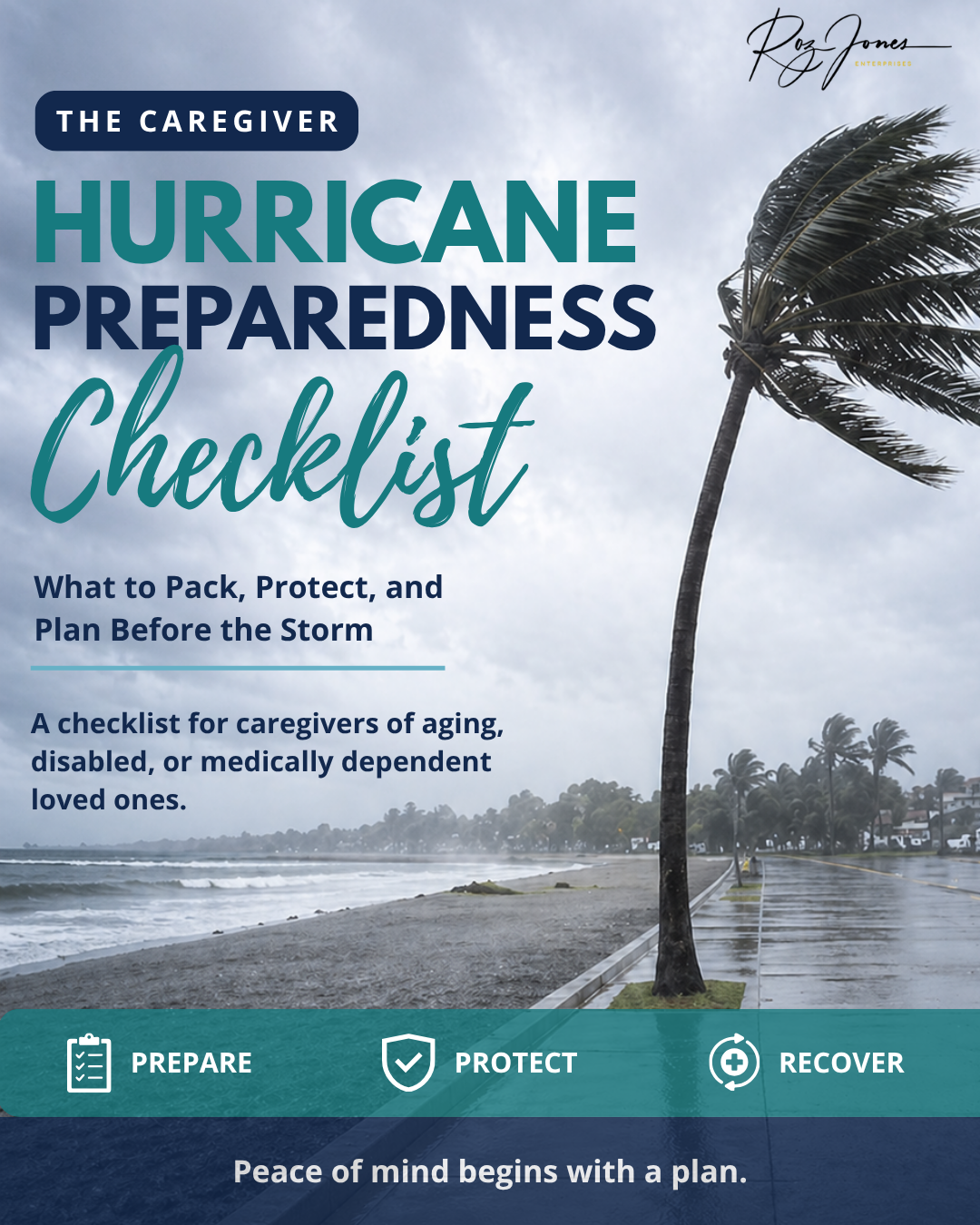
The Caregiver Hurricane Preparedness Checklist.

Caregivers, please do not wait until everything is urgent to get organized.
Do not wait until the storm is coming.
Do not wait until the hospital calls.
Do not wait until the medication list is missing, the refill is empty, or the family is asking who knows what.
Preparation is not panic.
Preparation is care.


That is why I created the Caregiver Hurricane Preparedness Checklist.
For only $1.99, this checklist helps caregivers organize the important details before an emergency happens, including medications, emergency contacts, documents, supplies, evacuation needs, and care information.


Purchase the Caregiver Hurricane Preparedness Checklist for $1.99 today and make sure your loved one’s care plan is not left to memory.

When You Can’t Do it All Give Roz a Call!

Roz Jones is a dedicated caretaker turned CEO with over a decade of experience in helping families care for and make decisions for loved ones and their legacies.Roz is a compassionate, innovative healthcare industry leader.

If your caregiving situation feels bigger than a checklist, I invite you to book a Family Care Planning Session with me.

Together, we can look at what needs to be organized, what conversations need to happen, and what support needs to be put in place so you are not carrying the care plan alone.

Subscribe to The Caregiver Cafe Weekly Newsletter!

Caregiving can be a roller coaster of ups and downs. The information that you will receive from The Caregiver Cafe Weekly Specials Newsletter will support you as a caregiver. Remember…

1. YOU ARE NOT ALONE: The problems you face as a caregiver are experienced by other caregivers. Knowing that you’re not alone can be comforting. 

2. Tools and Resources:  Find caregiver stress management tools and gain perspective from other caregiver’s experiences.

3. LEARN TO: Ask for help, accept help when it is offered, and acknowledge yourself on this caregiving journey. Hear from experts on how to balance caregiving responsibilities by taking care of your needs and involving others to help manage the natural stress and isolation of being a caregiver. 

Caregiving Needs Better Systems

By Roz Jones

Most caregivers are not dealing with one distraction at a time. 

They are answering calls between meetings, tracking medications while making dinner, trying to remember appointment details, responding to family members, checking in on an aging loved one, and still attempting to hold together the rest of their own lives. Caregiving today often happens in the middle of everything else, which is exactly why so many caregivers feel mentally overloaded before the day is even over.

Technology cannot remove the emotional weight of caregiving. It cannot replace presence, patience, or support. But it can help reduce some of the clutter, create more structure, and make daily caregiving responsibilities feel a little more manageable.

Technology Is Not the Answer to Everything

Let’s start there.

Technology is a tool, not a cure-all.

It cannot make hard decisions for you. It cannot solve grief, family tension, or the stress of watching someone you love need more help than they used to. And not every app, device, or system will work for every family.

But the right tools can reduce friction.

They can help you remember what needs to happen.
They can make communication easier.
They can support your aging loved one’s safety and independence.
They can help you stop carrying every detail in your head.

The Best Caregiving Tech Is Usually Simple

A few years ago, a blog like this might have focused mostly on listing caregiver apps. But caregiving has changed, and technology changes fast too. The better question now is not, “What app should I download?” It is, “What systems will actually make this easier?”

Most caregivers do not need more digital clutter. They need tools that reduce confusion and help them stay organized in real life.

Technology Tools That Can Lighten the Load

Not every caregiver needs a dozen new apps. In most cases, a few simple tools can make daily life feel more manageable. The goal is not to add more noise. It is to reduce the mental clutter, missed details, and constant back-and-forth that caregiving can create.

  • Shared calendar tools
    • One of the biggest sources of caregiver stress is trying to remember everything. Appointments. Medication refill dates. Transportation plans. Follow-up calls. Family updates. It adds up quickly.
    • A shared digital calendar can help keep those details in one place. This can be especially useful when more than one family member is involved in care, even if one person is still managing most of it.
  • Medication reminder apps
    • Medication management can become one of the most stressful parts of caregiving, especially when prescriptions change, refill timing gets complicated, or your loved one is managing multiple medications at once.
    • Medication reminder tools can help with alarms, refill tracking, and keeping an updated list of prescriptions. The Family Caregiver Alliance notes that digital medication tools can support pill identification, scheduling, and reminder systems, and AARP has highlighted Medisafe (Iphone /Android) as one current free option caregivers use for medication tracking.
  • Care coordination apps
    • Some caregivers need one central place to organize tasks, updates, and support from others. AARP has highlighted tools such as CaringBridge for updates and support, and Caring Village for coordinating tasks, roles, and communication among a care team. These kinds of tools can be helpful when several people want to support your loved one but communication is scattered or inconsistent.
  • Voice assistants and smart speakers
    • Voice assistants can be useful for reminders, hands-free calls, medication prompts, music, or simple daily routines. AARP notes that smart home technology can help older adults stay independent longer and can give caregivers oversight without feeling overly intrusive. For some families, something as simple as a spoken reminder can reduce daily stress in a meaningful way.
  • Smart home safety tools
    • Depending on your loved one’s needs, tools like video doorbells, motion sensors, smart lights, smart locks, fall alerts, and medical alert systems may help support safety at home. AARP recommends these kinds of tools as part of aging in place support and notes they can make daily life easier for both older adults and caregivers. Not every household needs all of this. Sometimes one or two simple tools can make a meaningful difference.
  • Telehealth and patient portals
    • For many families, healthcare communication looks different now than it did a few years ago. Telehealth can be helpful for routine follow-ups, mental health support, medication conversations, and appointments that do not require travel. Patient portals can also make it easier to review test results, request refills, track provider messages, and keep appointment information in one place. Caring.com lists virtual medicine and health tracking among the most useful tech categories for caregivers. Even if your aging loved one is not managing these systems independently, you may still be able to use them to reduce back-and-forth and stay more organized yourself.
  • Group messaging or shared notes
    • Sometimes the most helpful tool is not a caregiving app at all. A shared notes app, family group text, or simple digital checklist can reduce repetition and make it easier to keep everyone informed without having to explain the same thing over and over again. CaringBridge also notes that task-management tools for scheduling, medication reminders, and organization can be valuable for family caregivers.
  • Budget and bill-tracking tools
    • When caregiving includes helping with expenses, subscriptions, or household bills, digital budgeting tools can make that easier to monitor. AARP has highlighted tools such as Monarch Money, Quicken Simplifi, Rocket Money, and YNAB for tracking spending and spotting unusual transactions.This can be especially helpful when you are helping manage someone else’s household while trying to keep up with your own.
  • Use what already exists on your phone
    • Sometimes caregivers do not need another app. AARP notes that many built-in smartphone features can improve accessibility, reminders, and ease of use. In some families, the best tool may simply be using alarms, shared reminders, notes, and contact shortcuts more intentionally.

Support does not have to be fancy to be effective.

Not Every Tool Will Work for Every Family

It is important to stay grounded here.

A tool is only helpful if it is accessible, affordable, understandable, and usable in your actual daily life.

Sometimes the right support is digital.
Sometimes it is a paper planner and one reliable reminder system.
Sometimes it is keeping things simple enough that everyone involved can actually follow through.

Support does not have to be trendy to be effective.

Start with the Problem, Not the Product

Before downloading another app or buying another device, pause and ask yourself:

What is the actual problem we are trying to solve?

Is it missed medications?
Difficulty keeping up with appointments?
Trouble updating family members?
Safety concerns at home?
Losing track of paperwork?
Feeling like every task is living in your head?

When you start with the problem, you are much more likely to choose a tool that truly helps instead of adding more clutter.

Technology Should Lighten the Load

Caregiving can already feel like too many tabs open in your mind at once.

The best technology should not create more work. It should help you close a few tabs.

It should help you feel more organized.
More supported.
Less scattered.
Less alone in managing all the moving pieces.

That is the real value.

Not doing more.
Doing what matters with more clarity.If this blog spoke to where you are right now, be sure to read the earlier blog, Technology as a Tool for Caregivers to Manage Daily Distractions,” for a deeper look at how everyday interruptions can wear caregivers down over time. It is a helpful companion to this conversation and offers more context for why support systems matter so much.

When You Can’t Do it All Give Roz a Call!

Roz Jones is a dedicated caretaker turned CEO with over a decade of experience in helping families care for and make decisions for loved ones and their legacies.Roz is a compassionate, innovative healthcare industry leader.

If your family is managing too many moving parts without enough structure, book a family care planning session with Roz Jones for support in creating a clearer, more manageable plan.

Purchase the Caregiving & Advance Health Directives Checklist!

Roz Jones Enterprises Caregiving & Advance Health Directives Checklist.

If you are ready to get organized around important care decisions and next steps, purchase the Advanced Directives Checklist to help your family move forward with more clarity and confidence.

Subscribe to The Caregiver Cafe Weekly Newsletter!

Caregiving can be a roller coaster of ups and downs. The information that you will receive from The Caregiver Cafe Weekly Specials Newsletter will support you as a caregiver. Remember…

1. YOU ARE NOT ALONE: The problems you face as a caregiver are experienced by other caregivers. Knowing that you’re not alone can be comforting. 

2. Tools and Resources:  Find caregiver stress management tools and gain perspective from other caregiver’s experiences.

3. LEARN TO: Ask for help, accept help when it is offered, and acknowledge yourself on this caregiving journey. Hear from experts on how to balance caregiving responsibilities by taking care of your needs and involving others to help manage the natural stress and isolation of being a caregiver. 
Becoming a Master of Medication Management – Tips for Caregivers

By Roz Jones

Navigating the intricacies of medication management can often resemble a daunting juggling act. I understand the overwhelming nature of this responsibility all too well. However, fret not! I come bearing a wealth of tips and tricks aimed at easing this journey. So, without further ado, let’s discuss effective medication management.

  • Create a Medication Masterplan:

Create a schedule outlining when and how each medication should be taken. It could be on a calendar, in a medication journal, or even on an app. Don’t forget the essentials: the name of the medication, the dosage, and how often it’s needed.

  • Pill Organizers:

Like having a personal assistant for your aging loved ones’ medication. These little wonders, found at most pharmacies, organize pills by day and time. It’s a visual aid that turns medication time into a breeze.

  • Team Up with Healthcare Providers:

Keep your loved one’s healthcare provider in the loop about any changes. They’re there to guide you and answer any questions you might have.

  • Set Reminders:

Set reminders on your phone, computer, or even a smartwatch. Let these digital nudges keep you on track and ensure no medication is missed.

  • Understand the Medication Story:

Be the detective, understand potential side effects, and keep an eye out for them. If anything seems off, reach out to your loved one’s healthcare provider.

  • Keep a Medication Manifest:

Keep a list of all medications – name, dosage, and frequency. This list is not just for emergencies; it’s to share with healthcare providers.

  • Hit the Road Prepared:

If you’re hitting the road with your loved one, pack those meds like a pro. Ensure you have enough for the journey and carry all necessary documentation. It’s your travel checklist for a seamless adventure.

By following these tips and tricks, managing medications can be a superhero-level task for caregivers. Stay in communication, embrace reminders, and keep everything organized. With preparation, you’re ensuring your loved one gets the superhero treatment they deserve for a successful health journey. Keep up the fantastic work, caregivers!

Shop The Caregiver Cafe E-Commerce Store!

We founded The Caregiver Cafe Shopify Store with one simple goal: to help you experiment with your passion while at the same time providing amazing prices. We were tired of cookie-cutter stores with lackluster selections, and boring gifts. Instead of offering a huge unoriginal collection, we carefully curate just a few unique pieces perfectly suited for people the taste buds like you.

We focus on items that get you excited about shopping again, as we believe buying online should always be fun!


Subscribe to The Caregiver Cafe Weekly Newsletter!

Caregiving can be a roller coaster of ups and downs. The information that you will receive from The Caregiver Cafe Weekly Specials Newsletter will support you as a caregiver. Remember…

1. YOU ARE NOT ALONE: The problems you face as a caregiver are experienced by other caregivers. Knowing that you’re not alone can be comforting. 

2. Tools and Resources:  Find caregiver stress management tools and gain perspective from other caregivers’ experiences.

3. LEARN TO: Ask for help, accept help when it is offered, and acknowledge yourself on this caregiving journey. Hear from experts on how to balance caregiving responsibilities by taking care of your needs and involving others to help manage the natural stress and isolation of being a caregiver.