Rest Can Look Different as Care Needs Change

By Roz Jones

Relaxation can become increasingly difficult to define as caregiving responsibilities change. Activities that once felt restorative may no longer fit an aging loved one’s physical abilities, energy level, health needs, or daily routine. At the same time, caregivers may discover that their own opportunities for rest have become more limited as the level of assistance they provide increases.

For caregivers and aging loved ones, maintaining well-being often requires adjusting expectations around what relaxation should look like. A meaningful experience does not have to involve a full day away from home, an elaborate activity, or a carefully planned outing. Relaxation can be incorporated into everyday life in ways that consider current abilities, preferences, health concerns, and the caregiver’s capacity.

As aging changes the caregiving relationship, relaxation can change with it.

Adapting Activities to Changing Abilities

Many older adults experience changes in strength, mobility, balance, endurance, hearing, vision, or cognition over time. These changes can affect how comfortably they participate in activities that were once part of their regular routine.

A long walk through a park may eventually require a shorter route with accessible seating. An afternoon outing may work better when scheduled earlier in the day, when energy levels are higher. Large family gatherings may become tiring, making smaller visits more enjoyable. Even familiar activities may need modifications as health conditions or physical limitations develop.

Adapting an activity does not reduce its value. In many cases, those adjustments allow an aging loved one to continue participating in experiences they enjoy without creating unnecessary physical strain.

Physical activity can remain an important part of healthy aging when it is appropriate for the individual. Current public health guidance continues to emphasize aerobic activity, muscle strengthening, and activities that support balance for adults age 65 and older. However, health conditions and individual abilities should always be considered when determining what type and level of activity are appropriate.

The purpose of movement should not be to force an aging loved one to maintain the abilities they had years ago. It should support mobility, independence, comfort, and quality of life at the level that is appropriate now.

Finding Rest in Familiar Activities

Relaxation is often associated with vacations, spa days, meditation, or other activities intentionally set aside for rest. While these experiences can be beneficial, they are not the only ways caregivers and aging loved ones can create restorative moments.

Familiar activities can provide comfort without requiring extensive preparation. Listening to favorite music, watching a familiar television program, sitting outdoors, completing a puzzle, looking through family photographs, tending to plants, or preparing a simple meal can offer opportunities for enjoyment and connection.

These quieter activities can become especially valuable when leaving home requires significant preparation or when an aging loved one tires easily.

Familiarity can also provide emotional comfort as other parts of life change. Favorite routines, foods, music, photographs, and traditions can preserve a sense of continuity when health concerns or caregiving needs begin changing the structure of everyday life.

For individuals living with dementia or other forms of cognitive decline, familiar experiences may also provide opportunities for engagement without requiring them to recall specific information or complete complicated tasks.

Preserving Social Connection During Aging

Changes in health and independence can gradually affect an aging loved one’s social life. Retirement, loss of friends or a spouse, transportation difficulties, chronic illness, hearing or vision changes, and decreased mobility can all reduce opportunities for regular interaction with other people.

Social connection remains an important part of healthy aging. The National Institute on Aging continues to identify loneliness and social isolation among older adults as health concerns associated with increased risks for conditions including depression, heart disease, and cognitive decline.

Maintaining connection does not require a crowded social calendar. Small and familiar interactions may be more comfortable for an aging loved one who tires easily or becomes overwhelmed in large groups.

Visits with family members, conversations with friends, activities through a faith community, senior programs, adult day services, or other community-based opportunities can help older adults remain connected. Phone calls and video conversations may also provide additional connection for individuals who cannot easily leave home.

Social activities are most beneficial when they reflect the aging loved one’s interests, personality, and comfort level rather than becoming another responsibility added to the caregiving schedule.

Making Room for the Relationship Beyond Caregiving

As an aging loved one begins requiring more assistance, the relationship between caregiver and care recipient can gradually become centered around tasks.

Conversations may revolve around medications, appointments, meals, transportation, symptoms, and upcoming responsibilities. Time together can begin to feel structured around what needs to be completed rather than the relationship that existed before caregiving became necessary.

Shared relaxation can create opportunities to reconnect outside of those responsibilities.

Watching a favorite movie together, preparing a family recipe, sitting outdoors, listening to music, or looking through photographs can provide moments when the caregiver is not simply providing care and the aging loved one is not simply receiving it.

Those moments can help preserve parts of the relationship that caregiving responsibilities may otherwise overshadow.

A caregiver may still be a daughter, son, spouse, sibling, grandchild, or friend. An aging loved one remains more than the collection of health concerns that now require assistance.

Creating room for enjoyable experiences can help both people remember that.

Recognizing the Caregiver’s Need for Restoration

Caregiver wellness must remain part of the conversation about relaxation.

Family caregivers frequently manage responsibilities beyond hands-on care. Medical appointments, medication management, transportation, household responsibilities, meals, finances, family communication, and coordination with healthcare providers can all become part of the caregiving workload.

Adding elaborate activities intended to promote relaxation can sometimes create another responsibility rather than relieve one.

Caregivers do not need to create the perfect experience for an aging loved one every time they spend time together. Relaxation should not become another caregiving standard that must be met.

There may be days when a simple activity at home is enough. There may be days when an aging loved one prefers to rest rather than participate in an outing. There may also be times when the caregiver needs another person to provide companionship or supervision so they can step away.

Respite care, adult day programs, family assistance, community services, and other forms of caregiver support can provide opportunities for caregivers to restore their own energy while ensuring their loved one continues receiving appropriate care.

The National Family Caregiver Support Program continues to support services for family caregivers in 2026, including respite care, counseling, caregiver education, information, and assistance accessing available resources. Local aging agencies and Aging and Disability Resource Centers can also help families identify programs available within their communities.

Rest should not be reserved for the point when a caregiver has nothing left to give.

Letting Relaxation Reflect the Present

One of the more difficult adjustments in caregiving can be accepting that an aging loved one may no longer be able to participate in activities exactly as they once did.

Families may remember vacations they enjoyed together, long afternoons shopping, favorite restaurants, community events, or traditions that once required little planning. Changes in mobility, stamina, cognition, or health can make those same experiences more difficult.

Continuing to pursue meaningful experiences does not require recreating the past.

A favorite restaurant meal can become takeout at home. A long afternoon outdoors can become an hour on the porch or in a nearby park. A family celebration can become a smaller gathering. Travel can become a local day trip. Activities can become shorter, simpler, and more accessible while still preserving the parts that matter most.

Allowing relaxation to evolve helps families focus on what remains possible instead of measuring every experience against what an aging loved one used to be able to do.

Creating Meaningful Rest in Every Season of Care

In Embracing Elegance and Ease: Unwind with Graceful Relaxation Ideas for Caregivers and Aging Loved Ones, we explored shared activities such as mindfulness, meals, time outdoors, creative expression, and other ways caregivers and aging loved ones can make room for relaxation.

Those ideas can continue to support connection and well-being, but they may need to change as the caregiving journey progresses.

Meaningful relaxation is not determined by how elaborate an activity is or how closely it resembles what a family enjoyed in the past. It is determined by whether the experience supports the aging loved one’s current abilities, provides genuine enjoyment or comfort, and fits within the caregiver’s capacity.

Caregiving changes with time. Health changes. Energy changes. Independence changes. Family routines change.

Rest can change too.

Creating space for relaxation means allowing those moments to reflect the life, abilities, and needs that exist now while continuing to preserve connection, dignity, and quality of life for both the caregiver and the aging loved one.

Prepare for Your Next Trip

Planning to travel with an aging loved one? Download the free Vacationing with an Aging Loved One Checklist to help you prepare for medications, mobility needs, comfort, safety, and unexpected changes.

Tune in to The Caregiver Café Podcast

Coping Tips For the Overwhelmed Caregiver

In this episode of The Caregiver Café with Roz Jones, Roz is talking about something many caregivers know all too well: feeling overwhelmed while caring for an aging loved one.

Caregiving can be an all-consuming and demanding role. Between doctor’s appointments, medications, meals, daily routines, work responsibilities, and trying to care for yourself, it can start to feel like too much. But Roz reminds caregivers that overwhelm does not always mean you are failing. Sometimes it means you need a better system, more support, and a little more preparation.

Roz breaks down practical coping tips caregivers can use to reduce stress and create more breathing room in their day. She talks about the power of routines, using a calendar or planner, writing down appointments, preparing in advance, and building in extra time so caregivers are not always rushing from one thing to the next.

Give Yourself a Moment of Grace

Caregiving includes demanding days, unexpected changes, and moments of connection that may be easy to overlook. Moments of Grace offers encouragement to caregivers who need a reminder to pause and recognize the meaningful moments along the journey.

Preparing for hurricane season?
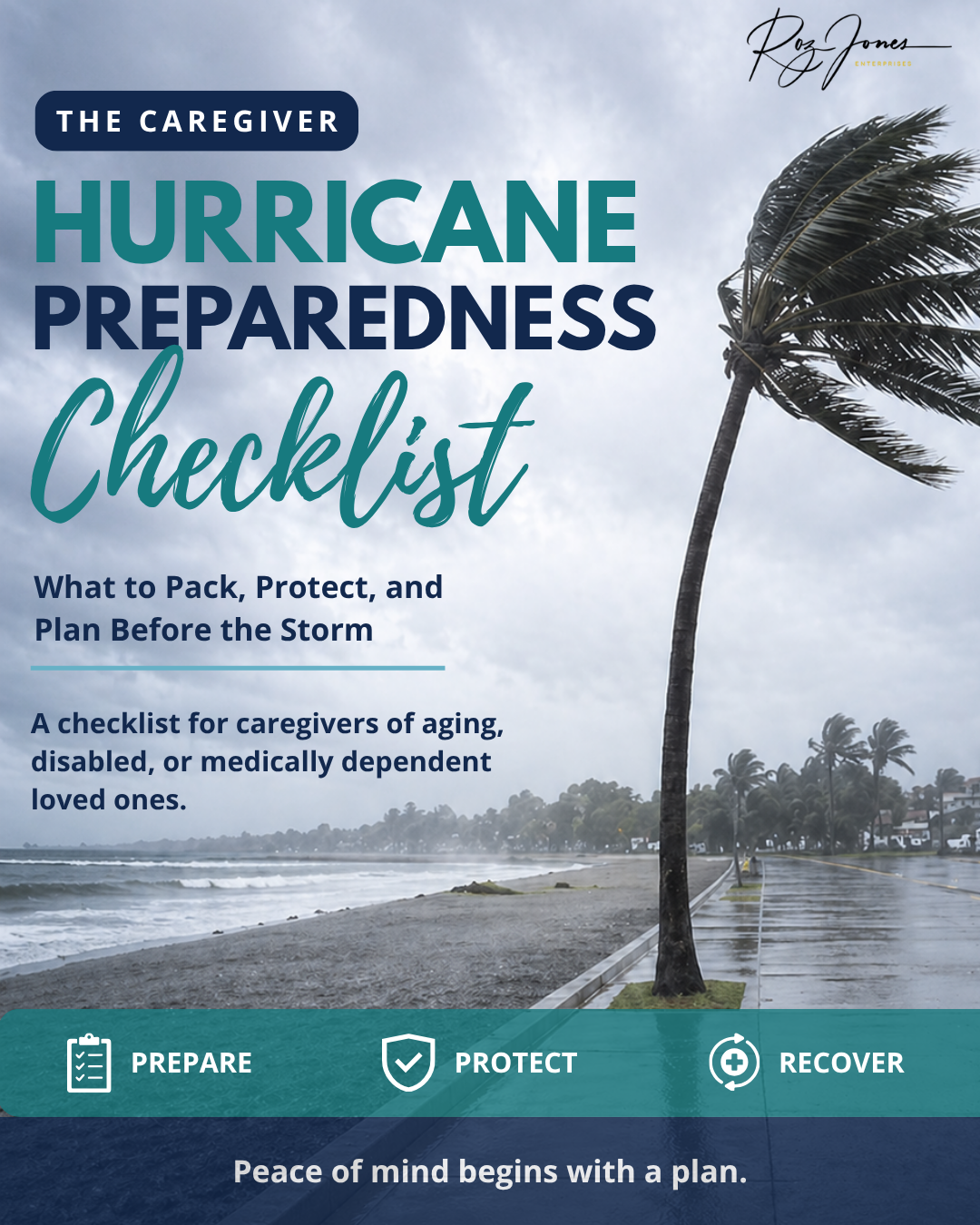
The Caregiver Hurricane Preparedness Checklist.

Are you preparing for hurricane season? Purchase the Caregiver Hurricane Preparedness Checklist to organize the information and supplies your family may need before severe weather arrives.

Subscribe to The Caregiver Cafe Weekly Newsletter!

Caregiving can be a roller coaster of ups and downs. The information that you will receive from The Caregiver Cafe Weekly Specials Newsletter will support you as a caregiver. Remember…

1. YOU ARE NOT ALONE: The problems you face as a caregiver are experienced by other caregivers. Knowing that you’re not alone can be comforting. 

2. Tools and Resources:  Find caregiver stress management tools and gain perspective from other caregiver’s experiences.

3. LEARN TO: Ask for help, accept help when it is offered, and acknowledge yourself on this caregiving journey. Hear from experts on how to balance caregiving responsibilities by taking care of your needs and involving others to help manage the natural stress and isolation of being a caregiver. 

Creating Calm in a Caregiving Home

By Roz Jones

Creating a peaceful caregiving environment involves more than finding time for meditation, relaxation, or an occasional break. The physical environment itself can have a significant impact on how caregivers and aging loved ones move through their daily routines. When a home becomes crowded with medical supplies, paperwork, mobility equipment, medications, household responsibilities, and reminders of everything that still needs to be completed, that environment can contribute to an already demanding caregiving experience.

For caregivers of aging loved ones, reducing household chaos is not about maintaining a perfectly organized home. It is about creating an environment that supports safety, accessibility, comfort, and more manageable caregiving routines. As an aging loved one’s needs change, the home may need to change with them.

Creating a Safer Environment for Aging Loved Ones

Clutter can become more than an organizational concern when an aging loved one experiences changes in mobility, balance, vision, strength, or cognition. Items that were once easy to navigate around may eventually become obstacles that increase the risk of falls or injury.

The National Institute on Aging recommends evaluating the homes of older adults for safety and accessibility, particularly for those who plan to remain at home as they age. Loose rugs, electrical cords, unnecessary furniture, poor lighting, and crowded pathways are among the household concerns families may need to address.

These changes do not always require major renovations. Creating wider pathways between furniture, keeping frequently traveled areas clear, improving lighting, and relocating objects that create tripping hazards can make everyday movement easier and safer.

Caregivers should periodically reassess the home as their loved one’s abilities change. A room arrangement that worked several years ago may no longer support someone who now uses a walker, wheelchair, or other mobility device.

Organizing the Information That Comes With Caregiving

Caregiving often generates an enormous amount of information. Medication lists, insurance documents, medical records, appointment instructions, emergency contacts, care plans, and information from multiple healthcare providers can quickly become scattered throughout the home.

Creating a consistent system for caregiving information can make daily responsibilities easier to manage. Important documents can be stored in one designated location, while frequently used medical or personal care supplies can be organized where they are easily accessible to the people providing care.

This becomes particularly important when caregiving responsibilities are shared. A family member, respite caregiver, home health aide, or other support person should be able to locate essential information without depending entirely on the primary caregiver.

Medication organization also deserves careful attention. Aging loved ones experiencing dementia or other cognitive changes may require additional safeguards around medications and potentially dangerous household items. As abilities change, storage systems may need to change as well.

An organized caregiving system does not need to be elaborate. It needs to be consistent, understandable, and easy for the people involved in the care plan to use.

Reducing Clutter Without Removing Familiarity

Decluttering the home of an aging loved one requires sensitivity.

A home is more than a collection of furniture and belongings. Photographs, artwork, books, decorations, and keepsakes often hold decades of memories. Removing too much in the name of organization can leave an aging loved one feeling as though control over their own environment is disappearing.

The goal should be to reduce unnecessary clutter while preserving the familiar items that provide comfort and connection.

Frequently used areas can remain functional without becoming sterile. Dining tables can be kept clear enough for meals and medication routines while still displaying meaningful items. Glasses, hearing aids, mobility devices, keys, and other frequently used belongings can be assigned consistent locations to reduce unnecessary searching.

Consistency can become especially valuable for aging loved ones experiencing memory changes. Familiar surroundings and predictable locations for everyday items may help reduce confusion while allowing the home to continue feeling personal.

Household Chaos Can Include the Calendar

Physical clutter is only one form of chaos caregivers manage.

Medical appointments, prescription refills, grocery shopping, transportation, meal preparation, household maintenance, family communication, and personal responsibilities can create a caregiving calendar that feels just as crowded as the home.

Caregivers may also be balancing employment, parenting, their own medical needs, relationships, or responsibilities for more than one aging loved one. The Centers for Disease Control and Prevention continues to recognize that caregiving can affect physical, emotional, psychological, and financial well-being.

Reducing this type of chaos may require examining which responsibilities can be combined, delegated, rescheduled, or removed altogether.

Medical appointments might be coordinated when possible. Another family member may be able to handle transportation or prescription pickups. Grocery delivery or meal preparation assistance may reduce another recurring responsibility. Family updates can be shared through one designated person or communication system rather than requiring the primary caregiver to repeatedly provide the same information.

A calmer caregiving routine is often created by simplifying what must be managed rather than becoming more efficient at managing an unreasonable number of responsibilities.

Protecting Space for the Caregiver

When caregiving takes place at home, the boundaries between caregiving and personal life can gradually disappear. Medical supplies may occupy one room, paperwork another, and reminders of upcoming responsibilities may be visible throughout the house.

Creating even a small area that is not centered around caregiving can provide an important separation.

This does not require a dedicated room. A comfortable chair, a corner of a bedroom, a porch, or another small area can become a space where caregiving paperwork and supplies are intentionally kept away.

Having a place to read, pray, journal, listen to music, enjoy a cup of coffee, or simply sit without completing another caregiving task can help the home continue to serve the caregiver as well as the person receiving care.

Rest should not always require leaving the house.

Sharing Household Responsibilities Is Caregiver Support

Household tasks are often treated as separate from caregiving, but they directly affect caregiver capacity.

Laundry, cleaning, meals, grocery shopping, errands, and household maintenance require time and energy. When the primary caregiver becomes responsible for all of those tasks in addition to providing hands-on care, the workload can become increasingly difficult to sustain.

Family members and other supporters do not necessarily need caregiving experience to provide meaningful help. Preparing meals, handling laundry, purchasing groceries, organizing supplies, completing errands, or spending time with an aging loved one can remove responsibilities from the primary caregiver’s workload.

Community resources can also become part of the support plan. Depending on eligibility and location, caregivers may have access to respite services, adult day programs, aging services, home care programs, transportation resources, caregiver education, or support groups.

Veterans and their caregivers may also have access to additional assistance through the Department of Veterans Affairs. In 2026, the VA Caregiver Support Program continues to provide services that can include caregiver education, coaching, peer support, referrals, and respite-related resources for eligible veterans and families.

Maintaining the Aging Loved One’s Role in the Home

Creating a safer and more organized caregiving environment should not mean taking control of the home away from the aging loved one.

Whenever possible, changes should include their participation.

Decisions about removing belongings, rearranging furniture, organizing personal items, or changing familiar routines should consider both safety and personal preference. An aging loved one may agree that a walkway needs to be cleared while still wanting certain photographs, furniture, or meaningful belongings nearby.

Those preferences matter.

A caregiving environment can become safer without becoming clinical. It can become more organized without losing its warmth. Most importantly, an aging loved one should still be able to recognize the space as their home.

Creating Calm Through the Caregiving Environment

In Calm & Chaos: Cleaning up Chaos to Induce Calm, we explored activities caregivers and aging loved ones can share to encourage relaxation, including meditation, nature walks, creative expression, gentle movement, storytelling, and intentional moments of rest.

Those activities can continue to play an important role in caregiver wellness.

Creating calm, however, also requires looking at the environment and systems surrounding caregiving. A safer walkway, an organized location for medications and paperwork, a more manageable schedule, clearly divided household responsibilities, and space for the caregiver to rest can reduce some of the unnecessary pressure surrounding everyday care.

Caregiving will always include responsibilities that cannot simply be organized away. Aging brings changes that families cannot always predict or control.

What families can do is create an environment that responds to those changes with greater intention.

Reducing chaos is not about creating the perfect home or the perfect caregiving routine. It is about removing unnecessary barriers so that the home continues to support the aging loved one’s safety and dignity while also protecting the caregiver’s ability to provide care.

Prepare for Your Next Trip

Planning to travel with an aging loved one? Download the free Vacationing with an Aging Loved One Checklist to help you prepare for medications, mobility needs, comfort, safety, and unexpected changes.

Tune in to The Caregiver Café Podcast

Coping Tips for the Overwhelmed Caregiver

In this episode of The Caregiver Café with Roz Jones, Roz is talking about something many caregivers know all too well: feeling overwhelmed while caring for an aging loved one.

Caregiving can be an all-consuming and demanding role. Between doctor’s appointments, medications, meals, daily routines, work responsibilities, and trying to care for yourself, it can start to feel like too much. But Roz reminds caregivers that overwhelm does not always mean you are failing. Sometimes it means you need a better system, more support, and a little more preparation.

Roz breaks down practical coping tips caregivers can use to reduce stress and create more breathing room in their day. She talks about the power of routines, using a calendar or planner, writing down appointments, preparing in advance, and building in extra time so caregivers are not always rushing from one thing to the next.

Give Yourself a Moment of Grace

Caregiving includes demanding days, unexpected changes, and moments of connection that may be easy to overlook. Moments of Grace offers encouragement to caregivers who need a reminder to pause and recognize the meaningful moments along the journey.

Preparing for hurricane season?

The Caregiver Hurricane Preparedness Checklist.

Are you preparing for hurricane season? Purchase the Caregiver Hurricane Preparedness Checklist to organize the information and supplies your family may need before severe weather arrives.

Subscribe to The Caregiver Cafe Weekly Newsletter!

Caregiving can be a roller coaster of ups and downs. The information that you will receive from The Caregiver Cafe Weekly Specials Newsletter will support you as a caregiver. Remember…

1. YOU ARE NOT ALONE: The problems you face as a caregiver are experienced by other caregivers. Knowing that you’re not alone can be comforting. 

2. Tools and Resources:  Find caregiver stress management tools and gain perspective from other caregiver’s experiences.

3. LEARN TO: Ask for help, accept help when it is offered, and acknowledge yourself on this caregiving journey. Hear from experts on how to balance caregiving responsibilities by taking care of your needs and involving others to help manage the natural stress and isolation of being a caregiver. 

Before the Next Dose

A Guide to Medication Safety, Organization, and Emergency Readiness

By Roz Jones

Caregiving has a way of making you pay attention to the details.

The doctor’s appointments.
The insurance cards.
The pharmacy calls.
The pill bottles on the counter.
The vitamins in the kitchen cabinet.
The “as needed” medication that nobody can remember the last time they used.

And then there is the next dose.

The one that needs to be taken with food.
The one that should not be mixed with another medication.
The one that changed after the last doctor’s appointment.
The one that your loved one swears they already took, but you are not quite sure.

When you are caring for an aging loved one, medication management is not just another task on the list.

It is part of the care plan.

In my previous blog, Decluttering and Organizing Medication: A Guide for Caregivers, I talked about the importance of checking expiration dates, sorting medications, labeling bottles, using trackers, keeping medicine stored safely, and properly disposing of what is no longer needed.

But before the next dose, caregivers need more than a neat medicine cabinet.

They need a system that protects safety, reduces confusion, and helps everyone involved know what is being taken, when, why, and by whom.

Because medication mistakes do not always happen because someone does not care.

Sometimes they happen because the system is unclear.

Before the Next Dose, Know What Is Current

Before organizing anything, gather every medication and health-related item into one place.

Not just the prescription bottles.

Check the bathroom cabinet.
The kitchen drawer.
The nightstand.
The purse.
The car.
The old travel bag.
The refrigerator.
The weekly pill organizer.

Caregivers are often surprised by what they find.

Duplicate bottles.

Expired medication.

Old antibiotics.

Prescription pain medicine from a past procedure.

Supplements no one remembers buying.

Medicine that was discontinued but never removed from the home.

Before the next dose is given, you need to know what is actually current.

Separate everything into categories:

  • Daily medications: These are medications your loved one takes on a regular schedule.
  • As-needed medications: These may include pain relievers, allergy medication, inhalers, nausea medication, or anything taken only when symptoms appear.
  • Over-the-counter medications and supplements: This includes vitamins, herbal supplements, digestive support, cold medicine, sleep aids, and anything purchased without a prescription.
  • Expired or no-longer-needed medication:  These should be separated and disposed of properly.
  • Medications that need clarification: If you are not sure whether your loved one should still be taking something, do not guess. Set it aside and ask the pharmacist or provider.

Before the Next Dose, Update the Medication List

Every caregiver should have a current medication list.

Not one from two years ago.

Not one buried in a folder.

Not one saved only in one person’s phone.

A current list.

This list should include:

  • Name of each medication
  • Dosage
  • Time of day it is taken
  • How often it is taken
  • Why it is being taken
  • Name of the prescribing doctor
  • Pharmacy name and phone number
  • Allergies
  • Medical conditions
  • Notes about recent changes or side effects
  • Emergency contacts
  • Insurance information

Keep a printed copy somewhere easy to reach.

Keep a digital copy as a backup.

And make sure at least one other trusted person knows where to find it.

Because if there is a fall, a hospital visit, a power outage, an evacuation, or a sudden change in health, you do not want to rely on memory.

Memory gets tired.

Memory gets stressed.

Memory forgets the name of the little white pill when the nurse is asking questions in the emergency room.

A medication list gives the care team something clear to work from.

Before the Next Dose, Check for Changes

Medication routines can change quickly.

A doctor adjusts the dosage.

A specialist adds something new.

A hospital discharge summary includes new instructions.

The pharmacy changes the look of the pill because the manufacturer changed.

Your loved one stops taking something because it makes them feel dizzy.

Another family member gives an over-the-counter medicine without realizing it could interact with something else.

This is why caregivers need to review medications regularly, especially after:

  • Doctor’s appointments
  • Emergency room visits
  • Hospital stays
  • Rehab or skilled nursing stays
  • New diagnoses
  • New symptoms
  • Falls
  • Confusion
  • Changes in appetite or sleep
  • Pharmacy refill changes

Before the next dose, ask yourself:

  • Has anything changed?
  • Was anything added?
  • Was anything stopped?
  • Did the instructions change?
  • Does the pill look different?
  • Did the doctor and pharmacist both know about all the medications, supplements, and over-the-counter items being used?

These are the questions that help prevent avoidable confusion.

Before the Next Dose, Choose a System That Works in Real Life

A medication system only works if the caregiver and loved one can actually use it.

  • Some families do well with medication apps.
  • Some need a paper chart on the refrigerator.
  • Some prefer a weekly pill organizer.
  • Some need pharmacy-prepared pill packs.
  • Some need phone alarms.
  • Some need a nurse, aide, or family member to physically check in.

Do not choose a system because it sounds impressive.

Choose the one that will actually get used.

You may consider:

  • Weekly pill organizers: Helpful for routine medications, but they should be filled carefully and checked often.
  • Medication reminder apps: Helpful when caregivers need alerts or shared reminders.
  • Pharmacy blister packs or pill packaging: Helpful when medication schedules are complex or when confusion is becoming a concern.
  • Paper medication logs: Helpful for documenting when medication was taken, missed, refused, or changed.
  • Shared caregiver notes: Helpful when more than one person is providing support.

Before the next dose, the person helping should know what needs to happen without guessing.

Before the Next Dose, Watch What Your Loved One’s Body Is Telling You

Caregivers often notice changes first.

Aging loved ones may not always connect symptoms to medication.

They may say:

  • “I just feel funny.”
  • “I’m more tired than usual.”
  • “I feel dizzy.”
  • “I don’t have an appetite.”
  • “I don’t know why I keep falling.”
  • “I feel confused.”
  • “I feel weak.”
  • “I can’t sleep.”

Those changes matter.

They may be connected to illness, dehydration, aging, or something else entirely.

But medication should always be part of the conversation.

Before the next dose, pay attention to what is different.

  • Write it down.
  • Call the pharmacist.
  • Message the doctor.
  • Ask whether medications could be interacting.
  • Ask whether the dose needs to be reviewed.
  • Ask whether the medication is still needed.
  • And please do not stop prescription medication without speaking with the provider unless you have been clearly instructed to do so.

Your role is not to become the doctor.

Your role is to notice, document, and advocate.

That is caregiving.

Before the Next Dose, Store Medication Safely

Medication should be easy for the right person to access and hard for the wrong person to access.

That balance matters.

Keep medication away from children, pets, and anyone who may take it accidentally.

Pay attention to storage instructions. Some medications need to be kept at room temperature. Some may need refrigeration. Some should not be stored in humid spaces like bathrooms.

Also consider your loved one’s current ability.

If they are experiencing memory loss, confusion, vision changes, mobility limitations, or difficulty reading labels, the medication system may need to change.

That does not mean taking away independence.

It means creating support that matches their needs.

Safety is not disrespect.

Safety is care.

Before the Next Dose, Clear Out What No Longer Belongs

Expired or unused medication should not sit around the house.

It creates clutter. It creates confusion. It creates risk.

If a medication is expired, discontinued, duplicated, or no longer needed, separate it from the current medication routine.

Then ask your local pharmacy, doctor’s office, or community agency about safe disposal options.

Many communities offer medication take-back programs or disposal kiosks.

Do not assume every medication should be flushed or thrown away. Some medications have specific disposal instructions.

When in doubt, ask the pharmacist.

That one question can help prevent an unsafe mistake.

Before the Next Dose, Prepare for Emergencies

Medication organization is not separate from emergency planning.

It is part of emergency planning.

If there is a hurricane, power outage, hospitalization, evacuation, flood, or sudden change in health, medication access can become urgent.

Caregivers need to know:

  • Does my loved one have enough medication on hand?
  • Are refills current?
  • Which medications cannot be missed?
  • Which medications need refrigeration?
  • What happens if the power goes out?
  • Do we have a printed medication list?
  • Do we have pharmacy contact information?
  • Do we have copies of prescriptions or medical supply orders?
  • Does anyone else know the medication routine?
  • If we had to leave quickly, could we grab what we need?

This is where many families realize preparation is not just about bottled water and flashlights.

It is also about pill bottles, prescriptions, medical equipment, insurance cards, emergency contacts, and knowing who is responsible for what.

Before the next storm, before the next emergency, and before the next dose, make sure the plan is clear.

Need Help Getting Prepared?

The Caregiver Hurricane Preparedness Checklist.

Caregivers, please do not wait until everything is urgent to get organized.
Do not wait until the storm is coming.
Do not wait until the hospital calls.
Do not wait until the medication list is missing, the refill is empty, or the family is asking who knows what.
Preparation is not panic.
Preparation is care.


That is why I created the Caregiver Hurricane Preparedness Checklist.
For only $1.99, this checklist helps caregivers organize the important details before an emergency happens, including medications, emergency contacts, documents, supplies, evacuation needs, and care information.


Purchase the Caregiver Hurricane Preparedness Checklist for $1.99 today and make sure your loved one’s care plan is not left to memory.

When You Can’t Do it All Give Roz a Call!

Roz Jones is a dedicated caretaker turned CEO with over a decade of experience in helping families care for and make decisions for loved ones and their legacies.Roz is a compassionate, innovative healthcare industry leader.

If your caregiving situation feels bigger than a checklist, I invite you to book a Family Care Planning Session with me.

Together, we can look at what needs to be organized, what conversations need to happen, and what support needs to be put in place so you are not carrying the care plan alone.

Subscribe to The Caregiver Cafe Weekly Newsletter!

Caregiving can be a roller coaster of ups and downs. The information that you will receive from The Caregiver Cafe Weekly Specials Newsletter will support you as a caregiver. Remember…

1. YOU ARE NOT ALONE: The problems you face as a caregiver are experienced by other caregivers. Knowing that you’re not alone can be comforting. 

2. Tools and Resources:  Find caregiver stress management tools and gain perspective from other caregiver’s experiences.

3. LEARN TO: Ask for help, accept help when it is offered, and acknowledge yourself on this caregiving journey. Hear from experts on how to balance caregiving responsibilities by taking care of your needs and involving others to help manage the natural stress and isolation of being a caregiver. 

Caregiving Needs Better Systems

By Roz Jones

Most caregivers are not dealing with one distraction at a time. 

They are answering calls between meetings, tracking medications while making dinner, trying to remember appointment details, responding to family members, checking in on an aging loved one, and still attempting to hold together the rest of their own lives. Caregiving today often happens in the middle of everything else, which is exactly why so many caregivers feel mentally overloaded before the day is even over.

Technology cannot remove the emotional weight of caregiving. It cannot replace presence, patience, or support. But it can help reduce some of the clutter, create more structure, and make daily caregiving responsibilities feel a little more manageable.

Technology Is Not the Answer to Everything

Let’s start there.

Technology is a tool, not a cure-all.

It cannot make hard decisions for you. It cannot solve grief, family tension, or the stress of watching someone you love need more help than they used to. And not every app, device, or system will work for every family.

But the right tools can reduce friction.

They can help you remember what needs to happen.
They can make communication easier.
They can support your aging loved one’s safety and independence.
They can help you stop carrying every detail in your head.

The Best Caregiving Tech Is Usually Simple

A few years ago, a blog like this might have focused mostly on listing caregiver apps. But caregiving has changed, and technology changes fast too. The better question now is not, “What app should I download?” It is, “What systems will actually make this easier?”

Most caregivers do not need more digital clutter. They need tools that reduce confusion and help them stay organized in real life.

Technology Tools That Can Lighten the Load

Not every caregiver needs a dozen new apps. In most cases, a few simple tools can make daily life feel more manageable. The goal is not to add more noise. It is to reduce the mental clutter, missed details, and constant back-and-forth that caregiving can create.

  • Shared calendar tools
    • One of the biggest sources of caregiver stress is trying to remember everything. Appointments. Medication refill dates. Transportation plans. Follow-up calls. Family updates. It adds up quickly.
    • A shared digital calendar can help keep those details in one place. This can be especially useful when more than one family member is involved in care, even if one person is still managing most of it.
  • Medication reminder apps
    • Medication management can become one of the most stressful parts of caregiving, especially when prescriptions change, refill timing gets complicated, or your loved one is managing multiple medications at once.
    • Medication reminder tools can help with alarms, refill tracking, and keeping an updated list of prescriptions. The Family Caregiver Alliance notes that digital medication tools can support pill identification, scheduling, and reminder systems, and AARP has highlighted Medisafe (Iphone /Android) as one current free option caregivers use for medication tracking.
  • Care coordination apps
    • Some caregivers need one central place to organize tasks, updates, and support from others. AARP has highlighted tools such as CaringBridge for updates and support, and Caring Village for coordinating tasks, roles, and communication among a care team. These kinds of tools can be helpful when several people want to support your loved one but communication is scattered or inconsistent.
  • Voice assistants and smart speakers
    • Voice assistants can be useful for reminders, hands-free calls, medication prompts, music, or simple daily routines. AARP notes that smart home technology can help older adults stay independent longer and can give caregivers oversight without feeling overly intrusive. For some families, something as simple as a spoken reminder can reduce daily stress in a meaningful way.
  • Smart home safety tools
    • Depending on your loved one’s needs, tools like video doorbells, motion sensors, smart lights, smart locks, fall alerts, and medical alert systems may help support safety at home. AARP recommends these kinds of tools as part of aging in place support and notes they can make daily life easier for both older adults and caregivers. Not every household needs all of this. Sometimes one or two simple tools can make a meaningful difference.
  • Telehealth and patient portals
    • For many families, healthcare communication looks different now than it did a few years ago. Telehealth can be helpful for routine follow-ups, mental health support, medication conversations, and appointments that do not require travel. Patient portals can also make it easier to review test results, request refills, track provider messages, and keep appointment information in one place. Caring.com lists virtual medicine and health tracking among the most useful tech categories for caregivers. Even if your aging loved one is not managing these systems independently, you may still be able to use them to reduce back-and-forth and stay more organized yourself.
  • Group messaging or shared notes
    • Sometimes the most helpful tool is not a caregiving app at all. A shared notes app, family group text, or simple digital checklist can reduce repetition and make it easier to keep everyone informed without having to explain the same thing over and over again. CaringBridge also notes that task-management tools for scheduling, medication reminders, and organization can be valuable for family caregivers.
  • Budget and bill-tracking tools
    • When caregiving includes helping with expenses, subscriptions, or household bills, digital budgeting tools can make that easier to monitor. AARP has highlighted tools such as Monarch Money, Quicken Simplifi, Rocket Money, and YNAB for tracking spending and spotting unusual transactions.This can be especially helpful when you are helping manage someone else’s household while trying to keep up with your own.
  • Use what already exists on your phone
    • Sometimes caregivers do not need another app. AARP notes that many built-in smartphone features can improve accessibility, reminders, and ease of use. In some families, the best tool may simply be using alarms, shared reminders, notes, and contact shortcuts more intentionally.

Support does not have to be fancy to be effective.

Not Every Tool Will Work for Every Family

It is important to stay grounded here.

A tool is only helpful if it is accessible, affordable, understandable, and usable in your actual daily life.

Sometimes the right support is digital.
Sometimes it is a paper planner and one reliable reminder system.
Sometimes it is keeping things simple enough that everyone involved can actually follow through.

Support does not have to be trendy to be effective.

Start with the Problem, Not the Product

Before downloading another app or buying another device, pause and ask yourself:

What is the actual problem we are trying to solve?

Is it missed medications?
Difficulty keeping up with appointments?
Trouble updating family members?
Safety concerns at home?
Losing track of paperwork?
Feeling like every task is living in your head?

When you start with the problem, you are much more likely to choose a tool that truly helps instead of adding more clutter.

Technology Should Lighten the Load

Caregiving can already feel like too many tabs open in your mind at once.

The best technology should not create more work. It should help you close a few tabs.

It should help you feel more organized.
More supported.
Less scattered.
Less alone in managing all the moving pieces.

That is the real value.

Not doing more.
Doing what matters with more clarity.If this blog spoke to where you are right now, be sure to read the earlier blog, Technology as a Tool for Caregivers to Manage Daily Distractions,” for a deeper look at how everyday interruptions can wear caregivers down over time. It is a helpful companion to this conversation and offers more context for why support systems matter so much.

When You Can’t Do it All Give Roz a Call!

Roz Jones is a dedicated caretaker turned CEO with over a decade of experience in helping families care for and make decisions for loved ones and their legacies.Roz is a compassionate, innovative healthcare industry leader.

If your family is managing too many moving parts without enough structure, book a family care planning session with Roz Jones for support in creating a clearer, more manageable plan.

Purchase the Caregiving & Advance Health Directives Checklist!

Roz Jones Enterprises Caregiving & Advance Health Directives Checklist.

If you are ready to get organized around important care decisions and next steps, purchase the Advanced Directives Checklist to help your family move forward with more clarity and confidence.

Subscribe to The Caregiver Cafe Weekly Newsletter!

Caregiving can be a roller coaster of ups and downs. The information that you will receive from The Caregiver Cafe Weekly Specials Newsletter will support you as a caregiver. Remember…

1. YOU ARE NOT ALONE: The problems you face as a caregiver are experienced by other caregivers. Knowing that you’re not alone can be comforting. 

2. Tools and Resources:  Find caregiver stress management tools and gain perspective from other caregiver’s experiences.

3. LEARN TO: Ask for help, accept help when it is offered, and acknowledge yourself on this caregiving journey. Hear from experts on how to balance caregiving responsibilities by taking care of your needs and involving others to help manage the natural stress and isolation of being a caregiver.