By Roz Jones
Family caregivers have always carried responsibilities that extend far beyond helping with meals, transportation, and appointments. Many caregivers are also helping with medications, mobility, daily activities, medical instructions, and the transition home after a hospital stay.
Medicare has begun recognizing that the person providing that unpaid care may need support too. That does not mean every caregiver is paid for the care they provide, but it does mean there are more situations where caregiver training, education, care coordination, and respite can become part of the healthcare plan.
Caregiver Training Can Be Part of the Plan
Some caregiving responsibilities require more than a written set of instructions.
A loved one may need help transferring safely, managing daily activities, communicating after a health change, following a treatment plan, or completing tasks that are necessary for them to remain safely at home.
Medicare now allows certain caregiver training services to be covered when they are connected to an established treatment plan and provided by an eligible healthcare professional. The training may focus on helping the caregiver safely support the aging loved one with functional needs, behavior management, or other parts of their care.
For caregivers, that recognition matters. Being expected to provide care is very different from being shown how to provide it safely.
Ask What Training Is Available
Caregivers should not have to wait until they are struggling at home to discover that additional instruction may have been available.
When a loved one’s condition changes, questions about caregiver training can become part of conversations with physicians, therapists, and other healthcare professionals.
A caregiver supporting someone after a stroke may need different instruction than someone assisting an aging loved one with mobility limitations, behavioral changes, or difficulty completing daily activities.
The support should reflect the care that is actually being provided.
Dementia Care Is Receiving More Attention
Caregiving becomes especially complex when an aging loved one is living with dementia.
Medicare’s GUIDE Model is one example of how caregiver support is being incorporated into dementia care. The program includes care navigation, caregiver education and training, access to support, and respite services for qualifying caregivers of eligible people living with dementia.
Under GUIDE, some eligible families can also receive respite services that temporarily relieve the caregiver from their responsibilities. Those services may be provided in the home, through an adult day program, or in a facility, depending on eligibility and the participating program.
The important distinction is that these supports are connected to specific Medicare programs and eligibility requirements. They are not automatically available to every family caregiver.
Respite Is Part of Healthcare Too
Caregiver exhaustion can affect the entire care plan.
When one person becomes responsible for medications, appointments, meals, mobility, supervision, household responsibilities, and emergencies, the family may begin relying on that caregiver’s ability to keep going without interruption.
That is not a sustainable care plan.
Programs that recognize respite as part of supporting an aging loved one also recognize that caregiver capacity matters. Time away from direct caregiving responsibilities can give the caregiver an opportunity to rest, manage personal responsibilities, or simply recover enough energy to continue providing care.
Support Does Not Always Mean a Paycheck
Families should be careful about interpreting caregiver support as direct payment to the family caregiver.
Medicare may pay healthcare professionals and participating organizations for certain services that support caregivers, but those arrangements are different from Medicare simply paying a relative for the hours they spend caring for an aging loved one.
That distinction can prevent families from building a care plan around assistance that may not actually be available.
Understanding exactly what a program covers, who qualifies, who provides the service, and whether the family has any financial responsibility is an important part of the research.
Bring Caregiver Needs Into Healthcare Appointments
Caregivers are often present during appointments while the entire conversation remains focused on the patient.
The aging loved one should always remain at the center of the care plan, but the person responsible for helping carry out that plan at home also needs enough information to do it safely.
When a new treatment, diagnosis, or discharge plan increases the caregiver’s responsibilities, that change should be discussed.
Healthcare providers need to understand what the caregiver is realistically able to manage, what training may be needed, and where the family may require additional support.
Make Support Part of the Care Plan Early
Families often begin looking for caregiver support only after exhaustion has already become a problem.
A better approach is to ask about resources when caregiving responsibilities begin to increase.
Training, respite, care navigation, community resources, and additional professional support can all become part of a stronger care plan when families know what is available and begin asking questions early.
Caregiver support should not be treated as something that matters only when the caregiver reaches a breaking point.
Supporting the caregiver also supports the aging loved one receiving the care.
If you have not read the original article, start with Traditional Medicare’s Support for Family Caregivers. That article introduced Medicare’s growing recognition of the role family caregivers play and why that shift matters for families providing care at home.
Prepare for Your Next Trip

Planning to travel with an aging loved one? Download the free Vacationing with an Aging Loved One Checklist to help you prepare for medications, mobility needs, comfort, safety, and unexpected changes.
Tune in to The Caregiver Café Podcast
How to avoid hospital re-admission for your loved ones

The transition home after a hospitalization can include medication changes, follow-up appointments, new care instructions, and additional responsibilities for the family caregiver. How those changes are managed can have an important impact on recovery.
Listen to the latest episode of The Caregiver Cafe, “How to Avoid Hospital Re-Admission for Your Loved Ones,” for practical information on preparing for the transition home and supporting an aging loved one after discharge.
Give Yourself a Moment of Grace

Caregiving includes demanding days, unexpected changes, and moments of connection that may be easy to overlook. Moments of Grace offers encouragement to caregivers who need a reminder to pause and recognize the meaningful moments along the journey.
Preparing for hurricane season?
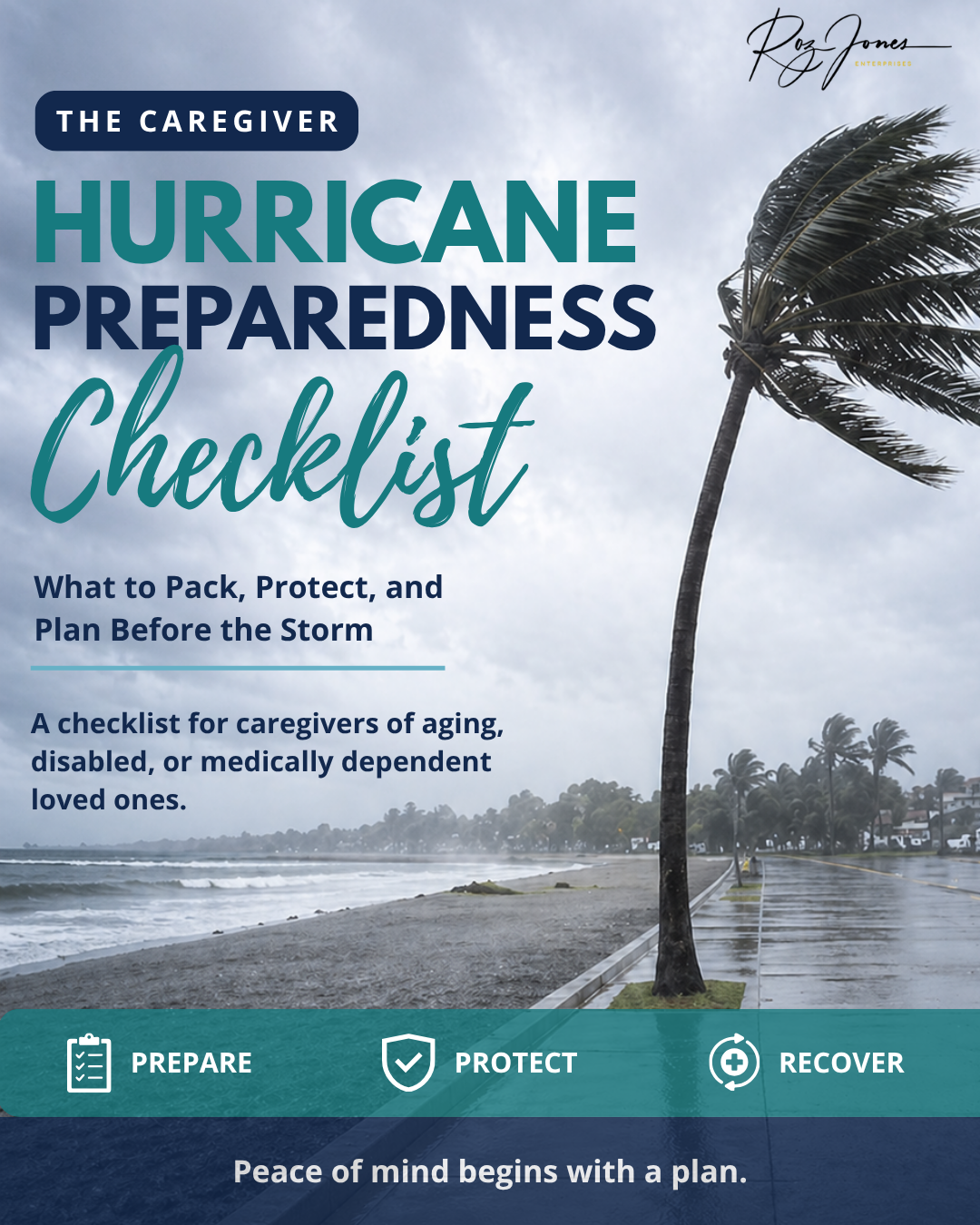
Are you preparing for hurricane season? Purchase the Caregiver Hurricane Preparedness Checklist to organize the information and supplies your family may need before severe weather arrives.
Subscribe to The Caregiver Cafe Weekly Newsletter!

1. YOU ARE NOT ALONE: The problems you face as a caregiver are experienced by other caregivers. Knowing that you’re not alone can be comforting.
2. Tools and Resources: Find caregiver stress management tools and gain perspective from other caregiver’s experiences.
3. LEARN TO: Ask for help, accept help when it is offered, and acknowledge yourself on this caregiving journey. Hear from experts on how to balance caregiving responsibilities by taking care of your needs and involving others to help manage the natural stress and isolation of being a caregiver.