By Roz Jones
Once hospice care becomes part of the family’s journey, the conversation cannot stop there.
The first conversation may be about accepting hospice.
The next conversation needs to be about how the family will walk through hospice together.
That is where many caregivers find themselves carrying more than they expected. The hospice team may be involved, the care plan may be in place, and the family may understand that the focus has shifted. But the day-to-day details still need to be discussed.
Who is calling the nurse?
Who is helping overnight?
Who is keeping track of medication changes?
Who is updating relatives?
Who is managing visitors?
Who is preparing the home?
Who is giving the primary caregiver time to rest?
These questions matter because hospice care does not happen in theory. It happens in real homes, real families, and real caregiving situations.
It happens in the bedroom where supplies are being organized.
It happens in the kitchen where someone is trying to remember if medicine was given.
It happens in family group texts where everyone wants updates, but only one person is doing the work.
It happens when visitors want access, but the loved one needs quiet.
It happens when the caregiver is exhausted and still trying to hold everything together.
The next hospice conversation every caregiver should have is not only about the illness. It is about the plan.
Deciding Who Will Do What
One of the most important conversations families can have during hospice is about responsibility.
Caregivers often become the default person for everything. They answer the phone. They coordinate appointments. They manage the home. They provide the updates. They hold the emotional weight. They become the person everyone looks to, even when they are already worn down.
That is not sustainable.
Families need to be honest about who can help and what they can actually do.
Some people may be able to sit with the loved one for a few hours. Some may be able to prepare meals. Some may be able to pick up supplies. Some may be able to handle phone calls. Some may be able to contribute financially. Some may live far away but can still help with scheduling, family communication, or ordering household items.
Help does not always have to look the same.
But it does need to be clear.
A caregiver should not have to keep asking the same people for support while carrying the whole load alone. The family needs to name the tasks, assign the responsibilities, and be honest about what each person can commit to.
This may include:
- Who will be the main contact for the hospice team
- Who will help with meals
- Who will manage errands
- Who will sit with the loved one so the caregiver can rest
- Who will update extended family
- Who will help with paperwork
- Who will handle household needs
- Who will step in during emergencies
When roles are not clear, resentment can grow quickly. The caregiver may feel abandoned, and other family members may assume everything is handled simply because they are not seeing the full picture.
A clear plan helps everyone understand that caregiving is not one person’s burden to carry alone.
Creating a Calm Home Environment
Hospice care often takes place at home, which means the home may need to shift.
The space should support comfort, safety, and ease of care.
That does not mean everything has to be perfect. Caregivers do not need to turn the house upside down overnight. But small changes can make a big difference.
The family may need to think about where the loved one will rest, where supplies will be kept, how medications will be organized, and how to keep walkways clear. If medical equipment is being delivered, there needs to be space for it. If the loved one has trouble walking, the home may need fewer obstacles. If visitors are coming, the caregiver may need a plan so the home does not become overwhelming.
Comfort is not only about medication.
Comfort is also about the environment.
A calm room, clean linens, soft lighting, familiar music, meaningful photos, favorite blankets, or quiet moments can help create peace. These details may seem small, but they can help the person receiving care feel seen and supported.
Caregivers should also consider what makes care easier.
A notebook near the bed.
A basket for supplies.
A posted list of phone numbers.
A medication chart.
A visitor schedule.
A place for important documents.
A charging station for phones.
These practical pieces help reduce confusion when emotions are high.
Setting Boundaries Around Visitors
Hospice can bring people back into the home.
Some come with love.
Some come with guilt.
Some come with opinions.
Some come with good intentions but poor timing.
This is why caregivers need a conversation about visitors.
Not everyone needs unlimited access. Not every visit needs to be long. Not every person needs to come at the same time. Not every family member understands when quiet is needed.
The person receiving care should remain the priority.
If they are tired, visits may need to be short. If they become anxious around too many people, visits may need to be limited. If they prefer privacy, that should be respected. If certain people bring stress into the room, the caregiver may need to protect the peace of the home.
Boundaries are not disrespectful.
Boundaries help preserve dignity.
Families can decide:
- What visiting hours make sense
- How many people should come at one time
- Who should coordinate visits
- Whether children should visit
- How long visits should last
- What visitors should know before they arrive
- When the loved one needs quiet
Caregivers should not be made to feel guilty for protecting the environment. Hospice is not the time to perform for everyone else. It is a time to honor the person receiving care.
Keeping One Communication System
Family updates can become overwhelming during hospice.
One person calls.
Another texts.
Someone asks the same question that was already answered.
Someone gets upset because they heard the news from someone else.
Before long, the caregiver is spending more time updating people than caring for themselves or their loved one.
Families need one communication system.
That may be a group text, a shared email update, a phone tree, or one designated family spokesperson. The goal is to keep communication clear without overwhelming the primary caregiver.
The family should decide:
- Who gives updates
- How often updates will be shared
- What information should be shared
- Who should receive updates
- How questions will be handled
- What should be taken directly to the hospice team
This is not about keeping people out. It is about keeping the caregiver from being pulled in too many directions.
A caregiver should not have to repeat the same emotionally heavy information ten times in one day.
Communication needs structure.
Keeping a Care Notebook
During hospice, details can change quickly.
Medication instructions may be adjusted. Symptoms may shift. Supplies may run low. The nurse may give new guidance. Family members may come and go. The caregiver may be tired and forget what was said.
A care notebook can help.
This does not need to be complicated. A simple notebook or binder can become a central place for important information.
It may include:
- Hospice contact numbers
- Medication instructions
- Notes from nurse visits
- Changes in symptoms
- Questions for the hospice team
- Supply lists
- Visitor notes
- Meal and hydration notes
- Family contact information
- Important documents or reminders
This notebook can also help when more than one person is providing care. Instead of everyone relying on memory, the family has one place to check.
Caregiving already carries enough emotional weight. A simple system can make the daily responsibilities easier to manage.
Talking About What Peace Looks Like
Every family should have a conversation about what peace looks like for their loved one.
Peace may look different for every person.
For one person, peace may mean prayer and gospel music.
For another, it may mean quiet and soft lighting.
For someone else, it may mean having grandchildren nearby, hearing familiar stories, or being surrounded by photos.
Peace may mean fewer visitors.
Peace may mean certain traditions.
Peace may mean forgiveness conversations.
Peace may mean laughter.
Peace may mean rest.
Caregivers and family members should not assume they know. If the loved one can still share their wishes, ask. If they cannot, think about who they have been and what has mattered to them.
What brought them comfort before illness changed things?
What did they love?
What did they value?
What helped them feel safe?
What made them smile?
Hospice care is not only about managing decline. It is also about honoring a life.
Making Room for Legacy
A hospice season can also open the door for legacy conversations.
This does not have to be formal or forced. It can be as simple as recording stories, writing down favorite sayings, gathering recipes, looking through photos, or asking about memories.
Some families may want to create a playlist.
Some may want to collect letters.
Some may want to ask about family history.
Some may want to preserve prayers, wisdom, or life lessons.
These moments can be meaningful for both the loved one and the family.
Caregivers should not feel pressure to create a perfect legacy project. The goal is not performance. The goal is connection.
Sometimes the most meaningful legacy is found in the small things: a phrase they always said, a song they loved, a meal they made, a story they repeated, or the way they made people feel.
Hospice can remind families to pay attention to those details while there is still time.
Preparing for the Days Ahead
The next hospice conversation also needs to include practical preparation.
Families may need to discuss schedules, supplies, transportation, household responsibilities, legal documents, emergency contacts, and final arrangements.
These conversations can be uncomfortable, but avoiding them does not make the need disappear.
Caregivers should not have to figure everything out in the middle of an emotional moment.
Preparation may include:
- Reviewing advance directives
- Knowing where insurance cards and legal documents are kept
- Confirming funeral or memorial preferences
- Organizing medication and supply information
- Planning for weather emergencies or power outages
- Identifying who can help at short notice
- Making sure important phone numbers are easy to find
This is not about expecting the worst.
It is about reducing confusion for the caregiver and the family.
When the plan is clear, the caregiver has less to carry alone.
Supporting the Primary Caregiver
The primary caregiver needs to be included in every hospice conversation.
Too often, families focus only on the person receiving care and forget the person providing most of the care.
The primary caregiver may be tired, grieving, overwhelmed, and trying to manage responsibilities that others do not see. They may need sleep. They may need meals. They may need someone else to answer calls. They may need someone to sit with their loved one while they step outside.
Families should ask the caregiver directly:
What do you need this week?
What can we take off your plate?
When can you rest?
What tasks are becoming too much?
What support would actually help?
Support should be specific.
Instead of saying, “Let me know if you need anything,” family members can say, “I can bring dinner on Tuesday,” or “I can sit with her Saturday morning,” or “I can call the pharmacy,” or “I can update the relatives.”
Caregivers need practical help, not vague promises.
The Conversation Is Really About Care
The next hospice conversation every caregiver should have is about how the family will show up.
Not just emotionally.
Practically.
Consistently.
Honestly.
Hospice can bring support, but the family still needs to communicate, organize, listen, and make decisions with care.
This season asks families to slow down and ask better questions.
What does our loved one need now?
What does peace look like?
Who is helping the caregiver?
What needs to be organized?
What boundaries need to be set?
What memories need to be honored?
What can we do now so the caregiver is not left to carry everything later?
These are not easy conversations, but they are loving ones.
Caregiving is not just about being present in the crisis. It is also about preparing with compassion, supporting one another, and making sure the person receiving care remains surrounded by dignity.
To read the previous blog The Benefits of Hospice Care for Patients and Their Families on hospice care visit the link.
Give Yourself a Moment of Grace

If you need encouragement for the emotional side of caregiving, purchase Roz Jones’ book, Moments of Grace. This book offers support, reflection, and reminders of grace for the caregiver who is carrying a lot.
This journal was created to help caregivers pause, breathe, reflect, and find strength in the middle of the caregiving journey.
Purchase Moments of Grace today and give yourself permission to breathe in the middle of the caregiving journey.
Prepare Before the Emergency Comes
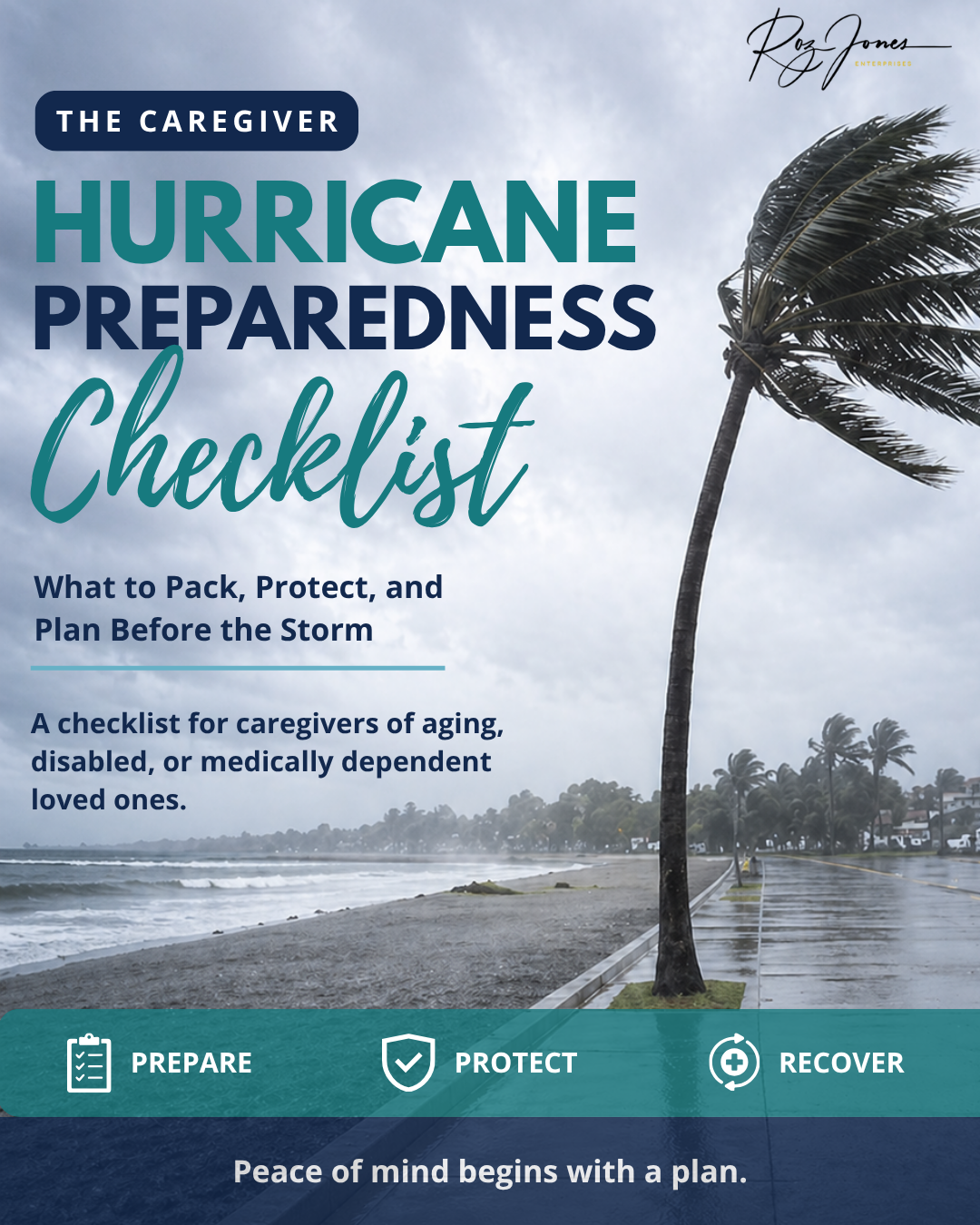
If you are caring for a loved one and want to be better prepared for storms, power outages, and unexpected caregiving emergencies, purchase the Caregiver Hurricane Preparedness Checklist. This resource can help you think through important details before a crisis is already at the door.
For only $1.99, this checklist gives you a simple starting point so you are not trying to gather everything during a storm, power outage, hospitalization, or sudden change in your loved one’s care.
Purchase the Caregiver Hurricane Preparedness Checklist for $1.99 today and take one more step toward peace of mind.
Need Help Sorting Through the Care Plan?

If your family needs help thinking through care decisions, caregiving responsibilities, or next steps, book a session with Roz Jones. You do not have to navigate this season alone.
Together, we can talk through what is working, what is becoming too heavy, and what boundaries need to be strengthened so you can continue to care without losing yourself in the process.
Subscribe to The Caregiver Cafe Weekly Newsletter!

1. YOU ARE NOT ALONE: The problems you face as a caregiver are experienced by other caregivers. Knowing that you’re not alone can be comforting.
2. Tools and Resources: Find caregiver stress management tools and gain perspective from other caregiver’s experiences.
3. LEARN TO: Ask for help, accept help when it is offered, and acknowledge yourself on this caregiving journey. Hear from experts on how to balance caregiving responsibilities by taking care of your needs and involving others to help manage the natural stress and isolation of being a caregiver.