
By Roz Jones
Caregiving has a way of bringing things to the surface.
Not just the doctor’s appointments.
Not just the medication lists.
Not just the bills, errands, paperwork, and safety concerns.
I am talking about the family tension.
The tension that shows up when one person becomes the default caregiver.
The tension that builds when siblings have opinions but not availability.
The tension that comes when everyone says they care, but only one person keeps rearranging their life.
The tension that sits in the room when old family roles, old wounds, and old expectations come back up under the pressure of caregiving.
This is the part of caregiving many families do not talk about.
But we need to.
Because caregiving does not just impact the aging loved one receiving care. It impacts the whole family system. It changes how people communicate, how decisions are made, who feels responsible, who feels left out, and who feels unsupported.
This blog is a continuation of my earlier conversation on Caregiving & The Impact of Mental Health on Family Dynamics. If you have not read that piece yet, I encourage you to revisit it, because the emotional health of the family matters just as much as the care plan itself.
The Tension Usually Starts Quietly
Most caregiving situations do not begin with a formal family meeting.
They begin with small needs.
Can you take Mom to this appointment?
Can you pick up Dad’s prescription?
Can you stop by and check on Auntie?
Can you help with this bill?
Can you talk to the doctor because you understand this better?
One task becomes two.
Two tasks become a routine.
A routine becomes an expectation.
And before long, one person is carrying the care plan while everyone else assumes it is being handled.
That is where tension begins.
Not always because people do not care. Sometimes they do care, but they are unsure how to help. Sometimes they are overwhelmed too. Sometimes they are avoiding the reality of what is changing. Sometimes they are waiting for someone else to step in.
But the caregiver who is doing the daily work may not experience it that way.
They may feel abandoned.
They may feel taken for granted.
They may feel angry.
They may feel like their life is the only one being interrupted.
And those feelings matter.
When Family Roles Resurface
Caregiving often brings old family roles right back to the table.
The responsible child becomes responsible again.
The peacemaker tries to keep everyone calm.
The outspoken sibling criticizes the plan.
The distant family member stays distant.
The one who always avoided hard conversations may disappear when decisions need to be made.
This can be painful because caregiving is already emotional. You are watching an aging loved one change. You may be grieving their independence, their memory, their mobility, or the way family life used to be.
Then on top of that, you are dealing with family patterns that may have been there for years.
That is why a conversation about transportation or medication can suddenly turn into something much bigger. It is not just about the appointment. It is about feeling unseen. It is about feeling unsupported. It is about years of “you always” and “you never” showing up in the middle of a care decision.
And if the family does not pause and name what is happening, that tension can shape the entire caregiving journey.
The Mental Health Piece We Cannot Ignore
Caregiving affects everyone’s mental health differently.
The primary caregiver may feel anxious, exhausted, resentful, or emotionally numb.
The aging loved one may feel afraid, frustrated, embarrassed, or resistant to help.
Siblings or other relatives may feel guilty, defensive, helpless, or disconnected.
Children in the home may feel the stress even when adults think they are hiding it.
Stress does not stay in one person.
It moves through the household.
It changes the tone of conversations.
It shortens patience.
It makes small things feel bigger.
It makes people react instead of respond.
That is why mental health support is not separate from caregiving. It is part of how families survive caregiving without turning on each other.
Sometimes what sounds like conflict is really exhaustion.
Sometimes what sounds like criticism is fear.
Sometimes what looks like avoidance is guilt.
Sometimes what sounds like anger is grief.
Sometimes what feels like control is someone trying to keep the situation from falling apart.
This does not excuse hurtful behavior. But it does help families understand that there may be more happening underneath the surface.
The Resentment No One Wants to Admit
Let’s be honest.
Caregivers can feel resentful.
And that can be hard to admit because resentment feels like something you are not supposed to feel when you love someone.
But resentment does not mean you do not love your aging loved one. It does not mean you are selfish. It does not mean you are ungrateful.
Resentment often means the load is too heavy and too uneven.
It may mean you have been doing too much for too long without enough help.
It may mean family members are making decisions without sharing responsibility.
It may mean people are giving advice instead of assistance.
It may mean your own life has been pushed so far to the side that you barely recognize it.
And here is where families have to be careful: unspoken resentment does not disappear. It leaks out.
It leaks out in tone.
It leaks out in silence.
It leaks out in short text messages.
It leaks out in arguments about small things.
It leaks out when the caregiver stops asking for help because they are tired of being disappointed.
That is why families need honest conversations before resentment becomes the main language in the room.
The Opinion Without Participation Problem
One of the hardest dynamics in caregiving is when people who are not doing the daily work have the strongest opinions.
They may question the doctor’s recommendation.
They may disagree with the schedule.
They may criticize the caregiver’s decisions.
They may say what “should” happen without offering time, money, transportation, or practical support.
That creates tension quickly.
Because if you are not showing up for the daily responsibilities, your opinion needs to come with humility.
Care decisions should be discussed. Families should communicate. Everyone deserves to be heard. But there is a difference between being involved and simply weighing in from the sidelines.
If a family member wants a voice in the care plan, they also need to be willing to take on a piece of the care.
That may not always be hands-on care. It could be paying for supplies, managing paperwork, making calls, organizing meals, researching resources, or giving the primary caregiver a break.
But care cannot be all opinion and no participation.
When the Caregiver Feels Alone in a Full Family
This is one of the quietest pains in caregiving.
Feeling alone while surrounded by family.
You may have siblings, cousins, adult children, church members, friends, and relatives who all love your aging loved one. But when the real work begins, you may still feel like the only one standing in the middle of it.
You are the one answering the phone.
You are the one remembering the details.
You are the one adjusting your schedule.
You are the one being watched closely if something goes wrong.
You are the one expected to stay calm, stay available, and stay strong.
That kind of loneliness can be heavy.
And if no one checks on the caregiver, the family may not realize how close that person is to burning out.
So let me say this clearly: caring for the caregiver is part of caring for the aging loved one.
If the caregiver breaks down, the care plan breaks down too.
What Families Can Do Differently
Family tension may be common in caregiving, but it does not have to run the whole show.
Families can make different choices. Not perfect choices. Different ones.
1. Put the Responsibilities in Writing
A care plan that only lives in one person’s head is not a family care plan.
Write down what needs to happen and who is responsible for each part.
Appointments.
Medication pickups.
Meal support.
Transportation.
Bill payments.
Safety checks.
Home maintenance.
Emergency contacts.
Important documents.
When the tasks are visible, it becomes easier to see whether the load is balanced or whether one person is carrying too much.
2. Have Regular Family Check-Ins
Do not wait until there is a crisis to talk.
Schedule short check-ins to review what is happening, what has changed, and where help is needed.
Keep the conversation focused on care, not blame.
Ask:
What does our loved one need this week?
What does the primary caregiver need this week?
What decision needs to be made?
Who can take responsibility for what?
What needs to be documented?
These conversations may not solve everything, but they can reduce confusion and prevent assumptions from taking over.
3. Speak the Need Clearly
Caregivers, I know this can be hard.
Sometimes you want people to notice. You want them to offer. You want them to understand without you having to ask again.
But in many families, clear requests work better than quiet frustration.
Instead of saying, “Nobody helps me,” try:
“I need someone to take Dad to his appointment on Thursday.”
“I need a break this Saturday from 10 to 2.”
“I need someone else to call the insurance company this week.”
“I need help paying for the supplies this month.”
“I need us to decide who is the backup emergency contact.”
Clear needs make it harder for people to hide behind confusion.
4. Make Respite Non-Negotiable
The primary caregiver should not have to reach exhaustion before the family talks about relief.
Respite needs to be planned.
That could mean rotating weekends.
Hiring help for a few hours.
Arranging adult day support.
Having another family member handle one evening a week.
Creating a backup plan for emergencies.
Respite protects the caregiver’s mental health and helps preserve the relationship between the caregiver and the aging loved one.
Because when every interaction becomes a task, it is easy for tenderness to get buried under responsibility.
5. Get Outside Support When the Family Is Stuck
Some families need help having the conversations they keep avoiding.
That may look like therapy, caregiver coaching, a support group, mediation, or a family care planning session.
There is no shame in bringing in support.
Sometimes a neutral person can help the family move from emotion to action. Sometimes you need someone who can help sort through roles, responsibilities, documents, emergency planning, and next steps without everyone falling back into the same argument.
Prepare Before the Pressure Gets Worse
Family tension often increases when there is no plan.
A storm is coming.
The power goes out.
A prescription runs low.
Your loved one needs to evacuate.
A medical decision has to be made quickly.
Important paperwork cannot be found.
Nobody knows who is supposed to do what.
That kind of pressure can turn a stressful family dynamic into a crisis.
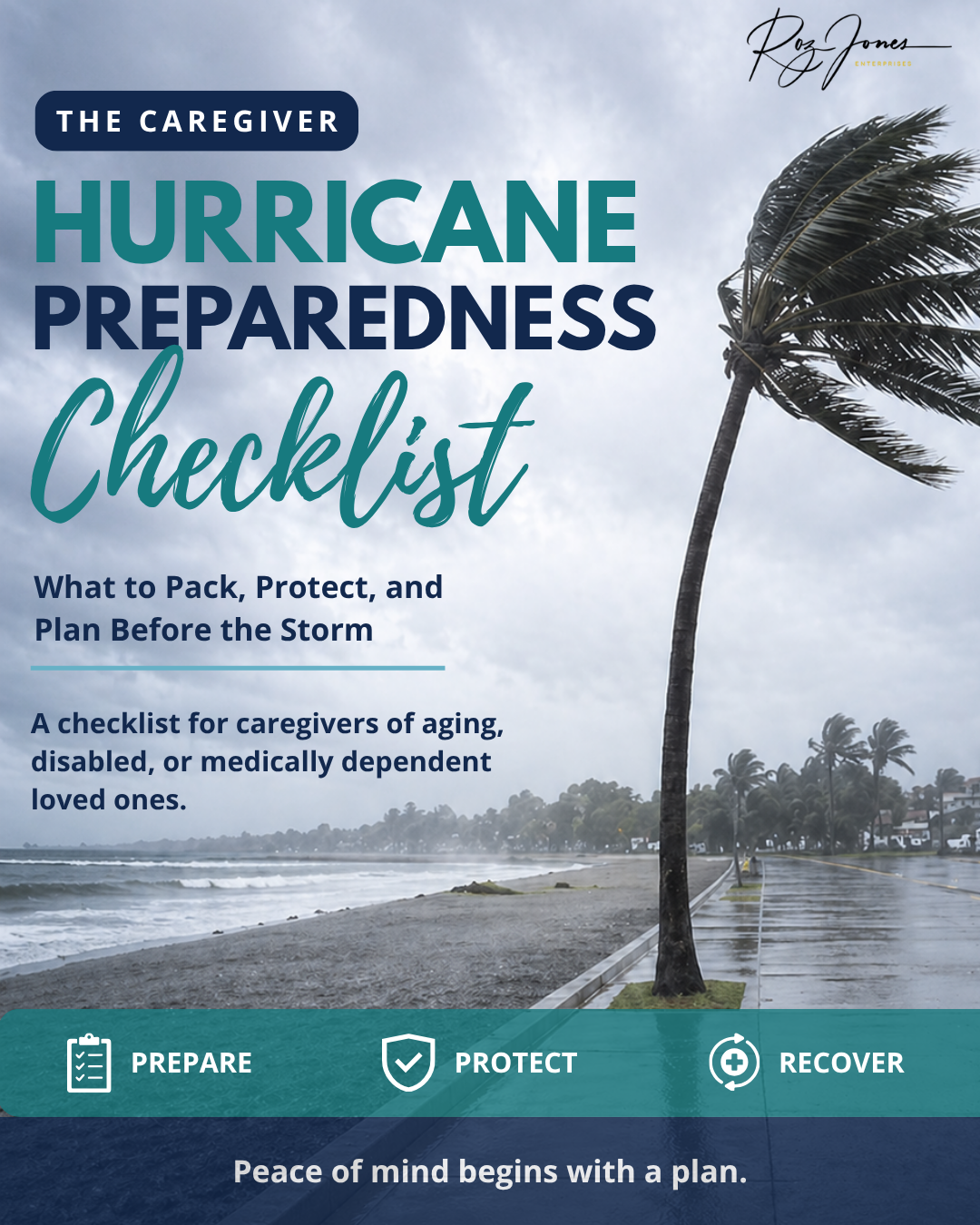
This is one reason I created the Caregiver Hurricane Preparedness Checklist. It is designed to help caregivers and families think through the practical details before the storm is in the forecast, including medications, emergency contacts, important documents, supplies, transportation, communication plans, and the needs of your aging loved one.
Join the Moments of Grace Launch List

Caregiving asks a lot of you — emotionally, physically, mentally, and spiritually. That is why Roz Jones created Moments of Grace: A 40-Day Caregiver Prayer Journal, a faith-filled journal designed to help caregivers pause, reflect, release, and reconnect with God in the middle of the caregiving journey.
Through daily prayers, comforting scriptures, guided journal prompts, and uplifting affirmations, Moments of Grace offers caregivers a quiet place to be honest about what they are carrying while receiving encouragement for the road ahead.
Whether you are caring for an aging parent, spouse, loved one, patient, or family member, this journal is a reminder that your spirit needs care too.
Need Help Getting a Plan in Place?
Caregivers, please do not wait until you are exhausted, overwhelmed, or in the middle of an emergency to get organized.
Preparation is not panic.
Preparation is care.
That is why I created the Caregiver Hurricane Preparedness Checklist.
For only $1.99, this checklist helps caregivers organize important details before an emergency happens, including medications, emergency contacts, documents, supplies, evacuation needs, and care information.
Purchase the Caregiver Hurricane Preparedness Checklist for $1.99 today and give yourself one less thing to carry from memory.
When You Can’t Do it All Give Roz a Call!

A Family Care Planning Session with Roz Jones can help you sort through the responsibilities, family roles, emergency needs, documents, routines, and next steps. Together, we can look at what is happening now and what needs to be put in place so the care feels clearer, calmer, and more shared.
Subscribe to The Caregiver Cafe Weekly Newsletter!

1. YOU ARE NOT ALONE: The problems you face as a caregiver are experienced by other caregivers. Knowing that you’re not alone can be comforting.
2. Tools and Resources: Find caregiver stress management tools and gain perspective from other caregiver’s experiences.
3. LEARN TO: Ask for help, accept help when it is offered, and acknowledge yourself on this caregiving journey. Hear from experts on how to balance caregiving responsibilities by taking care of your needs and involving others to help manage the natural stress and isolation of being a caregiver.