Building a Reliable Support Network Before Your Vacation

By Roz Jones

After assessing the needs of an aging loved one and creating a pre-vacation care plan, the next step is putting the right support system in place.

A written care plan is important, but it is only effective when dependable people are available to carry it out. Family members, friends, neighbors, and professional caregivers may all play a role, depending on the loved one’s level of independence and daily care needs.

Caregivers should avoid making assumptions about who will help or what each person is prepared to manage. Clear communication, defined responsibilities, and a backup plan are necessary to ensure continuity of care while the primary caregiver is away.

Determine the Level of Support Required

The support plan should be based on the aging loved one’s actual needs rather than what is easiest to arrange.

Some aging adults may remain mostly independent and require only occasional check-ins, transportation, meal preparation, or medication reminders. Others may need assistance with bathing, dressing, mobility, toileting, supervision, or medical equipment.

Review the care assessment and consider the level of support required throughout the day.

Important areas to evaluate include:

  • Medication management
  • Meal preparation and hydration
  • Personal care
  • Mobility and fall prevention
  • Transportation
  • Household safety
  • Companionship
  • Memory support
  • Medical appointments
  • Overnight supervision
  • Emergency response

Understanding the full scope of care will help determine whether support can be provided by family and friends or whether professional services are needed.

Include the Aging Loved One in the Process

Whenever possible, the aging loved one should be involved in decisions about who will provide care.

Personal care often involves privacy, trust, and comfort. A loved one may be comfortable receiving help from one family member but not another. They may also have concerns about unfamiliar caregivers entering the home or assisting with personal routines.

Discuss the proposed care arrangements in advance. Explain who will be involved, what responsibilities they will have, and how often they will visit.

If professional care will be used, arrange an introduction before the vacation begins. This allows the loved one to become familiar with the caregiver and gives everyone time to discuss routines, preferences, and concerns.

Including the loved one in the planning process supports dignity and can reduce anxiety about the caregiver’s absence.

Choose Support Based on Ability

Family members may be willing to help but may not fully understand the responsibilities involved.

Someone who feels comfortable preparing meals may not be comfortable assisting with bathing or toileting. A relative may be willing to provide transportation but may not be able to manage medications or respond to changes in behavior.

Each responsibility should be assigned based on a person’s availability, ability, and comfort level.

Caregivers should provide an honest explanation of what the role requires. General requests such as asking someone to “check in” may not provide enough clarity.

Instead, define the specific task.

Examples may include:

  • Preparing breakfast each morning
  • Providing transportation to appointments
  • Calling at scheduled times
  • Assisting with medication reminders
  • Staying in the home for several hours
  • Helping with mobility
  • Picking up groceries
  • Monitoring changes in health or behavior

Specific instructions help prevent misunderstandings and make it easier for family members to decide what they can realistically manage.

Assign Clear Responsibilities

A reliable support network requires more than a list of names.

Each person should know what they are responsible for, when they are expected to help, and who they should contact if a problem occurs.

Create a written schedule that includes:

  • The name of each support person
  • Assigned responsibilities
  • Dates and times of visits
  • Contact information
  • Backup coverage
  • Instructions for reporting concerns

When responsibilities are divided clearly, there is less risk that medications, meals, appointments, or personal care needs will be overlooked.

A written schedule also provides accountability and allows the primary caregiver to identify gaps before leaving.

Select a Primary Contact

One person should serve as the primary point of contact during the caregiver’s absence.

This individual should have a complete copy of the care plan and understand how the different parts of the support network work together.

The primary contact should know how to reach:

  • The aging loved one
  • Family members
  • Professional caregivers
  • Healthcare providers
  • The pharmacy
  • Emergency services
  • The primary caregiver

This person does not need to perform every caregiving responsibility. Their role is to coordinate communication, respond to unexpected changes, and help resolve problems.

Choose someone who is organized, dependable, and able to remain calm during an emergency.

Consider Professional Care Services

Family support may not always be enough.

Work schedules, distance, health limitations, and other responsibilities may prevent relatives from providing consistent care. Some aging loved ones may also need assistance that requires training or experience.

Professional support may include:

  • In-home personal care
  • Home health services
  • Respite care
  • Adult day programs
  • Meal delivery
  • Transportation services
  • Medication management
  • Short-term residential care

Professional services can fill gaps in the family’s availability and provide additional support for more complex needs.

Begin researching options early. Agencies may require assessments, paperwork, service agreements, or advance scheduling before care can begin.

Waiting until the final days before a vacation may limit the available choices.

Schedule a Trial Visit

A trial visit should be arranged before the primary caregiver leaves.

The person providing care should spend time with the aging loved one while the primary caregiver is still present.

During the visit, review the daily routine and demonstrate any tasks that require special instruction.

This may include:

  • Using mobility equipment
  • Preparing meals
  • Organizing medications
  • Assisting with transfers
  • Managing medical devices
  • Supporting memory loss
  • Responding to anxiety or confusion
  • Following bedtime routines
  • Locating emergency supplies

The trial visit provides an opportunity to identify questions, concerns, or safety issues before the care arrangement begins.

It also helps the aging loved one become more comfortable with the transition.

Create a Written Care Guide

Verbal instructions can be forgotten or misunderstood.

A written care guide should provide practical information about the aging loved one’s daily routine and health needs.

The guide may include:

  • Medication names, doses, and schedules
  • Dietary restrictions
  • Meal preferences
  • Personal care routines
  • Mobility limitations
  • Bathroom needs
  • Sleep schedules
  • Appointment information
  • Medical conditions
  • Known allergies
  • Behavioral changes to monitor
  • Emergency contacts
  • Healthcare provider information
  • Pharmacy information
  • Instructions for medical equipment

The care guide should be easy to read and stored in an accessible location.

Copies should be provided only to the people who need the information. Private medical and financial information should remain protected.

Review the guide with the support team before leaving to confirm that the instructions are understood.

Establish a Communication Schedule

The caregiver should decide how updates will be handled during the vacation.

Some caregivers may want one daily phone call. Others may prefer morning and evening text messages. In some situations, the primary contact may provide updates only when there is a concern.

The communication plan should identify:

  • How often updates will be provided
  • Who will provide them
  • Which method will be used
  • What information should be included
  • Which situations require immediate contact

Immediate communication may be necessary in situations involving:

  • A fall
  • A missed medication
  • Sudden confusion
  • Difficulty breathing
  • Chest pain
  • Refusal to eat or drink
  • A caregiver failing to arrive
  • A power outage
  • A medical emergency

Clear expectations allow the caregiver to remain informed without having to supervise every part of the care plan from a distance.

Develop a Backup Plan

Unexpected changes can affect even the most organized care plan.

A family member may become ill. A professional caregiver may cancel. Transportation may become unavailable. Severe weather may affect access to the home.

Backup coverage should be arranged for the most important responsibilities.

Alternate caregivers should have access to:

  • The written care guide
  • Emergency contact information
  • Medication instructions
  • The daily schedule
  • Necessary keys or access codes
  • Medical equipment instructions

The backup plan should be reviewed before the vacation begins.

A dependable care plan includes preparation for what happens when the original arrangement changes.

Prepare the Home

The home should be organized to make caregiving responsibilities easier and reduce safety risks.

Before leaving, caregivers should:

  • Remove clutter and tripping hazards
  • Clear walkways
  • Replace burned-out light bulbs
  • Secure loose rugs
  • Check handrails and grab bars
  • Place frequently used items within reach
  • Restock food and supplies
  • Refill medications
  • Organize personal care products
  • Test emergency alert devices
  • Check smoke and carbon monoxide detectors
  • Charge medical equipment and backup batteries

Labeling supplies and placing instructions near unfamiliar equipment may also be helpful.

A well-prepared home allows the support team to focus on the loved one’s care rather than searching for supplies or correcting preventable hazards.

Protect Privacy and Dignity

Care arrangements should continue to respect the aging loved one’s privacy.

Everyone involved should understand which areas of the home, personal records, devices, and belongings are private.

Medical information should only be shared with individuals who need it to provide care. Personal updates or photographs should not be shared without permission.

Assistance with bathing, dressing, toileting, or other personal tasks should be provided respectfully and discreetly.

The need for care does not remove a person’s right to dignity, choice, and privacy.

Allow the Care Plan to Work

Many caregivers continue to feel responsible for every detail even after a support network has been arranged.

They may call repeatedly, monitor the home, or attempt to manage each task from a distance.

Some communication is necessary, but the purpose of creating a support plan is to allow trusted people to provide care during the caregiver’s absence.

Taking time away is not abandonment.

Respite allows caregivers to rest, recover, and return with greater energy.

When the care needs have been assessed, responsibilities have been assigned, instructions have been provided, and backup plans are in place, the caregiver can leave knowing that preparation has been completed.

Build Support Beyond the Vacation

The support network created for a vacation may also reveal opportunities for ongoing assistance.

A family member may continue helping with meals.

A neighbor may remain available for periodic check-ins.

A professional caregiver may provide regular respite.

Transportation or adult day services may become part of the long-term care plan.

Vacation planning can help families identify where the primary caregiver needs additional support throughout the year.

Caregiving should not depend on one person managing every responsibility alone.

A strong support network protects the aging loved one and reduces the risk of caregiver exhaustion.

The most effective plans are built on clear communication, dependable help, realistic expectations, and preparation for change.

Learn how to evaluate care requirements, identify potential challenges, communicate with healthcare professionals, involve an aging loved one in the planning process, and create a complete care plan before taking a vacation by reading the previous blog, Assessing the Needs of Aging Loved Ones: A Pre-Vacation Checklist.

Prepare for Your Next Trip

Before traveling with an aging loved one, download the free Vacationing with an Aging Loved One Checklist.

This checklist will help you organize important information, supplies, medications, documents, accommodations, and care needs before leaving home.

Tune in to The Caregiver Café Podcast

Assisted Living: What Caregivers Need to Know

In this episode of The Caregiver Café with Roz Jones, Roz is talking about what caregivers need to know when it may be time to look for an assisted living facility.

There may come a point in the caregiving journey when your loved one’s care needs become more than one person can safely manage at home. Maybe their condition has changed. Maybe they need help standing, bathing, eating, taking medication, or getting to the bathroom. Maybe it now takes two people to safely transfer them from the bed or chair. When that happens, it may be time to start asking questions and exploring the next level of care.

Roz walks listeners through some of the important questions to ask when touring an assisted living facility, including staff ratios, staff turnover, training, medical support, room options, emergency response systems, accessibility, activities, meals, shared spaces, and whether residents can bring personal furniture or pets.

This episode is a practical reminder that choosing a facility is not only about the building. It is about safety, staffing, comfort, dignity, and making sure your loved one receives the care they need.

Before you take a tour, pour yourself something warm, get your questions ready, and let Roz help you know what to look for, what to ask, and what to pay attention to.

Give Yourself a Moment of Grace

If you need encouragement for the emotional side of caregiving, purchase Roz Jones’ book, Moments of Grace. This book offers support, reflection, and reminders of grace for the caregiver who is carrying a lot.

This journal was created to help caregivers pause, breathe, reflect, and find strength in the middle of the caregiving journey.

Purchase Moments of Grace today and give yourself permission to breathe in the middle of the caregiving journey.

Don’t Wait Until the Storm is Coming

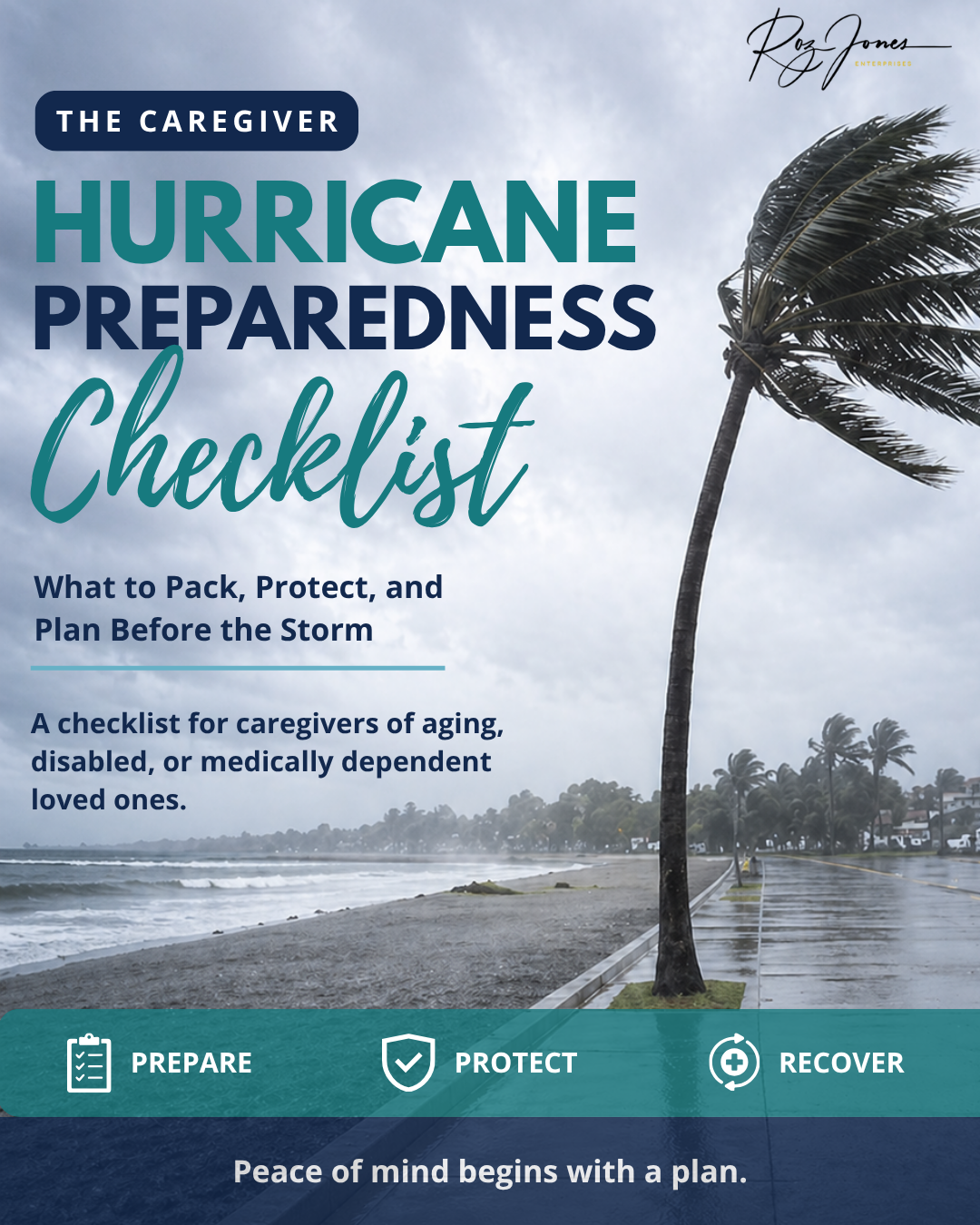
The Caregiver Hurricane Preparedness Checklist.

Severe weather can create additional risks for aging loved ones and family caregivers.

The Caregiver Hurricane Preparedness Checklist will help you organize emergency contacts, medications, medical information, evacuation needs, important documents and essential supplies before a storm arrives.

Need Help Sorting Through the Care Plan?

Roz Jones is a dedicated caretaker turned CEO with over a decade of experience in helping families care for and make decisions for loved ones and their legacies.Roz is a compassionate, innovative healthcare industry leader.

If your family needs help thinking through care decisions, caregiving responsibilities, or next steps, book a session with Roz Jones. You do not have to navigate this season alone.

Together, we can talk through what is working, what is becoming too heavy, and what boundaries need to be strengthened so you can continue to care without losing yourself in the process.

Subscribe to The Caregiver Cafe Weekly Newsletter!

Caregiving can be a roller coaster of ups and downs. The information that you will receive from The Caregiver Cafe Weekly Specials Newsletter will support you as a caregiver. Remember…

1. YOU ARE NOT ALONE: The problems you face as a caregiver are experienced by other caregivers. Knowing that you’re not alone can be comforting. 

2. Tools and Resources:  Find caregiver stress management tools and gain perspective from other caregiver’s experiences.

3. LEARN TO: Ask for help, accept help when it is offered, and acknowledge yourself on this caregiving journey. Hear from experts on how to balance caregiving responsibilities by taking care of your needs and involving others to help manage the natural stress and isolation of being a caregiver. 

Supporting the Mental Health of Minority Caregivers One Conversation at a Time 

By Roz Jones

Conversations about caregiving often begin with medications, doctor’s appointments, meal preparation, and keeping an aging loved one safe.

Conversations about mental health are not always given the same attention.

For many minority families, emotional well-being has traditionally been discussed quietly, if it is discussed at all. Feelings may be minimized, exhaustion may be overlooked, and caregivers may become so accustomed to carrying responsibility that they no longer recognize when the weight has become too heavy.

Changing that pattern does not happen overnight.

It begins with one conversation.

One conversation with a loved one about how they are coping emotionally.

One conversation with a family member about sharing caregiving responsibilities.

One conversation with a trusted healthcare professional, faith leader, therapist, or friend.

One honest conversation where a caregiver feels safe enough to say, “I need support.”

When families create space for these conversations, they begin building something just as important as a care plan. They begin building a culture where mental health is recognized as an essential part of caregiving rather than an afterthought.

Changing the Conversation Starts at Home

Supporting the mental health of minority caregivers does not always begin with finding the right resource or scheduling an appointment. Often, it begins with creating space for honest conversations within the family.

Caregiving discussions frequently revolve around practical responsibilities. Families talk about medications, doctor’s appointments, transportation, finances, and who will be available to help. While these conversations are necessary, they often leave out an equally important question:

How is everyone coping?

Taking time to ask that question can open the door to conversations that might not have happened otherwise. A caregiver may finally admit they are feeling overwhelmed. A sibling may realize they have underestimated how much responsibility one person has been carrying. An aging loved one may share fears or concerns they have kept to themselves because they did not want to burden their family.

These conversations do not need to solve every problem in a single afternoon.

Their purpose is to create understanding.

When families begin talking openly about emotional well-being alongside physical health, they create opportunities to identify concerns early, strengthen communication, and make decisions that support everyone involved in the caregiving journey.

Mental health should not become part of the conversation only after a caregiver reaches burnout or a loved one experiences a crisis. It deserves a place in the discussion from the very beginning, just as naturally as conversations about medications, appointments, or long-term care planning.

Make Mental Health Part of Every Healthcare Conversation

Caregiving conversations should not end when the doctor’s appointment begins.

Many caregivers arrive prepared to discuss medications, recent symptoms, upcoming procedures, and changes in their loved one’s health. These are important conversations, but they should not be the only ones taking place.

Emotional well-being deserves the same level of attention.

If you notice that your aging loved one has become withdrawn, is sleeping more than usual, seems unusually anxious, has lost interest in activities they once enjoyed, or is expressing feelings of hopelessness, those changes are worth discussing with their healthcare provider. Mental and emotional health are closely connected to physical health, and changes in mood or behavior should never be dismissed as simply “getting older.”

Caregivers should also feel comfortable speaking honestly about their own well-being.

If caregiving responsibilities are affecting your sleep, increasing your stress, making it difficult to focus at work, or impacting your physical or emotional health, share those concerns with your healthcare provider as well. While the appointment may focus on your loved one, your health is an important part of the caregiving equation.

Healthcare professionals can often connect families with counseling services, caregiver support groups, social workers, respite care, or other community resources that may not have been considered otherwise. Asking for these resources is not admitting defeat. It is taking a proactive step toward making caregiving more sustainable for both you and your loved one.

Strong caregiving begins with strong communication. The more openly families and healthcare providers talk about mental health, the better equipped they are to support the whole person—not just the diagnosis.

Small Conversations Can Lead to Meaningful Change

Starting a conversation about mental health does not require having all the right words. It simply requires creating opportunities for honest dialogue.

For an aging loved one, that conversation might begin with asking how they have been feeling emotionally instead of only asking how they are feeling physically. You may discover they are grieving the loss of independence, struggling with loneliness, or feeling anxious about changes in their health. These conversations can provide valuable insight into needs that may otherwise go unnoticed.

Caregivers also benefit from checking in with themselves. Taking a few moments to reflect on how you are coping emotionally can help you recognize when additional support may be needed. You might ask yourself:

Have I been feeling more overwhelmed than usual?

Am I sleeping well?

Have I lost interest in activities I once enjoyed?

Do I feel like I have someone I can talk to honestly?

These questions are not meant to judge or criticize. They are meant to increase awareness. Mental health concerns often develop gradually, making them easy to overlook when every day is focused on meeting someone else’s needs.

Families can also make emotional well-being part of their regular caregiving routine. Just as medications are reviewed and appointments are scheduled, consider setting aside time to talk about how everyone is doing. These conversations do not need to be formal. They can happen during dinner, on the drive home from a doctor’s appointment, or while sitting together at the end of a long day.

One conversation may not change everything.

But it can create an opening.

An opening for honesty.

An opening for support.

And an opening for caregivers and aging loved ones to recognize that emotional health deserves the same care and attention as physical health.

Finding Support That Respects Your Experience

Every caregiver deserves support that makes them feel seen, heard, and understood. For many minority caregivers, finding that support may involve looking for resources that recognize not only the challenges of caregiving but also the cultural experiences that shape how care is given and received.

For some families, support may come through a trusted faith community. Others may find comfort in a caregiver support group where they can connect with people facing similar challenges. Some caregivers may benefit from speaking with a therapist who understands the cultural values, family dynamics, or life experiences that influence the caregiving journey. Others may simply need a healthcare provider who takes the time to listen without making assumptions.

The most important thing is to find support that feels right for you.

There is no single path to protecting your mental health. What brings comfort and encouragement to one caregiver may not meet the needs of another. The goal is not to compare your journey to someone else’s. It is to build a network of people and resources that allows you to continue caring for your loved one without losing sight of your own well-being.

Today’s caregivers also have access to more resources than ever before. Virtual support groups, telehealth counseling, community organizations, faith-based programs, employee assistance programs, and caregiver education are helping families receive support in ways that may feel more accessible and flexible than in the past. Exploring these options can be an important step toward creating a caregiving plan that supports both your loved one and yourself.

Asking for support does not mean you are unable to care for your loved one.

It means you understand that caring for someone else becomes more sustainable when caregivers receive the encouragement, resources, and compassion they need as well.

Building a Healthier Caregiving Legacy

Every conversation about mental health has the potential to change more than one caregiving journey.

When families begin talking openly about emotional well-being, they create an environment where caregivers feel supported, aging loved ones feel heard, and future generations learn that asking for help is a sign of wisdom rather than weakness.

Children and grandchildren are often paying attention to how caregiving is modeled within the family. They notice how responsibilities are shared, how difficult conversations are handled, and whether emotional well-being is treated as an important part of overall health. When they see caregivers checking in with one another, seeking support when needed, and speaking honestly about the challenges of caregiving, they learn that caring for others should not require sacrificing themselves in the process.

These conversations also strengthen relationships within the family. They create opportunities to clarify expectations, share responsibilities, and make decisions together rather than placing the weight of caregiving on one person’s shoulders. Open communication allows families to respond to challenges with greater understanding and compassion while keeping the needs of the aging loved one at the center of every decision.

Supporting the mental health of minority caregivers is not about changing the values that have guided families for generations. It is about expanding those values to include the well-being of the caregiver alongside the well-being of the person receiving care.

One conversation may not solve every challenge a family faces.

But it can become the beginning of a healthier way of caring for one another.

And sometimes, that single conversation becomes the legacy that changes how caregiving is experienced for generations to come.

Keep the Conversation Going

Supporting the mental health of minority caregivers is not something that happens through one resource, one appointment, or one conversation alone. It happens when families commit to making emotional well-being part of the caregiving journey from the very beginning.

Checking in with an aging loved one should include asking how they are coping emotionally as well as physically.

Checking in with the caregiver should become just as important.

Asking for help should be viewed as a proactive step toward providing better care, not as a sign that someone has failed.

When caregivers feel supported, they are better equipped to provide compassionate, patient, and consistent care for the people who depend on them. When families create space for honest conversations, they strengthen relationships, reduce isolation, and remind one another that no one should have to carry the responsibilities of caregiving alone.

If you missed our previous blog, Addressing Mental Health Disparities Among Minority Caregivers, be sure to read it for a deeper look at the systemic, cultural, and emotional factors that can make it harder for minority caregivers to access the support they need. Together, these two articles help families understand the challenges, begin more honest conversations, and create a caregiving experience that protects the mental health of both the aging loved one and the caregiver.

Download the Vacationing With an Aging Loved One Checklist for FREE!

Before your next trip, download the free Vacationing with an Aging Loved One Checklist. This resource can help you think through what needs to be packed, planned discussed, and prepared before travel begins!

Tune in to The Caregiver Café Podcast

Handling Criticism as a Family Caregiver

In this episode of The Caregiver Café with Roz Jones, Roz is talking about a topic that can touch every caregiver at some point: criticism.

Being criticized while you are caring for a loved one does not feel good. It can make you feel judged, unappreciated, or like nothing you are doing is enough. But Roz reminds listeners that the way we respond to criticism can either create more chaos or open the door to better communication, support, and growth.

Roz shares how caregivers can begin to embrace criticism by using it as an opportunity for personal growth, improved relationships, and greater confidence. Instead of immediately becoming defensive, caregivers can ask questions, invite others to show a better way, and create space for honest conversations.

This episode is a reminder that everyone may have an opinion, but not everyone understands what caregiving looks like day to day. Still, when handled with wisdom, criticism can become a chance to improve care, strengthen family communication, and reduce tension along the caregiving journey.

So pour yourself something warm and join Roz at The Caregiver Café as she talks about how caregivers can respond to criticism with grace, boundaries, and a little bit of strategy.

Give Yourself a Moment of Grace

If you need encouragement for the emotional side of caregiving, purchase Roz Jones’ book, Moments of Grace. This book offers support, reflection, and reminders of grace for the caregiver who is carrying a lot.

This journal was created to help caregivers pause, breathe, reflect, and find strength in the middle of the caregiving journey.

Purchase Moments of Grace today and give yourself permission to breathe in the middle of the caregiving journey.

Prepare Before the Emergency Comes

The Caregiver Hurricane Preparedness Checklist.

If you are caring for a loved one during storm season, purchase the Caregiver Hurricane Preparedness Checklist. It can help you prepare important documents, emergency contacts, supplies, medication needs, and safety steps before severe weather becomes a crisis.

For only $1.99, this checklist gives you a simple starting point so you are not trying to gather everything during a storm, power outage, hospitalization, or sudden change in your loved one’s care.

Purchase the Caregiver Hurricane Preparedness Checklist for $1.99 today and take one more step toward peace of mind.

Need Help Sorting Through the Care Plan?

Roz Jones is a dedicated caretaker turned CEO with over a decade of experience in helping families care for and make decisions for loved ones and their legacies.Roz is a compassionate, innovative healthcare industry leader.

If your family needs help thinking through care decisions, caregiving responsibilities, or next steps, book a session with Roz Jones. You do not have to navigate this season alone.

Together, we can talk through what is working, what is becoming too heavy, and what boundaries need to be strengthened so you can continue to care without losing yourself in the process.

Subscribe to The Caregiver Cafe Weekly Newsletter!

Caregiving can be a roller coaster of ups and downs. The information that you will receive from The Caregiver Cafe Weekly Specials Newsletter will support you as a caregiver. Remember…

1. YOU ARE NOT ALONE: The problems you face as a caregiver are experienced by other caregivers. Knowing that you’re not alone can be comforting. 

2. Tools and Resources:  Find caregiver stress management tools and gain perspective from other caregiver’s experiences.

3. LEARN TO: Ask for help, accept help when it is offered, and acknowledge yourself on this caregiving journey. Hear from experts on how to balance caregiving responsibilities by taking care of your needs and involving others to help manage the natural stress and isolation of being a caregiver.