When Your Aging Loved One Resists Respite Care

By Roz Jones

You may know you need a break. You may have found someone who can help. You may even have the resources to make respite care possible. Then your aging loved one says the one thing you were hoping not to hear: I don’t want anybody else taking care of me.

For some caregivers, this becomes the reason respite never happens.

Your loved one may be uncomfortable with a stranger coming into the home. They may insist that no one knows their routine the way you do. They may worry about losing privacy or independence. If memory loss or dementia is part of the care situation, a change in who is providing care may create even more uncertainty.

Those concerns deserve to be heard. But they also do not mean the caregiver has to remain the only person providing care indefinitely.

Find Out What They Are Actually Saying No To

A refusal of respite care may sound simple.

“I don’t need anybody.”

“I don’t want a stranger in my house.”

“You can take care of me.”

But there may be something underneath those words.

Your loved one may be embarrassed about needing help with bathing or dressing. They may be worried that accepting another caregiver means they’re losing more independence. They may have had a bad experience with professional care in the past. They may simply be afraid of someone unfamiliar entering their space.

Before trying to convince them, ask questions.

What makes you uncomfortable about having someone else here?

Is there something you’re worried they won’t understand?

Would you feel differently if you met the person first?

What kind of help would feel acceptable to you?

You may not be able to remove every concern, but understanding what your loved one is resisting gives you something specific to address.

Do Not Introduce Respite as a Replacement

Words matter.

If respite is presented as, “Someone else is going to take care of you because I need a break,” your loved one may hear something very different.

They may hear:

You’re too much for me.

I don’t want to take care of you anymore.

Someone else is replacing me.

That may not be what you’re saying, but caregiving changes can bring up fears about dependence, abandonment, and losing control.

Try framing respite as additional support rather than replacement.

You might explain that another person is joining the care plan so there is someone familiar who can help when you have appointments, errands, work responsibilities, or other things you need to manage.

The goal is not to convince your loved one that you’re leaving.

It’s to help them understand that good care should be able to continue even when one caregiver is not available.

Give Them a Voice in Choosing the Support

Whenever your loved one is able to participate in the decision, include them.

If you’re considering professional respite care, let them meet the person who may be providing support. If several options are available, ask which person they feel most comfortable with.

Talk about what tasks they are comfortable receiving help with.

Maybe they’re comfortable having someone prepare lunch and provide companionship but aren’t ready to accept help bathing.

Maybe they would rather attend an adult day program than have someone come into their home.

Maybe they would feel more comfortable starting with a family member before bringing in professional support.

Not every preference can be accommodated, especially when safety or significant care needs are involved. But giving your loved one reasonable choices can make respite feel less like something being done to them.

Start Smaller Than You Think You Need

The first respite experience does not have to be an entire weekend.

If your loved one is resistant, several hours may feel overwhelming.

Start with thirty minutes or an hour while you’re still nearby.

Let the respite provider spend time talking with your loved one while you’re in another room. On another visit, leave long enough to run a short errand. If that goes well, gradually increase the amount of time.

This gives your loved one an opportunity to become familiar with the person and learn that you leave and come back.

It also gives you a chance to see how the arrangement works before depending on it for a longer period.

Familiarity takes time.

The person your loved one calls a stranger today may become someone they recognize and trust after several consistent visits.

Be Careful About Asking for Permission You Cannot Always Give

This can be one of the harder parts of the conversation.

There is a difference between respecting your loved one’s preferences and allowing their resistance to determine whether you are ever permitted to rest.

If your loved one is able to remain safely alone and simply prefers that you stay home, you may have more room to set boundaries around your availability.

If they cannot safely remain alone, the family needs another care option whether they like the idea initially or not.

That doesn’t mean ignoring their feelings.

It means being honest about what the care situation requires.

You can say:

“I understand that you would rather have me here, but I cannot be the only person available every day.”

Or:

“I hear that you’re uncomfortable with this. We’re going to start slowly so you can get to know her, but I need another person who can help when I’m not available.”

Caregivers can be compassionate without promising unlimited availability.

Watch for Resistance That May Be Connected to Dementia

For a loved one living with Alzheimer’s disease or another form of dementia, resistance may not be about the respite provider personally.

Changes in routine, unfamiliar faces, difficulty recognizing people, fear, confusion, or trouble understanding why the primary caregiver is leaving may all affect how respite is received.

In those situations, consistency can matter.

Using the same respite provider whenever possible may help the person become more familiar over time. Keeping meals, activities, music, television programs, and other parts of the daily routine familiar can also reduce unnecessary changes.

It may also help to introduce the respite provider without repeatedly emphasizing that you are “leaving.”

The Alzheimer’s Association recommends looking for the reason behind resistant behaviors and adjusting the environment or approach when possible rather than assuming the person is simply being difficult. Changes in routine, fear, discomfort, confusion, and unmet needs may all contribute to resistance.

Do Not Wait Until You Have No Choice

Here’s the shift I want to encourage: don’t make the first introduction to another caregiver happen on the day you absolutely have to leave.

If you wait until you’re sick, exhausted, hospitalized, called into work, or dealing with a family emergency, there may be no time for your loved one to adjust gradually.

Introduce support while you still have choices.

Let your loved one meet the person.

Pay attention to what makes them comfortable.

Make adjustments.

Give the relationship time to develop.

Respite becomes much harder when everyone is being introduced to a new care arrangement in the middle of a crisis.

Their Comfort Matters, and So Does Your Capacity

Caregivers can become so focused on keeping an aging loved one comfortable that they stop acknowledging their own limits.

Your loved one’s feelings about respite matter.

Their dignity matters.

Their preferences matter.

But the caregiver’s health, responsibilities, relationships, work, rest, and ability to continue providing care matter too.

A sustainable care plan has to make room for both.

You can listen to your loved one’s concerns without allowing guilt to make every decision.

You can introduce change slowly without avoiding change altogether.

You can respect their voice while still recognizing that one caregiver cannot always be the entire care plan.

Sometimes accepting another person into the caregiving circle takes time.

Start the conversation before you desperately need the break.

Because respite works best when your loved one has time to learn that receiving care from someone else does not mean losing you.

It means the care plan is becoming strong enough to support both of you.

For the beginning of this conversation, read Finding Balance Before Your Break for National Respite Care Month..

Prepare for Your Next Trip

Planning to travel with an aging loved one? Download the free Vacationing with an Aging Loved One Checklist to help you prepare for medications, mobility needs, comfort, safety, and unexpected changes.

Tune in to The Caregiver Café Podcast

Dad’s Dementia: Grieving the Living with Phil Hill

In this episode of The Caregiver Café with Roz Jones, Roz is joined by security expert and former family caregiver Phil Hill for an honest conversation about caring for a parent through cognitive decline, dementia, and the final years of life.

Phil shares how he first began noticing changes in his father, including confusion, difficulty navigating familiar places, changes in his appearance, and trouble managing responsibilities that had once been routine. Those early signs led to doctor visits, cognitive testing, difficult decisions about driving, and eventually moving his father into his home.

As the primary caregiver, Phil had to learn how to coordinate support among family members while also caring for his wife, his children, his business, and himself. He explains how even small contributions from relatives, such as taking his father to the barber shop, spending an afternoon with him, or providing companionship, gave him valuable moments of rest.

Roz and Phil also discuss the emotional side of caregiving. Watching a parent decline can bring grief long before the person passes away. Caregivers may lose sleep, experience exhaustion, make difficult safety decisions, and manage behaviors their loved one may not fully understand or remember.

Give Yourself a Moment of Grace

Caregiving includes demanding days, unexpected changes, and moments of connection that may be easy to overlook. Moments of Grace offers encouragement to caregivers who need a reminder to pause and recognize the meaningful moments along the journey.

Preparing for hurricane season?
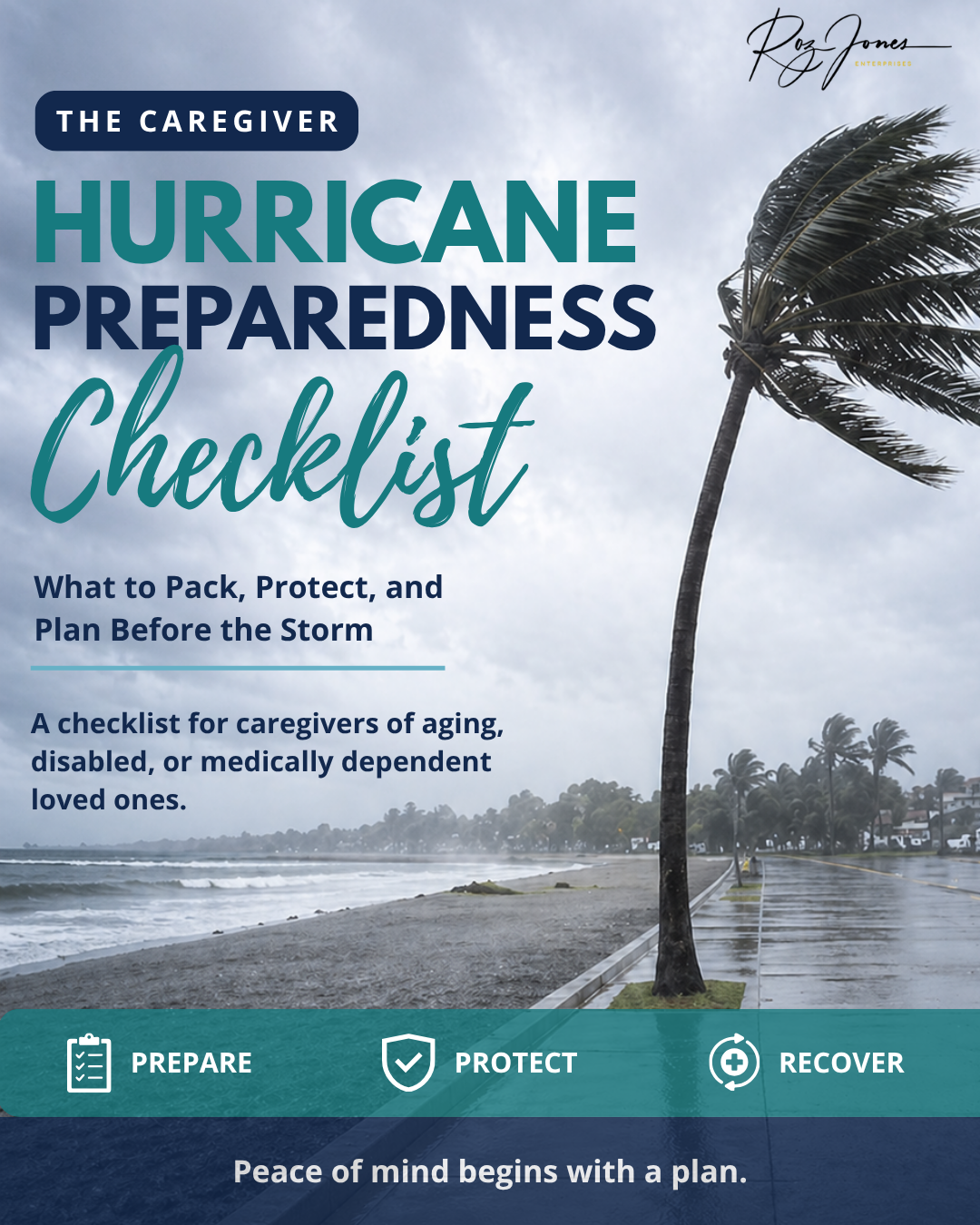
The Caregiver Hurricane Preparedness Checklist.

Are you preparing for hurricane season? Purchase the Caregiver Hurricane Preparedness Checklist to organize the information and supplies your family may need before severe weather arrives.

Subscribe to The Caregiver Cafe Weekly Newsletter!

Caregiving can be a roller coaster of ups and downs. The information that you will receive from The Caregiver Cafe Weekly Specials Newsletter will support you as a caregiver. Remember…

1. YOU ARE NOT ALONE: The problems you face as a caregiver are experienced by other caregivers. Knowing that you’re not alone can be comforting. 

2. Tools and Resources:  Find caregiver stress management tools and gain perspective from other caregiver’s experiences.

3. LEARN TO: Ask for help, accept help when it is offered, and acknowledge yourself on this caregiving journey. Hear from experts on how to balance caregiving responsibilities by taking care of your needs and involving others to help manage the natural stress and isolation of being a caregiver. 

When the Back-to-School Routine Stops Working

By Roz Jones

We’ve talked about getting through the back-to-school rush by creating routines, using technology, asking for help, and staying flexible. Those things matter when school first starts. But a few weeks into the year, caregivers usually have something they didn’t have in August: real information about what is and isn’t working.

The schedule you created may have looked manageable before school started. Then homework got heavier, after-school activities began, medical appointments continued, your loved one’s needs changed, and you realized there aren’t quite as many hours in the day as everyone seems to need.

That’s when it’s time to stop asking how to keep up with the routine and start asking whether the routine needs to change.

Pay Attention to the Problems That Keep Repeating

Every caregiver is going to have a hectic morning or a week when nothing seems to go according to plan. That’s family life. What matters more is whether the same problems keep showing up.

Maybe your loved one’s appointments regularly overlap with school pickup. Maybe mornings are difficult because you’re helping an aging parent get dressed and ready at the same time your children need to leave. Maybe you’re saving paperwork, meal preparation, and household responsibilities until everyone else goes to bed because that’s the only quiet time you have.

Those aren’t just frustrating moments. They’re signs that something in the routine may need to be adjusted.

Instead of automatically trying to move faster or become more organized, look at where the pressure keeps building. Sometimes the problem isn’t that you’re managing the schedule poorly. The schedule may simply be asking too much of one person.

Revisit What Really Has to Happen on the Same Day

A full calendar can make everything feel equally urgent.

It isn’t.

Some responsibilities have fixed times. School starts when school starts. Certain medications need to be taken on schedule. Medical appointments may be difficult to move.

Other responsibilities may have more flexibility than you originally gave them.

If Tuesdays are consistently overwhelming, for example, that may not be the best day for grocery shopping, extra errands, or appointments that could happen later in the week. If your loved one has several providers, ask whether appointments can be grouped in ways that reduce the number of separate trips you’re making.

This is also a good time to look at the household calendar as a whole instead of maintaining separate mental calendars for school, caregiving, work, and everything else.

The goal isn’t to fit more into the week. It’s to reduce unnecessary conflicts before they become your normal routine.

Decide What Someone Else Can Own

In the original back-to-school conversation, we talked about delegating and seeking support. A few weeks into the school year, you can get more specific about what that support actually needs to look like.

Instead of asking someone to “help more,” identify a responsibility they can own.

Maybe another family member can pick up prescriptions each month. Someone else may be able to take your loved one to one recurring appointment. An older child may be able to take responsibility for packing their school bag or completing an age-appropriate household task without waiting for you to remind them.

If you have paid caregiving support, this is also a good time to review whether you’re using those hours where they make the biggest difference.

Support becomes much more useful when everyone knows exactly what they’re responsible for.

Have a Plan for the School-Day Disruptions

The school calendar is predictable until it isn’t.

There will be teacher workdays, early dismissals, school breaks, sick days, weather closures, appointments, and days when a child needs to be picked up earlier than expected. If you’re also responsible for an aging loved one who cannot safely be left alone, one change to the school day can affect the entire care plan.

Don’t wait for that phone call from the school to figure out what happens next.

Think through who could step in with your loved one if you have to leave unexpectedly. Make sure that person knows the basic care routine, where important information is located, and how to reach you. You may also need a backup person for your children if leaving your loved one isn’t an option.

You won’t be able to plan for every disruption, but you can decide ahead of time who your first and second phone calls will be.

Make Sure the Care Plan Isn’t Living Only in Your Head

One of the biggest problems with a busy family routine is that the caregiver often becomes the only person who knows how everything works.

You know the medication schedule.

You know which doctor needs to be called.

You know what your loved one normally eats for lunch.

You know where the school forms are.

You know who needs to be where and when.

That may feel efficient until you’re unavailable.

Write down the information someone else would need to keep the day moving. That might include medication lists, emergency contacts, school pickup information, healthcare providers, dietary needs, transportation arrangements, and the basic daily routine.

The purpose isn’t to create another complicated binder that becomes one more project on your list. Start with the information someone would actually need if they had to step in tomorrow.

A good backup plan should not require you to give instructions from the middle of an emergency.

Give Yourself Permission to Change the Routine

Here’s the shift I want to encourage: don’t stay committed to a routine simply because you worked hard to create it.

If September’s schedule isn’t working by October, change it.

If the children need more responsibility, adjust it.

If your loved one now needs more assistance in the morning, adjust it.

If you’re exhausted every Thursday because you’ve packed too much into the first half of the week, adjust it.

Flexibility isn’t only about handling unexpected situations with grace. It’s also about recognizing when your original plan no longer fits the family you’re caring for today.

A sustainable routine should make caregiving more manageable, not prove how much you can carry.

The beginning of the school year gives families a chance to create structure. The weeks that follow give you a chance to test that structure, see where the pressure points are, and make changes before those pressure points become burnout.

For the beginning of this conversation, read the previous blog, Navigating the Back-to-School Hustle: 5 Essential Tips for Caregivers.

Prepare for Your Next Trip

Planning to travel with an aging loved one? Download the free Vacationing with an Aging Loved One Checklist to help you prepare for medications, mobility needs, comfort, safety, and unexpected changes.

Tune in to The Caregiver Café Podcast

Dad’s Dementia: Grieving the Living with Phil Hill

In this episode of The Caregiver Café with Roz Jones, Roz is joined by security expert and former family caregiver Phil Hill for an honest conversation about caring for a parent through cognitive decline, dementia, and the final years of life.

Phil shares how he first began noticing changes in his father, including confusion, difficulty navigating familiar places, changes in his appearance, and trouble managing responsibilities that had once been routine. Those early signs led to doctor visits, cognitive testing, difficult decisions about driving, and eventually moving his father into his home.

As the primary caregiver, Phil had to learn how to coordinate support among family members while also caring for his wife, his children, his business, and himself. He explains how even small contributions from relatives, such as taking his father to the barber shop, spending an afternoon with him, or providing companionship, gave him valuable moments of rest.

Roz and Phil also discuss the emotional side of caregiving. Watching a parent decline can bring grief long before the person passes away. Caregivers may lose sleep, experience exhaustion, make difficult safety decisions, and manage behaviors their loved one may not fully understand or remember.

Give Yourself a Moment of Grace

Caregiving includes demanding days, unexpected changes, and moments of connection that may be easy to overlook. Moments of Grace offers encouragement to caregivers who need a reminder to pause and recognize the meaningful moments along the journey.

Preparing for hurricane season?

The Caregiver Hurricane Preparedness Checklist.

Are you preparing for hurricane season? Purchase the Caregiver Hurricane Preparedness Checklist to organize the information and supplies your family may need before severe weather arrives.

Subscribe to The Caregiver Cafe Weekly Newsletter!

Caregiving can be a roller coaster of ups and downs. The information that you will receive from The Caregiver Cafe Weekly Specials Newsletter will support you as a caregiver. Remember…

1. YOU ARE NOT ALONE: The problems you face as a caregiver are experienced by other caregivers. Knowing that you’re not alone can be comforting. 

2. Tools and Resources:  Find caregiver stress management tools and gain perspective from other caregiver’s experiences.

3. LEARN TO: Ask for help, accept help when it is offered, and acknowledge yourself on this caregiving journey. Hear from experts on how to balance caregiving responsibilities by taking care of your needs and involving others to help manage the natural stress and isolation of being a caregiver. 

Making Travel Easier for Aging Loved Ones: What Caregivers Should Know Before Renting Equipment

By Roz Jones

Traveling with an aging loved one can be a beautiful experience.

It can give the family time together. It can help your loved one enjoy a change of scenery. It can create memories that matter. It can remind everyone that aging does not mean life has to stop.

But caregiver, let’s be honest.

Traveling with an aging loved one also requires planning.

It is not just about booking the room, packing the bags, and deciding what time to leave. It is also about thinking through comfort, safety, mobility, rest, medication, bathroom needs, and what your loved one may need once you arrive.

That is where renting equipment can make a difference.

Sometimes caregivers try to bring everything from home because they do not want to forget anything. But depending on where you are going, how you are traveling, and what your loved one needs, renting equipment may be the better option.

It can make the trip easier.

It can reduce stress.

It can help your loved one move with more confidence.

And it can help you focus more on the experience instead of spending the whole trip trying to manage every physical need without enough support.

Start With What Your Loved One Uses Every Day

Before you rent anything, begin with your loved one’s regular routine.

What do they use at home? What makes the day easier? What helps them move safely? What helps them sleep well? What prevents falls? What helps them feel comfortable in the bathroom, in the bedroom, or when moving from one place to another?

Caregivers sometimes plan for the trip itself but forget to plan for the daily routine once they arrive.

That routine matters.

If your loved one uses a walker at home, do not assume they will be fine without it on vacation. If they need a shower chair at home, do not assume the hotel bathroom will be easy to manage. If they sleep better with extra support, do not assume any bed will work.

Aging loved ones may be able to adjust to some changes, but too many changes at once can create discomfort, confusion, and safety concerns.

The goal is not to overpack or overprepare.

The goal is to notice what helps your loved one function well and make sure those supports are available while traveling.

Think About Mobility Before You Arrive

Mobility is one of the biggest things caregivers need to think through before a trip.

Your loved one may walk well at home but struggle in an airport, museum, resort, cruise ship, theme park, or large hotel. Long hallways, uneven sidewalks, crowded spaces, and long days can wear the body down quickly.

That is why mobility equipment can be helpful even if your loved one does not use it every day.

A wheelchair, transport chair, walker, rollator, or mobility scooter may give your loved one more energy for the parts of the trip that matter most. It may also reduce the risk of falls, exhaustion, or frustration.

Caregivers should think about the full travel day, not just the destination.

How far will your loved one need to walk?
Will there be stairs?
Will there be ramps or elevators?
Will the sidewalks be smooth?
Will there be places to sit and rest?
Will your loved one be able to move safely from the car to the room, from the room to meals, and from meals to activities?

These are not small questions.

They shape the whole travel experience.

When mobility is planned well, your loved one may feel more included and less worn out. And caregiver, you may feel less pressure on your body too.

Bathroom Safety Cannot Be an Afterthought

Bathrooms can become one of the most challenging parts of travel for aging loved ones.

At home, the bathroom may already be set up with grab bars, a raised toilet seat, a shower chair, or non-slip mats. But when you travel, those supports may not be there.

A hotel may say the room is accessible, but it is still important to ask specific questions.

Is the shower walk-in or does it have a tub?
Are there grab bars near the toilet and shower?
Is there enough space for a walker or wheelchair?
Is there a shower chair available, or do you need to rent one?
Is the toilet height comfortable for your loved one?
Is the floor slippery when wet?

Aging loved ones may feel embarrassed asking for bathroom support, but safety matters more than pride.

Falls can happen quickly, especially in unfamiliar spaces. A simple rental item like a shower chair or raised toilet seat can help your loved one feel more secure and reduce the caregiver’s worry.

Caregiving means protecting dignity too.

When the right equipment is in place, your loved one may be able to do more for themselves with less fear and less discomfort.

Comfort Matters More Than We Admit

Travel can be tiring on the body.

Aging loved ones may need more support for sleeping, sitting, standing, or resting. A bed that is too low, too high, too soft, or too firm can make the trip harder. A chair without arms may make it difficult to sit down or stand up. A long day without proper rest can lead to pain, irritability, fatigue, or confusion.

That is why caregivers should think about comfort equipment as part of the travel plan.

Depending on your loved one’s needs, you may want to ask about renting a lift chair, bed rail, adjustable bed, pressure-relief cushion, or other sleeping support.

This is especially important if your loved one has arthritis, back pain, limited mobility, balance concerns, or difficulty getting in and out of bed.

A vacation should not leave your loved one feeling physically defeated.

Comfort is not extra.

Comfort is care.

Do Not Wait Until the Last Minute for Medical Equipment

If your aging loved one uses medical equipment, plan early.

This may include oxygen equipment, a nebulizer, CPAP supplies, a blood pressure monitor, a wheelchair, or other devices connected to their health needs.

Before traveling, talk with your loved one’s healthcare provider about what should come with you, what can be rented, and what should not be changed. Some equipment may require special instructions, prescriptions, airline approval, or advance arrangements with a rental company.

Do not assume you can easily get what you need once you arrive.

Not every destination has the same rental options. Not every company carries the same equipment. Not every item will be available at the last minute.

Caregivers should also keep important medical information nearby, including medication lists, diagnoses, allergies, physician contacts, insurance information, and emergency instructions.

When medical needs are involved, preparation helps keep the trip from turning into a crisis.

Ask Better Questions Before You Rent

Renting equipment is helpful, but caregivers need to ask the right questions before making arrangements.

Do they deliver to the hotel, rental home, airport, or cruise port?
Do they pick up the equipment after the trip?
Is the equipment cleaned and inspected before delivery?
What happens if something breaks?
Is there an emergency contact number?
Are there weight or size limits?
Will the equipment fit in the room, vehicle, or doorway?
Are there additional fees for delivery, setup, or weekend service?

These details matter.

The last thing you want is to arrive and find out the wheelchair is too wide for the doorway, the scooter is too heavy to transport, or the shower chair was delivered after your loved one already needed it.

Caregivers should confirm everything in writing when possible.

Dates.
Delivery time.
Pickup time.
Equipment type.
Cost.
Location.
Contact person.

Clear information gives you something to refer back to if there is confusion.

Match the Equipment to the Trip

Every trip does not require the same equipment.

A weekend at a family member’s home may require different support than a cruise, a flight, a beach trip, or a long road trip.

Think about the environment.

If you are going to the beach, will your loved one need a beach wheelchair or extra support walking through sand? If you are going to a city, will there be a lot of walking? If you are staying in a rental home, are there stairs? If you are going on a cruise, how far is the cabin from the dining area or elevators?

The trip should be planned around what your loved one can realistically manage.

Sometimes families want the trip to feel like it used to. But aging changes how travel works.

That does not mean the trip cannot be enjoyable.

It means the plan needs to respect where your loved one is now.

The right equipment can help your loved one stay engaged without pushing their body past what it can comfortably handle.

Protect Dignity While Offering Support

Caregivers may know that equipment is needed, but aging loved ones may not always want to use it.

They may feel embarrassed. They may feel like it makes them look older. They may worry that people are watching. They may resist because accepting equipment feels like accepting a loss of independence.

That is why the conversation matters.

Try not to present rented equipment as a sign of decline. Present it as a way to help them enjoy the trip.

A wheelchair may mean they can stay out longer with the family. A shower chair may mean they can bathe with more confidence. A scooter may mean they can participate without becoming exhausted. A bed rail may mean they can rest more comfortably and get up more safely.

The message is not, “You cannot do this anymore.”

The message is, “We want you to be safe, comfortable, and included.”

That makes a difference.

Caregiving is not just about getting through the trip.

It is about helping your loved one feel respected while their needs are being met.

Keep Building Your Travel Plan

If you missed the first blog, you can read Renting Equipment for Aging Loved Ones that are Traveling: A Comprehensive Guide here. It is a helpful starting point for understanding what types of equipment may support your loved one while traveling.

This blog builds on that reminder with one more truth:

The right equipment can change the whole trip.

It can give your loved one more comfort.
It can help prevent unnecessary strain.
It can reduce safety concerns.
It can give the caregiver more peace of mind.
It can make the trip feel more possible for everyone involved.

Caregiver, you do not have to wait until something becomes difficult to start planning.

You can ask questions ahead of time.

You can rent what is needed.

You can prepare the room, the route, the bathroom, the sleeping space, and the travel day with your loved one’s needs in mind.

Not because you expect the trip to be hard.

But because the right support can make the trip easier.

And when your loved one is supported well, the family has more room to enjoy the moments that matter.

Download the Vacationing With an Aging Loved One Checklist for FREE!

Before your next trip, download the free Vacationing with an Aging Loved One Checklist. This resource can help you think through what needs to be packed, planned discussed, and prepared before travel begins!

Tune in to The Caregiver Café Podcast

In this episode of The Caregiver Café with Roz Jones, Roz is talking about something that many families face but do not always know how to handle: caregiving as a family affair.

When an aging parent, loved one, or family member needs care, one person often becomes the main caregiver while everyone else steps back, scatters, or assumes that person has it all under control. But caregiving should not fall on one person without a plan, support, or honest family conversations.

Roz breaks down how families can reduce the chaos in caregiving by understanding where tension comes from, setting realistic expectations, creating a care plan, assigning roles, and being honest about what each person can and cannot do. She also reminds listeners that every family member may not be able or willing to provide hands-on care, and that is why outside resources, respite care, and hired support may need to become part of the plan.

This episode is a practical reminder that caregiving requires communication, boundaries, preparation, and teamwork. Whether you live close by or long distance, there is usually some way to support the person providing daily care.

Caregiving may be a family affair, but it works best when the family has a plan.

Give Yourself a Moment of Grace

If you need encouragement for the emotional side of caregiving, purchase Roz Jones’ book, Moments of Grace. This book offers support, reflection, and reminders of grace for the caregiver who is carrying a lot.

This journal was created to help caregivers pause, breathe, reflect, and find strength in the middle of the caregiving journey.

Purchase Moments of Grace today and give yourself permission to breathe in the middle of the caregiving journey.

Prepare Before the Emergency Comes

The Caregiver Hurricane Preparedness Checklist.

If you are caring for a loved one during storm season, purchase the Caregiver Hurricane Preparedness Checklist. It can help you prepare important documents, emergency contacts, supplies, medication needs, and safety steps before severe weather becomes a crisis.

For only $1.99, this checklist gives you a simple starting point so you are not trying to gather everything during a storm, power outage, hospitalization, or sudden change in your loved one’s care.

Purchase the Caregiver Hurricane Preparedness Checklist for $1.99 today and take one more step toward peace of mind.

Need Help Sorting Through the Care Plan?

Roz Jones is a dedicated caretaker turned CEO with over a decade of experience in helping families care for and make decisions for loved ones and their legacies.Roz is a compassionate, innovative healthcare industry leader.

If your family needs help thinking through care decisions, caregiving responsibilities, or next steps, book a session with Roz Jones. You do not have to navigate this season alone.

Together, we can talk through what is working, what is becoming too heavy, and what boundaries need to be strengthened so you can continue to care without losing yourself in the process.

Subscribe to The Caregiver Cafe Weekly Newsletter!

Caregiving can be a roller coaster of ups and downs. The information that you will receive from The Caregiver Cafe Weekly Specials Newsletter will support you as a caregiver. Remember…

1. YOU ARE NOT ALONE: The problems you face as a caregiver are experienced by other caregivers. Knowing that you’re not alone can be comforting. 

2. Tools and Resources:  Find caregiver stress management tools and gain perspective from other caregiver’s experiences.

3. LEARN TO: Ask for help, accept help when it is offered, and acknowledge yourself on this caregiving journey. Hear from experts on how to balance caregiving responsibilities by taking care of your needs and involving others to help manage the natural stress and isolation of being a caregiver.