
Rest is Part of the Care Plan

By Roz Jones

Caregivers are often praised for how much they are able to carry. But over time, this level of responsibility can make rest feel unrealistic.

A caregiver may believe that stepping away will create more work, cause unnecessary disruption, or leave an aging loved one feeling abandoned. Even when respite care is available, guilt and worry may prevent the caregiver from using it.

However, rest should not be treated as something separate from caregiving. It is part of creating a care plan that can continue without sacrificing the caregiver’s physical health, emotional well-being, and ability to remain fully present.

Respite care offers more than time away from responsibility. When thoughtfully planned, it can create greater stability for the entire family.

Respite Care Should Begin Before a Crisis

Many caregivers wait until they are physically exhausted or emotionally overwhelmed before seeking additional support. By that point, the need for relief may be urgent, and the family may have little time to research options, prepare the aging loved one, or choose a provider carefully.

Respite care is often more effective when it is introduced before the caregiver reaches a breaking point.

Planning early gives families time to consider what kind of support is needed, how often it may be used, and who can provide care safely. It also allows the aging loved one to become familiar with another caregiver before an emergency requires the primary caregiver to step away unexpectedly.

A caregiver should not have to become ill, miss important medical appointments, or experience severe burnout before receiving help.

Respite can be used for a few hours, an overnight stay, a weekend, or a longer period, depending on the family’s needs and available resources. It may be provided in the home, through an adult day program, within a residential care setting, or by a trusted relative or friend.

Introducing respite gradually can make the transition easier for everyone involved.

Choose Support Based on the Care Required

Not every respite option will be appropriate for every aging loved one.

Some individuals may need companionship and help with meals. Others may require assistance with mobility, personal care, medication reminders, medical equipment, memory loss, or behavioral changes. The person providing respite must understand the level of responsibility involved.

Before selecting support, caregivers should clearly identify what the aging loved one needs throughout the day.

This includes the tasks that must be completed, but it should also include the routines, preferences, and details that help the person feel comfortable.

An aging loved one may prefer breakfast at a certain time, enjoy a particular television program, become anxious when the house is too quiet, or need additional time to complete personal care. Someone living with dementia may respond better to familiar language, music, or routines.

These details can help the respite provider offer care that feels more personal and less disruptive.

Families should also ask about the provider’s experience, training, availability, emergency procedures, and ability to manage the loved one’s specific needs. When professional respite care is being considered, caregivers may want to request references and learn how the provider screens and supervises staff.

The purpose is not only to find someone who is available. It is to find support that allows the caregiver to step away with greater confidence.

Prepare the Aging Loved One for the Change

An aging loved one may not immediately understand why someone else is providing care.

They may feel uncomfortable with a new person in the home, worry that the caregiver is leaving permanently, or interpret the decision as a sign that they have become a burden. These concerns may be especially difficult for someone experiencing memory loss, anxiety, or changes in routine.

Caregivers can reduce some of this uncertainty by discussing respite care before it begins.

The explanation should match the loved one’s level of understanding. Emphasize that the caregiver is taking a short break or completing another responsibility and will return. Introduce the respite provider in advance whenever possible and allow the aging loved one to become familiar with them while the primary caregiver is still present.

The first visit may be brief. The respite provider might share a meal, participate in a familiar activity, or spend time learning the daily routine.

A gradual introduction can help build trust.

The aging loved one should also be included in appropriate decisions. They may have preferences about who assists with personal care, what activities they would like to do, or where respite should take place.

Being included can make the change feel less like something being done to them and more like part of a care arrangement designed with their comfort in mind.

Create a Clear Respite Care Guide

A caregiver may know an aging loved one’s routine so well that many details are handled automatically. Another person will not have that same knowledge.

A written respite care guide can reduce confusion and help the provider respond more confidently.

The guide should include important contact information, medication instructions, meal preferences, mobility needs, allergies, medical conditions, emergency procedures, and the location of essential supplies.

It may also include the aging loved one’s daily schedule, preferred activities, communication style, and behaviors that may signal pain, anxiety, fatigue, or confusion.

For example, an aging loved one may become quiet when uncomfortable rather than asking for help. Another may repeat questions when feeling anxious. Someone with memory loss may become distressed if they cannot see the primary caregiver and may need calm reassurance rather than repeated correction.

These details can improve the quality of the respite experience and reduce the likelihood that the primary caregiver will receive repeated calls for information during the break.

The guide should be reviewed regularly as medications, routines, and care needs change.

Important information should not remain only in the caregiver’s memory.

Start With Shorter Periods of Respite

Caregivers who have been responsible for nearly every part of an aging loved one’s care may find it difficult to step away for an extended period.

Beginning with a shorter break can help build trust in the respite arrangement.

The caregiver may start with an hour to attend an appointment, take a walk, meet a friend, or sit quietly somewhere outside the home. As the aging loved one and respite provider become more comfortable with each other, the length of time can gradually increase.

Shorter visits also give the caregiver an opportunity to identify missing instructions, notice how the aging loved one responds, and determine whether the respite provider is a good fit.

The first experience does not have to be perfect.

There may be questions, adjustments, and moments of discomfort. These do not necessarily mean respite care will not work. They may simply show where the plan needs to be clarified or changed.

Building a reliable respite arrangement is often a process rather than a single decision.

Expect Guilt Without Letting It Make the Decision

Caregiver guilt can remain even when respite care is safe, necessary, and thoughtfully planned.

A caregiver may feel guilty for enjoying time away, especially if the aging loved one cannot participate in the same activity. They may worry that others will judge them or believe they should be able to continue without assistance.

Some caregivers may spend the entire break checking their phones, reviewing instructions, or thinking about what may be going wrong at home. They may return before the agreed time because resting feels more uncomfortable than continuing to provide care.

These feelings are common, but they should not determine whether the caregiver receives support.

Taking a break does not mean the caregiver loves the aging loved one less. It does not erase their commitment or make them irresponsible.

Caregiving requires energy, patience, decision-making, and emotional steadiness. Those abilities are harder to maintain when the caregiver is consistently depleted.

Guilt may appear during the first few respite experiences, but it can become easier to manage as the caregiver sees that the aging loved one can remain safe and supported while someone else helps.

Respite care is not a failure of devotion. It is an acknowledgment that quality care should not depend on one person being available every hour of every day.

Use Respite Time for What Is Actually Needed

Caregivers may feel pressure to use respite time productively.

They may schedule errands, clean the house, catch up on paperwork, or complete tasks that have been delayed. While these responsibilities may need attention, respite should not always become another work period.

The most helpful use of the time depends on what the caregiver needs most.

One caregiver may need uninterrupted sleep. Another may need to attend a medical appointment, spend time with friends, exercise, worship, go to therapy, or simply sit somewhere without listening for another person’s call.

Rest will not look the same for everyone.

A meaningful break does not have to be exciting or carefully planned. Its value comes from allowing the caregiver to step out of a constant state of responsibility.

Caregivers should also avoid filling every available respite hour with obligations simply because the time exists. Returning to care more exhausted than before defeats the purpose of the break.

Respite should create space for renewal, not another list of expectations.

Make Respite Part of the Regular Routine

Using respite only during emergencies can make each break feel unfamiliar and difficult.

Regularly scheduled respite may offer more stability for both the caregiver and aging loved one. The loved one can become familiar with the provider and begin to understand the routine. The caregiver can plan appointments, rest, and personal activities without waiting until exhaustion becomes severe.

Consistency may also help the caregiver recognize respite as a normal part of the care plan rather than a last resort.

The schedule does not have to be extensive. A few hours each week, twice a month, or at another manageable interval may provide meaningful relief.

The appropriate frequency will depend on the caregiver’s responsibilities, the aging loved one’s care needs, available resources, and the level of support provided by others.

Families should review the arrangement over time. An aging loved one’s needs may increase, the caregiver’s work schedule may change, or the original respite provider may no longer be available.

A sustainable plan must be flexible enough to grow with the caregiving situation.

Include Family Members in the Respite Plan

Professional respite care may not be the only source of support.

Relatives and trusted friends may be able to participate when responsibilities are clearly defined. One person may provide companionship for a few hours, while another handles transportation, prepares a meal, or stays overnight.

Family members may hesitate because they do not know what to do or believe the primary caregiver prefers to manage everything. Vague requests for help may also be difficult to respond to.

Specific requests can make participation more realistic.

Instead of asking someone to help more, the caregiver might ask whether they can stay with the aging loved one on the first Saturday of each month, provide transportation to one regular appointment, or sit with them for two hours while the caregiver attends therapy.

Clear expectations help others understand what is needed and whether they are able to commit.

Family support should still be based on the aging loved one’s comfort and safety. A relative who loves the person may not have the skills required to manage complex medical or personal care needs.

Each person should be given responsibilities they can handle reliably.

Prepare a Backup Before Respite Is Urgently Needed

Even a dependable care arrangement can change.

A provider may become ill. A family member may have a conflict. An adult day program may close temporarily. The aging loved one’s condition may change and require a different level of support.

Caregivers should identify more than one possible respite option whenever resources allow.

A backup plan may include another professional provider, a trusted family member, an agency, an adult day program, or a short-term residential care option.

Families should also know what support may be available through local aging services, caregiver organizations, faith communities, veterans’ programs, insurance benefits, or community agencies.

Researching these options can take time. Completing the work before a crisis allows the caregiver to make decisions more carefully.

The caregiver should not have to begin searching for help at the exact moment they are no longer able to continue.

Rest Protects the Relationship

Caregiving can change the relationship between the caregiver and aging loved one.

Conversations may become focused on medications, appointments, safety, and daily tasks. The caregiver may begin to feel more like a manager than a family member. The aging loved one may feel that every interaction is connected to something they need help doing.

Exhaustion can intensify this change. A depleted caregiver may become less patient, more easily frustrated, or emotionally distant, even when they are doing everything possible to provide good care.

Respite creates an opportunity for the caregiver to return with more emotional space.

The break may make it easier to sit together without rushing, listen more patiently, or enjoy an activity that is not centered on care. It can help restore parts of the relationship that daily responsibilities have pushed aside.

Respite does not only protect the caregiver’s health.

It may also protect the relationship from becoming defined entirely by the demands of caregiving.

A Strong Care Plan Includes Relief

Caregivers do not prove their love by becoming exhausted.

They do not have to wait until their health begins to decline before accepting support. They do not have to manage every responsibility personally for the care to be thoughtful and meaningful.

A strong care plan prepares for the aging loved one’s needs while also recognizing the caregiver’s limits.

Respite care creates room for rest, medical care, relationships, reflection, and life outside the caregiving role. It gives another trusted person an opportunity to learn the aging loved one’s routine and creates a support system that may become especially valuable during an emergency.

The most sustainable caregiving arrangements are not built around one person doing everything.

They are built around preparation, communication, shared responsibility, and the understanding that rest is part of providing care well.

For an introduction to respite care and the benefits it can provide, read the previous blog, The Power of Respite Care: A Guide for Caregivers During National Respite Care Month.

Prepare for Your Next Trip

Planning to travel with an aging loved one? Download the free Vacationing with an Aging Loved One Checklist to help you prepare for medications, mobility needs, comfort, safety, and unexpected changes.

Tune in to The Caregiver Café Podcast

What to Know About the Cost of Prescriptions

In this episode of The Caregiver Café with Roz Jones, Roz is talking about something many seniors and caregivers are feeling at the pharmacy counter: the rising cost of prescription medications.

As aging loved ones begin taking more medications, those costs can add up quickly. One prescription may not seem like much, but when there are several medications involved, the monthly total can become overwhelming for seniors, families, and caregivers trying to manage care on a fixed income.

Roz breaks down practical ways caregivers can help reduce the cost of prescriptions. She talks about asking doctors about generic medications, looking for less expensive brand-name options, using mail-order pharmacy services, reviewing Medicare drug plans during annual enrollment, and checking for state or manufacturer assistance programs.

Give Yourself a Moment of Grace

Caregiving includes demanding days, unexpected changes, and moments of connection that may be easy to overlook. Moments of Grace offers encouragement to caregivers who need a reminder to pause and recognize the meaningful moments along the journey.

Preparing for hurricane season?
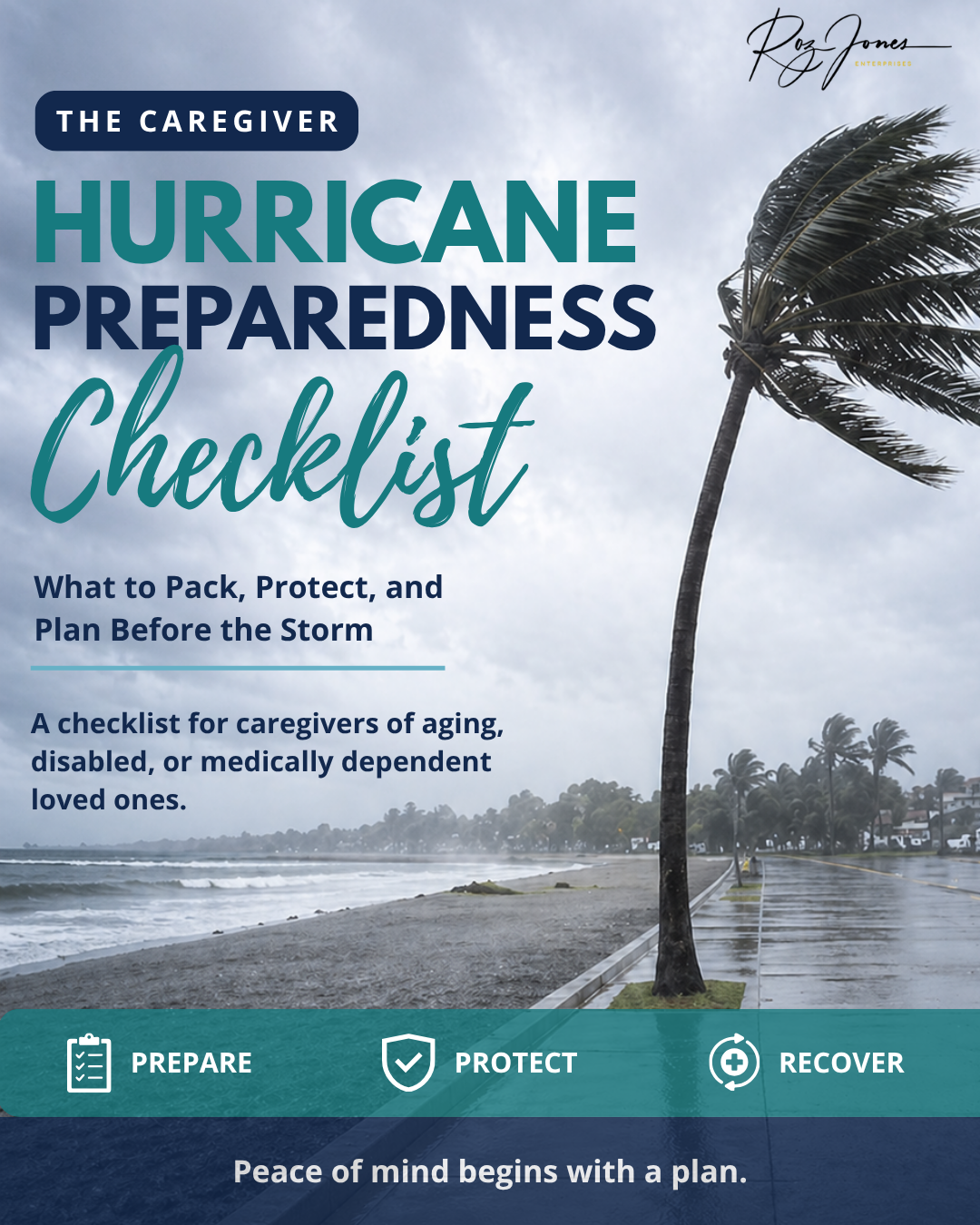
The Caregiver Hurricane Preparedness Checklist.

Are you preparing for hurricane season? Purchase the Caregiver Hurricane Preparedness Checklist to organize the information and supplies your family may need before severe weather arrives.

Subscribe to The Caregiver Cafe Weekly Newsletter!

Caregiving can be a roller coaster of ups and downs. The information that you will receive from The Caregiver Cafe Weekly Specials Newsletter will support you as a caregiver. Remember…

1. YOU ARE NOT ALONE: The problems you face as a caregiver are experienced by other caregivers. Knowing that you’re not alone can be comforting. 

2. Tools and Resources:  Find caregiver stress management tools and gain perspective from other caregiver’s experiences.

3. LEARN TO: Ask for help, accept help when it is offered, and acknowledge yourself on this caregiving journey. Hear from experts on how to balance caregiving responsibilities by taking care of your needs and involving others to help manage the natural stress and isolation of being a caregiver. 

When Helping Starts to Hurt: Emotional Boundaries for Caregivers of a Former Spouse

By Roz Jones

Caring for a former spouse is not the kind of caregiving situation most people prepare for.

You may have thought that chapter of your life was closed. You may have gone through the divorce, divided the household, rebuilt your routines, created distance, and learned how to live without being responsible for that person every day.

Then illness, aging, disability, surgery, memory changes, or a medical crisis enters the picture.

And suddenly, here you are again.

Answering calls.
Checking in.
Taking them to appointments.
Helping with meals.
Listening to their fears.
Trying to make sure they are safe.
Trying to do the right thing without getting pulled back into everything you worked so hard to heal from.

In my previous blog, Navigating Boundaries When Caregiving for a Former Spouse, I talked about defining your caregiving role, setting communication boundaries, making time for yourself, seeking support, and considering legal and financial boundaries.

Now I want to go a little deeper.

Because sometimes the hardest boundaries are not the ones written on paper.

Sometimes the hardest boundaries are the ones you have to keep in your heart.

You Can Care Without Returning to the Relationship

Let’s start there.

Providing care does not mean you are stepping back into the marriage.

It does not mean you are available the way you used to be.
It does not mean you are responsible for their loneliness.
It does not mean you have to comfort every fear.
It does not mean you have to explain yourself to everyone who has an opinion.
It does not mean the old relationship gets to come back just because care is needed.

Caregiving can blur the line between compassion and emotional re-entry.

You may start by helping with one thing, and before you know it, you are being treated like the spouse again. You are the first call, the emotional support, the problem-solver, the scheduler, the reminder, the listener, and the one expected to make everything okay.

Caregiver, let me say this clearly:

You can be kind without becoming consumed.

You can help without going backward.

You can care without reopening a door that needed to stay closed.

Watch for Old Patterns Trying to Come Back

Every relationship has patterns.

Maybe you were always the fixer.
Maybe you were always the one who stayed calm.
Maybe you were the one who made the appointments, handled the bills, smoothed things over with the children, or carried the emotional weight of the household.

Now caregiving can make those old roles show up again.

You may find yourself doing too much before anyone asks. You may feel guilty for saying no. You may feel like if you do not step in, everything will fall apart. You may feel responsible for their comfort, their choices, their emotions, or their relationship with other family members.

That is where you have to pause.

Ask yourself:

Am I helping because this is truly needed?
Or am I falling back into an old role?

Am I responding from compassion?
Or am I responding from guilt?

Am I making a choice?
Or am I feeling pressured?

Am I supporting their care?
Or am I becoming responsible for their whole life again?

Those are honest questions.

And honest questions can save you from silent resentment.

Guilt Is Not a Care Plan

Guilt can be loud in this kind of caregiving situation.

You may feel guilty because you left.
Guilty because the marriage ended.
Guilty because they are sick.
Guilty because they do not have enough support.
Guilty because the children are watching.
Guilty because you still care, but you cannot give everything.

But guilt is not a good leader.

Guilt will tell you to say yes when your body is tired.
Guilt will tell you to answer the phone when you need peace.
Guilt will tell you to ignore your current life.
Guilt will tell you that having limits makes you wrong.

It does not.

A boundary made from wisdom is not cruelty.

A no spoken with honesty is not abandonment.

You are allowed to make caregiving decisions from a grounded place, not from guilt.

Try saying:

“I care about your well-being, but I need to be honest about what I can do.”
“I am not able to be available every day.”
“I can help with this specific need, but I cannot take on everything.”
“I need other people involved so this does not fall only on me.”

That is not harsh.

That is clear.

Do Not Let Caregiving Become Emotional Debt

Sometimes former spouses have unfinished emotional business.

There may be apologies that never came.
There may be wounds that were never acknowledged.
There may be years of being misunderstood, dismissed, betrayed, disappointed, or overextended.

Then caregiving begins, and suddenly you are expected to show up with tenderness, patience, and grace.

That can be complicated.

You may want to help because it is the right thing to do, but still feel anger about the past. You may feel compassion one day and resentment the next. You may feel sad for them while also remembering what they put you through.

That does not make you a bad caregiver.

It makes you human.

But you have to be careful not to pay emotional debt that was never yours to pay.

Caregiving should not require you to pretend the past did not happen.

You do not have to be cruel.
You do not have to bring up old arguments.
You do not have to punish them.

But you also do not have to erase your own experience in order to provide care.

Sometimes the boundary is simply this:

“I can help with your care needs, but I am not available to revisit or repair the entire relationship.”

That is a valid boundary.

Protect Your Current Relationships and Household

If you have a current partner, children, grandchildren, family members, or others who depend on you, caregiving for a former spouse may affect them too.

This is something caregivers do not always talk about.

Your current partner may feel unsure about how much emotional energy is going toward your former spouse. Your children may have mixed feelings. Your household may feel the stress of your time, attention, and availability being stretched.

That does not mean you should not help.

It means you need to be honest about the impact.

Before you keep saying yes, ask:

Is this caregiving role creating tension in my current home?
Am I emotionally unavailable to the people in my life now?
Am I hiding how much I am doing?
Am I giving more than I can explain peacefully?
Is my current life being organized around my former spouse’s needs?

Caregiving is important.

But your current life matters too.

Do not sacrifice the relationships you are living in now to maintain a role from the past.

Keep the Conversations Focused on Care

When emotions run high, conversations can drift.

A call about medication becomes a conversation about the divorce.
A ride to the doctor becomes a discussion about what went wrong.
A check-in becomes a request for emotional closeness.
A family update becomes a replay of old wounds.

This is where you need conversational boundaries.

You can keep the focus on care without being cold.

You might say:

“I want to stay focused on what you need for the appointment.”
“I am not going to discuss the past right now.”
“I hear that you are feeling emotional, but I am not the best person to process that with.”
“I want to help with your care, but I need our conversations to stay respectful.”
“We can talk about the next step, but I am not available for an argument.”

Sometimes the most loving thing you can do is refuse to let every conversation become emotionally unsafe.

Know the Signs That It Is Becoming Too Much

Caregiving can become unhealthy when it starts taking more from you than you can recover from.

Pay attention to the signs.

You feel anxious when their name appears on your phone.
You feel responsible for their mood.
You feel pulled back into old relationship dynamics.
You are hiding the amount of care you are giving.
You are neglecting your own health, rest, work, or relationships.
You feel resentful but keep saying yes.
You feel like you cannot stop because everyone expects you to continue.
You are constantly explaining, defending, or justifying your boundaries.

Caregiver, those signs matter.

Your body may tell you the truth before your mouth is ready to say it.

If caregiving starts costing you your peace, your sleep, your emotional stability, or your current relationships, it is time to reassess the arrangement.

Not because you do not care.

Because care needs to be sustainable.

Let Other People Be Responsible Too

One of the quiet traps in caregiving is believing that because you can do something, you must do it.

No.

Just because you are capable does not mean you are the only option.

Other relatives, adult children, community resources, paid caregivers, case managers, neighbors, church members, or professional services may need to be part of the support system.

You are allowed to say:

“I cannot be the only person in this role.”
“We need to divide responsibilities.”
“This requires more support than I can provide.”
“I am willing to help, but I need backup.”
“I need us to identify who else can step in.”

Do not let other people’s absence become your full-time assignment.

Give Yourself Permission to Feel More Than One Thing

This type of caregiving is emotionally layered.

You can care about your former spouse and still feel tired.
You can have compassion and still need distance.
You can remember the good and still honor why the relationship ended.
You can want them safe and still not want to be pulled back in.
You can help and still wish the situation were different.

All of that can be true at the same time.

You do not have to make your feelings neat for other people to understand.

You just need to be honest with yourself.

Caregiving for a former spouse requires more than a kind heart.

It requires emotional honesty.

It requires you to notice when old patterns are returning. It requires you to separate compassion from obligation. It requires you to protect your current life while still making thoughtful choices about care.

You are allowed to support someone without becoming who you used to be to them.

You are allowed to care without carrying everything.

You are allowed to have boundaries that protect your peace.

And caregiver, please remember this:

Helping should not hurt you so deeply that you lose yourself in the process.

If it is starting to hurt, that does not mean you have failed.

It means something needs to change.

Purchase Moments of Grace

When caregiving comes with history, emotions can be heavy.

You may find yourself carrying guilt, grief, frustration, compassion, exhaustion, and responsibility all at the same time. That is a lot for one heart to hold.

That is why I created Moments of Grace: A Caregiver’s Guided Journal for Reflection, Prayer, and Peace.

This journal was made for caregivers who need a quiet place to breathe, reflect, release what they are carrying, and reconnect with themselves in the middle of the caregiving journey.

If you are caring for a former spouse, an aging parent, a loved one, or someone whose needs are stretching you emotionally, this journal can help you slow down and remember that your feelings matter too.

Purchase Moments of Grace today and give yourself permission to pause, reflect, and receive a little grace along the

Prepare Before the Emergency Comes

The Caregiver Hurricane Preparedness Checklist.

Emotional boundaries matter.

But practical preparation matters too.

If you are caring for an aging loved one, a former spouse, or someone with changing health needs, it is important to know where the essentials are before an emergency happens.

Medication lists.
Emergency contacts.
Important documents.
Evacuation details.
Medical equipment needs.
Insurance information.
Care instructions.

These are not things you want to search for during a storm, power outage, hospitalization, or sudden crisis.

The Caregiver Hurricane Preparedness Checklist was created to help caregivers organize the details that matter before they are needed.

For only $1.99, this checklist gives you a simple place to start so you can feel more prepared, less scattered, and more confident when unexpected situations arise.

Purchase the Caregiver Hurricane Preparedness Checklist for $1.99 today and take one more step toward protecting your loved one before an emergency.

Need Help Sorting Through the Care Plan?

Roz Jones is a dedicated caretaker turned CEO with over a decade of experience in helping families care for and make decisions for loved ones and their legacies.Roz is a compassionate, innovative healthcare industry leader.

If you are caring for a former spouse, aging loved one, or family member and the boundaries are starting to feel complicated, you do not have to figure it out alone.

Book a Family Care Planning Session with Roz Jones and get support creating a caregiving plan that is clear, compassionate, and realistic.

Together, we can talk through what is working, what is becoming too heavy, and what boundaries need to be strengthened so you can continue to care without losing yourself in the process.

Subscribe to The Caregiver Cafe Weekly Newsletter!

Caregiving can be a roller coaster of ups and downs. The information that you will receive from The Caregiver Cafe Weekly Specials Newsletter will support you as a caregiver. Remember…

1. YOU ARE NOT ALONE: The problems you face as a caregiver are experienced by other caregivers. Knowing that you’re not alone can be comforting. 

2. Tools and Resources:  Find caregiver stress management tools and gain perspective from other caregiver’s experiences.

3. LEARN TO: Ask for help, accept help when it is offered, and acknowledge yourself on this caregiving journey. Hear from experts on how to balance caregiving responsibilities by taking care of your needs and involving others to help manage the natural stress and isolation of being a caregiver.