What Caregivers Need to Know About Medigap in 2026

By Roz Jones

Medicare decisions can become another responsibility caregivers are expected to understand, especially when an aging loved one starts receiving more healthcare. You may be helping review medical bills, keeping track of appointments, checking insurance statements, or trying to understand why Medicare paid one portion of a bill while your loved one is responsible for another. That is often when Medicare Supplement Insurance, also called Medigap, becomes part of the conversation.

Medigap can help with some of the out-of-pocket costs that remain after Original Medicare pays its share, but it is not a replacement for Medicare and it does not cover every healthcare expense your loved one may have. Understanding how the coverage works can help families decide whether it fits into the larger healthcare and financial plan.

Understand What Medigap Actually Supplements

Medigap works alongside Original Medicare, Part A and Part B. Medicare pays its share of covered healthcare costs first, and the Medigap policy may then pay some or all of the remaining costs covered under that particular policy.

Those remaining costs can include deductibles, coinsurance, and copayments. Without supplemental coverage, those expenses can become difficult to predict, especially for an aging loved one who sees several providers, receives outpatient services regularly, or experiences a hospitalization.

One important distinction for caregivers to understand is that Medigap is not the same thing as Medicare Advantage. Medicare Advantage is another way to receive Medicare benefits, while Medigap supplements Original Medicare. Your loved one cannot use a Medigap policy to pay the copayments, deductibles, or premiums associated with a Medicare Advantage plan.

Know What Medigap Does Not Cover

Having supplemental insurance does not mean every healthcare-related expense will be covered. Medigap policies generally do not cover long-term care, routine dental or vision care, hearing aids, eyeglasses, or private-duty nursing.

Prescription drug coverage is also separate. Medigap policies sold after 2005 do not include prescription drug coverage, so someone with Original Medicare and Medigap may also need a separate Medicare Part D prescription drug plan if they want drug coverage.

That distinction becomes especially important for caregivers because many of the services an aging loved one may eventually need are not automatically covered simply because they have Medicare and Medigap. If your loved one begins needing ongoing personal care at home, assistance with activities of daily living, or long-term nursing home care, Medigap should not be treated as a long-term care insurance policy.

Compare the Plan, Not Just the Insurance Company

Medigap plans are standardized in most states and identified by letters, such as Plan G, Plan K, or Plan N. That means the basic benefits of a particular lettered plan are generally the same regardless of which insurance company sells it.

The price may not be the same.

Two companies may sell the same lettered Medigap plan with the same standardized benefits and charge different premiums. Premiums can also vary based on where your loved one lives and other factors, and those premiums can increase over time.

For caregivers helping compare coverage, that means it is worth looking at more than the name of the insurance company. Compare the same plan letter across several companies and ask how premiums are determined and whether the company has a history of increasing rates. The lowest premium today may not always be the only factor worth considering when the coverage may be kept for years.

Pay Attention to When Your Loved One Enrolls

Timing matters with Medigap in a way families may not realize.

The federal Medigap Open Enrollment Period is generally a one-time six-month period that begins when someone has Medicare Part B and is age 65 or older. During that period, your loved one can generally buy any Medigap policy sold in their state regardless of health problems.

That period does not return every year like Medicare’s annual Open Enrollment Period.

After the Medigap Open Enrollment Period ends, an insurance company may be allowed to use medical underwriting when someone applies for coverage unless the person qualifies for certain guaranteed issue protections or has additional rights under state law. That can mean higher premiums, fewer options, or being denied a policy.

Caregivers should pay attention to this timeline when helping someone first transition into Medicare rather than assuming they can simply add the same supplemental coverage several years later under the same conditions.

Look at the Healthcare Your Loved One Actually Uses

Choosing coverage should begin with your loved one’s needs rather than with the plan someone else recommends.

Think about how frequently your loved one receives medical care, whether they see specialists regularly, whether they travel, what they can realistically afford each month, and how comfortable they are with unpredictable out-of-pocket expenses.

A person who rarely receives care may look at the monthly premium differently from someone managing several chronic conditions and attending frequent appointments. One family may place a higher value on predictable healthcare expenses, while another may be more focused on keeping monthly premiums manageable.

There is no single Medigap plan that is automatically right for every older adult. The goal is understanding what financial risk your loved one is trying to reduce and whether the cost of the policy makes sense within their budget.

Consider How Often Your Loved One Travels

Original Medicare generally allows someone to see any doctor or hospital in the United States that takes Medicare, which can be useful for aging loved ones who spend time in different states or travel frequently.

Some Medigap policies also provide limited coverage for emergency medical care while traveling outside the United States, which Original Medicare generally does not cover except in limited circumstances.

That does not mean a Medigap policy should automatically replace travel medical insurance. Coverage outside the United States depends on the particular Medigap plan and has limits. If your loved one travels internationally, review those benefits carefully instead of assuming all medical expenses abroad will be covered.

Remember That Plan Options Can Depend on Medicare Eligibility

Not every Medigap plan is available to every Medicare beneficiary. For example, Plans C and F are no longer available to people who became newly eligible for Medicare on or after January 1, 2020. People who were eligible for Medicare before that date may still have access to those plans depending on their circumstances.

Some states also have different rules for people under age 65 who qualify for Medicare because of disability or End-Stage Renal Disease. Federal law generally does not require insurance companies to sell Medigap policies to beneficiaries under 65, although some states provide additional protections or options.

This is another reason caregivers should avoid comparing coverage based only on what another family member or friend has. Your loved one’s eligibility, state, age, and Medicare history can affect what is actually available to them.

Understand What Your Loved One Will Still Pay

Medigap adds another monthly premium to the household budget. Your loved one still has to pay the Medicare Part B premium, and then they pay a separate premium directly to the private insurance company providing the Medigap policy.

Depending on the plan they choose, there may still be other out-of-pocket costs as well. In 2026, for example, Plans F and G may offer high-deductible versions in some states. Those policies require the beneficiary to pay Medicare-covered costs up to a $2,950 deductible in 2026 before the high-deductible Medigap policy begins paying. Plans K and L also have annual out-of-pocket limits, which are $8,000 and $4,000 respectively in 2026.

Caregivers should look at the entire cost picture instead of focusing only on the monthly premium. Consider what your loved one would pay each month, what expenses they could still face when they receive care, and whether those costs remain manageable alongside medications, housing, transportation, food, and other caregiving expenses.

Get Unbiased Help Before Making the Decision

Medicare can become confusing quickly because families are often comparing Original Medicare, Medicare Advantage, Part D prescription drug coverage, Medigap policies, employer or retiree coverage, and sometimes Medicaid at the same time.

You do not have to understand all of that by yourself.

Every state has a State Health Insurance Assistance Program, or SHIP, that provides free counseling to people with Medicare and their families. SHIP counselors are not insurance agents and are not connected to a particular insurance company or health plan. Medicare specifically recommends contacting SHIP when consumers need help comparing their options.

That can be especially useful when a caregiver wants someone to explain the differences without immediately being sold a policy.

Review Coverage as Part of the Larger Care Plan

Insurance should not be reviewed separately from everything else happening in your loved one’s life. A healthcare plan that worked when they first enrolled in Medicare may need another look as their health, finances, prescriptions, travel habits, or care needs change.

Medigap policies themselves are generally guaranteed renewable as long as premiums continue to be paid, but that does not mean families should stop paying attention to costs. Premiums may increase over time, and other parts of Medicare coverage, including prescription drug plans, may also need to be reviewed separately.

Keep insurance information with the other documents you use to manage care. Know which Medicare coverage your loved one has, which company provides the Medigap policy, how premiums are being paid, and who to contact when you have questions about a bill or claim. The more organized that information is, the easier it becomes to help when something changes.

I first talked about supplemental coverage in Unraveling the Maze of Medicare Supplemental Insurance. The basic purpose of Medigap has not changed, but caregivers in 2026 still need to understand the difference between Medigap and Medicare Advantage, how enrollment timing affects access to coverage, what supplemental policies do not pay for, and why comparing both benefits and long-term costs matters.

Prepare for Your Next Trip

Planning to travel with an aging loved one? Download the free Vacationing with an Aging Loved One Checklist to help you prepare for medications, mobility needs, comfort, safety, and unexpected changes.

Tune in to The Caregiver Café Podcast

Struggling with being patient as a Caregiver

In this episode of The Caregiver Café with Roz Jones, Roz is talking about something every caregiver has probably struggled with at one time or another: patience.

Caregiving does not happen in a perfect environment. You may wake up late, your schedule may change, something unexpected may happen with your aging loved one, or you may simply be tired, hungry, overwhelmed, and trying to get too much done at once. Before you know it, something small can push you from calm to frustrated.

And Roz will be the first to tell you—she is working on this right along with you.

In this episode, Roz breaks down six reasons we often struggle with patience, including disrupted routines, feeling like there is never enough time, comparing our progress to someone else’s, becoming overwhelmed, expecting results too quickly, and trying to function when we are tired or hungry.

Give Yourself a Moment of Grace

Caregiving includes demanding days, unexpected changes, and moments of connection that may be easy to overlook. Moments of Grace offers encouragement to caregivers who need a reminder to pause and recognize the meaningful moments along the journey.

Preparing for hurricane season?
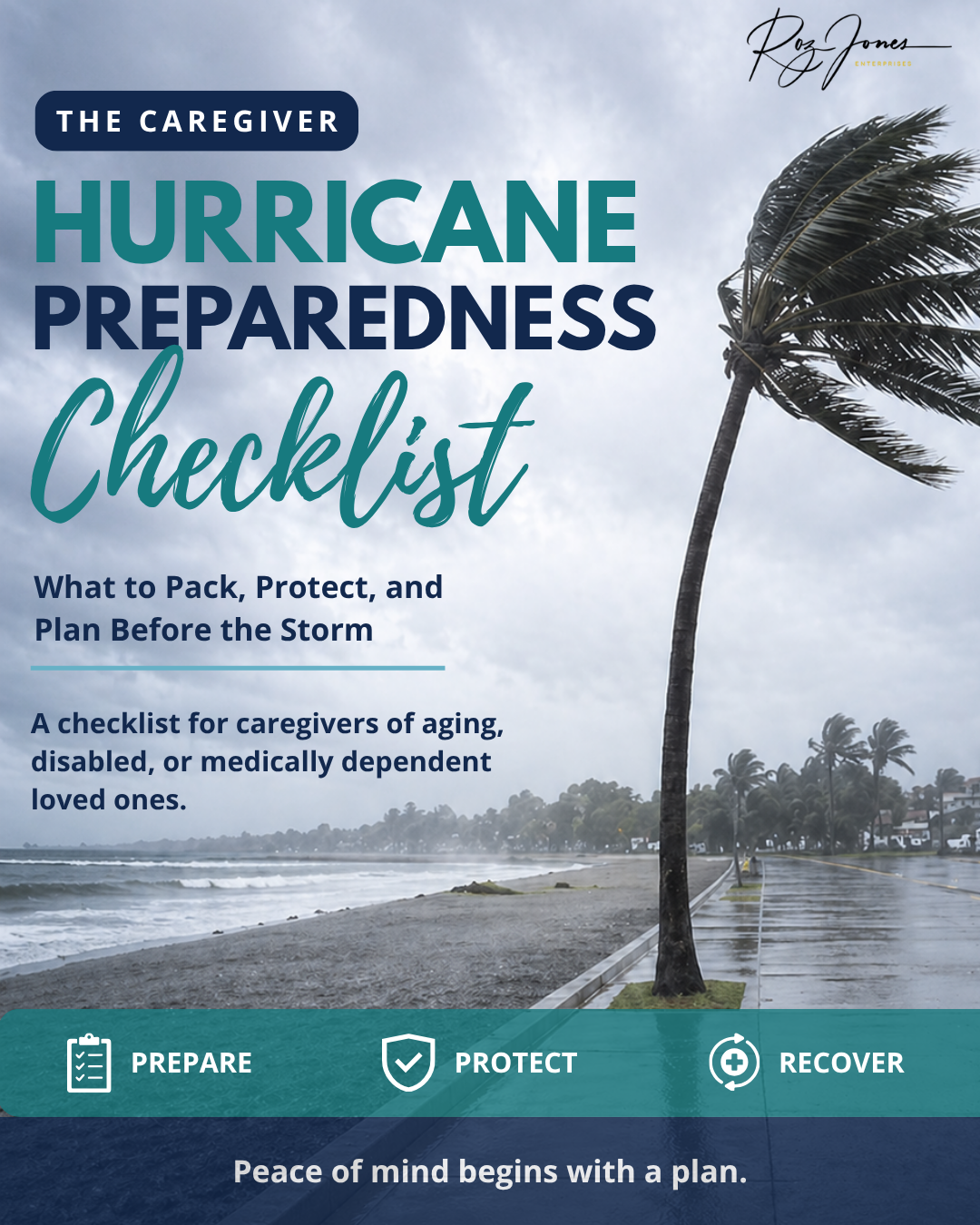
The Caregiver Hurricane Preparedness Checklist.

Are you preparing for hurricane season? Purchase the Caregiver Hurricane Preparedness Checklist to organize the information and supplies your family may need before severe weather arrives.

Subscribe to The Caregiver Cafe Weekly Newsletter!

Caregiving can be a roller coaster of ups and downs. The information that you will receive from The Caregiver Cafe Weekly Specials Newsletter will support you as a caregiver. Remember…

1. YOU ARE NOT ALONE: The problems you face as a caregiver are experienced by other caregivers. Knowing that you’re not alone can be comforting. 

2. Tools and Resources:  Find caregiver stress management tools and gain perspective from other caregiver’s experiences.

3. LEARN TO: Ask for help, accept help when it is offered, and acknowledge yourself on this caregiving journey. Hear from experts on how to balance caregiving responsibilities by taking care of your needs and involving others to help manage the natural stress and isolation of being a caregiver. 

Helping Your Aging Loved One Prepare for Medicare Open Enrollment

By Roz Jones

Medicare Open Enrollment comes around every year, and for family caregivers, it can bring another set of decisions to manage.

Your aging loved one may already have Medicare coverage that worked well this year, but that doesn’t automatically mean it’ll still be the best fit next year. Prescription needs can change. Doctors may leave a plan’s network. Premiums and other costs may change. A plan can also make changes to the benefits it offers.

That’s why Open Enrollment is worth paying attention to, even when your loved one isn’t unhappy with their current coverage.

Medicare Open Enrollment runs from October 15 through December 7 each year. During that period, people who already have Medicare can review their coverage and make certain changes for the following year. Any changes made during Open Enrollment generally take effect on January 1.

As a caregiver, you don’t need to become a Medicare expert. You do need to know what has changed in your loved one’s health and whether their current coverage still supports those needs.

Understand What Open Enrollment Is Really For

One important thing to clear up is that Medicare Open Enrollment isn’t usually the time when someone turning 65 first signs up for Medicare Part A and Part B.

Most people first become eligible for Medicare around age 65, and their Initial Enrollment Period generally begins three months before the month they turn 65 and continues for three months afterward.

Open Enrollment is different.

This is the time when people who already have Medicare can make changes to how they receive their health or prescription drug coverage. That may mean switching from Original Medicare to a Medicare Advantage plan, moving from Medicare Advantage back to Original Medicare, changing Medicare Advantage plans, or changing prescription drug coverage.

For caregivers, understanding that difference can prevent a lot of unnecessary confusion.

Start With What Changed This Year

Before looking at plans, think about what has changed for your aging loved one since the last enrollment period.

Maybe they’ve started taking a new prescription. Maybe they’re seeing a new specialist. Their mobility may have changed, making transportation benefits more important. A new diagnosis may mean they need services they weren’t using before.

Those changes matter because the plan that worked last year was chosen around last year’s needs.

You don’t have to assume that something needs to change. You’re simply checking.

Look at how your loved one actually used their coverage throughout the year and ask whether anything became more difficult, more expensive, or harder to access.

That gives you a much better starting point than choosing a plan based only on the monthly premium.

Don’t Automatically Renew Without Reviewing

If your loved one is satisfied with their current coverage and the plan will continue next year, they may not need to make a change during Open Enrollment.

That still doesn’t mean you should skip the review.

Medicare plans can change their costs, benefits, provider networks, and drug coverage from one year to the next. Your loved one should receive information from their current plan explaining what will change in the upcoming year.

Take time to read it.

A familiar plan name can make it feel like nothing has changed, but the details underneath that name may look different next year.

Family caregivers should pay particular attention to the services their loved one uses most often. If they regularly see certain doctors, use specific pharmacies, take several prescriptions, or rely on particular benefits, those are the things you want to verify before deciding to stay with the current plan.

Review Prescription Coverage Carefully

Prescription drug coverage deserves extra attention during Medicare Open Enrollment because medication needs can change quickly for aging adults.

Make sure your loved one’s current prescriptions are still covered and pay attention to how the plan classifies those medications. A prescription can remain covered while the amount your loved one pays for it changes.

You’ll also want to check whether the pharmacies your loved one uses are still participating in the plan and whether using a preferred pharmacy could make a difference in what they pay.

Medicare Part D also continues to look different than it did several years ago. For 2026, out-of-pocket costs for covered Part D prescription drugs are capped at $2,100 for the year. Once someone reaches that limit through qualifying out-of-pocket spending, they won’t continue paying copayments or coinsurance for covered Part D drugs for the remainder of that calendar year.

That’s another reason caregivers should work from current information instead of assuming Medicare works the way it did a few years ago.

Check the Doctors and Services Your Loved One Uses

Cost matters, but access matters too.

If your aging loved one has doctors they trust, specialists they see regularly, or a preferred hospital system, check whether those providers will still be available under the plan you’re considering.

This is especially important with Medicare Advantage plans because provider networks can differ.

A plan may look affordable on paper but become much less useful if your loved one has to change several healthcare providers or travel much farther for care.

Think about the whole picture.

Your loved one’s healthcare routine may include primary care visits, specialists, medications, diagnostic testing, therapy, home health services, or other care that happens throughout the year.

The best coverage isn’t necessarily the plan with the most extras. It’s the one that works with the care your loved one actually needs.

Be Careful With All the Marketing

Open Enrollment season can bring a lot of mail, phone calls, television advertisements, and plan offers.

That can be overwhelming for caregivers and aging loved ones alike.

A plan advertisement may highlight extra benefits or a low premium without explaining every limitation that could affect your loved one.

Slow the process down.

Use official Medicare information when comparing options, and make sure you understand what your loved one would be giving up as well as what they might gain by switching.

Medicare.gov and the annual Medicare & You handbook are official sources for comparing coverage and understanding changes.

If the choices still feel confusing, you can also get help from a State Health Insurance Assistance Program counselor. SHIP programs provide Medicare counseling and can help beneficiaries and families understand their options without relying solely on an insurance company’s marketing.

Give Your Loved One a Voice in the Decision

If your aging loved one can participate in the decision, include them.

Ask what worked well about their healthcare this year and what frustrated them. They may remember a problem with a prescription, difficulty reaching a provider, or a service they wished they had access to that you didn’t know was important to them.

Those experiences should be part of the decision.

Caregivers may handle much of the research and paperwork, but the coverage ultimately affects your loved one’s everyday healthcare.

That means their priorities matter too.

Don’t Wait Until December 7

Waiting until the final day of Open Enrollment creates pressure nobody needs.

Start reviewing information before October 15 if you can. Medicare recommends using the beginning of October to review notices from current plans and preview options for the coming year.

That gives you time to collect your loved one’s medication information, check providers, compare plans, ask questions, and talk through any possible changes without feeling rushed.

If your loved one decides their current coverage still works, that’s a decision too.

The goal isn’t to change plans every year.

The goal is to make sure keeping the current plan is an informed choice.

Make the Review Part of Your Caregiving Routine

Medicare Open Enrollment is easier to manage when it becomes part of your annual caregiving routine instead of something you remember at the last minute.

Each fall, take some time to look at what has changed with your loved one’s health and what has changed with their coverage.

That annual review can help you catch problems before your loved one is standing at a pharmacy counter in January wondering why a medication costs more than expected or calling a doctor only to learn the plan has changed.

I first talked about this process in Unveiling the Medicare Enrollment Period: Your Guide to Getting Started. The importance of reviewing Medicare coverage hasn’t changed, but Medicare itself continues to evolve, which makes it even more important for family caregivers to work from current information when helping an aging loved one prepare for the year ahead.

You don’t have to understand every Medicare rule in one sitting.

What matters is knowing your loved one’s current needs, checking the coverage they already have, paying attention to what’s changing, and asking for help when something isn’t clear. A little preparation during Open Enrollment can help prevent a lot of frustration after January 1.

Prepare for Your Next Trip

Planning to travel with an aging loved one? Download the free Vacationing with an Aging Loved One Checklist to help you prepare for medications, mobility needs, comfort, safety, and unexpected changes.

Tune in to The Caregiver Café Podcast

S.O.S: When to ask for help with Phil Hill

In this episode of The Caregiver Café with Roz Jones, Roz continues her conversation with security expert and former family caregiver Phil Hill about the emotional weight of caregiving, knowing when to ask for help, and what happens when caregivers try to carry too much for too long.

Phil reflects on the years he spent caring for his father while he and his wife were also helping care for her parents. He shares how managing several caregiving situations at once affected his family, his business, his relationships, and his emotional well-being.

Although Phil had access to a long-term care insurance policy and other resources, he waited to use them because he believed he might need them later. Roz reminds caregivers that the time to ask for help is often much earlier than they realize. When a loved one moves into the home, the family should begin identifying gaps in care, exploring available benefits, and creating a support plan before exhaustion and crisis take over.

Give Yourself a Moment of Grace

Caregiving includes demanding days, unexpected changes, and moments of connection that may be easy to overlook. Moments of Grace offers encouragement to caregivers who need a reminder to pause and recognize the meaningful moments along the journey.

Preparing for hurricane season?

The Caregiver Hurricane Preparedness Checklist.

Are you preparing for hurricane season? Purchase the Caregiver Hurricane Preparedness Checklist to organize the information and supplies your family may need before severe weather arrives.

Subscribe to The Caregiver Cafe Weekly Newsletter!

Caregiving can be a roller coaster of ups and downs. The information that you will receive from The Caregiver Cafe Weekly Specials Newsletter will support you as a caregiver. Remember…

1. YOU ARE NOT ALONE: The problems you face as a caregiver are experienced by other caregivers. Knowing that you’re not alone can be comforting. 

2. Tools and Resources:  Find caregiver stress management tools and gain perspective from other caregiver’s experiences.

3. LEARN TO: Ask for help, accept help when it is offered, and acknowledge yourself on this caregiving journey. Hear from experts on how to balance caregiving responsibilities by taking care of your needs and involving others to help manage the natural stress and isolation of being a caregiver. 

Planning Before the Crisis

By Roz Jones

If you are caring for an aging loved one, or if you are someone trying to prepare your own wishes so your family is not left guessing later, advance directives can feel like a hard topic to even bring up.

That makes sense.

These conversations touch fear, vulnerability, health changes, and the reality that life will not always stay the same. A lot of people avoid them not because they do not care, but because they do. Deeply.

But that is also exactly why this matters.

Advance directives are not just legal documents. They are one way to make sure a person’s voice stays part of the conversation, even during moments when they may not be able to speak for themselves.

What Advance Directives Really Mean

At their core, advance directives help put medical wishes into writing ahead of time.

They can help answer questions like:

Who should speak for me if I cannot speak for myself?
What kinds of treatment would I want or not want?
What matters most to me if my health changes?

For the person aging, this is about protecting choice.

For the caregiver, this is about having guidance instead of having to make painful guesses in the middle of a crisis.

That matters more than people sometimes realize.

Why Your Aging Loved One May Need This

Aging does not take away a person’s right to decide how they want to be cared for.

Your aging loved one may already have strong feelings about medical care, life support, hospital treatment, comfort, dignity, and who they trust to make decisions. The problem is not always that they do not have wishes. The problem is that those wishes often have not been clearly shared, written down, or discussed with the right people.

When that happens, families are left trying to figure things out under pressure.

Advance directives help aging loved ones stay centered in their own care. They create space for a person to say, while they are able, “This is what matters to me.”

Why Caregivers Need This Too

If you are a caregiver, you already know how much can end up resting on your shoulders.

You may be the person making calls, tracking medications, keeping up with appointments, watching for changes, checking on safety, and trying to hold everything together emotionally at the same time. In the middle of all that, the last thing you need is to be forced into making major medical decisions without clear direction.

That kind of uncertainty can weigh heavily on caregivers.

It can create guilt.
It can create conflict among family members.
It can leave one person carrying the emotional burden of decisions no one prepared for.

Advance directives cannot remove all the pain from a hard season, but they can give caregivers something steady to lean on. They can offer clarity when emotions are high. They can help families move from guessing to honoring what their loved one actually wanted.

This Is Not Only About End-of-Life

One of the biggest reasons families delay this conversation is because they think advance directives are only about death.

That is part of the picture, but not the whole picture.

Advance directives matter anytime someone may not be able to communicate their wishes for themselves. That could happen during a serious illness, after a fall, during hospitalization, after a stroke, with memory loss, or because of another unexpected medical event.

So this is not just about preparing for the end.
It is about preparing for the unknown.

And when you are caring for an aging loved one, you know how quickly things can change.

Why Families Put It Off

Many people assume there will be more time.

More time to ask the questions.
More time to fill out the forms.
More time to come back to the conversation when things feel less busy, less emotional, less uncomfortable.

But in caregiving, waiting often creates more pressure, not less.

Conversations that could have happened slowly and thoughtfully end up happening in hospital rooms, after emergencies, or during moments when everyone is tired and overwhelmed. That is when stress is high, opinions collide, and people are most likely to feel lost.

Planning ahead does not make a hard situation easy.
But it can make it clearer.

How to Start Without Making It Feel Scary

This conversation does not have to begin with legal language or stacks of paperwork.

It can begin with care.

You might say:

I want to make sure we understand what matters to you.
Have you thought about who you would want speaking for you if needed?
Are there medical decisions you feel strongly about?
What would you want us to know now, before there is ever a crisis?

That kind of opening feels different.

It does not sound like fear.
It sounds like love.
It sounds like respect.
It sounds like preparation.

And for caregivers who are making plans for themselves too, these same questions matter just as much. You do not have to wait until you are older, sicker, or in crisis to decide you want your wishes known.

Clarity Is a Gift to Everyone Involved

One of the most loving things a person can do for their family is make their wishes clear.

One of the most loving things a caregiver can do is help create space for that clarity.

Advance directives are not about expecting the worst. They are about reducing confusion if life takes a difficult turn. They are about helping aging loved ones keep their voice. They are about helping caregivers feel less alone in decision-making. They are about giving families a stronger foundation in moments that can otherwise feel chaotic.

That is why this matters. If you want to understand the basics more clearly, read my previous blog What are Advance Directives and Why Do They Matter?

Schedule a Family Care Planning Session

Roz Jones is a dedicated caretaker turned CEO with over a decade of experience in helping families care for and make decisions for loved ones and their legacies.Roz is a compassionate, innovative healthcare industry leader.

If your family needs support talking through next steps, book a Family Care Planning Session with Roz Jones to walk through your concerns, questions, and planning needs with more clarity and care.

Purchase the Caregiving & Advance Health Directives Checklist!

Roz Jones Enterprises Caregiving & Advance Health Directives Checklist.

If you want a practical tool to help guide the conversation and make these decisions feel less overwhelming, purchase the Caregiving & Advance Health Directives Checklist at the link below.

Subscribe to The Caregiver Cafe Weekly Newsletter!

Caregiving can be a roller coaster of ups and downs. The information that you will receive from The Caregiver Cafe Weekly Specials Newsletter will support you as a caregiver. Remember…

1. YOU ARE NOT ALONE: The problems you face as a caregiver are experienced by other caregivers. Knowing that you’re not alone can be comforting. 

2. Tools and Resources:  Find caregiver stress management tools and gain perspective from other caregiver’s experiences.

3. LEARN TO: Ask for help, accept help when it is offered, and acknowledge yourself on this caregiving journey. Hear from experts on how to balance caregiving responsibilities by taking care of your needs and involving others to help manage the natural stress and isolation of being a caregiver.