Making Travel Easier for Aging Loved Ones: What Caregivers Should Know Before Renting Equipment

By Roz Jones

Traveling with an aging loved one can be a beautiful experience.

It can give the family time together. It can help your loved one enjoy a change of scenery. It can create memories that matter. It can remind everyone that aging does not mean life has to stop.

But caregiver, let’s be honest.

Traveling with an aging loved one also requires planning.

It is not just about booking the room, packing the bags, and deciding what time to leave. It is also about thinking through comfort, safety, mobility, rest, medication, bathroom needs, and what your loved one may need once you arrive.

That is where renting equipment can make a difference.

Sometimes caregivers try to bring everything from home because they do not want to forget anything. But depending on where you are going, how you are traveling, and what your loved one needs, renting equipment may be the better option.

It can make the trip easier.

It can reduce stress.

It can help your loved one move with more confidence.

And it can help you focus more on the experience instead of spending the whole trip trying to manage every physical need without enough support.

Start With What Your Loved One Uses Every Day

Before you rent anything, begin with your loved one’s regular routine.

What do they use at home? What makes the day easier? What helps them move safely? What helps them sleep well? What prevents falls? What helps them feel comfortable in the bathroom, in the bedroom, or when moving from one place to another?

Caregivers sometimes plan for the trip itself but forget to plan for the daily routine once they arrive.

That routine matters.

If your loved one uses a walker at home, do not assume they will be fine without it on vacation. If they need a shower chair at home, do not assume the hotel bathroom will be easy to manage. If they sleep better with extra support, do not assume any bed will work.

Aging loved ones may be able to adjust to some changes, but too many changes at once can create discomfort, confusion, and safety concerns.

The goal is not to overpack or overprepare.

The goal is to notice what helps your loved one function well and make sure those supports are available while traveling.

Think About Mobility Before You Arrive

Mobility is one of the biggest things caregivers need to think through before a trip.

Your loved one may walk well at home but struggle in an airport, museum, resort, cruise ship, theme park, or large hotel. Long hallways, uneven sidewalks, crowded spaces, and long days can wear the body down quickly.

That is why mobility equipment can be helpful even if your loved one does not use it every day.

A wheelchair, transport chair, walker, rollator, or mobility scooter may give your loved one more energy for the parts of the trip that matter most. It may also reduce the risk of falls, exhaustion, or frustration.

Caregivers should think about the full travel day, not just the destination.

How far will your loved one need to walk?
Will there be stairs?
Will there be ramps or elevators?
Will the sidewalks be smooth?
Will there be places to sit and rest?
Will your loved one be able to move safely from the car to the room, from the room to meals, and from meals to activities?

These are not small questions.

They shape the whole travel experience.

When mobility is planned well, your loved one may feel more included and less worn out. And caregiver, you may feel less pressure on your body too.

Bathroom Safety Cannot Be an Afterthought

Bathrooms can become one of the most challenging parts of travel for aging loved ones.

At home, the bathroom may already be set up with grab bars, a raised toilet seat, a shower chair, or non-slip mats. But when you travel, those supports may not be there.

A hotel may say the room is accessible, but it is still important to ask specific questions.

Is the shower walk-in or does it have a tub?
Are there grab bars near the toilet and shower?
Is there enough space for a walker or wheelchair?
Is there a shower chair available, or do you need to rent one?
Is the toilet height comfortable for your loved one?
Is the floor slippery when wet?

Aging loved ones may feel embarrassed asking for bathroom support, but safety matters more than pride.

Falls can happen quickly, especially in unfamiliar spaces. A simple rental item like a shower chair or raised toilet seat can help your loved one feel more secure and reduce the caregiver’s worry.

Caregiving means protecting dignity too.

When the right equipment is in place, your loved one may be able to do more for themselves with less fear and less discomfort.

Comfort Matters More Than We Admit

Travel can be tiring on the body.

Aging loved ones may need more support for sleeping, sitting, standing, or resting. A bed that is too low, too high, too soft, or too firm can make the trip harder. A chair without arms may make it difficult to sit down or stand up. A long day without proper rest can lead to pain, irritability, fatigue, or confusion.

That is why caregivers should think about comfort equipment as part of the travel plan.

Depending on your loved one’s needs, you may want to ask about renting a lift chair, bed rail, adjustable bed, pressure-relief cushion, or other sleeping support.

This is especially important if your loved one has arthritis, back pain, limited mobility, balance concerns, or difficulty getting in and out of bed.

A vacation should not leave your loved one feeling physically defeated.

Comfort is not extra.

Comfort is care.

Do Not Wait Until the Last Minute for Medical Equipment

If your aging loved one uses medical equipment, plan early.

This may include oxygen equipment, a nebulizer, CPAP supplies, a blood pressure monitor, a wheelchair, or other devices connected to their health needs.

Before traveling, talk with your loved one’s healthcare provider about what should come with you, what can be rented, and what should not be changed. Some equipment may require special instructions, prescriptions, airline approval, or advance arrangements with a rental company.

Do not assume you can easily get what you need once you arrive.

Not every destination has the same rental options. Not every company carries the same equipment. Not every item will be available at the last minute.

Caregivers should also keep important medical information nearby, including medication lists, diagnoses, allergies, physician contacts, insurance information, and emergency instructions.

When medical needs are involved, preparation helps keep the trip from turning into a crisis.

Ask Better Questions Before You Rent

Renting equipment is helpful, but caregivers need to ask the right questions before making arrangements.

Do they deliver to the hotel, rental home, airport, or cruise port?
Do they pick up the equipment after the trip?
Is the equipment cleaned and inspected before delivery?
What happens if something breaks?
Is there an emergency contact number?
Are there weight or size limits?
Will the equipment fit in the room, vehicle, or doorway?
Are there additional fees for delivery, setup, or weekend service?

These details matter.

The last thing you want is to arrive and find out the wheelchair is too wide for the doorway, the scooter is too heavy to transport, or the shower chair was delivered after your loved one already needed it.

Caregivers should confirm everything in writing when possible.

Dates.
Delivery time.
Pickup time.
Equipment type.
Cost.
Location.
Contact person.

Clear information gives you something to refer back to if there is confusion.

Match the Equipment to the Trip

Every trip does not require the same equipment.

A weekend at a family member’s home may require different support than a cruise, a flight, a beach trip, or a long road trip.

Think about the environment.

If you are going to the beach, will your loved one need a beach wheelchair or extra support walking through sand? If you are going to a city, will there be a lot of walking? If you are staying in a rental home, are there stairs? If you are going on a cruise, how far is the cabin from the dining area or elevators?

The trip should be planned around what your loved one can realistically manage.

Sometimes families want the trip to feel like it used to. But aging changes how travel works.

That does not mean the trip cannot be enjoyable.

It means the plan needs to respect where your loved one is now.

The right equipment can help your loved one stay engaged without pushing their body past what it can comfortably handle.

Protect Dignity While Offering Support

Caregivers may know that equipment is needed, but aging loved ones may not always want to use it.

They may feel embarrassed. They may feel like it makes them look older. They may worry that people are watching. They may resist because accepting equipment feels like accepting a loss of independence.

That is why the conversation matters.

Try not to present rented equipment as a sign of decline. Present it as a way to help them enjoy the trip.

A wheelchair may mean they can stay out longer with the family. A shower chair may mean they can bathe with more confidence. A scooter may mean they can participate without becoming exhausted. A bed rail may mean they can rest more comfortably and get up more safely.

The message is not, “You cannot do this anymore.”

The message is, “We want you to be safe, comfortable, and included.”

That makes a difference.

Caregiving is not just about getting through the trip.

It is about helping your loved one feel respected while their needs are being met.

Keep Building Your Travel Plan

If you missed the first blog, you can read Renting Equipment for Aging Loved Ones that are Traveling: A Comprehensive Guide here. It is a helpful starting point for understanding what types of equipment may support your loved one while traveling.

This blog builds on that reminder with one more truth:

The right equipment can change the whole trip.

It can give your loved one more comfort.
It can help prevent unnecessary strain.
It can reduce safety concerns.
It can give the caregiver more peace of mind.
It can make the trip feel more possible for everyone involved.

Caregiver, you do not have to wait until something becomes difficult to start planning.

You can ask questions ahead of time.

You can rent what is needed.

You can prepare the room, the route, the bathroom, the sleeping space, and the travel day with your loved one’s needs in mind.

Not because you expect the trip to be hard.

But because the right support can make the trip easier.

And when your loved one is supported well, the family has more room to enjoy the moments that matter.

Download the Vacationing With an Aging Loved One Checklist for FREE!

Before your next trip, download the free Vacationing with an Aging Loved One Checklist. This resource can help you think through what needs to be packed, planned discussed, and prepared before travel begins!

Tune in to The Caregiver Café Podcast

In this episode of The Caregiver Café with Roz Jones, Roz is talking about something that many families face but do not always know how to handle: caregiving as a family affair.

When an aging parent, loved one, or family member needs care, one person often becomes the main caregiver while everyone else steps back, scatters, or assumes that person has it all under control. But caregiving should not fall on one person without a plan, support, or honest family conversations.

Roz breaks down how families can reduce the chaos in caregiving by understanding where tension comes from, setting realistic expectations, creating a care plan, assigning roles, and being honest about what each person can and cannot do. She also reminds listeners that every family member may not be able or willing to provide hands-on care, and that is why outside resources, respite care, and hired support may need to become part of the plan.

This episode is a practical reminder that caregiving requires communication, boundaries, preparation, and teamwork. Whether you live close by or long distance, there is usually some way to support the person providing daily care.

Caregiving may be a family affair, but it works best when the family has a plan.

Give Yourself a Moment of Grace

If you need encouragement for the emotional side of caregiving, purchase Roz Jones’ book, Moments of Grace. This book offers support, reflection, and reminders of grace for the caregiver who is carrying a lot.

This journal was created to help caregivers pause, breathe, reflect, and find strength in the middle of the caregiving journey.

Purchase Moments of Grace today and give yourself permission to breathe in the middle of the caregiving journey.

Prepare Before the Emergency Comes
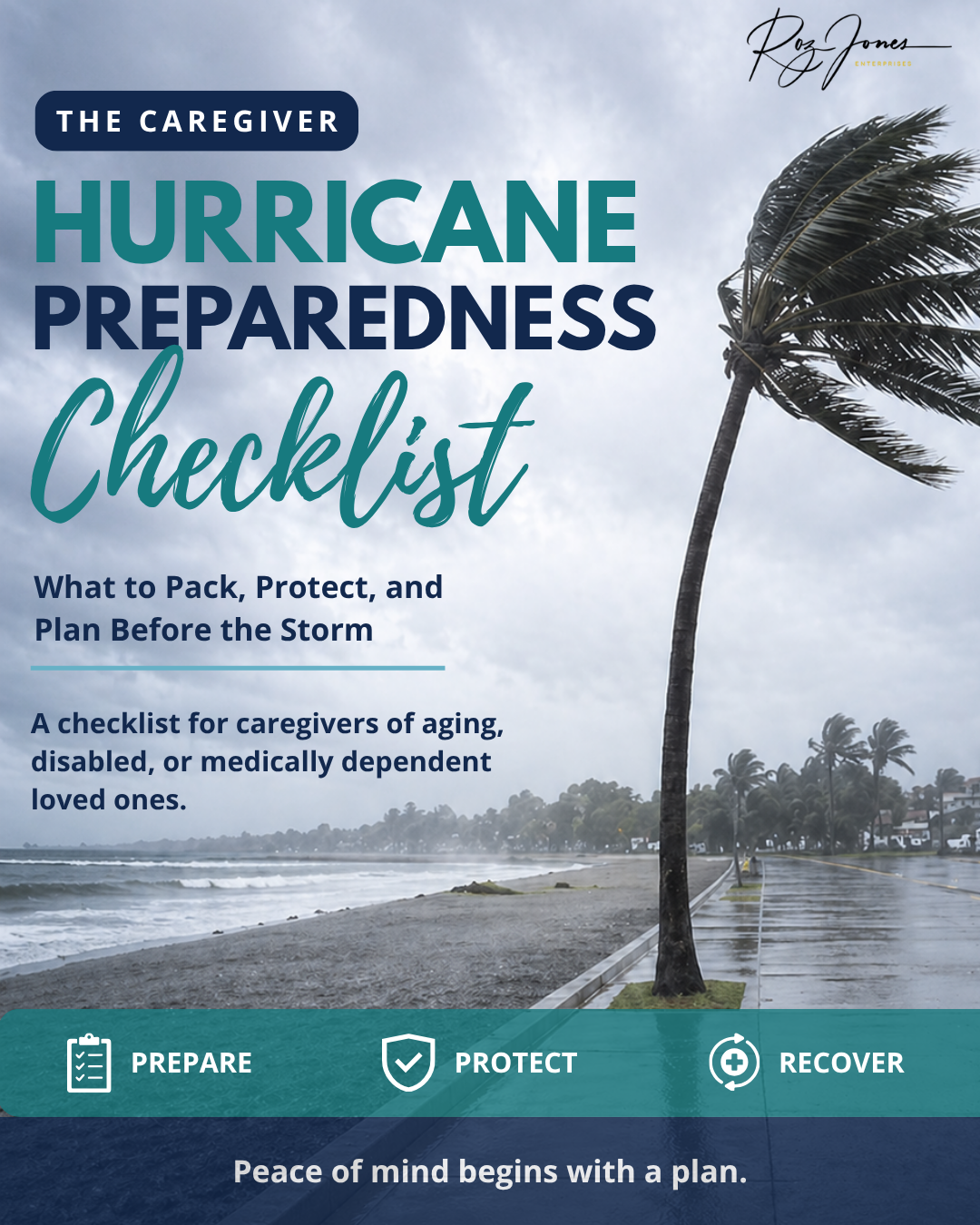
The Caregiver Hurricane Preparedness Checklist.

If you are caring for a loved one during storm season, purchase the Caregiver Hurricane Preparedness Checklist. It can help you prepare important documents, emergency contacts, supplies, medication needs, and safety steps before severe weather becomes a crisis.

For only $1.99, this checklist gives you a simple starting point so you are not trying to gather everything during a storm, power outage, hospitalization, or sudden change in your loved one’s care.

Purchase the Caregiver Hurricane Preparedness Checklist for $1.99 today and take one more step toward peace of mind.

Need Help Sorting Through the Care Plan?

Roz Jones is a dedicated caretaker turned CEO with over a decade of experience in helping families care for and make decisions for loved ones and their legacies.Roz is a compassionate, innovative healthcare industry leader.

If your family needs help thinking through care decisions, caregiving responsibilities, or next steps, book a session with Roz Jones. You do not have to navigate this season alone.

Together, we can talk through what is working, what is becoming too heavy, and what boundaries need to be strengthened so you can continue to care without losing yourself in the process.

Subscribe to The Caregiver Cafe Weekly Newsletter!

Caregiving can be a roller coaster of ups and downs. The information that you will receive from The Caregiver Cafe Weekly Specials Newsletter will support you as a caregiver. Remember…

1. YOU ARE NOT ALONE: The problems you face as a caregiver are experienced by other caregivers. Knowing that you’re not alone can be comforting. 

2. Tools and Resources:  Find caregiver stress management tools and gain perspective from other caregiver’s experiences.

3. LEARN TO: Ask for help, accept help when it is offered, and acknowledge yourself on this caregiving journey. Hear from experts on how to balance caregiving responsibilities by taking care of your needs and involving others to help manage the natural stress and isolation of being a caregiver. 

Caring Through Culture, Stress, and Silence: What Minority Caregivers Need to Remember

By Roz Jones

Caregiving is already a lot.

But when you are caring for an aging loved one in a minority family, there can be another layer that people do not always talk about.

There may be cultural expectations.
There may be family pressure.
There may be silence around mental health.
There may be guilt around asking for help.
There may be a long history of doing what had to be done without naming how heavy it really was.

During National Minority Mental Health Awareness Month, it is important to talk about caregiving in a way that sees the whole picture.

Because minority caregivers are not just managing appointments, meals, medications, transportation, bathing, paperwork, and family updates.

Many are also carrying the emotional weight of being the one everyone depends on.

And caregiver, that weight can affect your mental health too.

When Caregiving Becomes the Family Expectation

In many families, caregiving is not treated like a role someone steps into.

It is treated like something you are just supposed to do.

You may hear things like:

“That is your mother.”
“That is your father.”
“That is what family does.”
“We do not put our business out there.”
“We take care of our own.”

And yes, family care is beautiful.

There is love in showing up. There is honor in caring for the people who cared for you. There is strength in making sure aging loved ones are not forgotten, dismissed, or left without support.

But love does not mean the caregiver should disappear.

Family responsibility should not come at the cost of your health, your peace, your body, your sleep, or your emotional well-being.

Caregivers can honor their aging loved ones and still need support.

Both can be true.

The Silence Around Mental Health Can Be Heavy

In some minority communities, mental health has not always been easy to talk about.

Some families were taught to pray through it, push through it, work through it, or keep it private. Some were taught that sadness, anxiety, depression, exhaustion, and grief were not things to discuss outside the home.

Some aging loved ones may not even have the language to say what they are feeling.

They may say they are tired.
They may say they do not feel like themselves.
They may become more withdrawn.
They may become more irritable.
They may refuse help.
They may say, “I’m fine,” even when everyone can see they are not.

Caregivers may do the same thing.

You keep going because you feel like you have to. You say you are okay because there is too much to do. You ignore the stress because your loved one’s needs feel more urgent than your own.

But silence does not make the stress disappear.

It just makes the caregiver carry it alone.

Aging Loved Ones Need Emotional Support Too

When caring for an aging loved one, it can be easy to focus only on physical needs.

Are they eating?
Are they taking medication?
Are they safe at home?
Are they getting to appointments?
Are the bills paid?
Is the house clean?

Those things matter.

But aging also affects a person emotionally.

Your loved one may be grieving independence. They may be missing the way their body used to move. They may be afraid of becoming a burden. They may be lonely. They may be frustrated because decisions are being made for them. They may be carrying memories, losses, disappointments, or trauma that were never fully talked about.

For minority aging loved ones, there may also be the impact of life experiences shaped by racism, discrimination, economic hardship, medical mistrust, or being unheard in systems that were supposed to help.

Caregivers need to understand that mental health is not separate from caregiving.

It is part of caregiving.

Sometimes support looks like listening without rushing to fix. Sometimes it looks like helping your loved one talk to a doctor. Sometimes it looks like finding a counselor, support group, faith leader, or community resource that understands their background and experience.

And sometimes support looks like noticing when something has changed and not brushing it off as “just getting older.”

Caregivers Need Safe Places to Tell the Truth

Caregivers are often asked how their loved one is doing.

But not enough people ask how the caregiver is doing.

And even when they do ask, caregivers may not tell the full truth.

Because the truth may sound like:

“I am tired.”
“I am overwhelmed.”
“I am scared.”
“I feel guilty.”
“I am angry.”
“I need help.”
“I do not know how much longer I can keep doing this alone.”

Those words can be hard to say, especially if you were raised to be strong, private, dependable, or self-sacrificing.

But caregiver, being honest about what you need does not make you weak.

It makes you human.

You need people in your life who can hear the truth without judging you. You need people who will not shame you for needing rest. You need people who understand that caregiving can be an act of love and still be exhausting.

That may be a support group. That may be a trusted friend. That may be a therapist. That may be a caregiver community. That may be another family member who finally needs to understand what you have been carrying.

But you need somewhere to put the weight down.

Even if only for a moment.

Cultural Care Should Not Mean Carrying Everything Alone

Culture can be a source of strength in caregiving.

Family meals, music, faith, traditions, stories, prayer, community, and shared history can bring comfort to aging loved ones. These things can remind them who they are and where they come from.

But culture should not be used to keep caregivers silent.

It should not be used to make one person responsible for everything. It should not be used to shame caregivers who need outside help. It should not be used to stop families from talking about depression, anxiety, grief, dementia, caregiver burnout, or emotional stress.

There is nothing wrong with honoring tradition.

But we also have to be willing to ask:

Is this tradition helping the caregiver survive?
Is this expectation fair?
Is this silence protecting the family, or is it hurting the person doing the caregiving?
Is there a way to honor our loved one without sacrificing one person’s entire well-being?

Caregiving does not have to look the same in every generation.

We can keep the love and change the way the weight is carried.

Small Check-Ins Can Make a Difference

You do not have to wait until everything falls apart to take mental health seriously.

Start with small check-ins.

Ask your loved one how they are feeling emotionally, not just physically. Pay attention to changes in mood, sleep, appetite, energy, memory, and interest in things they used to enjoy.

Ask yourself those same questions too.

Am I sleeping?
Am I eating?
Am I more irritated than usual?
Am I crying more?
Am I withdrawing from people?
Am I feeling hopeless?
Am I constantly on edge?
Am I carrying resentment because I have not asked for help?

These questions are not meant to make you feel bad.

They are meant to help you notice what needs care.

Because caregivers need care too.

And the earlier you notice the signs, the easier it may be to get support before burnout takes over.

Support Can Look Different for Every Family

Every family will not need the same kind of support.

Some caregivers may need respite care. Some may need family members to take specific tasks off their plate. Some may need help navigating insurance, appointments, or transportation. Some may need therapy. Some may need a support group where they do not have to explain the cultural layers of caregiving.

Some may need to have a hard conversation with family and say:

“I cannot keep doing this by myself.”

That sentence may be uncomfortable, but it can also be necessary.

Caregiving should not depend on one person quietly breaking down while everyone else assumes they are handling it.

If your family wants your aging loved one to receive good care, then the caregiver also needs support.

That is not selfish.

That is realistic.

Keep the Conversation Going

If you missed the first blog, you can read Nurturing Mental Health in Minority Caregiving: A Guide to Supporting Aging Loved Ones here. It is a helpful starting point for understanding how culture, mental health, and caregiving connect.

This blog builds on that reminder with one more truth:

Caregivers in minority families need room to be honest.

Honest about the love.
Honest about the stress.
Honest about the cultural expectations.
Honest about the silence.
Honest about needing help.

Because caregiving is not only about keeping your loved one safe.

It is also about making sure the caregiver does not get lost in the process.

National Minority Mental Health Awareness Month reminds us that mental health conversations belong in every community, every family, and every caregiving journey.

Caregiver, you do not have to carry everything quietly.

You can ask for help.

You can name what is heavy.

You can honor your loved one and still protect your own well-being.

You can build a care plan that includes your aging loved one and you.

Because care is not complete if the caregiver is left unsupported.

Download the Vacationing With an Aging Loved One Checklist for FREE!

Before your next trip, download the free Vacationing with an Aging Loved One Checklist. This resource can help you think through what needs to be packed, planned discussed, and prepared before travel begins!

Tune in to The Caregiver Café Podcast

In this episode of The Caregiver Café with Roz Jones, Roz is talking about something that many families face but do not always know how to handle: caregiving as a family affair.

When an aging parent, loved one, or family member needs care, one person often becomes the main caregiver while everyone else steps back, scatters, or assumes that person has it all under control. But caregiving should not fall on one person without a plan, support, or honest family conversations.

Roz breaks down how families can reduce the chaos in caregiving by understanding where tension comes from, setting realistic expectations, creating a care plan, assigning roles, and being honest about what each person can and cannot do. She also reminds listeners that every family member may not be able or willing to provide hands-on care, and that is why outside resources, respite care, and hired support may need to become part of the plan.

This episode is a practical reminder that caregiving requires communication, boundaries, preparation, and teamwork. Whether you live close by or long distance, there is usually some way to support the person providing daily care.

Caregiving may be a family affair, but it works best when the family has a plan.

Give Yourself a Moment of Grace

If you need encouragement for the emotional side of caregiving, purchase Roz Jones’ book, Moments of Grace. This book offers support, reflection, and reminders of grace for the caregiver who is carrying a lot.

This journal was created to help caregivers pause, breathe, reflect, and find strength in the middle of the caregiving journey.

Purchase Moments of Grace today and give yourself permission to breathe in the middle of the caregiving journey.

Prepare Before the Emergency Comes

The Caregiver Hurricane Preparedness Checklist.

If you are caring for a loved one during storm season, purchase the Caregiver Hurricane Preparedness Checklist. It can help you prepare important documents, emergency contacts, supplies, medication needs, and safety steps before severe weather becomes a crisis.

For only $1.99, this checklist gives you a simple starting point so you are not trying to gather everything during a storm, power outage, hospitalization, or sudden change in your loved one’s care.

Purchase the Caregiver Hurricane Preparedness Checklist for $1.99 today and take one more step toward peace of mind.

Need Help Sorting Through the Care Plan?

Roz Jones is a dedicated caretaker turned CEO with over a decade of experience in helping families care for and make decisions for loved ones and their legacies.Roz is a compassionate, innovative healthcare industry leader.

If your family needs help thinking through care decisions, caregiving responsibilities, or next steps, book a session with Roz Jones. You do not have to navigate this season alone.

Together, we can talk through what is working, what is becoming too heavy, and what boundaries need to be strengthened so you can continue to care without losing yourself in the process.

Subscribe to The Caregiver Cafe Weekly Newsletter!

Caregiving can be a roller coaster of ups and downs. The information that you will receive from The Caregiver Cafe Weekly Specials Newsletter will support you as a caregiver. Remember…

1. YOU ARE NOT ALONE: The problems you face as a caregiver are experienced by other caregivers. Knowing that you’re not alone can be comforting. 

2. Tools and Resources:  Find caregiver stress management tools and gain perspective from other caregiver’s experiences.

3. LEARN TO: Ask for help, accept help when it is offered, and acknowledge yourself on this caregiving journey. Hear from experts on how to balance caregiving responsibilities by taking care of your needs and involving others to help manage the natural stress and isolation of being a caregiver. 

Beyond Activities: Helping Aging Loved Ones Feel Seen, Heard and Connected

By Roz Jones

Family bonding is not only about what families do together.

It is also about how aging loved ones feel when the family is gathered around them.

Do they feel included?
Do they feel heard?
Do they feel remembered?
Do they feel like their life still matters?
Do they feel like they are still part of the family story?

As loved ones age, families often focus on care needs. The appointments. The medications. The meals. The mobility concerns. The daily routines. Those responsibilities are important, and caregivers know how much attention they require.

But caregiving also includes emotional connection.

Aging loved ones need more than assistance. They need belonging. They need meaningful interaction. They need opportunities to share who they are, what they have lived through, and what still matters to them.

Family bonding does not always have to be planned around a major outing or a large gathering. Sometimes the most meaningful moments happen in simple, quiet ways. A song. A story. A photograph. A favorite saying. A familiar prayer. A hand held a little longer than usual.

These moments may seem small, but they can help aging loved ones feel grounded, valued, and loved.

Preserve Their Stories While You Can

Every aging loved one carries a history.

They have lived through seasons the younger generation may never fully understand. They may remember family traditions, childhood lessons, first jobs, hard years, joyful years, people who have passed on, and moments that shaped the family long before the caregiver stepped into this role.

Those stories matter.

Caregivers can create moments of connection by inviting aging loved ones to share parts of their life story. This does not have to be formal. It can happen during a quiet afternoon, a family visit, a phone call, or while looking at old pictures.

The family might ask about where they grew up, who influenced them, what they were proud of, what they learned the hard way, what they wish younger family members knew, or what traditions they hope the family will continue.

When memory changes are present, the conversation may need to be gentle and flexible. The goal is not to test their memory or correct every detail. The goal is to listen.

Sometimes a story may come out slowly.

Sometimes it may come out in pieces.

Sometimes the same story may be repeated more than once.

That does not make it less valuable.

Repeated stories may be the ones that still hold meaning. They may be the memories that feel safest, strongest, or most connected to identity.

Listening is an act of care.

Create a Family Memory Project

Families can help aging loved ones feel honored by creating a simple memory project.

This could be a photo album with captions, a family recipe collection, a box of handwritten notes, a recorded conversation, a voice memo, a short video, or a family timeline.

The project does not have to be perfect.

It simply needs to make room for the loved one’s life to be acknowledged.

A caregiver might ask family members to write down favorite memories. Grandchildren might contribute drawings or questions. Adult children might record short reflections. The loved one might share names, places, sayings, stories, or lessons they want remembered.

These projects can become a gift for the whole family.

They also remind the aging loved one that their life has impact.

They are not just being cared for.

They are being honored.

Use Music to Bring Comfort and Connection

Music has a way of reaching places that words sometimes cannot.

A familiar song can bring a smile. A hymn can bring peace. A favorite artist can bring back a memory. A song from childhood, church, a wedding, a family gathering, or a meaningful season of life can create connection almost instantly.

Caregivers can use music as a gentle way to bond with aging loved ones.

This may look like creating a playlist of favorite songs, playing soft music during a visit, singing together, listening to old records, or asking what music they loved when they were younger.

Music can also support mood and routine. A calming song may help during moments of anxiety. Familiar music may bring comfort during personal care. A favorite upbeat song may encourage movement or laughter.

The most important part is to choose music connected to the loved one’s life, not just what is convenient.

Music can help families remember that the person in front of them has a full history, full emotions, and full humanity.

Make Room for Spiritual and Emotional Rituals

For many aging loved ones, faith, prayer, devotion, meditation, or quiet reflection has been part of their life for years.

Caregivers can create bonding moments by honoring those spiritual and emotional rhythms.

This may include reading a short prayer, sitting together in silence, listening to a favorite sermon, playing gospel music, lighting a candle safely, holding hands, saying grace, or creating a quiet moment of gratitude.

For some families, this may not be religious. It may be emotional or reflective. It may look like naming one good thing from the day, sharing something they are thankful for, or simply taking a few quiet breaths together.

These rituals can bring peace.

They can also create consistency in a season where so much may feel uncertain.

Caregivers do not need to have all the right words. Sometimes presence is enough.

A calm voice, a steady hand, and a peaceful space can become part of the care.

Invite Younger Generations In

Family bonding is also about helping younger generations stay connected to aging loved ones.

Children, teens, and young adults may not always know how to interact with an aging family member, especially if there are changes in memory, mobility, hearing, or communication. They may feel unsure, nervous, or afraid of saying the wrong thing.

Caregivers can help bridge that gap.

Younger family members can ask simple questions, share school updates, show photos, read a short note, help with a small project, play a favorite song, or simply sit nearby.

The goal is not to force a perfect interaction.

The goal is to make connection feel possible.

A grandchild does not need to know how to have a long conversation to make an aging loved one feel loved. A hug, a drawing, a short visit, or a shared laugh can matter deeply.

These moments also help younger family members understand that aging loved ones are not just elderly relatives. They are people with stories, wisdom, humor, personality, and history.

That is how family connection continues across generations.

Respect Their Need for Quiet

Family bonding does not always mean more noise, more activity, or more conversation.

Sometimes aging loved ones need quiet companionship.

Sitting together without rushing can be meaningful. Watching the birds outside the window can be meaningful. Holding hands while resting can be meaningful. Sharing the same room without needing to fill every moment with words can be meaningful.

Caregivers should pay attention to how much stimulation their loved one can handle.

Aging loved ones may become tired more quickly. They may need breaks between visitors. They may enjoy family time but still need moments of calm. They may withdraw when the environment becomes too loud, too busy, or too confusing.

Quiet does not always mean disinterest.

Sometimes quiet is how the loved one is preserving energy.

A caregiver who understands this can help the family adjust expectations.

Connection does not have to be loud to be real.

Let Them Teach What They Know

Aging loved ones often still have wisdom, skills, and life lessons to share.

Even if they cannot do everything they once did, they may still be able to teach, guide, explain, or offer perspective.

Caregivers can create bonding moments by inviting loved ones to share what they know.

This may include family sayings, advice, cultural traditions, household tips, faith lessons, work stories, parenting wisdom, relationship lessons, or memories of how the family made it through difficult seasons.

Questions can be simple.

What is something you learned from your mother?
What advice would you give the younger generation?
What did family mean to you growing up?
What helped you through hard times?
What do you want us to remember?

These questions remind aging loved ones that they still have something to give.

That matters.

Caregiving should not only focus on what the loved one needs from others. It should also make room for what they can still offer.

Create a Comfort Routine Around Visits

Family visits can feel more meaningful when there is a gentle rhythm.

A comfort routine helps aging loved ones know what to expect. It can also make visits feel less rushed and more intentional.

This might include greeting them the same way, sitting in a favorite spot, playing a familiar song, bringing a favorite blanket, sharing a short update, looking at one photo, or ending the visit with a prayer or kind word.

Simple routines can bring a sense of safety.

They can also help family members be more present.

Instead of rushing in, talking over one another, and leaving quickly, the family can create a rhythm that honors the loved one’s pace.

Caregiving often asks families to slow down.

That slowing down can become a gift.

Pay Attention to Emotional Needs

Aging loved ones may not always say when they feel lonely, forgotten, afraid, frustrated, or sad.

Sometimes those feelings show up in other ways. They may become quiet. They may seem irritated. They may repeat concerns. They may ask when someone is coming. They may say they do not want to be a burden.

Caregivers can support family bonding by noticing the emotions underneath the behavior.

An aging loved one may need reassurance. They may need to be reminded that they are not forgotten. They may need someone to sit with them, listen to them, or help them feel connected to the family.

Emotional care is still care.

Aging loved ones need to know that their presence matters, even when their abilities change.

They need to know they are loved, not just managed.

Final Thoughts

Family bonding with aging loved ones does not have to be complicated.

It does not always require a big event, a full schedule, or a perfect plan. Sometimes the most meaningful connection happens through stories, music, spiritual rituals, memory projects, quiet companionship, and the simple act of listening.

Caregivers can help families move beyond simply being around an aging loved one and begin being present with them.

That presence matters.

It helps aging loved ones feel included.
It helps them feel remembered.
It helps them feel valued.
It helps them feel connected to the family they helped build.

As care needs change, the way families bond may also need to change. But connection is still possible. Joy is still possible. Meaning is still possible.

The goal is not to recreate the past exactly as it was.

The goal is to honor the person in front of you now.

For more on this topic, read the previous blog, Embracing Family Bonding: Creating Lasting Memories with Aging Loved Ones,” where I share additional ways family time can support connection with aging loved ones.

Tune in to The Caregiver Café Podcast

In this episode of The Caregiver Café with Roz Jones, Roz sits down with her dear friend Susan Palmer for a heartfelt Caregiver Chronicles conversation about caring for her mother at home.

Susan shares how caregiving became part of her life, first through planning and preparing a space for her mom, and then through unexpected changes after the pandemic, a fall, hospital stays, and increased care needs. Together, Roz and Susan talk honestly about what it means when caregiving happens because you are the closest, the one available, or the one everyone assumes will step in.

This conversation walks through the real-life details many families face: creating a safe home environment, preventing falls, using tools like walkers, risers, belts, shower chairs, and hospital-style beds, managing medications and hydration, and learning how to support a loved one with dignity during private care moments.

Roz also reminds listeners that caregiving is not meant to be carried alone. Support matters. Respite matters. Family conversations matter. And taking care of yourself is part of taking care of the person you love.

Susan’s story is filled with honesty, humor, tenderness, and practical wisdom for anyone caring for an aging loved one at home.

So pour yourself something warm and join Roz and Susan at The Caregiver Café as they talk about what’s roasting, what’s in the cup, and what it really means to care with kindness, preparation, and grace.

Give Yourself a Moment of Grace

If you need encouragement for the emotional side of caregiving, purchase Roz Jones’ book, Moments of Grace. This book offers support, reflection, and reminders of grace for the caregiver who is carrying a lot.

This journal was created to help caregivers pause, breathe, reflect, and find strength in the middle of the caregiving journey.

Purchase Moments of Grace today and give yourself permission to breathe in the middle of the caregiving journey.

Prepare Before the Emergency Comes

The Caregiver Hurricane Preparedness Checklist.

If you are caring for a loved one and want to be better prepared for storms, power outages, and unexpected caregiving emergencies, purchase the Caregiver Hurricane Preparedness Checklist. This resource can help you think through important details before a crisis is already at the door.

For only $1.99, this checklist gives you a simple starting point so you are not trying to gather everything during a storm, power outage, hospitalization, or sudden change in your loved one’s care.

Purchase the Caregiver Hurricane Preparedness Checklist for $1.99 today and take one more step toward peace of mind.

Need Help Sorting Through the Care Plan?

Roz Jones is a dedicated caretaker turned CEO with over a decade of experience in helping families care for and make decisions for loved ones and their legacies.Roz is a compassionate, innovative healthcare industry leader.

If your family needs help thinking through care decisions, caregiving responsibilities, or next steps, book a session with Roz Jones. You do not have to navigate this season alone.

Together, we can talk through what is working, what is becoming too heavy, and what boundaries need to be strengthened so you can continue to care without losing yourself in the process.

Subscribe to The Caregiver Cafe Weekly Newsletter!

Caregiving can be a roller coaster of ups and downs. The information that you will receive from The Caregiver Cafe Weekly Specials Newsletter will support you as a caregiver. Remember…

1. YOU ARE NOT ALONE: The problems you face as a caregiver are experienced by other caregivers. Knowing that you’re not alone can be comforting. 

2. Tools and Resources:  Find caregiver stress management tools and gain perspective from other caregiver’s experiences.

3. LEARN TO: Ask for help, accept help when it is offered, and acknowledge yourself on this caregiving journey. Hear from experts on how to balance caregiving responsibilities by taking care of your needs and involving others to help manage the natural stress and isolation of being a caregiver. 
What Caregivers Need to Understand About How Aging Changes Intimacy

By Roz Jones

Caregiving often brings attention to the most visible needs of an aging loved one.

Families focus on medications, appointments, meals, mobility, safety, memory changes, transportation, and daily routines. These needs matter. They help keep a loved one safe, supported, and cared for.

But an aging loved one is more than a care schedule.

They are still a whole person with a history, a body, emotions, relationships, desires, and a need for dignity. As the body changes, intimacy may also change. But the need for affection, companionship, respect, privacy, and emotional connection does not disappear.

For caregivers, this can be a sensitive topic. It may feel too private to discuss, especially when caring for a parent, spouse, or older relative. But avoiding the conversation completely can cause families to overlook important parts of a loved one’s emotional and physical well-being.

Intimacy after 60 is not only about sex. It can include holding hands, sitting close, praying together, sharing memories, gentle touch, laughter, companionship, and feeling seen beyond a diagnosis or care need.

Caregiving that honors the whole person must also honor the need for connection.

Intimacy Is Part of Whole-Person Care

Whole-person care means looking beyond the diagnosis, the medication list, and the next appointment. It means remembering that aging loved ones still need emotional safety, belonging, affection, and dignity.

For some older adults, intimacy may include sexual expression. For others, it may look like tenderness, closeness, conversation, or quiet companionship. These expressions of intimacy can reduce loneliness and help a loved one feel valued.

When caregiving becomes task-focused, intimacy can unintentionally be pushed aside. A spouse may become more of a caregiver than a partner. Adult children may become so focused on safety that privacy is forgotten. Family members may assume that illness, age, or disability has removed the need for affection.

Those assumptions can leave aging loved ones feeling unseen.

The form of intimacy may change, but the need for connection remains.

Aging Can Affect Confidence, Health, and Desire

As men age, their bodies may change in ways that affect intimacy. Decreased stamina, changes in desire, erectile dysfunction, fatigue, pain, medication side effects, prostate concerns, diabetes, heart disease, depression, anxiety, or changes in body confidence can all play a role.

These concerns can be difficult for older men to discuss.

A man who has always seen himself as strong, independent, or capable may feel embarrassed when his body begins to respond differently. He may withdraw from his partner. He may avoid medical conversations. He may become quiet, frustrated, or distant because he does not know how to explain what has changed.

Caregivers should approach these changes with compassion, not shame.

Changes in intimacy may be connected to larger health concerns. A conversation with a healthcare provider can help determine whether medications, chronic conditions, stress, or other factors are affecting sexual health or emotional closeness.

The caregiver’s role is not to intrude into private matters. The caregiver’s role is to encourage dignity, respect, and appropriate medical support when concerns arise.

Communication Helps Preserve Dignity

Communication becomes even more important when aging, illness, or caregiving changes a relationship.

Couples may need to talk about comfort, desire, pain, fatigue, fear, limitations, and new ways to remain close. These conversations may feel uncomfortable, but silence can create distance. Honest communication can help both people adjust with more tenderness and less confusion.

When a spouse becomes a caregiver, the relationship may shift. The routines of care can affect romance, privacy, patience, and emotional connection. Both people may grieve what has changed while trying to understand what closeness can look like now.

That process requires grace.

For adult children and other family caregivers, communication must be handled with sensitivity. They do not need to know every private detail, but they can help create an environment where loved ones are treated with respect and where health concerns are not ignored because of embarrassment.

Dignity is protected when families understand that older adults still deserve privacy, affection, and choice.

Privacy Is Part of Good Care

Caregiving often requires help with personal tasks such as bathing, dressing, toileting, mobility, and medication routines. These moments can make privacy harder to protect, but they also make privacy more important.

Small actions matter.

Knocking before entering a room.
Explaining care tasks before beginning.
Offering choices when possible.
Covering the body during personal care.
Allowing the loved one to do what they safely can on their own.

These practices help preserve dignity.

Privacy also matters for couples. If an aging loved one has a spouse or partner, their relationship should still be respected. When safety allows, couples may need private time together, emotional closeness, and space to remain connected without feeling watched or managed.

Aging does not remove the right to dignity.

Emotional Wellness Shapes Intimacy

Stress, grief, anxiety, depression, loneliness, and exhaustion can affect intimacy. This is true for the person receiving care and for the caregiver.

A loved one may feel like a burden. A spouse may feel overwhelmed by the demands of caregiving. A caregiver may be physically present but emotionally depleted. These emotional realities can affect affection, patience, communication, and closeness.

Support can make a difference.

Counseling, support groups, respite care, spiritual guidance, medical conversations, and family support can help caregivers and loved ones process change instead of allowing stress and silence to take over.

Healthy intimacy does not require everything to be the way it used to be.

It requires compassion, patience, honesty, and a willingness to stay connected in a new season.

Redefining Intimacy in a New Season

Aging may require couples and families to redefine intimacy.

What once felt natural may need to be adjusted. Illness, disability, memory changes, fatigue, pain, or caregiving responsibilities may change what is possible. But those changes do not remove the need for closeness.

Redefined intimacy may include shared routines, gentle touch, sitting together, listening to music, looking through photographs, praying together, laughing, or simply being present. For some couples, physical intimacy may continue with communication and medical guidance. For others, emotional closeness may become the most meaningful expression of love.

The value of intimacy is not measured by performance.

It is measured by connection.

When care becomes demanding, simple expressions of affection can remind everyone that the relationship is still more than the illness, the schedule, or the next task.

A Continuation of Care, Connection, and Belonging

In the previous blog, Embracing Intimacy: Sex After 60 for the Distinguished Gentleman, we discussed how aging loved ones need connection, stimulation, safety, and belonging as their care needs change. This conversation continues that message by reminding caregivers that connection also includes intimacy, affection, privacy, and emotional closeness.

Alzheimer’s, chronic illness, mobility changes, and aging can all affect how a loved one experiences the world. Caregivers must continue creating environments where loved ones feel safe, respected, and included. That includes the physical space, the emotional atmosphere, and the way the family protects dignity.

Care That Honors the Whole Person

Caregiving is not only about helping someone get through the day.

It is about honoring the person within the care.

Aging loved ones need safety, but they also need tenderness. They need medical attention, but they also need emotional connection. They need support with daily tasks, but they also need privacy and respect. They need families who remember that aging does not erase the desire to be loved, valued, and treated as a whole person.

For male aging loved ones, conversations about intimacy and sexual health may carry added layers of pride, vulnerability, or discomfort. These conversations should be approached with compassion instead of embarrassment.

When caregivers respond with dignity, they create room for better health, stronger relationships, and a more respectful care environment.

Aging changes many things.

But it does not remove the need for connection.

Care that honors intimacy is care that honors humanity.

Tune in to The Caregiver Café Podcast

In the first episode of The Caregiver Café with Roz Jones, Roz welcomes listeners into a space created to serve those caring for sick, aging, or vulnerable loved ones.

Roz shares the personal story that started her caregiving journey and how one unexpected hospital visit showed her just how quickly life can change. Through her experience, she reminds families of the importance of having documentation in order, including advance directives, healthcare surrogates, and backup support before a crisis happens.

This episode is a warm introduction to Roz, her heart for caregivers, and the purpose of The Caregiver Café: to provide resources, encouragement, and practical support that helps reduce stress, overwhelm, and safety concerns along the caregiving journey.

Pull up a chair. Roz has a seat waiting for you.

Give Yourself a Moment of Grace

If you need encouragement for the emotional side of caregiving, purchase Roz Jones’ book, Moments of Grace. This book offers support, reflection, and reminders of grace for the caregiver who is carrying a lot.

This journal was created to help caregivers pause, breathe, reflect, and find strength in the middle of the caregiving journey.

Purchase Moments of Grace today and give yourself permission to breathe in the middle of the caregiving journey.

Prepare Before the Emergency Comes

The Caregiver Hurricane Preparedness Checklist.

If you are caring for a loved one and want to be better prepared for storms, power outages, and unexpected caregiving emergencies, purchase the Caregiver Hurricane Preparedness Checklist. This resource can help you think through important details before a crisis is already at the door.

For only $1.99, this checklist gives you a simple starting point so you are not trying to gather everything during a storm, power outage, hospitalization, or sudden change in your loved one’s care.

Purchase the Caregiver Hurricane Preparedness Checklist for $1.99 today and take one more step toward peace of mind.

Need Help Sorting Through the Care Plan?

Roz Jones is a dedicated caretaker turned CEO with over a decade of experience in helping families care for and make decisions for loved ones and their legacies.Roz is a compassionate, innovative healthcare industry leader.

If your family needs help thinking through care decisions, caregiving responsibilities, or next steps, book a session with Roz Jones. You do not have to navigate this season alone.

Together, we can talk through what is working, what is becoming too heavy, and what boundaries need to be strengthened so you can continue to care without losing yourself in the process.

Subscribe to The Caregiver Cafe Weekly Newsletter!

Caregiving can be a roller coaster of ups and downs. The information that you will receive from The Caregiver Cafe Weekly Specials Newsletter will support you as a caregiver. Remember…

1. YOU ARE NOT ALONE: The problems you face as a caregiver are experienced by other caregivers. Knowing that you’re not alone can be comforting. 

2. Tools and Resources:  Find caregiver stress management tools and gain perspective from other caregiver’s experiences.

3. LEARN TO: Ask for help, accept help when it is offered, and acknowledge yourself on this caregiving journey. Hear from experts on how to balance caregiving responsibilities by taking care of your needs and involving others to help manage the natural stress and isolation of being a caregiver. 

The Next Hospice Conversation Every Caregiver Should Have

By Roz Jones

Once hospice care becomes part of the family’s journey, the conversation cannot stop there.

The first conversation may be about accepting hospice.

The next conversation needs to be about how the family will walk through hospice together.

That is where many caregivers find themselves carrying more than they expected. The hospice team may be involved, the care plan may be in place, and the family may understand that the focus has shifted. But the day-to-day details still need to be discussed.

Who is calling the nurse?

Who is helping overnight?

Who is keeping track of medication changes?

Who is updating relatives?

Who is managing visitors?

Who is preparing the home?

Who is giving the primary caregiver time to rest?

These questions matter because hospice care does not happen in theory. It happens in real homes, real families, and real caregiving situations.

It happens in the bedroom where supplies are being organized.

It happens in the kitchen where someone is trying to remember if medicine was given.

It happens in family group texts where everyone wants updates, but only one person is doing the work.

It happens when visitors want access, but the loved one needs quiet.

It happens when the caregiver is exhausted and still trying to hold everything together.

The next hospice conversation every caregiver should have is not only about the illness. It is about the plan.

Deciding Who Will Do What

One of the most important conversations families can have during hospice is about responsibility.

Caregivers often become the default person for everything. They answer the phone. They coordinate appointments. They manage the home. They provide the updates. They hold the emotional weight. They become the person everyone looks to, even when they are already worn down.

That is not sustainable.

Families need to be honest about who can help and what they can actually do.

Some people may be able to sit with the loved one for a few hours. Some may be able to prepare meals. Some may be able to pick up supplies. Some may be able to handle phone calls. Some may be able to contribute financially. Some may live far away but can still help with scheduling, family communication, or ordering household items.

Help does not always have to look the same.

But it does need to be clear.

A caregiver should not have to keep asking the same people for support while carrying the whole load alone. The family needs to name the tasks, assign the responsibilities, and be honest about what each person can commit to.

This may include:

  • Who will be the main contact for the hospice team
  • Who will help with meals
  • Who will manage errands
  • Who will sit with the loved one so the caregiver can rest
  • Who will update extended family
  • Who will help with paperwork
  • Who will handle household needs
  • Who will step in during emergencies

When roles are not clear, resentment can grow quickly. The caregiver may feel abandoned, and other family members may assume everything is handled simply because they are not seeing the full picture.

A clear plan helps everyone understand that caregiving is not one person’s burden to carry alone.

Creating a Calm Home Environment

Hospice care often takes place at home, which means the home may need to shift.

The space should support comfort, safety, and ease of care.

That does not mean everything has to be perfect. Caregivers do not need to turn the house upside down overnight. But small changes can make a big difference.

The family may need to think about where the loved one will rest, where supplies will be kept, how medications will be organized, and how to keep walkways clear. If medical equipment is being delivered, there needs to be space for it. If the loved one has trouble walking, the home may need fewer obstacles. If visitors are coming, the caregiver may need a plan so the home does not become overwhelming.

Comfort is not only about medication.

Comfort is also about the environment.

A calm room, clean linens, soft lighting, familiar music, meaningful photos, favorite blankets, or quiet moments can help create peace. These details may seem small, but they can help the person receiving care feel seen and supported.

Caregivers should also consider what makes care easier.

A notebook near the bed.

A basket for supplies.

A posted list of phone numbers.

A medication chart.

A visitor schedule.

A place for important documents.

A charging station for phones.

These practical pieces help reduce confusion when emotions are high.

Setting Boundaries Around Visitors

Hospice can bring people back into the home.

Some come with love.

Some come with guilt.

Some come with opinions.

Some come with good intentions but poor timing.

This is why caregivers need a conversation about visitors.

Not everyone needs unlimited access. Not every visit needs to be long. Not every person needs to come at the same time. Not every family member understands when quiet is needed.

The person receiving care should remain the priority.

If they are tired, visits may need to be short. If they become anxious around too many people, visits may need to be limited. If they prefer privacy, that should be respected. If certain people bring stress into the room, the caregiver may need to protect the peace of the home.

Boundaries are not disrespectful.

Boundaries help preserve dignity.

Families can decide:

  • What visiting hours make sense
  • How many people should come at one time
  • Who should coordinate visits
  • Whether children should visit
  • How long visits should last
  • What visitors should know before they arrive
  • When the loved one needs quiet

Caregivers should not be made to feel guilty for protecting the environment. Hospice is not the time to perform for everyone else. It is a time to honor the person receiving care.

Keeping One Communication System

Family updates can become overwhelming during hospice.

One person calls.

Another texts.

Someone asks the same question that was already answered.

Someone gets upset because they heard the news from someone else.

Before long, the caregiver is spending more time updating people than caring for themselves or their loved one.

Families need one communication system.

That may be a group text, a shared email update, a phone tree, or one designated family spokesperson. The goal is to keep communication clear without overwhelming the primary caregiver.

The family should decide:

  • Who gives updates
  • How often updates will be shared
  • What information should be shared
  • Who should receive updates
  • How questions will be handled
  • What should be taken directly to the hospice team

This is not about keeping people out. It is about keeping the caregiver from being pulled in too many directions.

A caregiver should not have to repeat the same emotionally heavy information ten times in one day.

Communication needs structure.

Keeping a Care Notebook

During hospice, details can change quickly.

Medication instructions may be adjusted. Symptoms may shift. Supplies may run low. The nurse may give new guidance. Family members may come and go. The caregiver may be tired and forget what was said.

A care notebook can help.

This does not need to be complicated. A simple notebook or binder can become a central place for important information.

It may include:

  • Hospice contact numbers
  • Medication instructions
  • Notes from nurse visits
  • Changes in symptoms
  • Questions for the hospice team
  • Supply lists
  • Visitor notes
  • Meal and hydration notes
  • Family contact information
  • Important documents or reminders

This notebook can also help when more than one person is providing care. Instead of everyone relying on memory, the family has one place to check.

Caregiving already carries enough emotional weight. A simple system can make the daily responsibilities easier to manage.

Talking About What Peace Looks Like

Every family should have a conversation about what peace looks like for their loved one.

Peace may look different for every person.

For one person, peace may mean prayer and gospel music.

For another, it may mean quiet and soft lighting.

For someone else, it may mean having grandchildren nearby, hearing familiar stories, or being surrounded by photos.

Peace may mean fewer visitors.

Peace may mean certain traditions.

Peace may mean forgiveness conversations.

Peace may mean laughter.

Peace may mean rest.

Caregivers and family members should not assume they know. If the loved one can still share their wishes, ask. If they cannot, think about who they have been and what has mattered to them.

What brought them comfort before illness changed things?

What did they love?

What did they value?

What helped them feel safe?

What made them smile?

Hospice care is not only about managing decline. It is also about honoring a life.

Making Room for Legacy

A hospice season can also open the door for legacy conversations.

This does not have to be formal or forced. It can be as simple as recording stories, writing down favorite sayings, gathering recipes, looking through photos, or asking about memories.

Some families may want to create a playlist.

Some may want to collect letters.

Some may want to ask about family history.

Some may want to preserve prayers, wisdom, or life lessons.

These moments can be meaningful for both the loved one and the family.

Caregivers should not feel pressure to create a perfect legacy project. The goal is not performance. The goal is connection.

Sometimes the most meaningful legacy is found in the small things: a phrase they always said, a song they loved, a meal they made, a story they repeated, or the way they made people feel.

Hospice can remind families to pay attention to those details while there is still time.

Preparing for the Days Ahead

The next hospice conversation also needs to include practical preparation.

Families may need to discuss schedules, supplies, transportation, household responsibilities, legal documents, emergency contacts, and final arrangements.

These conversations can be uncomfortable, but avoiding them does not make the need disappear.

Caregivers should not have to figure everything out in the middle of an emotional moment.

Preparation may include:

  • Reviewing advance directives
  • Knowing where insurance cards and legal documents are kept
  • Confirming funeral or memorial preferences
  • Organizing medication and supply information
  • Planning for weather emergencies or power outages
  • Identifying who can help at short notice
  • Making sure important phone numbers are easy to find

This is not about expecting the worst.

It is about reducing confusion for the caregiver and the family.

When the plan is clear, the caregiver has less to carry alone.

Supporting the Primary Caregiver

The primary caregiver needs to be included in every hospice conversation.

Too often, families focus only on the person receiving care and forget the person providing most of the care.

The primary caregiver may be tired, grieving, overwhelmed, and trying to manage responsibilities that others do not see. They may need sleep. They may need meals. They may need someone else to answer calls. They may need someone to sit with their loved one while they step outside.

Families should ask the caregiver directly:

What do you need this week?

What can we take off your plate?

When can you rest?

What tasks are becoming too much?

What support would actually help?

Support should be specific.

Instead of saying, “Let me know if you need anything,” family members can say, “I can bring dinner on Tuesday,” or “I can sit with her Saturday morning,” or “I can call the pharmacy,” or “I can update the relatives.”

Caregivers need practical help, not vague promises.

The Conversation Is Really About Care

The next hospice conversation every caregiver should have is about how the family will show up.

Not just emotionally.

Practically.

Consistently.

Honestly.

Hospice can bring support, but the family still needs to communicate, organize, listen, and make decisions with care.

This season asks families to slow down and ask better questions.

What does our loved one need now?

What does peace look like?

Who is helping the caregiver?

What needs to be organized?

What boundaries need to be set?

What memories need to be honored?

What can we do now so the caregiver is not left to carry everything later?

These are not easy conversations, but they are loving ones.

Caregiving is not just about being present in the crisis. It is also about preparing with compassion, supporting one another, and making sure the person receiving care remains surrounded by dignity.

To read the previous blog The Benefits of Hospice Care for Patients and Their Families on hospice care visit the link.

Give Yourself a Moment of Grace

If you need encouragement for the emotional side of caregiving, purchase Roz Jones’ book, Moments of Grace. This book offers support, reflection, and reminders of grace for the caregiver who is carrying a lot.

This journal was created to help caregivers pause, breathe, reflect, and find strength in the middle of the caregiving journey.

Purchase Moments of Grace today and give yourself permission to breathe in the middle of the caregiving journey.

Prepare Before the Emergency Comes

The Caregiver Hurricane Preparedness Checklist.

If you are caring for a loved one and want to be better prepared for storms, power outages, and unexpected caregiving emergencies, purchase the Caregiver Hurricane Preparedness Checklist. This resource can help you think through important details before a crisis is already at the door.

For only $1.99, this checklist gives you a simple starting point so you are not trying to gather everything during a storm, power outage, hospitalization, or sudden change in your loved one’s care.

Purchase the Caregiver Hurricane Preparedness Checklist for $1.99 today and take one more step toward peace of mind.

Need Help Sorting Through the Care Plan?

Roz Jones is a dedicated caretaker turned CEO with over a decade of experience in helping families care for and make decisions for loved ones and their legacies.Roz is a compassionate, innovative healthcare industry leader.

If your family needs help thinking through care decisions, caregiving responsibilities, or next steps, book a session with Roz Jones. You do not have to navigate this season alone.

Together, we can talk through what is working, what is becoming too heavy, and what boundaries need to be strengthened so you can continue to care without losing yourself in the process.

Subscribe to The Caregiver Cafe Weekly Newsletter!

Caregiving can be a roller coaster of ups and downs. The information that you will receive from The Caregiver Cafe Weekly Specials Newsletter will support you as a caregiver. Remember…

1. YOU ARE NOT ALONE: The problems you face as a caregiver are experienced by other caregivers. Knowing that you’re not alone can be comforting. 

2. Tools and Resources:  Find caregiver stress management tools and gain perspective from other caregiver’s experiences.

3. LEARN TO: Ask for help, accept help when it is offered, and acknowledge yourself on this caregiving journey. Hear from experts on how to balance caregiving responsibilities by taking care of your needs and involving others to help manage the natural stress and isolation of being a caregiver.