Hospice is Not About Giving Up

By Roz Jones

Hospice is one of the hardest conversations a family may have during a caregiving journey. The word itself can feel heavy, final, and frightening. For many caregivers, hospice can sound like the end of hope or a sign that the family has stopped trying.

But hospice is not about giving up.

Hospice is a shift in the focus of care. When a chronic illness, terminal diagnosis, or end-stage condition reaches a point where curative treatment is no longer helping in the same way, hospice offers support that centers comfort, dignity, peace, and quality of life.

It is not the absence of care. It is a different kind of care.

Hospice care recognizes that even when a disease can no longer be cured, the person still deserves attention, relief, compassion, and respect. Pain still matters. Breathing still matters. Emotional support still matters. Family guidance still matters. Dignity still matters.

In the previous blog, we explored what hospice care is and how it differs from other types of medical care. That foundation is important because many families do not fully understand hospice until they are already in a crisis. This continuation looks at what caregivers need to understand once hospice becomes part of the care plan.

Hospice Is Still Active Care

A common misconception is that hospice means treatment stops completely. In reality, hospice provides active support focused on comfort and symptom management.

Rather than pursuing aggressive treatments that may no longer improve the illness, hospice care focuses on helping the person remain as comfortable as possible. This may include managing pain, easing shortness of breath, addressing nausea, supporting emotional distress, offering spiritual care, and helping the family understand what changes to expect.

The care does not stop. The goal changes.

For caregivers, this shift can be emotional. Many families are used to fighting for the next appointment, the next treatment, the next medication, or the next specialist. Hospice asks the family to consider a different question: What does comfort look like now?

Comfort is not a lesser goal. Comfort can mean fewer unnecessary hospital trips. It can mean relief from pain. It can mean familiar surroundings. It can mean peace in the home. It can mean honoring the wishes of the person receiving care.

When the focus moves from cure to comfort, love is still present. Care is still present. Support is still present.

The Caregiver’s Role Changes

When hospice begins, the caregiver’s role often shifts from managing treatment to supporting comfort, communication, advocacy, and presence.

The caregiver may become the person who notices changes in pain, appetite, breathing, sleep, alertness, or mood. They may be the one communicating with the hospice nurse, updating family members, organizing medications, protecting the environment from unnecessary stress, and making sure the loved one’s wishes remain at the center of the care plan.

This role is important.

Caregiving during hospice may involve physical tasks, but it also involves emotional strength and decision-making. It may include adjusting pillows, offering small sips of water, playing familiar music, reading scripture, managing visitors, or simply sitting quietly beside a loved one.

These moments matter.

The work may look different than it did earlier in the caregiving journey, but it is no less meaningful. Supporting someone’s comfort and dignity is sacred work.

Hospice Can Bring Clarity During a Difficult Time

Families often delay hospice conversations because they are afraid of what hospice represents. However, waiting too long can leave caregivers overwhelmed, unsupported, and unsure of what to do when symptoms change.

Hospice can help reduce fear by giving families guidance.

A hospice team can explain which symptoms are expected, which changes should be reported, what medications are being used, and who to call when concerns arise. This kind of support is especially important when changes happen at night, over the weekend, or during a stressful family moment.

Without guidance, caregivers may wonder whether to call 911, whether their loved one is suffering, whether a symptom is normal, or whether they are making the right decision. Hospice helps create a plan so that caregivers are not left guessing their way through every change.

Preparation does not remove grief, but it can reduce confusion.

Important Questions for the Hospice Team

Caregivers should feel empowered to ask questions when hospice care begins. Asking questions does not mean the caregiver is being difficult. It means they are trying to provide responsible care.

Some important questions include:

Who should be called when something changes?
Caregivers should know the main hospice number, the after-hours number, and what types of symptoms require immediate attention.

What symptoms may happen as the illness progresses?
Understanding possible changes in appetite, breathing, sleep, alertness, communication, and energy can help families feel less frightened when decline occurs.

What medications are being used and why?
Caregivers should understand what each medication is for, when it should be given, and what signs of discomfort to watch for.

What support is available for the caregiver?
Hospice may include respite care, social work support, spiritual care, grief counseling, volunteer support, and bereavement services. These resources are not extras. They are part of supporting the whole family.

What decisions need to be made now?
Families may need to discuss advance directives, funeral preferences, emergency plans, medical equipment, household needs, and communication among relatives.

These conversations can be tender, but they help prevent confusion during crisis moments.

Family Communication Matters

Hospice can bring old family patterns and unresolved emotions to the surface. Some relatives may agree with the decision, while others may struggle to accept it. Some family members may show up with strong opinions but little understanding of the daily caregiving responsibilities. Others may question the caregiver who has been carrying the work all along.

This is why communication is so important.

The focus should remain on the comfort, dignity, and wishes of the person receiving care. When possible, the hospice team can help explain the care plan so that family members hear the same information from a professional source.

Caregivers may need to set boundaries around criticism, confusion, or unnecessary conflict. The loudest voice in the family should not automatically guide the care plan. Decisions should be based on the patient’s wishes, medical guidance, and what supports comfort and dignity.

Hospice is not a time for family members to compete over who cares the most. It is a time to work together in service of the person who needs care.

Comfort Is Not a Small Thing

Many families struggle with the idea of comfort-focused care because they have been taught to associate care with fighting, fixing, and doing more. But there are times when doing more medically does not mean the person is receiving better care.

Comfort is not passive.

Comfort can involve thoughtful symptom management, skilled nursing support, emotional reassurance, spiritual care, and a peaceful environment. It can mean reducing pain, calming distress, and helping the person remain surrounded by familiar voices and familiar surroundings.

There comes a point in some caregiving journeys when the question is no longer, “How do we fight harder?” The question becomes, “How do we love well right here?”

That is not weakness. That is wisdom.

Caregivers Need Support Too

Hospice care can be sacred, but it can also be emotionally exhausting. Many caregivers are grieving while still providing care. They may be managing family communication, watching physical decline, making difficult decisions, and trying to remain strong while their own heart is breaking.

Caregivers should not ignore their own needs during this season.

Rest matters. Food matters. Hydration matters. Emotional support matters. Counseling, respite care, spiritual support, and bereavement resources can help caregivers process what they are carrying.

Being the caregiver does not mean disappearing. It does not mean pretending to be fine. It does not mean carrying every responsibility alone.

A caregiver can love deeply and still need help.

Preparation Is an Act of Love

Hospice also reminds families of the importance of preparation. Caregivers should have access to important documents, medication lists, emergency contacts, hospice phone numbers, insurance information, advance directives, and family communication plans.

Preparation becomes even more important when a loved one depends on oxygen, medical equipment, refrigerated medications, electricity, mobility support, or in-home assistance. Severe weather, hurricanes, power outages, and other emergencies can create serious risks for medically fragile loved ones.

Having a plan is not fear-based. It is care-based.

Preparation allows families to respond with greater clarity when unexpected situations arise. It also gives caregivers a sense of direction in moments that can otherwise feel overwhelming.

Hospice Is a Different Expression of Love

Hospice is not about giving up. It is about recognizing when care needs to change.

Sometimes love fights for healing. Sometimes love fights for more time. Sometimes love fights for comfort, peace, and dignity.

All of it is love.

For caregivers, hospice can be one of the most emotional parts of the journey. It may bring grief, relief, fear, tenderness, confusion, and gratitude all at once. That is why families need information, support, and honest conversations before they are standing in the middle of crisis.

When hospice becomes part of the care plan, the caregiver does not have to know everything. They do not have to carry every emotion alone. They do not have to prove their love through exhaustion.

They simply need support, guidance, and permission to care in a new way.

To read the previous blog on hospice care and how it differs from other types of medical care, visit the link: https://thecaregivercafe.net/2023/06/15/what-is-hospice-care-and-how-does-it-differ-from-other-types-of-medical-care/

Give Yourself a Moment of Grace

If you need encouragement for the emotional side of caregiving, purchase Roz Jones’ book, Moments of Grace. This book offers support, reflection, and reminders of grace for the caregiver who is carrying a lot.

This journal was created to help caregivers pause, breathe, reflect, and find strength in the middle of the caregiving journey.

Purchase Moments of Grace today and give yourself permission to breathe in the middle of the caregiving journey.

Prepare Before the Emergency Comes
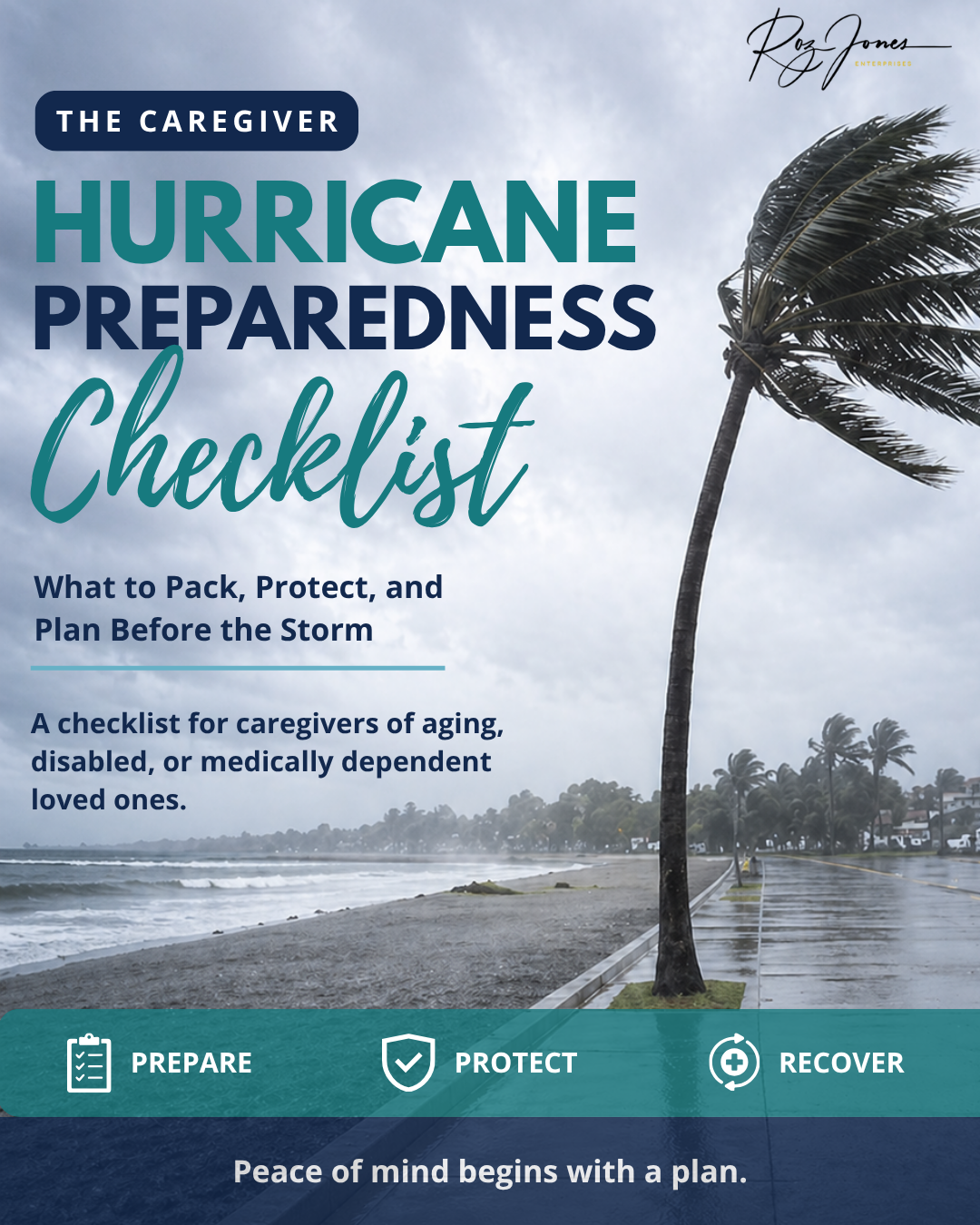
The Caregiver Hurricane Preparedness Checklist.

If you are caring for a loved one and want to be better prepared for storms, power outages, and unexpected caregiving emergencies, purchase the Caregiver Hurricane Preparedness Checklist. This resource can help you think through important details before a crisis is already at the door.

For only $1.99, this checklist gives you a simple starting point so you are not trying to gather everything during a storm, power outage, hospitalization, or sudden change in your loved one’s care.

Purchase the Caregiver Hurricane Preparedness Checklist for $1.99 today and take one more step toward peace of mind.

Need Help Sorting Through the Care Plan?

Roz Jones is a dedicated caretaker turned CEO with over a decade of experience in helping families care for and make decisions for loved ones and their legacies.Roz is a compassionate, innovative healthcare industry leader.

If your family needs help thinking through care decisions, caregiving responsibilities, or next steps, book a session with Roz Jones. You do not have to navigate this season alone.

Together, we can talk through what is working, what is becoming too heavy, and what boundaries need to be strengthened so you can continue to care without losing yourself in the process.

Subscribe to The Caregiver Cafe Weekly Newsletter!

Caregiving can be a roller coaster of ups and downs. The information that you will receive from The Caregiver Cafe Weekly Specials Newsletter will support you as a caregiver. Remember…

1. YOU ARE NOT ALONE: The problems you face as a caregiver are experienced by other caregivers. Knowing that you’re not alone can be comforting. 

2. Tools and Resources:  Find caregiver stress management tools and gain perspective from other caregiver’s experiences.

3. LEARN TO: Ask for help, accept help when it is offered, and acknowledge yourself on this caregiving journey. Hear from experts on how to balance caregiving responsibilities by taking care of your needs and involving others to help manage the natural stress and isolation of being a caregiver. 

Strong Hearts Need Checkups Too

By Roz Jones

Aging men are often praised for their strength, endurance, and ability to keep going no matter what life brings. Many have spent years providing for their families, solving problems, showing up for work, caring for others, and pushing through discomfort without complaint. While that kind of strength may be admirable, it can also become dangerous when it leads to ignoring heart health.

Cardiovascular health is one of the most important health concerns for men, especially as they age. High blood pressure, high cholesterol, diabetes, smoking, obesity, physical inactivity, poor sleep, stress, and family history can all increase the risk of heart disease. Some of these risk factors can be managed. Others cannot be changed, but they can still be monitored.

For caregivers supporting aging fathers, husbands, brothers, uncles, grandfathers, partners, or male loved ones, heart health must become part of the larger care plan. Waiting until there is a crisis is not enough. Prevention, routine checkups, and daily support matter.

Strength Does Not Replace Prevention

Many men do not seek medical care until symptoms become difficult to ignore. Some avoid appointments because they do not want bad news. Some minimize what they are feeling. Others believe they are still healthy because they can continue with their normal routine.

However, heart disease does not always announce itself clearly in the beginning. High blood pressure may not cause noticeable symptoms. High cholesterol can build over time. Blood sugar changes may slowly affect the blood vessels. Stress and poor sleep can take a toll on the body long before a major event occurs.

This is why regular medical care matters. A man does not have to feel seriously ill to benefit from a checkup. Routine appointments give healthcare providers an opportunity to review blood pressure, cholesterol, blood sugar, medications, weight, lifestyle habits, and family history.

For caregivers, encouraging these checkups is not about nagging. It is about helping the men they love stay present, supported, and informed.

Know the Numbers That Tell the Story

Heart health should not be based on guesswork. Important numbers can help families and healthcare providers understand what needs attention.

Blood pressure is one of the most important numbers to monitor. Cholesterol levels, blood sugar or A1C, weight changes, smoking status, physical activity, and sleep patterns are also important pieces of the heart health picture.

Caregivers can help by keeping track of appointment dates, encouraging follow-up labs, bringing an updated medication list to medical visits, and writing down questions before appointments. If a loved one is already being treated for high blood pressure, diabetes, heart disease, or high cholesterol, the caregiver can also help watch for missed medications, side effects, or changes in daily habits.

These numbers are not meant to shame anyone. They are tools. They help guide decisions and make the care plan clearer.

Blood Pressure Needs Consistent Attention

High blood pressure is common, but that does not make it harmless. Over time, uncontrolled blood pressure can increase the risk of heart attack, stroke, kidney disease, and other serious health problems.

For aging loved ones, blood pressure management may include medication, diet changes, regular movement, reduced sodium intake, stress management, and home monitoring if recommended by a healthcare provider.

Caregivers can support this process by helping create a routine. That may include keeping the blood pressure cuff in an easy-to-find place, writing down readings, reminding a loved one to take medication as prescribed, and making sure follow-up appointments are not missed.

Consistency matters. A heart health plan only works when it becomes part of daily life.

Movement Supports the Heart

Physical activity is one of the most effective ways to support cardiovascular health, but it must be realistic for the person’s age, ability, and medical condition.

Not every aging loved one can go to the gym or follow a structured exercise program. Some may have arthritis, balance concerns, shortness of breath, fatigue, or limited mobility. That does not mean movement should be ignored.

Movement can look like a short walk, light stretching, chair exercises, water aerobics, physical therapy exercises, gardening, or gentle strength training. For some families, the goal may be to increase activity gradually and safely under the guidance of a healthcare provider.

Caregivers can help by making movement part of the routine instead of turning it into a lecture. A walk after breakfast, stretching before bedtime, or light movement during the day can support circulation, strength, mood, and independence.

Small steps done consistently can make a meaningful difference.

Food Choices Can Help or Hurt the Heart

Heart health is also shaped by what happens in the kitchen.

A heart-supportive diet often includes more vegetables, fruits, whole grains, beans, lean proteins, fish, nuts, seeds, and healthier fats. It also includes paying attention to sodium, added sugars, processed foods, and saturated fats.

For caregivers, food changes can be challenging. Many aging loved ones have strong food preferences, cultural traditions, comfort meals, and long-standing habits. A sudden shift in diet may feel like punishment.

A better approach is to make gradual changes. Add more vegetables to familiar meals. Season foods with herbs, garlic, onions, peppers, vinegar, lemon, and spices instead of relying only on salt. Offer baked, grilled, or stewed options more often. Keep water available throughout the day. Make the healthier choice easier to reach.

Caregiving is not about policing every plate. It is about creating a home environment that supports better choices.

Tobacco Use Must Be Addressed With Care

Smoking and tobacco use are major risk factors for heart disease. For many men, tobacco use may be tied to stress, routine, grief, work history, or long-standing habits. Quitting can be difficult, especially if the person has smoked for many years.

Caregivers should approach this conversation with honesty and compassion. Shame rarely helps someone change. Support, resources, and medical guidance are more effective.

A healthcare provider can discuss smoking cessation options, nicotine replacement therapy, medications, counseling, quitlines, and community programs. The caregiver can encourage the conversation, help remove barriers, and celebrate progress.

Quitting tobacco is not easy, but it is one of the most important steps a person can take to protect the heart.

Sleep and Stress Are Part of Heart Health

Heart health is not only about blood pressure, food, and exercise. Sleep and stress matter too.

Many men carry stress quietly. They may not talk about financial worries, grief, family concerns, pain, or fear. Over time, that stress can affect sleep, mood, eating habits, blood pressure, and overall health.

Poor sleep can also place strain on the body. Snoring, waking frequently, daytime fatigue, and morning headaches may be signs that sleep quality needs attention. If a loved one has symptoms of sleep apnea or ongoing sleep problems, it is worth discussing with a healthcare provider.

Caregivers can support healthier routines by encouraging rest, helping reduce unnecessary stress where possible, and noticing changes in mood, energy, appetite, or sleep patterns.

A tired body and a stressed heart need attention.

The Caregiver’s Role Is Support, Not Control

Supporting a man’s heart health requires balance. Caregivers may see patterns their loved one does not want to admit. They may notice skipped medications, poor food choices, missed appointments, shortness of breath, fatigue, or changes in mood. It can be frustrating when a loved one resists help.

Still, the caregiver’s role is not to control. The role is to support, encourage, organize, and communicate.

That support may include scheduling appointments, preparing questions for the doctor, helping track blood pressure readings, organizing medications, preparing heart-supportive meals, encouraging movement, and helping the family understand the care plan.

A caregiver does not need to become a heart specialist. The goal is to help the plan stay clear and consistent.

Heart Health Should Be a Family Conversation

When an aging loved one has high blood pressure, heart disease, diabetes, high cholesterol, or a history of stroke or heart attack, the family should understand how to provide appropriate support.

This does not mean every family member needs access to private medical details. It does mean the right people should know what support is needed, who attends appointments, who helps with medication routines, who handles transportation, and who steps in when the primary caregiver is unavailable.

Heart health conversations are easier before a crisis. Families should talk about prevention, lifestyle changes, medical follow-up, emergency contacts, and care responsibilities while things are calm.

A prepared family can respond with more clarity. A silent family often waits until stress is already high.

A Strong Heart Needs Daily Care

Cardiovascular health is not built through one appointment or one good decision. It is built through repeated choices, consistent medical care, honest conversations, and family support.

Men deserve to know that caring for their heart is not weakness. It is wisdom. It is responsibility. It is a way of remaining present for the people who love them.

An aging loved one may still be independent, proud, capable, and strong. But strength does not remove the need for checkups, screenings, medication management, movement, rest, and healthier routines.

In the first blog, we talked about cardiovascular risks, prevention strategies, lifestyle changes, and the importance of seeking professional guidance. This follow-up is a reminder that mastering heart health is not about perfection. It is about staying aware, staying consistent, and allowing the care plan to support the man behind the strength.

If you missed the first blog, you can read it here: Unleash Your Heart’s Potential: Mastering Cardiovascular Health for Men.

Strong hearts need care too. Caregivers can help by encouraging checkups, knowing the important numbers, supporting healthier habits, asking the right questions, and keeping the care plan moving.

Give Yourself a Moment of Grace

If your spirit needs encouragement along the way, purchase Moments of Grace: A 40-Day Caregiver Prayer Journal on Amazon.

This journal was created to help caregivers pause, breathe, reflect, and find strength in the middle of the caregiving journey.

Purchase Moments of Grace today and give yourself permission to breathe in the middle of the caregiving journey.

Prepare Before the Emergency Comes

The Caregiver Hurricane Preparedness Checklist.

The Caregiver Hurricane Preparedness Checklist helps caregivers organize important documents, medications, emergency contacts, evacuation needs, medical equipment details, and care instructions before an emergency happens.

For only $1.99, this checklist gives you a simple starting point so you are not trying to gather everything during a storm, power outage, hospitalization, or sudden change in your loved one’s care.

Purchase the Caregiver Hurricane Preparedness Checklist for $1.99 today and take one more step toward peace of mind.

Need Help Sorting Through the Care Plan?

Roz Jones is a dedicated caretaker turned CEO with over a decade of experience in helping families care for and make decisions for loved ones and their legacies.Roz is a compassionate, innovative healthcare industry leader.

Book a Family Care Planning Session with Roz Jones and get support creating a caregiving plan that is clear, compassionate, and realistic.

Together, we can talk through what is working, what is becoming too heavy, and what boundaries need to be strengthened so you can continue to care without losing yourself in the process.

Subscribe to The Caregiver Cafe Weekly Newsletter!

Caregiving can be a roller coaster of ups and downs. The information that you will receive from The Caregiver Cafe Weekly Specials Newsletter will support you as a caregiver. Remember…

1. YOU ARE NOT ALONE: The problems you face as a caregiver are experienced by other caregivers. Knowing that you’re not alone can be comforting. 

2. Tools and Resources:  Find caregiver stress management tools and gain perspective from other caregiver’s experiences.

3. LEARN TO: Ask for help, accept help when it is offered, and acknowledge yourself on this caregiving journey. Hear from experts on how to balance caregiving responsibilities by taking care of your needs and involving others to help manage the natural stress and isolation of being a caregiver. 

Love Still Has a Language

By Roz Jones

Alzheimer’s disease can change the way a loved one speaks, remembers, responds, and participates in daily life. But it does not take away their need for connection.

Love still has a language.

Sometimes that language is a familiar song. Sometimes it is a gentle hand on the shoulder. Sometimes it is a calm voice, a warm smile, or sitting quietly beside someone who no longer has the words they used to have.

For caregivers supporting aging loved ones with Alzheimer’s, this is one of the hardest lessons to learn: communication may change, but connection can still remain.

That connection may not look the way it once did. Conversations may become shorter. Stories may repeat. Names may be forgotten. Questions may come again and again. But the person in front of you still deserves dignity, patience, and presence.

According to the Alzheimer’s Association’s 2026 Facts and Figures, an estimated 7.4 million Americans age 65 and older are living with Alzheimer’s dementia. More than 12 million family members and other unpaid caregivers are providing care for people living with Alzheimer’s or other dementias. This is not a rare caregiving experience. It is a growing reality for families across the country.

Communication Is More Than Conversation

Many caregivers feel grief when conversation begins to change. A loved one who once gave advice, told stories, laughed easily, or remembered family details may now struggle to find the right words.

That grief is real.

But communication is bigger than conversation.

A person with Alzheimer’s may communicate through facial expressions, body language, restlessness, silence, tears, agitation, or withdrawal. A repeated question may not be about the answer. It may be about needing reassurance. A sudden mood change may not be “difficult behavior.” It may be fear, pain, confusion, hunger, fatigue, or overstimulation.

The Alzheimer’s Association reminds families that Alzheimer’s gradually affects a person’s ability to communicate and that communication requires patience, understanding, and good listening skills.

Caregivers must learn to listen differently.

Not just to the words.

To the person.

Tone Can Become a Form of Care

A caregiver’s tone matters deeply.

As Alzheimer’s progresses, a loved one may not understand every word being said, but they may still sense frustration, impatience, anger, or tension. A rushed voice can increase fear. A sharp tone can create resistance. A tense face can make the person feel unsafe, even if the caregiver is trying to help.

The National Institute on Aging encourages caregivers to make eye contact, call the person by name, and pay attention to tone, volume, facial expressions, and body language when communicating with someone who has Alzheimer’s.

This does not mean caregivers must be perfect. Caregivers are human. They get tired. They get overwhelmed. They have moments when patience is thin.

But tone should be treated as part of the care plan.

A calm voice can help settle confusion.
A gentle expression can reduce fear.
A slower pace can make the moment easier to process.
A respectful approach can help preserve dignity.

Love has a language, and sometimes it sounds like calm.

Simple Words Can Bring More Peace

Alzheimer’s can make it harder for the brain to process long explanations, multiple choices, or fast instructions. This is why caregivers may need to simplify communication without making the loved one feel talked down to.

Instead of several instructions at once, offer one step.

Instead of open-ended questions that may feel overwhelming, offer simple choices.

Instead of correcting every mistaken detail, focus on comfort and connection.

For example, rather than saying, “You already asked me that three times,” try, “We are leaving at 2:00, and I will be with you.”

Rather than saying, “That is not what happened,” try, “I know this feels confusing. You are safe.”

Rather than asking, “What do you want to eat?” try, “Would you like soup or a sandwich?”

Simple does not mean childish.

Simple means clear.

And clarity is kindness when the brain is already working hard.

Reassurance Often Matters More Than Correction

One of the hardest adjustments in Alzheimer’s caregiving is learning when not to argue.

A loved one may insist they need to go home, even if they are already home. They may ask for someone who has passed away. They may become upset about an appointment that is not happening. They may remember something differently.

The instinct may be to correct.

But correction is not always comfort.

Sometimes the better response is reassurance. The caregiver can acknowledge the feeling without feeding the confusion.

“I can see you are worried.”
“You are safe here.”
“I am staying with you.”
“Let’s sit together for a minute.”
“We will take care of it.”

The goal is not to win the conversation. The goal is to reduce distress.

Caregivers do not have to correct every detail to care well. Sometimes love chooses peace over proving a point.

Familiar Routines Can Speak

For people living with Alzheimer’s, familiar routines can become a language of safety.

A morning prayer.
A favorite chair.
The same blanket.
A familiar playlist.
A cup of tea at the same time each day.
A walk after breakfast.
A photo album on the table.
A favorite lotion or scent.
A repeated phrase that brings comfort.

Routines can help reduce confusion because they create rhythm. They tell the body and mind, “This is familiar. This is safe.”

Caregivers can use routines to support communication. A loved one may not always understand an explanation, but they may respond to familiar patterns. They may settle when music begins. They may participate when a task feels known. They may smile at a familiar voice, even when words are limited.

This is why caregivers should pay attention to what still brings recognition, comfort, and calm.

Those details matter.

Connection Can Be Built Through the Senses

As words become harder, the senses can help keep connection alive.

Music can reach memory in powerful ways.
Photos can invite recognition.
Touch can offer reassurance.
Food can bring comfort.
A familiar scent can stir emotion.
A walk outside can calm the nervous system.
A favorite hymn, prayer, or poem can create a moment of peace.

Caregivers may need to shift from trying to have the “old” conversation to creating a meaningful moment in the present.

That may mean sitting together without forcing words.

It may mean singing instead of asking questions.

It may mean holding a hand instead of explaining again.

It may mean letting the loved one fold towels, stir batter, water plants, or look through family pictures.

Connection does not have to be complicated to be meaningful.

Caregivers Need Support for the Emotional Weight

Alzheimer’s caregiving is not only physical care. It is emotional care.

It can be heartbreaking to repeat the same answer all day. It can be exhausting to stay calm through confusion. It can be painful when a loved one no longer recognizes you. It can feel lonely when other family members do not understand how much the communication changes affect daily life.

Caregivers need support too.

Support groups, respite care, family care planning, dementia education, counseling, church support, and trusted community can help caregivers carry the weight with more support and less isolation.

The earlier public conversation around Rosalynn Carter’s dementia diagnosis reminded many families that dementia care reaches far beyond the person diagnosed. Mrs. Carter passed away on November 19, 2023, at age 96, and The Carter Center remembered her as a longtime champion of mental health, caregiving, and women’s rights.

Her legacy still reminds us that caregiving deserves attention, resources, and community.

No caregiver should have to walk this road alone.

Family Members Must Learn the New Language Too

One caregiver cannot be the only person learning how to communicate.

If an aging loved one has Alzheimer’s, the family needs shared understanding. Adult children, spouses, siblings, grandchildren, home care aides, and close support people should learn how communication may change and how to respond with patience.

This helps reduce arguments, frustration, and hurt feelings.

It also helps loved ones stay included.

Family members need to understand that the person living with Alzheimer’s may repeat questions, lose track of conversations, struggle with names, misread tone, or become overwhelmed by too much noise. These changes are not personal attacks. They are part of the disease process.

A prepared family can respond with more compassion.

A confused family may respond with resentment.

Education matters.

Care Planning Protects Connection

Families often wait until communication has declined significantly before talking about care preferences, routines, safety, respite, and support. But waiting makes everything harder.

Care planning should begin while the loved one can still share preferences as much as possible.

What routines bring comfort?
Who does the loved one trust?
What music, prayers, foods, or activities are meaningful?
What environments increase agitation?
What helps calm them?
What family roles need to be clear?
What support does the primary caregiver need?

These questions are not small.

They help protect dignity.

They help reduce confusion.

They help the family respond with more consistency.

And consistency is part of love’s language too.

Love Still Has a Language

Alzheimer’s may change the words, but it does not erase the person.

They still need to feel safe.
They still need to be treated with respect.
They still need familiar voices.
They still need patience.
They still need comfort.
They still need connection.

Caregivers may have to learn a new way to listen. Families may have to learn a new way to respond. The relationship may change, but love can still show up.

In the first blog, we talked about the power of connection, community, and conversation for Alzheimer’s caregivers. This follow-up is a reminder that even as words change, love still has a language. That language may be gentler, slower, quieter, and more intentional, but it can still reach the person you love.

If you missed the first blog, you can read it here: The Power of Connection, Community, and Conversation for Alzheimer’s Caregivers.

Caregivers, do not measure connection only by perfect conversation.

Measure it by peace.
By presence.
By patience.
By dignity.
By the moments when your loved one feels safe because you are near.

That is love speaking.

Give Yourself a Moment of Grace

If your spirit needs encouragement along the way, purchase Moments of Grace: A 40-Day Caregiver Prayer Journal on Amazon.

This journal was created to help caregivers pause, breathe, reflect, and find strength in the middle of the caregiving journey.

Purchase Moments of Grace today and give yourself permission to breathe in the middle of the caregiving journey.

Prepare Before the Emergency Comes

The Caregiver Hurricane Preparedness Checklist.

The Caregiver Hurricane Preparedness Checklist helps caregivers organize important documents, medications, emergency contacts, evacuation needs, medical equipment details, and care instructions before an emergency happens.

For only $1.99, this checklist gives you a simple starting point so you are not trying to gather everything during a storm, power outage, hospitalization, or sudden change in your loved one’s care.

Purchase the Caregiver Hurricane Preparedness Checklist for $1.99 today and take one more step toward peace of mind.

Need Help Sorting Through the Care Plan?

Roz Jones is a dedicated caretaker turned CEO with over a decade of experience in helping families care for and make decisions for loved ones and their legacies.Roz is a compassionate, innovative healthcare industry leader.

Book a Family Care Planning Session with Roz Jones and get support creating a caregiving plan that is clear, compassionate, and realistic.

Together, we can talk through what is working, what is becoming too heavy, and what boundaries need to be strengthened so you can continue to care without losing yourself in the process.

Subscribe to The Caregiver Cafe Weekly Newsletter!

Caregiving can be a roller coaster of ups and downs. The information that you will receive from The Caregiver Cafe Weekly Specials Newsletter will support you as a caregiver. Remember…

1. YOU ARE NOT ALONE: The problems you face as a caregiver are experienced by other caregivers. Knowing that you’re not alone can be comforting. 

2. Tools and Resources:  Find caregiver stress management tools and gain perspective from other caregiver’s experiences.

3. LEARN TO: Ask for help, accept help when it is offered, and acknowledge yourself on this caregiving journey. Hear from experts on how to balance caregiving responsibilities by taking care of your needs and involving others to help manage the natural stress and isolation of being a caregiver. 

When Alzheimer’s Changes More Than Memory: What Families Need to Understand Next

By Roz Jones

Alzheimer’s is not just about forgetting names, misplacing keys, or repeating a question.

Alzheimer’s changes routines.
It changes conversations.
It changes family roles.
It changes safety needs.
It changes the way people connect, respond, and move through the day.

And for the people providing daily support, it can feel like you are constantly learning a new version of someone you love.

Today, I want to talk about what Alzheimer’s can look like beyond the diagnosis — and how families can prepare with more patience, planning, and compassion.

Alzheimer’s Affects the Whole Family

When one person is diagnosed with Alzheimer’s, the whole family feels the shift.

Someone may need to start managing medications.
Someone may need to attend doctor appointments.
Someone may need to help with meals, bathing, transportation, or bills.
Someone may need to make the hard decisions about driving, living arrangements, safety, and long-term care.

And many times, these responsibilities do not arrive all at once.

They build slowly.

At first, it may be small reminders. Then it becomes missed appointments, unpaid bills, confusion with directions, changes in mood, or difficulty completing familiar tasks.

That is why families need to pay attention early.

Not from a place of fear.

From a place of preparation.

The Changes May Not Always Look Like Memory Loss

One of the reasons Alzheimer’s can be so difficult to understand is because the changes do not always show up the way people expect.

Yes, memory loss is common.

But you may also notice:

Changes in judgment.
Confusion with time or place.
Mood swings.
Suspicion or fear.
Difficulty finding words.
Trouble following a recipe or routine.
Withdrawal from family or hobbies.
Poor sleep.
Agitation later in the day.
Resistance to help.

These changes can be painful to witness, especially when the person you love begins acting in ways that feel unfamiliar.

But this is where families have to pause and remember:

This is not simply stubbornness.
This is not always intentional.
This is not just “old age.”
This may be the disease affecting how the brain processes information, emotions, and surroundings.

That does not make the hard moments easy.

But understanding what may be happening can help you respond with more patience and less frustration.

You Need a Plan Before the Crisis

Too many families wait until there is an emergency before they start making decisions.

A fall happens.
A stove is left on.
A loved one gets lost while driving.
Medication is taken twice.
A bill goes unpaid.
Someone ends up in the hospital.

And suddenly, everyone is trying to make decisions under pressure.

Planning ahead is not being negative.

Planning ahead is love in action.

Start having conversations about:

Who will attend medical appointments.
Who will manage medications.
Who will help with finances and paperwork.
Who has access to emergency contacts.
Who can step in when the main support person needs a break.
What legal documents need to be in place.
What safety changes need to happen in the home.
What signs will tell the family that more help is needed.

These conversations may feel uncomfortable, but they are much harder when everyone is tired, scared, and reacting to a crisis.

Do Not Try to Carry This Alone

Alzheimer’s care can become emotionally heavy.

You may feel grief while your loved one is still physically present.
You may feel guilt for getting frustrated.
You may feel exhausted from repeating the same answers.
You may feel lonely because others do not fully see what you are managing.
You may feel overwhelmed by decisions that seem to keep coming.

You are not weak for needing help.

You are human.

Families need support systems. That support may include doctors, social workers, home care, adult day programs, respite care, trusted relatives, support groups, faith communities, neighbors, or professional planning sessions.

Do not wait until you are completely drained before asking for help.

The person living with Alzheimer’s needs care.

But so do you.

Honor the Person, Not Just the Diagnosis

Alzheimer’s may change how someone communicates, remembers, or moves through the world, but it does not erase who they are.

They are still someone with a story.
Someone with memories, even if they cannot always access them.
Someone with preferences, dignity, emotions, and a need to feel safe.
Someone who still deserves to be spoken to with respect.

Try to keep pieces of who they are present in the day.

Play music they love.
Look through photos together.
Keep familiar routines when possible.
Offer simple choices.
Speak calmly.
Use their name.
Give them time to respond.
Celebrate small moments of connection.

Sometimes the goal is not to correct every detail.

Sometimes the goal is to preserve peace.

Sometimes the goal is to meet them where they are instead of forcing them back to where they used to be.

Remembering Rosalynn Carter’s Legacy

In conversations about Alzheimer’s, I often think about former First Lady Rosalynn Carter and her work around Alzheimer’s awareness and family support.

Rosalynn Carter passed away on November 19, 2023, after her family shared earlier that year that she was living with dementia. But her legacy continues through her decades of advocacy for mental health, family care, and the belief that those providing support deserve to be seen, heard, and equipped.

Her work reminds us that Alzheimer’s is not only a medical issue.

It is a family issue.
A community issue.
A planning issue.
A dignity issue.
A support issue.

And no family should have to navigate it without guidance, compassion, and resources.

Give Yourself Permission to Learn as You Go

Nobody handles Alzheimer’s perfectly.

You may lose patience.
You may say the wrong thing.
You may feel unsure.
You may grieve changes you were not ready for.
You may need to adjust the plan more than once.

That does not mean you are failing.

It means you are walking through something difficult.

Give yourself permission to learn.
Give yourself permission to ask questions.
Give yourself permission to rest.
Give yourself permission to get support before you reach your breaking point.

Alzheimer’s changes many things, but it does not remove the need for love, patience, planning, and community.

The more families understand, the better prepared they can be.

And preparation can make the journey feel less lonely.Want to revisit the first part of this conversation? Read my previous blog: Unraveling Alzheimer’s: A Guide to Understanding the Disease and Its Impact on the Brain, where we discussed what Alzheimer’s disease is, how it affects the brain, and why awareness matters for families and loved ones.

Give Yourself a Moment of Grace

If this season of caregiving has been heavy, emotional, or filled with grief you have not had time to name, Moments of Grace: A Caregiver’s Guided Journal for Reflection, Prayer, and Peace was created with you in mind.

This journal gives caregivers a quiet place to pause, reflect, pray, release, and reconnect with themselves while caring for someone they love.

Purchase Moments of Grace today and give yourself permission to breathe in the middle of the caregiving journey.

Prepare Before the Emergency Comes

The Caregiver Hurricane Preparedness Checklist.

Grief can make it hard to think clearly in a crisis. That is why preparation matters.

The Caregiver Hurricane Preparedness Checklist helps caregivers organize important documents, medications, emergency contacts, evacuation needs, medical equipment details, and care instructions before an emergency happens.

For only $1.99, this checklist gives you a simple starting point so you are not trying to gather everything during a storm, power outage, hospitalization, or sudden change in your loved one’s care.

Purchase the Caregiver Hurricane Preparedness Checklist for $1.99 today and take one more step toward peace of mind.

Need Help Sorting Through the Care Plan?

Roz Jones is a dedicated caretaker turned CEO with over a decade of experience in helping families care for and make decisions for loved ones and their legacies.Roz is a compassionate, innovative healthcare industry leader.

If you are caring for a former spouse, aging loved one, or family member and the boundaries are starting to feel complicated, you do not have to figure it out alone.

Book a Family Care Planning Session with Roz Jones and get support creating a caregiving plan that is clear, compassionate, and realistic.

Together, we can talk through what is working, what is becoming too heavy, and what boundaries need to be strengthened so you can continue to care without losing yourself in the process.

Subscribe to The Caregiver Cafe Weekly Newsletter!

Caregiving can be a roller coaster of ups and downs. The information that you will receive from The Caregiver Cafe Weekly Specials Newsletter will support you as a caregiver. Remember…

1. YOU ARE NOT ALONE: The problems you face as a caregiver are experienced by other caregivers. Knowing that you’re not alone can be comforting. 

2. Tools and Resources:  Find caregiver stress management tools and gain perspective from other caregiver’s experiences.

3. LEARN TO: Ask for help, accept help when it is offered, and acknowledge yourself on this caregiving journey. Hear from experts on how to balance caregiving responsibilities by taking care of your needs and involving others to help manage the natural stress and isolation of being a caregiver. 
Caregiving and the Family Tension No One Talks About

By Roz Jones

Caregiving has a way of bringing things to the surface.

Not just the doctor’s appointments.
Not just the medication lists.
Not just the bills, errands, paperwork, and safety concerns.

I am talking about the family tension.

The tension that shows up when one person becomes the default caregiver.
The tension that builds when siblings have opinions but not availability.
The tension that comes when everyone says they care, but only one person keeps rearranging their life.
The tension that sits in the room when old family roles, old wounds, and old expectations come back up under the pressure of caregiving.

This is the part of caregiving many families do not talk about.

But we need to.

Because caregiving does not just impact the aging loved one receiving care. It impacts the whole family system. It changes how people communicate, how decisions are made, who feels responsible, who feels left out, and who feels unsupported.

This blog is a continuation of my earlier conversation on Caregiving & The Impact of Mental Health on Family Dynamics. If you have not read that piece yet, I encourage you to revisit it, because the emotional health of the family matters just as much as the care plan itself.

The Tension Usually Starts Quietly

Most caregiving situations do not begin with a formal family meeting.

They begin with small needs.

Can you take Mom to this appointment?
Can you pick up Dad’s prescription?
Can you stop by and check on Auntie?
Can you help with this bill?
Can you talk to the doctor because you understand this better?

One task becomes two.
Two tasks become a routine.
A routine becomes an expectation.
And before long, one person is carrying the care plan while everyone else assumes it is being handled.

That is where tension begins.

Not always because people do not care. Sometimes they do care, but they are unsure how to help. Sometimes they are overwhelmed too. Sometimes they are avoiding the reality of what is changing. Sometimes they are waiting for someone else to step in.

But the caregiver who is doing the daily work may not experience it that way.

They may feel abandoned.
They may feel taken for granted.
They may feel angry.
They may feel like their life is the only one being interrupted.

And those feelings matter.

When Family Roles Resurface

Caregiving often brings old family roles right back to the table.

The responsible child becomes responsible again.
The peacemaker tries to keep everyone calm.
The outspoken sibling criticizes the plan.
The distant family member stays distant.
The one who always avoided hard conversations may disappear when decisions need to be made.

This can be painful because caregiving is already emotional. You are watching an aging loved one change. You may be grieving their independence, their memory, their mobility, or the way family life used to be.

Then on top of that, you are dealing with family patterns that may have been there for years.

That is why a conversation about transportation or medication can suddenly turn into something much bigger. It is not just about the appointment. It is about feeling unseen. It is about feeling unsupported. It is about years of “you always” and “you never” showing up in the middle of a care decision.

And if the family does not pause and name what is happening, that tension can shape the entire caregiving journey.

The Mental Health Piece We Cannot Ignore

Caregiving affects everyone’s mental health differently.

The primary caregiver may feel anxious, exhausted, resentful, or emotionally numb.
The aging loved one may feel afraid, frustrated, embarrassed, or resistant to help.
Siblings or other relatives may feel guilty, defensive, helpless, or disconnected.
Children in the home may feel the stress even when adults think they are hiding it.

Stress does not stay in one person.

It moves through the household.
It changes the tone of conversations.
It shortens patience.
It makes small things feel bigger.
It makes people react instead of respond.

That is why mental health support is not separate from caregiving. It is part of how families survive caregiving without turning on each other.

Sometimes what sounds like conflict is really exhaustion.

Sometimes what sounds like criticism is fear.
Sometimes what looks like avoidance is guilt.
Sometimes what sounds like anger is grief.
Sometimes what feels like control is someone trying to keep the situation from falling apart.

This does not excuse hurtful behavior. But it does help families understand that there may be more happening underneath the surface.

The Resentment No One Wants to Admit

Let’s be honest.

Caregivers can feel resentful.

And that can be hard to admit because resentment feels like something you are not supposed to feel when you love someone.

But resentment does not mean you do not love your aging loved one. It does not mean you are selfish. It does not mean you are ungrateful.

Resentment often means the load is too heavy and too uneven.

It may mean you have been doing too much for too long without enough help.
It may mean family members are making decisions without sharing responsibility.
It may mean people are giving advice instead of assistance.
It may mean your own life has been pushed so far to the side that you barely recognize it.

And here is where families have to be careful: unspoken resentment does not disappear. It leaks out.

It leaks out in tone.
It leaks out in silence.
It leaks out in short text messages.
It leaks out in arguments about small things.
It leaks out when the caregiver stops asking for help because they are tired of being disappointed.

That is why families need honest conversations before resentment becomes the main language in the room.

The Opinion Without Participation Problem

One of the hardest dynamics in caregiving is when people who are not doing the daily work have the strongest opinions.

They may question the doctor’s recommendation.
They may disagree with the schedule.
They may criticize the caregiver’s decisions.
They may say what “should” happen without offering time, money, transportation, or practical support.

That creates tension quickly.

Because if you are not showing up for the daily responsibilities, your opinion needs to come with humility.

Care decisions should be discussed. Families should communicate. Everyone deserves to be heard. But there is a difference between being involved and simply weighing in from the sidelines.

If a family member wants a voice in the care plan, they also need to be willing to take on a piece of the care.

That may not always be hands-on care. It could be paying for supplies, managing paperwork, making calls, organizing meals, researching resources, or giving the primary caregiver a break.

But care cannot be all opinion and no participation.

When the Caregiver Feels Alone in a Full Family

This is one of the quietest pains in caregiving.

Feeling alone while surrounded by family.

You may have siblings, cousins, adult children, church members, friends, and relatives who all love your aging loved one. But when the real work begins, you may still feel like the only one standing in the middle of it.

You are the one answering the phone.
You are the one remembering the details.
You are the one adjusting your schedule.
You are the one being watched closely if something goes wrong.
You are the one expected to stay calm, stay available, and stay strong.

That kind of loneliness can be heavy.

And if no one checks on the caregiver, the family may not realize how close that person is to burning out.

So let me say this clearly: caring for the caregiver is part of caring for the aging loved one.

If the caregiver breaks down, the care plan breaks down too.

What Families Can Do Differently

Family tension may be common in caregiving, but it does not have to run the whole show.

Families can make different choices. Not perfect choices. Different ones.

1. Put the Responsibilities in Writing

A care plan that only lives in one person’s head is not a family care plan.

Write down what needs to happen and who is responsible for each part.

Appointments.
Medication pickups.
Meal support.
Transportation.
Bill payments.
Safety checks.
Home maintenance.
Emergency contacts.
Important documents.

When the tasks are visible, it becomes easier to see whether the load is balanced or whether one person is carrying too much.

2. Have Regular Family Check-Ins

Do not wait until there is a crisis to talk.

Schedule short check-ins to review what is happening, what has changed, and where help is needed.

Keep the conversation focused on care, not blame.

Ask:

What does our loved one need this week?
What does the primary caregiver need this week?
What decision needs to be made?
Who can take responsibility for what?
What needs to be documented?

These conversations may not solve everything, but they can reduce confusion and prevent assumptions from taking over.

3. Speak the Need Clearly

Caregivers, I know this can be hard.

Sometimes you want people to notice. You want them to offer. You want them to understand without you having to ask again.

But in many families, clear requests work better than quiet frustration.

Instead of saying, “Nobody helps me,” try:

“I need someone to take Dad to his appointment on Thursday.”
“I need a break this Saturday from 10 to 2.”
“I need someone else to call the insurance company this week.”
“I need help paying for the supplies this month.”
“I need us to decide who is the backup emergency contact.”

Clear needs make it harder for people to hide behind confusion.

4. Make Respite Non-Negotiable

The primary caregiver should not have to reach exhaustion before the family talks about relief.

Respite needs to be planned.

That could mean rotating weekends.
Hiring help for a few hours.
Arranging adult day support.
Having another family member handle one evening a week.
Creating a backup plan for emergencies.

Respite protects the caregiver’s mental health and helps preserve the relationship between the caregiver and the aging loved one.

Because when every interaction becomes a task, it is easy for tenderness to get buried under responsibility.

5. Get Outside Support When the Family Is Stuck

Some families need help having the conversations they keep avoiding.

That may look like therapy, caregiver coaching, a support group, mediation, or a family care planning session.

There is no shame in bringing in support.

Sometimes a neutral person can help the family move from emotion to action. Sometimes you need someone who can help sort through roles, responsibilities, documents, emergency planning, and next steps without everyone falling back into the same argument.

Prepare Before the Pressure Gets Worse

Family tension often increases when there is no plan.

A storm is coming.
The power goes out.
A prescription runs low.
Your loved one needs to evacuate.
A medical decision has to be made quickly.
Important paperwork cannot be found.
Nobody knows who is supposed to do what.

That kind of pressure can turn a stressful family dynamic into a crisis.

This is one reason I created the Caregiver Hurricane Preparedness Checklist. It is designed to help caregivers and families think through the practical details before the storm is in the forecast, including medications, emergency contacts, important documents, supplies, transportation, communication plans, and the needs of your aging loved one.

Join the Moments of Grace Launch List

Caregiving asks a lot of you — emotionally, physically, mentally, and spiritually. That is why Roz Jones created Moments of Grace: A 40-Day Caregiver Prayer Journal, a faith-filled journal designed to help caregivers pause, reflect, release, and reconnect with God in the middle of the caregiving journey.

Through daily prayers, comforting scriptures, guided journal prompts, and uplifting affirmations, Moments of Grace offers caregivers a quiet place to be honest about what they are carrying while receiving encouragement for the road ahead.

Whether you are caring for an aging parent, spouse, loved one, patient, or family member, this journal is a reminder that your spirit needs care too.

Need Help Getting a Plan in Place?

The Caregiver Hurricane Preparedness Checklist.

Caregivers, please do not wait until you are exhausted, overwhelmed, or in the middle of an emergency to get organized.

Preparation is not panic.

Preparation is care.

That is why I created the Caregiver Hurricane Preparedness Checklist.

For only $1.99, this checklist helps caregivers organize important details before an emergency happens, including medications, emergency contacts, documents, supplies, evacuation needs, and care information.

Purchase the Caregiver Hurricane Preparedness Checklist for $1.99 today and give yourself one less thing to carry from memory.

When You Can’t Do it All Give Roz a Call!

Roz Jones is a dedicated caretaker turned CEO with over a decade of experience in helping families care for and make decisions for loved ones and their legacies.Roz is a compassionate, innovative healthcare industry leader.

A Family Care Planning Session with Roz Jones can help you sort through the responsibilities, family roles, emergency needs, documents, routines, and next steps. Together, we can look at what is happening now and what needs to be put in place so the care feels clearer, calmer, and more shared.

Subscribe to The Caregiver Cafe Weekly Newsletter!

Caregiving can be a roller coaster of ups and downs. The information that you will receive from The Caregiver Cafe Weekly Specials Newsletter will support you as a caregiver. Remember…

1. YOU ARE NOT ALONE: The problems you face as a caregiver are experienced by other caregivers. Knowing that you’re not alone can be comforting. 

2. Tools and Resources:  Find caregiver stress management tools and gain perspective from other caregiver’s experiences.

3. LEARN TO: Ask for help, accept help when it is offered, and acknowledge yourself on this caregiving journey. Hear from experts on how to balance caregiving responsibilities by taking care of your needs and involving others to help manage the natural stress and isolation of being a caregiver.