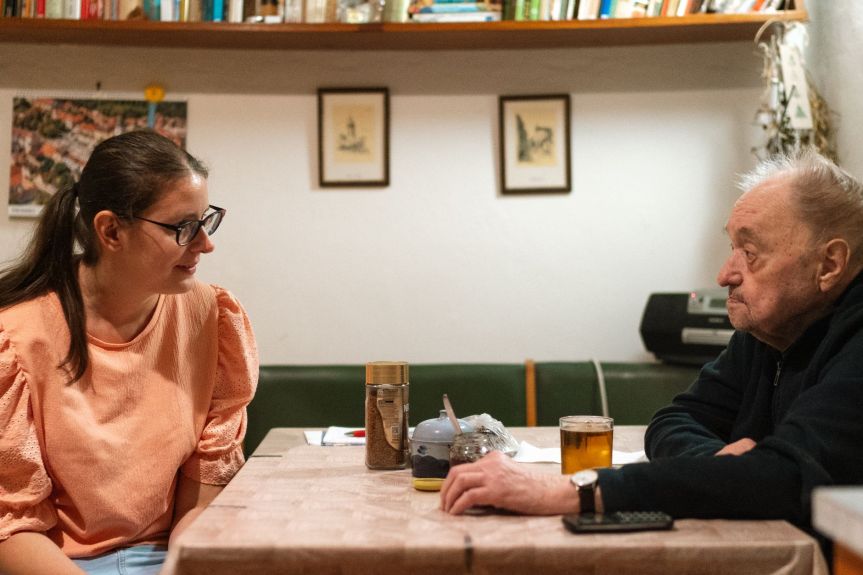
The Next Hospice Conversation Every Caregiver Should Have

By Roz Jones

Once hospice care becomes part of the family’s journey, the conversation cannot stop there.

The first conversation may be about accepting hospice.

The next conversation needs to be about how the family will walk through hospice together.

That is where many caregivers find themselves carrying more than they expected. The hospice team may be involved, the care plan may be in place, and the family may understand that the focus has shifted. But the day-to-day details still need to be discussed.

Who is calling the nurse?

Who is helping overnight?

Who is keeping track of medication changes?

Who is updating relatives?

Who is managing visitors?

Who is preparing the home?

Who is giving the primary caregiver time to rest?

These questions matter because hospice care does not happen in theory. It happens in real homes, real families, and real caregiving situations.

It happens in the bedroom where supplies are being organized.

It happens in the kitchen where someone is trying to remember if medicine was given.

It happens in family group texts where everyone wants updates, but only one person is doing the work.

It happens when visitors want access, but the loved one needs quiet.

It happens when the caregiver is exhausted and still trying to hold everything together.

The next hospice conversation every caregiver should have is not only about the illness. It is about the plan.

Deciding Who Will Do What

One of the most important conversations families can have during hospice is about responsibility.

Caregivers often become the default person for everything. They answer the phone. They coordinate appointments. They manage the home. They provide the updates. They hold the emotional weight. They become the person everyone looks to, even when they are already worn down.

That is not sustainable.

Families need to be honest about who can help and what they can actually do.

Some people may be able to sit with the loved one for a few hours. Some may be able to prepare meals. Some may be able to pick up supplies. Some may be able to handle phone calls. Some may be able to contribute financially. Some may live far away but can still help with scheduling, family communication, or ordering household items.

Help does not always have to look the same.

But it does need to be clear.

A caregiver should not have to keep asking the same people for support while carrying the whole load alone. The family needs to name the tasks, assign the responsibilities, and be honest about what each person can commit to.

This may include:

  • Who will be the main contact for the hospice team
  • Who will help with meals
  • Who will manage errands
  • Who will sit with the loved one so the caregiver can rest
  • Who will update extended family
  • Who will help with paperwork
  • Who will handle household needs
  • Who will step in during emergencies

When roles are not clear, resentment can grow quickly. The caregiver may feel abandoned, and other family members may assume everything is handled simply because they are not seeing the full picture.

A clear plan helps everyone understand that caregiving is not one person’s burden to carry alone.

Creating a Calm Home Environment

Hospice care often takes place at home, which means the home may need to shift.

The space should support comfort, safety, and ease of care.

That does not mean everything has to be perfect. Caregivers do not need to turn the house upside down overnight. But small changes can make a big difference.

The family may need to think about where the loved one will rest, where supplies will be kept, how medications will be organized, and how to keep walkways clear. If medical equipment is being delivered, there needs to be space for it. If the loved one has trouble walking, the home may need fewer obstacles. If visitors are coming, the caregiver may need a plan so the home does not become overwhelming.

Comfort is not only about medication.

Comfort is also about the environment.

A calm room, clean linens, soft lighting, familiar music, meaningful photos, favorite blankets, or quiet moments can help create peace. These details may seem small, but they can help the person receiving care feel seen and supported.

Caregivers should also consider what makes care easier.

A notebook near the bed.

A basket for supplies.

A posted list of phone numbers.

A medication chart.

A visitor schedule.

A place for important documents.

A charging station for phones.

These practical pieces help reduce confusion when emotions are high.

Setting Boundaries Around Visitors

Hospice can bring people back into the home.

Some come with love.

Some come with guilt.

Some come with opinions.

Some come with good intentions but poor timing.

This is why caregivers need a conversation about visitors.

Not everyone needs unlimited access. Not every visit needs to be long. Not every person needs to come at the same time. Not every family member understands when quiet is needed.

The person receiving care should remain the priority.

If they are tired, visits may need to be short. If they become anxious around too many people, visits may need to be limited. If they prefer privacy, that should be respected. If certain people bring stress into the room, the caregiver may need to protect the peace of the home.

Boundaries are not disrespectful.

Boundaries help preserve dignity.

Families can decide:

  • What visiting hours make sense
  • How many people should come at one time
  • Who should coordinate visits
  • Whether children should visit
  • How long visits should last
  • What visitors should know before they arrive
  • When the loved one needs quiet

Caregivers should not be made to feel guilty for protecting the environment. Hospice is not the time to perform for everyone else. It is a time to honor the person receiving care.

Keeping One Communication System

Family updates can become overwhelming during hospice.

One person calls.

Another texts.

Someone asks the same question that was already answered.

Someone gets upset because they heard the news from someone else.

Before long, the caregiver is spending more time updating people than caring for themselves or their loved one.

Families need one communication system.

That may be a group text, a shared email update, a phone tree, or one designated family spokesperson. The goal is to keep communication clear without overwhelming the primary caregiver.

The family should decide:

  • Who gives updates
  • How often updates will be shared
  • What information should be shared
  • Who should receive updates
  • How questions will be handled
  • What should be taken directly to the hospice team

This is not about keeping people out. It is about keeping the caregiver from being pulled in too many directions.

A caregiver should not have to repeat the same emotionally heavy information ten times in one day.

Communication needs structure.

Keeping a Care Notebook

During hospice, details can change quickly.

Medication instructions may be adjusted. Symptoms may shift. Supplies may run low. The nurse may give new guidance. Family members may come and go. The caregiver may be tired and forget what was said.

A care notebook can help.

This does not need to be complicated. A simple notebook or binder can become a central place for important information.

It may include:

  • Hospice contact numbers
  • Medication instructions
  • Notes from nurse visits
  • Changes in symptoms
  • Questions for the hospice team
  • Supply lists
  • Visitor notes
  • Meal and hydration notes
  • Family contact information
  • Important documents or reminders

This notebook can also help when more than one person is providing care. Instead of everyone relying on memory, the family has one place to check.

Caregiving already carries enough emotional weight. A simple system can make the daily responsibilities easier to manage.

Talking About What Peace Looks Like

Every family should have a conversation about what peace looks like for their loved one.

Peace may look different for every person.

For one person, peace may mean prayer and gospel music.

For another, it may mean quiet and soft lighting.

For someone else, it may mean having grandchildren nearby, hearing familiar stories, or being surrounded by photos.

Peace may mean fewer visitors.

Peace may mean certain traditions.

Peace may mean forgiveness conversations.

Peace may mean laughter.

Peace may mean rest.

Caregivers and family members should not assume they know. If the loved one can still share their wishes, ask. If they cannot, think about who they have been and what has mattered to them.

What brought them comfort before illness changed things?

What did they love?

What did they value?

What helped them feel safe?

What made them smile?

Hospice care is not only about managing decline. It is also about honoring a life.

Making Room for Legacy

A hospice season can also open the door for legacy conversations.

This does not have to be formal or forced. It can be as simple as recording stories, writing down favorite sayings, gathering recipes, looking through photos, or asking about memories.

Some families may want to create a playlist.

Some may want to collect letters.

Some may want to ask about family history.

Some may want to preserve prayers, wisdom, or life lessons.

These moments can be meaningful for both the loved one and the family.

Caregivers should not feel pressure to create a perfect legacy project. The goal is not performance. The goal is connection.

Sometimes the most meaningful legacy is found in the small things: a phrase they always said, a song they loved, a meal they made, a story they repeated, or the way they made people feel.

Hospice can remind families to pay attention to those details while there is still time.

Preparing for the Days Ahead

The next hospice conversation also needs to include practical preparation.

Families may need to discuss schedules, supplies, transportation, household responsibilities, legal documents, emergency contacts, and final arrangements.

These conversations can be uncomfortable, but avoiding them does not make the need disappear.

Caregivers should not have to figure everything out in the middle of an emotional moment.

Preparation may include:

  • Reviewing advance directives
  • Knowing where insurance cards and legal documents are kept
  • Confirming funeral or memorial preferences
  • Organizing medication and supply information
  • Planning for weather emergencies or power outages
  • Identifying who can help at short notice
  • Making sure important phone numbers are easy to find

This is not about expecting the worst.

It is about reducing confusion for the caregiver and the family.

When the plan is clear, the caregiver has less to carry alone.

Supporting the Primary Caregiver

The primary caregiver needs to be included in every hospice conversation.

Too often, families focus only on the person receiving care and forget the person providing most of the care.

The primary caregiver may be tired, grieving, overwhelmed, and trying to manage responsibilities that others do not see. They may need sleep. They may need meals. They may need someone else to answer calls. They may need someone to sit with their loved one while they step outside.

Families should ask the caregiver directly:

What do you need this week?

What can we take off your plate?

When can you rest?

What tasks are becoming too much?

What support would actually help?

Support should be specific.

Instead of saying, “Let me know if you need anything,” family members can say, “I can bring dinner on Tuesday,” or “I can sit with her Saturday morning,” or “I can call the pharmacy,” or “I can update the relatives.”

Caregivers need practical help, not vague promises.

The Conversation Is Really About Care

The next hospice conversation every caregiver should have is about how the family will show up.

Not just emotionally.

Practically.

Consistently.

Honestly.

Hospice can bring support, but the family still needs to communicate, organize, listen, and make decisions with care.

This season asks families to slow down and ask better questions.

What does our loved one need now?

What does peace look like?

Who is helping the caregiver?

What needs to be organized?

What boundaries need to be set?

What memories need to be honored?

What can we do now so the caregiver is not left to carry everything later?

These are not easy conversations, but they are loving ones.

Caregiving is not just about being present in the crisis. It is also about preparing with compassion, supporting one another, and making sure the person receiving care remains surrounded by dignity.

To read the previous blog The Benefits of Hospice Care for Patients and Their Families on hospice care visit the link.

Give Yourself a Moment of Grace

If you need encouragement for the emotional side of caregiving, purchase Roz Jones’ book, Moments of Grace. This book offers support, reflection, and reminders of grace for the caregiver who is carrying a lot.

This journal was created to help caregivers pause, breathe, reflect, and find strength in the middle of the caregiving journey.

Purchase Moments of Grace today and give yourself permission to breathe in the middle of the caregiving journey.

Prepare Before the Emergency Comes
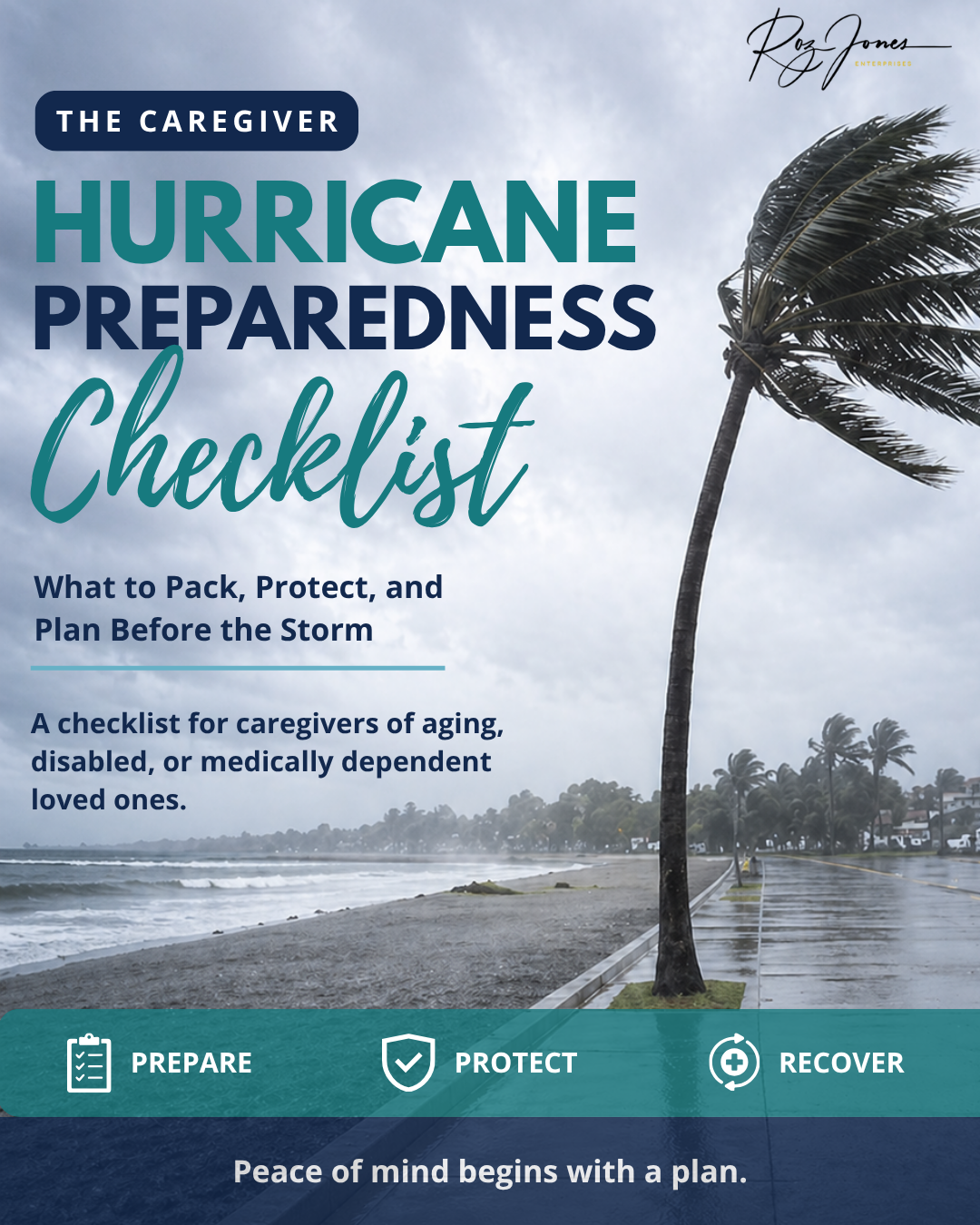
The Caregiver Hurricane Preparedness Checklist.

If you are caring for a loved one and want to be better prepared for storms, power outages, and unexpected caregiving emergencies, purchase the Caregiver Hurricane Preparedness Checklist. This resource can help you think through important details before a crisis is already at the door.

For only $1.99, this checklist gives you a simple starting point so you are not trying to gather everything during a storm, power outage, hospitalization, or sudden change in your loved one’s care.

Purchase the Caregiver Hurricane Preparedness Checklist for $1.99 today and take one more step toward peace of mind.

Need Help Sorting Through the Care Plan?

Roz Jones is a dedicated caretaker turned CEO with over a decade of experience in helping families care for and make decisions for loved ones and their legacies.Roz is a compassionate, innovative healthcare industry leader.

If your family needs help thinking through care decisions, caregiving responsibilities, or next steps, book a session with Roz Jones. You do not have to navigate this season alone.

Together, we can talk through what is working, what is becoming too heavy, and what boundaries need to be strengthened so you can continue to care without losing yourself in the process.

Subscribe to The Caregiver Cafe Weekly Newsletter!

Caregiving can be a roller coaster of ups and downs. The information that you will receive from The Caregiver Cafe Weekly Specials Newsletter will support you as a caregiver. Remember…

1. YOU ARE NOT ALONE: The problems you face as a caregiver are experienced by other caregivers. Knowing that you’re not alone can be comforting. 

2. Tools and Resources:  Find caregiver stress management tools and gain perspective from other caregiver’s experiences.

3. LEARN TO: Ask for help, accept help when it is offered, and acknowledge yourself on this caregiving journey. Hear from experts on how to balance caregiving responsibilities by taking care of your needs and involving others to help manage the natural stress and isolation of being a caregiver. 

Hospice is Not About Giving Up

By Roz Jones

Hospice is one of the hardest conversations a family may have during a caregiving journey. The word itself can feel heavy, final, and frightening. For many caregivers, hospice can sound like the end of hope or a sign that the family has stopped trying.

But hospice is not about giving up.

Hospice is a shift in the focus of care. When a chronic illness, terminal diagnosis, or end-stage condition reaches a point where curative treatment is no longer helping in the same way, hospice offers support that centers comfort, dignity, peace, and quality of life.

It is not the absence of care. It is a different kind of care.

Hospice care recognizes that even when a disease can no longer be cured, the person still deserves attention, relief, compassion, and respect. Pain still matters. Breathing still matters. Emotional support still matters. Family guidance still matters. Dignity still matters.

In the previous blog, we explored what hospice care is and how it differs from other types of medical care. That foundation is important because many families do not fully understand hospice until they are already in a crisis. This continuation looks at what caregivers need to understand once hospice becomes part of the care plan.

Hospice Is Still Active Care

A common misconception is that hospice means treatment stops completely. In reality, hospice provides active support focused on comfort and symptom management.

Rather than pursuing aggressive treatments that may no longer improve the illness, hospice care focuses on helping the person remain as comfortable as possible. This may include managing pain, easing shortness of breath, addressing nausea, supporting emotional distress, offering spiritual care, and helping the family understand what changes to expect.

The care does not stop. The goal changes.

For caregivers, this shift can be emotional. Many families are used to fighting for the next appointment, the next treatment, the next medication, or the next specialist. Hospice asks the family to consider a different question: What does comfort look like now?

Comfort is not a lesser goal. Comfort can mean fewer unnecessary hospital trips. It can mean relief from pain. It can mean familiar surroundings. It can mean peace in the home. It can mean honoring the wishes of the person receiving care.

When the focus moves from cure to comfort, love is still present. Care is still present. Support is still present.

The Caregiver’s Role Changes

When hospice begins, the caregiver’s role often shifts from managing treatment to supporting comfort, communication, advocacy, and presence.

The caregiver may become the person who notices changes in pain, appetite, breathing, sleep, alertness, or mood. They may be the one communicating with the hospice nurse, updating family members, organizing medications, protecting the environment from unnecessary stress, and making sure the loved one’s wishes remain at the center of the care plan.

This role is important.

Caregiving during hospice may involve physical tasks, but it also involves emotional strength and decision-making. It may include adjusting pillows, offering small sips of water, playing familiar music, reading scripture, managing visitors, or simply sitting quietly beside a loved one.

These moments matter.

The work may look different than it did earlier in the caregiving journey, but it is no less meaningful. Supporting someone’s comfort and dignity is sacred work.

Hospice Can Bring Clarity During a Difficult Time

Families often delay hospice conversations because they are afraid of what hospice represents. However, waiting too long can leave caregivers overwhelmed, unsupported, and unsure of what to do when symptoms change.

Hospice can help reduce fear by giving families guidance.

A hospice team can explain which symptoms are expected, which changes should be reported, what medications are being used, and who to call when concerns arise. This kind of support is especially important when changes happen at night, over the weekend, or during a stressful family moment.

Without guidance, caregivers may wonder whether to call 911, whether their loved one is suffering, whether a symptom is normal, or whether they are making the right decision. Hospice helps create a plan so that caregivers are not left guessing their way through every change.

Preparation does not remove grief, but it can reduce confusion.

Important Questions for the Hospice Team

Caregivers should feel empowered to ask questions when hospice care begins. Asking questions does not mean the caregiver is being difficult. It means they are trying to provide responsible care.

Some important questions include:

Who should be called when something changes?
Caregivers should know the main hospice number, the after-hours number, and what types of symptoms require immediate attention.

What symptoms may happen as the illness progresses?
Understanding possible changes in appetite, breathing, sleep, alertness, communication, and energy can help families feel less frightened when decline occurs.

What medications are being used and why?
Caregivers should understand what each medication is for, when it should be given, and what signs of discomfort to watch for.

What support is available for the caregiver?
Hospice may include respite care, social work support, spiritual care, grief counseling, volunteer support, and bereavement services. These resources are not extras. They are part of supporting the whole family.

What decisions need to be made now?
Families may need to discuss advance directives, funeral preferences, emergency plans, medical equipment, household needs, and communication among relatives.

These conversations can be tender, but they help prevent confusion during crisis moments.

Family Communication Matters

Hospice can bring old family patterns and unresolved emotions to the surface. Some relatives may agree with the decision, while others may struggle to accept it. Some family members may show up with strong opinions but little understanding of the daily caregiving responsibilities. Others may question the caregiver who has been carrying the work all along.

This is why communication is so important.

The focus should remain on the comfort, dignity, and wishes of the person receiving care. When possible, the hospice team can help explain the care plan so that family members hear the same information from a professional source.

Caregivers may need to set boundaries around criticism, confusion, or unnecessary conflict. The loudest voice in the family should not automatically guide the care plan. Decisions should be based on the patient’s wishes, medical guidance, and what supports comfort and dignity.

Hospice is not a time for family members to compete over who cares the most. It is a time to work together in service of the person who needs care.

Comfort Is Not a Small Thing

Many families struggle with the idea of comfort-focused care because they have been taught to associate care with fighting, fixing, and doing more. But there are times when doing more medically does not mean the person is receiving better care.

Comfort is not passive.

Comfort can involve thoughtful symptom management, skilled nursing support, emotional reassurance, spiritual care, and a peaceful environment. It can mean reducing pain, calming distress, and helping the person remain surrounded by familiar voices and familiar surroundings.

There comes a point in some caregiving journeys when the question is no longer, “How do we fight harder?” The question becomes, “How do we love well right here?”

That is not weakness. That is wisdom.

Caregivers Need Support Too

Hospice care can be sacred, but it can also be emotionally exhausting. Many caregivers are grieving while still providing care. They may be managing family communication, watching physical decline, making difficult decisions, and trying to remain strong while their own heart is breaking.

Caregivers should not ignore their own needs during this season.

Rest matters. Food matters. Hydration matters. Emotional support matters. Counseling, respite care, spiritual support, and bereavement resources can help caregivers process what they are carrying.

Being the caregiver does not mean disappearing. It does not mean pretending to be fine. It does not mean carrying every responsibility alone.

A caregiver can love deeply and still need help.

Preparation Is an Act of Love

Hospice also reminds families of the importance of preparation. Caregivers should have access to important documents, medication lists, emergency contacts, hospice phone numbers, insurance information, advance directives, and family communication plans.

Preparation becomes even more important when a loved one depends on oxygen, medical equipment, refrigerated medications, electricity, mobility support, or in-home assistance. Severe weather, hurricanes, power outages, and other emergencies can create serious risks for medically fragile loved ones.

Having a plan is not fear-based. It is care-based.

Preparation allows families to respond with greater clarity when unexpected situations arise. It also gives caregivers a sense of direction in moments that can otherwise feel overwhelming.

Hospice Is a Different Expression of Love

Hospice is not about giving up. It is about recognizing when care needs to change.

Sometimes love fights for healing. Sometimes love fights for more time. Sometimes love fights for comfort, peace, and dignity.

All of it is love.

For caregivers, hospice can be one of the most emotional parts of the journey. It may bring grief, relief, fear, tenderness, confusion, and gratitude all at once. That is why families need information, support, and honest conversations before they are standing in the middle of crisis.

When hospice becomes part of the care plan, the caregiver does not have to know everything. They do not have to carry every emotion alone. They do not have to prove their love through exhaustion.

They simply need support, guidance, and permission to care in a new way.

To read the previous blog on hospice care and how it differs from other types of medical care, visit the link: https://thecaregivercafe.net/2023/06/15/what-is-hospice-care-and-how-does-it-differ-from-other-types-of-medical-care/

Give Yourself a Moment of Grace

If you need encouragement for the emotional side of caregiving, purchase Roz Jones’ book, Moments of Grace. This book offers support, reflection, and reminders of grace for the caregiver who is carrying a lot.

This journal was created to help caregivers pause, breathe, reflect, and find strength in the middle of the caregiving journey.

Purchase Moments of Grace today and give yourself permission to breathe in the middle of the caregiving journey.

Prepare Before the Emergency Comes

The Caregiver Hurricane Preparedness Checklist.

If you are caring for a loved one and want to be better prepared for storms, power outages, and unexpected caregiving emergencies, purchase the Caregiver Hurricane Preparedness Checklist. This resource can help you think through important details before a crisis is already at the door.

For only $1.99, this checklist gives you a simple starting point so you are not trying to gather everything during a storm, power outage, hospitalization, or sudden change in your loved one’s care.

Purchase the Caregiver Hurricane Preparedness Checklist for $1.99 today and take one more step toward peace of mind.

Need Help Sorting Through the Care Plan?

Roz Jones is a dedicated caretaker turned CEO with over a decade of experience in helping families care for and make decisions for loved ones and their legacies.Roz is a compassionate, innovative healthcare industry leader.

If your family needs help thinking through care decisions, caregiving responsibilities, or next steps, book a session with Roz Jones. You do not have to navigate this season alone.

Together, we can talk through what is working, what is becoming too heavy, and what boundaries need to be strengthened so you can continue to care without losing yourself in the process.

Subscribe to The Caregiver Cafe Weekly Newsletter!

Caregiving can be a roller coaster of ups and downs. The information that you will receive from The Caregiver Cafe Weekly Specials Newsletter will support you as a caregiver. Remember…

1. YOU ARE NOT ALONE: The problems you face as a caregiver are experienced by other caregivers. Knowing that you’re not alone can be comforting. 

2. Tools and Resources:  Find caregiver stress management tools and gain perspective from other caregiver’s experiences.

3. LEARN TO: Ask for help, accept help when it is offered, and acknowledge yourself on this caregiving journey. Hear from experts on how to balance caregiving responsibilities by taking care of your needs and involving others to help manage the natural stress and isolation of being a caregiver. 
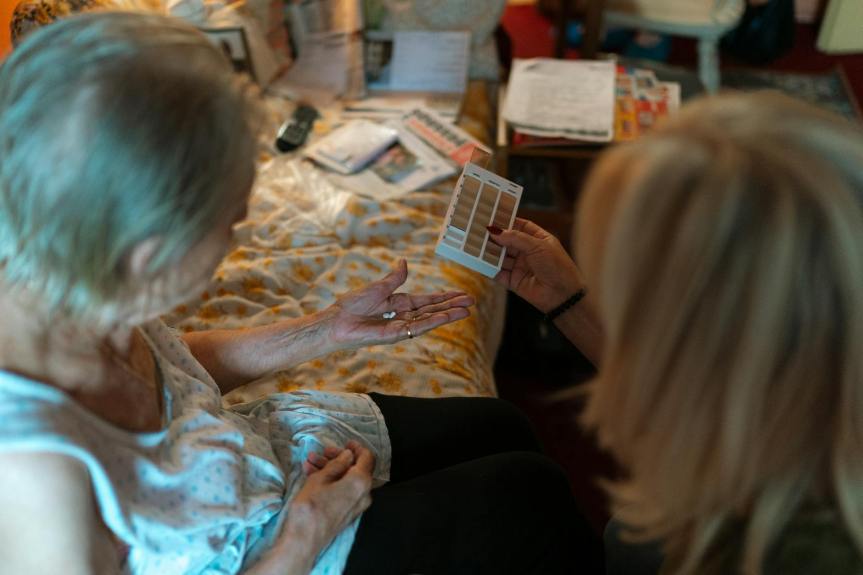
When Alzheimer’s Changes More Than Memory: What Families Need to Understand Next

By Roz Jones

Alzheimer’s is not just about forgetting names, misplacing keys, or repeating a question.

Alzheimer’s changes routines.
It changes conversations.
It changes family roles.
It changes safety needs.
It changes the way people connect, respond, and move through the day.

And for the people providing daily support, it can feel like you are constantly learning a new version of someone you love.

Today, I want to talk about what Alzheimer’s can look like beyond the diagnosis — and how families can prepare with more patience, planning, and compassion.

Alzheimer’s Affects the Whole Family

When one person is diagnosed with Alzheimer’s, the whole family feels the shift.

Someone may need to start managing medications.
Someone may need to attend doctor appointments.
Someone may need to help with meals, bathing, transportation, or bills.
Someone may need to make the hard decisions about driving, living arrangements, safety, and long-term care.

And many times, these responsibilities do not arrive all at once.

They build slowly.

At first, it may be small reminders. Then it becomes missed appointments, unpaid bills, confusion with directions, changes in mood, or difficulty completing familiar tasks.

That is why families need to pay attention early.

Not from a place of fear.

From a place of preparation.

The Changes May Not Always Look Like Memory Loss

One of the reasons Alzheimer’s can be so difficult to understand is because the changes do not always show up the way people expect.

Yes, memory loss is common.

But you may also notice:

Changes in judgment.
Confusion with time or place.
Mood swings.
Suspicion or fear.
Difficulty finding words.
Trouble following a recipe or routine.
Withdrawal from family or hobbies.
Poor sleep.
Agitation later in the day.
Resistance to help.

These changes can be painful to witness, especially when the person you love begins acting in ways that feel unfamiliar.

But this is where families have to pause and remember:

This is not simply stubbornness.
This is not always intentional.
This is not just “old age.”
This may be the disease affecting how the brain processes information, emotions, and surroundings.

That does not make the hard moments easy.

But understanding what may be happening can help you respond with more patience and less frustration.

You Need a Plan Before the Crisis

Too many families wait until there is an emergency before they start making decisions.

A fall happens.
A stove is left on.
A loved one gets lost while driving.
Medication is taken twice.
A bill goes unpaid.
Someone ends up in the hospital.

And suddenly, everyone is trying to make decisions under pressure.

Planning ahead is not being negative.

Planning ahead is love in action.

Start having conversations about:

Who will attend medical appointments.
Who will manage medications.
Who will help with finances and paperwork.
Who has access to emergency contacts.
Who can step in when the main support person needs a break.
What legal documents need to be in place.
What safety changes need to happen in the home.
What signs will tell the family that more help is needed.

These conversations may feel uncomfortable, but they are much harder when everyone is tired, scared, and reacting to a crisis.

Do Not Try to Carry This Alone

Alzheimer’s care can become emotionally heavy.

You may feel grief while your loved one is still physically present.
You may feel guilt for getting frustrated.
You may feel exhausted from repeating the same answers.
You may feel lonely because others do not fully see what you are managing.
You may feel overwhelmed by decisions that seem to keep coming.

You are not weak for needing help.

You are human.

Families need support systems. That support may include doctors, social workers, home care, adult day programs, respite care, trusted relatives, support groups, faith communities, neighbors, or professional planning sessions.

Do not wait until you are completely drained before asking for help.

The person living with Alzheimer’s needs care.

But so do you.

Honor the Person, Not Just the Diagnosis

Alzheimer’s may change how someone communicates, remembers, or moves through the world, but it does not erase who they are.

They are still someone with a story.
Someone with memories, even if they cannot always access them.
Someone with preferences, dignity, emotions, and a need to feel safe.
Someone who still deserves to be spoken to with respect.

Try to keep pieces of who they are present in the day.

Play music they love.
Look through photos together.
Keep familiar routines when possible.
Offer simple choices.
Speak calmly.
Use their name.
Give them time to respond.
Celebrate small moments of connection.

Sometimes the goal is not to correct every detail.

Sometimes the goal is to preserve peace.

Sometimes the goal is to meet them where they are instead of forcing them back to where they used to be.

Remembering Rosalynn Carter’s Legacy

In conversations about Alzheimer’s, I often think about former First Lady Rosalynn Carter and her work around Alzheimer’s awareness and family support.

Rosalynn Carter passed away on November 19, 2023, after her family shared earlier that year that she was living with dementia. But her legacy continues through her decades of advocacy for mental health, family care, and the belief that those providing support deserve to be seen, heard, and equipped.

Her work reminds us that Alzheimer’s is not only a medical issue.

It is a family issue.
A community issue.
A planning issue.
A dignity issue.
A support issue.

And no family should have to navigate it without guidance, compassion, and resources.

Give Yourself Permission to Learn as You Go

Nobody handles Alzheimer’s perfectly.

You may lose patience.
You may say the wrong thing.
You may feel unsure.
You may grieve changes you were not ready for.
You may need to adjust the plan more than once.

That does not mean you are failing.

It means you are walking through something difficult.

Give yourself permission to learn.
Give yourself permission to ask questions.
Give yourself permission to rest.
Give yourself permission to get support before you reach your breaking point.

Alzheimer’s changes many things, but it does not remove the need for love, patience, planning, and community.

The more families understand, the better prepared they can be.

And preparation can make the journey feel less lonely.Want to revisit the first part of this conversation? Read my previous blog: Unraveling Alzheimer’s: A Guide to Understanding the Disease and Its Impact on the Brain, where we discussed what Alzheimer’s disease is, how it affects the brain, and why awareness matters for families and loved ones.

Give Yourself a Moment of Grace

If this season of caregiving has been heavy, emotional, or filled with grief you have not had time to name, Moments of Grace: A Caregiver’s Guided Journal for Reflection, Prayer, and Peace was created with you in mind.

This journal gives caregivers a quiet place to pause, reflect, pray, release, and reconnect with themselves while caring for someone they love.

Purchase Moments of Grace today and give yourself permission to breathe in the middle of the caregiving journey.

Prepare Before the Emergency Comes

The Caregiver Hurricane Preparedness Checklist.

Grief can make it hard to think clearly in a crisis. That is why preparation matters.

The Caregiver Hurricane Preparedness Checklist helps caregivers organize important documents, medications, emergency contacts, evacuation needs, medical equipment details, and care instructions before an emergency happens.

For only $1.99, this checklist gives you a simple starting point so you are not trying to gather everything during a storm, power outage, hospitalization, or sudden change in your loved one’s care.

Purchase the Caregiver Hurricane Preparedness Checklist for $1.99 today and take one more step toward peace of mind.

Need Help Sorting Through the Care Plan?

Roz Jones is a dedicated caretaker turned CEO with over a decade of experience in helping families care for and make decisions for loved ones and their legacies.Roz is a compassionate, innovative healthcare industry leader.

If you are caring for a former spouse, aging loved one, or family member and the boundaries are starting to feel complicated, you do not have to figure it out alone.

Book a Family Care Planning Session with Roz Jones and get support creating a caregiving plan that is clear, compassionate, and realistic.

Together, we can talk through what is working, what is becoming too heavy, and what boundaries need to be strengthened so you can continue to care without losing yourself in the process.

Subscribe to The Caregiver Cafe Weekly Newsletter!

Caregiving can be a roller coaster of ups and downs. The information that you will receive from The Caregiver Cafe Weekly Specials Newsletter will support you as a caregiver. Remember…

1. YOU ARE NOT ALONE: The problems you face as a caregiver are experienced by other caregivers. Knowing that you’re not alone can be comforting. 

2. Tools and Resources:  Find caregiver stress management tools and gain perspective from other caregiver’s experiences.

3. LEARN TO: Ask for help, accept help when it is offered, and acknowledge yourself on this caregiving journey. Hear from experts on how to balance caregiving responsibilities by taking care of your needs and involving others to help manage the natural stress and isolation of being a caregiver. 

When Male Caregivers Keep Going Without Checking In With Themselves

By Roz Jones

Men’s Health Awareness Month is a reminder for men to take their health seriously.

Not later.
Not when something goes wrong.
Not only when the pain becomes too much to ignore.
Now.

But today, I want to take that conversation a little deeper.

Because many men are not only managing their own health. They are also caring for someone else.

You may be a husband caring for your wife.
A son caring for your aging mother or father.
A brother helping a sibling through illness.
A father managing the needs of your household while also checking on an older loved one.
A grandfather carrying responsibilities that nobody always sees.

And you may not even call yourself a caregiver.

You may just say, “I’m helping my family.”

But let me say this clearly:

If someone depends on you for transportation, meals, medication reminders, doctor appointments, finances, safety, daily support, or emotional care, you are caregiving.

And your health matters too.

Male Caregivers Are Often Carrying More Than They Say

Many men have been taught to keep going.

Handle it.
Stay strong.
Do not complain.
Figure it out.
Push through.

And while strength is a beautiful thing, silence can become dangerous.

Because caregiving has a way of adding responsibility to your life without asking permission. One day you are just helping out here and there. Then suddenly you are managing appointments, picking up prescriptions, paying bills, checking blood pressure, lifting someone in and out of chairs, handling emergencies, and trying to keep your own life together at the same time.

That is not small.

That is not “just helping.”

That is caregiving.

And if you are not careful, you can become so focused on making sure your loved one is okay that you stop asking yourself the same question.

Am I okay?

Your Body Will Speak Even When You Do Not

Caregiving stress does not always show up as tears.

Sometimes it shows up as headaches.
Back pain.
Poor sleep.
High blood pressure.
Short patience.
Constant fatigue.
Eating whatever is quick instead of what your body needs.
Skipping doctor appointments.
Feeling irritated but not knowing why.
Sitting in the car for a few extra minutes because you need a moment before walking inside.

Male caregivers may not always say, “I am overwhelmed.”

Sometimes they say:

“I’m good.”
“I’m just tired.”
“It is what it is.”
“I don’t have time right now.”
“I’ll deal with me later.”

But later can become too late if you keep ignoring what your body is trying to tell you.

Caregiver, your loved one needs you well. Not perfect. Not superhuman. Well.

Do Not Cancel Yourself Out of the Care Plan

Many caregivers know their loved one’s medical schedule better than their own.

You know when their refills are due.
You know which doctor they need to see next.
You know what symptoms to watch for.
You know what paperwork needs to be completed.
You know what medication changed after the last appointment.

But when was the last time you scheduled your own checkup?

When was the last time you asked your doctor about your blood pressure, heart health, prostate health, stress, sleep, or screenings based on your age and family history?

When was the last time you admitted that caregiving is affecting you too?

You cannot be so committed to keeping everyone else alive and well that you forget your own body is asking for attention.

Your health is not an afterthought.

It belongs in the care plan too.

Strength Also Looks Like Asking for Help

Some men struggle to ask for support because they feel like they should be able to handle everything on their own.

But caregiving was never meant to be a one-person job.

There is nothing weak about asking a sibling to take over one appointment.
There is nothing weak about hiring help if you can.
There is nothing weak about talking to a therapist, coach, pastor, doctor, or trusted friend.
There is nothing weak about saying, “I need a break.”
There is nothing weak about admitting, “I do not know what to do next.”

That is not weakness.

That is wisdom.

Trying to carry everything alone may look strong from the outside, but it can wear you down on the inside.

We need to stop calling burnout dedication.

You can love your family and still need rest.
You can be dependable and still need support.
You can be strong and still need someone to check on you.

Pay Attention to What You Are Holding Emotionally

Caregiving can bring up emotions that are hard to name.

You may feel grief watching someone you love change.
You may feel anger because the responsibility feels unfair.
You may feel guilt when you want time for yourself.
You may feel pressure because people expect you to be the strong one.
You may feel lonely because nobody sees how much you are doing.

Those emotions do not make you a bad caregiver.

They make you human.

Male caregivers deserve space to talk about what this role is doing to their hearts, minds, and spirits. You do not have to wait until you explode, shut down, or get sick before you tell the truth about what you are carrying.

Sometimes the healthiest thing you can do is speak honestly before the weight becomes too heavy.

Practical Reminders for Male Caregivers

Let this be your reminder to check in with yourself.

Schedule your annual physical.
Ask your doctor what screenings you need.
Pay attention to changes in your body.
Move your body, even if it is just a walk around the block.
Drink water.
Eat something that gives you strength.
Get sleep when you can.
Take breaks without apologizing for needing them.
Talk to someone you trust.
Ask for help before resentment builds.

These things may sound simple, but when caregiving gets heavy, simple things are often the first things to go.

Do not let your care for someone else become the reason you abandon yourself.

Caregiving Is Love, But It Should Not Cost You Your Health

Male caregivers are often overlooked in conversations about caregiving, but you are here.

You are showing up.
You are making decisions.
You are carrying responsibility.
You are doing emotional labor, physical labor, and family labor.

And even if nobody says it enough, what you are doing matters.

But you matter too.

Your health is not secondary.
Your well-being is not optional.
Your needs are not an inconvenience.
Your rest is not laziness.
Your feelings are not a problem.

Taking care of yourself is part of taking care of the people you love.

So do not wait until your body forces you to stop.

Make the appointment.
Take the break.
Have the conversation.
Ask for help.
Check in with yourself.

Because you cannot keep pouring from a body, mind, and spirit that are running on empty.Want to revisit the first part of this conversation? Read Part 1: The Importance of Men’s Health Awareness Month: Prioritizing Well-being, where we discussed why men’s health deserves attention, conversation, and action.

Give Yourself a Moment of Grace

If this season of caregiving has been heavy, emotional, or filled with grief you have not had time to name, Moments of Grace: A Caregiver’s Guided Journal for Reflection, Prayer, and Peace was created with you in mind.

This journal gives caregivers a quiet place to pause, reflect, pray, release, and reconnect with themselves while caring for someone they love.

Purchase Moments of Grace today and give yourself permission to breathe in the middle of the caregiving journey.

Prepare Before the Emergency Comes

The Caregiver Hurricane Preparedness Checklist.

Grief can make it hard to think clearly in a crisis. That is why preparation matters.

The Caregiver Hurricane Preparedness Checklist helps caregivers organize important documents, medications, emergency contacts, evacuation needs, medical equipment details, and care instructions before an emergency happens.

For only $1.99, this checklist gives you a simple starting point so you are not trying to gather everything during a storm, power outage, hospitalization, or sudden change in your loved one’s care.

Purchase the Caregiver Hurricane Preparedness Checklist for $1.99 today and take one more step toward peace of mind.

Need Help Sorting Through the Care Plan?

Roz Jones is a dedicated caretaker turned CEO with over a decade of experience in helping families care for and make decisions for loved ones and their legacies.Roz is a compassionate, innovative healthcare industry leader.

If you are caring for a former spouse, aging loved one, or family member and the boundaries are starting to feel complicated, you do not have to figure it out alone.

Book a Family Care Planning Session with Roz Jones and get support creating a caregiving plan that is clear, compassionate, and realistic.

Together, we can talk through what is working, what is becoming too heavy, and what boundaries need to be strengthened so you can continue to care without losing yourself in the process.

Subscribe to The Caregiver Cafe Weekly Newsletter!

Caregiving can be a roller coaster of ups and downs. The information that you will receive from The Caregiver Cafe Weekly Specials Newsletter will support you as a caregiver. Remember…

1. YOU ARE NOT ALONE: The problems you face as a caregiver are experienced by other caregivers. Knowing that you’re not alone can be comforting. 

2. Tools and Resources:  Find caregiver stress management tools and gain perspective from other caregiver’s experiences.

3. LEARN TO: Ask for help, accept help when it is offered, and acknowledge yourself on this caregiving journey. Hear from experts on how to balance caregiving responsibilities by taking care of your needs and involving others to help manage the natural stress and isolation of being a caregiver. 

Caregiving and the Family Tension No One Talks About

By Roz Jones

Caregiving has a way of bringing things to the surface.

Not just the doctor’s appointments.
Not just the medication lists.
Not just the bills, errands, paperwork, and safety concerns.

I am talking about the family tension.

The tension that shows up when one person becomes the default caregiver.
The tension that builds when siblings have opinions but not availability.
The tension that comes when everyone says they care, but only one person keeps rearranging their life.
The tension that sits in the room when old family roles, old wounds, and old expectations come back up under the pressure of caregiving.

This is the part of caregiving many families do not talk about.

But we need to.

Because caregiving does not just impact the aging loved one receiving care. It impacts the whole family system. It changes how people communicate, how decisions are made, who feels responsible, who feels left out, and who feels unsupported.

This blog is a continuation of my earlier conversation on Caregiving & The Impact of Mental Health on Family Dynamics. If you have not read that piece yet, I encourage you to revisit it, because the emotional health of the family matters just as much as the care plan itself.

The Tension Usually Starts Quietly

Most caregiving situations do not begin with a formal family meeting.

They begin with small needs.

Can you take Mom to this appointment?
Can you pick up Dad’s prescription?
Can you stop by and check on Auntie?
Can you help with this bill?
Can you talk to the doctor because you understand this better?

One task becomes two.
Two tasks become a routine.
A routine becomes an expectation.
And before long, one person is carrying the care plan while everyone else assumes it is being handled.

That is where tension begins.

Not always because people do not care. Sometimes they do care, but they are unsure how to help. Sometimes they are overwhelmed too. Sometimes they are avoiding the reality of what is changing. Sometimes they are waiting for someone else to step in.

But the caregiver who is doing the daily work may not experience it that way.

They may feel abandoned.
They may feel taken for granted.
They may feel angry.
They may feel like their life is the only one being interrupted.

And those feelings matter.

When Family Roles Resurface

Caregiving often brings old family roles right back to the table.

The responsible child becomes responsible again.
The peacemaker tries to keep everyone calm.
The outspoken sibling criticizes the plan.
The distant family member stays distant.
The one who always avoided hard conversations may disappear when decisions need to be made.

This can be painful because caregiving is already emotional. You are watching an aging loved one change. You may be grieving their independence, their memory, their mobility, or the way family life used to be.

Then on top of that, you are dealing with family patterns that may have been there for years.

That is why a conversation about transportation or medication can suddenly turn into something much bigger. It is not just about the appointment. It is about feeling unseen. It is about feeling unsupported. It is about years of “you always” and “you never” showing up in the middle of a care decision.

And if the family does not pause and name what is happening, that tension can shape the entire caregiving journey.

The Mental Health Piece We Cannot Ignore

Caregiving affects everyone’s mental health differently.

The primary caregiver may feel anxious, exhausted, resentful, or emotionally numb.
The aging loved one may feel afraid, frustrated, embarrassed, or resistant to help.
Siblings or other relatives may feel guilty, defensive, helpless, or disconnected.
Children in the home may feel the stress even when adults think they are hiding it.

Stress does not stay in one person.

It moves through the household.
It changes the tone of conversations.
It shortens patience.
It makes small things feel bigger.
It makes people react instead of respond.

That is why mental health support is not separate from caregiving. It is part of how families survive caregiving without turning on each other.

Sometimes what sounds like conflict is really exhaustion.

Sometimes what sounds like criticism is fear.
Sometimes what looks like avoidance is guilt.
Sometimes what sounds like anger is grief.
Sometimes what feels like control is someone trying to keep the situation from falling apart.

This does not excuse hurtful behavior. But it does help families understand that there may be more happening underneath the surface.

The Resentment No One Wants to Admit

Let’s be honest.

Caregivers can feel resentful.

And that can be hard to admit because resentment feels like something you are not supposed to feel when you love someone.

But resentment does not mean you do not love your aging loved one. It does not mean you are selfish. It does not mean you are ungrateful.

Resentment often means the load is too heavy and too uneven.

It may mean you have been doing too much for too long without enough help.
It may mean family members are making decisions without sharing responsibility.
It may mean people are giving advice instead of assistance.
It may mean your own life has been pushed so far to the side that you barely recognize it.

And here is where families have to be careful: unspoken resentment does not disappear. It leaks out.

It leaks out in tone.
It leaks out in silence.
It leaks out in short text messages.
It leaks out in arguments about small things.
It leaks out when the caregiver stops asking for help because they are tired of being disappointed.

That is why families need honest conversations before resentment becomes the main language in the room.

The Opinion Without Participation Problem

One of the hardest dynamics in caregiving is when people who are not doing the daily work have the strongest opinions.

They may question the doctor’s recommendation.
They may disagree with the schedule.
They may criticize the caregiver’s decisions.
They may say what “should” happen without offering time, money, transportation, or practical support.

That creates tension quickly.

Because if you are not showing up for the daily responsibilities, your opinion needs to come with humility.

Care decisions should be discussed. Families should communicate. Everyone deserves to be heard. But there is a difference between being involved and simply weighing in from the sidelines.

If a family member wants a voice in the care plan, they also need to be willing to take on a piece of the care.

That may not always be hands-on care. It could be paying for supplies, managing paperwork, making calls, organizing meals, researching resources, or giving the primary caregiver a break.

But care cannot be all opinion and no participation.

When the Caregiver Feels Alone in a Full Family

This is one of the quietest pains in caregiving.

Feeling alone while surrounded by family.

You may have siblings, cousins, adult children, church members, friends, and relatives who all love your aging loved one. But when the real work begins, you may still feel like the only one standing in the middle of it.

You are the one answering the phone.
You are the one remembering the details.
You are the one adjusting your schedule.
You are the one being watched closely if something goes wrong.
You are the one expected to stay calm, stay available, and stay strong.

That kind of loneliness can be heavy.

And if no one checks on the caregiver, the family may not realize how close that person is to burning out.

So let me say this clearly: caring for the caregiver is part of caring for the aging loved one.

If the caregiver breaks down, the care plan breaks down too.

What Families Can Do Differently

Family tension may be common in caregiving, but it does not have to run the whole show.

Families can make different choices. Not perfect choices. Different ones.

1. Put the Responsibilities in Writing

A care plan that only lives in one person’s head is not a family care plan.

Write down what needs to happen and who is responsible for each part.

Appointments.
Medication pickups.
Meal support.
Transportation.
Bill payments.
Safety checks.
Home maintenance.
Emergency contacts.
Important documents.

When the tasks are visible, it becomes easier to see whether the load is balanced or whether one person is carrying too much.

2. Have Regular Family Check-Ins

Do not wait until there is a crisis to talk.

Schedule short check-ins to review what is happening, what has changed, and where help is needed.

Keep the conversation focused on care, not blame.

Ask:

What does our loved one need this week?
What does the primary caregiver need this week?
What decision needs to be made?
Who can take responsibility for what?
What needs to be documented?

These conversations may not solve everything, but they can reduce confusion and prevent assumptions from taking over.

3. Speak the Need Clearly

Caregivers, I know this can be hard.

Sometimes you want people to notice. You want them to offer. You want them to understand without you having to ask again.

But in many families, clear requests work better than quiet frustration.

Instead of saying, “Nobody helps me,” try:

“I need someone to take Dad to his appointment on Thursday.”
“I need a break this Saturday from 10 to 2.”
“I need someone else to call the insurance company this week.”
“I need help paying for the supplies this month.”
“I need us to decide who is the backup emergency contact.”

Clear needs make it harder for people to hide behind confusion.

4. Make Respite Non-Negotiable

The primary caregiver should not have to reach exhaustion before the family talks about relief.

Respite needs to be planned.

That could mean rotating weekends.
Hiring help for a few hours.
Arranging adult day support.
Having another family member handle one evening a week.
Creating a backup plan for emergencies.

Respite protects the caregiver’s mental health and helps preserve the relationship between the caregiver and the aging loved one.

Because when every interaction becomes a task, it is easy for tenderness to get buried under responsibility.

5. Get Outside Support When the Family Is Stuck

Some families need help having the conversations they keep avoiding.

That may look like therapy, caregiver coaching, a support group, mediation, or a family care planning session.

There is no shame in bringing in support.

Sometimes a neutral person can help the family move from emotion to action. Sometimes you need someone who can help sort through roles, responsibilities, documents, emergency planning, and next steps without everyone falling back into the same argument.

Prepare Before the Pressure Gets Worse

Family tension often increases when there is no plan.

A storm is coming.
The power goes out.
A prescription runs low.
Your loved one needs to evacuate.
A medical decision has to be made quickly.
Important paperwork cannot be found.
Nobody knows who is supposed to do what.

That kind of pressure can turn a stressful family dynamic into a crisis.

This is one reason I created the Caregiver Hurricane Preparedness Checklist. It is designed to help caregivers and families think through the practical details before the storm is in the forecast, including medications, emergency contacts, important documents, supplies, transportation, communication plans, and the needs of your aging loved one.

Join the Moments of Grace Launch List

Caregiving asks a lot of you — emotionally, physically, mentally, and spiritually. That is why Roz Jones created Moments of Grace: A 40-Day Caregiver Prayer Journal, a faith-filled journal designed to help caregivers pause, reflect, release, and reconnect with God in the middle of the caregiving journey.

Through daily prayers, comforting scriptures, guided journal prompts, and uplifting affirmations, Moments of Grace offers caregivers a quiet place to be honest about what they are carrying while receiving encouragement for the road ahead.

Whether you are caring for an aging parent, spouse, loved one, patient, or family member, this journal is a reminder that your spirit needs care too.

Need Help Getting a Plan in Place?

The Caregiver Hurricane Preparedness Checklist.

Caregivers, please do not wait until you are exhausted, overwhelmed, or in the middle of an emergency to get organized.

Preparation is not panic.

Preparation is care.

That is why I created the Caregiver Hurricane Preparedness Checklist.

For only $1.99, this checklist helps caregivers organize important details before an emergency happens, including medications, emergency contacts, documents, supplies, evacuation needs, and care information.

Purchase the Caregiver Hurricane Preparedness Checklist for $1.99 today and give yourself one less thing to carry from memory.

When You Can’t Do it All Give Roz a Call!

Roz Jones is a dedicated caretaker turned CEO with over a decade of experience in helping families care for and make decisions for loved ones and their legacies.Roz is a compassionate, innovative healthcare industry leader.

A Family Care Planning Session with Roz Jones can help you sort through the responsibilities, family roles, emergency needs, documents, routines, and next steps. Together, we can look at what is happening now and what needs to be put in place so the care feels clearer, calmer, and more shared.

Subscribe to The Caregiver Cafe Weekly Newsletter!

Caregiving can be a roller coaster of ups and downs. The information that you will receive from The Caregiver Cafe Weekly Specials Newsletter will support you as a caregiver. Remember…

1. YOU ARE NOT ALONE: The problems you face as a caregiver are experienced by other caregivers. Knowing that you’re not alone can be comforting. 

2. Tools and Resources:  Find caregiver stress management tools and gain perspective from other caregiver’s experiences.

3. LEARN TO: Ask for help, accept help when it is offered, and acknowledge yourself on this caregiving journey. Hear from experts on how to balance caregiving responsibilities by taking care of your needs and involving others to help manage the natural stress and isolation of being a caregiver.