When Hospice Begins, Caregivers Need Holding Too

By Roz Jones

Hospice care often begins when a family has already carried a long season of appointments, decisions, treatments, questions, and emotional weight.

By the time hospice becomes part of the conversation, caregivers may already be tired. They may have spent months or years coordinating care, managing symptoms, listening for changes, updating family members, and trying to keep the home steady. Hospice does not erase that weight. It brings a different kind of care, a different kind of support, and a different kind of emotional preparation.

For many families, hospice is misunderstood.

Some hear the word and feel fear. Some hear the word and think it means giving up. Some delay the conversation because they do not want to face what may be changing. But hospice care is not about abandoning a loved one. Hospice is about comfort, dignity, support, and making sure the person receiving care and the family surrounding them are not left to carry the final season alone.

And that includes the caregiver.

Family caregivers play a vital role during hospice care. They are often the ones noticing changes first. They are the ones calling the nurse, giving updates, managing the home, comforting the loved one, and helping the family understand what is happening. They may be present for difficult conversations, quiet moments, emotional shifts, and physical changes that are hard to witness.

That kind of care requires emotional support.

Not later.

Now.

Hospice Care Changes the Caregiver’s Role

When hospice begins, the caregiver’s responsibilities may shift, but they do not disappear.

The focus of care may move from treatment to comfort. The medical team may become more involved. Nurses, aides, chaplains, social workers, and other hospice professionals may enter the home or care setting. Medications may change. Routines may change. Family members may begin asking more questions.

The caregiver may feel relief that help has arrived, but that relief can exist alongside sadness, fear, guilt, uncertainty, and grief.

This is why emotional support matters.

The caregiver is not only managing tasks. The caregiver is also processing what hospice means for the loved one, for the family, and for the future. There may be moments when the caregiver feels grateful for the support and moments when the reality feels too heavy to hold.

Both can be true.

A caregiver can know hospice is the right support and still grieve the reason hospice is needed.

The Emotional Weight of Watching Change

One of the hardest parts of hospice caregiving is witnessing decline.

A loved one may sleep more. They may eat less. They may speak less. Their body may change. Their needs may become more delicate. The caregiver may find themselves watching closely, wondering what each change means and whether they are doing enough.

That watching can be exhausting.

Caregivers may experience anticipatory grief, which is the grief that begins before the loss occurs. They may feel sadness while still providing care. They may feel guilt for needing rest. They may feel anger that life has changed. They may feel anxious about what comes next.

These emotions do not mean the caregiver lacks faith, love, or strength.

They mean the caregiver is human.

Emotional support gives caregivers a place to put some of what they are carrying. It creates room for honesty, tears, questions, prayer, silence, and support without judgment. It reminds caregivers that they do not have to be strong every minute in order to love well.

Caregivers Need More Than Information

Hospice teams often provide education about symptoms, medications, equipment, and what to expect. That information is important. It helps families feel less afraid when changes happen. It helps caregivers understand when to call for help and how to provide comfort.

But caregivers need more than information.

They need someone to ask how they are holding up.
They need space to say what feels hard.
They need permission to rest.
They need family members who do more than wait for updates.
They need support that reaches the caregiver, not just the care plan.

A caregiver can have all the instructions and still feel emotionally overwhelmed.

That is why families must be intentional about supporting the person providing care. Hospice care should not become another season where one caregiver carries everything while everyone else stands at a distance.

Family Support Must Become Practical

During hospice care, concern is not enough.

Family members may say, “Let me know if you need anything,” but caregivers are often too tired to assign tasks in the moment. The better approach is to offer specific, practical support.

Someone can bring meals.
Someone can sit with the loved one while the caregiver rests.
Someone can manage phone calls and family updates.
Someone can help with laundry, groceries, errands, or transportation.
Someone can stay overnight if appropriate.
Someone can help organize paperwork, emergency contacts, and important documents.

Support becomes more meaningful when it lightens the caregiver’s actual load.

This is especially important when the caregiver is also managing grief. A caregiver who is emotionally overwhelmed may not have the energy to explain every need. Family members must pay attention, step in with care, and follow through.

Hospice Support Includes the Caregiver

Hospice care is designed to support both the patient and the family.

Caregivers should use the hospice team as part of their support system. The nurse can answer questions about symptoms and medication. The social worker can help with emotional concerns, family communication, planning, and resources. The chaplain can offer spiritual care. Bereavement support may also be available before and after the loss.

Caregivers do not have to wait until they are breaking down before asking for help.

Questions are allowed.
Tears are allowed.
Uncertainty is allowed.
Needing a break is allowed.

Hospice professionals understand that this season can be tender and difficult. They can help caregivers understand what is happening and remind them that comfort care includes the emotional well-being of the family.

Self-Care During Hospice Is Not Selfish

Self-care can feel complicated during hospice.

Many caregivers feel guilty leaving the room, taking a nap, eating a full meal, or stepping outside for air. They may feel they should be available every moment. They may worry that resting means they are not doing enough.

But caregivers cannot pour from a body and spirit that have been completely drained.

Self-care during hospice may be simple. It may look like drinking water. Eating something nourishing. Sitting outside for ten minutes. Letting someone else answer the phone. Taking a shower. Praying. Writing in a journal. Listening to music. Calling a trusted friend. Accepting respite when it is offered.

These small moments matter.

They help the caregiver remain present without becoming consumed. They help the body release some of the stress. They remind the caregiver that their needs still matter, even in a difficult season.

Emotional Support Protects the Caregiver and the Care

When caregivers are emotionally supported, care becomes steadier.

The caregiver is better able to listen, respond, communicate, and make decisions. They are less likely to feel completely alone in the process. They may still feel grief and exhaustion, but they are not carrying those feelings without support.

When caregivers are not supported, the weight can become too much. Stress can turn into burnout. Sadness can become isolation. Exhaustion can affect health, patience, and decision-making. Family tension can grow when one person feels responsible for everything.

Supporting the caregiver is not separate from supporting the loved one.

It is part of the same care.

A loved one in hospice deserves comfort and dignity. The caregiver deserves compassion and support while helping provide that care.

Preparing the Family Before Crisis

Hospice care also reminds families of the importance of preparation.

The more families talk, plan, and share responsibilities, the less pressure falls on one person. Caregivers need to know who is available, who can help, what documents are needed, what the hospice team provides, and how family communication will be handled.

Preparation does not remove the grief, but it can reduce confusion.

In a previous blog, The Importance of Emotional Support for Family Caregivers During Hospice Care, we talked about the importance of having the next hospice conversation before crisis makes every decision harder. This blog continues that conversation by reminding families that emotional support for the caregiver must be part of the plan, not an afterthought.

Caregivers Should Not Be Left Alone in Hospice

Hospice is a sacred and emotional season of care.

It can hold tenderness, sorrow, gratitude, fear, peace, and uncertainty all at once. It can bring families closer, but it can also reveal where support is missing. It can give caregivers help, but families must still be willing to surround the caregiver with compassion and practical care.

No caregiver should have to walk through hospice feeling invisible.

The caregiver needs to be seen.
The caregiver needs to be supported.
The caregiver needs to be allowed to grieve.
The caregiver needs to rest.
The caregiver needs a circle of people who understand that love does not mean carrying everything alone.

Hospice care is not only about helping a loved one die with dignity.

It is also about helping the family care with compassion, honesty, and support.

And the caregiver is part of that family.

Tune in to The Caregiver Café Podcast

In the first episode of The Caregiver Café with Roz Jones, Roz welcomes listeners into a space created to serve those caring for sick, aging, or vulnerable loved ones.

Roz shares the personal story that started her caregiving journey and how one unexpected hospital visit showed her just how quickly life can change. Through her experience, she reminds families of the importance of having documentation in order, including advance directives, healthcare surrogates, and backup support before a crisis happens.

This episode is a warm introduction to Roz, her heart for caregivers, and the purpose of The Caregiver Café: to provide resources, encouragement, and practical support that helps reduce stress, overwhelm, and safety concerns along the caregiving journey.

Pull up a chair. Roz has a seat waiting for you.

Give Yourself a Moment of Grace

If you need encouragement for the emotional side of caregiving, purchase Roz Jones’ book, Moments of Grace. This book offers support, reflection, and reminders of grace for the caregiver who is carrying a lot.

This journal was created to help caregivers pause, breathe, reflect, and find strength in the middle of the caregiving journey.

Purchase Moments of Grace today and give yourself permission to breathe in the middle of the caregiving journey.

Prepare Before the Emergency Comes

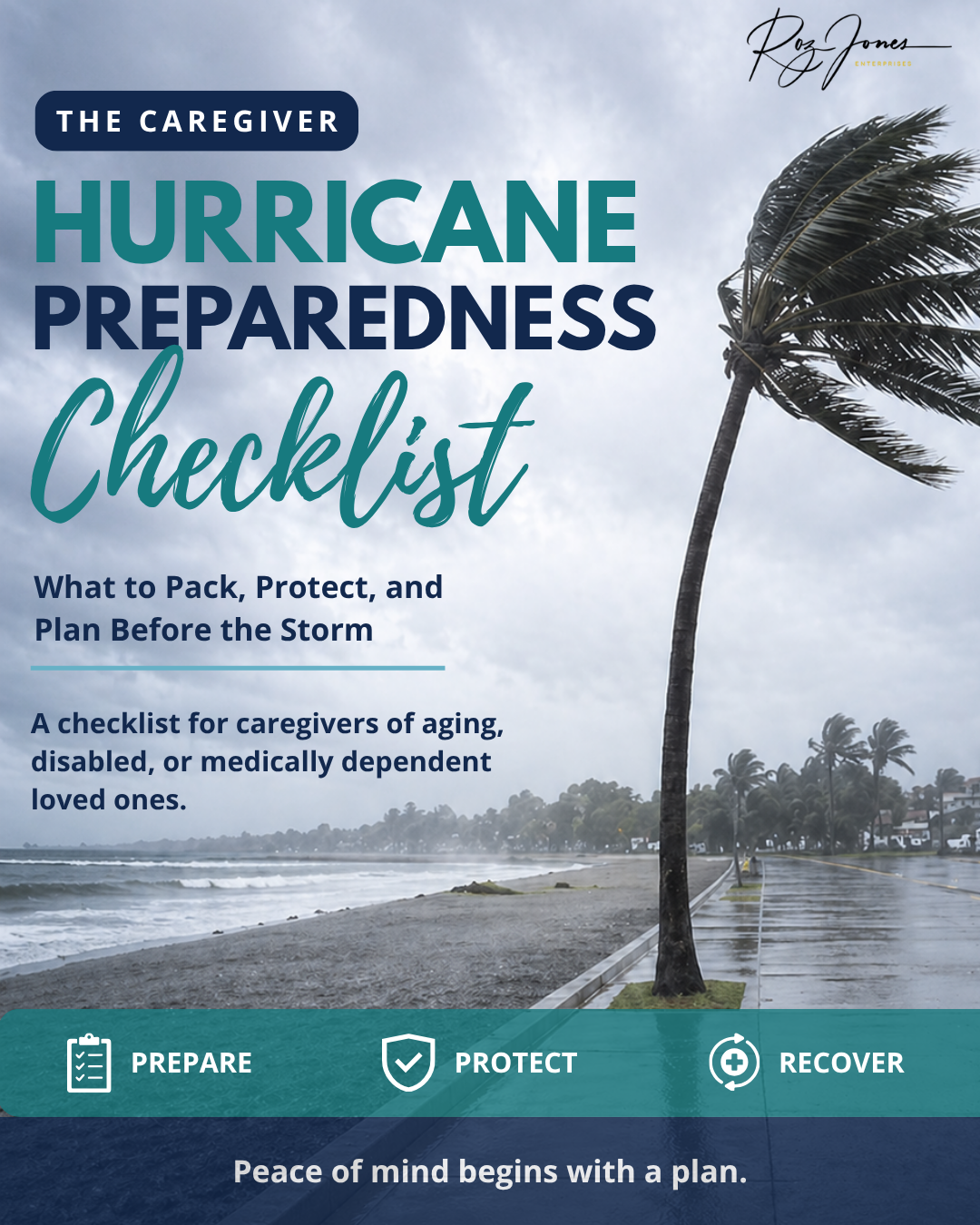
The Caregiver Hurricane Preparedness Checklist.

If you are caring for a loved one and want to be better prepared for storms, power outages, and unexpected caregiving emergencies, purchase the Caregiver Hurricane Preparedness Checklist. This resource can help you think through important details before a crisis is already at the door.

For only $1.99, this checklist gives you a simple starting point so you are not trying to gather everything during a storm, power outage, hospitalization, or sudden change in your loved one’s care.

Purchase the Caregiver Hurricane Preparedness Checklist for $1.99 today and take one more step toward peace of mind.

Need Help Sorting Through the Care Plan?

Roz Jones is a dedicated caretaker turned CEO with over a decade of experience in helping families care for and make decisions for loved ones and their legacies.Roz is a compassionate, innovative healthcare industry leader.

If your family needs help thinking through care decisions, caregiving responsibilities, or next steps, book a session with Roz Jones. You do not have to navigate this season alone.

Together, we can talk through what is working, what is becoming too heavy, and what boundaries need to be strengthened so you can continue to care without losing yourself in the process.

Subscribe to The Caregiver Cafe Weekly Newsletter!

Caregiving can be a roller coaster of ups and downs. The information that you will receive from The Caregiver Cafe Weekly Specials Newsletter will support you as a caregiver. Remember…

1. YOU ARE NOT ALONE: The problems you face as a caregiver are experienced by other caregivers. Knowing that you’re not alone can be comforting. 

2. Tools and Resources:  Find caregiver stress management tools and gain perspective from other caregiver’s experiences.

3. LEARN TO: Ask for help, accept help when it is offered, and acknowledge yourself on this caregiving journey. Hear from experts on how to balance caregiving responsibilities by taking care of your needs and involving others to help manage the natural stress and isolation of being a caregiver. 

Beyond the Brave Face: Emotional Wellness for Male Caregivers

By Roz Jones

Male caregivers often carry responsibilities that are not always visible to others.

The work may begin early in the morning with medication reminders, meal preparation, transportation, or checking in on a loved one before the rest of the day begins. It may continue through doctor’s appointments, household tasks, financial concerns, family updates, and the constant need to remain alert to changes in health, mood, or behavior.

Much of this work is done quietly.

Many male caregivers become the steady presence in the family. They are expected to manage, respond, decide, and continue forward. Their strength is often praised, but the emotional weight behind that strength is not always acknowledged.

Caregiving affects more than the daily schedule. It affects the heart, the mind, the body, and the relationships surrounding the caregiver. For male caregivers, emotional wellness must become part of the care plan because the quality of care is connected to the well-being of the person providing it.

The Emotional Side of Caregiving

Caregiving brings responsibility, but it also brings emotion.

A male caregiver may be caring for a parent whose needs are increasing, a spouse whose health is changing, a sibling who requires support, or another aging loved one who can no longer manage life in the same way. These changes can bring grief, worry, frustration, sadness, fear, and exhaustion.

In many families, male caregivers are expected to stay calm and composed. They may have been taught to handle problems privately, avoid emotional expression, and keep going without complaint. As a result, the emotional impact of caregiving may remain unnamed.

Unspoken stress can still affect the caregiver.

It may appear as irritability, fatigue, sleeplessness, withdrawal, impatience, or difficulty concentrating. It may also affect communication with family members, healthcare providers, and the loved one receiving care. These signs do not mean the caregiver is failing. They often indicate that the caregiver needs support, rest, and healthier ways to process what is being carried.

When Responsibility Becomes Isolation

Isolation is one of the quiet challenges many caregivers face.

For male caregivers, isolation may not always look like being physically alone. It may look like being surrounded by family but still feeling like the only one who truly understands the care needs. It may look like answering questions about the loved one’s condition while no one asks how the caregiver is managing. It may look like keeping difficult emotions private because there is no safe place to put them.

Over time, this isolation can make caregiving feel heavier than it already is.

Family members may assume that everything is under control because the caregiver continues to function. Friends may admire the caregiver’s dedication without realizing how much support is needed. The caregiver may begin to pull back from conversations, social activities, or personal routines because care has taken up more and more space.

Isolation can weaken both the caregiver and the care plan.

A caregiver who feels emotionally alone may struggle to ask for help, make clear decisions, or recognize when burnout is approaching. This is why emotional wellness is not separate from caregiving. It is part of the foundation that allows care to remain steady and sustainable.

Why Emotional Wellness Matters

Emotional wellness helps caregivers recognize what they are feeling and respond to those feelings in healthy ways. It does not remove the challenges of caregiving, but it gives the caregiver tools to manage the pressure with more clarity and support.

For male caregivers, emotional wellness can strengthen communication, improve relationships, and reduce the risk of carrying stress in silence. It can make it easier to identify when help is needed, when rest is necessary, and when a family conversation must happen.

A caregiver who is emotionally supported is better able to remain patient during difficult moments. He is better prepared to manage unexpected changes. He is more likely to seek resources before a crisis develops. He is also more able to care from a place of steadiness instead of constant depletion.

The caregiver’s emotional health matters because the caregiver matters.

Caregiving should not require a man to disappear behind responsibility. It should not require him to ignore his own stress in order to prove commitment. Emotional wellness allows male caregivers to remain connected to themselves while caring for someone else.

Healthy Relationships Support Better Care

Strong caregiving relationships require communication, honesty, and shared responsibility.

When the emotional burden rests on one person, resentment can build. Misunderstandings can grow. Family members may not realize how much is being handled behind the scenes. The caregiver may feel frustrated that others are not helping, while others may not know what kind of help is needed.

Healthy relationships create space for the care plan to be shared more clearly.

This may include assigning specific responsibilities, updating family members regularly, identifying backup support, or asking others to assist with transportation, meals, errands, paperwork, or respite. It may also include emotional check-ins that focus on the caregiver, not only the loved one receiving care.

For male caregivers, these relationships can provide important relief. They offer a reminder that caregiving does not have to be carried alone. They also help protect the caregiver from becoming the only person who understands the needs, routines, and decisions connected to care.

Supportive relationships do more than provide help. They help prevent isolation.

Healthy Coping Is Not Optional

Caregiving stress needs somewhere to go.

Without healthy coping strategies, stress can begin to settle into the body and mind. It may affect sleep, appetite, mood, focus, energy, and overall health. Male caregivers may be especially likely to minimize these effects if they have been taught to push through discomfort rather than address it.

Healthy coping creates room for release.

This may include walking, exercise, prayer, journaling, therapy, time outdoors, music, support groups, or quiet moments of reflection. It may also include practical routines such as scheduling respite care, attending personal medical appointments, or setting aside time each week for rest.

Coping is not about avoiding the reality of caregiving. It is about helping the caregiver remain well enough to continue.

Rest, reflection, and support are not signs of weakness. They are tools that help caregivers preserve their strength.

Professional Support Has a Place

There are times when family and friends may not be enough.

Professional support can help caregivers process the emotional and practical demands of care. A therapist or counselor can provide space to work through grief, stress, frustration, and burnout. A care manager may help families understand options and organize next steps. Respite care providers can allow caregivers to step away for rest or personal needs without leaving their loved one unsupported.

Community organizations, caregiver programs, senior centers, faith communities, and healthcare teams may also provide education, referrals, and resources.

Seeking professional support does not mean the caregiver has failed. It means the caregiver understands that sustainable care requires more than endurance.

Building Support Before Crisis

Caregiving becomes more difficult when support is only discussed after something has gone wrong.

Families benefit from building support before a crisis occurs. This includes knowing who can help, what resources are available, where important information is stored, and what the caregiver needs in order to continue safely and well.

This is especially important for male caregivers who may have been carrying responsibilities privately. When care details live only in one person’s head, the entire family becomes vulnerable during emergencies. A shared plan helps reduce confusion and allows others to step in with greater confidence.

In a previous blog, Igniting vs. Isolation: The Impact of Emotional Well-Being on Men, we discussed the importance of building a caregiver circle and creating relationships that can help carry the weight of care. This blog continues that message by focusing on the emotional wellness of male caregivers and the need for support that reaches beyond tasks.

Male Caregivers Need Care Too

Male caregivers are often recognized for their dependability, loyalty, and strength. Those qualities matter, but they should not become a reason to overlook their emotional needs.

The man who provides care may also be grieving.
He may be exhausted.
He may be overwhelmed.
He may need rest, guidance, encouragement, and support.
He may need someone to notice the weight behind the brave face.

Caregiving is an act of love, but love should not require emotional isolation.

When male caregivers are supported, families become stronger. Care plans become healthier. Communication improves. Emergencies become less chaotic. The caregiver is better able to continue without losing himself in the process.

Emotional wellness is not separate from caregiving.

It is one of the ways caregivers are sustained for the journey ahead.

Tune in to The Caregiver Café Podcast

In the first episode of The Caregiver Café with Roz Jones, Roz welcomes listeners into a space created to serve those caring for sick, aging, or vulnerable loved ones.

Roz shares the personal story that started her caregiving journey and how one unexpected hospital visit showed her just how quickly life can change. Through her experience, she reminds families of the importance of having documentation in order, including advance directives, healthcare surrogates, and backup support before a crisis happens.

This episode is a warm introduction to Roz, her heart for caregivers, and the purpose of The Caregiver Café: to provide resources, encouragement, and practical support that helps reduce stress, overwhelm, and safety concerns along the caregiving journey.

Pull up a chair. Roz has a seat waiting for you.

Give Yourself a Moment of Grace

If you need encouragement for the emotional side of caregiving, purchase Roz Jones’ book, Moments of Grace. This book offers support, reflection, and reminders of grace for the caregiver who is carrying a lot.

This journal was created to help caregivers pause, breathe, reflect, and find strength in the middle of the caregiving journey.

Purchase Moments of Grace today and give yourself permission to breathe in the middle of the caregiving journey.

Prepare Before the Emergency Comes

The Caregiver Hurricane Preparedness Checklist.

If you are caring for a loved one and want to be better prepared for storms, power outages, and unexpected caregiving emergencies, purchase the Caregiver Hurricane Preparedness Checklist. This resource can help you think through important details before a crisis is already at the door.

For only $1.99, this checklist gives you a simple starting point so you are not trying to gather everything during a storm, power outage, hospitalization, or sudden change in your loved one’s care.

Purchase the Caregiver Hurricane Preparedness Checklist for $1.99 today and take one more step toward peace of mind.

Need Help Sorting Through the Care Plan?

Roz Jones is a dedicated caretaker turned CEO with over a decade of experience in helping families care for and make decisions for loved ones and their legacies.Roz is a compassionate, innovative healthcare industry leader.

If your family needs help thinking through care decisions, caregiving responsibilities, or next steps, book a session with Roz Jones. You do not have to navigate this season alone.

Together, we can talk through what is working, what is becoming too heavy, and what boundaries need to be strengthened so you can continue to care without losing yourself in the process.

Subscribe to The Caregiver Cafe Weekly Newsletter!

Caregiving can be a roller coaster of ups and downs. The information that you will receive from The Caregiver Cafe Weekly Specials Newsletter will support you as a caregiver. Remember…

1. YOU ARE NOT ALONE: The problems you face as a caregiver are experienced by other caregivers. Knowing that you’re not alone can be comforting. 

2. Tools and Resources:  Find caregiver stress management tools and gain perspective from other caregiver’s experiences.

3. LEARN TO: Ask for help, accept help when it is offered, and acknowledge yourself on this caregiving journey. Hear from experts on how to balance caregiving responsibilities by taking care of your needs and involving others to help manage the natural stress and isolation of being a caregiver. 

The Caregiver Circle: Why Strong Support Makes Stronger Care

By Roz Jones

Caregiving is not only about what one person can carry.

It is about what happens when the right people, resources, and plans are placed around the caregiver before the weight becomes too heavy. Many caregivers step into the role with love, loyalty, and a deep sense of responsibility. They manage appointments, medications, meals, transportation, household needs, emotional changes, and family updates. They learn how to adjust quickly, respond calmly, and keep going even when their own bodies and minds are tired.

But caregiving was never meant to be a one-person assignment.

When one caregiver becomes the only person who knows the routine, understands the care needs, manages the emergencies, and holds the family plan together, the care system becomes fragile. It may appear steady from the outside, but inside, the caregiver may be exhausted, isolated, and silently overwhelmed.

That is why building a caregiver circle matters.

A strong caregiver circle is not just a list of people who care. It is a support system that understands what is needed and knows how to respond. It includes family, friends, neighbors, community resources, healthcare professionals, respite care, support groups, and spiritual or emotional support. It gives the caregiver room to breathe while making sure the loved one continues to receive steady care.

Support Is Part of the Care Plan

Many caregivers are used to doing what needs to be done without asking for much in return. They may believe that asking for help means they are not strong enough. They may feel guilty for needing rest. They may hesitate to share the full picture because they do not want to worry anyone else.

But support is not a sign of weakness.

Support is part of a healthy care plan.

A caregiver who has support is better positioned to make thoughtful decisions, respond to emergencies, and remain emotionally present for the loved one receiving care. Without support, even the most committed caregiver can become worn down by the constant pressure of being needed.

Caregiving requires strength, but it also requires connection. It requires someone to step in when the caregiver needs rest. It requires someone to listen when the caregiver needs to talk. It requires someone to help organize information, prepare for emergencies, and share responsibility when the needs become too much for one person to carry alone.

The Danger of Carrying the Plan Alone

One of the hardest parts of caregiving is that much of the work is invisible.

Others may see the doctor’s appointment, but they may not see the hours spent scheduling it, preparing questions, gathering medications, arranging transportation, and explaining everything afterward. Others may see the meal on the table, but they may not see the planning, shopping, dietary changes, and worry behind it. Others may know that care is being provided, but they may not understand how much mental and emotional energy it takes to keep everything moving.

When the care plan lives mostly in one person’s head, the caregiver becomes the calendar, the emergency contact, the medication tracker, the decision-maker, and the family update system.

That is too much for one person.

A strong caregiver circle helps move the plan out of one person’s head and into a shared structure. It allows others to understand what is happening, what needs attention, and where they can help. It also protects the caregiver from becoming the only person everyone depends on during a crisis.

Building Relationships That Can Hold Care

Caregiving relationships need more than concern. They need communication, clarity, and consistency.

Some family members may want to help but may not know what to do. Others may assume the primary caregiver has everything handled because they have not been told otherwise. Sometimes the caregiver is frustrated that no one is stepping in, while family members are waiting to be asked.

This is where clear communication becomes important.

Instead of only saying, “I need help,” caregivers benefit from naming specific needs. A relative may be able to take over transportation once a week. A neighbor may be willing to check in after a storm. A friend may be able to sit with a loved one while the caregiver runs errands. A family member who lives far away may be able to manage phone calls, paperwork, research, or appointment reminders.

Help becomes easier when people understand what kind of help is needed.

Building relationships that can hold care also means telling the truth before resentment builds. Caregivers do not have to wait until they are angry, exhausted, or at a breaking point before having family conversations. Support works best when it is built early, not after the crisis has already arrived.

The Value of Other Caregivers

There is a different kind of comfort that comes from connecting with someone who understands caregiving from the inside.

Other caregivers know what it feels like to be tired and still show up. They understand the emotional weight of making decisions for someone else. They know how hard it can be to balance love, frustration, fear, and responsibility. They understand why rest can feel difficult, even when it is necessary.

Caregiver support groups, online communities, local organizations, and faith-based groups can offer a place to speak honestly without having to explain every detail. These spaces can provide practical ideas, emotional encouragement, and reminders that the caregiver is not alone.

For male caregivers especially, support spaces can be important because caregiving conversations often overlook their experiences. Many men are caring for spouses, parents, siblings, relatives, and loved ones while also carrying expectations to stay strong, quiet, and in control. A support network gives male caregivers permission to be honest about the weight they are carrying and the help they need.

Professional Support Has a Place

Family support is important, but there are times when professional support is needed too.

A therapist or counselor can help caregivers process stress, grief, anger, guilt, and burnout. A care manager can help organize next steps and connect the family with resources. A respite care provider can give the caregiver time away without leaving the loved one unsupported. Community agencies, senior centers, caregiver organizations, and healthcare teams can also provide education, referrals, and practical guidance.

Seeking professional support does not mean the caregiver has failed.

It means the caregiver understands that this journey requires more than endurance. It requires tools. It requires planning. It requires spaces where the caregiver’s well-being is also considered.

Respite Is Not Abandonment

Many caregivers struggle with taking breaks because they feel responsible for being available all the time. But constant availability is not the same as healthy caregiving.

Respite care gives caregivers time to rest, handle personal needs, attend appointments, sleep, work, worship, exercise, or simply sit quietly without being on alert. These breaks are not selfish. They are necessary.

A caregiver who never has time to recover is at greater risk for burnout, frustration, and health challenges. Rest helps protect the caregiver’s ability to continue providing care with patience, steadiness, and compassion.

Caregivers must be reminded that stepping away for a short time does not mean they have stepped away from love. It means they are making room to continue.

Preparation Strengthens the Circle

Support should not begin at the moment of emergency.

Every caregiver circle needs a plan. That plan should include who to call, where important documents are kept, what medications are being taken, what routines matter, what signs require urgent attention, and what should happen during severe weather, power outages, or sudden health changes.

Preparation helps reduce panic. It allows family members and support people to respond with more confidence. It also keeps the primary caregiver from having to explain everything in the middle of a crisis.

In the previous blog, Are You Blocking or Building Strong Relationships as a Caregiver? we talked about the importance of having the right conversations before the caregiver becomes overwhelmed and before crisis makes every decision harder. This conversation continues that message by reminding families that support must be built before it is urgently needed.

Caregiving Needs Community

Caregiving is an act of love, but love still needs structure.

Love needs a plan.
Love needs communication.
Love needs backup.
Love needs rest.
Love needs people who are willing to show up with more than concern.

The caregiver circle does not have to be large to be meaningful. It simply needs to be honest, dependable, and willing to share the weight of care. One person helping with transportation, one person helping with meals, one person helping with paperwork, one person offering respite, and one person checking in emotionally can make a real difference.

Caregivers should not have to disappear inside the role in order to prove their love.

They deserve support.
They deserve rest.
They deserve preparation.
They deserve community.

Strong care is not built by one person carrying everything alone. Strong care is built when the caregiver is surrounded, supported, and strengthened for the journey ahead.

Tune in to The Caregiver Café Podcast

In the first episode of The Caregiver Café with Roz Jones, Roz welcomes listeners into a space created to serve those caring for sick, aging, or vulnerable loved ones.

Roz shares the personal story that started her caregiving journey and how one unexpected hospital visit showed her just how quickly life can change. Through her experience, she reminds families of the importance of having documentation in order, including advance directives, healthcare surrogates, and backup support before a crisis happens.

This episode is a warm introduction to Roz, her heart for caregivers, and the purpose of The Caregiver Café: to provide resources, encouragement, and practical support that helps reduce stress, overwhelm, and safety concerns along the caregiving journey.

Pull up a chair. Roz has a seat waiting for you.

Give Yourself a Moment of Grace

If you need encouragement for the emotional side of caregiving, purchase Roz Jones’ book, Moments of Grace. This book offers support, reflection, and reminders of grace for the caregiver who is carrying a lot.

This journal was created to help caregivers pause, breathe, reflect, and find strength in the middle of the caregiving journey.

Purchase Moments of Grace today and give yourself permission to breathe in the middle of the caregiving journey.

Prepare Before the Emergency Comes

The Caregiver Hurricane Preparedness Checklist.

If you are caring for a loved one and want to be better prepared for storms, power outages, and unexpected caregiving emergencies, purchase the Caregiver Hurricane Preparedness Checklist. This resource can help you think through important details before a crisis is already at the door.

For only $1.99, this checklist gives you a simple starting point so you are not trying to gather everything during a storm, power outage, hospitalization, or sudden change in your loved one’s care.

Purchase the Caregiver Hurricane Preparedness Checklist for $1.99 today and take one more step toward peace of mind.

Need Help Sorting Through the Care Plan?

Roz Jones is a dedicated caretaker turned CEO with over a decade of experience in helping families care for and make decisions for loved ones and their legacies.Roz is a compassionate, innovative healthcare industry leader.

If your family needs help thinking through care decisions, caregiving responsibilities, or next steps, book a session with Roz Jones. You do not have to navigate this season alone.

Together, we can talk through what is working, what is becoming too heavy, and what boundaries need to be strengthened so you can continue to care without losing yourself in the process.

Subscribe to The Caregiver Cafe Weekly Newsletter!

Caregiving can be a roller coaster of ups and downs. The information that you will receive from The Caregiver Cafe Weekly Specials Newsletter will support you as a caregiver. Remember…

1. YOU ARE NOT ALONE: The problems you face as a caregiver are experienced by other caregivers. Knowing that you’re not alone can be comforting. 

2. Tools and Resources:  Find caregiver stress management tools and gain perspective from other caregiver’s experiences.

3. LEARN TO: Ask for help, accept help when it is offered, and acknowledge yourself on this caregiving journey. Hear from experts on how to balance caregiving responsibilities by taking care of your needs and involving others to help manage the natural stress and isolation of being a caregiver. 
When Caregivers Keep Delaying Their Own Care

By Roz Jones

Caregiving has a way of moving a person’s health to the bottom of the list.

A loved one needs help getting to an appointment. Medication needs to be picked up. The house needs to be managed. Meals need to be prepared. Insurance calls need to be made. Family members need updates. Something unexpected happens, and the caregiver adjusts again.

Before long, the caregiver’s own checkup gets postponed. A screening gets delayed. A symptom gets ignored. Sleep becomes inconsistent. Meals become whatever is quick. Stress becomes normal. Fatigue becomes something to push through.

Knowing that preventive care matters is one thing. Building it into the caregiving lifestyle is another.

Caregivers cannot keep treating their own health like an afterthought and expect to remain strong enough to support someone else.

Caregiving Can Hide Health Problems

Many caregivers learn how to function while tired, stressed, and overwhelmed. They keep going because the needs around them are real. But when stress becomes constant, it can become harder to notice what is happening in the body.

A caregiver may dismiss headaches as tension.

They may blame chest discomfort on stress.

They may assume shortness of breath is from being out of shape.

They may explain away changes in appetite, sleep, mood, or energy.

They may ignore pain because there is no time to deal with it.

They may delay care because the loved one’s needs feel more urgent.

This is how health problems can hide in plain sight.

Preventive care is not only about catching disease early. It is also about giving the caregiver permission to pay attention to their own body before the body has to get louder.

A caregiver’s health is not separate from the caregiving plan. It is part of it.

The Cost of Always Going Last

Many caregivers place themselves last out of love, obligation, or habit. For male caregivers, this can be especially common when strength is tied to endurance, providing, protecting, and not complaining.

But always going last has a cost.

Missed appointments can delay diagnosis. Ignored symptoms can become more serious. Poor sleep can affect mood and decision-making. Unmanaged blood pressure, diabetes, stress, or heart health concerns can create long-term risks.

Caregivers may also find themselves becoming more irritable, forgetful, withdrawn, or emotionally exhausted. These changes do not always mean the caregiver does not care. They may mean the caregiver is running without enough support, rest, or medical attention.

Caregiving requires presence. It requires patience. It requires energy. It requires clear thinking.

Those things are harder to maintain when the caregiver’s own health is being neglected.

Preventive Care Has to Be Scheduled, Not Wished For

Good intentions are not enough.

Many caregivers say they will make the appointment when things calm down. But caregiving seasons do not always calm down on their own. There may always be another appointment, another errand, another concern, another family issue, or another task that feels more urgent.

That is why preventive care has to be scheduled.

A caregiver may need to choose a month for annual appointments and protect that time. They may need to schedule their own checkup on the same day each year. They may need to set reminders for blood pressure checks, lab work, dental visits, eye exams, prostate screenings, colon cancer screenings, and other recommended care.

For some caregivers, it may help to treat personal medical appointments the same way they treat their loved one’s appointments: written down, confirmed, protected, and taken seriously.

A caregiver’s appointment should not be the first thing canceled every time life gets busy.

Health Conversations Should Include the Caregiver

When families discuss caregiving responsibilities, they often talk about the loved one’s needs.

Who will take them to the doctor?

Who will cook?

Who will manage medication?

Who will stay overnight?

Who will handle transportation?

Those conversations are important, but they are incomplete if they do not include the caregiver’s health.

Families also need to ask:

Who will cover care when the caregiver has a medical appointment?

Who can help if the caregiver is sick?

Who can step in if the caregiver needs rest?

Who is watching for signs that the caregiver is overwhelmed?

Who is helping the caregiver stay healthy enough to continue?

The caregiver should not have to choose between their own appointment and their loved one’s care. A healthy caregiving plan includes backup support.

If no one else knows how to help, the family needs to create a better system before a crisis forces the issue.

Male Caregivers and Silent Symptoms

Many male caregivers are used to minimizing what they feel.

They may downplay pain. They may avoid talking about fatigue. They may ignore changes in mood, sleep, digestion, weight, or energy. They may avoid screenings because they are uncomfortable, busy, or afraid of what might be found.

But silence does not protect health.

Preventive care gives male caregivers a chance to address concerns early, before they become harder to manage. It also challenges the idea that men should only seek help when something becomes severe.

A man can be strong and still get his blood pressure checked.

A man can be dependable and still schedule a prostate screening.

A man can love his family and still talk to a doctor about stress, depression, sleep issues, or pain.

A man can be a caregiver and still need care.

There is no honor in waiting until the body breaks down.

Watch the Patterns, Not Just the Symptoms

Caregivers often look for one major sign that something is wrong. But health changes may show up as patterns.

A caregiver may notice they are tired every morning, not just once in a while.

They may feel more short-tempered than usual.

They may need more caffeine to get through the day.

They may stop exercising.

They may eat more fast food because cooking feels like too much.

They may avoid people.

They may lose interest in things they once enjoyed.

They may feel their heart racing during stressful moments.

They may experience headaches, stomach issues, dizziness, muscle tension, or trouble sleeping.

These patterns deserve attention.

They may be connected to stress, but that does not mean they should be ignored. Stress can affect the body in real ways. It can also exist alongside other health concerns that need medical care.

Caregivers should not diagnose themselves and move on. They should bring concerns to a healthcare provider and let the provider help sort out what needs attention.

Build a Personal Health Folder

Caregivers often keep detailed information for their loved ones but do not have the same organization for themselves.

A personal health folder can help change that.

This folder can include:

  • Primary care provider information
  • Medication list
  • Allergies
  • Emergency contacts
  • Insurance information
  • Recent lab results
  • Screening dates
  • Vaccination records
  • Family health history
  • Questions for upcoming appointments
  • Notes about symptoms or changes

This does not have to be complicated. The goal is to make the caregiver’s health easier to track.

When information is organized, appointments are more productive. It is easier to remember questions, follow up on screenings, and notice when something has been delayed.

Caregivers organize so much for others. Their own health deserves that same attention.

Make Caregiver Health Part of the Weekly Routine

Preventive care is not only about annual appointments. It is also about what happens in the weekly rhythm of life.

Small choices matter when they are repeated.

A caregiver health routine may include checking blood pressure, taking prescribed medication, drinking enough water, walking a few times a week, preparing simple meals, stretching, sleeping at a consistent time, limiting alcohol, scheduling quiet time, or checking in with a support person.

The goal is not perfection.

The goal is consistency.

A caregiver who waits for the perfect schedule may never begin. But a caregiver who builds small health habits into the week can begin protecting their body before exhaustion takes over.

The question is not, “How do I overhaul my entire life?”

The better question is, “What is one thing I can do this week that supports my health?”

Emergency Preparedness Includes the Caregiver Too

When caregiving involves an aging loved one, emergency planning often focuses on the person receiving care. That is important, especially if they depend on medication, oxygen, mobility support, medical equipment, refrigerated supplies, or transportation assistance.

But emergency preparedness should also include the caregiver.

What happens if the caregiver becomes sick?

What happens if the caregiver cannot get to the loved one during a storm?

What happens if power goes out and medical equipment is needed?

What happens if medication runs low before severe weather arrives?

What happens if the caregiver is too exhausted to make clear decisions in the middle of a crisis?

Planning ahead reduces stress. It also helps protect both the loved one and the caregiver.

Emergency contacts, backup transportation, medication lists, supply checklists, and family communication plans should be easy to access. During hurricane season or severe weather, preparation can make a hard situation less chaotic.

Preparedness is not fear. It is care with a plan.

Caregiving Cannot Depend on One Person’s Health Forever

A family should never build a caregiving system that assumes one person will always be available, healthy, and able to manage everything.

That is not realistic.

Caregivers have bodies. They have limits. They have appointments. They have emotional needs. They may develop health challenges of their own.

A better plan includes shared responsibility, backup support, community resources, and honest conversations about what the caregiver can and cannot continue doing alone.

If one person’s health is holding the entire caregiving system together, the system needs attention.

Caregiver health is not a side issue. It is a foundation.

When the caregiver is healthier, the loved one is safer. When the caregiver is supported, the care plan is stronger. When the caregiver receives preventive care, the whole family benefits.

Caring for Yourself Is Part of Caring for Them

Preventive care is not selfish. It is not a luxury. It is not something to handle only after everyone else is settled.

It is part of caregiving.

A caregiver who gets regular checkups, completes recommended screenings, pays attention to symptoms, manages stress, and builds healthy routines is not stepping away from responsibility. They are strengthening their ability to continue.

Caregivers often give their best attention to the people they love. This next season requires them to give some of that attention back to themselves.

The loved one matters.

The caregiver matters too.

And a care plan that honors both is stronger, safer, and more sustainable.

To read more on the subject, read my previous blog, Are You Positioned to Care? Nurturing Your Own Health.

Give Yourself a Moment of Grace

If you need encouragement for the emotional side of caregiving, purchase Roz Jones’ book, Moments of Grace. This book offers reflection, support, and reminders of grace for caregivers who are carrying more than others may see.

This journal was created to help caregivers pause, breathe, reflect, and find strength in the middle of the caregiving journey.

Purchase Moments of Grace today and give yourself permission to breathe in the middle of the caregiving journey.

Prepare Before the Emergency Comes

The Caregiver Hurricane Preparedness Checklist.

If you are caring for an aging loved one and want to reduce the stress of last-minute emergency planning, purchase the Caregiver Hurricane Preparedness Checklist. This resource can help you organize important details, supplies, contacts, and plans before severe weather or a crisis arrives.

For only $1.99, this checklist gives you a simple starting point so you are not trying to gather everything during a storm, power outage, hospitalization, or sudden change in your loved one’s care.

Purchase the Caregiver Hurricane Preparedness Checklist for $1.99 today and take one more step toward peace of mind.

Need Help Sorting Through the Care Plan?

Roz Jones is a dedicated caretaker turned CEO with over a decade of experience in helping families care for and make decisions for loved ones and their legacies.Roz is a compassionate, innovative healthcare industry leader.

If your family needs help thinking through care decisions, caregiving responsibilities, or next steps, book a session with Roz Jones. You do not have to navigate this season alone.

If your family needs help creating a care plan, talking through caregiving responsibilities, or deciding what support is needed next, book a session with Roz Jones. You do not have to carry the caregiving journey by yourself.

Subscribe to The Caregiver Cafe Weekly Newsletter!

Caregiving can be a roller coaster of ups and downs. The information that you will receive from The Caregiver Cafe Weekly Specials Newsletter will support you as a caregiver. Remember…

1. YOU ARE NOT ALONE: The problems you face as a caregiver are experienced by other caregivers. Knowing that you’re not alone can be comforting. 

2. Tools and Resources:  Find caregiver stress management tools and gain perspective from other caregiver’s experiences.

3. LEARN TO: Ask for help, accept help when it is offered, and acknowledge yourself on this caregiving journey. Hear from experts on how to balance caregiving responsibilities by taking care of your needs and involving others to help manage the natural stress and isolation of being a caregiver. 
The Freedom to Rest: A Juneteenth Reflection for Caregivers

By Roz Jones

Caregiving often begins with a simple act of love. A loved one needs help, and someone steps forward. An aging parent needs support after a diagnosis. A spouse needs assistance after surgery. A family member can no longer manage medications, meals, transportation, appointments, or daily care alone.

Over time, what begins as helping can become a full caregiving role. Schedules change. Responsibilities increase. Sleep becomes lighter. Personal needs are postponed. The caregiver becomes the person who answers the calls, manages the updates, keeps track of appointments, and tries to hold the family together.

In the previous blog, Managing Stress and Burnout: Self-Care for Caregivers, the focus was on managing stress and burnout through self-care, including recognizing the signs of burnout, prioritizing personal well-being, staying physically active, practicing relaxation, and seeking support.

This continuation expands that conversation through the lens of Juneteenth.

Juneteenth is a reminder of freedom, dignity, liberation, and the ongoing work of building lives where people are not simply surviving, but able to rest, heal, and live with support. For caregivers, especially those who have been taught to carry silently, this message is deeply relevant.

Caregiving should not require a person to disappear inside the needs of everyone else.

Freedom Includes Rest

Juneteenth invites reflection on what freedom means beyond survival.

For caregivers, freedom may not mean stepping away from responsibility. It may mean having enough support that responsibility does not become isolation. It may mean being able to rest without guilt, ask for help without shame, and name exhaustion before it becomes a health crisis.

Caregivers often continue long after their bodies and minds have signaled that the load is too heavy. They may keep going because the loved one’s needs are urgent, because family support is limited, or because they have been conditioned to believe that strength means endurance at all costs.

However, rest is not a reward for finishing the work. Rest is part of the work.

A caregiver who is depleted cannot continue to provide steady care without consequence. Physical fatigue, emotional strain, resentment, poor sleep, and declining health can all become signs that the current caregiving arrangement is not sustainable.

Rest is not neglect. It is maintenance for the person providing care.

Burnout Is a Signal, Not a Character Flaw

Burnout is often misunderstood as weakness, impatience, or a lack of commitment. In reality, burnout is a signal that the caregiving load has exceeded the caregiver’s capacity without enough support.

This is especially important for male caregivers, who may face added pressure to appear strong, capable, and emotionally contained. Some men may feel they are expected to be the provider, protector, decision-maker, and steady presence for everyone else. That pressure can make it difficult to admit when caregiving has become overwhelming.

Burnout can show up in many ways. It may appear as irritability, fatigue, withdrawal, disrupted sleep, poor concentration, changes in appetite, resentment, sadness, anxiety, or a loss of interest in things that once brought joy.

These signs should not be ignored.

Burnout does not mean the caregiver does not love their family member. It means the caregiving structure needs attention. Love may be present, but love alone does not replace rest, help, resources, and a realistic plan.

The Care Plan Must Include the Caregiver

Care plans often focus on the person receiving care: medications, appointments, meals, mobility, safety, hygiene, and daily support. Those details matter, but they are incomplete if the caregiver is not included in the plan.

A sustainable care plan should account for the person providing the care.

This includes the caregiver’s schedule, health, work responsibilities, sleep, emotional well-being, financial strain, and access to support. A plan that depends on one person being available at all times is not sustainable. It places the entire household at risk if that caregiver becomes sick, overwhelmed, or unable to continue.

Families should discuss how responsibilities can be shared before the caregiver reaches a breaking point. This may include transportation, grocery shopping, meal preparation, medication pickup, appointment scheduling, household chores, financial paperwork, overnight support, and communication with extended family.

When caregiving responsibilities are clearly named, they are easier to divide. When they remain invisible, the primary caregiver often carries them alone.

The Trap of Being “The Strong One”

Many caregivers are praised for being strong. While that praise may be well-intentioned, it can also create pressure.

The “strong one” is often expected to keep going without complaint. Family members may assume that the person who has always handled things can continue handling them. Friends may not ask deeper questions. The caregiver may begin to believe that needing help is a form of failure.

This expectation is especially harmful when strength becomes another word for silence.

Strength should not require a caregiver to ignore exhaustion, hide grief, suppress frustration, or accept an unfair share of responsibility. True strength can include honesty. It can include asking for help. It can include setting limits. It can include admitting that the current arrangement is no longer working.

A healthier caregiving culture does not celebrate burnout as proof of devotion. It recognizes that care must be shared, supported, and sustained.

Boundaries Help Protect the Care

Boundaries are often misunderstood in caregiving. Some families interpret boundaries as selfishness or distance. In reality, boundaries help protect both the caregiver and the loved one receiving care.

Without boundaries, caregiving can expand until it consumes every hour, every relationship, and every part of the caregiver’s life. Over time, that can lead to resentment, emotional exhaustion, and physical decline.

Boundaries may include setting limits on phone calls, identifying which days are available for appointments, asking other relatives to take specific tasks, limiting non-urgent requests, or creating protected time for rest.

Healthy boundaries make caregiving more sustainable. They clarify what the caregiver can do, what others must help with, and what support needs to be brought in from outside the family.

Boundaries do not reduce love. They make continued care possible.

Support Must Be Practical

Caregivers are often told, “Let me know if you need anything.” While the sentiment may be kind, it still places responsibility on the caregiver to identify the need, ask for help, explain the task, and manage the follow-through.

Practical support is more useful when it is specific.

A family member can bring dinner on a certain day. A friend can sit with a loved one for two hours. A sibling can handle pharmacy pickups. A neighbor can take out the trash. Someone can manage the family update text. Someone can drive to an appointment. Someone can help organize paperwork.

Specific help reduces the caregiver’s mental load.

Caregivers can also benefit from keeping a running list of tasks that others can take on. When someone offers help, there is already a clear answer. This prevents the caregiver from minimizing their needs or defaulting to doing everything alone.

Support is most effective when it lightens the actual workload.

A Weekly Reset Can Reduce the Weight

Caregiving often becomes reactive. One need follows another. One appointment leads to another task. One phone call turns into another responsibility. Without a rhythm, caregivers may feel as if they are always responding to the next issue.

A weekly reset can help bring structure to the care routine.

This reset may include reviewing the upcoming week’s appointments, checking medication refills, preparing simple meals, confirming transportation, updating the family, reviewing supplies, organizing paperwork, and identifying one task that can be delegated.

It should also include attention to the caregiver’s needs.

Sleep, meals, movement, quiet time, spiritual practice, medical appointments, counseling, and social connection all matter. A weekly reset gives the caregiver a chance to ask what is needed before another week begins.

This practice does not remove every challenge, but it can reduce the feeling of constantly being behind.

Emergency Preparedness Is Part of Caregiver Wellness

Stress often increases when caregivers are carrying too many “what ifs.”

What if the power goes out? What if medication runs low? What if a storm comes? What if medical equipment stops working? What if transportation is needed quickly? What if the caregiver cannot get to the loved one? What if oxygen, refrigerated medication, or mobility support is interrupted?

Emergency planning helps reduce that mental burden.

Caregivers should have important information organized and accessible. This includes medication lists, physician contacts, insurance information, emergency contacts, medical equipment instructions, backup power needs, transportation options, and copies of important documents.

This is especially important during hurricane season or in areas where severe weather can disrupt care.

Preparedness is not fear. It is stability. It allows caregivers to respond with more clarity and less panic when unexpected situations arise.

Community Is a Form of Care

Caregiving may happen inside the family, but it should not depend on one person alone. Support can come from relatives, friends, neighbors, church communities, caregiver support groups, respite programs, professional care planners, medical teams, and community organizations.

Building a care network takes effort, but it can reduce isolation and help prevent burnout.

Community support also challenges the idea that caregiving is private work that must be carried quietly. Many caregivers suffer because the need is hidden. When the care situation is shared with trusted people, support becomes more possible.

No caregiver should have to become invisible in order to be dependable.

Juneteenth and the Call to Care Differently

Juneteenth reminds us that freedom is not only about release from bondage. It is also about the pursuit of dignity, wholeness, rest, family, and a life where people are not only surviving.

That message belongs in the caregiving conversation.

Caregivers deserve more than survival. They deserve care plans that include their needs. They deserve support that is specific and reliable. They deserve rest that is not treated as selfish. They deserve family systems that do not depend on one person being endlessly available.

For Black caregivers, male caregivers, and anyone who has been taught to keep carrying without complaint, Juneteenth offers a timely reminder: liberation also includes the right to be supported.

The goal is not to stop caring.

The goal is to build a caregiving life that does not destroy the caregiver in the process.

Caregiving rooted in love should also make room for rest, preparation, community, and grace.

Read more on this subject by reading, Managing Stress and Burnout: Self-Care for Caregivers.

Give Yourself a Moment of Grace

If you need encouragement for the emotional side of caregiving, purchase Roz Jones’ book, Moments of Grace. This book offers support, reflection, and reminders of grace for the caregiver who is carrying a lot.

This journal was created to help caregivers pause, breathe, reflect, and find strength in the middle of the caregiving journey.

Purchase Moments of Grace today and give yourself permission to breathe in the middle of the caregiving journey.

Prepare Before the Emergency Comes

The Caregiver Hurricane Preparedness Checklist.

If you are caring for a loved one and want to be better prepared for storms, power outages, and unexpected caregiving emergencies, purchase the Caregiver Hurricane Preparedness Checklist. This resource can help you think through important details before a crisis is already at the door.

For only $1.99, this checklist gives you a simple starting point so you are not trying to gather everything during a storm, power outage, hospitalization, or sudden change in your loved one’s care.

Purchase the Caregiver Hurricane Preparedness Checklist for $1.99 today and take one more step toward peace of mind.

Need Help Sorting Through the Care Plan?

Roz Jones is a dedicated caretaker turned CEO with over a decade of experience in helping families care for and make decisions for loved ones and their legacies.Roz is a compassionate, innovative healthcare industry leader.

If your family needs help thinking through care decisions, caregiving responsibilities, or next steps, book a session with Roz Jones. You do not have to navigate this season alone.

Together, we can talk through what is working, what is becoming too heavy, and what boundaries need to be strengthened so you can continue to care without losing yourself in the process.

Subscribe to The Caregiver Cafe Weekly Newsletter!

Caregiving can be a roller coaster of ups and downs. The information that you will receive from The Caregiver Cafe Weekly Specials Newsletter will support you as a caregiver. Remember…

1. YOU ARE NOT ALONE: The problems you face as a caregiver are experienced by other caregivers. Knowing that you’re not alone can be comforting. 

2. Tools and Resources:  Find caregiver stress management tools and gain perspective from other caregiver’s experiences.

3. LEARN TO: Ask for help, accept help when it is offered, and acknowledge yourself on this caregiving journey. Hear from experts on how to balance caregiving responsibilities by taking care of your needs and involving others to help manage the natural stress and isolation of being a caregiver.